
Cattle Feed Production Line UK | MAIKONG Pellet Plants
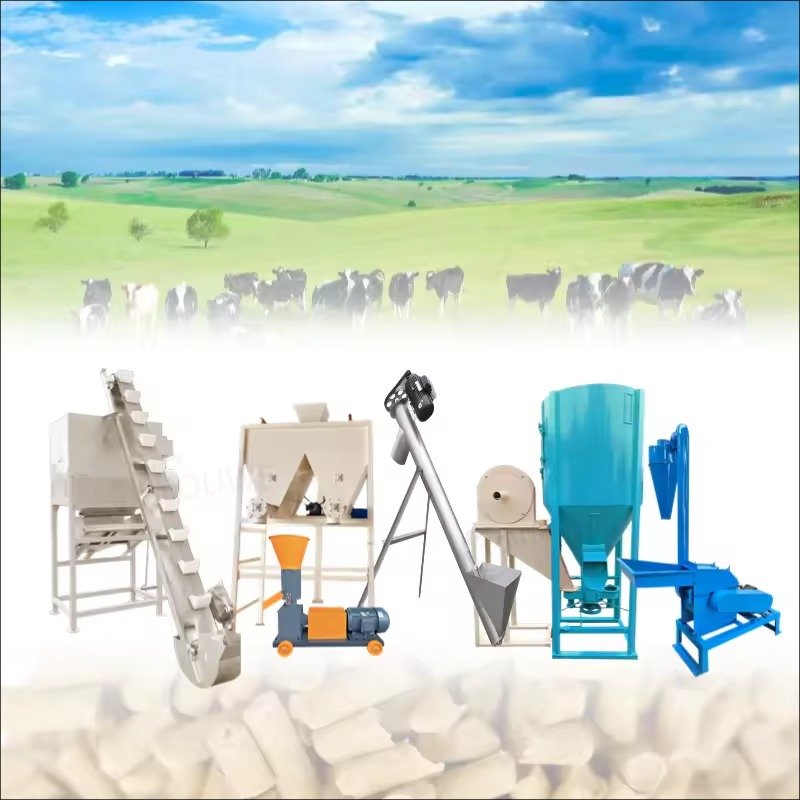
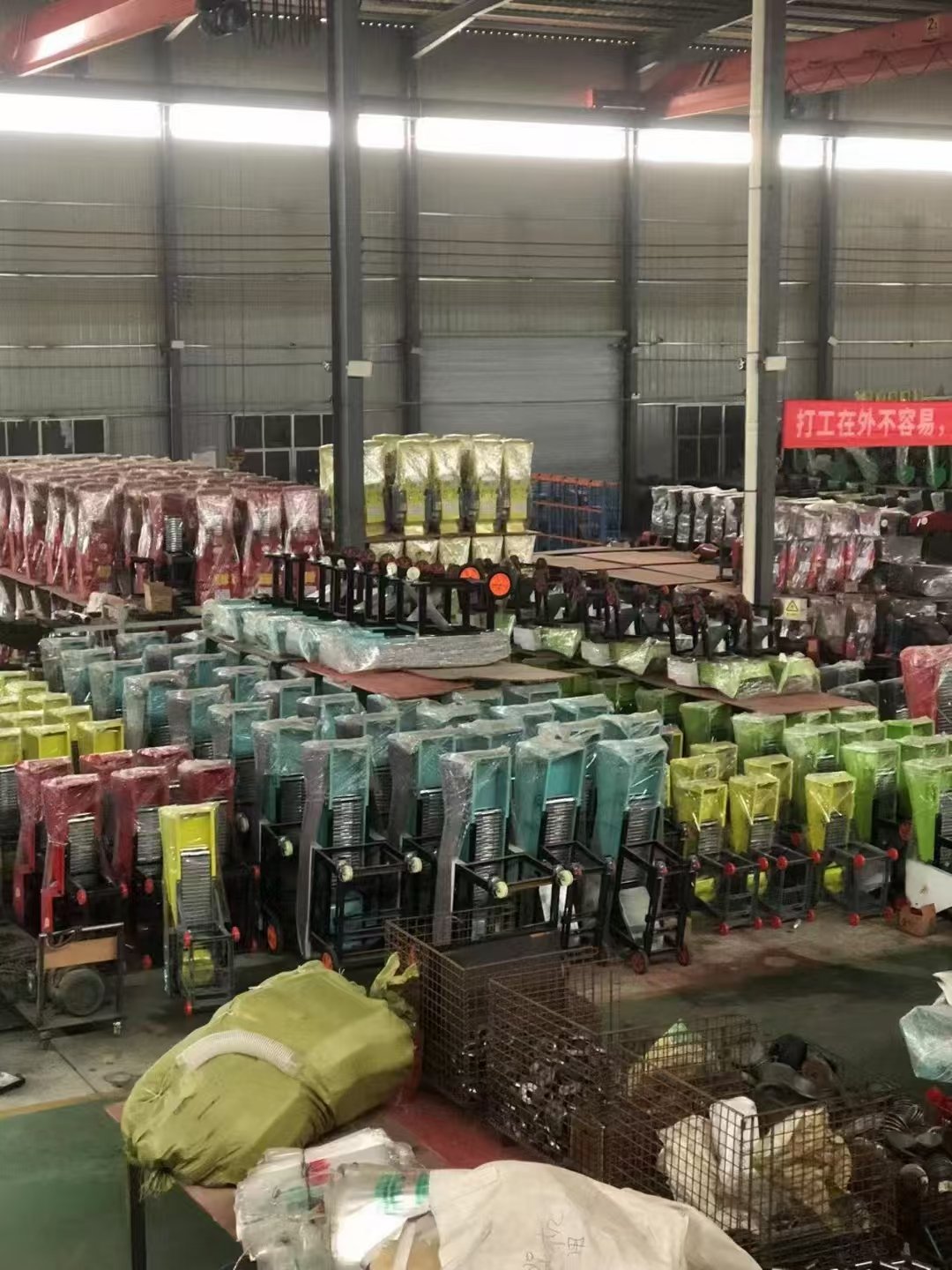
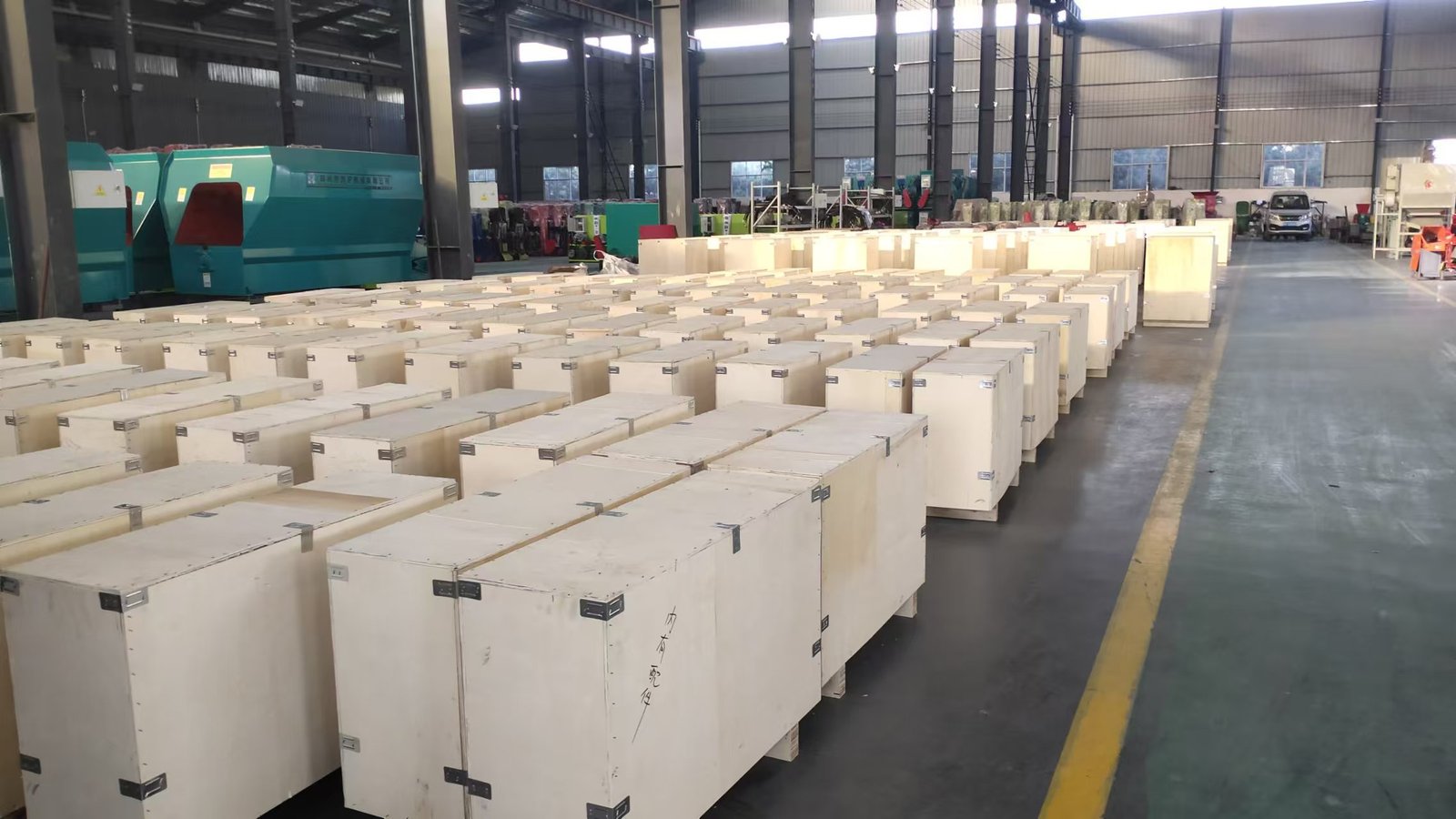
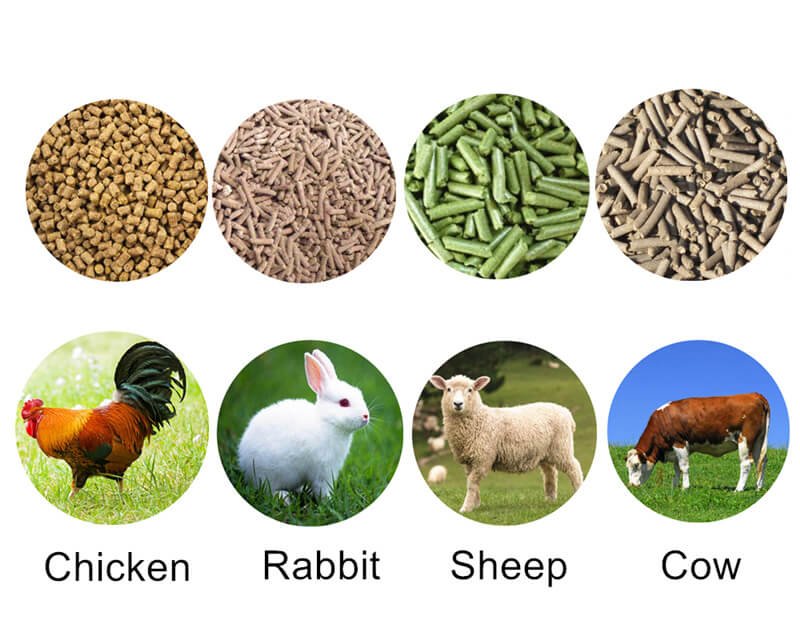
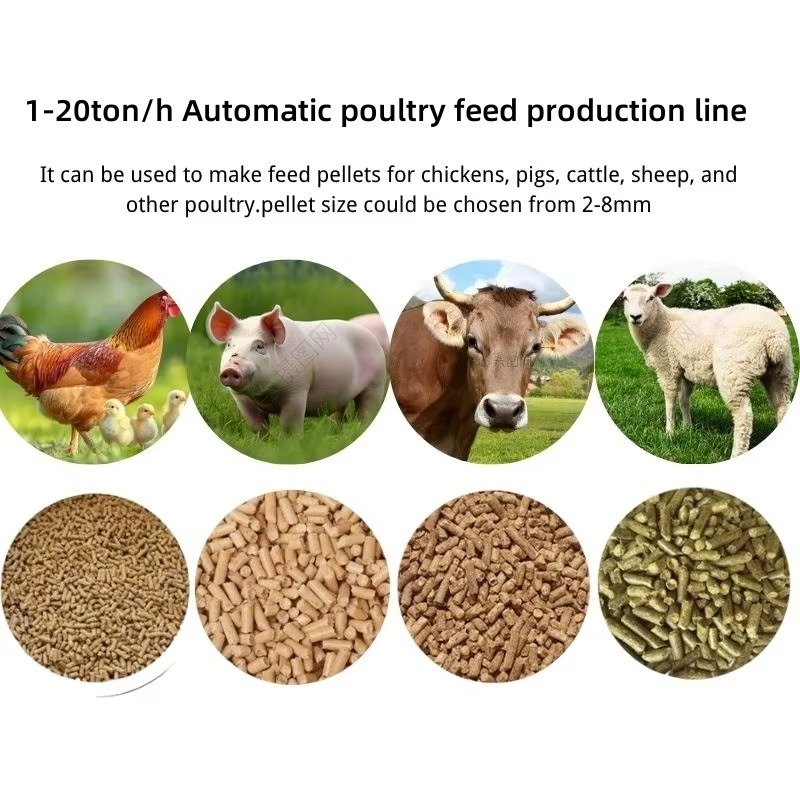
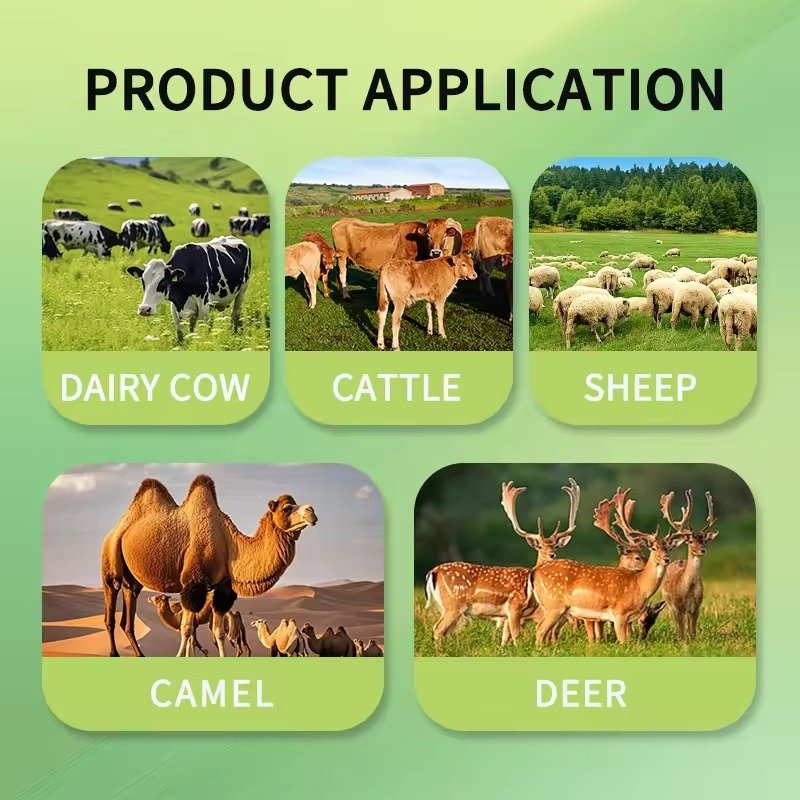 This comprehensive guide examines everything UK buyers need to know about cattle feed pellet plants. We cover equipment specifications, production processes, customization options, and supplier selection criteria. Whether you operate a 200-head dairy farm or manage a commercial feed mill serving multiple cattle operations, understanding production line capabilities helps you make informed investment decisions.MAIKONG has manufactured feed processing equipment for over 22 years, supplying complete turnkey systems to cattle operations across Europe, Asia, the Americas, and Africa. Our experience encompasses small-scale farm systems producing 200 kilograms per hour through to industrial plants processing 200 tonnes hourly, all designed specifically for the unique requirements of ruminant nutrition.
Understanding Cattle Feed Production Requirements and Ruminant Nutrition Fundamentals
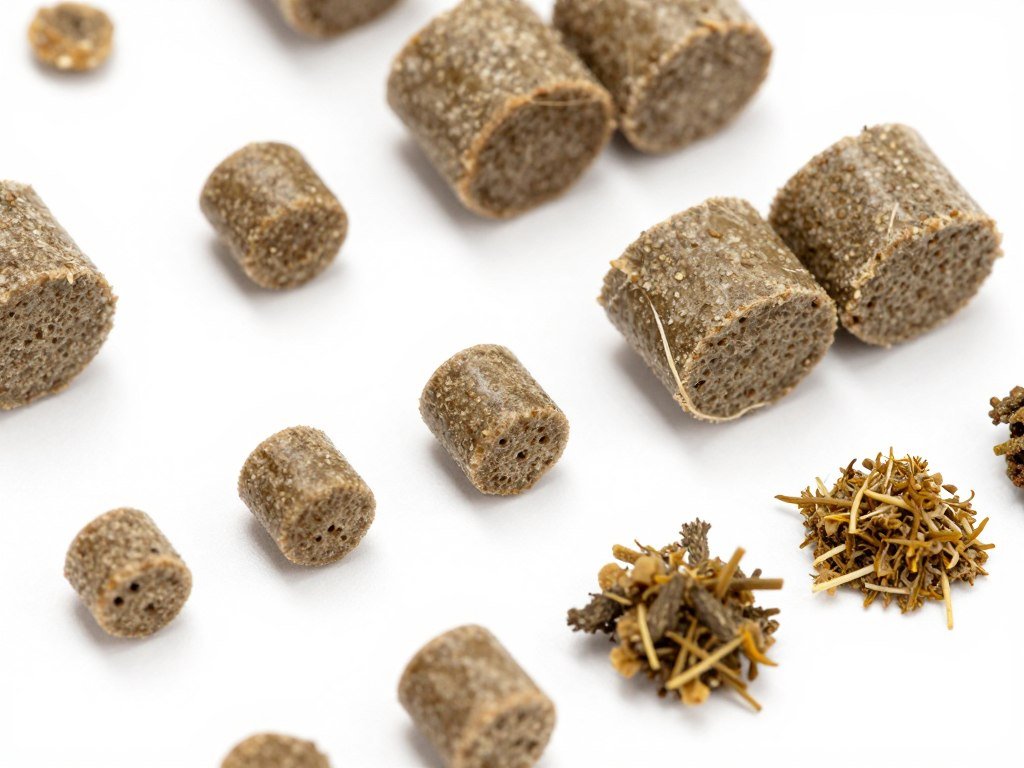
Cattle require fundamentally different feed than poultry or swine. Ruminant digestive systems depend on coarse fiber materials for proper rumen function. A proper cattle feed production line must accommodate fibrous ingredients like hay, straw, silage, and grass alongside traditional concentrates such as grain and protein meals.
Coarse Fiber Processing Challenges in Cattle Feed Manufacturing
Raw materials for cattle feed present unique processing difficulties. Hay and straw require specialized hammer mills with reinforced screens. Standard poultry feed equipment often fails when processing these coarse materials. The moisture content in silage and fresh grass creates additional complications during pelleting.
Feed formulations differ substantially between dairy and beef operations. Dairy cattle need higher protein levels (16-18%) and energy density for milk production. Beef cattle formulations emphasize efficient weight gain with moderate protein (12-14%) and higher fiber content. Growing calves require different nutrient profiles than mature cattle.
Dairy Cattle Feed Specifications
- Protein content: 16-18% crude protein
- Energy: 2.8-3.2 Mcal/kg metabolizable energy
- Fiber: 28-32% neutral detergent fiber
- Pellet size: 6-8mm diameter optimal
- Hardness: Medium (reduces dust, maintains rumen function)
- Moisture: 12-14% for storage stability
Beef Cattle Feed Specifications
- Protein content: 12-14% crude protein
- Energy: 2.4-2.8 Mcal/kg metabolizable energy
- Fiber: 32-38% neutral detergent fiber
- Pellet size: 6-10mm diameter range
- Hardness: Medium-firm (withstands handling)
- Moisture: 12-14% for extended storage
Material Flowability and Dust Control in Ruminant Feed
Cattle feed produces more dust than processed poultry feed due to fibrous material breakdown. Excessive dust creates respiratory health risks for both animals and farm workers. Modern production lines incorporate dust collection systems at multiple points throughout the process.
Low-dust pellets result from proper conditioning (steam addition) before pelleting and adequate cooling after pellet formation. Pellet durability index (PDI) should exceed 92% for cattle feed to minimize fines during handling and transport. Poor pellet quality leads to ingredient segregation, reducing nutritional consistency.
Complete Cattle Feed Production Line Components and System Architecture
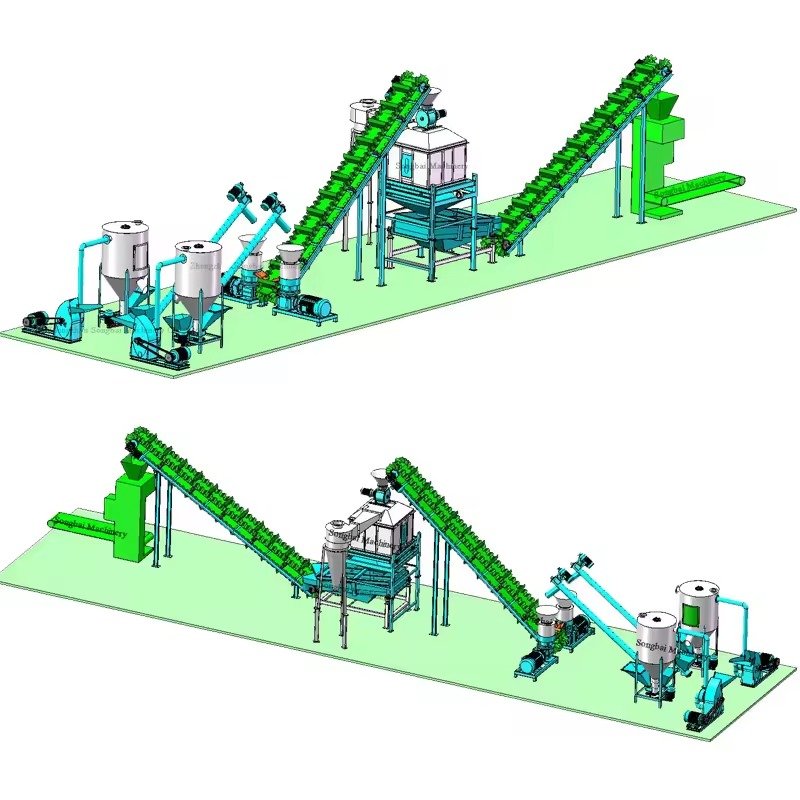
A complete cattle feed pellet plant comprises multiple integrated systems. Each component serves a specific function in transforming raw ingredients into finished pellets. Understanding this equipment helps buyers evaluate supplier proposals and avoid incomplete systems that require additional purchases later.
Raw Material Receiving and Pre-Cleaning Systems
Production begins with proper material handling. Bulk ingredients arrive by lorry and require storage in weatherproof silos or warehouses. Pre-cleaning equipment removes contaminants like stones, metal fragments, and debris that damage downstream equipment.
Permanent magnetic separators capture ferrous metal particles. Vibrating screens separate oversized materials. Dust extraction systems protect air quality in receiving areas. These preprocessing steps significantly extend equipment lifespan and improve final product quality.
Speak with MAIKONG Technical Specialists About Your Production Requirements
Our UK-based engineering team has designed cattle feed systems for operations ranging from 200kg/hour farm plants to 200-tonne industrial facilities. We’ll help you specify the right equipment configuration for your specific raw materials, production capacity, and budget.
Crushing and Grinding Equipment for Coarse Fiber Materials
Hammer mills form the backbone of cattle feed grinding operations. These machines use rotating hammers to impact materials against reinforced screens, reducing particle size to specifications suitable for mixing and pelleting. For cattle feed, target particle size ranges from 2mm to 5mm depending on formulation.
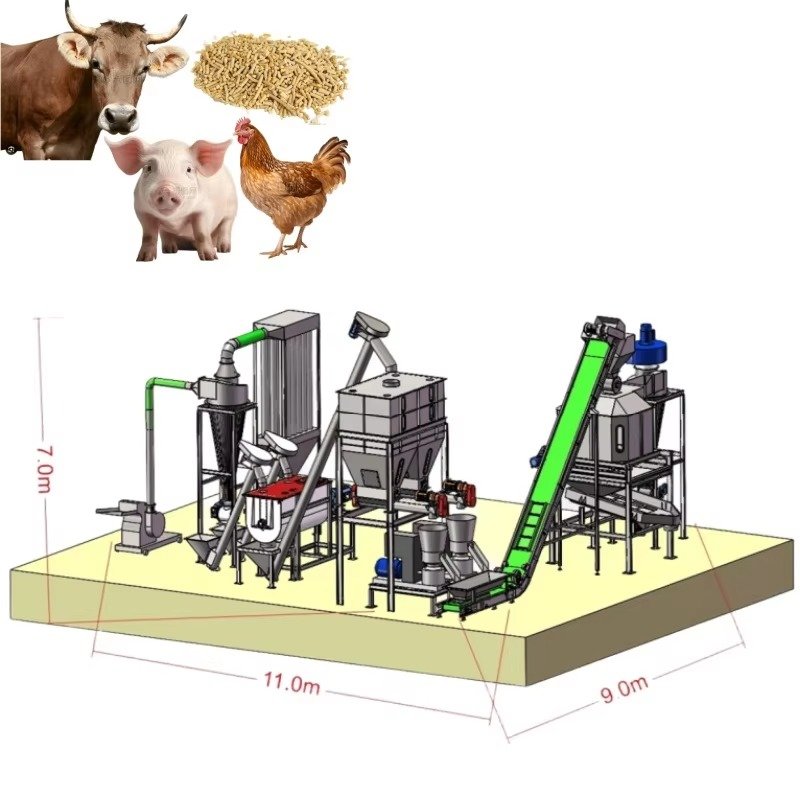
Equipment capacity determines throughput. A 30kW hammer mill typically processes 3-5 tonnes per hour of mixed grains and moderate fiber materials. Processing higher percentages of hay or straw may require 55kW or 75kW models to maintain production rates. Screen hole size affects particle fineness and energy consumption.
Replaceable wear parts include hammers and screens. Quality mills use high-carbon steel or alloy hammers lasting 800-1200 operating hours. Screens wear faster with abrasive materials, requiring replacement every 400-600 hours. MAIKONG supplies all wearing components with clear part numbers for straightforward reordering.
Accurate Batching and Weighing Systems
Nutritional consistency depends on precise ingredient proportioning. Automated batching systems use load cells to weigh individual ingredients according to formula specifications. A typical dairy feed formula might include 15-20 different ingredients, each requiring accurate measurement.
Computer-controlled batching eliminates human error. Operators input formulas once; the system executes each batch identically. This consistency proves crucial for milk production optimization where even minor nutritional variations affect yields. Manual batching introduces 3-5% variation; automated systems achieve ±0.5% accuracy.
| Component Type | Typical Accuracy | Weighing Range | Batch Speed |
| Major ingredients (grains, meals) | ±0.5% | 50-500 kg | 2-3 min/batch |
| Micro ingredients (minerals, vitamins) | ±0.2% | 0.1-10 kg | 1-2 min/batch |
| Liquid ingredients (molasses, oils) | ±1.0% | 5-50 kg | 3-4 min/batch |
High-Efficiency Mixing Technology
Proper mixing ensures every pellet contains the correct nutrient balance. Ribbon mixers and paddle mixers dominate cattle feed applications. These horizontal mixers achieve 95% homogeneity in 4-6 minutes, significantly better than vertical mixers which require 8-12 minutes.
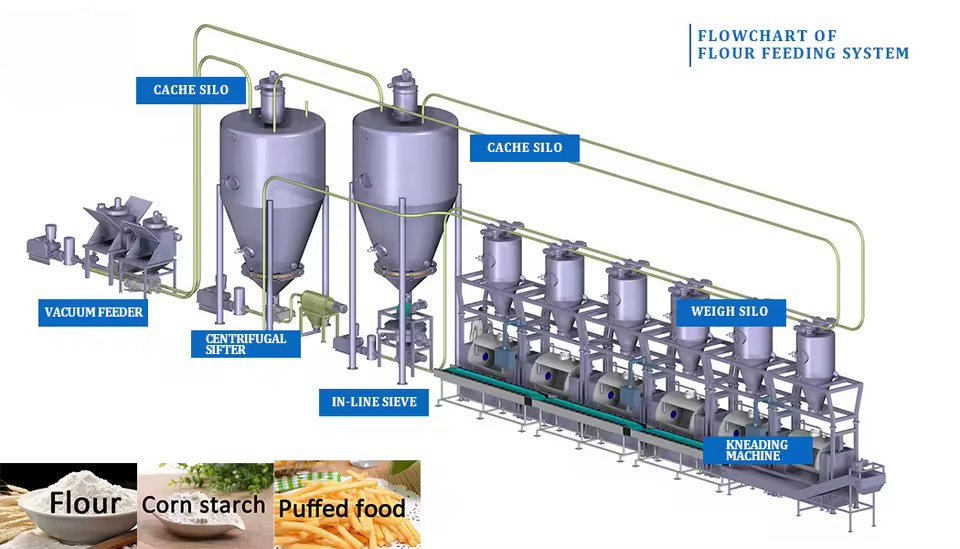
Batch size matching proves critical for efficiency. A mixer should operate at 70-85% capacity for optimal performance. Operating below 50% capacity increases mixing time and energy waste. Oversized mixers also cost more initially. MAIKONG engineers specify mixer sizes based on your target hourly production and typical batch formulas.
Liquid addition systems spray oils, molasses, or water during mixing. This improves pellet binding and adds energy to formulations. Proper liquid distribution requires dedicated spray nozzles; simply pouring liquids into the mixer creates uneven coating and pellet quality problems.
Conditioning and Steam Treatment Systems
Steam conditioning before pelleting dramatically improves pellet quality and production efficiency. Short-term (10-30 second) steam exposure at 80-85°C gelatinizes starches, improving binding. Moisture addition from steam (typically raising material moisture from 12% to 16%) lubricates die passages, reducing wear and energy consumption.
Proper conditioner design features adjustable retention time and multiple steam injection points. Single-shaft conditioners suit basic applications. Twin-shaft models provide superior mixing and heat distribution for complex cattle formulations containing high fiber percentages. MAIKONG supplies both configurations depending on your specific processing needs.
Pellet Mills: Heart of the Production System
The feed pellet production line centers on the pelleting machine. This equipment forces conditioned material through die holes, forming cylindrical pellets. Ring die pellet mills dominate commercial cattle feed production due to their high capacity and continuous operation capability.
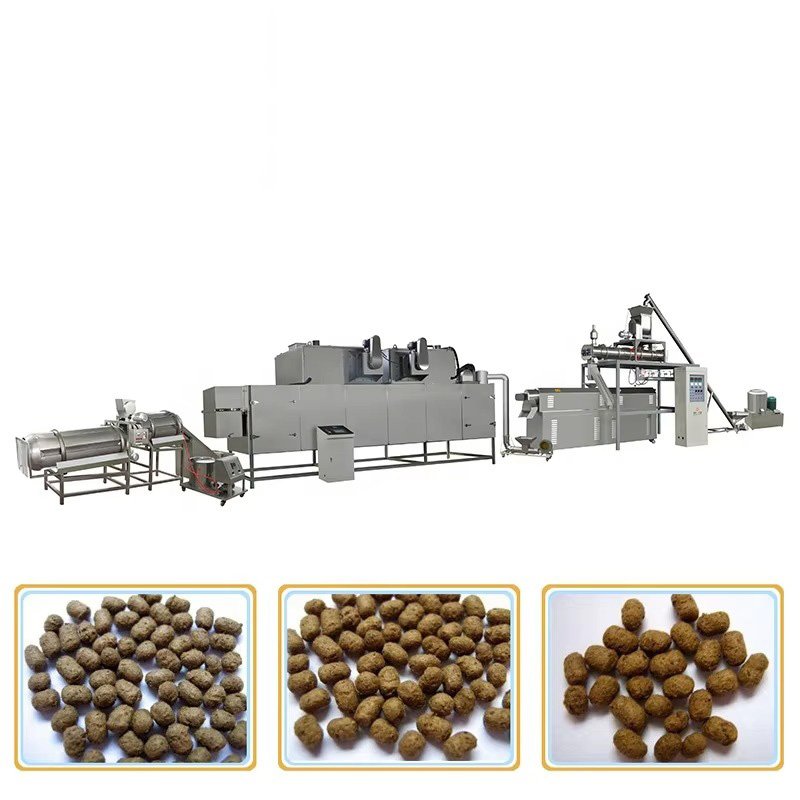
Die specifications critically affect pellet quality and production capacity. Cattle feed typically uses 6mm, 8mm, or 10mm die holes. Smaller holes increase production energy but produce harder, more durable pellets. Die thickness affects pellet length; thicker dies produce longer pellets from the same hole diameter.
Roller and die wear represents the primary operating cost after electricity. Quality alloy dies last 400-800 hours processing cattle feed with moderate fiber content. High-silica materials (rice hulls, straw) accelerate wear. MAIKONG uses proprietary alloy formulations extending die life 25-30% compared to standard specifications.
| Pellet Mill Model | Main Power | Capacity (Cattle Feed) | Die Diameter | Pellet Sizes Available |
| MK-L003-420 | 90 kW | 3-5 T/H | 420 mm | 4-10 mm |
| MK-L003-508 | 132 kW | 5-8 T/H | 508 mm | 4-10 mm |
| MK-L003-678 | 220 kW | 10-15 T/H | 678 mm | 5-12 mm |
| MK-L003-858 | 315 kW | 15-25 T/H | 858 mm | 6-12 mm |
Cooling Systems for Temperature and Moisture Reduction
Pellets exit the mill at 75-85°C with 16-17% moisture content. Immediate cooling and drying prevents mold growth during storage. Counterflow coolers provide the most efficient cooling, forcing ambient air upward through descending pellets. This design maximizes heat and moisture transfer while minimizing pellet breakage.
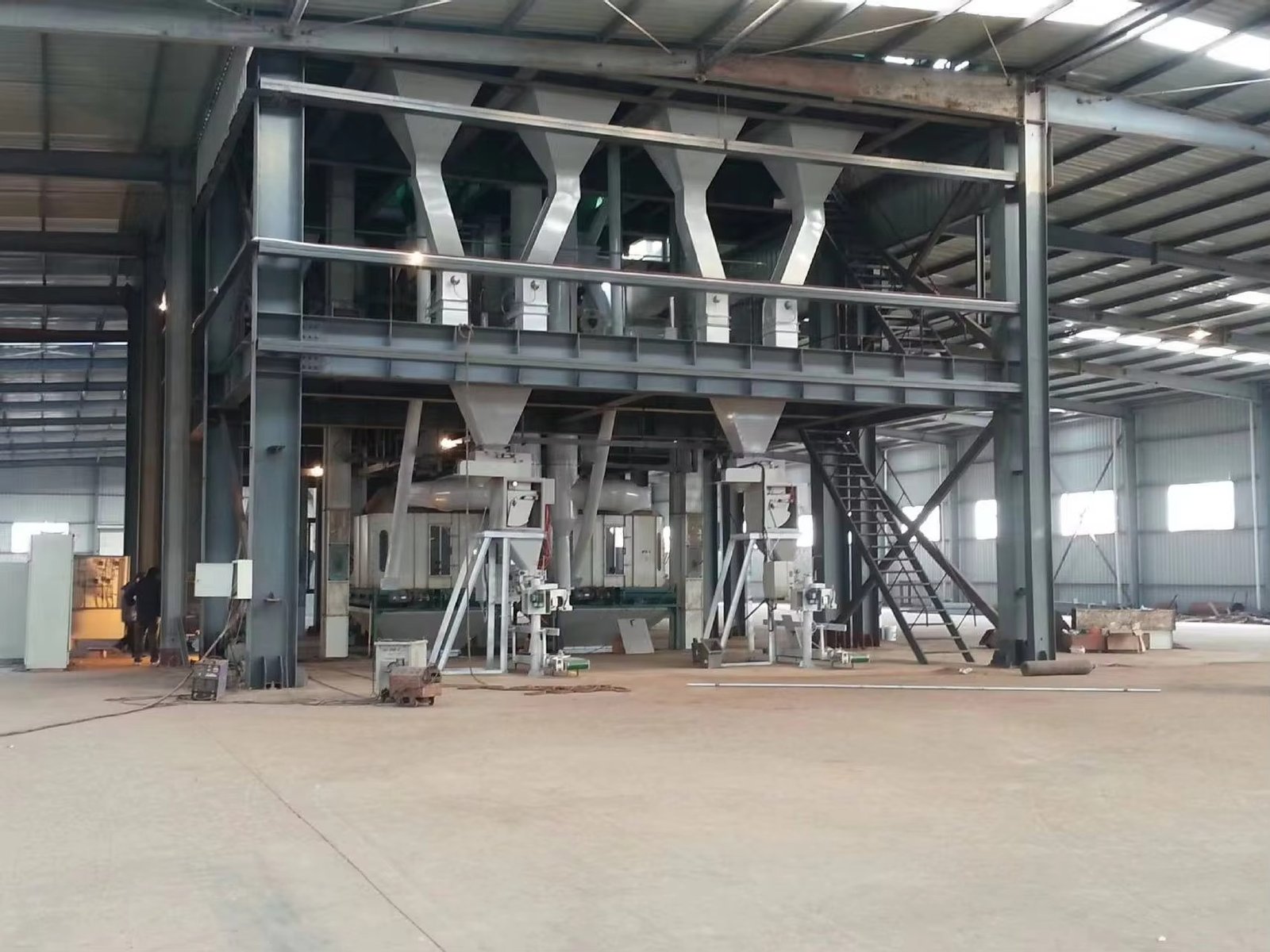
Cooling capacity must match pelleting capacity. Undersized coolers become bottlenecks, forcing production slowdowns. Pellets should cool to within 5°C of ambient temperature and dry to 12-13% moisture before packaging or bulk storage. Insufficient cooling causes “sweating” in storage, creating favorable mold conditions.
Cooling air filtration prevents dust contamination of finished feed. MAIKONG coolers incorporate multi-stage filtration keeping product clean while maintaining adequate airflow for efficient cooling. This attention to detail protects your investment in quality ingredients from contamination during final processing.
Screening and Fines Separation
Vibrating screens separate undersized particles and broken pellets from finished product. These “fines” typically represent 2-5% of pellet mill output with properly operating equipment. Fines return to the pelleting process via automated conveying, eliminating waste and maintaining consistent product quality.
Excessive fines indicate problems requiring attention. Die wear, improper conditioning, or formulation issues cause fines percentages exceeding 8-10%. Monitoring fines return rates helps identify developing equipment problems before major failures occur, a preventive maintenance advantage professional operators value highly.
Automated Packaging and Bulk Handling Systems
Finished pellets require packaging for retail sales or bulk handling for on-farm storage. Electronic scales weigh 25kg or 50kg bags automatically at 6-12 bags per minute depending on system specification. Bag sewing machines seal bags immediately after filling, maintaining freshness and preventing spillage during handling.
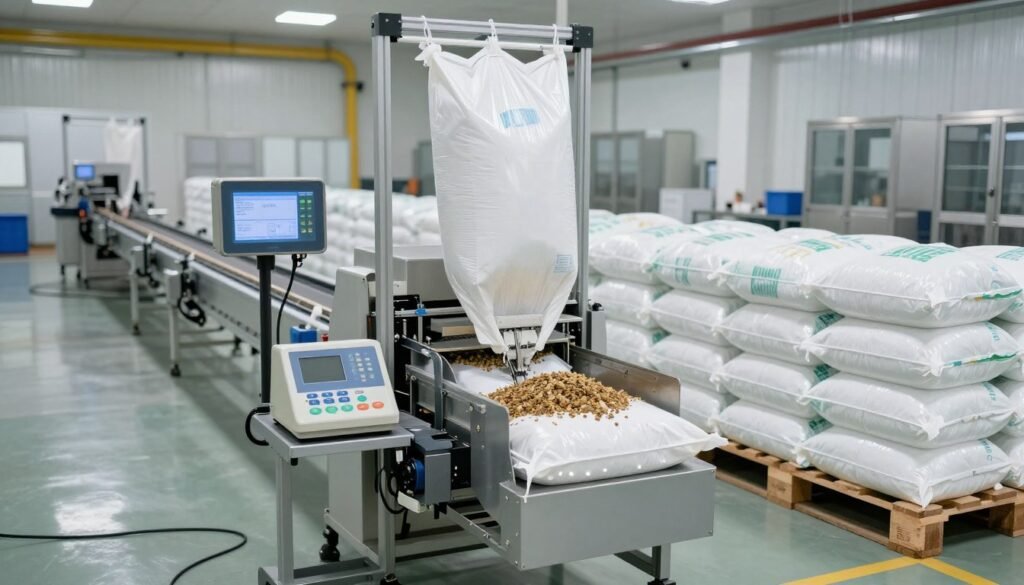
Bulk storage silos suit larger operations feeding cattle directly from storage. Properly designed silos prevent bridging (material arching above the discharge) and provide adequate capacity for 3-7 days consumption. MAIKONG provides complete material handling design including conveyors, elevators, and pneumatic transport systems connecting all production components.
Production Capacity Selection and System Sizing for Your Operation
Choosing the correct cattle feed mill line capacity prevents expensive mistakes. Undersized systems cannot meet demand, limiting herd growth. Oversized systems waste capital and operate inefficiently at partial capacity, increasing per-tonne production costs unnecessarily.
Calculating Daily Feed Requirements
Adult dairy cows consume 18-25 kg of total mixed ration daily depending on milk production levels. High-producing cows (over 35 litres daily) may consume up to 28 kg. Beef cattle consumption varies by animal size and production stage, ranging from 8-12 kg daily for finishing cattle to 15-18 kg for breeding stock.
Calculate your operation’s total daily requirement by multiplying head count by average consumption. Add 10-15% buffer for growth, seasonal variation, and production cushion. A 200-head dairy operation consuming 22 kg per cow daily needs 4,400 kg daily, or approximately 4.8 tonnes with buffer included.
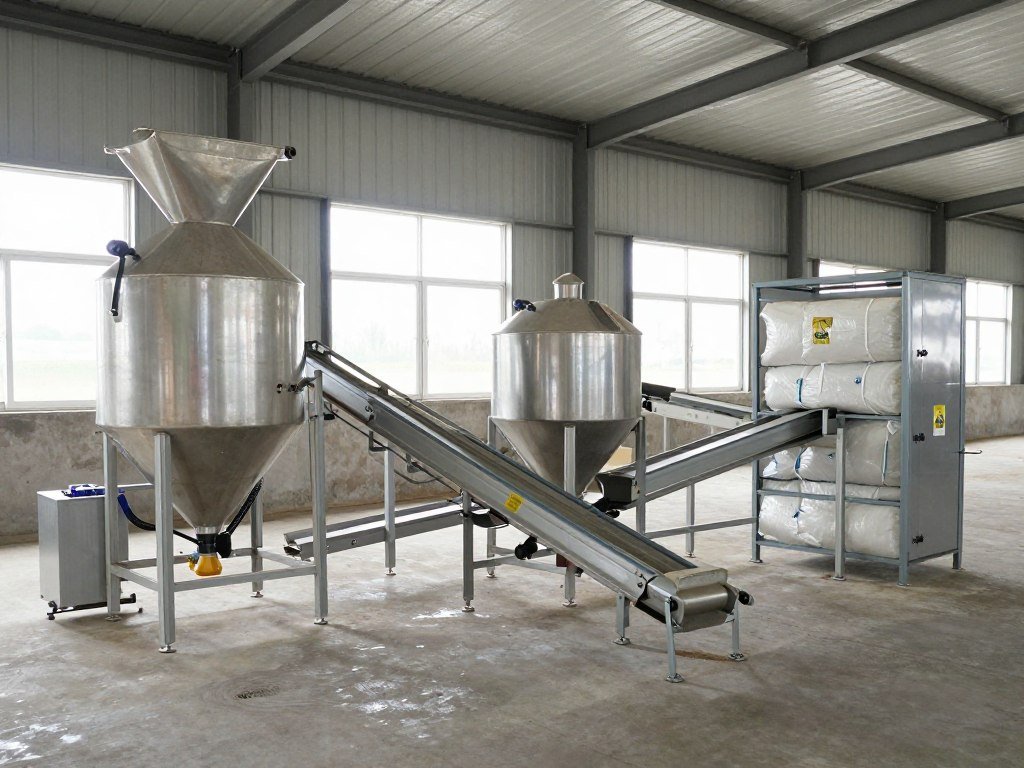
Small Farm Production Lines (200kg-2T/H)
These compact systems suit smaller cattle operations with 50-250 head. Equipment occupies minimal space, often fitting within existing farm buildings. Single-shift operation produces adequate feed for daily requirements with modest capital investment.
Small systems offer flexibility for farms producing multiple feed types. The same equipment produces dairy rations, calf starter feeds, and dry cow formulations by simply changing formulas. This versatility maximizes equipment utilization across changing farm requirements throughout the production year.
- Typical capacity: 200kg to 2 tonnes per hour
- Suitable for: 50-250 cattle operations
- Space requirement: 150-300 square metres
- Crew requirement: 1-2 operators
- Power consumption: 30-80 kW total installed
- Investment range: £45,000-£125,000
Medium Commercial Plants (3-10T/H)
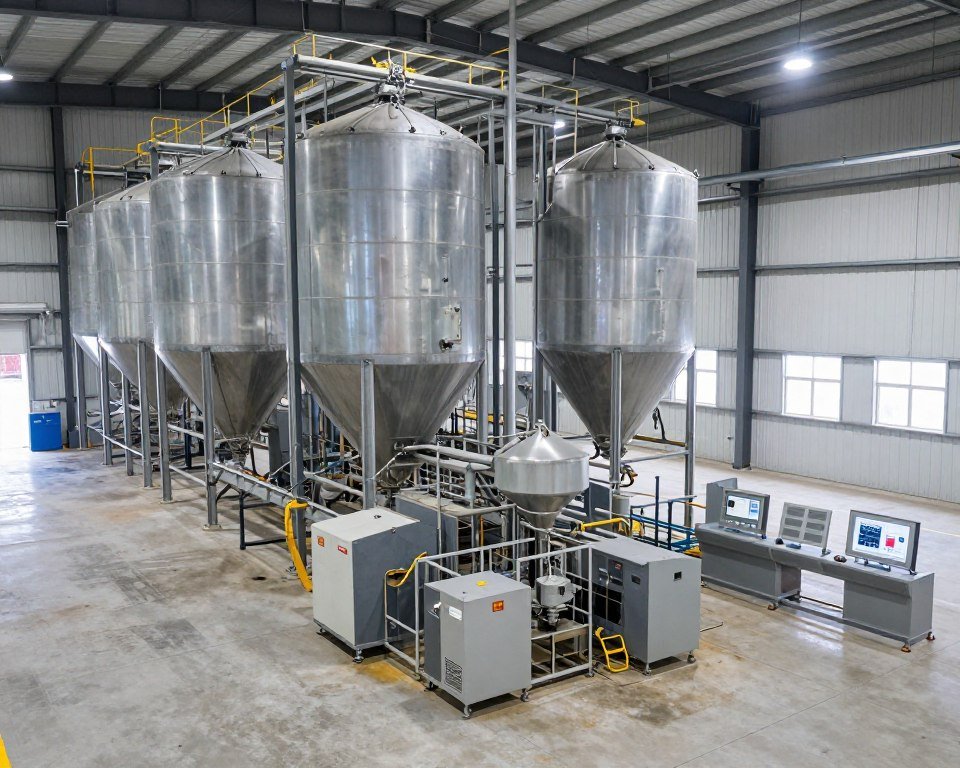
Medium capacity systems serve larger single-site operations or commercial feed businesses supplying multiple farms. These plants incorporate higher automation levels, reducing labor requirements while maintaining consistent quality across higher production volumes.
Multiple mixer and pellet mill lines provide redundancy, allowing continued operation during maintenance. This reliability proves essential for commercial operations where customers depend on consistent feed supply. MAIKONG designs medium plants with modularity allowing future expansion without replacing existing equipment.
- Typical capacity: 3-10 tonnes per hour
- Suitable for: 500-2000+ cattle or commercial feed mills
- Space requirement: 500-1200 square metres
- Crew requirement: 2-4 operators per shift
- Power consumption: 150-400 kW total installed
- Investment range: £180,000-£550,000
Large Industrial Feed Manufacturing Facilities
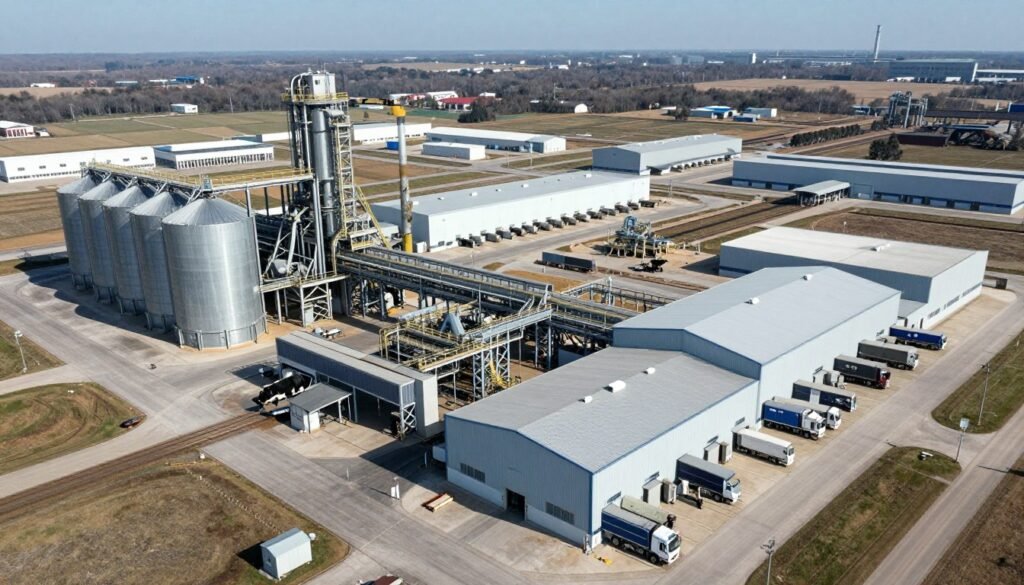
Industrial-scale operations processing 15-200 tonnes hourly supply regional markets or large integrated cattle operations. These sophisticated facilities incorporate complete automation from raw material receiving through finished product loadout. Central control rooms monitor all processes, optimizing efficiency and ensuring quality consistency.
Large plants justify investment in advanced technology including near-infrared (NIR) analyzers for rapid ingredient quality verification and automated formula adjustment systems. Multiple production lines allow simultaneous manufacture of different formulations, maximizing throughput and market responsiveness.
Key Technical Specifications and Performance Parameters for Cattle Feed Equipment
Understanding technical specifications helps evaluate supplier quotations and compare competing proposals objectively. Not all cattle feed production line equipment offers equivalent quality despite similar claimed capacities. Several critical parameters separate professional-grade systems from substandard alternatives.
Electrical Requirements and Power Configuration
UK standard electrical supply is 400V three-phase for industrial equipment. Complete production lines typically require 0.4-1.5 MVA transformer capacity depending on total installed power. MAIKONG engineers calculate exact electrical requirements based on your specific equipment configuration and local utility specifications.
Motor efficiency classes affect operating costs substantially over equipment lifetime. Premium efficiency motors (IE3 rated) cost 15-20% more initially but reduce electricity consumption by 8-12% compared to standard efficiency motors. For a 100kW pellet mill operating 2000 hours annually, this saves approximately £1,600-£2,400 yearly at current UK electricity rates.
Power Consumption by Production Scale
Small systems (200kg-2T/H): 25-35 kWh per tonne produced. Total connected load 30-80 kW.
Medium systems (3-10T/H): 18-28 kWh per tonne produced. Total connected load 150-400 kW.
Large systems (15-200T/H): 15-22 kWh per tonne produced. Total connected load 500-5000+ kW.
Actual consumption varies with formulation difficulty, equipment efficiency, and raw material characteristics. High-fiber formulations consume 20-30% more energy than grain-concentrate feeds.
Raw Material Moisture Content Tolerances
Input material moisture significantly affects processing efficiency and pellet quality. Ideal moisture content for grinding ranges from 12-14%. Materials above 16% moisture create bridging in hoppers and excessive hammer mill loading. Materials below 10% moisture generate excess dust and increase wear on grinding equipment.
Pelleting requires 15-16% material moisture (achieved through steam conditioning) for optimal binding. Excessively dry materials produce soft, crumbly pellets with poor durability. Wet materials create die blockages and produce pellets that mold during storage. MAIKONG conditioning systems precisely control moisture addition for consistent results regardless of incoming material variations.
Die and Roller Specifications for Cattle Feed
Ring die specifications fundamentally affect production capacity and pellet quality. Effective working width (die length), die diameter, and hole pattern determine throughput. Larger dies with more holes produce higher capacity but require greater driving power and generate more heat requiring more efficient cooling.
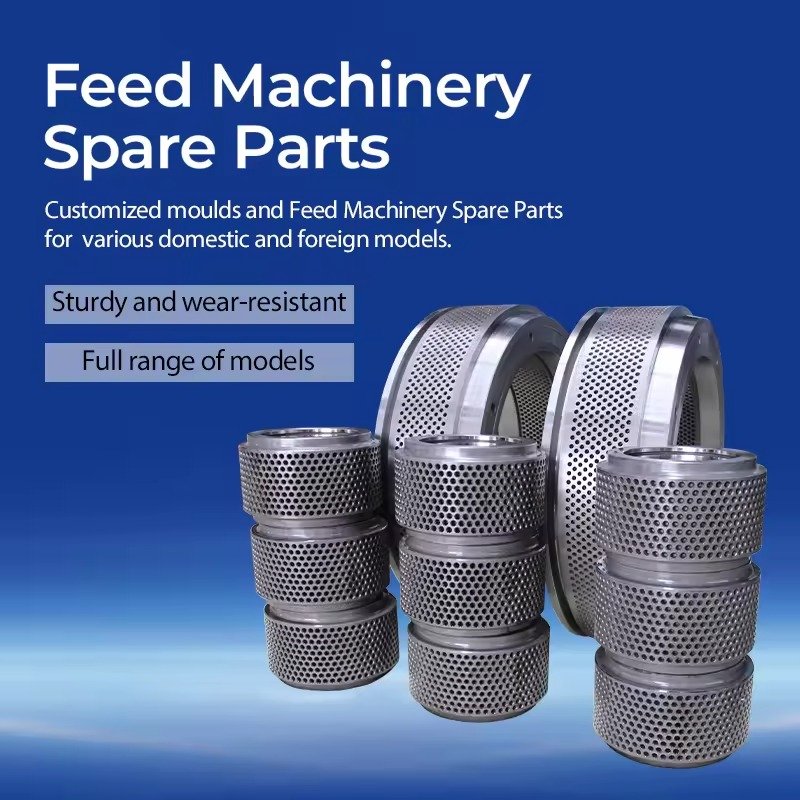
Compression ratio (the ratio between die hole effective length and hole diameter) affects pellet hardness. Higher compression ratios (typically 1:10 to 1:14 for cattle feed) produce harder, more durable pellets but require more power and generate more heat. Lower ratios suit formulations with high natural starch content providing good natural binding.
MAIKONG uses vacuum-hardened alloy steel dies lasting significantly longer than standard dies. Our proprietary heat treatment process creates a hardened surface layer maintaining sharp die holes throughout the die’s service life, preventing the gradual capacity decline common with conventional dies as holes gradually enlarge through wear.
Production Efficiency and Downtime Considerations
Theoretical capacity represents maximum possible production under ideal conditions. Actual operating capacity typically runs 75-85% of theoretical maximum due to formula changes, raw material handling, routine adjustments, and minor delays. Professional plant design accounts for this reality rather than optimistically assuming continuous full-capacity operation.
Planned maintenance requirements vary by equipment quality and operating conditions. High-quality systems require 2-4 hours weekly maintenance per 40-hour operating week. This includes lubrication, visual inspections, minor adjustments, and cleaning. Major maintenance (die changes, roller replacement, drive system service) occurs every 400-800 operating hours depending on material abrasiveness.
| Maintenance Item | Frequency | Typical Duration | Critical for Performance |
| Lubrication (bearings, gearboxes) | Daily/Weekly | 30-60 minutes | Yes – prevents failures |
| Belt tension adjustment | Weekly | 15-30 minutes | Moderate – affects efficiency |
| Hammer mill screen replacement | 400-600 hours | 2-3 hours | Yes – affects capacity and quality |
| Pellet die and roller replacement | 600-1000 hours | 4-6 hours | Yes – affects all pellet parameters |
| Mixer ribbon inspection/replacement | 1200-1800 hours | 3-5 hours | Moderate – affects mixing uniformity |
Automation and Control System Capabilities
Modern control systems optimize production efficiency while reducing operator workload. Basic systems provide start/stop control with manual formula input. Advanced systems feature recipe management databases, automatic sequencing, production reporting, and integration with enterprise resource planning software.
Touchscreen human-machine interfaces (HMI) simplify operation compared to traditional button-and-switch control panels. Operators can monitor all equipment status, adjust parameters, and troubleshoot issues from a central location. Remote monitoring capability allows technical support staff to diagnose problems without site visits, minimizing downtime.
MAIKONG supplies control systems matched to operation sophistication requirements. Small farm systems typically use programmable logic controller (PLC) based automation with local touchscreen. Commercial plants benefit from networked control systems with remote access, production database management, and automated reporting for quality assurance and regulatory compliance.
Download Complete Technical Specifications for MAIKONG Cattle Feed Production Lines
Access detailed equipment datasheets, electrical requirements, foundation drawings, and performance specifications for all MAIKONG animal feed production line models. Our technical documentation helps you evaluate exact requirements for your specific operation and site conditions.
Customization Options and OEM/ODM Manufacturing Capabilities
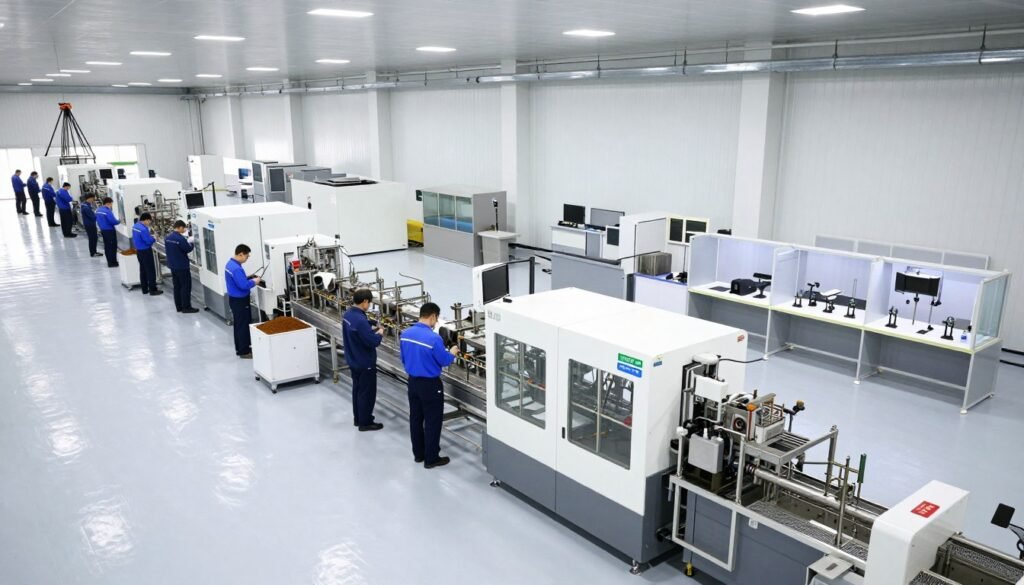
Every cattle operation faces unique circumstances regarding available space, raw materials, production requirements, and budget constraints. Off-the-shelf standard systems rarely provide optimal solutions. MAIKONG specializes in customized cattle feed pellet plant configurations precisely matching your specific requirements rather than forcing you to adapt operations to equipment limitations.
Production Capacity Customization from 200 Kilograms to 200 Tonnes Hourly
Our design capability spans an extraordinary range from compact 200kg/hour systems suitable for small mixed farms through massive 200-tonne/hour industrial complexes supplying regional markets. This breadth of experience means we understand the unique requirements at each scale rather than simply scaling up or down from a single design approach.
Small-scale systems emphasize simplicity, ease of operation, and minimal space requirements. These typically feature manual controls, single-shift operation patterns, and flexibility for multiple feed types. Medium capacity systems balance automation with cost-effectiveness. Large industrial plants incorporate sophisticated process control, redundant equipment for reliability, and specialized systems for bulk material handling.
Raw Material Adaptations for Diverse Ingredient Portfolios
Cattle feed formulations vary dramatically by region, farm philosophy, and ingredient availability. Some operations rely heavily on farm-grown forages (hay, straw, grass silage). Others purchase commercial protein concentrates and grain by-products. MAIKONG engineers configure grinding, conditioning, and pelleting systems specifically for your planned ingredient mix.
High-fiber formulations require reinforced hammer mills with specialized screen designs. Oily ingredients (full-fat soya, certain by-products) benefit from specific die surface treatments preventing material adhesion. Formulations incorporating molasses or liquid supplements need integrated liquid addition systems with precise metering and distribution.
Regional Ingredient Adaptation Examples
UK/Ireland dairy operations: Grass silage base with barley, wheat feeds, rapeseed meal – requires excellent moisture handling in conditioning
European intensive beef: Maize silage, grain concentrates, protein meals – benefits from high-compression dies for hard pellets
Extensive beef systems: Hay, straw, minimal concentrates – needs specialized fiber processing capability
Voltage and Frequency Configuration for Global Deployment
Electrical standards vary globally. UK operations use 400V/50Hz three-phase supply. Some regions use 380V, 415V, or 440V nominal voltages. North American operations typically use 480V/60Hz. MAIKONG manufactures equipment to any voltage and frequency specification, ensuring seamless integration with your existing electrical infrastructure.
Motor selection, control transformer sizing, and protective device calibration all vary with electrical supply characteristics. We specify every electrical component for your specific supply, eliminating compatibility issues that cause project delays and unexpected costs with suppliers offering “standard” configurations requiring expensive modifications.
Layout and Space Optimization
Available installation space significantly affects system design. Some operations have expansive green-field sites allowing optimal horizontal layout. Others must retrofit equipment into existing buildings with restrictive dimensions and difficult material flow paths. MAIKONG provides complete layout engineering regardless of site challenges.
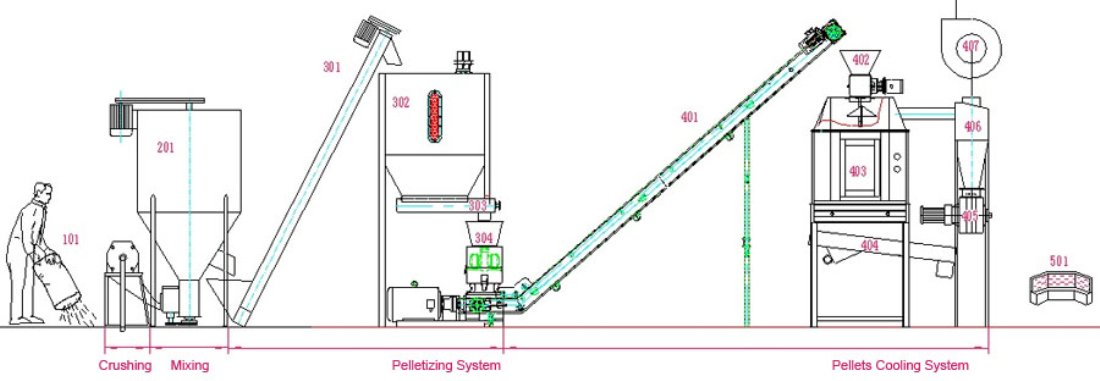
Vertical designs minimize footprint using multi-storey construction with gravity flow between process stages. Horizontal layouts suit single-storey buildings and provide easier access for maintenance. Hybrid designs balance space utilization with operational convenience. We develop custom layouts incorporating your specific site constraints, building structure limitations, and future expansion possibilities.
Production Line Efficiency Ratings and Output Optimization
Production efficiency represents actual output relative to theoretical capacity. Well-designed systems achieve 80-85% efficiency accounting for formula changeovers, routine stops, and operator breaks. Poor designs struggle to reach 65-70% efficiency, wasting capital investment and increasing per-tonne operating costs.
MAIKONG optimizes efficiency through proper material flow design, eliminating bottlenecks, and matching component capacities throughout the system. Oversized mixers paired with undersized pellet mills waste mixing capacity. Inadequate cooling creates production delays. Our engineering ensures balanced throughput across all process stages.
OEM and ODM Partnership Opportunities
Many equipment dealers and agricultural cooperatives serve their markets under their own brand names. MAIKONG provides complete original equipment manufacturer (OEM) services allowing you to offer cattle feed production equipment under your brand identity. We manufacture to your specifications, applying your branding, and provide full technical support while you maintain customer relationships.
Original design manufacturer (ODM) partnerships suit organizations with specific application requirements not served by standard products. We collaborate on custom engineering, develop specialized equipment variations, and manufacture exclusively for your markets. This provides competitive advantage through unique product offerings competitors cannot duplicate.
Over 22 years, MAIKONG has developed numerous successful OEM partnerships across Europe, Asia, and Africa. Partners benefit from our manufacturing expertise, quality control systems, and proven designs while building their own brand equity. We provide confidential manufacturing ensuring your competitive position remains secure.
OEM Services Include
- Custom brand application (your logos, colours, identification)
- Modified control interfaces with your preferred languages
- Private packaging and documentation
- Confidential manufacturing arrangements
- Drop-shipping to your customers
- White-label technical support coordination
- Custom warranty and service terms
ODM Collaboration Advantages
- Exclusive product designs for your markets
- Joint engineering development programs
- Market-specific feature customization
- Competitive differentiation through unique offerings
- Shared intellectual property arrangements
- Long-term strategic partnerships
- Volume manufacturing cost advantages
Request a Custom Configuration Quote for Your Specific Requirements
MAIKONG engineering team will develop a tailored cattle feed production line proposal matching your exact capacity needs, ingredient types, available space, and budget parameters. We provide detailed quotations including equipment specifications, installation requirements, commissioning support, and operator training programs.
Quotations typically delivered within 48 hours. Include your required capacity, primary raw materials, and site location for accurate proposal.
Installation, Training, and Technical Support Services
Equipment purchase represents only the first step toward successful cattle feed production. Proper installation, comprehensive operator training, and ongoing technical support determine whether your investment delivers expected returns or becomes a source of frustration and unexpected costs.
Professional Installation and Commissioning Services
MAIKONG provides complete installation supervision and commissioning for all cattle feed production line systems. Our experienced technicians guide local installation contractors, ensuring proper equipment assembly, alignment, and connection. This professional oversight prevents installation errors that cause premature wear, reduced capacity, and safety hazards.
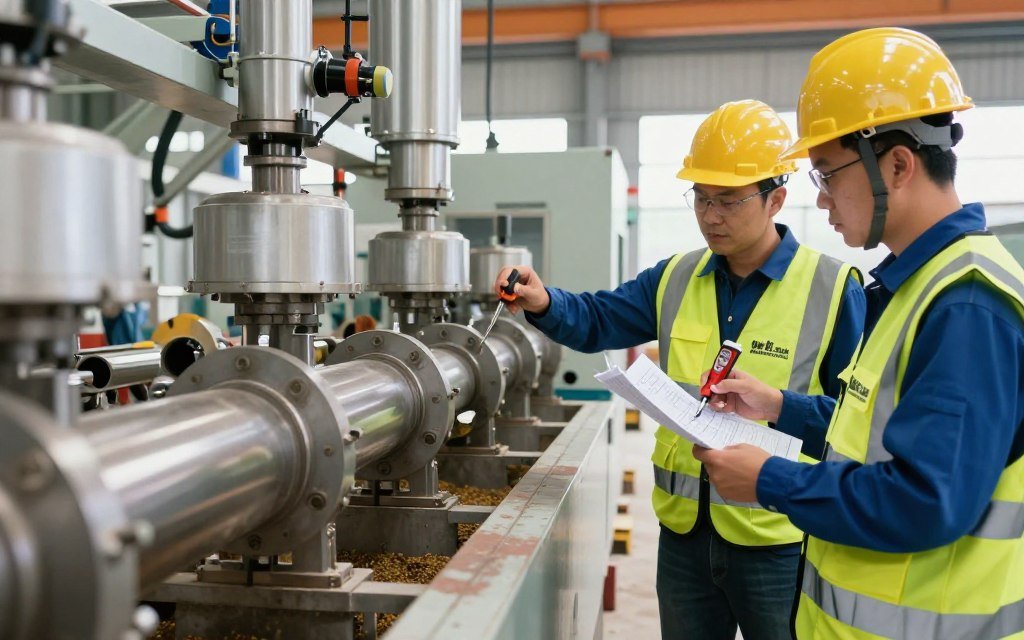
Installation duration varies by system complexity. Small farm systems typically require 1-2 weeks for installation and commissioning. Medium commercial plants need 3-5 weeks. Large industrial facilities may require 8-12 weeks including civil works, equipment installation, and systematic commissioning of all subsystems.
Commissioning involves systematic testing of each equipment component followed by integrated system operation verification. We process trial batches using your actual raw materials, adjusting parameters for optimal performance. This ensures your operation begins production with properly configured, fully functional equipment rather than facing a prolonged troubleshooting period.
Comprehensive Operator Training Programs
Sophisticated equipment requires knowledgeable operators. MAIKONG provides structured training covering equipment operation, routine maintenance, quality control procedures, and basic troubleshooting. Training occurs at your facility using your equipment and raw materials, providing immediately applicable skills rather than generic classroom instruction.
Training typically spans 3-7 days depending on system complexity and operator experience levels. We train multiple operators ensuring adequate coverage for shift work and staff absences. Training includes hands-on practice under supervision, written operating procedures in your preferred language, and reference materials for ongoing use.
Operator Training Curriculum
- Safety procedures and lockout/tagout protocols: Critical safety practices prevent accidents and comply with UK health and safety requirements.
- Start-up and shutdown sequences: Proper procedures prevent equipment damage and ensure consistent performance.
- Formula management and batching: Accurate ingredient handling maintains product quality and nutritional consistency.
- Process parameter adjustment: Optimizing steam, temperature, and throughput maximizes efficiency and pellet quality.
- Quality monitoring and testing: Regular checks ensure product meets specifications and identify problems early.
- Routine maintenance execution: Daily and weekly maintenance tasks operators perform independently.
- Common problem recognition: Identifying developing issues before major failures occur.
- Record keeping and documentation: Production logs support quality assurance and regulatory compliance.
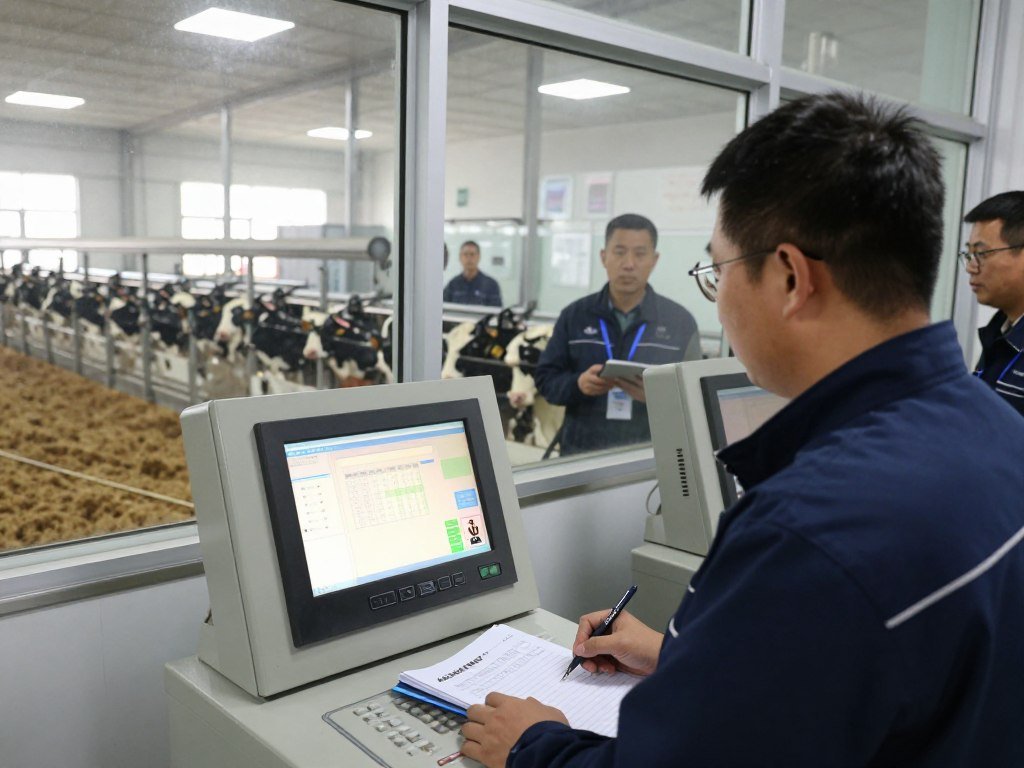
Ongoing Technical Support and Troubleshooting Assistance
Even well-maintained equipment occasionally experiences problems. MAIKONG provides multi-level technical support ensuring rapid problem resolution regardless of your location. Our UK-based support team offers first-level assistance with most issues resolved through phone or video consultation, eliminating travel delays and costs.
Complex problems may require on-site visits. We maintain relationships with qualified service technicians across the UK and Europe capable of rapid deployment when needed. For urgent situations affecting production, we can typically arrange on-site support within 24-48 hours anywhere in the British Isles.
Remote diagnostic capability built into modern control systems allows our engineers to observe equipment operation, analyze parameters, and guide troubleshooting without site visits. This technology dramatically reduces downtime for many issues while providing valuable operating data helping identify developing problems before failures occur.
Spare Parts Supply and Inventory Management
Minimizing production interruptions requires readily available spare parts. MAIKONG maintains comprehensive spare parts inventory for all equipment models including both routine maintenance items (hammers, screens, bearings) and less frequent replacement components (gearboxes, motors, electrical controls).
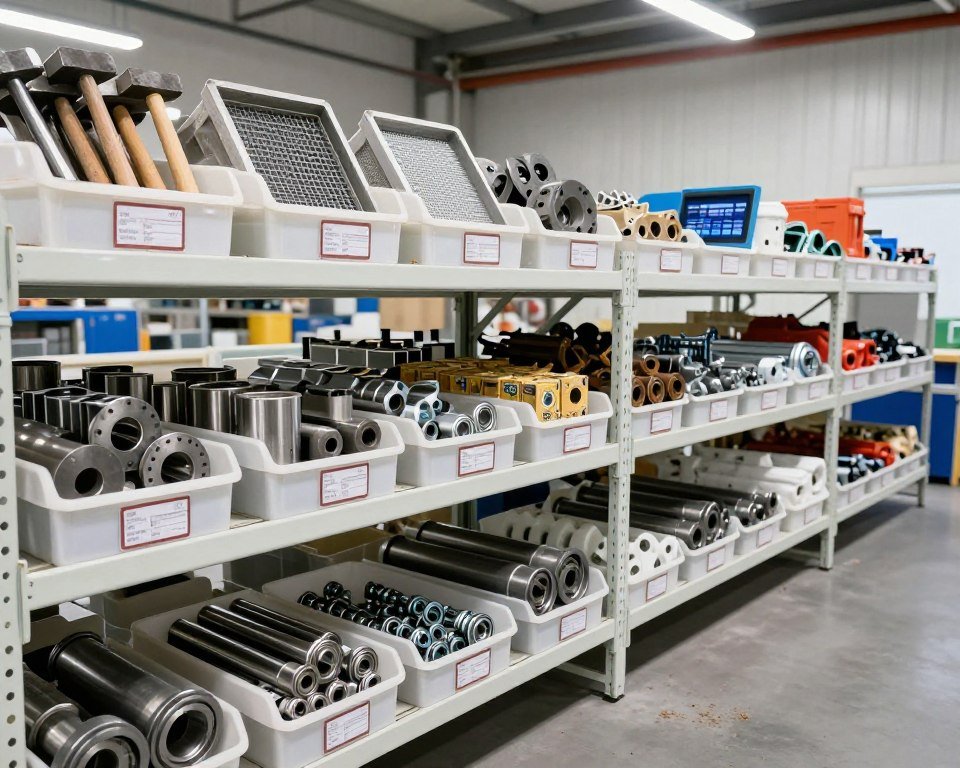
Critical spare parts recommendations accompany every system delivery. These recommended inventory items balance investment cost against production risk, typically representing 3-5% of equipment value. Maintaining this inventory ensures routine maintenance proceeds on schedule without waiting for parts shipments during component failures.
We ship spare parts globally via express courier services. UK deliveries typically arrive within 2-4 business days. Emergency situations can be accommodated with next-day service when needed. Our parts department provides technical support ensuring you order correct components, avoiding the delays and frustration of incorrect part shipments.
Maintenance Training and Support Resources
Preventive maintenance dramatically extends equipment life and prevents unexpected failures. MAIKONG provides detailed maintenance schedules specifying inspection points, lubrication requirements, and adjustment procedures. Following these schedules typically results in 15-25 year equipment service life compared to 8-12 years with poor maintenance practices.
We offer advanced maintenance training for farm maintenance staff or commercial plant maintenance crews. This training covers component overhaul procedures, proper alignment techniques, and preventive maintenance optimization. Organizations with in-house maintenance capabilities achieve lower operating costs and faster problem resolution compared to those dependent on external service providers.
Successful Cattle Feed Production Line Installations Across Europe and Globally
MAIKONG cattle feed systems operate successfully across diverse regions, climates, and operational models. These installations demonstrate our equipment’s adaptability and reliability under varying conditions. Real-world performance proves design quality better than specifications alone.
European Union Dairy Operation Case Studies
A 450-head dairy operation in Cheshire, UK, installed a MAIKONG 3-tonne per hour poultry feed production line adapted for dairy cattle formulations in 2021. The system processes grass silage, barley, wheat middlings, and rapeseed meal into 8mm pellets meeting precise nutritional requirements for high-producing Holstein cows.
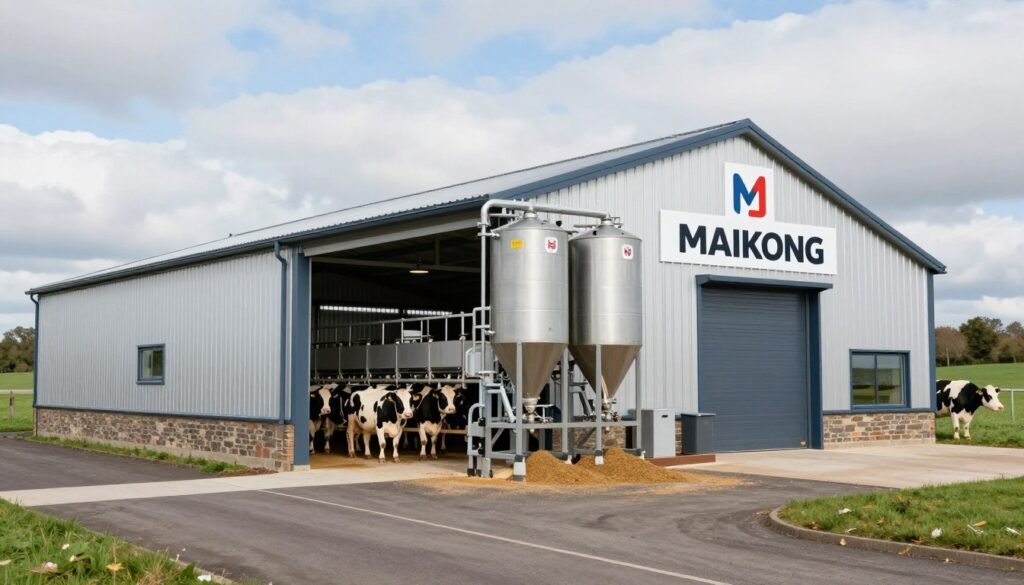
Production operates five days weekly, manufacturing 60 tonnes of complete feed supporting the dairy operation plus sales to three neighboring farms. The operation reports 18% reduction in feed costs compared to purchased complete feeds, with payback period of approximately 4.2 years on the £165,000 investment including installation and commissioning.
A German beef finishing operation near Munich installed a 5-tonne per hour system processing 85% maize silage with concentrate supplements. This high-moisture formulation required specialized conditioning equipment and die configurations. The system produces firm pellets withstanding automated feeding systems despite challenging raw material characteristics. Two years of operation demonstrate consistent performance with minimal maintenance requirements.
Eastern European Large-Scale Feed Mill Projects
A commercial feed mill in Poland produces complete feeds for dairy and beef operations throughout the region. Their MAIKONG 12-tonne per hour system operates two shifts daily, manufacturing separate formulations for dairy cows, beef finishers, and calf starters. The installation includes automated batching for 20 ingredients, computerized recipe management, and bulk loadout facilities.
This facility represents MAIKONG’s capability in sophisticated commercial applications. The control system tracks production batches, generates quality documentation, and provides inventory management interfacing with the mill’s enterprise software. Production efficiency averages 83% over 18 months of operation, exceeding original projections of 78-80% efficiency.
| Installation Location | System Capacity | Primary Application | Special Features | Operating Since |
| Cheshire, United Kingdom | 3 T/H | Dairy cow complete feed | High-moisture silage processing | 2021 |
| Bavaria, Germany | 5 T/H | Beef finishing feed | Maize silage specialization | 2020 |
| Greater Poland, Poland | 12 T/H | Commercial multi-formula production | Full automation, ERP integration | 2022 |
| Noord-Brabant, Netherlands | 8 T/H | Dairy cooperative feed mill | Organic certification compliance | 2019 |
| Auvergne, France | 4 T/H | Grass-fed beef operation | High-fiber processing capability | 2021 |
Asian and Middle Eastern Installations
Climate extremes in Middle Eastern regions challenge equipment designed for temperate conditions. A cattle feeding operation in the United Arab Emirates installed a MAIKONG system operating in ambient temperatures exceeding 45°C. Enhanced cooling systems and climate-appropriate motor specifications ensure reliable performance despite harsh conditions.
Dust control requirements in arid climates exceed European standards. This installation incorporates comprehensive dust collection throughout material handling and processing areas, maintaining safe working conditions and preventing product contamination despite challenging environmental conditions.
African Market Development Projects
MAIKONG systems support agricultural development in several African nations. A Tanzania project provides cattle feed production capability for a large ranch operation and serves as a demonstration facility for smaller producers. The system emphasizes locally available ingredients including cotton seed cake, maize bran, and sunflower meal.
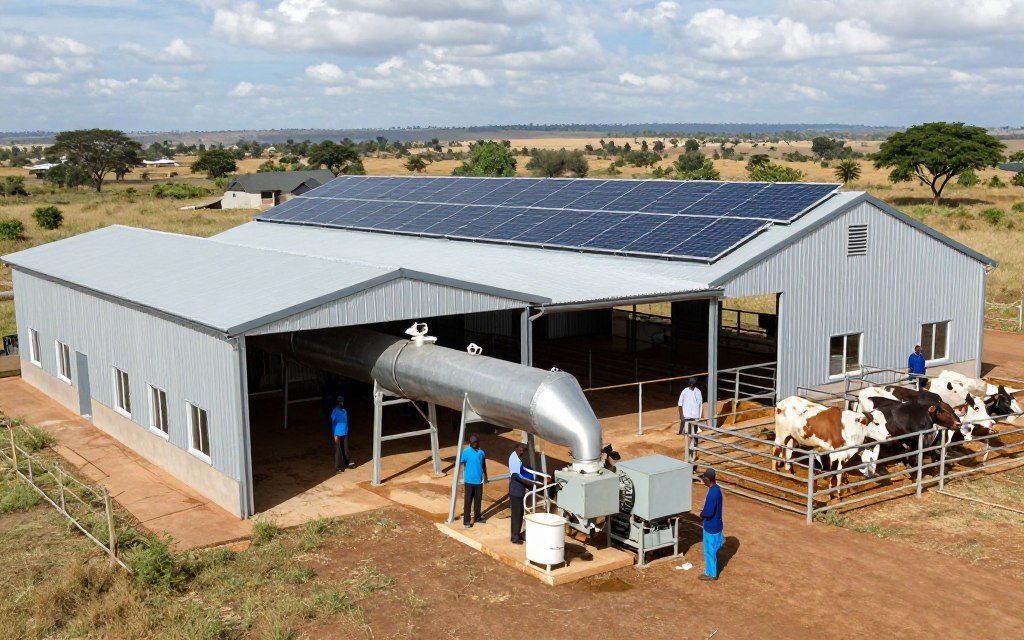
Technical training extends beyond operation into basic maintenance and troubleshooting, building local capacity for sustainable operation. Spare parts inventory and simple component fabrication capabilities developed during installation help ensure long-term operational success despite limited access to specialized technical services.
American Market Installations
Several North and South American installations demonstrate MAIKONG’s global reach. A Brazilian beef operation processes 15 tonnes hourly using locally grown maize, soya meal, and sugar cane by-products. The system’s flexibility accommodates seasonal ingredient availability variations common in agricultural markets.
A Canadian dairy cooperative operates a 7-tonne per hour system producing feed for member farms. The installation includes cold-weather specifications ensuring reliable operation in -30°C winter conditions. Insulated buildings, heat tracing on critical piping, and cold-rated motors prevent the freezing and starting problems that plague inadequately specified equipment in harsh climates.
View Detailed Case Studies and Reference Site Information
Access complete installation case studies including equipment configurations, production data, customer testimonials, and high-resolution facility photographs. Reference sites available for technical visits by serious buyers evaluating MAIKONG systems.
Investment Considerations, Pricing Factors, and Return on Investment Analysis
Cattle feed production line investment represents significant capital commitment. Understanding cost drivers, comparing alternatives objectively, and accurately projecting returns helps ensure successful projects that deliver expected financial benefits rather than becoming expensive disappointments.
Equipment Cost Factors and Pricing Variables
Cattle feed production line pricing varies dramatically based on capacity, automation level, included features, and supplier positioning. Small farm systems (200kg-1T/H) typically range £35,000-£85,000. Medium capacity systems (3-8T/H) generally cost £150,000-£400,000. Large industrial plants (15T/H+) start around £500,000 and can exceed £2,000,000 for sophisticated high-capacity installations.
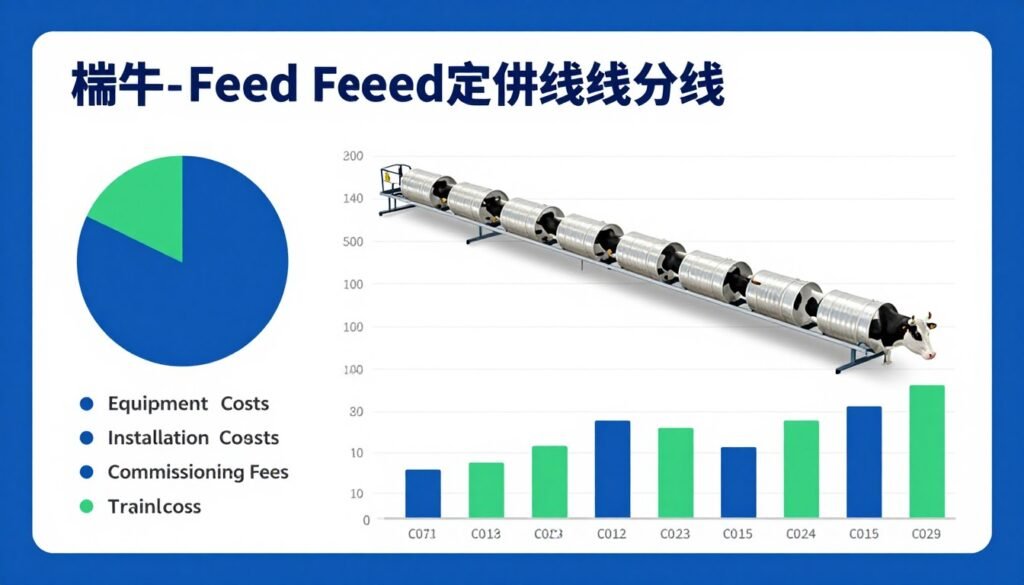
Several factors influence pricing within capacity ranges:
- Automation level: Manual systems cost 30-40% less than fully automated equivalents but require more labor
- Equipment quality: Premium components (alloy dies, precision gearboxes, premium motors) add 15-25% to base cost but extend lifespan and reduce operating costs
- Control sophistication: Basic relay controls vs. PLC automation vs. networked SCADA systems represent cost differences of £5,000-£50,000+
- Material handling inclusion: Simple manual bag filling vs. automated bagging vs. complete bulk handling systems dramatically affect total investment
- Customization extent: Standard configurations vs. heavily customized designs for unique requirements or site constraints
- Installation scope: Equipment-only supply vs. turnkey installation including civil works, electrical infrastructure, and commissioning
Operating Cost Components
Equipment acquisition represents only the initial investment. Operating costs determine long-term profitability. Major operating cost categories include:
Electrical Energy
Electricity typically represents the largest single operating cost for cattle feed production. Costs range from £3.50-£7.50 per tonne produced depending on equipment efficiency, formulation difficulty, and local electricity rates. High-efficiency motors and optimized equipment sizing reduce energy consumption substantially.
Labor Requirements
Operator labor varies by production scale and automation level. Small manual systems require 1-2 operators producing £12-£18 per tonne in labor costs. Highly automated commercial plants achieve £2-£4 per tonne with economies of scale and reduced manual handling.
Maintenance and Wear Parts
Routine maintenance including lubrication, minor adjustments, and cleaning requires 2-4 hours per operating week. Major wearing components (hammer mill screens, pellet dies and rollers) typically cost £1.50-£3.50 per tonne produced including replacement parts and labor.
Return on Investment Calculation Framework
ROI analysis compares your cattle feed production line investment against alternative options, typically purchasing complete commercial feed. Calculate annual savings by subtracting your production costs (ingredients, energy, labor, maintenance) from the cost of equivalent purchased feed.
Example calculation for a 300-head dairy operation:
| Cost Category | Purchased Feed | Own Production | Annual Savings |
| Feed cost per tonne | £245/tonne | £165/tonne ingredients £18/tonne processing cost |
£62/tonne |
| Annual consumption | 2,190 tonnes | 2,190 tonnes | – |
| Total annual feed cost | £536,550 | £400,770 | £135,780 |
| Equipment investment | – | £185,000 | – |
| Simple payback period | – | – | 1.36 years |
This example demonstrates attractive ROI, though actual results vary by operation size, local ingredient costs, and purchased feed prices. Smaller operations typically show 3-6 year payback periods. Large commercial mills often achieve payback under 3 years due to economies of scale.
Additional Financial Considerations
Beyond direct cost savings, cattle feed production provides strategic benefits difficult to quantify financially:
- Nutritional control: Precise formulation management optimizes animal performance beyond what’s achievable with commercial feeds meeting only general requirements
- Supply security: Independence from external suppliers prevents production interruptions during shortages or logistical disruptions
- Flexibility: Rapid formula adjustments respond to ingredient availability, price fluctuations, or changing animal requirements
- Quality assurance: Direct control over ingredient quality and processing eliminates concerns about adultered or contaminated commercial feeds
- Marketing advantage: Own-produced feed can be marketed to other farms, creating additional revenue streams
For commercial feed mills, cattle feed production capability expands market reach and customer service. Many livestock producers prefer suppliers offering both ruminant and monogastric feeds, providing one-stop shopping convenience worth premium pricing.
Financing Options and Capital Planning
Various financing approaches help manage cattle feed production line investments:
Agricultural equipment loans from banks or agricultural credit unions typically offer 5-10 year terms with interest rates 1-3 percentage points above base rates. These loans are secured against the equipment itself.
Lease-purchase arrangements spread payments over equipment lifetime, matching costs with revenue generation. Monthly payments typically run £1,500-£8,000 depending on equipment value and term length.
Government agricultural development programs in some UK regions and EU member states provide grants or subsidized loans for feed production infrastructure. MAIKONG can provide documentation supporting grant applications when relevant programs exist.
Cooperative financing suits groups of farms jointly investing in shared feed production facilities. This approach reduces individual investment while maintaining supply control and cost savings.
UK Dealer and Distributor Partnership Opportunities with MAIKONG
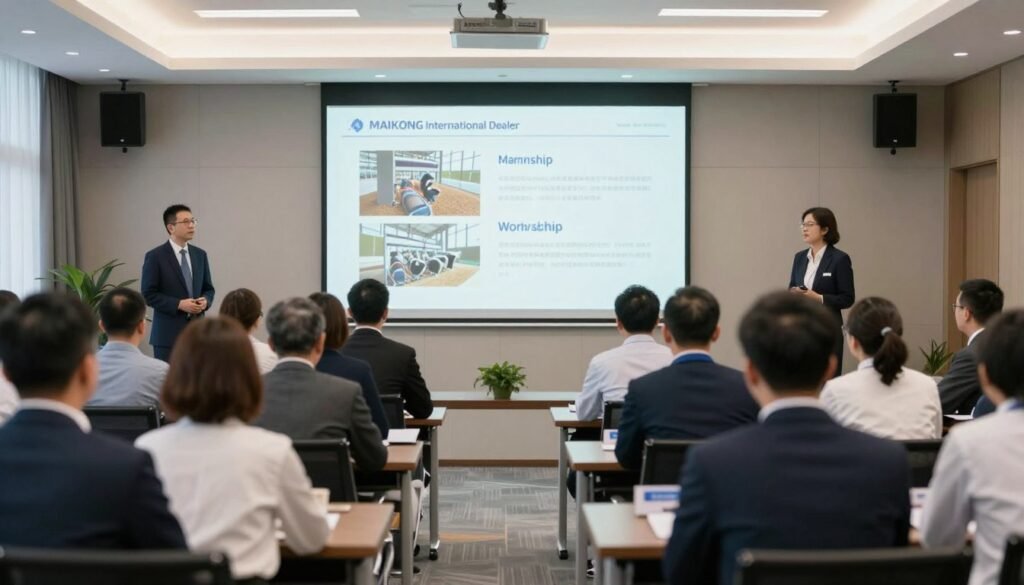
MAIKONG actively seeks qualified dealers and distributors throughout the United Kingdom and European markets. We offer comprehensive support programs enabling partners to successfully market, sell, install, and service our complete range of feed production line equipment including cattle, poultry, pig, fish, and pet feed systems.
Advantages of MAIKONG Dealer Partnership
Partnering with MAIKONG provides established manufacturers capabilities without the capital investment and time required to develop equivalent products independently. Our 22 years of manufacturing experience, proven designs, and global installation base provide the foundation for your local market success.
Business Development Support
- Exclusive or preferred territory arrangements protecting your market investment
- Complete product training on all equipment lines and applications
- Marketing materials including brochures, technical documents, and digital assets
- Lead generation support through digital marketing and trade show participation
- Competitive dealer pricing enabling attractive margins
- Demonstration equipment financing programs
- Cooperative advertising and marketing fund participation
Technical and Operational Support
- Application engineering assistance for complex projects
- Installation supervision and commissioning support
- Operator and maintenance training programs
- Spare parts inventory consignment programs
- Technical hotline access to engineering staff
- Warranty administration and claims processing support
- Ongoing product updates and improvement programs
Ideal Dealer Partner Profile
Successful MAIKONG dealers typically possess several common characteristics:
Established market presence in agricultural equipment, livestock production, or feed industry sectors provides existing customer relationships and market credibility accelerating new product adoption.
Technical capability including engineers or experienced technicians enables proper installation and service delivery. Partners needn’t be manufacturing experts, but technical competence ensures customer satisfaction.
Service commitment to long-term customer relationships rather than transactional sales approaches aligns with capital equipment business models where customer success determines future opportunities.
Financial stability sufficient for inventory investment, demonstration equipment, and credit extension to qualified customers supports business growth without constant cash flow constraints.
Growth ambition to actively develop markets rather than passively taking orders ensures partnership benefits both parties through expanding sales volumes.
Market Opportunities in UK and European Feed Production
Several trends create expanding opportunities for feed production equipment dealers:
Scale consolidation in cattle production concentrates animals on fewer, larger operations requiring sophisticated feed production systems previously economically viable only for commercial mills.
Biosecurity concerns following various disease outbreaks encourage producers to manufacture feed on-site, eliminating external contamination risks from commercial feed deliveries visiting multiple farms.
Sustainability initiatives and organic production growth require specialized feeds not economically viable in commercial production, driving on-farm manufacturing adoption.
Brexit implications for UK agriculture potentially include changes to agricultural support programs, input costs, and market access that may encourage producers to control more production inputs including feed.
These factors combine to create growing demand for feed production equipment across small farm through commercial mill segments, providing opportunities for well-positioned dealers with quality products and support capabilities.
Apply to Become an Authorized MAIKONG Dealer in Your Territory
Limited exclusive territories remain available in the UK and select European regions. MAIKONG seeks ambitious, technically capable partners to represent our comprehensive feed production equipment line. We provide complete business development, technical training, and ongoing support enabling your success in this growing market sector.
Include your company background, market experience, technical capabilities, and territory of interest in your application. Our partnership development team will respond within 48-72 hours to discuss opportunities.
Common Buyer Concerns and Questions About Cattle Feed Production Lines
Evaluating cattle feed pellet plant suppliers and making purchase decisions raises legitimate questions and concerns. Addressing these issues directly helps buyers make confident, well-informed choices.
Material Blockage and Feed Flow Problems
Concern: “Will high-fiber cattle feed ingredients block hoppers, mixers, or pellet mills causing production stoppages?”
Reality: Properly designed systems accommodate fibrous materials without chronic blockage issues. Critical design elements include:
- Hopper angles exceeding material angle of repose (typically 60-70 degrees for cattle feed ingredients)
- Adequate agitation or vibration systems preventing bridging in storage
- Sized discharge openings at least 6-8 times the largest material particle dimension
- Air assistance or mechanical discharge aids for particularly difficult materials
MAIKONG systems incorporate decades of experience with challenging materials. We specify appropriate hopper designs, discharge mechanisms, and material handling systems preventing common flow problems. Proper system design eliminates over 95% of potential blockage issues, with remaining rare occurrences quickly resolved through designed access points.
Pellet Durability and Fines Generation Concerns
Concern: “Will pellets break during handling and create excessive dust, losing nutritional value and creating waste?”
Reality: Pellet quality depends primarily on die design, conditioning adequacy, and proper cooling. Well-made cattle feed pellets routinely achieve pellet durability index (PDI) values exceeding 92%, meaning less than 8% fines after standardized tumbling tests simulating handling stresses.
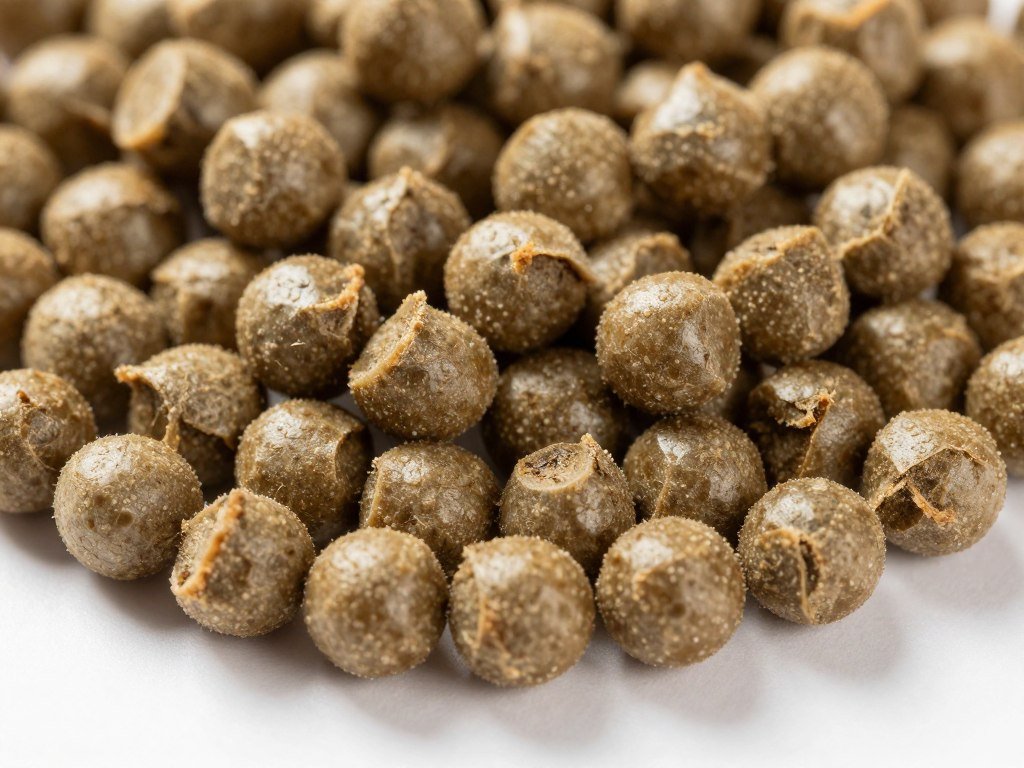
Key factors MAIKONG addresses to ensure durable pellets:
- Die compression ratios (hole length to diameter) optimized for specific formulations, typically 1:11 to 1:13 for cattle feeds
- Adequate conditioning time (minimum 30 seconds) and steam application achieving 80-85°C material temperature before pelleting
- Proper cooling reducing pellet temperature to within 5°C of ambient and moisture content to 12-13%
- Quality die materials and precise hole drilling maintaining sharp, smooth die passages throughout service life
Customers report typical fines levels of 3-6% with MAIKONG systems, significantly below the 10-15% common with poorly designed or improperly operated equipment. Lower fines mean less reprocessing, reduced labor, and better product consistency.
Spare Parts Availability and Support Responsiveness
Concern: “What happens if equipment fails and I need replacement parts urgently? Will I wait weeks for components while cattle go unfed?”
Reality: This represents the most significant concern differentiating reputable suppliers from problematic vendors. MAIKONG maintains comprehensive spare parts inventory both at our manufacturing facility and through regional distribution points including UK locations for common wearing components.
We stock all routine maintenance parts (hammer mill hammers and screens, pellet mill dies and rollers, drive belts, common bearings) with immediate availability. Less common components typically ship within 2-4 business days globally. Emergency situations receive priority handling with express courier services delivering critical parts next-day when needed within UK and Europe.
Our UK technical support contact information ensures rapid response to problems. Phone, WhatsApp, and email support provide multiple contact options, and we respond to urgent issues within hours rather than days. Remote diagnostic capability built into control systems allows engineers to assess problems and guide troubleshooting without site visits in many cases, dramatically reducing downtime.
Installation Complexity and Timeline Concerns
Concern: “How long will installation take, and what disruption will it cause to our existing operations?”
Reality: Installation duration varies by system complexity and site preparation adequacy. Small farm systems typically install in 1-2 weeks assuming building structure and utilities are ready. Medium commercial systems require 3-5 weeks. Large industrial plants may need 2-3 months including civil works and systematic commissioning.
MAIKONG provides detailed pre-installation requirements including foundation drawings, electrical specifications, and utility connections. Completing this preparation work before equipment arrival dramatically reduces installation time. We coordinate delivery scheduling with your construction progress, preventing costly equipment storage or rushed installations compromising quality.
Our installation supervision ensures local contractors properly assemble equipment according to specifications. This professional oversight prevents the installation errors that cause ongoing problems, excessive wear, and warranty complications. We don’t simply ship equipment and wish you luck; we ensure successful installation and commissioning.
Operator Training and Skill Requirements
Concern: “Our staff aren’t engineers. Can regular farm workers successfully operate sophisticated feed production equipment?”
Reality: Modern automated equipment significantly simplifies operation compared to older manual systems. Operators needn’t understand complex engineering principles to successfully run well-designed production lines. MAIKONG training programs teach practical operation, routine maintenance, and basic troubleshooting to people with basic mechanical aptitude and farm experience.
Our training occurs at your facility using your equipment and ingredients, providing immediately applicable skills rather than theoretical knowledge. We train multiple operators ensuring adequate coverage and preventing single-person dependencies. Written procedures in clear language support ongoing operations after formal training concludes.
Most operations achieve confident independent operation within 2-4 weeks following training. Ongoing technical support remains available for unusual situations or questions, preventing the isolation feeling some buyers fear with complex equipment.
Long-Term Operating Cost Uncertainties
Concern: “How do I know operating costs won’t spiral unexpectedly, eliminating supposed savings from own-production?”
Reality: Operating costs for mature, properly maintained equipment remain quite stable. Major cost components include:
- Electricity: Stable per-tonne costs once equipment reaches steady operation, varying only with utility rate changes
- Wearing parts: Predictable replacement schedules based on operating hours, allowing accurate budgeting
- Labor: Fixed cost per operating hour or shift
- Maintenance: Routine maintenance costs are quite consistent; major overhauls occur on predictable schedules
MAIKONG provides customers with detailed operating cost projections based on similar installations. These projections typically prove accurate within ±10% over the first 2-3 years of operation. Customers report higher-than-expected costs almost always trace to inadequate preventive maintenance rather than equipment design issues.
We recommend maintaining detailed production records tracking energy consumption, parts usage, and maintenance hours. This data identifies developing problems early and supports continuous improvement efforts optimizing efficiency over time.
How long does a cattle feed production line typically last?
With proper maintenance, MAIKONG cattle feed production lines operate reliably for 15-25 years. Major components like pellet mill main gearboxes, hammer mill frames, and mixers commonly exceed 20 years service life. Wearing parts require periodic replacement (dies every 600-1000 hours, hammer mill screens every 400-600 hours, hammers every 800-1200 hours) but these replacements are routine maintenance rather than equipment failure.
The key to long equipment life is following preventive maintenance schedules including proper lubrication, timely wearing part replacement before excessive damage occurs, and addressing minor issues before they escalate to major failures. Customers who neglect maintenance often experience problems within 5-8 years, while those following recommended practices routinely exceed 20 years successful operation.
Can a single production line make different feed formulations?
Yes, production lines easily accommodate multiple formulations. Computerized batching systems store numerous recipes accessible through simple selection menus. Operators can switch between dairy, beef, calf, or dry cow formulations in minutes by selecting the desired formula. The equipment processes different recipes without modification.
Formula changeovers require brief equipment flushing to prevent contamination between batches. Most operations run 2-4 batches of a single formula before changing to minimize changeover frequency. Some facilities dedicate specific production days to each formula type, maximizing efficiency while maintaining flexibility. MAIKONG systems routinely handle 5-15 different formulations depending on operation requirements.
What happens if electricity supply fails during production?
Brief power interruptions cause no equipment damage. Modern control systems safely shut down equipment and retain production data. Upon power restoration, operators safely restart following normal procedures. Material in-process may need disposal or reprocessing depending on where power failed in the cycle.
For operations requiring uninterrupted production, MAIKONG can specify generator backup systems providing emergency power within 10-30 seconds of utility failure. These systems typically power essential equipment allowing safe shutdown or continued operation during extended outages. Generator sizing depends on total equipment power requirements and determines whether full production continues or only critical systems operate during outages.
How much space does a cattle feed production line require?
Space requirements vary dramatically by capacity and layout orientation. Small 200kg-1T/H systems fit in 80-150 square metres. Medium 3-8T/H plants typically need 400-800 square metres. Large industrial facilities require 1,500+ square metres plus substantial raw material and finished product storage.
Vertical layouts using multi-storey construction minimize floor space at the cost of taller buildings. Horizontal single-level layouts require more floor area but provide easier access for maintenance and material handling. MAIKONG engineers optimize layouts for your specific site constraints, whether fitting equipment into existing buildings or designing new construction. We provide complete dimensioned layout drawings showing equipment placement, clearances, access requirements, and material flow paths.
What certifications and regulatory compliance do MAIKONG systems meet?
MAIKONG cattle feed production equipment meets relevant international standards including CE marking for European Economic Area sales. Electrical components comply with IEC standards. Safety systems follow ISO machinery safety directives. Quality management systems are ISO 9001 certified ensuring consistent manufacturing processes.
Specific market certifications can be arranged when required. UK installations comply with Health and Safety Executive (HSE) requirements for industrial machinery including appropriate guarding, emergency stops, lockout/tagout provisions, and operator safety features. We provide complete documentation supporting regulatory compliance and insurance requirements for equipment operation.
About MAIKONG: Your Trusted Partner in Feed Production Equipment Manufacturing
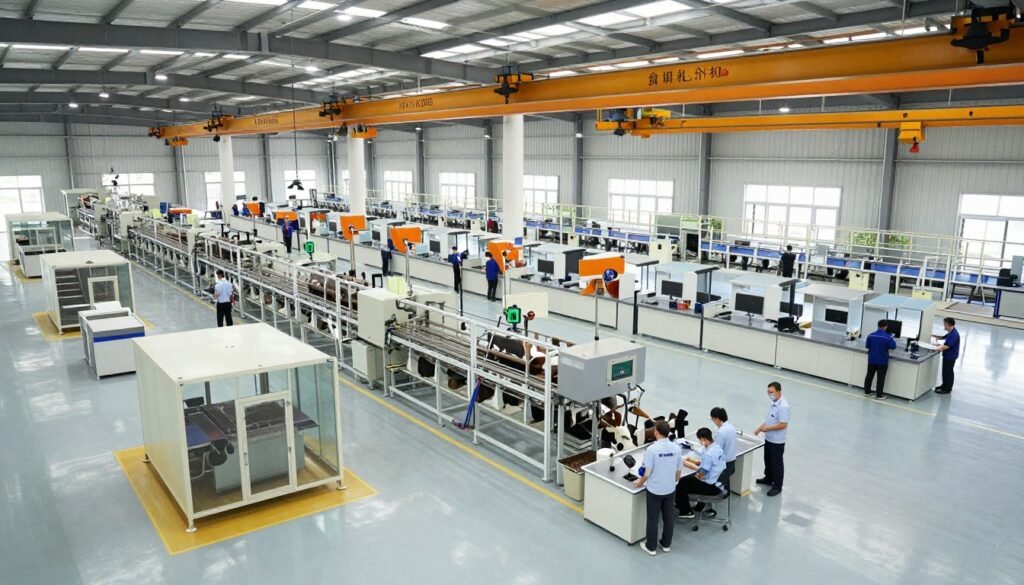
MAIKONG has manufactured feed production equipment for over 22 years, establishing ourselves as a trusted supplier to cattle operations, commercial feed mills, and agricultural equipment dealers worldwide. Our GD province, SZ city manufacturing facility employs experienced engineers and skilled technicians dedicated to producing reliable, efficient equipment meeting the demanding requirements of modern livestock production.
Manufacturing Philosophy and Quality Commitment
Our success stems from unwavering commitment to quality rather than lowest-cost production. We use premium materials including alloy steels for critical wearing components, precision-machined gearboxes providing smooth, quiet operation, and quality electrical components ensuring long service life. This quality focus results in equipment requiring less frequent maintenance while delivering consistent performance over decades of operation.
Every MAIKONG system undergoes rigorous testing before shipment. We run complete production trials using actual feed ingredients, verifying capacity, power consumption, pellet quality, and system integration before customer delivery. This testing identifies and corrects any issues under controlled factory conditions rather than discovering problems during customer commissioning, saving time and preventing frustration.
Comprehensive Product Range Beyond Cattle Feed
While this article focuses on cattle feed production, MAIKONG manufactures complete lines for diverse applications including:
Livestock Feed Lines
- Pig feed production lines – Complete starter, grower, and finisher systems
- Sheep and goat feed equipment – Specialized for small ruminants
- Horse feed production – Premium feed systems for equine nutrition
- Rabbit feed manufacturing – Complete pelleting systems for rabbit operations
Poultry Feed Systems
- Chicken feed production lines – Broiler and layer formulations
- Turkey and duck feed equipment – Large bird specialized systems
- Game bird feed production – Pheasant, quail, and specialty birds
- Crumble production systems – Young bird feed manufacturing
Aquaculture Feed Equipment
- Fish feed production lines – Floating and sinking pellets
- Shrimp feed equipment – Specialized aquaculture nutrition systems
- Aquatic feed manufacturing – Complete systems for fish farming operations
- Extruded feed production – High-temperature expansion processing for digestibility
This comprehensive capability means MAIKONG understands diverse feed production requirements and technologies. We apply this broad experience to each specific application, bringing proven solutions rather than adapting unfamiliar technologies to new situations.
Global Presence with Local Support
MAIKONG equipment operates successfully in over 130 countries across six continents. This global presence provides extensive experience with diverse climates, raw materials, operating conditions, and regulatory environments. Whether your operation faces extreme heat, bitter cold, high humidity, or arid conditions, we’ve engineered solutions for similar challenges elsewhere.
Despite our global reach, we emphasize local support. Our UK market development focuses on building strong dealer and distributor partnerships providing responsive local service, spare parts availability, and technical support in English with understanding of British business practices and agricultural sector requirements.
Innovation and Continuous Improvement
Agricultural equipment manufacturing isn’t static. Advancing technologies, changing nutritional understanding, evolving raw materials, and increasing efficiency demands drive continuous product improvement. MAIKONG invests heavily in research and development, incorporating customer feedback and the latest processing technologies into updated equipment designs.
Recent innovations include improved die materials extending service life 30%+ compared to previous specifications, enhanced conditioning systems providing superior pellet binding, more efficient electrical systems reducing energy consumption, and advanced control capabilities optimizing production while simplifying operation.
This commitment to improvement benefits customers through better equipment performance, lower operating costs, and enhanced competitiveness. We view equipment sales as the beginning of long-term relationships rather than isolated transactions, maintaining customer satisfaction through responsive support and continuous value delivery.
Contact MAIKONG for Cattle Feed Production Line Solutions

Whether you’re a cattle farm operator evaluating feed production options, a commercial mill buyer sourcing equipment for a new facility, or an agricultural equipment dealer seeking quality product lines to represent, MAIKONG welcomes your inquiry. Our experienced team provides responsive, professional assistance throughout equipment evaluation, purchase, installation, and long-term operation.
Multiple Contact Options for Your Convenience
We recognize buyers prefer different communication methods. MAIKONG provides multiple contact channels ensuring you reach us through your preferred approach:
Email Inquiries
Technical and sales inquiries:
Lucy@feedproductionline.uk
Email provides convenient communication for detailed technical questions, quotation requests, and sending specifications or site information. We typically respond within 24 hours during business days, often sooner for urgent inquiries.
For fastest response, include:
- Your required production capacity
- Primary raw materials you’ll process
- Your location and site constraints
- Approximate budget range
- Timeline for equipment requirement
Phone and WhatsApp
Direct phone contact:
WhatsApp messaging:
Message on WhatsApp
Phone communication enables rapid discussion of complex requirements, immediate clarification of questions, and personal interaction with experienced technical staff. WhatsApp provides convenient text-based communication plus ability to share photos of existing facilities, raw materials, or specific site conditions.
UK customers find WhatsApp particularly convenient for quick questions without international calling complications. We respond promptly to WhatsApp messages during business hours GMT.
Information to Provide for Accurate Quotations
Helping us understand your specific requirements enables more accurate quotations and appropriate equipment recommendations. When contacting MAIKONG about cattle feed production line equipment, please provide:
Essential Information for Quotations
- Production capacity requirement: tonnes per hour, operating hours per day, annual production volume
- Cattle type and formulations: dairy, beef, calves; number of different formulas you’ll produce
- Raw materials: primary ingredients (grains, forages, by-products, supplements); typical ingredient percentages
- Existing facilities: available building space, dimensions, height; existing utilities (electrical supply voltage and capacity, water, compressed air)
- Budget range: approximate investment budget helps us recommend appropriate equipment levels
- Timeline: when do you need equipment operational; any specific deadline driving your schedule
- Special requirements: organic certification needs, specific regulations, unusual site conditions, climate extremes
Don’t worry if you don’t have all this information immediately. We’ll guide you through determining requirements and help you develop complete specifications for your specific situation. Our goal is ensuring you receive equipment perfectly matched to your needs rather than forcing you into inappropriate “standard” configurations.
What Happens After You Contact Us
When you reach out to MAIKONG, expect a professional, consultative process:
Initial response (24-48 hours): We acknowledge your inquiry and ask clarifying questions about your specific requirements if needed. For straightforward inquiries with complete information, we may provide preliminary equipment recommendations and pricing at this stage.
Detailed proposal (2-5 days): Based on your requirements, we prepare comprehensive quotations including equipment specifications, layout drawings, installation requirements, and pricing. Proposals typically include multiple options at different capacity or automation levels, allowing you to evaluate trade-offs between features and investment.
Technical consultation (ongoing): We discuss proposals, answer questions, refine specifications based on your feedback, and provide whatever additional information helps you make confident decisions. This consultation process continues as long as needed—we never pressure customers toward premature decisions.
Order placement and engineering (after agreement): Once you decide to proceed, we formalize orders with detailed equipment specifications, payment terms, delivery schedules, and installation planning. Our engineering team begins detailed design work for any customization required for your specific application.
Manufacturing and quality control (6-16 weeks typical): Equipment manufacturing proceeds with rigorous quality control at multiple stages. We provide progress updates and can arrange factory inspections if desired for major projects.
Delivery and installation (varies by project scope): We coordinate shipping logistics, provide installation supervision, commission equipment, train your operators, and ensure successful startup before final project completion.
Ongoing support (throughout equipment lifetime): We maintain long-term relationships with customers, providing technical support, spare parts supply, and advice for production optimization throughout your equipment’s service life.
Take the First Step Toward Your Own Cattle Feed Production Capability
MAIKONG stands ready to help you develop the perfect cattle feed production solution for your operation. Whether you’re a farm operator seeking cost-effective feed production, a commercial mill buyer evaluating equipment suppliers, or a dealer exploring partnership opportunities, we welcome your inquiry and look forward to demonstrating why thousands of customers worldwide trust MAIKONG equipment.
Prefer to speak directly? Call our technical team:
Visit our complete website for additional product information, case studies, and technical resources: https://feedproductionline.uk/
UK Dealer and Distributor Applications
Agricultural equipment dealers and distributors seeking quality product lines to expand their offerings should contact MAIKONG about exclusive territory partnerships. We actively develop our UK and European dealer network, providing comprehensive support enabling partner success in this growing market segment.
Dealer inquiries receive special attention from our partnership development team. We evaluate market fit, provide detailed information about dealer programs, discuss territory availability, and work to establish mutually beneficial relationships supporting long-term growth for both parties.
When contacting us about dealer opportunities, please provide information about your company background, current product lines, market coverage, technical capabilities, and territory interests. This helps us assess fit and discuss appropriate partnership structures for your specific situation.
Explore MAIKONG Dealer Partnership Opportunities
Limited exclusive territories remain available. Contact our partnership development team to discuss how MAIKONG can strengthen your product portfolio and help you serve the growing cattle feed production equipment market.
Conclusion: Making the Right Cattle Feed Production Line Investment
Investing in a cattle feed production line represents a significant decision with long-term implications for your operation’s profitability, production efficiency, and competitive position. This comprehensive guide has examined critical factors including equipment components, technical specifications, customization options, installation requirements, operating costs, and supplier selection criteria.
Successful projects share common characteristics: clearly defined requirements, realistic capacity planning, appropriate equipment selection, quality manufacturing, professional installation, comprehensive training, and ongoing maintenance commitment. Shortcuts in any of these areas compromise results and reduce return on investment.
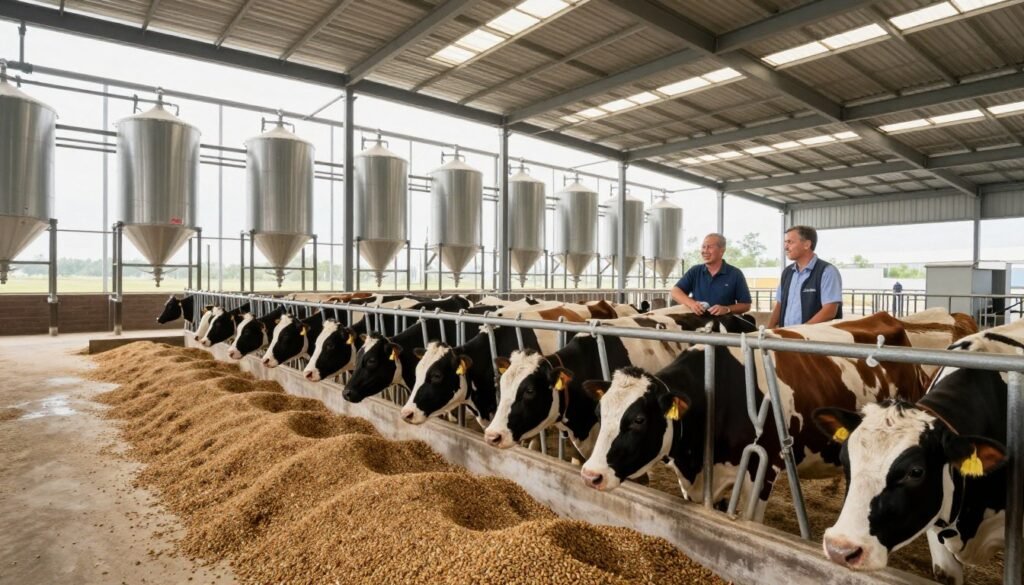
MAIKONG’s 22 years of manufacturing experience, comprehensive product range from 200kg to 200 tonnes hourly capacity, extensive customization capabilities, global installation experience, and commitment to long-term customer support position us as an ideal partner for your cattle feed production requirements. We don’t simply sell equipment—we develop lasting relationships supporting your operational success throughout equipment lifetime.
Whether you operate a small mixed farm seeking basic pellet production capability, manage a large dairy operation requiring sophisticated automated systems, or run a commercial feed mill serving regional markets, MAIKONG has proven solutions matching your specific needs. Our engineering team welcomes the opportunity to learn about your requirements and develop customized proposals demonstrating how proper equipment investment delivers compelling financial returns while providing the operational benefits of production control, quality assurance, and supply security.
The cattle feeding industry continues evolving with consolidation increasing average operation sizes, sustainability concerns driving production practice changes, and market dynamics affecting input costs and finished product values. Own-production capability provides strategic flexibility responding to these changes while maintaining profitability regardless of external market conditions. Now represents an opportune time to evaluate feed production investment, positioning your operation for sustained success in an increasingly competitive agricultural environment.
We encourage you to contact MAIKONG today to begin exploring how cattle feed production equipment can benefit your specific operation. Our responsive, professional team stands ready to answer questions, provide detailed technical information, develop customized proposals, and support you throughout equipment evaluation, purchase, installation, and long-term operation. We look forward to demonstrating why thousands of cattle operations worldwide trust MAIKONG equipment for their feed production requirements.
Begin Your Cattle Feed Production Journey with MAIKONG Today
Don’t let high commercial feed costs continue eroding your profit margins. Take control of feed quality, nutrition, and costs through your own production capability. MAIKONG makes it achievable with proven equipment, expert support, and competitive investment requirements delivering attractive returns.
MAIKONG – 22 Years Manufacturing Excellence in Feed Production Equipment
Serving cattle operations across the UK, Europe, and 130 countries worldwide