
Chicken Feed Production Line UK | MAIKONG Manufacturer
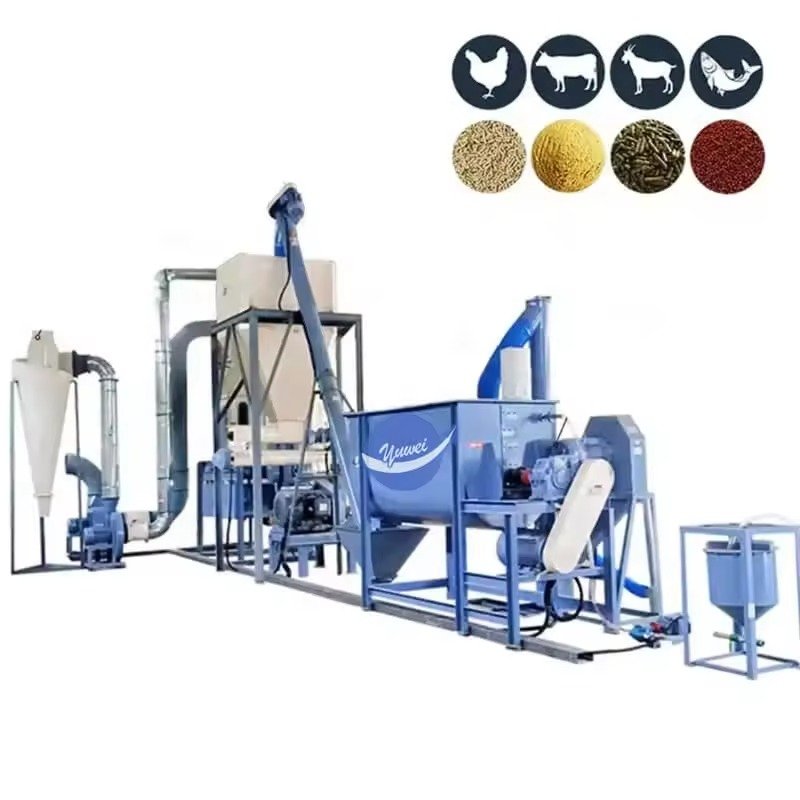
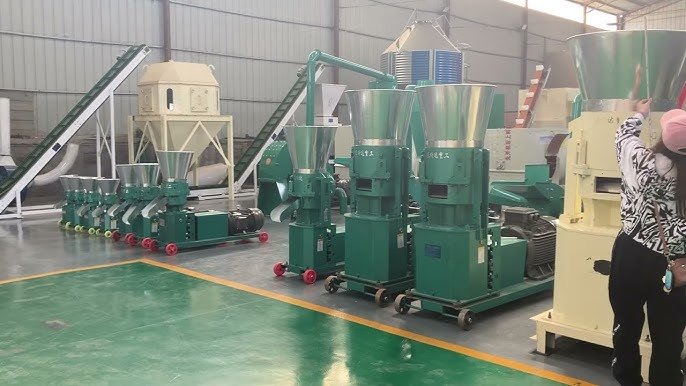
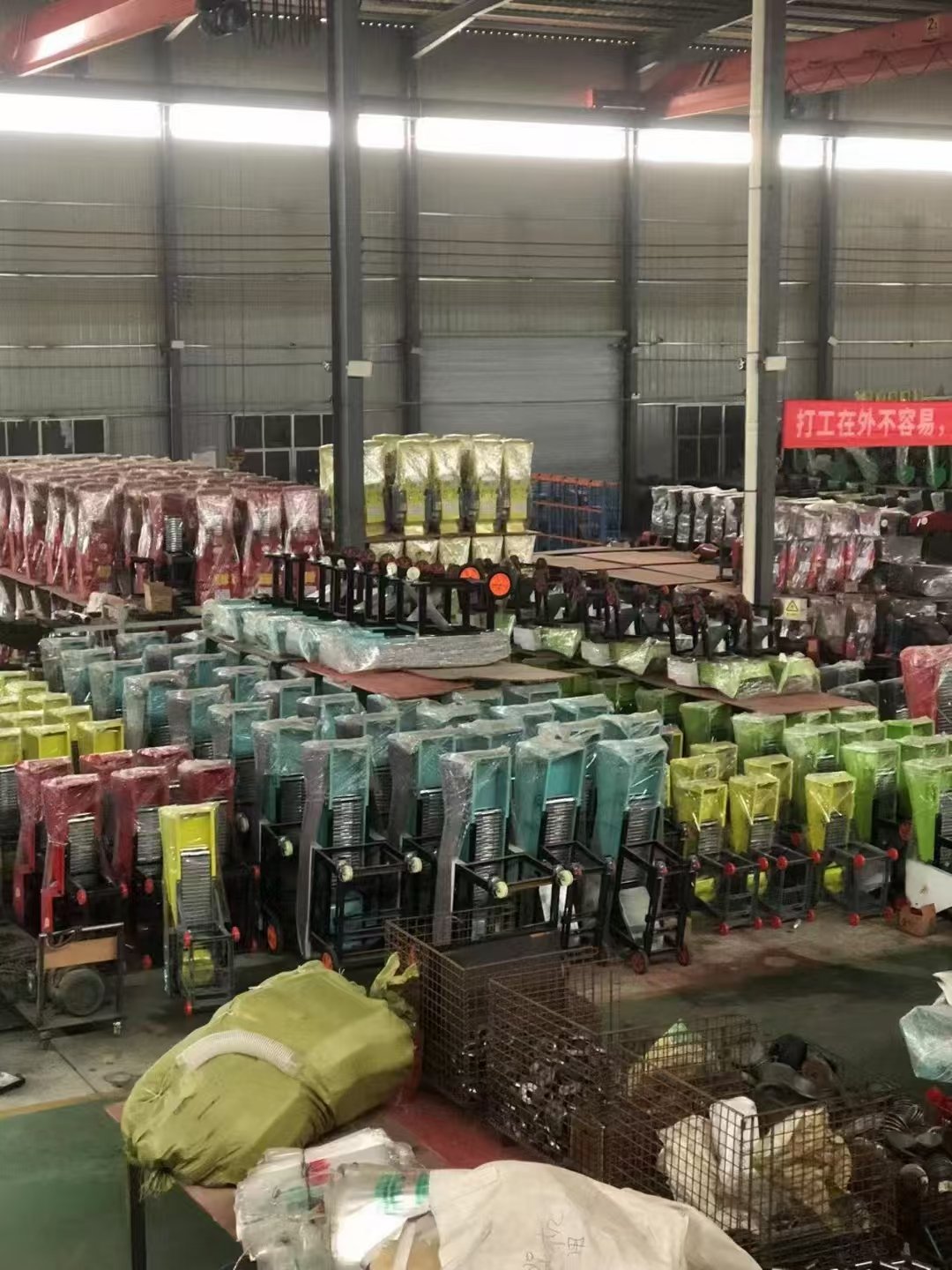
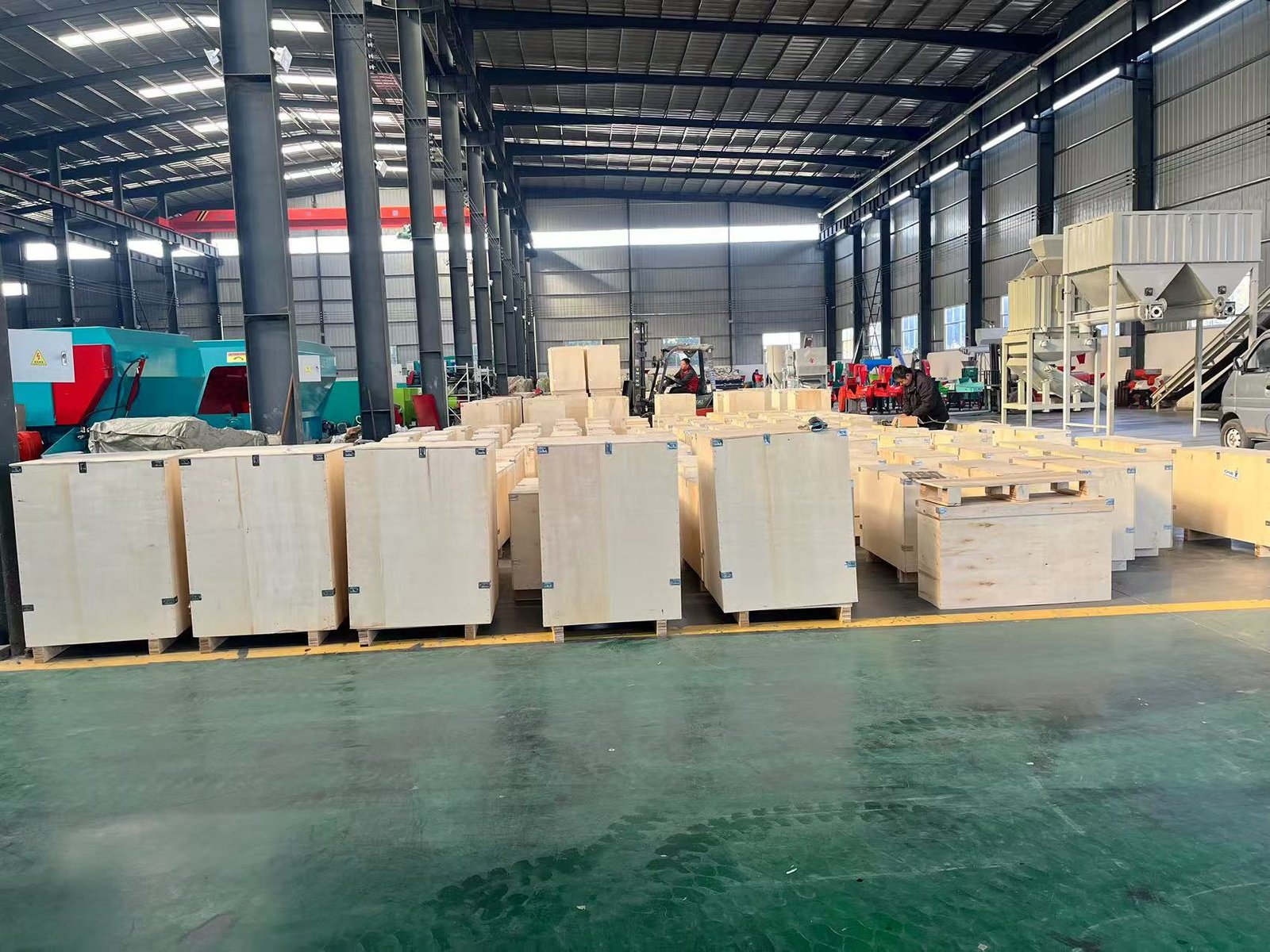
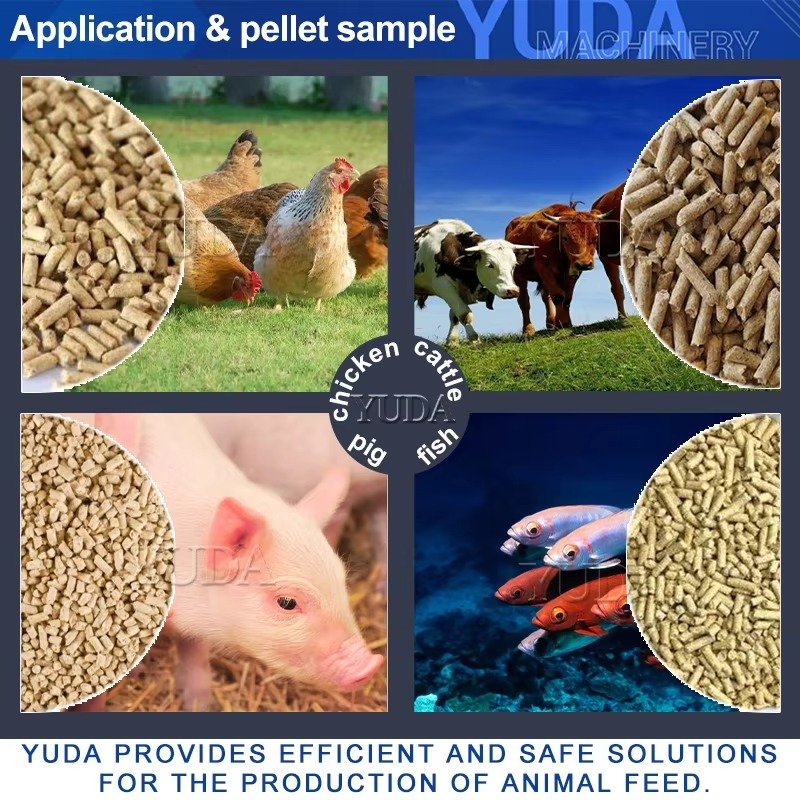
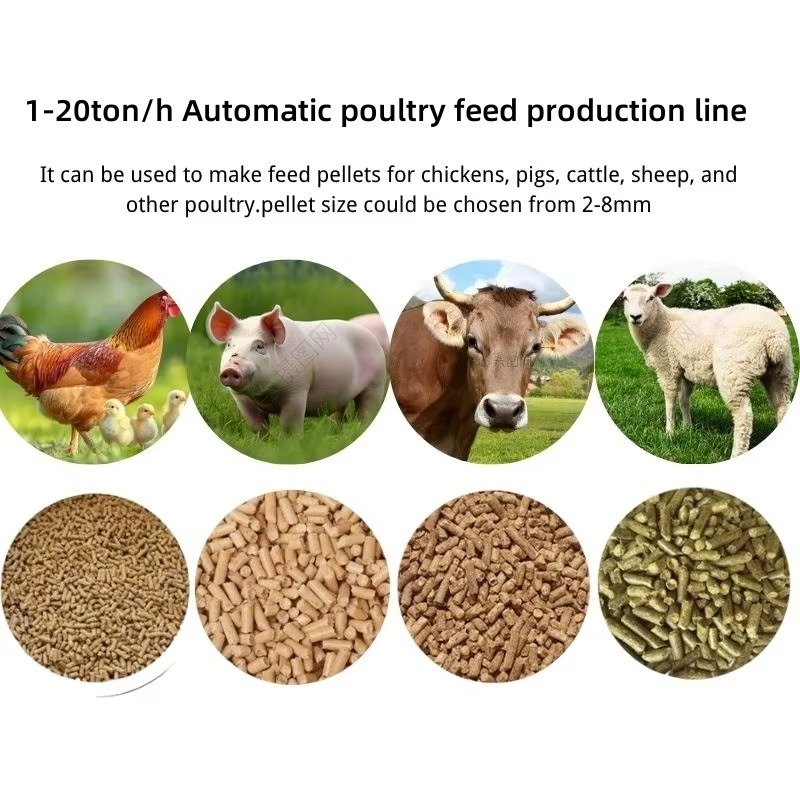 For UK farm operators, feed mill managers, and agricultural equipment dealers, selecting the right production line represents a substantial capital investment. The equipment must handle everything from whole grain crushing through final pellet packaging whilst maintaining strict quality standards and operating efficiently within your facility’s footprint.MAIKONG has manufactured poultry feed production line equipment for over 22 years from our facilities in GD province, SZ city. Our Model MK-L003 systems process capacities ranging from 200 kilograms to 200 tonnes per hour, with complete customisation for pellet diameter, raw material specifications, voltage requirements, and production efficiency targets. UK distributors and agents have successfully installed our lines across Europe, serving operations from small farm mills to large commercial feed plants.
Looking to Establish Your UK Feed Manufacturing Operation?
MAIKONG provides complete technical guidance for chicken feed mill setup. Our engineering team addresses your specific capacity requirements, raw material handling, facility layout, and equipment configuration. We support UK businesses with proven production line solutions backed by European case studies.
Chicken Feed Production Line Process
A complete feed production line consists of interconnected equipment modules that progressively transform bulk raw materials into finished feed products. Each processing stage serves a specific purpose in achieving the final pellet characteristics your chickens require.
Core Processing Stages
The chicken feed manufacturing process begins with raw material reception. Maize, soya bean meal, wheat, vitamins, minerals, and other ingredients arrive at your facility in various forms. Proper storage and handling at this initial stage prevents contamination and maintains ingredient quality before processing begins.
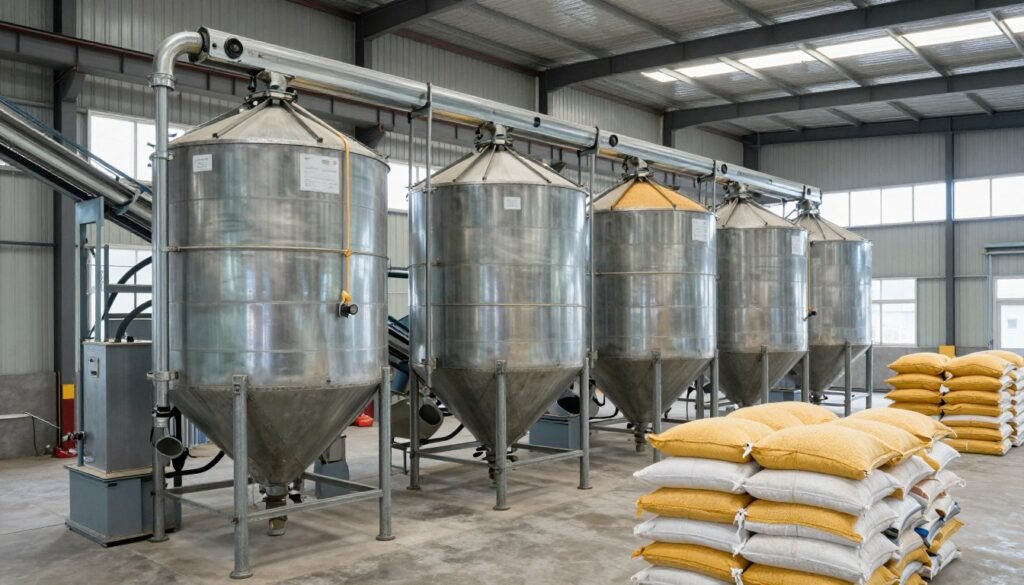
Cleaning removes unwanted foreign materials that could damage downstream equipment or contaminate finished feed. Magnetic separators extract ferrous metals whilst screening equipment removes stones, string, and oversize particles. This pre-cleaning protects your hammer mill and ensures only proper ingredients enter your formulation.
Crushing and Grinding Operations
The crushing section reduces particle size to optimise nutrient availability and prepare materials for mixing. Whole grains pass through hammer mills fitted with screens that control final particle dimensions. Different chicken types demand different particle specifications. Broiler starter feeds typically require finer grinding than layer maintenance rations.
Grinding Benefits for Poultry Digestion
- Increased surface area enhances enzyme access to nutrients
- Improved feed conversion ratios reduce cost per kilogram of gain
- Better ingredient mixing creates uniform pellet composition
- Reduced energy consumption in pelleting equipment
Common Grinding Challenges
- Excessive fines create dust control problems
- Over-grinding wastes energy without nutritional benefit
- Screen wear affects particle consistency over time
- Moisture content influences grinding efficiency
Material flow from grinding proceeds to batching stations where precise quantities of each ingredient combine according to your nutritional formulation. Modern batching systems employ load cells and computerised controls that weigh multiple ingredients simultaneously, dramatically reducing cycle times compared to sequential batching methods.
Mixing for Nutritional Uniformity
Thorough mixing distributes minor ingredients throughout the bulk materials. Vitamins, trace minerals, medications, and other micro-ingredients comprise small percentages of total formulation yet critically impact flock health and performance. Inadequate mixing creates variation between pellets, meaning some birds receive insufficient nutrition whilst others get excess amounts.
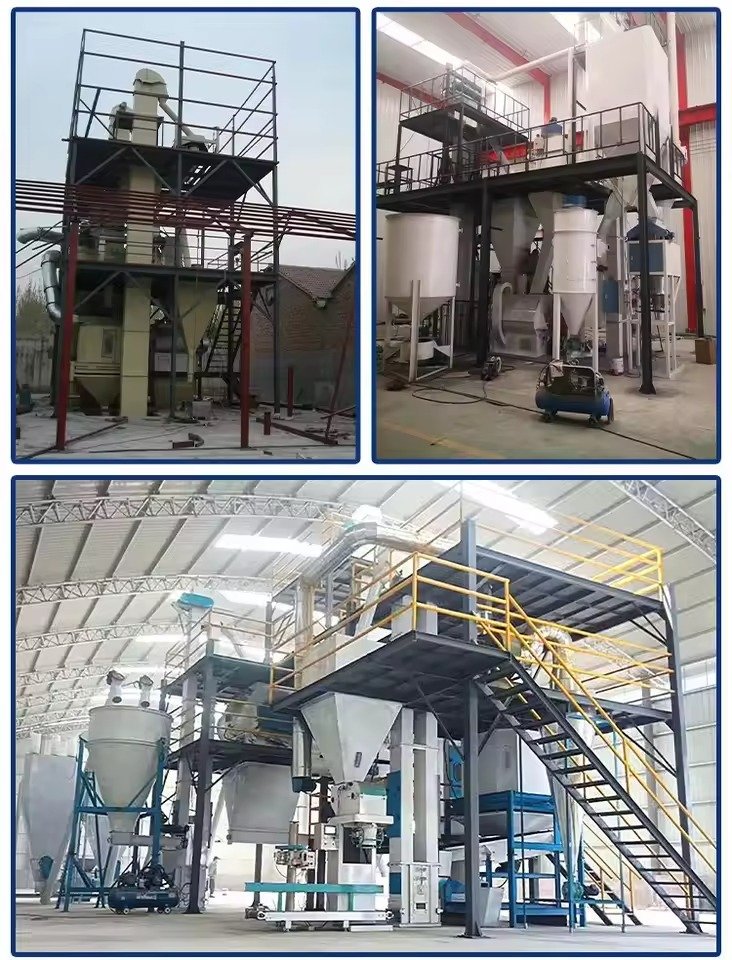
Paddle mixers and ribbon mixers represent the two dominant designs in poultry feed production line applications. Both styles achieve coefficient of variation below 5 percent when properly operated. Mixing duration, fill level, and ingredient addition sequence all influence final homogeneity. MAIKONG engineers specify mixer capacity and configuration based on your throughput requirements and ingredient characteristics.
Pelleting Fundamentals
Pellet formation converts the mixed mash into dense cylindrical shapes. The pelleting process applies heat, moisture, and mechanical pressure to bind particles together. Steam conditioning precedes the pellet mill, adding moisture and heat that gelatinise starches and improve pellet durability.
Inside the pellet mill, a rotating roller presses conditioned mash through die holes. Die diameter determines pellet diameter whilst die thickness affects pellet length. Chickens at different ages require different pellet sizes. Day-old chicks consume crumbles made from crushed pellets, whilst mature layers eat 3-4 millimetre diameter whole pellets.
Need Custom Pellet Specifications?
MAIKONG production lines accommodate pellet diameters from 2mm to 8mm with adjustable length control. Our MK-L003 system includes interchangeable dies for switching between product specifications. UK operations benefit from our technical support during die selection and pellet quality optimisation.
Cooling and Finishing
Fresh pellets exit the mill at temperatures exceeding 80 degrees Celsius with moisture content around 15-16 percent. Immediate cooling reduces temperature and moisture to safe storage levels. Counter-flow coolers pass ambient air through the pellet bed, extracting heat and moisture efficiently.
Proper cooling prevents mould growth during storage and maintains pellet integrity during handling. Inadequately cooled pellets clump together in storage bins and crumble during transport. The cooling stage also recovers waste heat that can be redirected to other facility processes, improving overall energy efficiency.
Screening follows cooling to separate acceptable pellets from fines and oversized pieces. Fines return to the pellet mill for reprocessing whilst quality pellets proceed to packaging or bulk storage. Final quality control checks pellet durability index, ensuring the product can withstand typical handling and transport without excessive breakage.
Essential Equipment in a Chicken Feed Production Line
Each piece of equipment in your feed pellet production line performs specific functions. Understanding component capabilities helps you specify the right configuration for your operation’s scale and product requirements.
Hammer Mills and Crushing Equipment
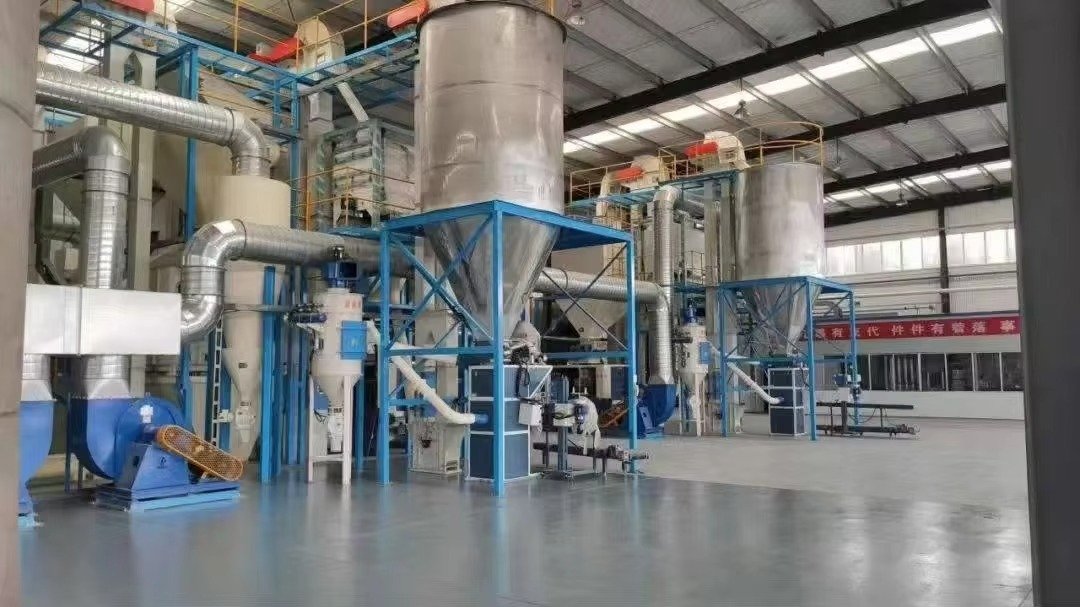
The hammer mill reduces raw materials to the particle size your formulation requires. MAIKONG hammer mills feature hardened steel hammers that impact materials at high rotational speeds. Replaceable screens control discharge particle size. Screen hole diameter typically ranges from 2 to 10 millimetres depending on finished feed specifications.
Mill capacity depends on screen size, material moisture content, and desired particle fineness. A 37-kilowatt hammer mill processes approximately 3-4 tonnes per hour when grinding maize through a 4-millimetre screen. The same mill’s throughput drops when grinding harder grains or using finer screens.
| Motor Power | Typical Capacity (Maize, 4mm Screen) | Suitable Production Scale | UK Voltage Options |
| 22 kW | 1.5-2 T/hour | Small farm mills | 415V, 3-phase |
| 37 kW | 3-4 T/hour | Medium operations | 415V, 3-phase |
| 55 kW | 5-6 T/hour | Commercial mills | 415V, 3-phase |
| 75 kW | 7-8 T/hour | Large commercial mills | 415V, 3-phase |
| 110 kW | 10-12 T/hour | Industrial operations | 415V, 3-phase |
Regular maintenance extends hammer mill service life. Worn hammers reduce grinding efficiency and increase power consumption. Screen replacement frequency depends on abrasiveness of materials processed. Most UK operations replace screens every 500-1000 operating hours whilst hammers last 2000-3000 hours under normal conditions.
Mixing Equipment Selection
Mixer choice affects product quality and production efficiency. Ribbon mixers employ helical ribbons on a horizontal shaft to lift and fold materials together. This design achieves excellent mixing in 3-5 minutes with minimal energy consumption. Paddle mixers use radial paddles on vertical or horizontal shafts, providing aggressive mixing action suitable for difficult-to-blend ingredients.
Mixer capacity should match your batching cycle to maintain continuous flow through the production line. A 1000-kilogram mixer fits operations producing 4-5 tonnes per hour when batch cycle time approximates 15-20 minutes including loading, mixing, and discharge. Undersized mixers create bottlenecks whilst oversized units waste energy mixing partially filled chambers.
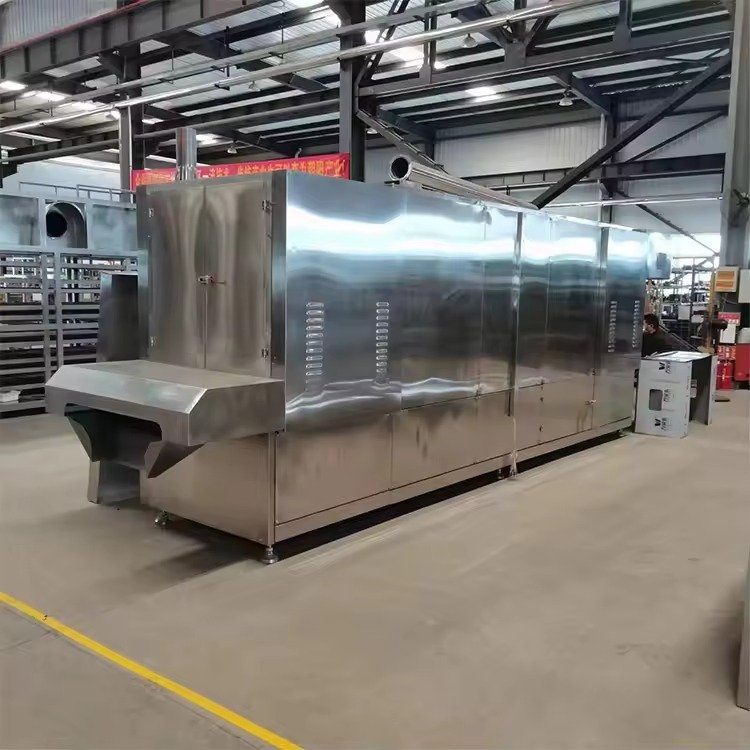
Pellet Mills for Different Capacities
The pellet mill represents the heart of any chicken feed production line. Ring die pellet mills dominate commercial applications due to their high capacity and durability. Die diameter ranges from 350mm for small mills to 600mm or larger for high-capacity installations.
MAIKONG Model MK-L003 pellet mills incorporate heavy-duty construction with hardened alloy rollers and precision-drilled dies. Variable-frequency drives provide soft starting and speed adjustment, optimising pellet quality across different formulations. Steam conditioning systems integrated with the mill ensure consistent moisture and temperature before pelleting.
Critical Pellet Mill Specifications
- Ring die diameter determines maximum capacity
- Die hole diameter sets pellet diameter
- Die thickness affects pellet length and density
- Roller-die gap influences production rate and power consumption
- Conditioning chamber retention time impacts pellet durability
- Main motor power must match die size and expected throughput
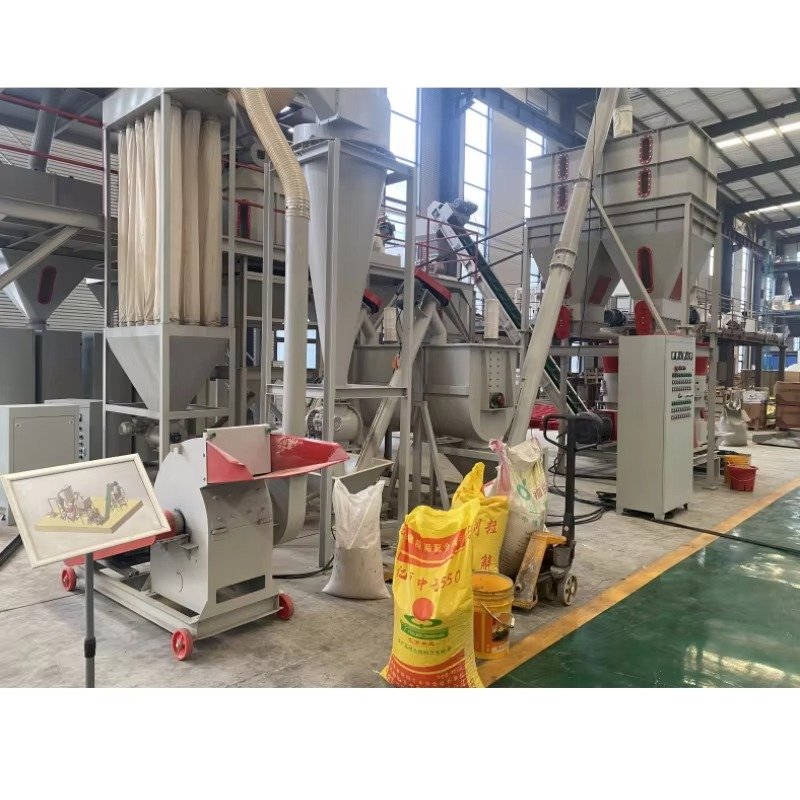
Die life represents a significant operating cost. Dies manufactured from X46Cr13 stainless steel typically process 3000-5000 tonnes before requiring replacement, depending on formulation abrasiveness and pellet diameter. Smaller diameter holes wear faster than larger ones. Proper conditioning and correct roller-die clearance extend die service intervals.
Cooling Equipment Performance
Counter-flow coolers provide the most efficient heat and moisture removal for pelleted feeds. Pellets enter at the top and descend through rising air streams. The counter-current principle maximises temperature differential between pellets and cooling air, improving efficiency compared to cross-flow designs.
Cooler capacity must match pellet mill output to prevent production bottlenecks. A rule of thumb suggests 12-15 minutes retention time for adequate cooling. A mill producing 5 tonnes per hour requires a cooler with approximately 1000-1250 kilogram holding capacity. Insufficient cooling capacity forces reduced mill output or results in inadequately cooled product.
Packaging and Bagging Systems
Final packaging prepares finished feed for delivery to your customers or on-farm storage. Automated bagging scales weigh precise quantities into bags ranging from 25 to 50 kilograms. Modern systems achieve 6-10 bags per minute with accuracy within ±0.1 percent of target weight.
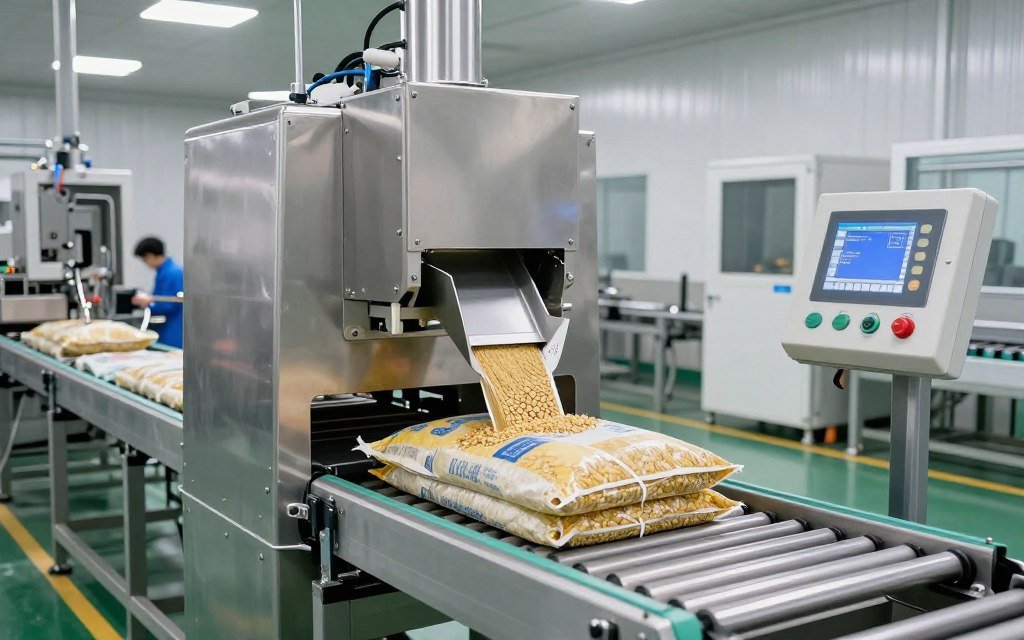
Bag sewing machines seal filled bags quickly and securely. Thread quality affects seal integrity during handling and transport. Many UK operations now employ heat-seal systems that eliminate thread whilst reducing labour requirements. Palletisers stack filled bags automatically, further reducing manual handling and improving warehouse efficiency.
Building Your Custom Chicken Feed Production Line?
MAIKONG engineers configure complete production systems matched to your capacity targets, facility constraints, and budget parameters. We supply individual equipment pieces or turnkey installations including electrical integration, dust collection, and control systems. Our UK clients receive detailed equipment specifications, layout drawings, and installation supervision.
Production Capacity Planning and Line Configuration
Selecting the appropriate production capacity requires careful analysis of your current and projected feed requirements. Under-capacity lines constrain business growth whilst excessive capacity wastes capital and increases operating costs through inefficient equipment utilisation.
Determining Required Capacity
Calculate your feed requirements by analysing flock size, consumption rates, and feeding frequency. A 10,000-bird layer operation consuming 110 grammes per bird daily requires 1,100 kilogrammes of feed per day. Adding 15 percent for safety stock and growth suggests a minimum production requirement of 1,265 kilogrammes daily.
Most commercial operations produce feed in campaigns, manufacturing multiple days’ supply in single production runs. This approach reduces labour costs and improves efficiency through longer equipment run times. A mill producing twice weekly would need capacity for 3.5 days’ consumption per run, or approximately 4,400 kilogrammes per campaign for the example flock above.
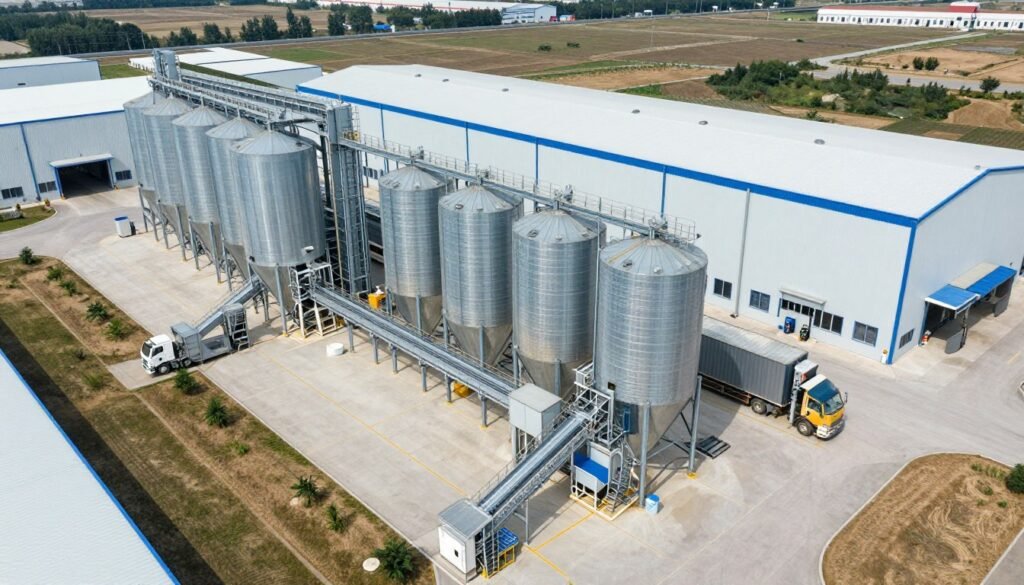
Batch versus Continuous Production
Small to medium operations typically employ batch production where each formulation is mixed, pelleted, and packaged as a complete lot before changing to the next product. This approach suits operations producing multiple feed types with frequent formula changes.
Continuous production runs a single formula for extended periods, typically 8-24 hours between product changes. High-volume operations producing primarily one or two formulations benefit from continuous systems’ higher efficiency and reduced labour requirements per tonne produced.
| Production Scale | Typical Capacity Range | Recommended System Type | Crew Requirements | Investment Range (£) |
| Small farm mill | 200-500 kg/hour | Simple batch system | 1-2 operators | £25,000-£60,000 |
| Medium operation | 1-3 tonnes/hour | Automated batch system | 2-3 operators | £80,000-£180,000 |
| Commercial mill | 5-10 tonnes/hour | Continuous production | 3-4 operators | £200,000-£450,000 |
| Large industrial | 15-30 tonnes/hour | Fully automated continuous | 4-6 operators | £500,000-£1,200,000 |
| Major facility | 50+ tonnes/hour | Multiple parallel lines | 8-12 operators | £1,500,000+ |
Material Flow and Plant Layout
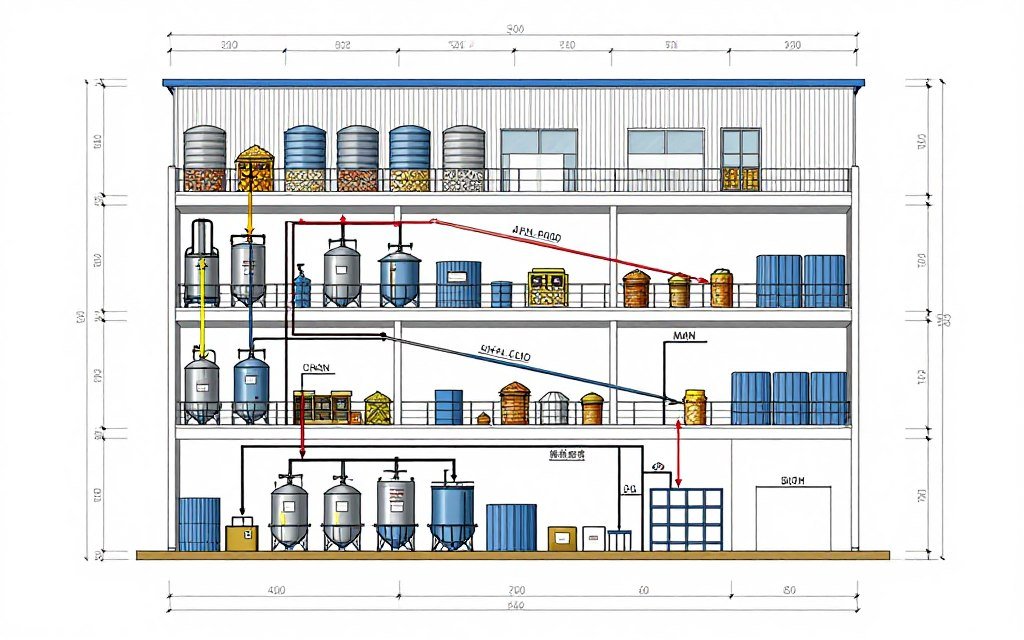
Efficient plant layout minimises material handling whilst maintaining logical process flow. Vertical arrangements use gravity to move materials between processing stages, reducing conveying equipment and power consumption. Ingredients enter at the highest point, progressing downward through grinding, mixing, pelleting, and cooling before reaching ground-level packaging.
Horizontal layouts suit facilities with height restrictions or when expanding existing buildings. Mechanical conveyors transport materials between processing stages. This approach requires more equipment and consumes additional energy but provides flexibility for phased expansion and equipment upgrades.
Automation and Control Systems
Modern animal feed production line installations incorporate computerised control systems that manage batching accuracy, monitor equipment performance, and record production data. Basic systems provide recipe storage and automatic batching sequence control. Advanced installations add real-time equipment monitoring, predictive maintenance alerts, and integration with inventory management software.
Control system sophistication should match your operation’s complexity and staff capabilities. Over-complicated systems frustrate operators and remain underutilised. MAIKONG provides scalable control packages from simple push-button operation for small mills through comprehensive SCADA systems for large commercial facilities.
Raw Materials and Feed Formulation Considerations
Successful chicken feed production begins with quality raw materials processed according to proven nutritional formulations. Understanding how ingredient characteristics affect processing helps you specify appropriate equipment and avoid common production problems.
Common UK Feed Ingredients
Wheat and barley form the energy foundation of most UK poultry rations. These cereals provide readily digestible carbohydrates whilst their protein content contributes to overall amino acid profiles. UK-grown wheat typically contains 11-13 percent protein whilst feed barley averages 10-11 percent.
Soya bean meal supplies the primary protein component in most commercial formulations. Imported from the Americas, soya meal contains 44-48 percent crude protein with excellent amino acid balance. Its consistent quality and availability make it the reference protein source despite price volatility and supply chain considerations.
Energy Sources
- Wheat: 13-14 MJ/kg metabolizable energy
- Maize (imported): 14-15 MJ/kg metabolizable energy
- Barley: 12-13 MJ/kg metabolizable energy
- Wheat feed: 10-11 MJ/kg metabolizable energy
- Vegetable oils: 30-36 MJ/kg metabolizable energy
Protein Sources
- Soya bean meal: 44-48% crude protein
- Rapeseed meal: 34-38% crude protein
- Sunflower meal: 28-32% crude protein
- Field beans: 23-25% crude protein
- Distillers grains: 26-30% crude protein
Ingredient Properties Affecting Processing
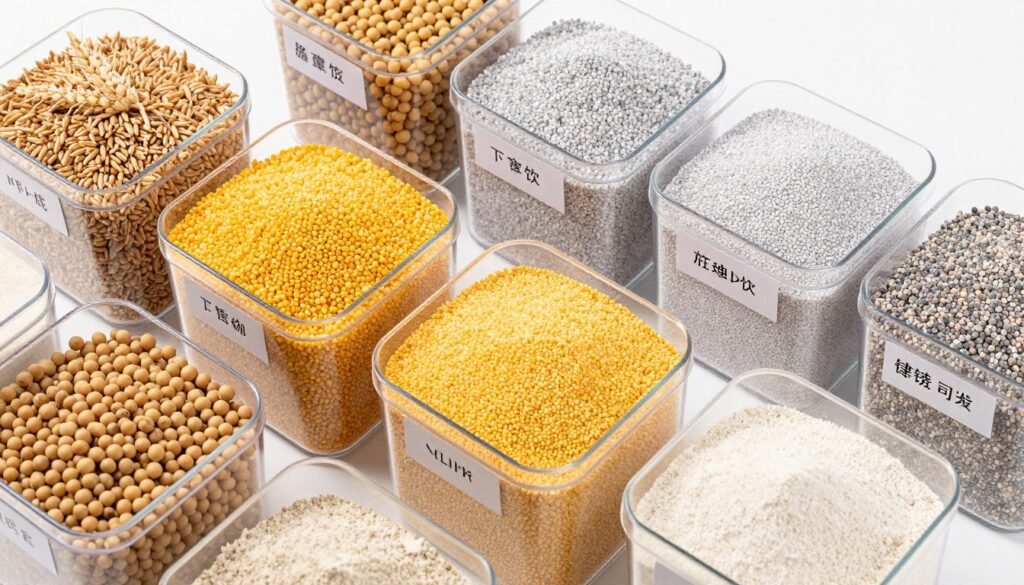
Moisture content dramatically impacts grinding efficiency and pellet quality. Grains above 14 percent moisture are difficult to grind and may cause pellet mill blockages. Conversely, extremely dry materials below 10 percent create excessive dust and produce fragile pellets with poor durability.
Particle density influences mixer performance and pellet mill throughput. Lightweight ingredients like wheat feed or sunflower meal tend to segregate during handling and may not blend uniformly with denser components. Proper mixer selection and adequate mixing duration overcome these challenges.
Formulation Principles for Different Chicken Types
Broiler chicks require high-energy, high-protein starter feeds that promote rapid early growth. Typical starter formulations contain 22-23 percent crude protein with 12.5-13 MJ/kg metabolizable energy. Starter feeds are often manufactured as 2-3mm crumbles that young birds can consume easily.
Layer pullets transition through grower and developer phases before reaching point of lay around 16-18 weeks. Layer feeds balance protein for egg production with calcium for shell formation. Standard layer rations contain 16-17 percent protein with 3.5-4.0 percent calcium from limestone or oyster shell.
| Feed Type | Crude Protein (%) | Energy (MJ/kg) | Calcium (%) | Pellet Size |
| Broiler starter (0-10 days) | 22-23% | 12.5-13.0 | 0.9-1.0% | 2-3mm crumbles |
| Broiler grower (11-24 days) | 20-21% | 13.0-13.5 | 0.85-0.95% | 3-4mm pellets |
| Broiler finisher (25+ days) | 18-19% | 13.0-13.5 | 0.8-0.9% | 4-5mm pellets |
| Layer pullet (0-6 weeks) | 19-20% | 11.5-12.0 | 0.9-1.0% | 2-3mm crumbles |
| Layer grower (7-16 weeks) | 15-16% | 11.0-11.5 | 0.9-1.0% | 3-4mm pellets |
| Layer production (17+ weeks) | 16-17% | 11.0-11.5 | 3.5-4.0% | 3-4mm pellets |
Quality Control and Testing
Regular ingredient testing verifies nutritional content and identifies quality problems before they affect finished feed. Near-infrared spectroscopy provides rapid analysis of moisture, protein, fat, and fibre content. This technology allows immediate formulation adjustments when ingredient composition varies from expected values.
Finished feed quality assessment includes pellet durability testing, nutrient analysis, and visual inspection. Pellet durability index measures resistance to handling damage, with values above 85 percent considered acceptable for most applications. Poor durability indicates inadequate conditioning, incorrect die specification, or formulation problems requiring correction.
Installation Requirements and Project Timeline
Proper installation ensures your poultry feed production line operates reliably from day one. MAIKONG provides comprehensive installation support for UK projects, addressing building requirements, utilities, equipment assembly, and commissioning procedures.
Facility Infrastructure Needs
Building design must accommodate equipment dimensions, material flow patterns, and maintenance access. A 5-tonne-per-hour production line typically requires 400-600 square metres of processing area plus additional space for ingredient storage and finished product warehousing.
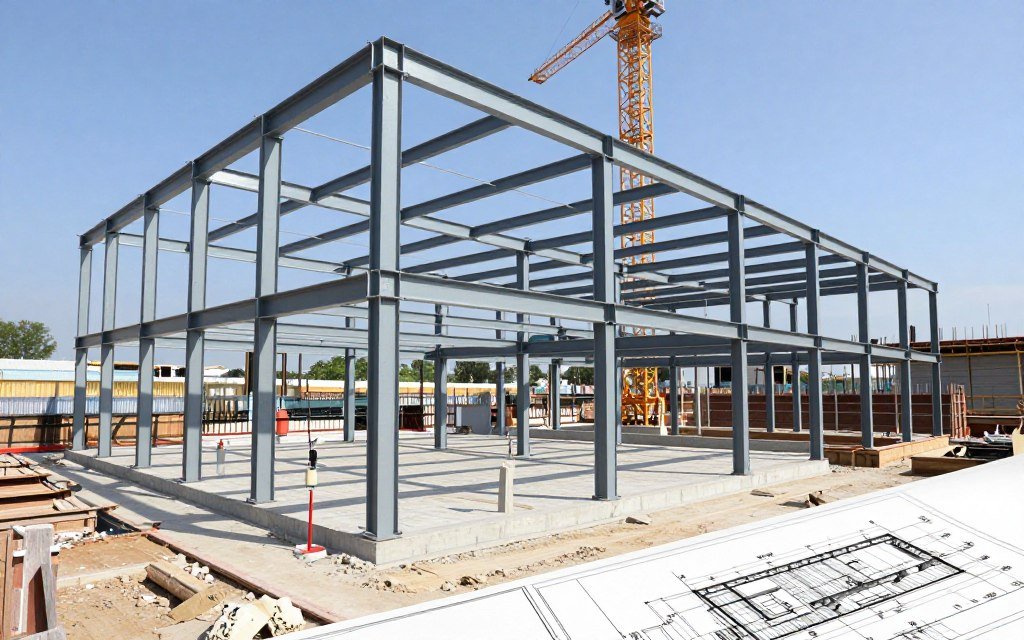
Floor loading capacity must support heavy equipment and material storage. Pellet mills generate significant foundation loads, requiring reinforced concrete pads designed to equipment manufacturer specifications. MAIKONG provides foundation drawings showing required pad dimensions and anchor bolt locations for each equipment piece.
Electrical and Utility Requirements
Total connected load for a complete chicken feed production line ranges from 150 kilowatts for small systems to over 500 kilowatts for high-capacity installations. UK facilities typically receive 415-volt three-phase power. Motor starters, control panels, and distribution equipment must comply with BS 7671 electrical installation standards.
Steam generation supports pellet conditioning in mills above 2 tonnes per hour capacity. Gas-fired or oil-fired boilers provide 200-1000 kilogrammes per hour steam capacity depending on mill size. Boiler installation must meet UK pressure vessel regulations and inspection requirements.
Utility Specifications
- Electrical supply: 415V, 3-phase, 50Hz
- Compressed air: 7 bar, 100-300 litres/minute
- Steam pressure: 3-6 bar gauge
- Water supply: 500-2000 litres/day
- Dust collection: 10,000-50,000 m³/hour airflow
Space Requirements by Capacity
- 1 T/hour: 200-300 m² processing area
- 3 T/hour: 350-500 m² processing area
- 5 T/hour: 400-600 m² processing area
- 10 T/hour: 600-900 m² processing area
- 20 T/hour: 900-1400 m² processing area
Installation Timeline
Equipment installation duration depends on production line complexity and existing facility preparation. Small systems of 1-2 tonnes per hour capacity install in 2-3 weeks with prepared facilities. Larger commercial mills require 6-12 weeks for mechanical installation plus additional time for electrical work and commissioning.
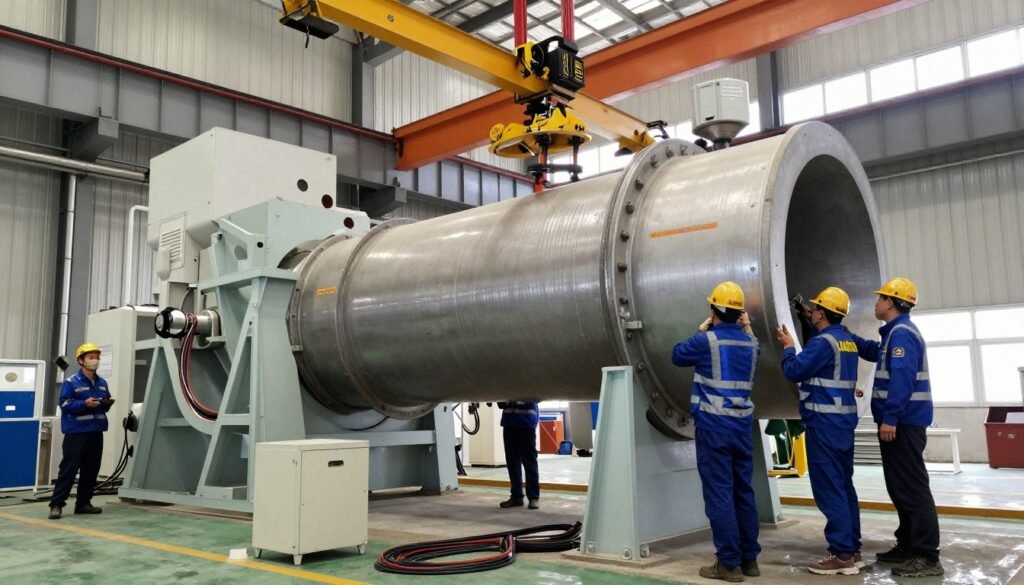
MAIKONG installation teams work alongside local contractors to complete mechanical assembly, alignment, and initial testing. Our supervisors coordinate equipment placement, piping connections, and safety system verification. UK projects benefit from our European logistics network that delivers equipment efficiently and tracks shipments throughout transit.
Staff Training and Operational Support
Operator training covers equipment operation, routine maintenance, troubleshooting, and safety procedures. MAIKONG provides on-site instruction during commissioning, typically 3-5 days for small systems extending to 2 weeks for complex installations. Training includes hands-on operation, formulation trials, and documentation of optimal settings for your specific ingredients.
Post-installation support continues through our technical service team. UK clients contact our engineers for production optimisation, troubleshooting assistance, and spare parts specification. We maintain detailed equipment records that facilitate rapid parts identification and ordering when maintenance or repairs become necessary.
Planning Your Feed Mill Installation?
MAIKONG installation services cover equipment delivery, mechanical assembly, electrical integration, commissioning, and operator training. Our project managers coordinate with your contractors to ensure efficient installation within agreed timelines. We handle all technical aspects whilst you focus on business preparations for production launch.
Operational Efficiency and Production Optimisation
Maximising production efficiency requires attention to numerous factors beyond basic equipment operation. Understanding how processing variables interact helps you achieve consistent pellet quality whilst minimising energy consumption and operating costs.
Energy Consumption and Cost Management
Electrical power represents the largest variable operating cost in feed production line operations. Grinding consumes approximately 60-70 percent of total electrical demand. Pellet mill operation accounts for another 20-25 percent. Reducing particle size increases grinding energy proportionally whilst providing diminishing nutritional benefits.
Steam costs depend on fuel type and boiler efficiency. Natural gas pricing volatility significantly affects pelleting costs. A 5-tonne-per-hour mill consumes roughly 200-250 kilogrammes of steam per hour, equivalent to 150-200 kilowatts thermal input. Efficient conditioning and proper die selection minimise steam consumption per tonne produced.
| Operating Parameter | Typical Value | Impact on Costs | Optimisation Strategy |
| Grinding energy | 12-18 kWh/tonne | £2.40-£3.60/tonne at £0.20/kWh | Match particle size to requirement; avoid over-grinding |
| Pelleting energy | 8-12 kWh/tonne | £1.60-£2.40/tonne at £0.20/kWh | Optimal conditioning; correct roller-die gap |
| Steam consumption | 40-60 kg/tonne | £1.20-£1.80/tonne at £30/tonne steam | Efficient conditioning; minimal steam wastage |
| Labour requirement | 0.3-0.6 hours/tonne | £4.50-£9.00/tonne at £15/hour | Automation; efficient batch scheduling |
| Maintenance costs | 2-4% of equipment value/year | Varies with equipment age | Preventive maintenance; prompt repairs |
Pellet Quality Optimisation
Pellet durability index measures resistance to handling damage. Target values exceed 85 percent for most poultry feeds. Poor durability creates fines that waste nutrients and cause dust problems. Multiple factors influence pellet durability including conditioning temperature, steam addition rate, die specification, and formulation composition.
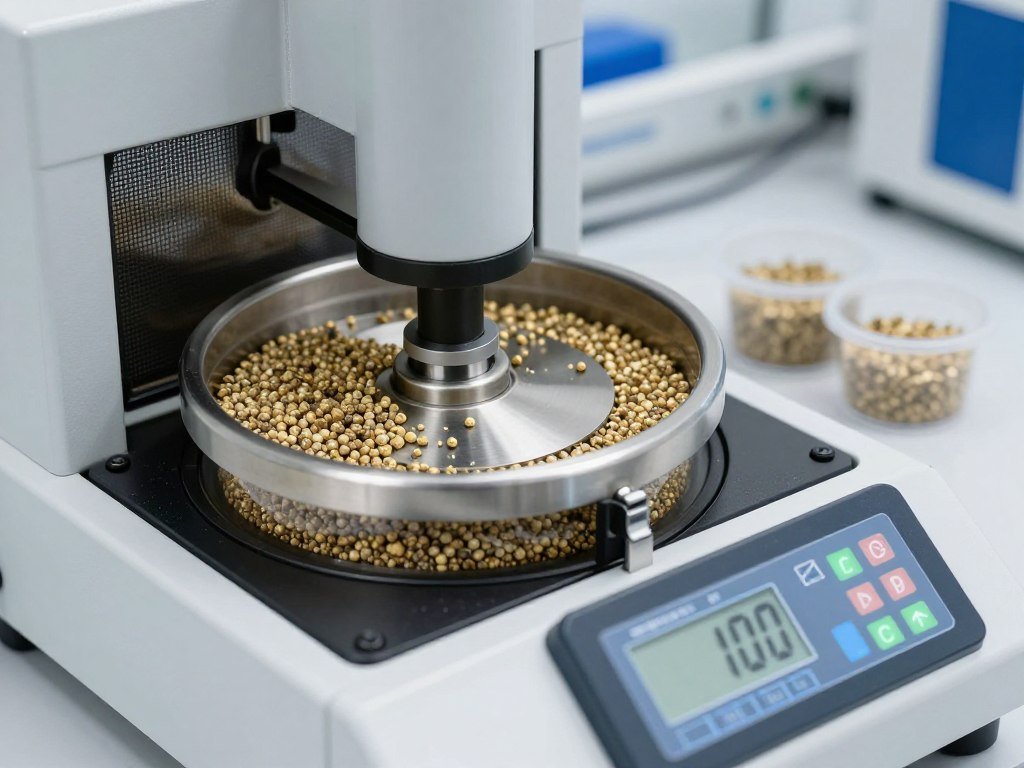
Conditioning temperature should reach 75-85 degrees Celsius for most formulations. Higher temperatures improve starch gelatinisation but risk heat damage to vitamins and amino acids. Steam quality affects results significantly. Wet steam introduces excessive moisture whilst dry steam provides inadequate heat transfer. Proper steam trap maintenance ensures consistent conditioning performance.
Common Production Challenges
Material blockages disrupt production and reduce efficiency. Bridging in bins occurs when fine particles create stable arches that prevent flow. Bin activators, proper outlet design, and consistent material moisture prevent bridging problems. Pellet mill die blockages result from excessive conditioning moisture, insufficient steam, or foreign material contamination.
Excessive pellet breakage creates fines that reduce finished product value. Fragile pellets indicate inadequate binding, often caused by insufficient conditioning or formulations high in fibrous ingredients. Die specification affects pellet strength; thicker dies produce more durable pellets but reduce throughput and increase power consumption.
Production Problem: Low Output
Symptoms: Mill produces below rated capacity
Common Causes:
- Worn die or rollers
- Incorrect roller-die gap
- Insufficient conditioning
- Formulation too difficult to pellet
- Undersized main motor
Solutions: Check wear components; verify conditioning temperature; adjust formulation; confirm motor sizing
Production Problem: Poor Pellet Quality
Symptoms: Excessive fines or soft pellets
Common Causes:
- Low conditioning temperature
- Excessive moisture content
- Die holes too large
- High fibre formulation
- Inadequate steam quality
Solutions: Increase conditioning; reduce moisture; specify smaller die; reformulate; check steam system
Preventive Maintenance Programming
Scheduled maintenance prevents unexpected breakdowns and extends equipment service life. Daily inspections identify developing problems before they cause failures. Operators check belt tensions, bearing temperatures, oil levels, and listen for unusual noises that indicate wear or misalignment.
Weekly maintenance includes lubrication of bearing points, inspection of wear components, and cleaning of dust collection systems. Monthly tasks involve detailed inspections of critical components, measurement of wear items, and testing of safety systems. Annual shutdowns allow major overhauls including die replacement, bearing renewal, and alignment verification.
MAIKONG European Installation Success Stories
MAIKONG has supplied chicken feed production line equipment to numerous European operations over 22 years. These installations demonstrate our capability to deliver reliable solutions that meet stringent EU standards whilst addressing specific customer requirements.
Netherlands Commercial Layer Operation
A 150,000-bird layer operation in the Netherlands required a 3-tonne-per-hour production line producing both layer pellets and pullet grower feeds. The facility needed to manufacture different pellet sizes for various flock ages whilst maintaining batch traceability for food safety compliance.
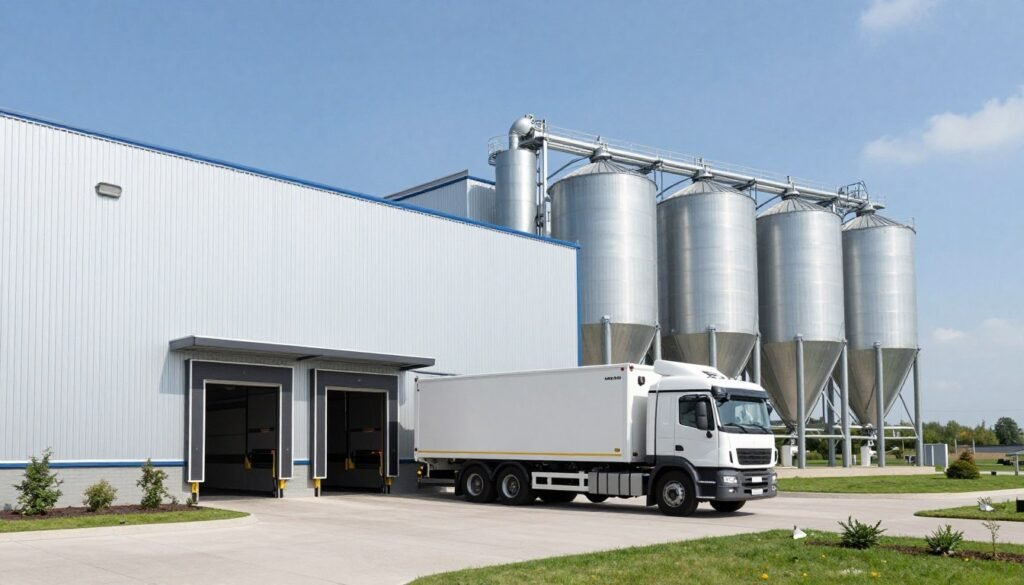
MAIKONG supplied Model MK-L003 equipment including twin 37-kilowatt hammer mills, 2000-kilogram mixer, 420-millimetre ring die pellet mill with variable-frequency drive, counter-flow cooler, automated bagging system, and computerised batching controls. Installation completed in five weeks including commissioning and operator training.
The operation now produces 6000 tonnes annually across four different formulations. Pellet quality consistently achieves durability index above 90 percent. Energy consumption averages 28 kilowatt-hours per tonne, below initial projections. The client reports significant savings compared to purchased feed whilst gaining complete formulation control.
German Broiler Integration Project
A German broiler integrator operates contract growers across three regions. Centralised feed production from a new 8-tonne-per-hour mill replaced purchased feed from multiple suppliers, improving quality consistency and reducing delivered feed costs.
The facility processes 35,000 tonnes annually of starter, grower, and finisher feeds. MAIKONG provided complete equipment including raw material receiving system, dual-line grinding, automated batching for 14 ingredients, twin pellet mills, cooling and crumbling equipment, and bulk delivery system. The installation achieved full production within 10 weeks of equipment arrival.
Project: UK Free-Range Producer
Location: Somerset, England
Capacity: 1.5 tonnes/hour
Application: Organic layer feeds
Special Requirements: Organic certification compliance, small-batch flexibility
Result: Successfully producing 2,400 tonnes/year across six organic formulations with complete traceability
Project: Belgian Feed Manufacturer
Location: Flanders region, Belgium
Capacity: 5 tonnes/hour
Application: Multi-species feeds (poultry, pig, cattle)
Special Requirements: Rapid product changeover, medication handling capabilities
Result: Processing 18,000 tonnes annually with 95% equipment availability
Project: Spanish Egg Producer
Location: Catalonia, Spain
Capacity: 4 tonnes/hour
Application: Layer and pullet feeds
Special Requirements: Mediterranean climate adaptation, local ingredient utilisation
Result: Reduced feed costs 12% versus purchased feed whilst improving flock performance
UK Market Opportunities
The United Kingdom feed industry faces ongoing consolidation pressures. Smaller mills struggle to compete with large integrated operators’ purchasing power and efficiency. However, specialised producers serving niche markets including organic, free-range, and regional operations maintain profitable businesses through quality differentiation and customer service.
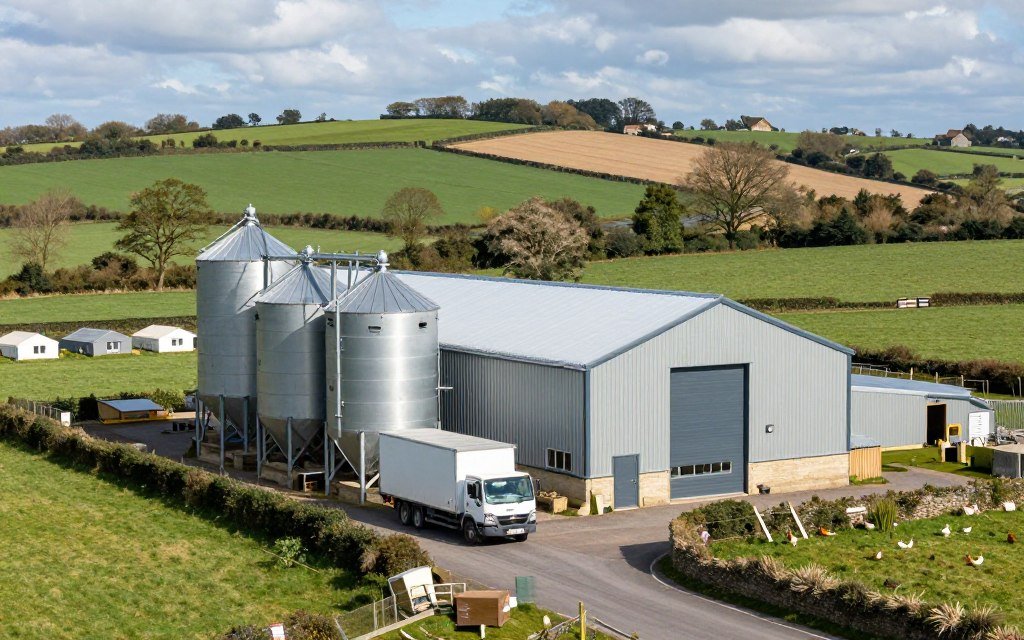
MAIKONG equipment suits UK market conditions particularly well. Our systems scale from small on-farm mills through medium commercial operations. The flexibility to produce multiple formulations efficiently addresses UK producers’ need to serve diverse customer requirements. Robust construction and proven reliability match UK operators’ expectations for equipment longevity and minimal downtime.
Join MAIKONG’s Growing UK Partner Network
MAIKONG seeks established UK distributors and agents to represent our complete range of feed production equipment. We provide technical support, competitive pricing, reliable delivery, and comprehensive after-sales service. Our European installations demonstrate proven performance in markets similar to the UK. Ideal partners include agricultural equipment dealers, mill suppliers, and farm service companies with established customer bases.
Technical Support and Spare Parts Service
Reliable equipment support ensures your poultry feed production line maintains consistent operation. MAIKONG provides comprehensive technical assistance and spare parts supply to UK customers through our European logistics network.
Preventive Maintenance Guidelines
Regular maintenance schedules prevent unexpected failures and extend component service life. MAIKONG provides detailed maintenance manuals specifying inspection intervals, lubrication requirements, and wear limits for critical parts. Following these schedules minimises downtime and reduces overall operating costs.
| Maintenance Interval | Tasks | Typical Duration | Required Skills |
| Daily | Visual inspection, belt tension check, bearing temperature monitoring, dust system cleaning | 30-45 minutes | Operator level |
| Weekly | Lubrication, detailed inspection, screen condition check, safety system test | 2-3 hours | Operator/Technician |
| Monthly | Wear measurement, alignment check, electrical connections inspection, calibration verification | 4-6 hours | Technician level |
| Quarterly | Detailed equipment inspection, bearing replacement as needed, belt replacement, motor testing | 8-12 hours | Technician level |
| Annually | Major overhaul, die replacement, roller refurbishment, complete alignment, safety certification | 3-5 days | Specialist technician |
Spare Parts Availability
MAIKONG maintains spare parts inventory in our European distribution centre for rapid delivery to UK customers. Common wear items including hammer mill screens, pellet mill dies and rollers, mixer paddles, and bearings ship within 3-5 working days. Urgent requirements receive priority handling with express shipping options available.
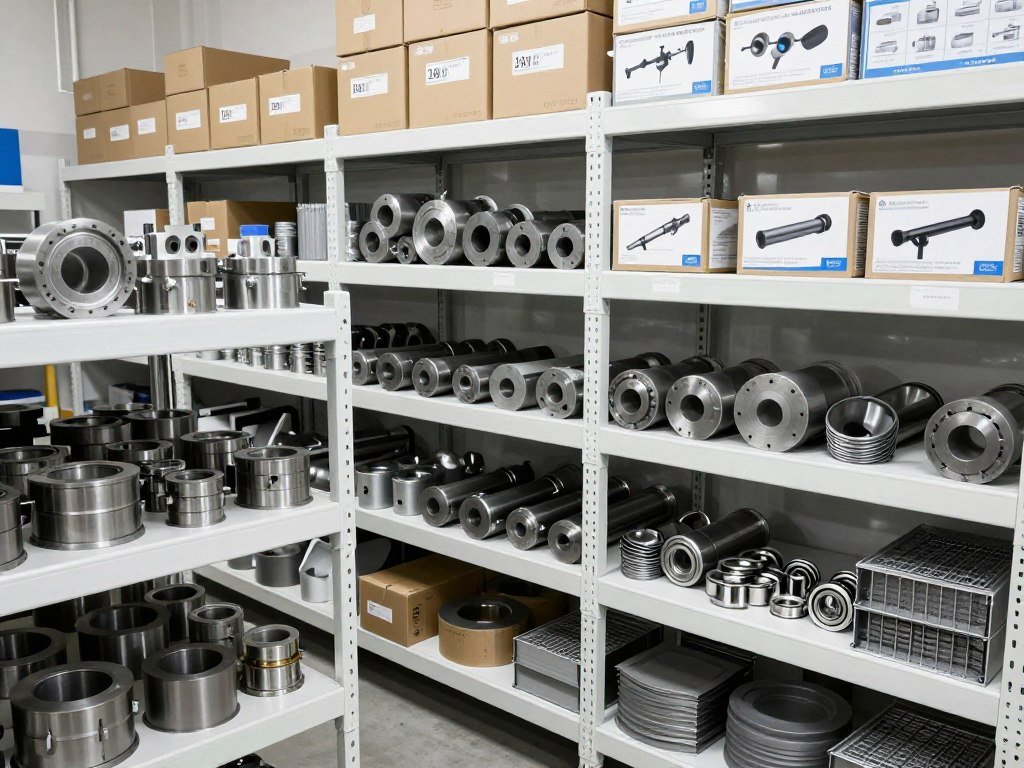
Critical spare parts should be stocked on-site to minimise downtime during component failures. MAIKONG provides recommended spare parts lists based on your equipment configuration and production intensity. Typical initial spare parts packages cost 3-5 percent of equipment value and cover first-year requirements for routine replacements.
Remote Technical Assistance
UK customers access our technical support team via email, phone, and video conferencing. Many troubleshooting situations resolve remotely through systematic diagnostic procedures. Our engineers guide your staff through adjustments, measurements, and repairs, avoiding costly service visits for routine issues.
Complex problems may require on-site service visits. MAIKONG maintains relationships with qualified service technicians throughout Europe who can respond to UK locations within 2-3 working days. Emergency situations receive priority response with temporary equipment loans available to maintain production whilst permanent repairs proceed.
OEM and Customisation Capabilities
Beyond standard production line equipment, MAIKONG offers complete OEM services for UK businesses requiring customised solutions. We manufacture equipment to customer specifications including special capacities, unique material handling requirements, or integration with existing facilities.
Private label opportunities suit established UK distributors building their own brand identity. MAIKONG supplies equipment bearing your company name and branding whilst providing comprehensive technical support. This arrangement allows you to offer complete feed mill solutions without maintaining manufacturing capabilities.
Investment Analysis and Financial Planning
Establishing a chicken feed production line represents significant capital investment. Thorough financial analysis ensures the project delivers acceptable returns whilst managing risk appropriately.
Total Project Costs
Equipment represents 60-70 percent of total project cost for typical installations. Building construction or renovation adds 20-25 percent. Electrical work, utilities, installation labour, and commissioning account for remaining costs. Small operations under 2 tonnes per hour may invest £80,000-£150,000 total whilst larger commercial mills of 5-10 tonnes per hour require £250,000-£500,000.
| Cost Component | Small Mill (1-2 T/h) | Medium Mill (3-5 T/h) | Large Mill (8-10 T/h) |
| Processing equipment | £50,000-£90,000 | £120,000-£220,000 | £280,000-£450,000 |
| Material handling | £12,000-£20,000 | £25,000-£45,000 | £55,000-£90,000 |
| Dust collection | £8,000-£15,000 | £18,000-£30,000 | £35,000-£60,000 |
| Control systems | £5,000-£12,000 | £15,000-£35,000 | £40,000-£80,000 |
| Building/renovation | £25,000-£50,000 | £60,000-£120,000 | £140,000-£240,000 |
| Installation/commissioning | £15,000-£25,000 | £35,000-£60,000 | £70,000-£110,000 |
| Total project cost | £115,000-£212,000 | £273,000-£510,000 | £620,000-£1,030,000 |
Operating Cost Structure
Variable costs include raw materials, energy, labour, and packaging. Fixed costs encompass equipment depreciation, facility costs, insurance, and administration. Raw materials dominate at 85-90 percent of total production cost. Energy represents 2-4 percent, labour 3-5 percent, with packaging and other costs comprising the remainder.
Understanding cost structure helps identify optimisation opportunities. Ingredient purchasing represents the largest leverage point. Volume commitments, forward contracts, and opportunistic buying can reduce raw material costs significantly. Energy management through efficient equipment operation provides smaller but meaningful savings.
Return on Investment Calculations
Feed manufacturing profitability depends on the margin between purchased ingredient costs and finished feed value. On-farm mills eliminate commercial feed margins, typically 10-15 percent of delivered feed cost. Commercial mills selling to third parties require competitive pricing whilst maintaining adequate margins to cover operating costs and provide reasonable returns.

Payback periods for feed mill investments range from 2-5 years depending on production volume and margin realisation. Higher volume operations achieve faster payback through better fixed cost absorption. On-farm mills serving captive flocks often show shorter payback than commercial mills facing competitive market pressures.
Financing Options
UK agricultural lending institutions understand feed mill investments and offer suitable financing packages. Equipment loans typically cover 70-80 percent of project costs with 5-7 year repayment terms. Interest rates reflect agricultural lending risk premiums above base rates.
Some buyers prefer operating leases that treat equipment as an expense rather than capital purchase. Leasing preserves capital for other business needs whilst providing equipment access. MAIKONG works with UK leasing companies familiar with our equipment to facilitate financing arrangements.
UK Feed Industry Regulations and Compliance
Feed manufacturing in the United Kingdom operates under comprehensive regulatory frameworks ensuring product safety and quality. Understanding compliance requirements prevents costly mistakes and maintains your business reputation.
Feed Hygiene Regulations
UK feed producers must register with the appropriate regulatory authority and maintain approval for feed manufacturing operations. Facilities require documented food safety management systems based on HACCP principles. Regular inspections verify compliance with structural requirements, operational procedures, and record-keeping standards.
Cross-contamination prevention receives particular regulatory attention. Production lines manufacturing feeds containing medications require validated cleanout procedures between medicated and non-medicated products. Equipment design should facilitate thorough cleaning. MAIKONG systems incorporate smooth surfaces and accessible cleanout points that simplify validation procedures.
Ingredient and Product Labelling
Compound feed labelling must declare ingredient composition, nutritional analysis, and intended species. Specific requirements apply to feeds containing additives, medications, or designed for particular production stages. Accurate batching systems and thorough record-keeping support labelling compliance and traceability requirements.
Required Production Records
- Raw material receiving documentation and certificates
- Batch formulation records with actual weights used
- Production dates and batch identification codes
- Quality control testing results and corrective actions
- Equipment maintenance and cleaning records
- Product distribution and delivery documentation
Typical Inspection Focus Areas
- Facility condition and pest control programme
- Ingredient storage and handling procedures
- Batching accuracy and verification methods
- Cross-contamination prevention measures
- Finished product testing and hold/release system
- Traceability system effectiveness
Environmental Compliance
Feed mills generate dust emissions requiring control to meet air quality standards. Dust collection systems must capture and contain particulate matter from grinding, mixing, and material handling operations. MAIKONG equipment includes dust collection connections designed to integrate with central filtration systems.
Noise from hammer mills and other processing equipment may require mitigation depending on facility location. Sound attenuation measures include equipment enclosures, building insulation, and operational scheduling. Local planning authorities assess potential noise impact during facility approval processes.
Why Choose MAIKONG for Your Feed Production Line
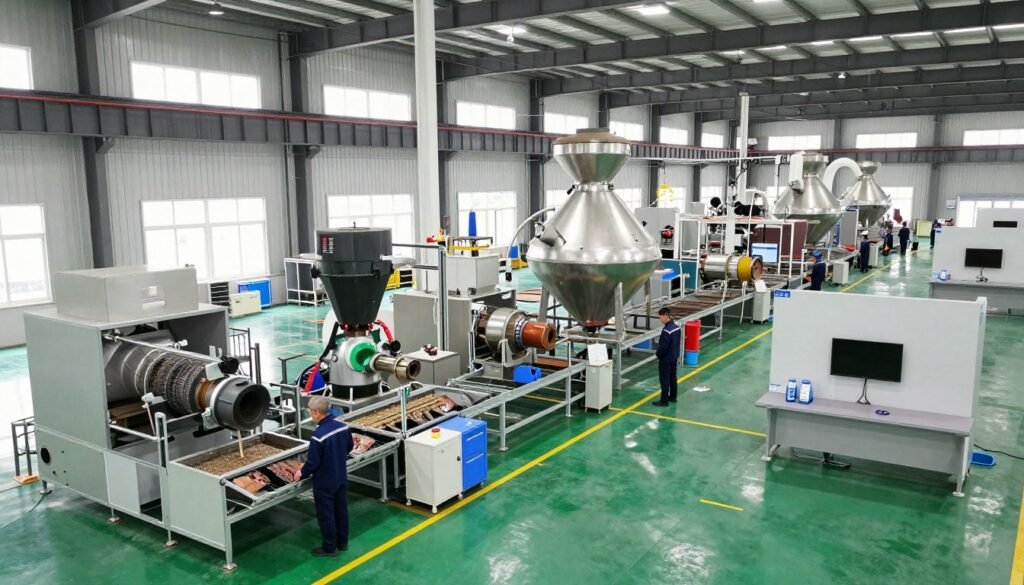
MAIKONG has manufactured animal feed production line equipment for over 22 years from our advanced facilities in GD province, SZ city. Our engineering team combines decades of feed industry experience with modern manufacturing capabilities to deliver reliable, efficient equipment suited to UK market requirements.
Proven Manufacturing Excellence
Our production facilities employ advanced machining centres, precision welding equipment, and comprehensive quality control systems. Every component undergoes rigorous inspection before assembly. Finished equipment receives thorough testing including no-load trials and simulated production runs using actual feed ingredients.
MAIKONG holds ISO 9001 quality certification and maintains strict adherence to international manufacturing standards. Our supply chain management ensures consistent component quality from approved suppliers. This attention to detail delivers equipment that meets performance specifications whilst providing years of reliable service.
Technical Innovation and Customisation
Standard models suit most applications, but unique requirements often demand customised solutions. MAIKONG engineers work closely with customers to specify equipment configurations addressing specific needs. We modify capacities, adjust dimensions for facility constraints, and integrate control systems with existing infrastructure.
Recent innovations include energy-efficient motor drives, improved pellet mill die materials extending service life, and advanced control systems providing detailed production monitoring. UK customers benefit from these developments through equipment delivering better performance and lower operating costs than previous generations.
Comprehensive OEM and ODM Services
MAIKONG supports UK distributors and private label customers through complete OEM/ODM programmes. We manufacture equipment to your specifications, apply your branding, and provide technical documentation customised to your company identity. This allows you to offer complete feed mill solutions under your name whilst leveraging our manufacturing expertise and capacity.
ODM services include design modification, capacity customisation, and integration engineering. Our team works from your conceptual requirements to deliver finished equipment meeting your exact specifications. Whether adapting existing designs or developing new solutions, MAIKONG provides the engineering and manufacturing capabilities to realise your vision.
Global Experience, Local Support
MAIKONG equipment operates in over 130 countries across all continents. This global presence demonstrates our ability to adapt equipment and support services to diverse markets and regulatory environments. European installations provide particularly relevant experience for UK customers facing similar standards and operating conditions.
UK support includes English-language technical documentation, British electrical specifications, and compliance with relevant EU and UK standards. Our technical team understands UK agricultural terminology and business practices, facilitating clear communication and effective problem-solving.
Frequently Asked Questions About Chicken Feed Production Lines
What production capacity should I choose for my chicken operation?
Capacity selection depends on your flock size, feeding frequency, and growth plans. Calculate daily feed consumption by multiplying bird numbers by average consumption per bird. Add 20-30 percent for growth and safety margin. If producing 2-3 times weekly, divide weekly consumption by number of production days to determine required hourly capacity. Account for different formulations that may require separate production runs.
For example, a 20,000-bird layer flock consuming 110g daily requires 2,200kg daily or 15,400kg weekly. Producing twice weekly means 7,700kg per run. A 2-tonne-per-hour line completes this batch in roughly 4 hours including setup and cleanup.
How long does installation take for a complete production line?
Installation duration varies with system complexity and facility readiness. Small lines of 1-2 tonnes per hour typically install in 2-3 weeks with proper facility preparation. Medium systems of 3-5 tonnes per hour require 4-6 weeks. Large commercial mills over 8 tonnes per hour may need 8-12 weeks for complete installation and commissioning.
These timelines assume finished building structure, utilities available, and foundation work completed before equipment arrival. Pre-installation planning significantly impacts total project duration. MAIKONG provides detailed installation schedules during project planning stages.
What ongoing maintenance does feed production equipment require?
Daily maintenance includes visual inspections, bearing temperature checks, and dust system cleaning, requiring 30-45 minutes. Weekly lubrication and detailed inspections take 2-3 hours. Monthly wear measurement and alignment verification requires 4-6 hours with technician-level skills.
Major components like hammer mill screens need replacement every 500-1000 operating hours depending on material abrasiveness. Pellet mill dies last 3000-5000 tonnes throughput under normal conditions. Annual overhauls including die replacement and bearing renewal typically require 3-5 days scheduled downtime.
Can I produce different pellet sizes on the same production line?
Yes, different pellet sizes are achieved by changing pellet mill dies. Most operations maintain several dies for different product specifications. Die changes typically require 2-4 hours including mill disassembly, die exchange, reassembly, and adjustment. Production lines serving multiple chicken types commonly stock dies ranging from 2mm for chick crumbles through 4-5mm for mature birds.
MAIKONG MK-L003 systems include quick-change die mounting that simplifies changeover procedures. We supply multiple dies as part of complete installations, allowing you to produce your full product range without external die sourcing.
What electrical requirements does a feed production line need?
UK installations require 415-volt three-phase electrical supply. Total connected load varies with production capacity. A 2-tonne-per-hour system typically needs 100-150 kilowatts, whilst a 5-tonne-per-hour line requires 200-300 kilowatts. Large commercial mills of 10+ tonnes per hour may demand 400-600 kilowatts total connected load.
Actual running load averages 60-70 percent of connected load during steady-state operation. Soft-start motor controls reduce peak demand during equipment startup. MAIKONG provides detailed electrical specifications including motor schedules and control panel requirements during engineering phases.
How much does it cost to produce one tonne of chicken feed?
Production costs vary significantly with ingredient prices and facility scale. Raw materials comprise 85-90 percent of total cost. For typical UK layer feed formulations, ingredient costs range from £250-£320 per tonne depending on wheat, soya, and additive prices. Manufacturing adds £15-£30 per tonne covering energy, labour, and packaging. Total production cost typically ranges £265-£350 per tonne compared to purchased feed costs of £300-£400 per tonne.
Larger facilities achieve lower per-tonne manufacturing costs through better fixed-cost absorption. On-farm mills eliminate delivery charges and commercial margins, often showing £30-£60 per tonne savings versus purchased alternatives.
What warranties and support does MAIKONG provide?
MAIKONG provides 12-month comprehensive warranty covering manufacturing defects and workmanship issues. Warranty includes replacement parts and technical support for covered items. Wear components like hammer mill screens and pellet mill dies are excluded as consumables with defined service life.
Post-warranty support continues through our spare parts service and technical assistance programme. UK customers access our European parts distribution and technical support team via phone, email, and video conferencing. Emergency service response is available within 2-3 working days for critical situations requiring on-site assistance.
Can MAIKONG equipment handle organic feed production?
Yes, MAIKONG production lines suit organic feed manufacturing with proper contamination prevention procedures. Organic certification requires documented cleanout procedures between conventional and organic production. Our equipment design incorporates accessible inspection points and smooth surfaces facilitating thorough cleaning.
Dedicated organic production eliminates cleanout requirements but may not fully utilise mill capacity if organic volume is limited. Many operations produce organic feeds as separate campaigns with validated cleaning before organic ingredient processing begins. We provide guidance on establishing effective cleanout procedures meeting organic certification standards.
Partner with MAIKONG for Your UK Feed Production Success
Establishing a successful chicken feed production line requires more than quality equipment. You need a manufacturing partner who understands your business objectives, provides proven technology, and supports your operation throughout its lifetime. MAIKONG delivers this complete package backed by 22 years of industry experience and installations across Europe and worldwide.
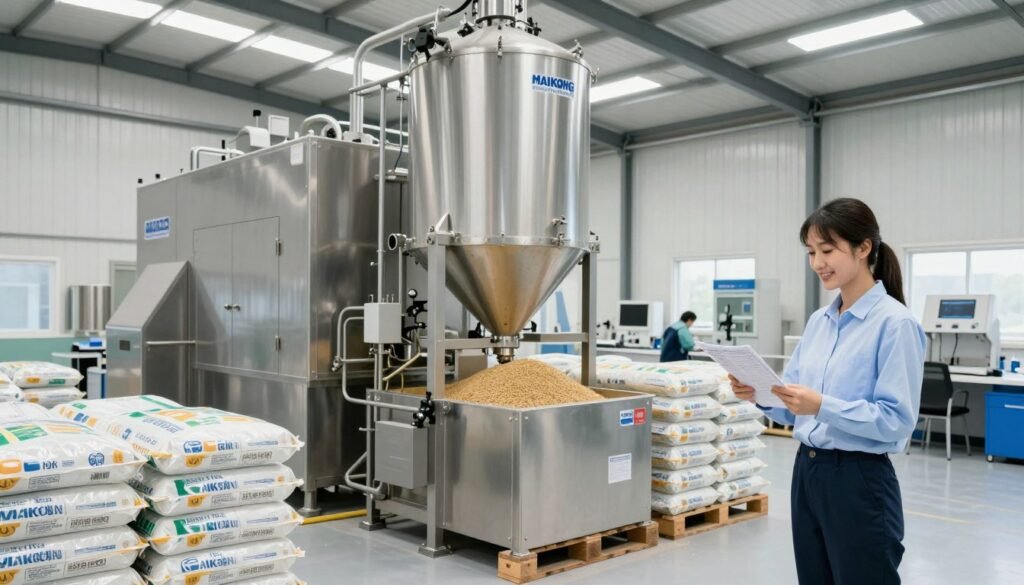
Our Model MK-L003 production systems address the full range of UK market requirements from small farm mills through large commercial installations. Capacities from 200 kilogrammes to 200 tonnes per hour accommodate operations of any scale. Complete customisation capabilities ensure your system matches your specific facility constraints, ingredient characteristics, and product specifications.
UK distributors and agents find MAIKONG an ideal manufacturing partner. We support your business development through competitive pricing, reliable delivery, comprehensive technical resources, and responsive customer service. OEM and private label programmes allow you to build your brand whilst leveraging our manufacturing expertise and quality standards.
MAIKONG Equipment Benefits
- 22+ years proven manufacturing experience
- Complete capacity range from 200kg to 200T per hour
- Full customisation for UK electrical and regulatory standards
- Successful European installations demonstrating performance
- Comprehensive installation and commissioning support
- Responsive technical service and spare parts supply
- Competitive pricing with flexible payment terms
- OEM/ODM services for distributors and private label
UK Market Advantages
- English technical documentation and support
- UK-compatible electrical specifications (415V, 3-phase)
- European logistics network for efficient delivery
- Understanding of UK agricultural business practices
- Compliance with relevant UK and EU standards
- Established European customer references
- Distributor and agent partnership opportunities
- Complete systems from single-source supplier
Feed production represents a strategic investment impacting your operation’s profitability and competitive position. Choose a equipment partner who brings genuine manufacturing expertise, proven product performance, and commitment to your long-term success. MAIKONG provides this partnership backed by global experience and focused on your UK market needs.
Ready to Discuss Your Chicken Feed Production Line Project?
Contact MAIKONG today to explore how our manufacturing experience and proven equipment solutions can support your UK feed production objectives. Whether you’re establishing a new mill, expanding existing capacity, or seeking distributor partnership opportunities, our technical team provides expert guidance matched to your specific requirements.
Get in touch using any of these convenient methods:
MAIKONG welcomes enquiries from UK poultry producers, feed manufacturers, agricultural equipment dealers, and potential distribution partners. Our engineering team responds promptly with detailed information addressing your project requirements and business objectives.
Learn more about our company and capabilities:
MAIKONG – Your Trusted Partner for Feed Production Excellence
Manufacturing location: GD Province, SZ City
Serving UK and European markets with 22+ years of expertise in animal feed production line equipment and comprehensive technical support.