
Comprehensive Guide to Pig Feed Production Line: UK Manufacturer Solutions for Commercial Swine Operations
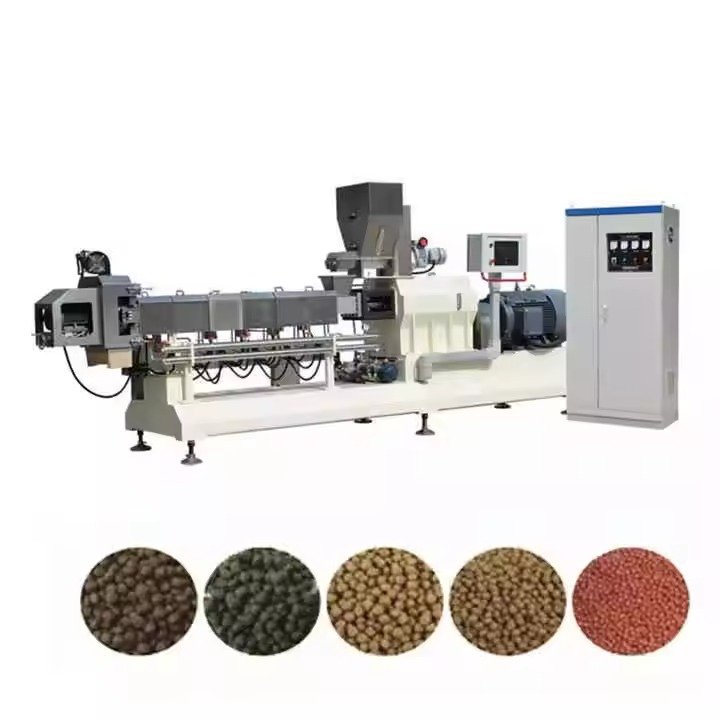
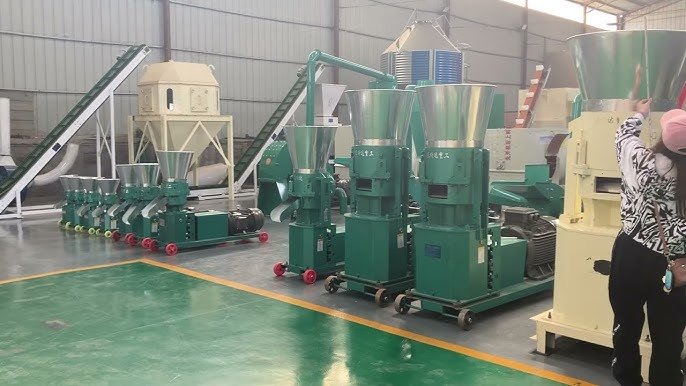
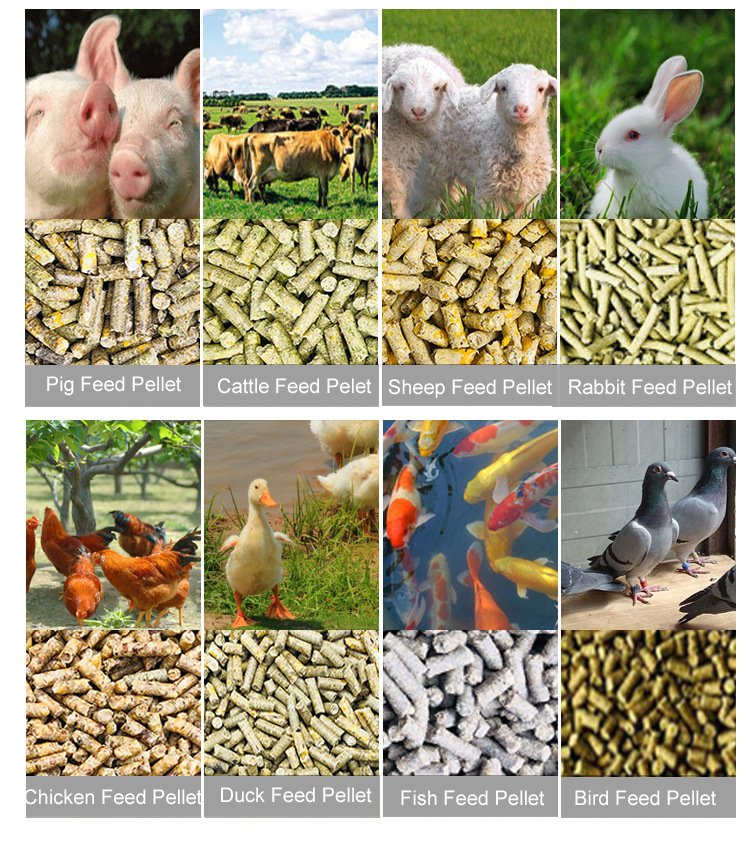
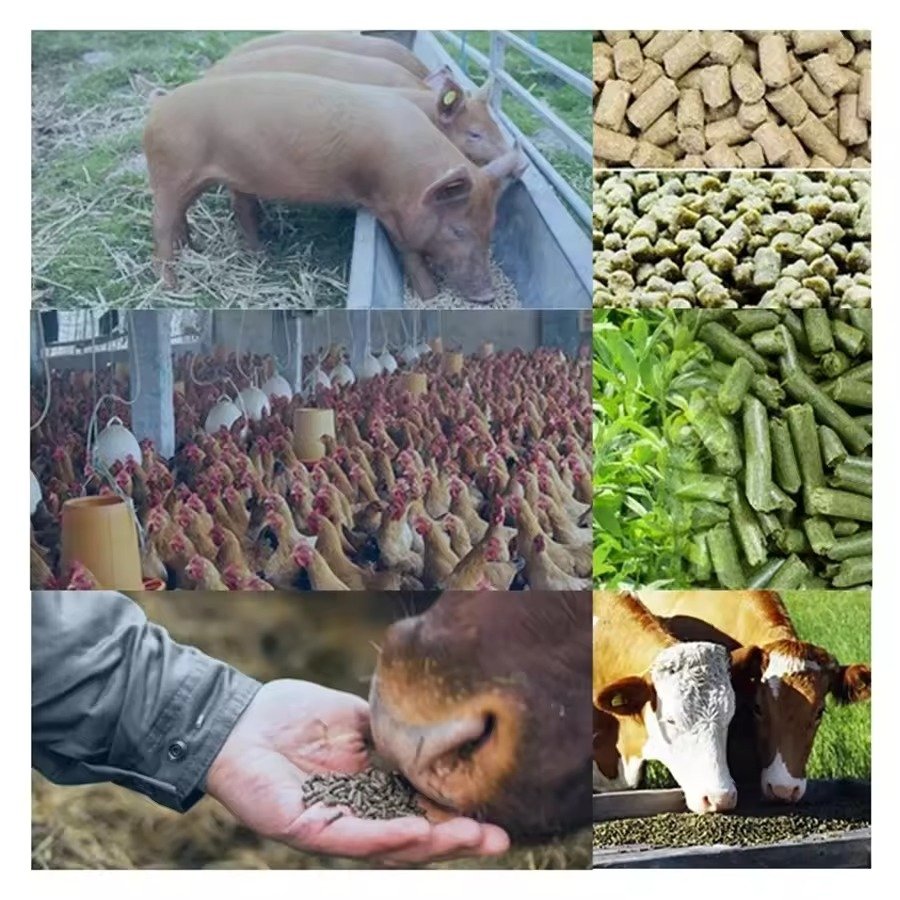
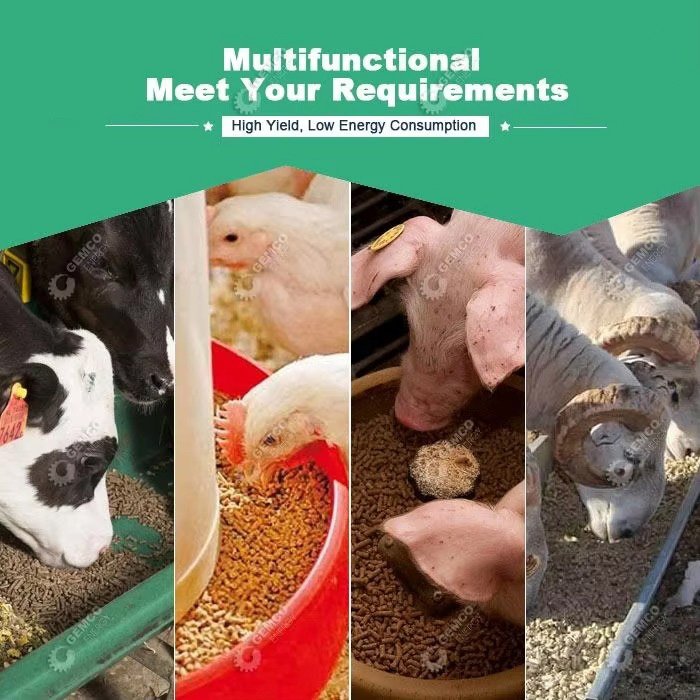
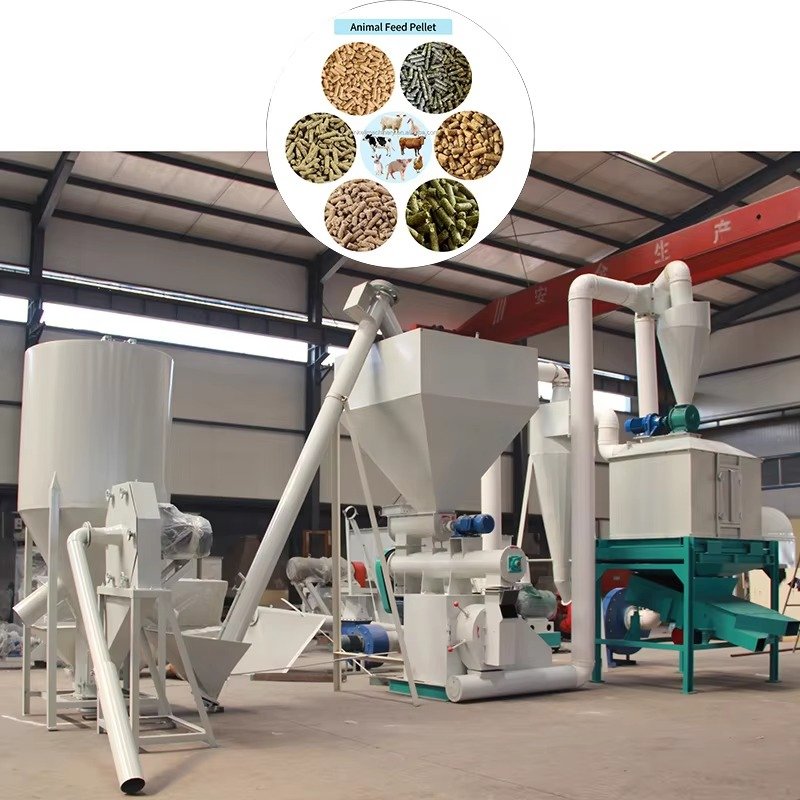
MAIKONG has manufactured animal feed production equipment for 22 years, supplying complete pig feed production line systems to operations throughout Europe, Asia, and beyond. Our model MK-L003 system exemplifies the customization and technical sophistication available to today’s feed producers.
Pig Feed Production Line Systems and Core Components
A complete pig feed production line integrates multiple processing stages that transform raw agricultural materials into nutritionally balanced pellets. The system typically includes receiving and storage equipment, grinding machinery, batching systems, mixing apparatus, pelleting machines, cooling units, and packaging equipment. Each component plays a specific role in achieving final product quality.
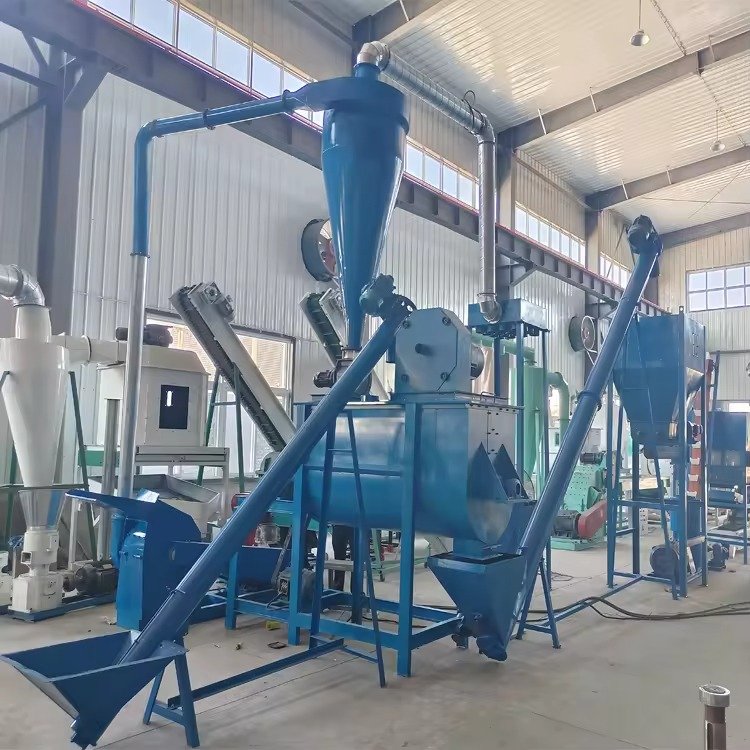
Feed processing begins with raw material reception and cleaning. Incoming grains, protein meals, and supplements must be screened to remove contaminants and foreign objects. Magnetic separators extract metallic particles that could damage downstream equipment. This preliminary stage protects your investment and ensures product safety.
Grinding equipment reduces particle size to optimize digestibility and pellet formation. Hammer mills are most common for pig feed applications, offering adjustable screen sizes that control final particle dimensions. Smaller particles generally improve pellet quality and nutrient absorption, though extremely fine grinding increases energy consumption and may create dust issues.
Primary Processing Equipment
- Raw material receiving hoppers with capacity monitoring
- Vibrating screens and magnetic separators for cleaning
- Hammer mills with variable screen configurations
- Precision batching systems with load cells
- Horizontal or vertical ribbon mixers
- Steam conditioning chambers
Finishing Equipment
- Ring die pellet mills (primary production unit)
- Counterflow coolers for temperature reduction
- Crumbler units for producing smaller pellet sizes
- Sifting screens for size classification
- Automatic bagging and weighing systems
- Finished product storage silos
Batching accuracy determines nutritional consistency across production batches. Modern systems employ electronic load cells and computerized control to dispense ingredients according to formulation requirements. Typical batching accuracy ranges from 0.2% to 0.5% for major ingredients and 1% to 2% for micro-ingredients.
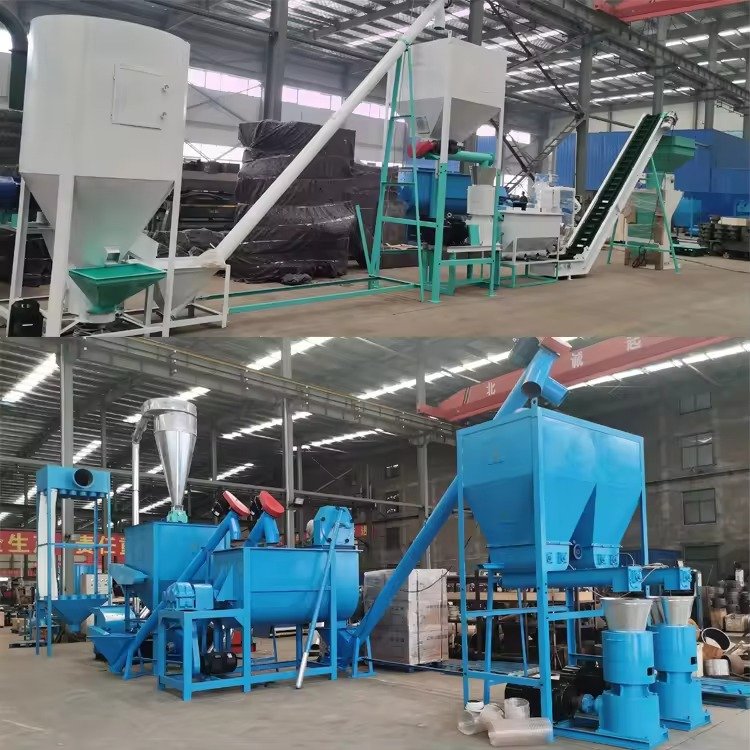
Mixing technology ensures uniform distribution of all ingredients throughout the batch. Horizontal ribbon mixers are preferred for pig feed applications due to their gentle action and coefficient of variation typically below 5%. Mixing duration ranges from 3 to 8 minutes depending on ingredient characteristics and batch size.
Request Your Free Consultation & Custom Quote
Our technical team will help you specify the ideal pig feed production line configuration for your operation’s capacity requirements and formulation needs. MAIKONG provides complete system design, equipment supply, installation supervision, and operator training for UK and European customers.
Contact: Lucy@feedproductionline.uk | +86 15815556422
Pelletizing Technology for Pig Feed Applications
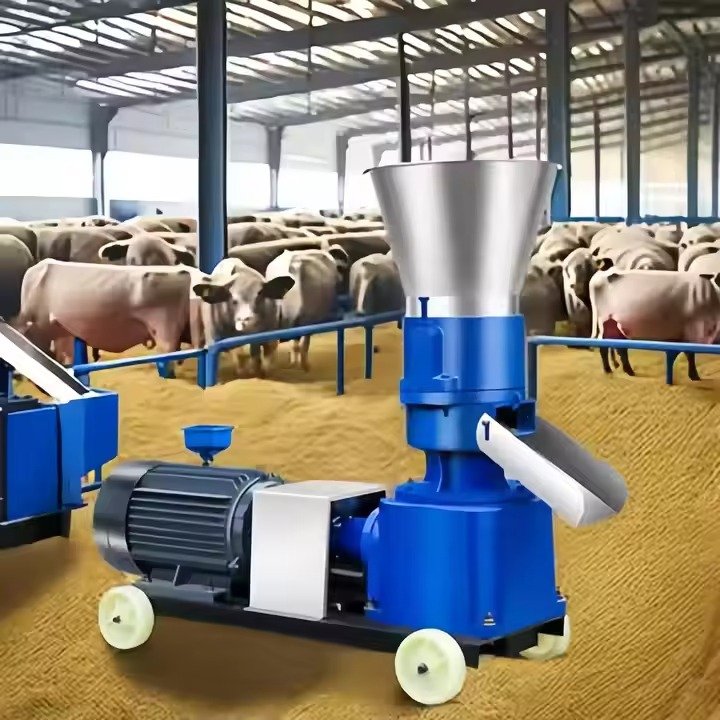
The pelleting process represents the heart of any pig feed production line. Ring die pellet mills force conditioned feed material through die openings using mechanical pressure from rotating rollers. This compression generates heat through friction whilst forming cylindrical pellets that are cut to length by fixed or rotating knives.
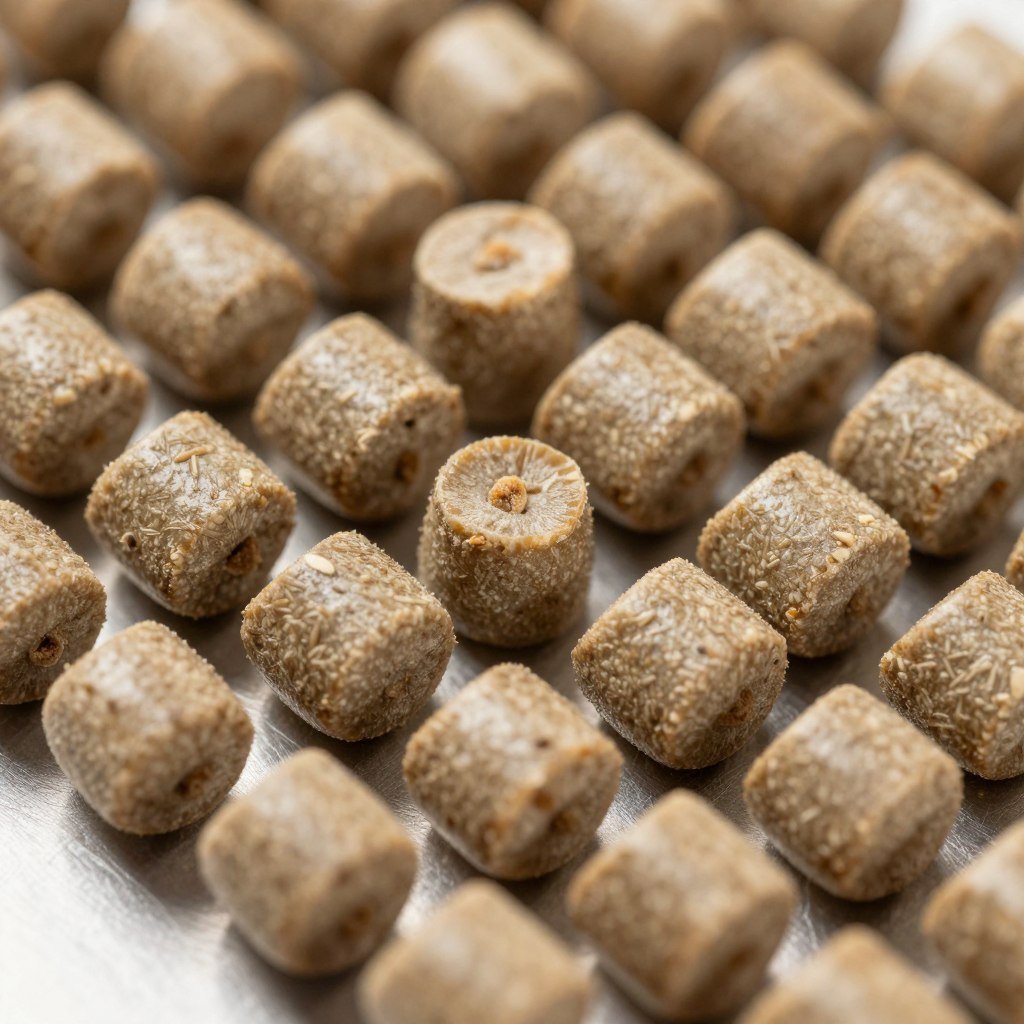
Steam conditioning precedes pelleting to improve pellet quality and production efficiency. Steam injection raises material temperature to 75-85°C whilst adding moisture. This treatment gelatinizes starch, denatures proteins, and softens fiber, making the material more plastic and easier to compress. Conditioning duration typically ranges from 30 to 60 seconds.
Die specifications significantly influence pellet characteristics and production capacity. Die hole diameter for pig feed ranges from 2.5mm for young piglets to 6mm for finishing hogs. Length-to-diameter ratio affects pellet durability and mill throughput. A ratio of 8:1 to 12:1 balances quality and production efficiency for most pig feed formulations.
Critical Pelleting Parameters
- Die hole diameter: 2.5-6mm depending on pig age
- Conditioning temperature: 75-85°C optimal range
- Conditioning time: 30-60 seconds typical duration
- Die compression ratio: 8:1 to 12:1 length-to-diameter
- Production capacity: 200kg/hour to 200 tonnes/hour
- Pellet durability index: Target above 95%
Production capacity depends on multiple factors including raw material characteristics, formulation composition, die specifications, and equipment power. A 200kW pellet mill typically produces 8-12 tonnes per hour of pig feed, though actual throughput varies with recipe and pellet size requirements.
Pellet quality measurement focuses on durability and fines percentage. The pellet durability index (PDI) quantifies pellet resistance to mechanical handling. Quality pig feed pellets should achieve PDI values above 95%. Fines content (material passing through a specified screen) should remain below 5% after cooling and handling.
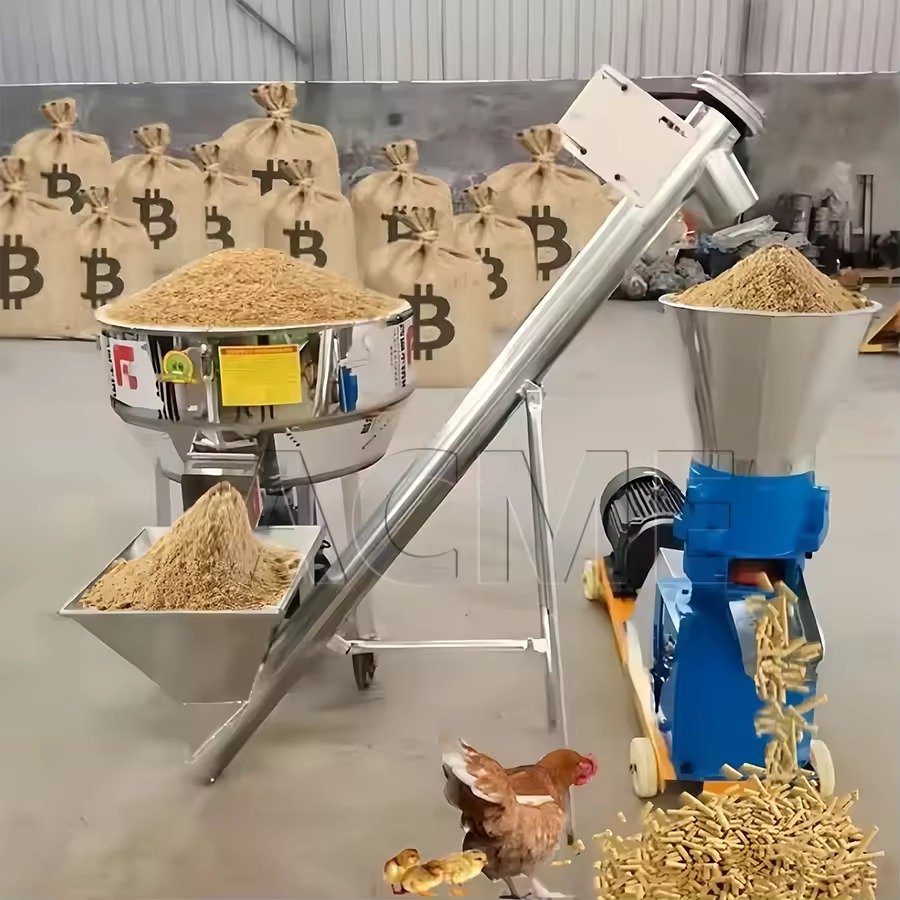
Cooling technology stabilizes pellets after the high-temperature pelleting process. Counterflow coolers pass ambient air upward through a descending bed of hot pellets. This design maximizes thermal efficiency whilst achieving uniform cooling. Proper cooling reduces pellet temperature to within 5-8°C of ambient before storage or packaging.
Formulation Considerations for Swine Nutrition Across Growth Stages
Pig nutritional requirements change dramatically from weaning through finishing. Your production line must accommodate multiple formulations targeting different growth phases. Nursery pig diets emphasize highly digestible ingredients and smaller pellet sizes. Grower and finisher formulations shift toward maximum growth efficiency and cost-effectiveness.
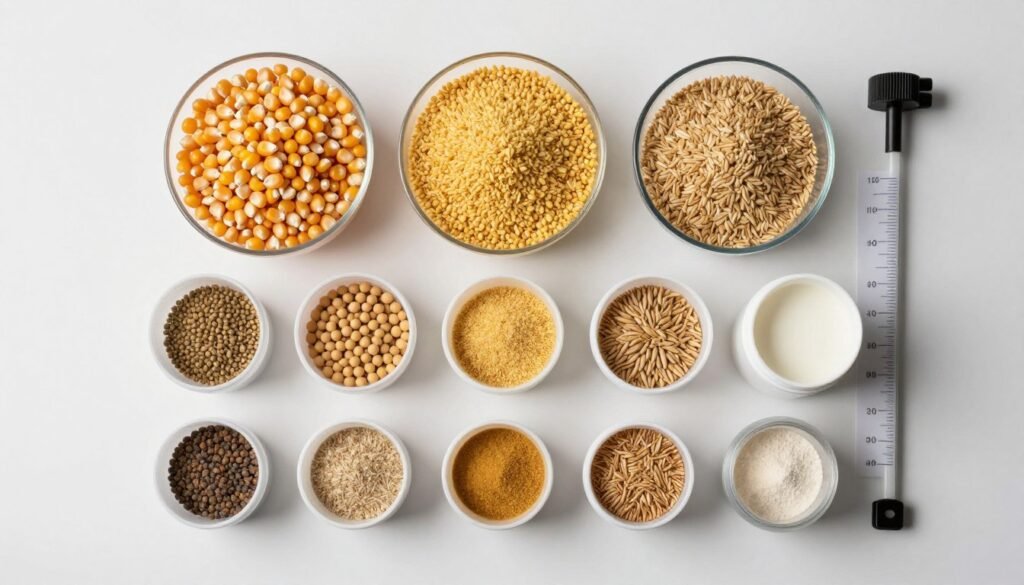
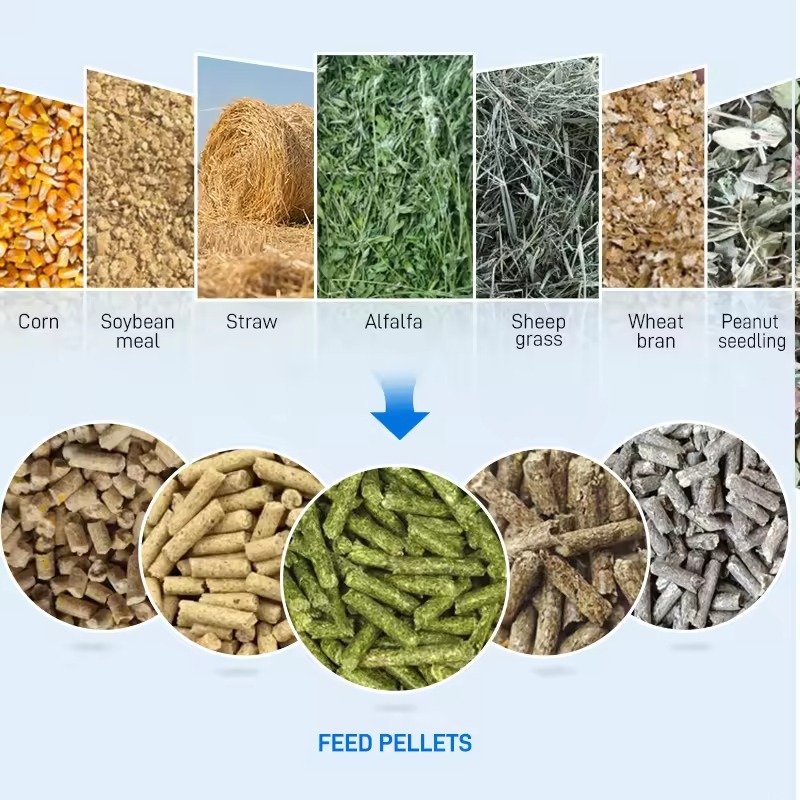
Corn and soybean meal form the foundation of most UK pig feed formulations. Corn provides energy primarily from starch, whilst soybean meal supplies protein and amino acids. Typical grower-finisher formulations contain 60-70% corn and 15-25% soybean meal, with remainder comprising wheat, barley, vitamins, minerals, and additives.
Nursery Pig Feed (7-25kg)
Pellet Size: 2.5-3.2mm diameter
- Crude protein: 18-20%
- Digestible energy: 3.4-3.5 Mcal/kg
- Lysine: 1.35-1.45%
- Calcium: 0.7-0.8%
- Phosphorus: 0.6-0.65%
Emphasizes highly digestible ingredients including plasma proteins, milk products, and specialty carbohydrates. Smaller pellet size suits developing digestive systems.
Grower Pig Feed (25-60kg)
Pellet Size: 3.2-4.5mm diameter
- Crude protein: 16-18%
- Digestible energy: 3.3-3.4 Mcal/kg
- Lysine: 1.05-1.15%
- Calcium: 0.65-0.75%
- Phosphorus: 0.55-0.6%
Transitions toward standard ingredients as digestive capability matures. Medium pellet size accommodates increased feed intake capacity.
Finisher Pig Feed (60-120kg)
Pellet Size: 4.5-6.0mm diameter
- Crude protein: 14-16%
- Digestible energy: 3.3-3.4 Mcal/kg
- Lysine: 0.85-0.95%
- Calcium: 0.6-0.7%
- Phosphorus: 0.5-0.55%
Optimized for economic growth and carcass quality. Larger pellets match intake capability and reduce feed wastage.
Ingredient moisture content affects processing behavior and pellet quality. Optimal moisture for pelleting ranges from 14% to 16%. Material that is too dry produces weak pellets with excessive fines. Excessively wet material reduces production capacity and creates sticky conditions in the die.
Fiber content influences both pellet quality and nutritional value. Moderate fiber levels (3-5% crude fiber) improve pellet durability by providing structural support during compression. However, excessive fiber reduces energy density and may decrease feed conversion efficiency.
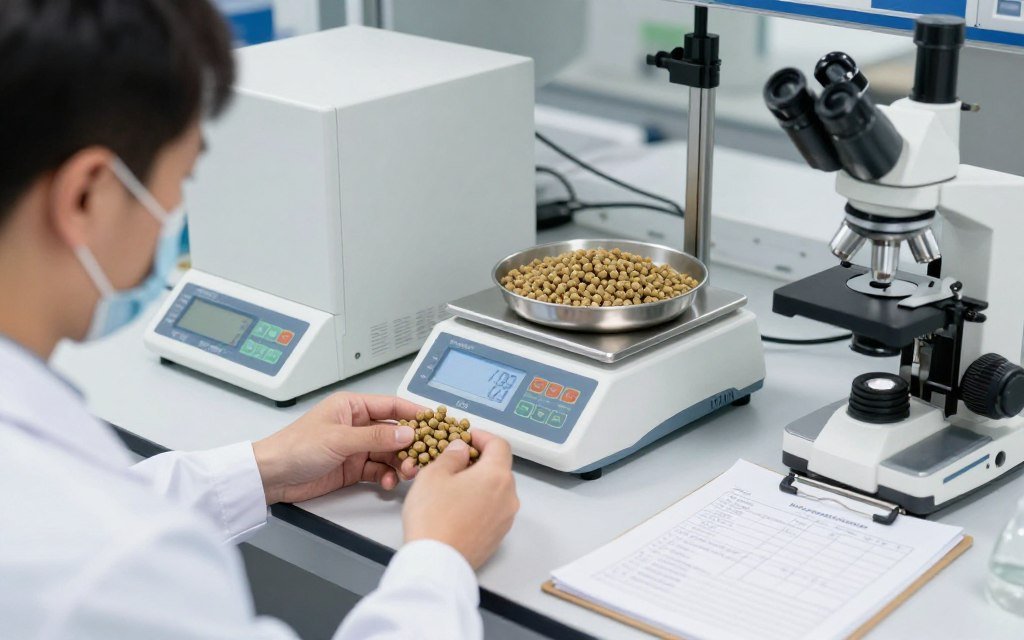
Fat addition enhances energy density but complicates pelleting. Fats reduce friction in the pellet die, potentially decreasing pellet durability. Post-pellet fat coating systems allow higher fat inclusion without compromising pellet quality. These systems spray liquid fat onto cooled pellets in a specialized mixer.
Equipment Capacity Planning and Production Efficiency
Determining appropriate production line capacity requires careful analysis of current and projected feed requirements. Undersized equipment creates production bottlenecks and limits growth potential. Oversized systems incur unnecessary capital costs and may operate inefficiently at low utilization rates.
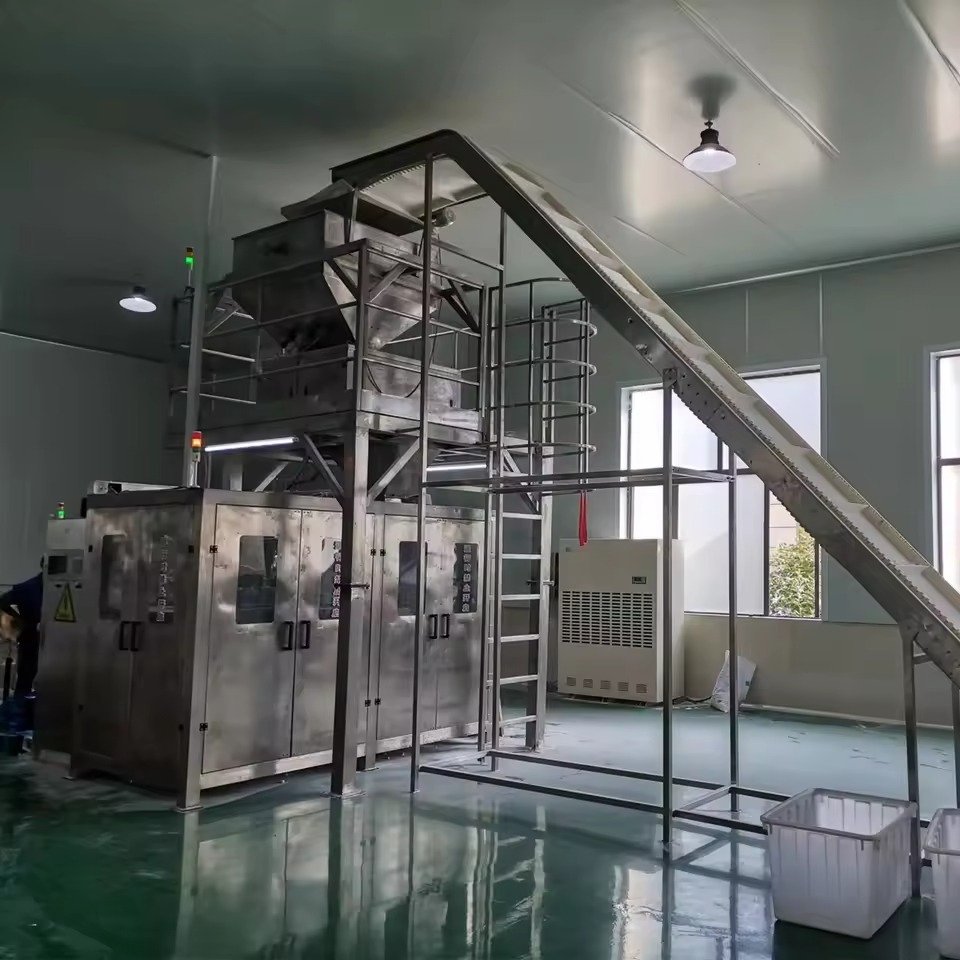
Calculate daily feed requirements based on animal numbers and consumption rates. A 1,000-head finishing operation consuming 2.5kg per pig daily requires 2.5 tonnes of feed per day. Adding 20% safety margin suggests minimum daily capacity of 3 tonnes. Assuming 8-hour production shifts, this operation needs equipment capable of at least 375kg per hour sustained production.
Production line efficiency rarely reaches 100% of nameplate capacity. Material handling delays, formulation changes, routine maintenance, and equipment adjustments reduce effective operating time. Plan for 70-85% utilization when sizing equipment. A line rated at 5 tonnes per hour typically produces 3.5-4.25 tonnes per hour averaged across full production days.
| Production Capacity | Typical Operation Scale | Pellet Mill Power | Total Installed Power | Floor Space Required | Operator Requirements |
| 200-500 kg/hour | Small farm, 200-500 pigs | 15-30 kW | 30-60 kW | 50-80 m² | 1 operator |
| 1-2 tonnes/hour | Medium farm/small mill, 1,000-2,000 pigs | 55-75 kW | 120-180 kW | 150-250 m² | 2 operators |
| 3-5 tonnes/hour | Large farm/regional mill, 3,000-5,000 pigs | 110-160 kW | 250-400 kW | 400-600 m² | 2-3 operators |
| 8-12 tonnes/hour | Commercial mill serving multiple farms | 200-280 kW | 500-750 kW | 800-1,200 m² | 3-4 operators |
| 15-25 tonnes/hour | Large commercial mill, regional distribution | 315-450 kW | 900-1,400 kW | 1,500-2,500 m² | 4-6 operators |
Energy consumption represents a significant ongoing operational cost. Pelleting typically accounts for 60-70% of total production line energy use. Specific energy consumption ranges from 15-25 kWh per tonne of finished feed depending on formulation characteristics, equipment efficiency, and die specifications.
Modular design allows capacity expansion as your operation grows. Initial installation might include a single pellet mill with supporting equipment. Future expansion adds parallel production lines or replaces smaller equipment with higher-capacity units. This phased approach matches capital investment with business growth.
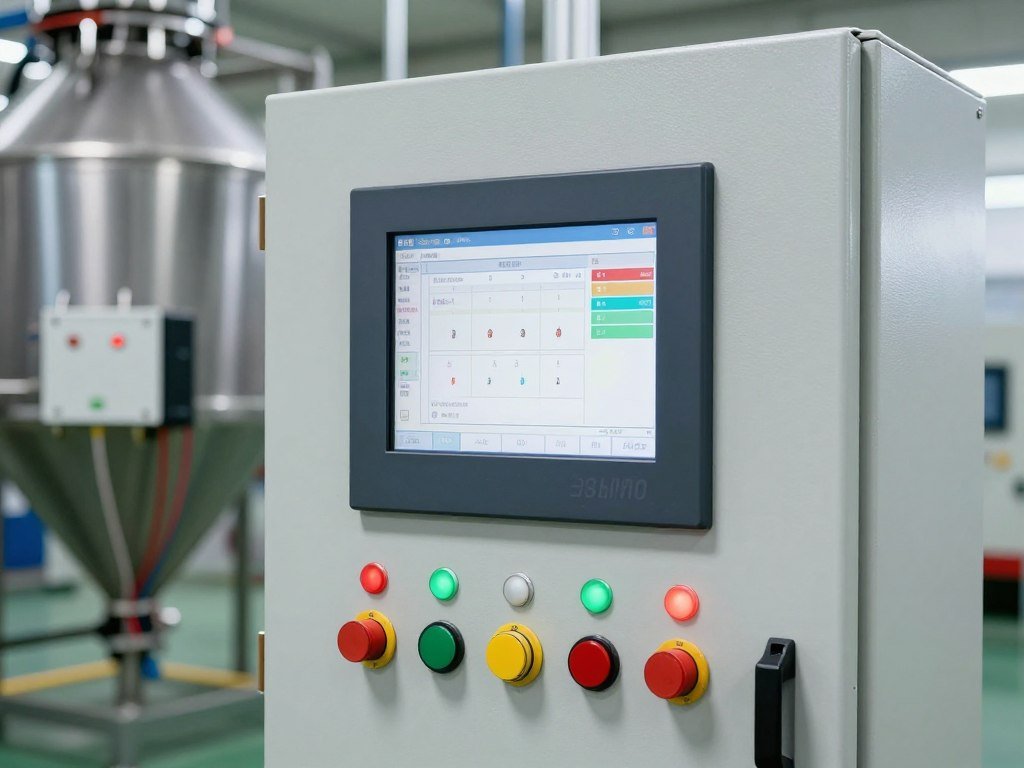
Automation level affects labor requirements and consistency. Fully automated systems with computerized formulation control and process monitoring require minimal operator intervention. Semi-automatic lines need operators for batching, machine adjustments, and quality checks. Manual operations demand continuous operator attention throughout production.
Hygiene and Safety Standards in Pig Feed Manufacturing
Feed safety directly impacts pig health and farm biosecurity. Contamination with pathogens, mycotoxins, or foreign material creates disease risks and potential regulatory violations. Manufacturing facilities must implement comprehensive hygiene protocols and hazard controls throughout production processes.
Equipment design influences cleanability and sanitation effectiveness. Stainless steel construction resists corrosion and facilitates thorough cleaning. Smooth internal surfaces without dead spaces prevent material accumulation. Access doors and inspection ports allow complete interior cleaning of mixers, conveyors, and storage vessels.
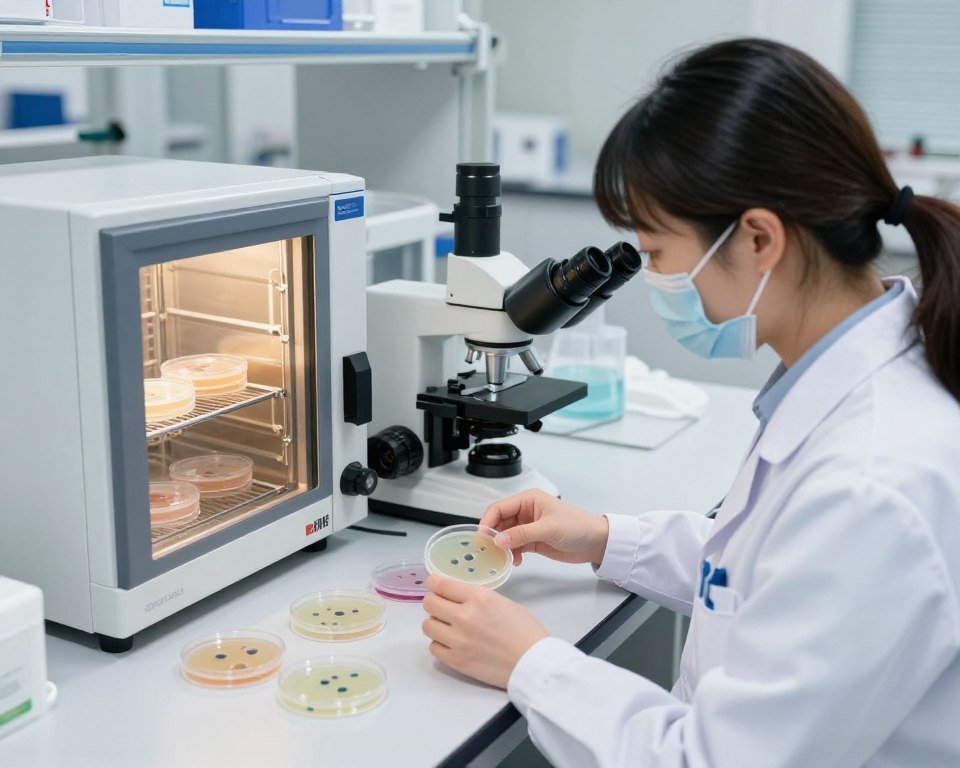
Salmonella control requires particular attention in pig feed production. Thermal processing during pelleting reduces bacterial loads, with temperatures above 80°C achieving significant pathogen reduction. However, post-pelleting contamination remains a risk. Cooling, handling, and packaging equipment must maintain sanitary conditions to preserve pellet safety.
Critical Control Points
- Raw material receiving and inspection procedures
- Ingredient storage conditions and pest management
- Equipment sanitation schedules and protocols
- Thermal processing time-temperature combinations
- Post-pelleting handling and contamination prevention
- Finished product storage and distribution controls
Dust control protects worker health and prevents explosion hazards. Feed processing generates substantial airborne dust, particularly during grinding and handling operations. Effective dust collection systems with properly sized cyclones or bag filters capture particulates before atmospheric release. Explosion-proof electrical equipment and static dissipation measures reduce ignition risks in dust-prone areas.
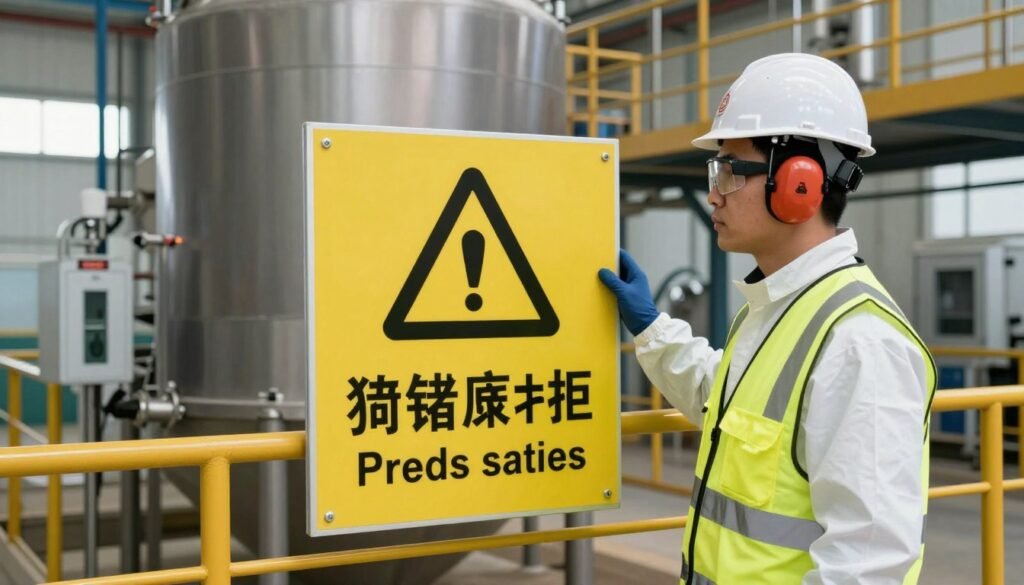
Workplace safety encompasses multiple hazards including rotating machinery, high-temperature surfaces, noise exposure, and material handling. Machine guarding prevents contact with moving parts. Proper lockout-tagout procedures protect workers during maintenance activities. Personal protective equipment including hearing protection, safety glasses, and dust masks reduces exposure risks.
Regular equipment inspection and preventive maintenance prevent failures that could compromise feed safety or worker protection. Scheduled lubrication, wear part replacement, and calibration verification maintain optimal equipment performance. Documentation of maintenance activities demonstrates due diligence and supports troubleshooting efforts.
MAIKONG UK: Advanced Manufacturing Capabilities for European Markets
MAIKONG brings 22 years of specialized experience in animal feed production line manufacturing to UK and European customers. Our engineering team understands the specific requirements of pig feed processing, from nursery pig nutrition through finishing operations. This expertise translates into equipment designs that balance production efficiency with pellet quality.
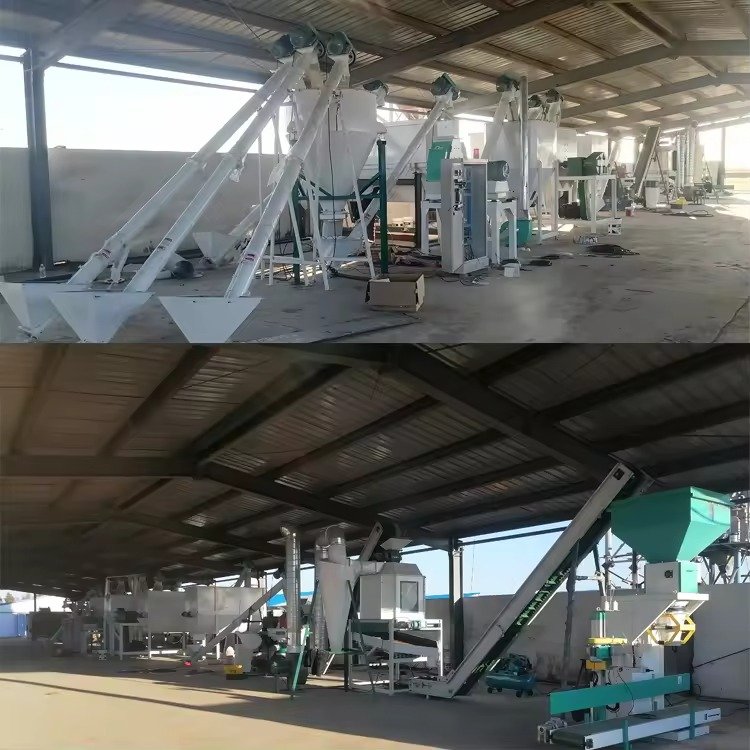
Our model MK-L003 pig feed production line exemplifies the customization available to commercial operators. This system accommodates capacities from 1 to 100 tonnes per hour depending on configuration. Automatic, semi-automatic, and manual control options suit different operational preferences and budget requirements. Each installation receives specification tailored to customer formulations and production goals.
OEM and ODM capabilities allow distributors and integrators to offer MAIKONG technology under their own brands. We support custom color schemes, control panel configurations, and specification modifications that meet local market preferences. This flexibility benefits UK distributors seeking to establish or expand their feed production line offerings.
European Case Study: Netherlands
Location: Gelderland Province
Capacity: 8 tonnes/hour
Application: Finishing pig feed for 5,000-head operation
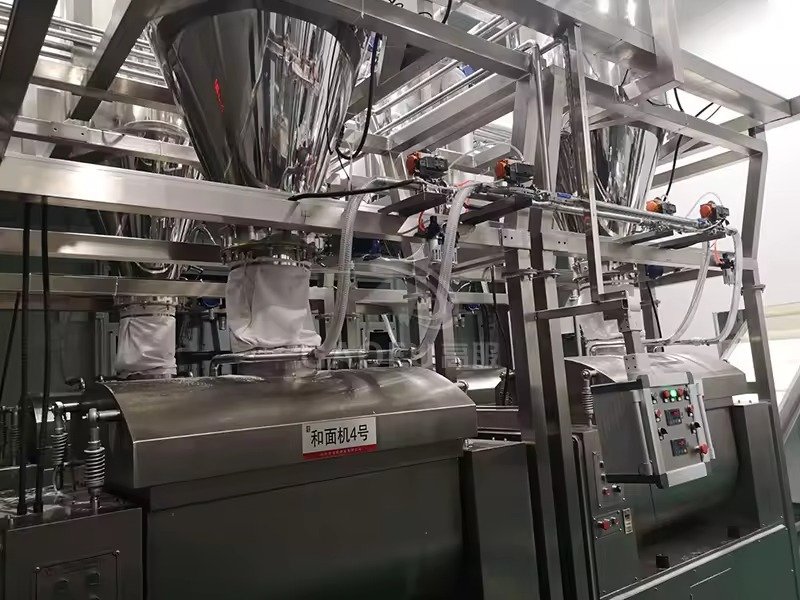
This commercial pig operation selected MAIKONG equipment for flexibility across multiple formulations. The system produces three different pellet sizes for various growth stages, supporting the farm’s continuous-flow production model.
European Case Study: Germany
Location: Lower Saxony
Capacity: 15 tonnes/hour
Application: Regional feed mill serving contract pig farms
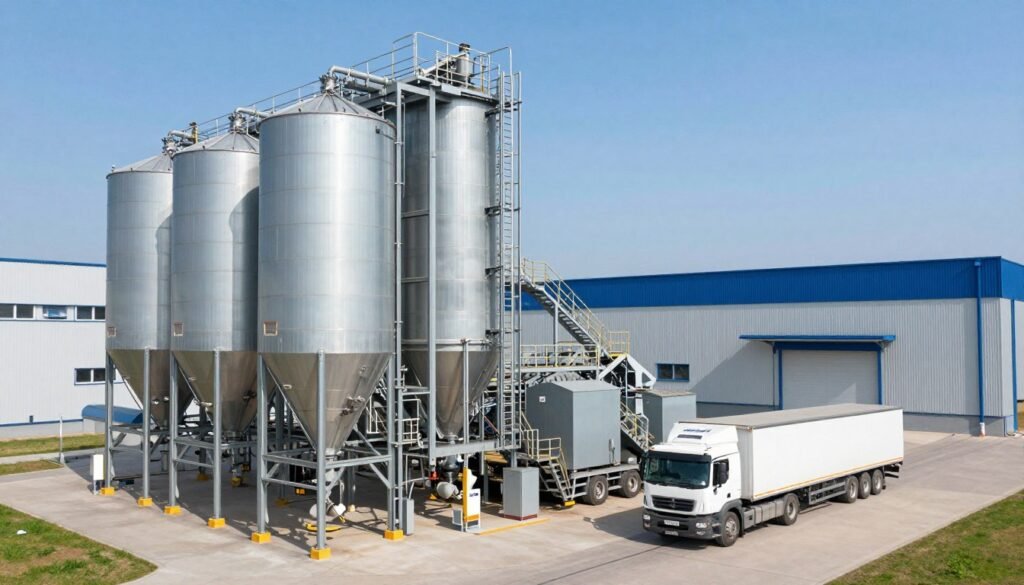
This feed mill supplies multiple pig farms throughout the region. MAIKONG’s modular design allowed phased expansion from initial 8 tonne/hour capacity. Automated formulation control supports over 20 different pig feed recipes.
European Case Study: Poland
Location: Greater Poland Voivodeship
Capacity: 12 tonnes/hour
Application: Integrated pig production complex
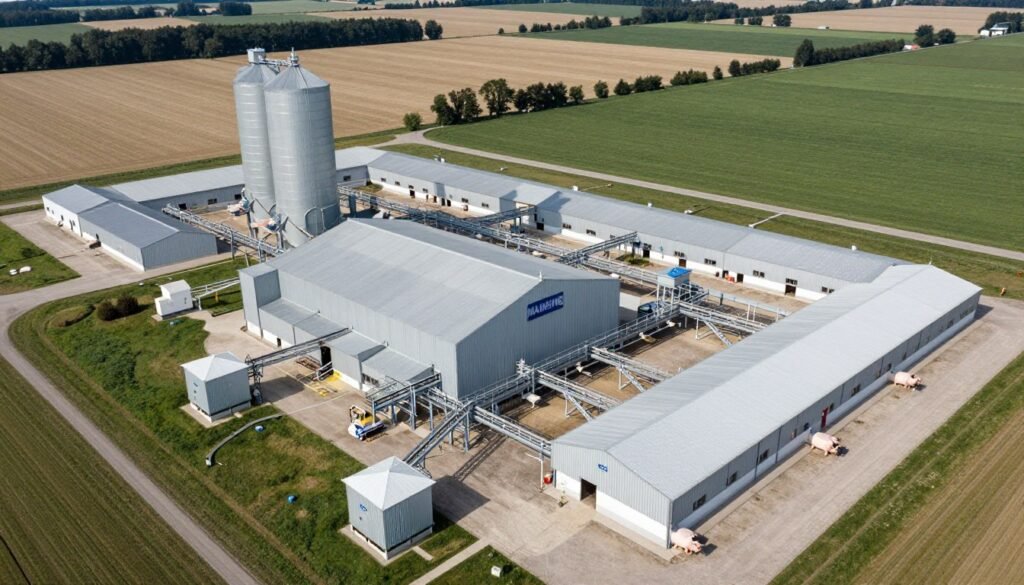
This vertically integrated operation produces feed for genetic nucleus herds through finishing. MAIKONG equipment’s hygiene standards support the biosecurity requirements of breeding stock operations whilst maintaining production efficiency.
Technical support extends throughout project lifecycle from initial specification through decades of operation. Our engineers assist with system design, equipment selection, installation supervision, operator training, and ongoing technical consultation. We maintain comprehensive spare parts inventory ensuring rapid response to maintenance requirements.
Quality certification demonstrates our commitment to manufacturing standards. MAIKONG facilities maintain ISO quality management systems with regular third-party audits. Individual equipment carries CE marking where applicable, confirming compliance with European safety and performance directives.
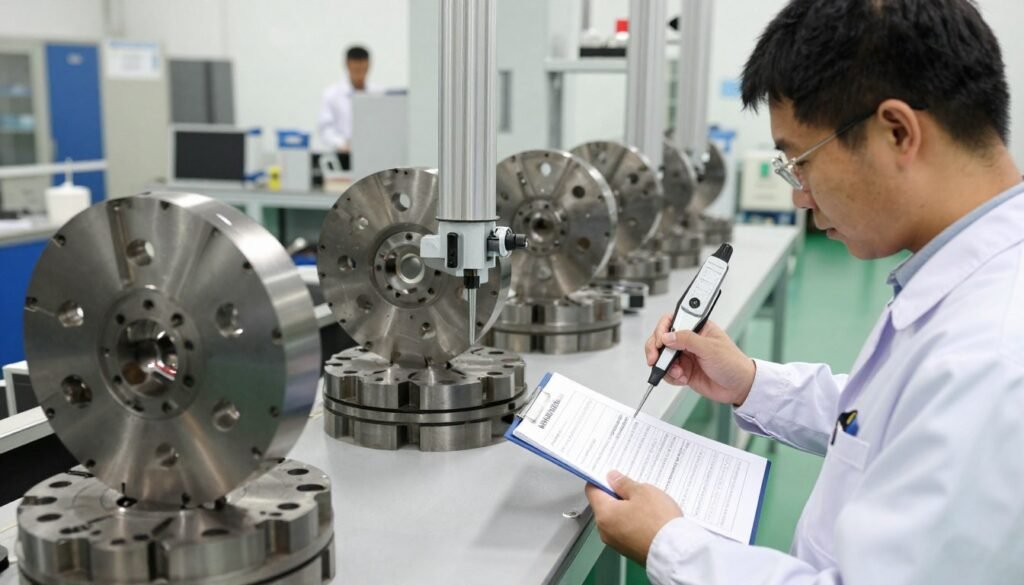
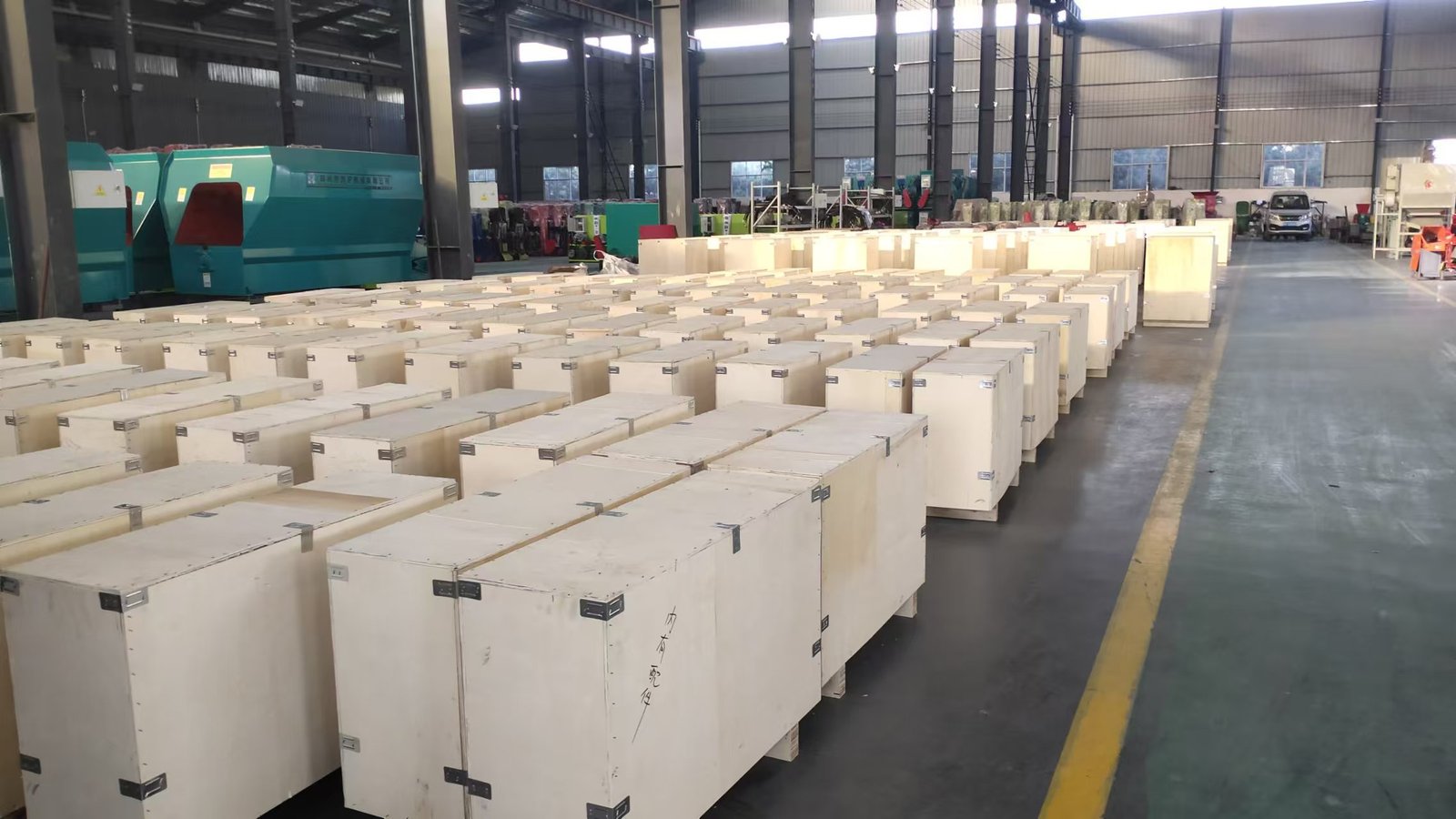
Export packaging protects equipment during international shipping. We utilize fumigation-treated wooden crates, waterproof wrapping, and shock-absorbing materials appropriate for ocean and ground transport. Container loading follows best practices maximizing equipment protection whilst optimizing space utilization.
Complete System Design
Our engineers create optimized layouts matching your facility constraints and workflow requirements. 3D modeling and production flow simulation identify potential issues before construction begins.
- Site assessment and measurement
- Equipment arrangement optimization
- Material flow analysis
- Utility requirement specification
- Structural and foundation design coordination
Installation & Commissioning
MAIKONG technical staff supervise installation ensuring correct assembly and optimal performance. Comprehensive commissioning procedures verify all systems before handover to your operation.
- On-site installation supervision
- Equipment assembly guidance
- Electrical and control system setup
- Performance testing and verification
- Operator training programs
After-Sales Support
Ongoing technical support keeps your production line operating efficiently for decades. We maintain parts inventory, provide remote troubleshooting, and offer equipment upgrades as technology advances.
- 24-hour technical response
- Spare parts availability
- Remote diagnostic assistance
- Periodic maintenance planning
- Equipment upgrade options
Investment Considerations and Return on Investment Analysis
Capital investment in pig feed production equipment requires careful financial analysis. Equipment costs represent only one component of total project expenditure. Facility construction or modification, installation labor, spare parts inventory, operator training, and working capital for raw materials contribute to overall investment requirements.

Production line cost varies significantly with capacity and automation level. Small-scale systems (500kg-1 tonne/hour) suitable for individual farms typically require £30,000-£60,000 investment. Medium-capacity operations (3-5 tonnes/hour) range from £100,000-£200,000. Large commercial mills (10-25 tonnes/hour) involve investments of £300,000-£800,000 or more depending on specification.
Operating costs include energy consumption, labor, maintenance, and ingredient procurement. Energy typically represents 8-12% of total feed production cost. Labor requirements vary with automation level from 0.3-0.8 hours per tonne produced. Maintenance costs average 2-4% of equipment capital value annually.
Cost-Benefit Analysis Factors
Return on investment depends on multiple variables unique to each operation. Feed cost savings compared to commercial feed purchases typically range from 15-30% depending on ingredient sourcing and production efficiency. Quality improvements and reduced disease incidence may provide additional indirect benefits.
- Commercial feed cost vs. ingredient costs in your region
- Production volume and capacity utilization rates
- Energy and labor costs in your location
- Formulation flexibility and least-cost formulation opportunities
- Quality control improvements and reduced feed wastage
- Equipment lifespan and residual value considerations
Payback periods for on-farm feed production typically range from 2-5 years for operations with consistent feed demand. Commercial feed mills serving multiple customers often achieve shorter payback through higher utilization rates and value-added services.
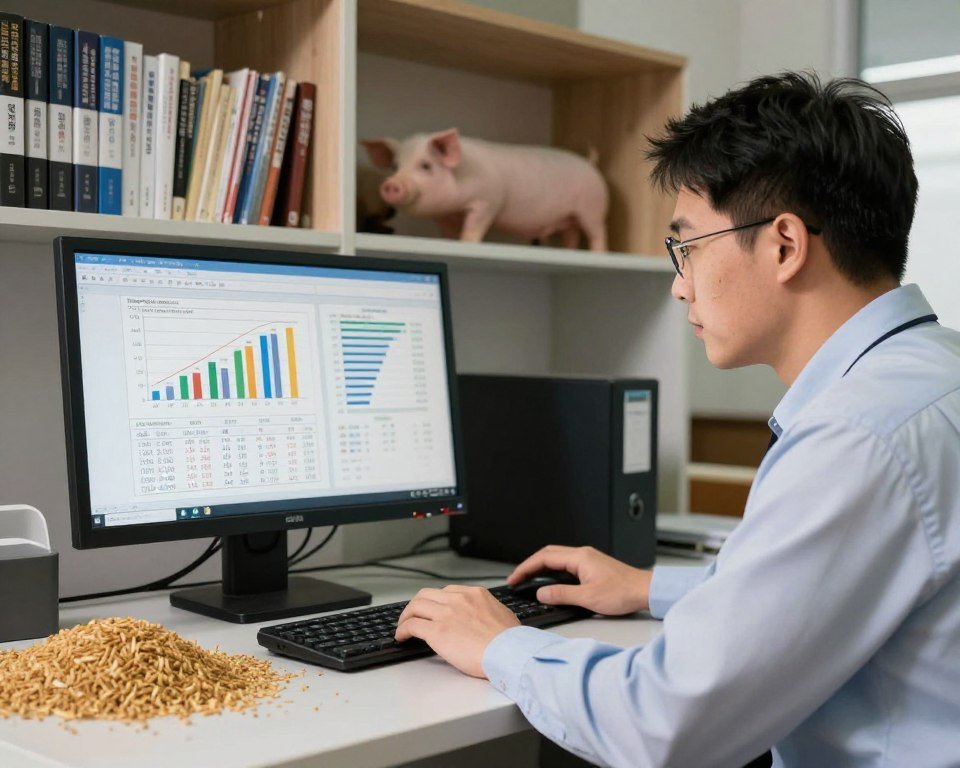
Financing options affect project feasibility. Equipment leasing or hire-purchase arrangements reduce upfront capital requirements whilst preserving working capital for operations. Some agricultural lenders offer favorable terms for feed production equipment recognizing the long-term cost benefits to livestock operations.
Technology obsolescence represents a moderate risk in feed production equipment. Core mechanical systems (crushers, mixers, pellet mills) remain viable for 15-25 years with proper maintenance. Control systems may require updates as technology advances, but modular designs allow selective upgrades without complete equipment replacement.
Common Operational Challenges and Practical Solutions
Feed production operations encounter various technical challenges affecting efficiency and product quality. Understanding common issues and their solutions helps operators maintain consistent performance and minimize costly downtime.
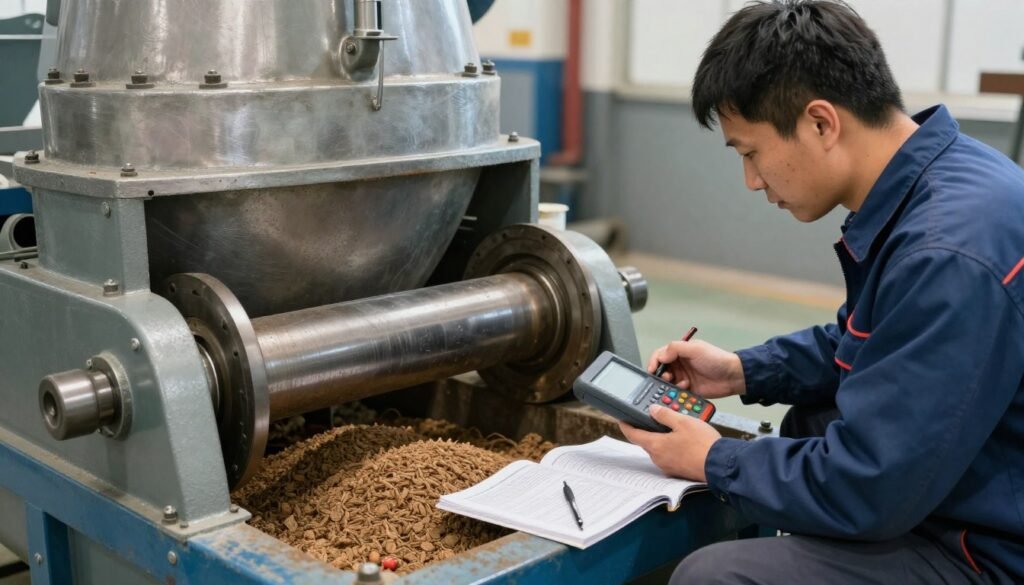
Die blockage frustrates operators and reduces production capacity. This issue typically stems from excessive moisture content, insufficient conditioning temperature, or worn die surfaces. Solutions include verifying ingredient moisture levels, adjusting steam pressure to achieve proper conditioning temperature, and implementing regular die replacement schedules based on production tonnage.
High fines percentage indicates inadequate pellet durability. Contributing factors include insufficient steam conditioning, inappropriate die specifications, or suboptimal formulation characteristics. Increasing conditioning time or temperature often improves pellet quality. Die hole length-to-diameter ratio adjustments may be necessary for particularly challenging formulations.
Why are my pellets too soft and crumbly?
Soft, crumbly pellets usually result from insufficient heat and moisture during conditioning or inappropriate formulation binders. Increase steam pressure to raise conditioning temperature to 75-85°C. Verify steam quality—wet steam contains excessive moisture that actually reduces pellet quality. Consider adding natural binding agents such as bentonite clay at 0.5-1% inclusion rate. Ensure die is not excessively worn; smooth, polished die holes from extended use reduce friction necessary for proper pellet formation.
How can I reduce excessive dust in my production facility?
Dust accumulation indicates inadequate collection systems or air leaks in conveyors and equipment. Install or upgrade dust collection equipment with properly sized cyclones or bag filters. Seal conveyor housings and transfer points to contain airborne particles. Add small amounts of liquid (water or fat) during mixing to agglomerate fine particles—1-2% moisture addition significantly reduces dust without compromising pellet quality. Implement regular cleaning schedules focusing on elevated surfaces where dust accumulates.
What causes uneven mixing and ingredient segregation?
Mixing problems stem from insufficient mixing time, improper mixer loading sequence, or equipment wear. Extend mixing duration—most formulations require 4-6 minutes for adequate blending. Add ingredients in proper sequence: dry ingredients first, followed by liquids near mixing cycle end. Regularly inspect mixer ribbons or paddles for wear; replace when clearance exceeds manufacturer specifications. Avoid overfilling mixer beyond rated capacity as this prevents proper ingredient movement.
How do I prevent pellet mill bearing failures and extend equipment life?
Bearing failures typically result from inadequate lubrication, contamination, or misalignment. Implement strict lubrication schedules using manufacturer-specified greases. Install proper seals preventing feed dust and moisture from reaching bearing surfaces. Monitor bearing temperatures—readings above normal indicate developing problems. Verify proper shaft alignment during installation and after major maintenance. Schedule regular bearing inspection and replacement based on operating hours rather than waiting for failure.
Production capacity decline over time usually relates to die and roller wear. As these components wear, clearances increase and compression effectiveness decreases. Regular inspection of critical wear parts with micrometer measurements identifies degradation before severe capacity loss occurs. Establishing replacement schedules based on production tonnage prevents unexpected failures.
Spare parts inventory management balances availability against capital tied up in stock. Critical wear parts including die and roller assemblies, mixer ribbons, screen perforations, and bearings should remain on-hand for immediate replacement. Less critical components can be ordered as needed provided supplier lead times are reasonable. MAIKONG maintains UK-accessible spare parts inventory supporting rapid response to customer requirements.
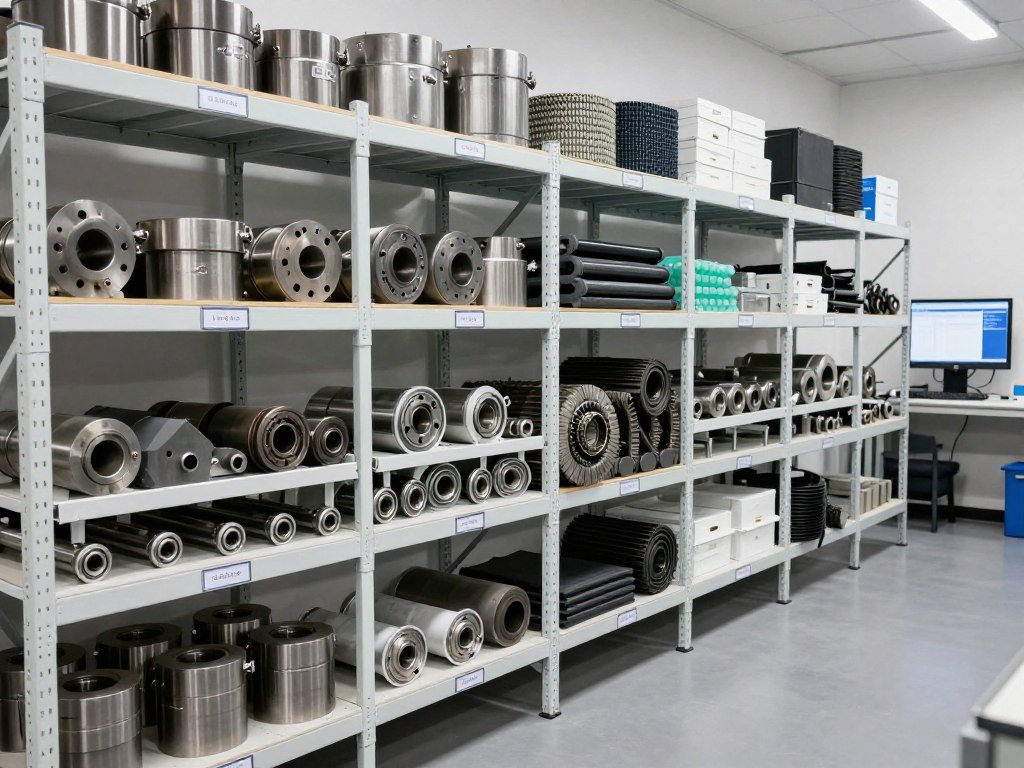
Operator training significantly affects production efficiency and product quality. Comprehensive initial training covering equipment operation, routine maintenance, troubleshooting procedures, and safety protocols establishes foundation for successful operation. Ongoing education updates operators on equipment optimization techniques and addresses recurring issues.
UK Distributor and Partnership Opportunities with MAIKONG
MAIKONG actively seeks qualified distributors and partners throughout the United Kingdom and broader European markets. The growing emphasis on farm sustainability and feed security creates strong demand for reliable pig feed production equipment. Distributors benefit from representing an established manufacturer with proven technology and comprehensive support infrastructure.

Ideal distribution partners possess established relationships within the UK agricultural equipment sector. Experience with livestock production equipment, understanding of animal nutrition principles, and technical service capabilities enhance distributor effectiveness. MAIKONG provides comprehensive product training, technical support, and marketing resources supporting distributor success.
Distributor Benefits and Support Package
MAIKONG distributor partnerships include comprehensive support ensuring your success in the UK market:
Business Support
- Exclusive or preferred territory arrangements
- Competitive distributor pricing structure
- Flexible payment terms for established partners
- Co-operative marketing fund contribution
- Lead generation and inquiry referral system
- Trade show participation support
Technical Support
- Comprehensive product training programs
- Technical documentation and specification sheets
- Installation guidance and commissioning support
- After-sales technical assistance
- Spare parts supply and logistics support
- Equipment customization capabilities
We seek long-term partnerships with distributors committed to representing quality equipment and providing excellent customer service. Initial minimum order requirements are reasonable, allowing new partners to establish market presence without excessive inventory investment.
Market opportunities extend beyond traditional pig farming operations. Emerging sectors including organic livestock production, specialty pork programs, and local food systems create demand for flexible, smaller-scale feed production capabilities. Distributors who understand these niche markets can develop specialized equipment packages addressing specific customer requirements.
OEM arrangements allow established equipment suppliers to expand their product portfolio without developing manufacturing capabilities. MAIKONG produces equipment to your specifications, branded with your identity. This approach leverages our manufacturing expertise whilst you maintain customer relationships and market presence. Minimum order quantities for OEM programs depend on customization requirements and production scheduling.
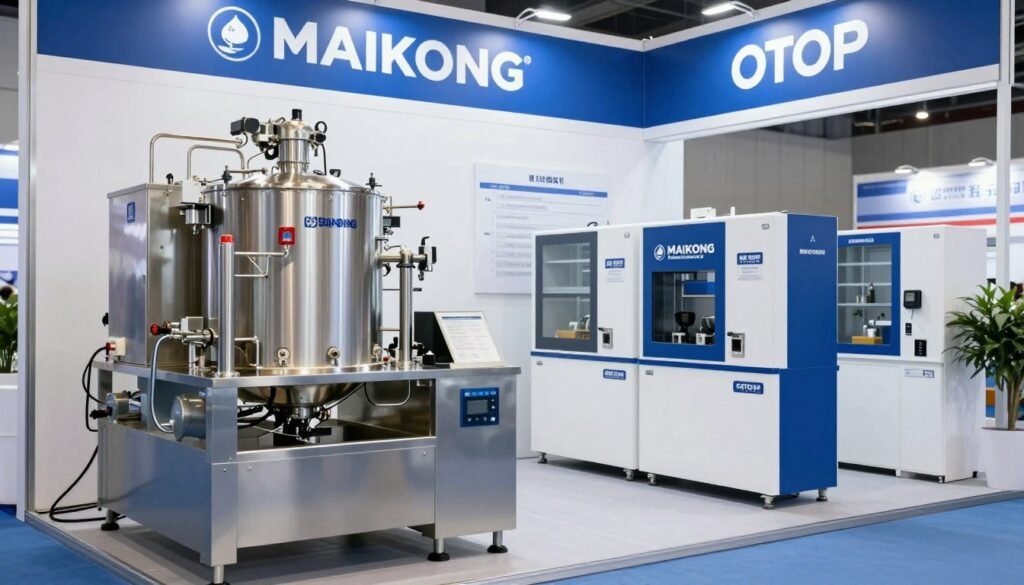
Technical service capability distinguishes successful distributors in the agricultural equipment sector. Customers expect prompt response to equipment issues and knowledgeable technical support. MAIKONG provides distributor technical training covering equipment operation, maintenance procedures, troubleshooting methods, and common repair techniques. Remote diagnostic support assists distributors in resolving customer issues efficiently.
Future Trends in Pig Feed Production Technology
Feed production technology continues evolving in response to nutritional research, sustainability concerns, and automation advances. Understanding emerging trends helps operators and investors make equipment decisions that remain relevant throughout extended service lives.
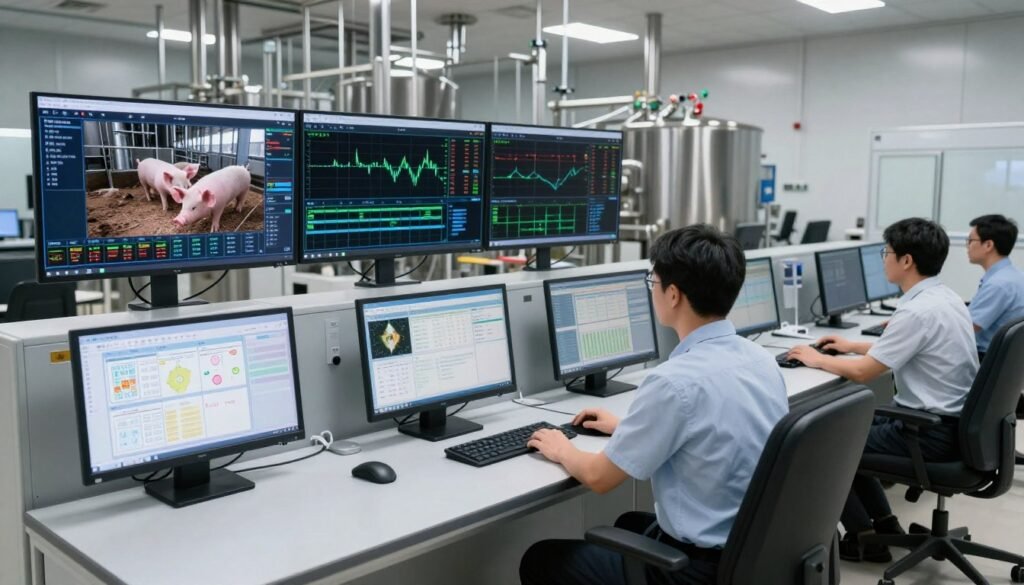
Precision nutrition employs detailed knowledge of pig requirements at specific production stages to optimize formulations. This approach minimizes nutrient excretion whilst maintaining performance. Feed production equipment increasingly incorporates flexible batching systems that easily accommodate frequent formulation changes supporting precision feeding strategies.
Alternative protein sources address sustainability concerns and price volatility of conventional ingredients. Insect meals, single-cell proteins, and novel plant proteins enter pig feed formulations. Production equipment must accommodate these materials’ unique physical and processing characteristics. MAIKONG engineers monitor these developments, ensuring equipment designs remain compatible with emerging ingredients.
Current Technology Focus
- Conventional grain and soybean meal formulations
- Standard pellet sizes for broad pig categories
- Semi-automated control systems
- Batch production methodologies
- Energy efficiency improvements
- Operator-dependent quality control
Emerging Technology Trends
- Alternative proteins and by-product utilization
- Customized pellets for specific production phases
- Fully automated production with AI optimization
- Continuous production methodologies
- Renewable energy integration (solar, biomass)
- Automated quality monitoring and adjustment
Future Development Directions
- Circular economy integration (waste-to-feed)
- Individualized nutrition based on genetics
- Machine learning for formulation optimization
- Distributed production (on-farm micro-mills)
- Carbon-neutral manufacturing processes
- Blockchain traceability throughout supply chain
Automation and data integration create “smart” feed mills that optimize production parameters in real-time. Sensors throughout production lines monitor temperatures, moisture levels, power consumption, and production rates. Advanced control systems adjust equipment settings automatically maintaining optimal performance despite ingredient variations. These technologies reduce labor requirements whilst improving consistency.
Sustainability measures address environmental impact of feed production. Energy-efficient motor systems, waste heat recovery, and renewable energy integration reduce carbon footprint. Water conservation measures minimize environmental discharge. MAIKONG equipment designs incorporate these considerations, supporting customers’ sustainability objectives.
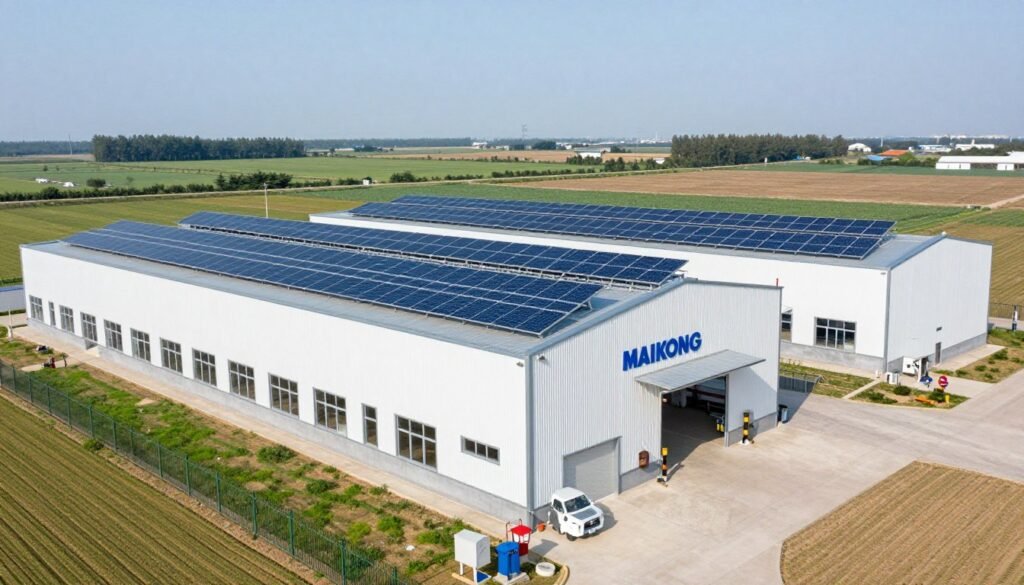
Equipment modularity and upgradeability protect long-term investment value. Core mechanical components remain viable for decades, but control systems and automation technology advance rapidly. MAIKONG designs separate mechanical and control elements, allowing selective technology upgrades without complete equipment replacement. This approach maintains competitiveness whilst maximizing equipment lifespan.
Taking the Next Step: Implementing Your Pig Feed Production Solution
Successful pig feed production line implementation requires careful planning, appropriate equipment selection, and ongoing operational optimization. This guide has examined the critical factors influencing these decisions, from processing technology and capacity planning to formulation considerations and operational challenges.
Your specific requirements depend on operation scale, pig types, production philosophy, and business objectives. Small farm-based systems prioritize simplicity and flexibility. Commercial mills emphasize capacity, efficiency, and product diversity. Both applications benefit from equipment designed and manufactured to rigorous quality standards by experienced suppliers.
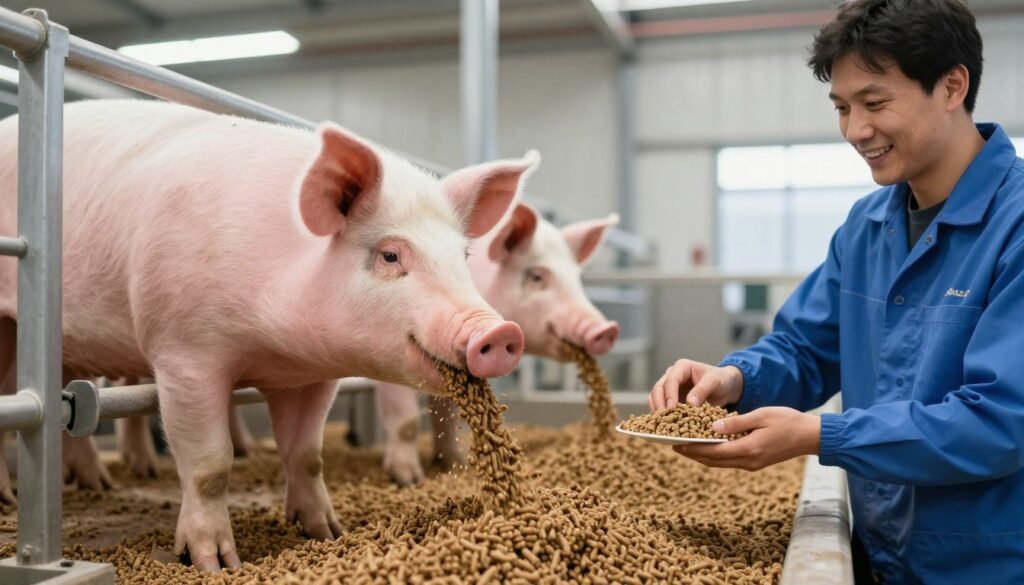
MAIKONG’s 22-year heritage in feed pellet production line manufacturing provides the technical foundation for your project success. Our model MK-L003 systems serve operations from 200 kilograms to 200 tonnes per hour capacity. Customization capabilities ensure equipment matches your formulation requirements, facility constraints, and automation preferences.
Whether you operate an existing pig farm seeking to reduce feed costs, plan a new commercial feed mill, or represent an equipment distributor expanding your product portfolio, MAIKONG offers solutions supporting your objectives. Our comprehensive approach encompasses system design, equipment supply, installation support, operator training, and long-term technical assistance.
Contact MAIKONG Today to Discuss Your Pig Feed Production Requirements
Our experienced team is ready to help you specify the ideal equipment configuration for your operation. We provide detailed quotations, technical specifications, and project timelines supporting your decision-making process. For UK distributors and partners, we offer attractive commercial terms and comprehensive support programs.
Direct Contact:
Email: Lucy@feedproductionline.uk
Website: feedproductionline.uk
MAIKONG — 22 Years Manufacturing Excellence in Animal Feed Production Equipment
Investment in quality feed production equipment represents a strategic decision affecting your operation’s performance for decades. Take time to thoroughly evaluate your requirements, compare available options, and select suppliers committed to your long-term success. MAIKONG stands ready to support your pig feed production objectives with proven technology, comprehensive service, and genuine partnership.