
Feed Pellet Production Line UK | MAIKONG Manufacturer
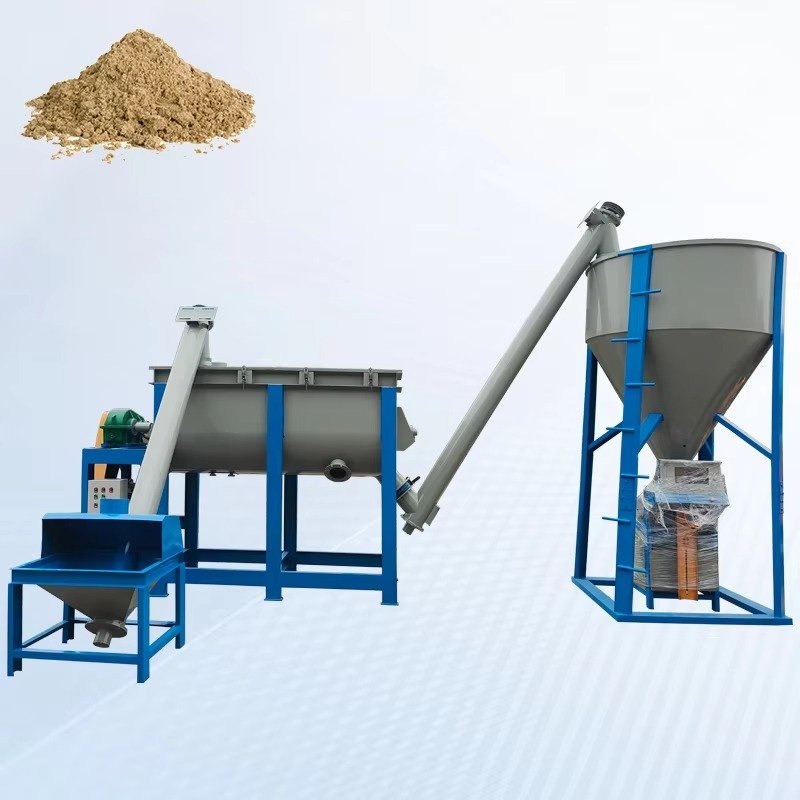
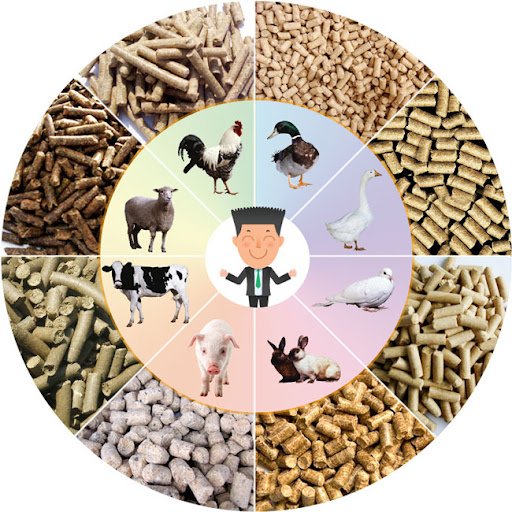
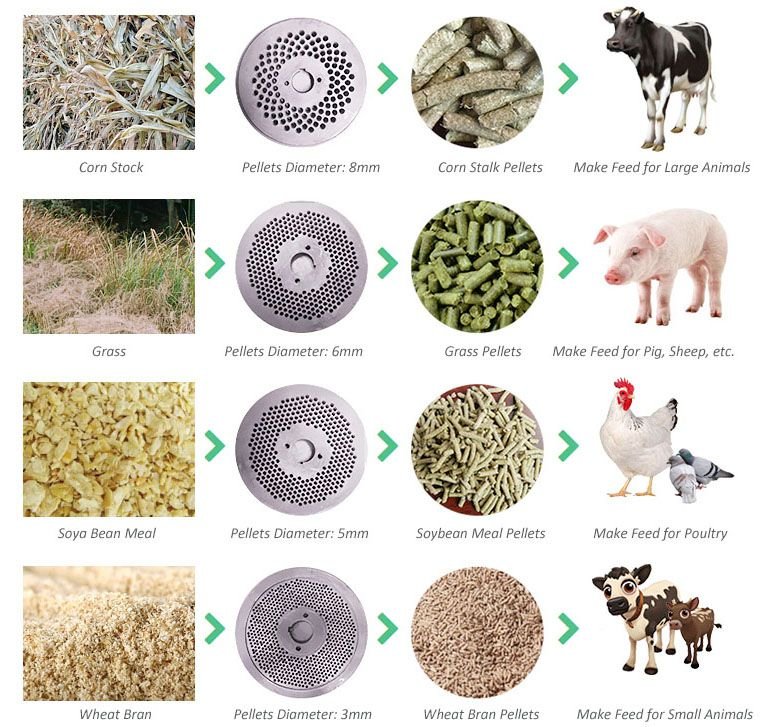
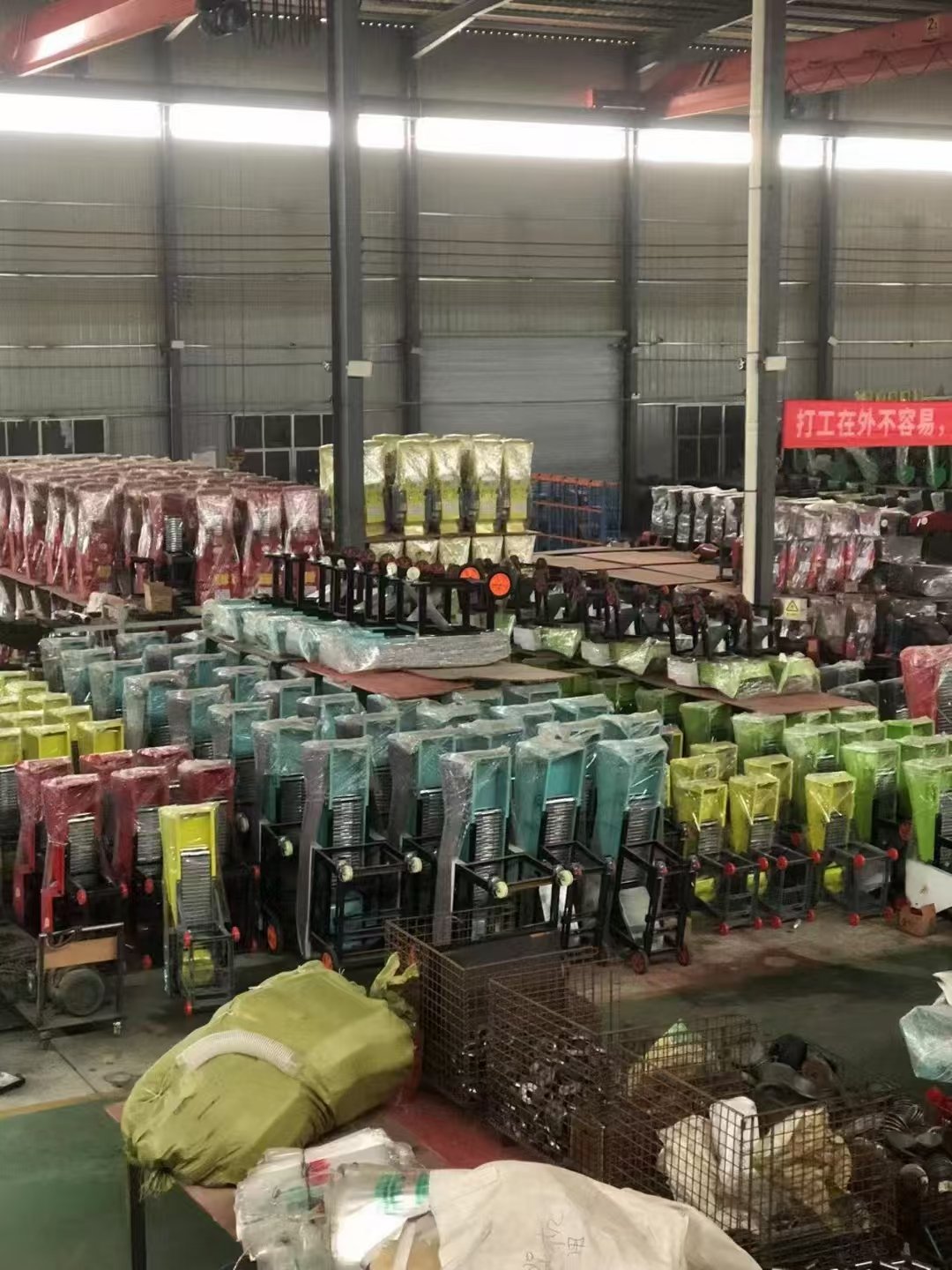
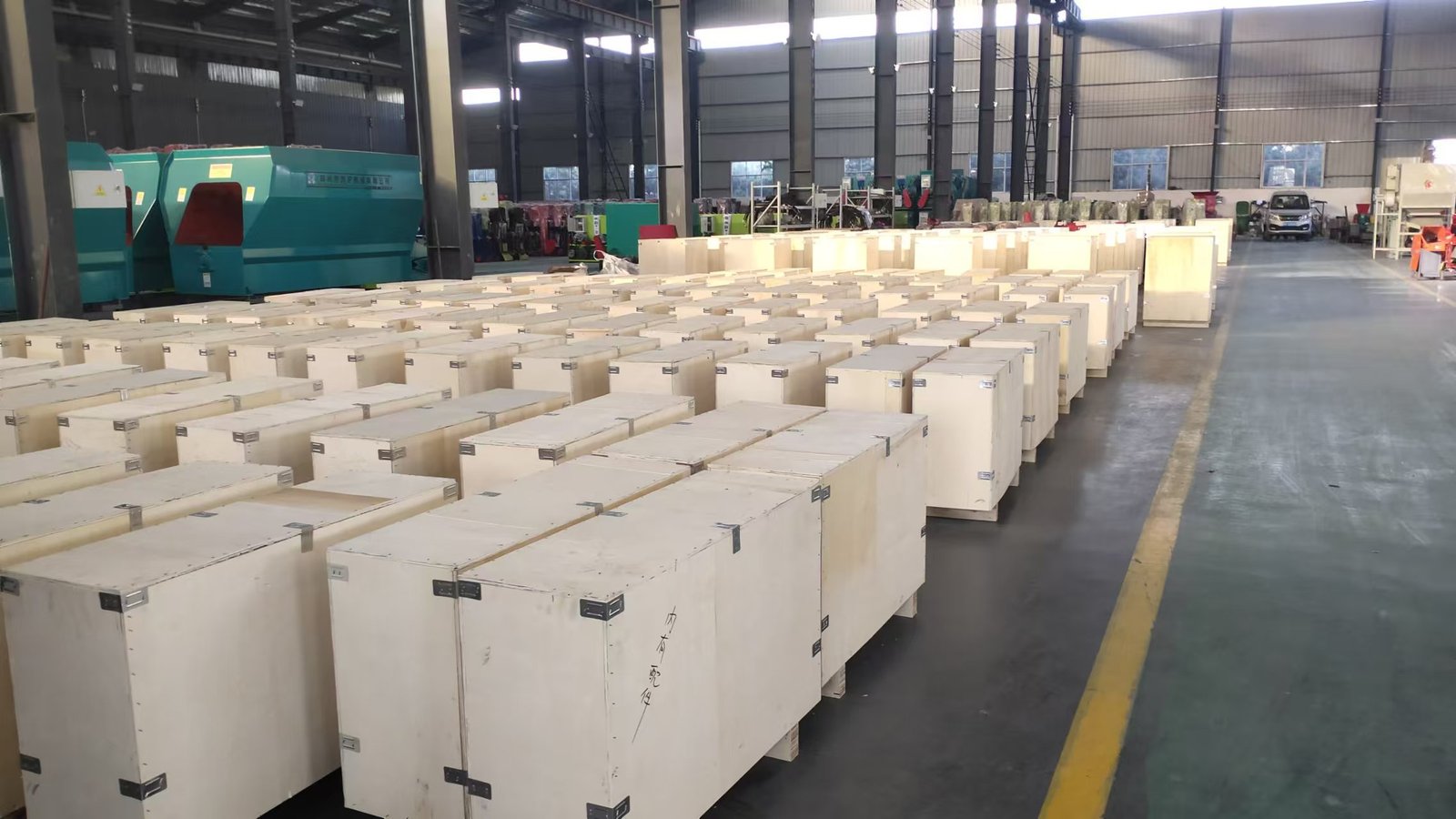
Selecting the right feed pellet production line represents one of the most significant investments for animal feed manufacturers, agricultural cooperatives, and livestock operations across the United Kingdom and Europe. The decision impacts production capacity, pellet quality, operational efficiency, and long-term profitability.Understanding equipment specifications, production processes, and supplier capabilities helps feed plant owners make informed purchasing decisions. This comprehensive guide examines feed pellet production line equipment, technical parameters, capacity options, and configuration choices available to UK buyers.MAIKONG has manufactured feed production equipment for over 22 years, supplying complete production lines to feed mills, poultry operations, cattle farms, aquaculture facilities, and pet food manufacturers throughout Europe, Asia, Americas, and Africa.
Our UK-based technical team provides specification consultations, capacity assessments, and custom configuration services. Contact us via WhatsApp or phone to discuss your production requirements.
Understanding Feed Pellet Production Line Systems and Applications
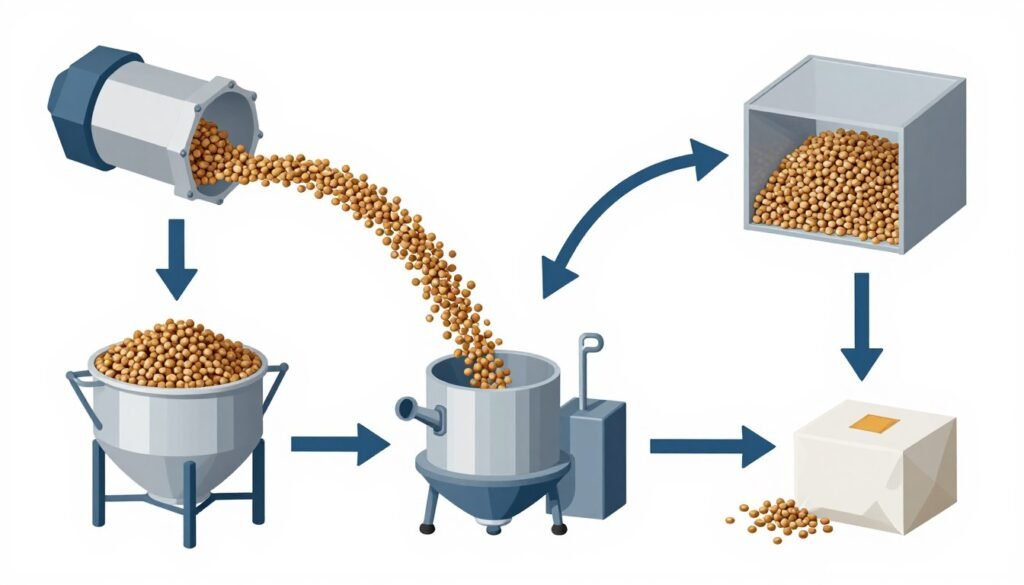
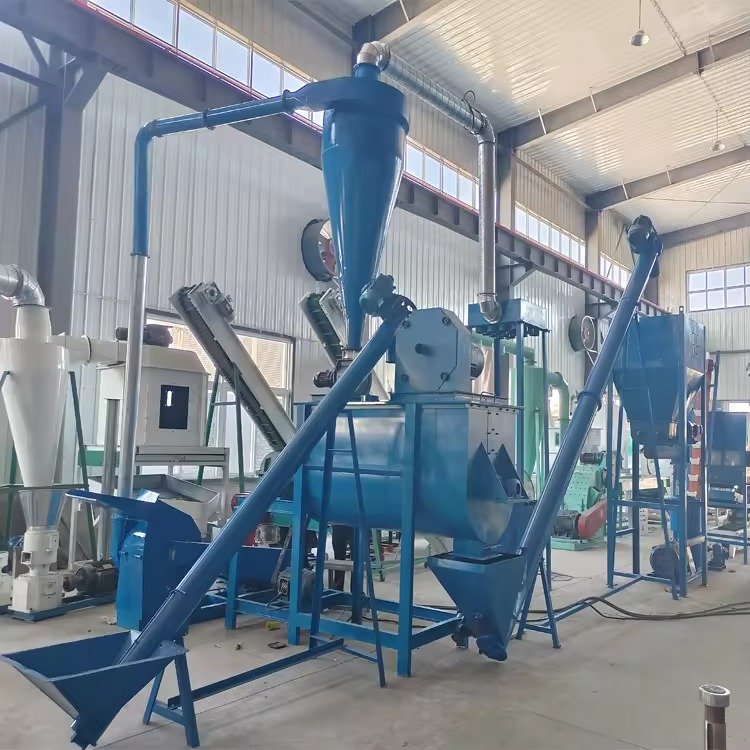
A feed pellet production line transforms raw agricultural materials into compressed pellet feed suitable for livestock, poultry, aquatic species, and pets. The system combines multiple processing stages to achieve consistent pellet quality, optimal nutritional retention, and efficient production output.
Core Production Line Components
Complete feed pellet production lines integrate several essential equipment types. Each component performs a specific function within the overall manufacturing process.
Primary Processing Equipment
- Raw material crusher for particle size reduction
- Batch mixing system for ingredient blending
- Feed pellet mill for compression and formation
- Cooling system for temperature reduction
- Screening equipment for size classification
- Packaging machinery for finished product handling
Auxiliary Support Systems
- Conveying equipment for material transport
- Dust collection systems for air quality
- Liquid addition systems for fats and oils
- Control panels for process automation
- Storage silos for raw materials and finished products
- Weighing systems for accurate batching
Feed Pellet Applications by Animal Type
Production line configuration varies based on the intended animal feed application. Different species require specific pellet characteristics, affecting equipment selection and process parameters.
Poultry Feed Pellets
Chicken, duck, turkey, and other poultry operations require pellets with specific diameter ranges. Layer feed typically uses 2.5-3mm pellets, whilst broiler feed ranges from 3-5mm depending on bird age.
- High protein content formulations
- Precise pellet diameter control
- Low moisture content requirements
- Consistent pellet hardness
Livestock Feed Pellets
Cattle, sheep, pigs, and rabbits consume larger pellet sizes. Ruminant feed often incorporates roughage elements, requiring equipment capable of processing fibrous materials.
- Larger pellet diameters (6-12mm)
- Higher fibre content processing
- Varied protein formulations
- Durability for transportation
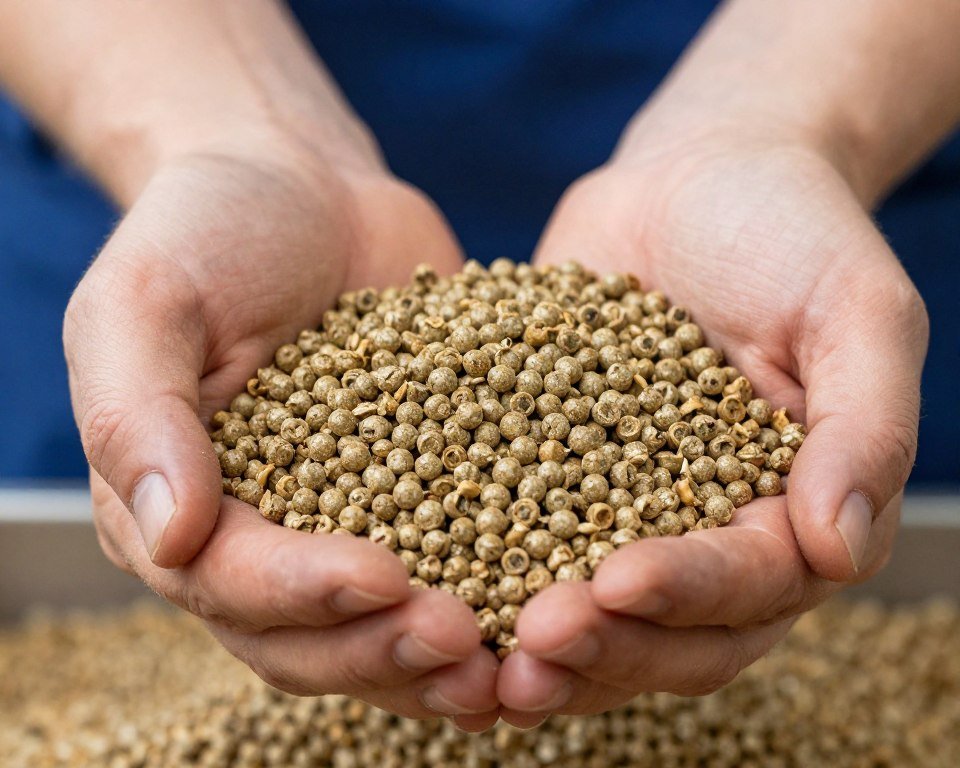
Aquatic Feed Pellets
Fish, shrimp, and other aquatic species demand floating or sinking pellets with water stability. Production equipment must achieve specific density characteristics.
- Water-stable pellet structure
- Controlled floating properties
- High-fat content capability
- Species-specific formulations
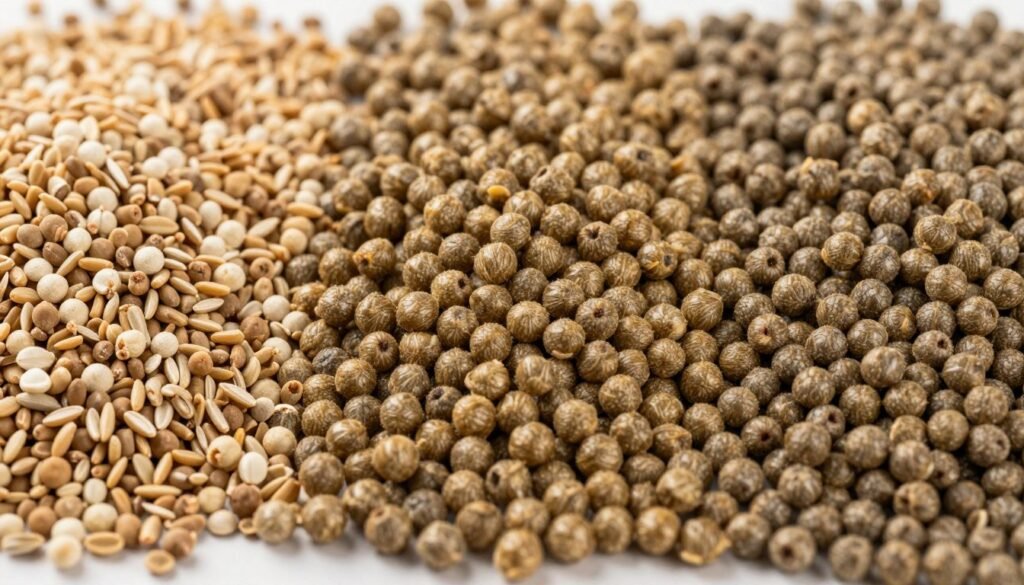
For detailed guidance on specific animal feed types, explore our comprehensive resources on poultry feed production line, cattle feed production line, and fish feed production line systems.
Production Capacity Selection: Matching Output to Operational Requirements
Choosing appropriate production capacity represents a critical decision affecting equipment investment, operational costs, and business scalability. Feed pellet production lines range from small-scale operations producing 200 kilograms per hour to large industrial facilities generating 200 tonnes hourly.
Capacity Range Categories
| Capacity Category | Output Range | Typical Applications | Investment Level | Space Requirements |
| Small Scale | 200-500 kg/h | Small farms, research facilities, specialty feed producers | Lower initial investment | Compact installation footprint |
| Medium Scale | 1-10 tonnes/h | Regional feed mills, cooperative operations, medium livestock farms | Moderate capital requirement | Standard factory space |
| Large Scale | 10-50 tonnes/h | Commercial feed manufacturers, integrated operations | Substantial investment | Extensive facility space |
| Industrial Scale | 50-200 tonnes/h | Major feed corporations, export-oriented facilities | Major capital project | Large industrial site |
Factors Influencing Capacity Requirements
Several operational considerations determine the appropriate production capacity for your feed manufacturing operation.

- Daily feed consumption: Calculate total feed requirements across all animal populations
- Production scheduling: Determine whether continuous or batch production suits operational patterns
- Formulation variety: Consider the number of different feed types produced
- Storage capacity: Assess raw material and finished product storage limitations
- Growth projections: Account for anticipated business expansion over 5-10 years
- Market demand: Evaluate regional feed requirements and competitive positioning
- Labour availability: Match production capacity to available workforce
- Energy infrastructure: Verify electrical supply capacity for equipment operation
Determine Your Optimal Production Capacity
Our technical team conducts free capacity assessments based on your animal populations, feed formulations, and operational goals. Receive detailed recommendations for equipment configuration and production line layout.
Technical Equipment Specifications for Feed Pellet Production Lines
Understanding detailed equipment specifications enables informed purchasing decisions. Feed pellet production line performance depends on proper equipment selection, matching technical parameters to production requirements.
MAIKONG Model MK-L003 Production Line Specifications
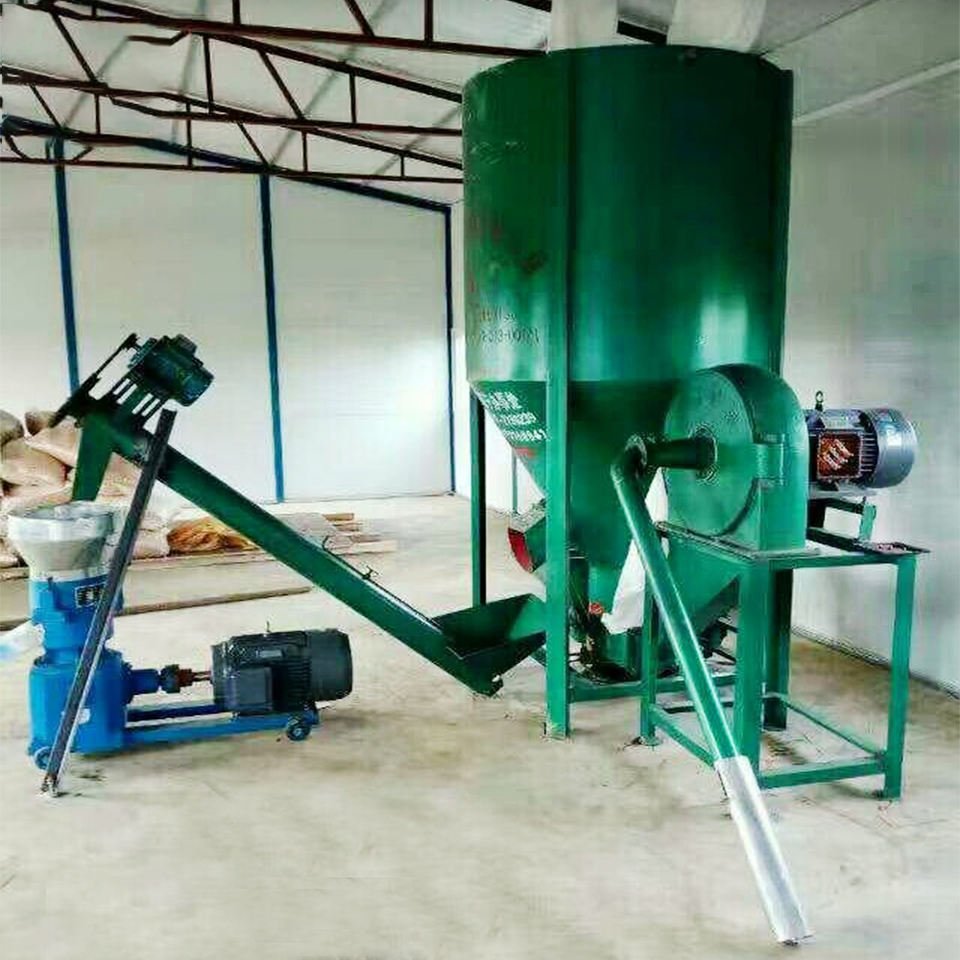
| Specification Parameter | MK-L003 Standard Configuration | Customization Options |
| Production Capacity | 3-5 tonnes/hour | Scalable to 200 kg/h – 200 tonnes/h |
| Pellet Diameter Options | 2mm, 3mm, 4mm, 6mm, 8mm | Custom die specifications available |
| Main Motor Power | 55 kW | Variable frequency drive optional |
| Pellet Mill Die Diameter | 420mm | Multiple die sizes available |
| Voltage Configuration | 380V/50Hz (UK Standard) | 220V/415V/440V options |
| Overall Dimensions (L×W×H) | 8500mm × 3200mm × 4200mm | Custom layout configurations |
| Total Equipment Weight | 6800 kg | Varies with configuration |
| Material Construction | Stainless steel contact surfaces, carbon steel structure | Full stainless steel available |
| Control System | PLC with touchscreen interface | Advanced automation packages |
| Colour Options | Industrial grey (RAL 7035) | Custom colour specifications |
| Stock Availability | Standard models: 4-6 weeks | Custom builds: 8-12 weeks |
Individual Component Specifications
Feed Crusher Specifications
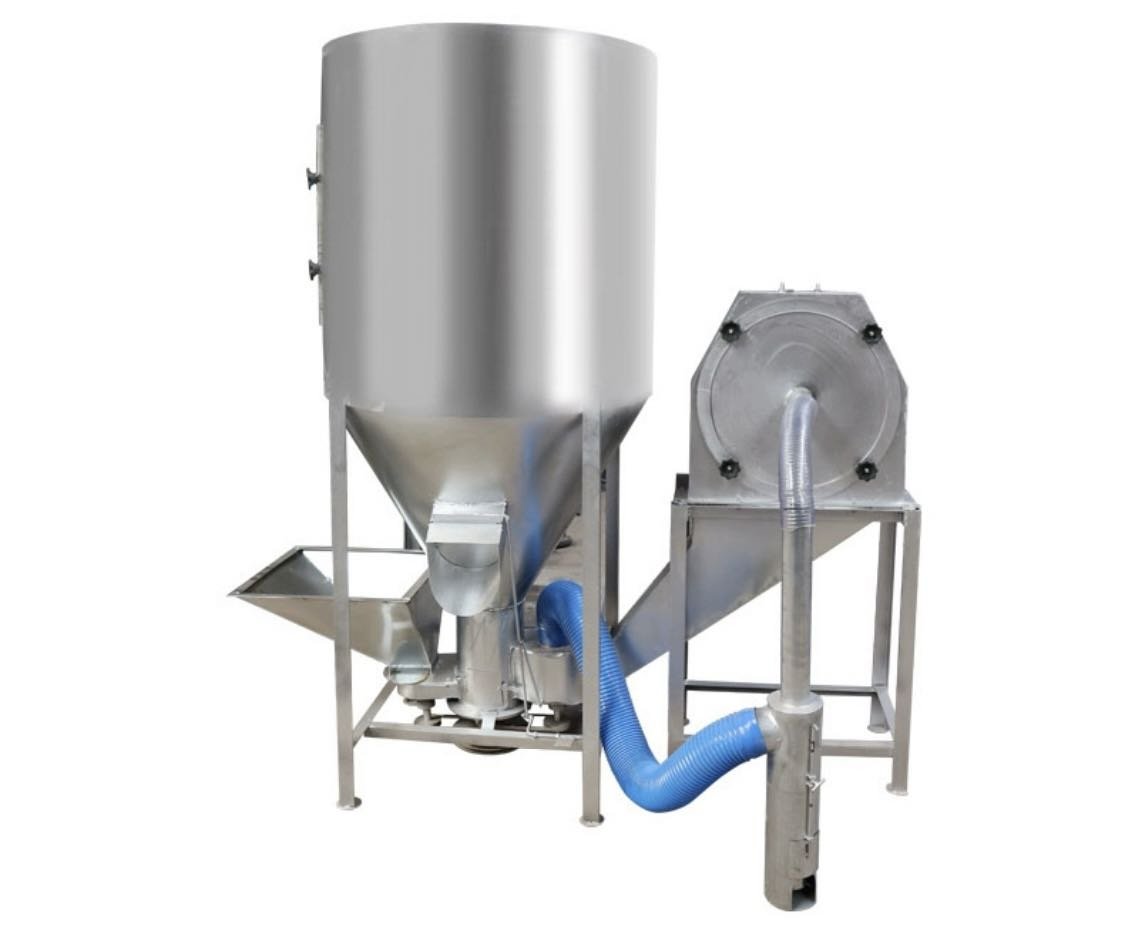
- Rotor diameter: 600mm with replaceable hammers
- Screen mesh sizes: 2mm to 10mm interchangeable
- Crushing capacity: 4-6 tonnes/hour
- Motor power: 37 kW three-phase
- Particle size output: 1-5mm adjustable
- Noise level: ≤85 dB(A)
Mixing System Specifications
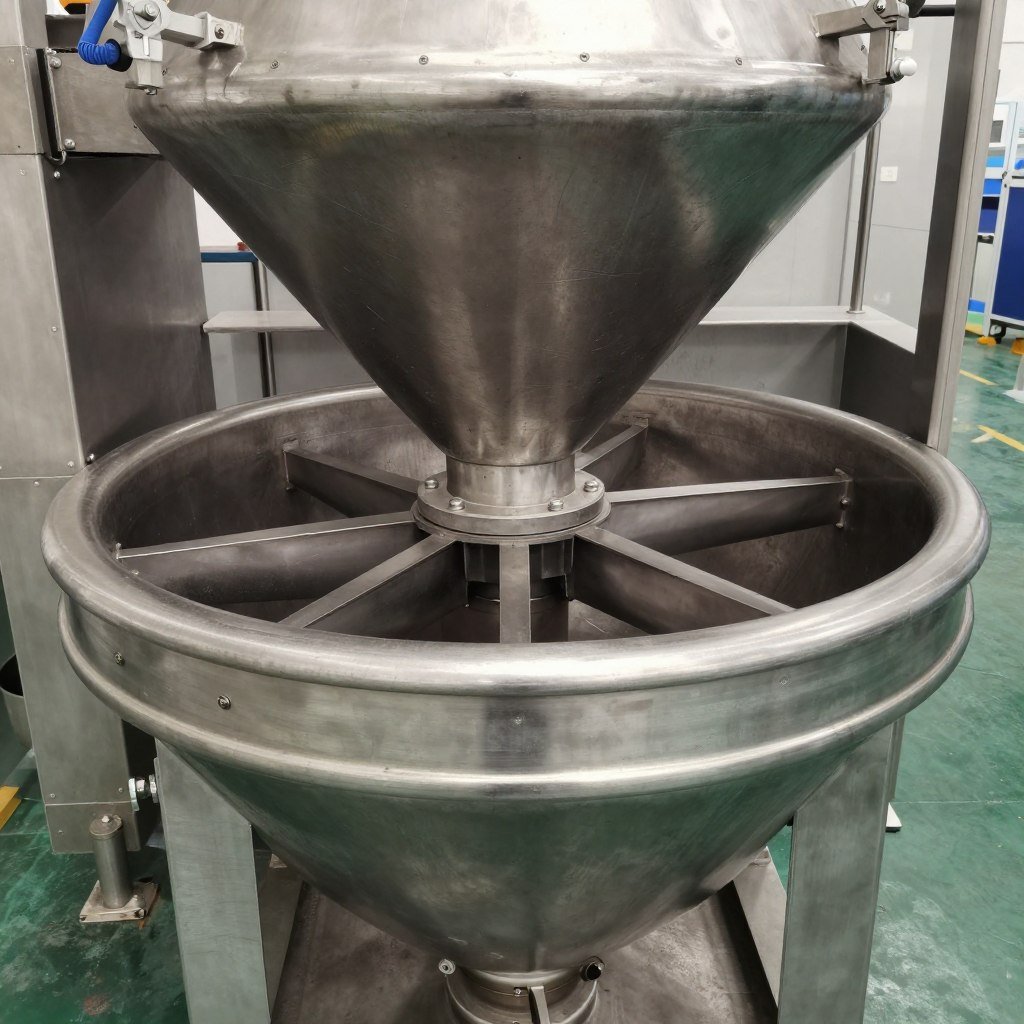
- Mixer type: Double-shaft paddle mixer
- Batch capacity: 1000 kg per cycle
- Mixing time: 3-5 minutes per batch
- Motor power: 15 kW
- Mixing uniformity: CV ≤5%
- Discharge time: ≤60 seconds
Pellet Mill Core Specifications
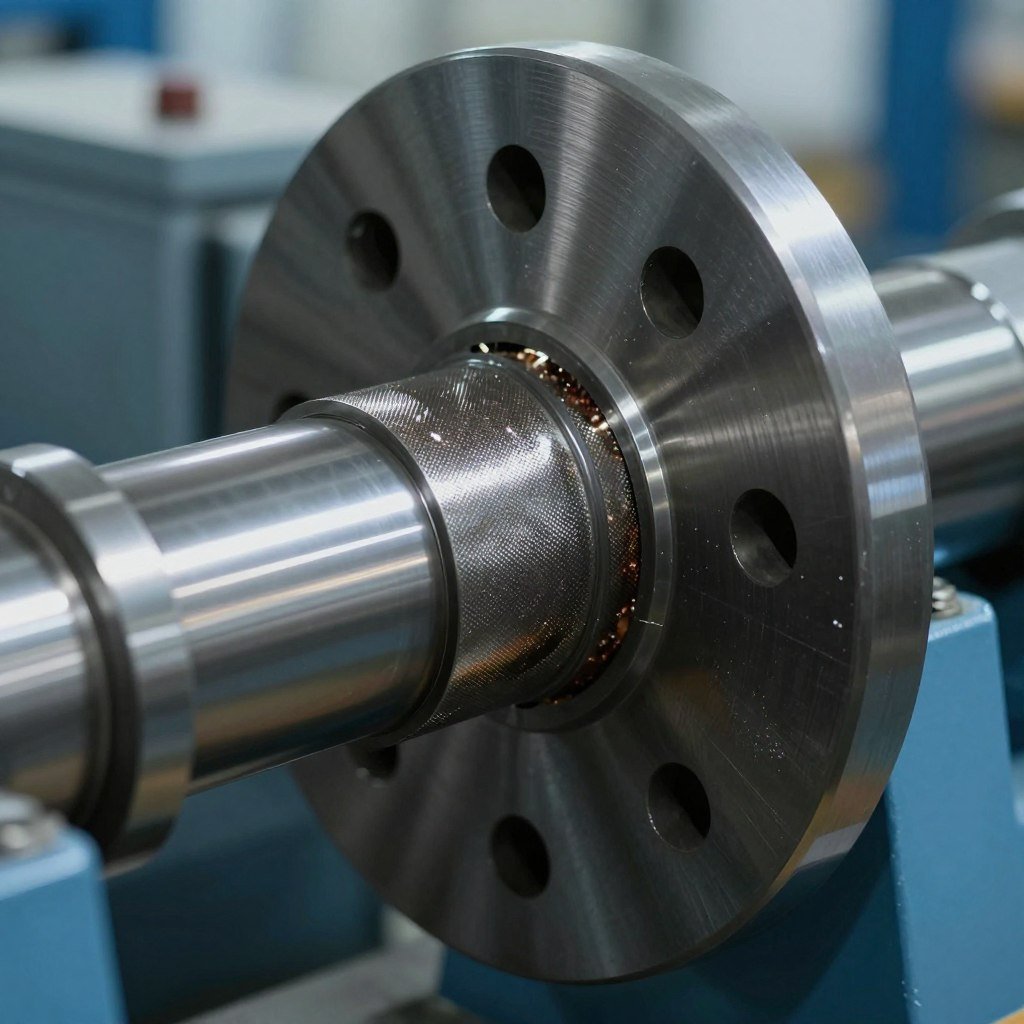
- Die compression ratio: 1:8 to 1:12 options
- Roller configuration: Double roller design
- Production rate: 3-5 tonnes/hour
- Main motor: 55 kW with overload protection
- Pellet forming rate: ≥95%
- Die material: Alloy steel (heat treated)
Cooling System Specifications
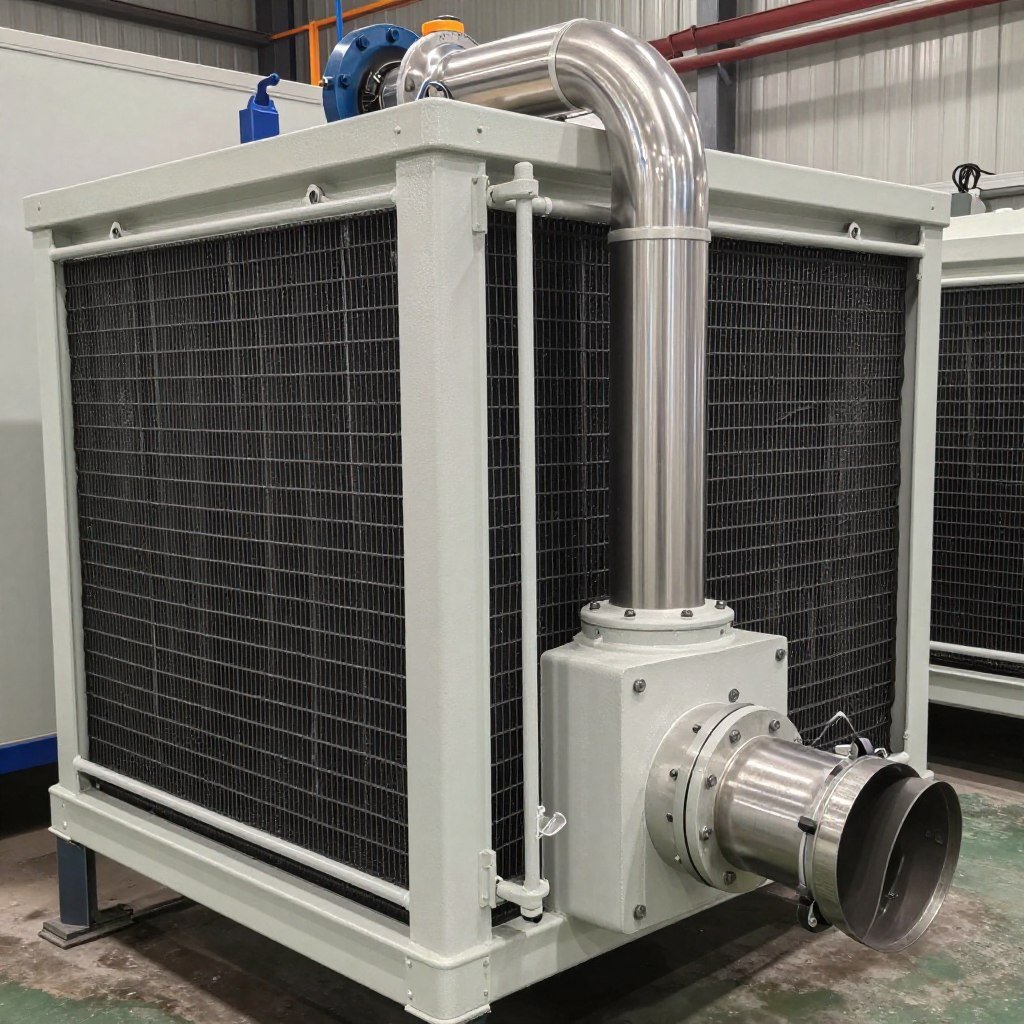
- Cooling method: Counter-flow air cooling
- Cooling capacity: 5-7 tonnes/hour
- Temperature reduction: Ambient +3°C to +5°C
- Cooling time: 8-10 minutes residence
- Final moisture content: ≤12.5%
- Fan power: 5.5 kW centrifugal blower
Comprehensive specifications for related equipment types are available through our animal feed production line and pellet production line technical documentation.
Raw Material Requirements and Processing Parameters for Feed Pellet Production
Successful feed pellet production depends on proper raw material preparation and processing control. Understanding material characteristics, moisture requirements, and particle size specifications ensures optimal pellet quality and production efficiency.
Common Feed Raw Materials and Processing Guidelines

| Raw Material Type | Recommended Moisture Content | Particle Size After Crushing | Processing Considerations |
| Corn (Maize) | 12-14% | 2-4mm | Primary energy source, requires thorough grinding |
| Wheat | 11-13% | 2-3mm | Good binding properties, easier to pelletize |
| Soybean Meal | 11-12% | 1-3mm | High protein content, excellent pellet binder |
| Fish Meal | 8-10% | 0.5-2mm | Premium protein source, requires careful storage |
| Rice Bran | 11-13% | 2-4mm | High oil content, shorter storage life |
| Alfalfa Meal | 10-12% | 3-5mm | Fibrous material, may require pre-conditioning |
| Vitamin Premix | ≤8% | Pre-ground powder | Add during final mixing stage |
Material Moisture Control and Conditioning
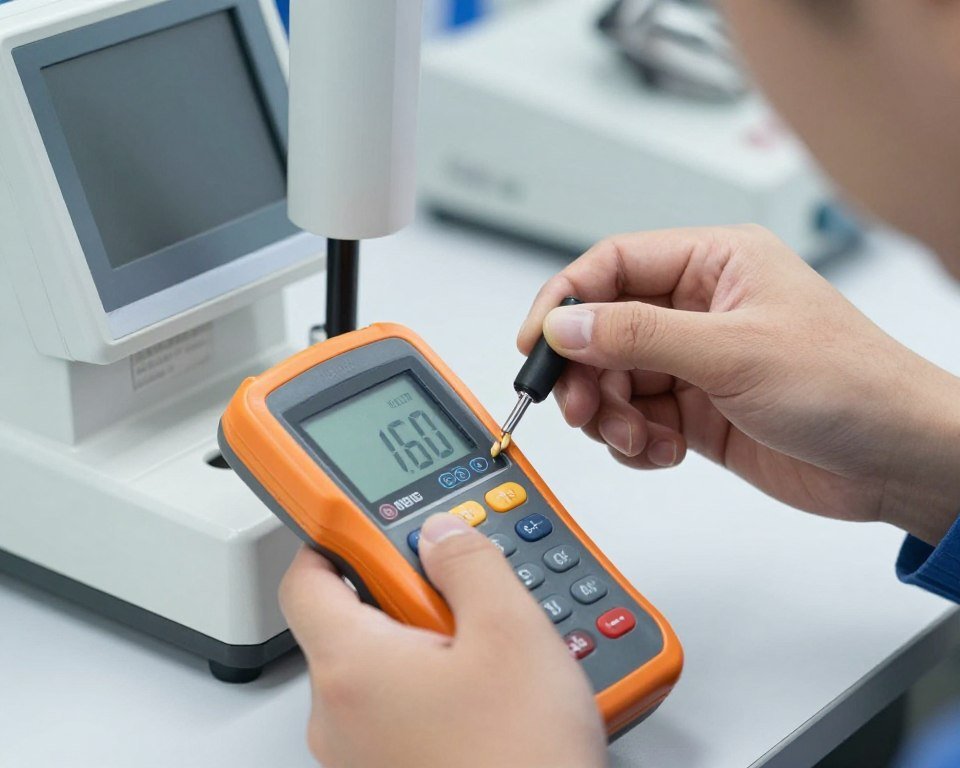
Moisture content significantly affects pellet quality, production efficiency, and equipment performance. Proper moisture management requires attention throughout the production process.
Critical Moisture Control Points
- Raw material reception: Test incoming grain moisture levels
- Storage management: Maintain proper ventilation in storage silos
- Pre-conditioning: Add steam to achieve 14-16% moisture before pelleting
- Post-pelleting: Reduce moisture to ≤12.5% through cooling
- Final storage: Maintain dry conditions to prevent mold growth
Moisture Content Impact on Pellet Quality
- Too low (<13%): Increased dust, poor pellet durability, higher energy consumption
- Optimal (14-16% during pelleting): Best pellet formation, minimal equipment wear
- Too high (>16%): Material blockage, soft pellets, mold risk during storage
Common Raw Material Processing Challenges
Optimal Processing Conditions
- Consistent raw material quality from suppliers
- Proper moisture content maintained throughout process
- Uniform particle size after grinding operations
- Adequate steam conditioning before pelleting
- Effective cooling immediately after pellet formation
- Clean equipment maintained regularly
Processing Issues to Avoid
- Variable moisture content causing inconsistent pellet quality
- Oversized particles leading to die blockage
- Insufficient conditioning resulting in poor pellet durability
- Inadequate cooling causing pellet deformation
- Cross-contamination between different feed formulations
- Accumulated dust reducing production efficiency
Additional guidance on raw material specifications for specific applications is available through our specialised resources on chicken feed production line and pig feed production line systems.
Complete Feed Pellet Production Process Flow and Equipment Integration
Understanding the complete production process helps optimise equipment selection, workflow efficiency, and pellet quality outcomes. A properly designed feed pellet production line integrates multiple processing stages into a cohesive manufacturing system.
Step-by-Step Production Process
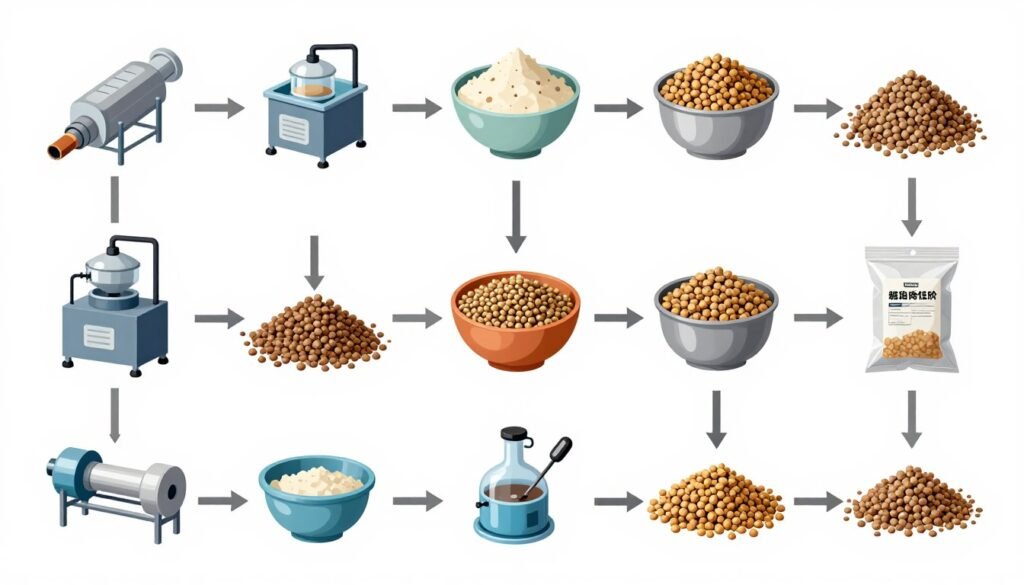
- Raw Material Reception and Storage: Bulk materials arrive by lorry and transfer to storage silos through pneumatic conveying systems. Reception equipment includes weighbridges, samplers, and magnetic separators to remove metallic contaminants. Storage silos maintain material quality through proper ventilation and monitoring systems.
- Ingredient Dosing and Batching: Automated batching systems measure precise quantities of each ingredient according to formulation recipes. Dosing equipment typically includes load cells, screw feeders, and control systems ensuring accuracy within ±0.5% of target weights. Batch processing allows formula changes without production interruption.
- Grinding and Size Reduction: Raw materials pass through hammer mills or roller mills to achieve target particle sizes. Grinding operations consume significant energy, making equipment efficiency critical. Screen selection determines final particle size distribution, typically ranging from 1-5mm depending on animal species and age.
- Mixing and Blending: Properly proportioned ingredients combine in paddle or ribbon mixers. Mixing duration typically ranges 3-8 minutes, achieving coefficient of variation (CV) below 5% for uniform nutrient distribution. Liquid ingredients such as fats, oils, or molasses may be added during this stage.
- Conditioning and Pelleting: The mixed material enters a conditioning chamber where steam injection raises temperature to 75-85°C and moisture content to 14-16%. Conditioned material then passes through the pellet mill die, where rollers compress it through die holes, forming cylindrical pellets. Die temperature during pelleting reaches 80-95°C.
- Cooling and Drying: Freshly formed pellets exit the mill at high temperature (75-85°C) and elevated moisture (15-17%). Counter-flow coolers reduce temperature to within 3-5°C of ambient and decrease moisture to safe storage levels (≤12.5%). Cooling time typically requires 8-12 minutes residence in the cooler.
- Crumbling and Screening: For smaller animals requiring crumbles rather than whole pellets, a crumbler breaks pellets into smaller particles. Screening equipment then separates pellets or crumbles by size, removing fines (undersized particles) and oversized material. Fines typically return to the production process.
- Coating and Fat Application: Some formulations require post-pelleting fat addition to increase energy density whilst avoiding die blockage. Coating equipment applies liquid fats uniformly across pellet surfaces. Fat addition can increase energy content by 100-200 kcal/kg whilst improving palatability.
- Finished Product Handling: Cooled, screened pellets convey to finished product bins or packaging equipment. Bulk loading systems fill delivery vehicles for large customers, whilst bagging lines package smaller quantities. Automated weighing ensures accurate package weights.
- Quality Control and Testing: Throughout production, quality control procedures monitor pellet durability index (PDI), moisture content, bulk density, and pellet dimensions. Laboratory testing verifies nutrient content matches formulation specifications.
Equipment Integration and Automation
Modern feed pellet production lines integrate equipment through automated control systems, improving efficiency, consistency, and labour productivity.
Basic Automation Level
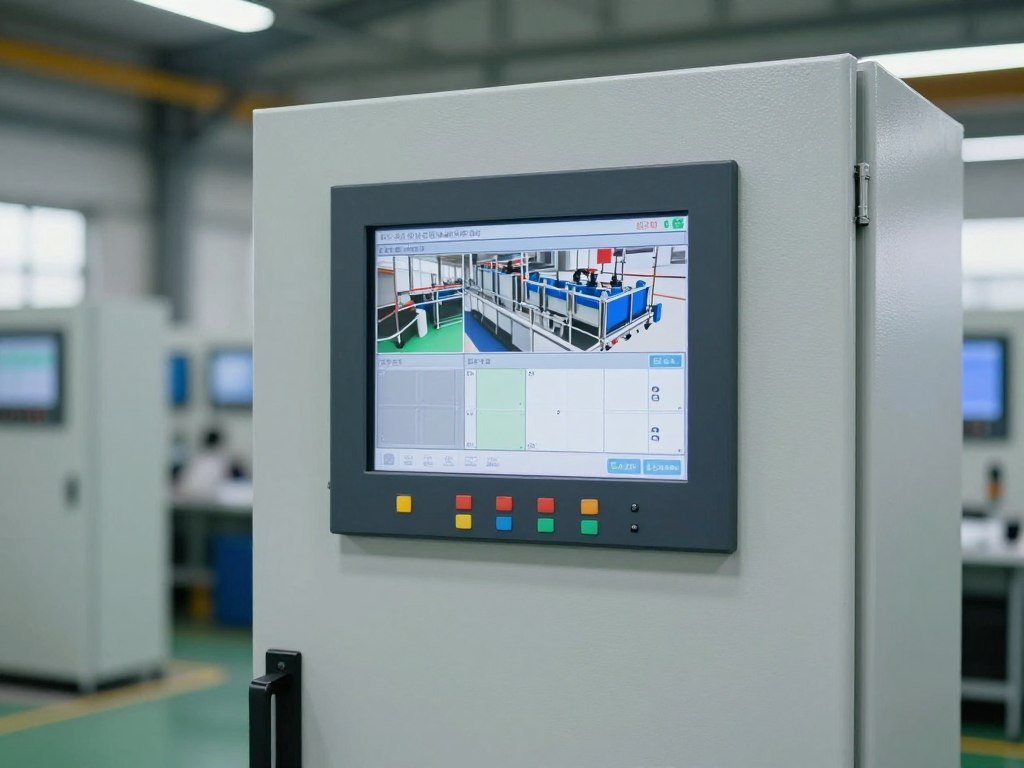
- Individual equipment motor controls
- Manual batch recipe entry
- Basic process monitoring
- Start/stop sequence controls
- Emergency stop systems
Suitable for small operations
Intermediate Automation Level
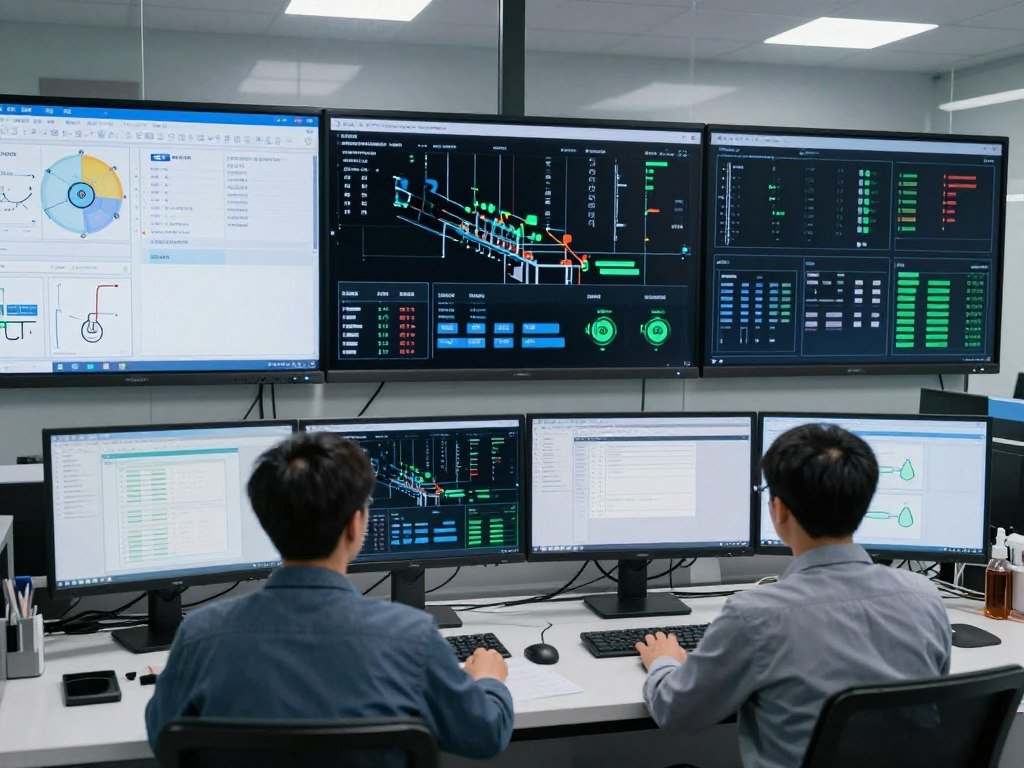
- PLC-based process control
- Recipe management system
- Real-time production monitoring
- Automated batching sequences
- Production data logging
Recommended for medium-scale facilities
Advanced Automation Level
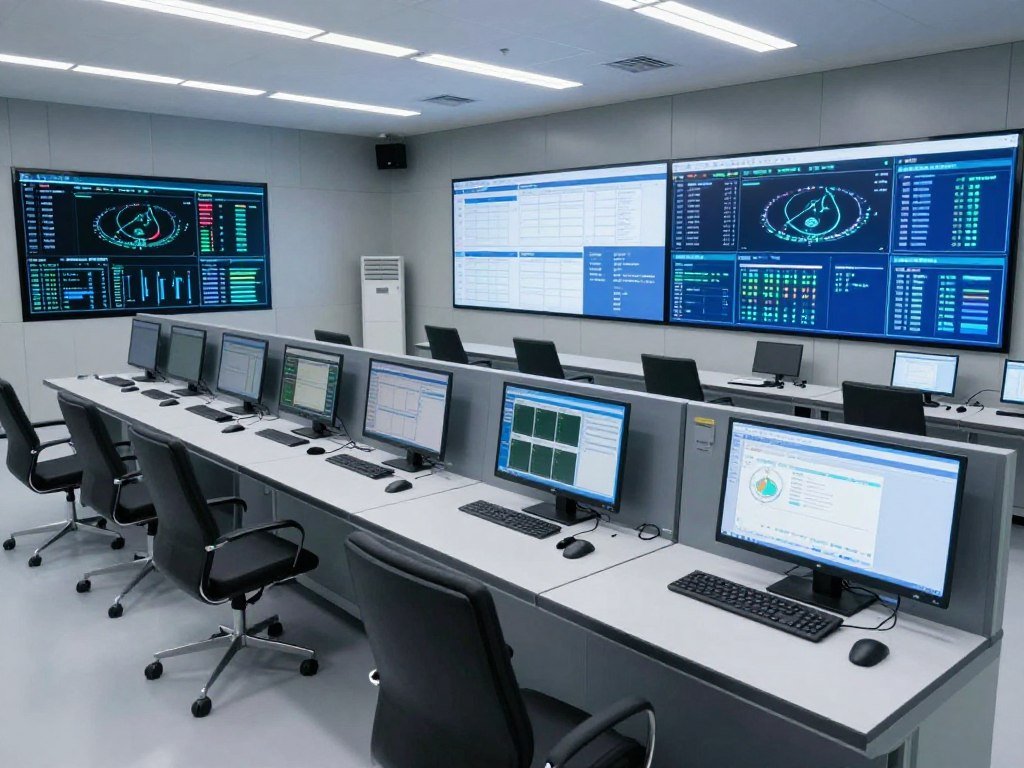
- Integrated SCADA systems
- Automated quality monitoring
- Predictive maintenance alerts
- Remote access capabilities
- ERP system integration
Optimal for large commercial operations
Request Detailed Process Flow Design
Our engineering team creates custom process flow diagrams and equipment layouts tailored to your facility requirements, raw materials, and production targets. Receive professional CAD drawings and specification documents.
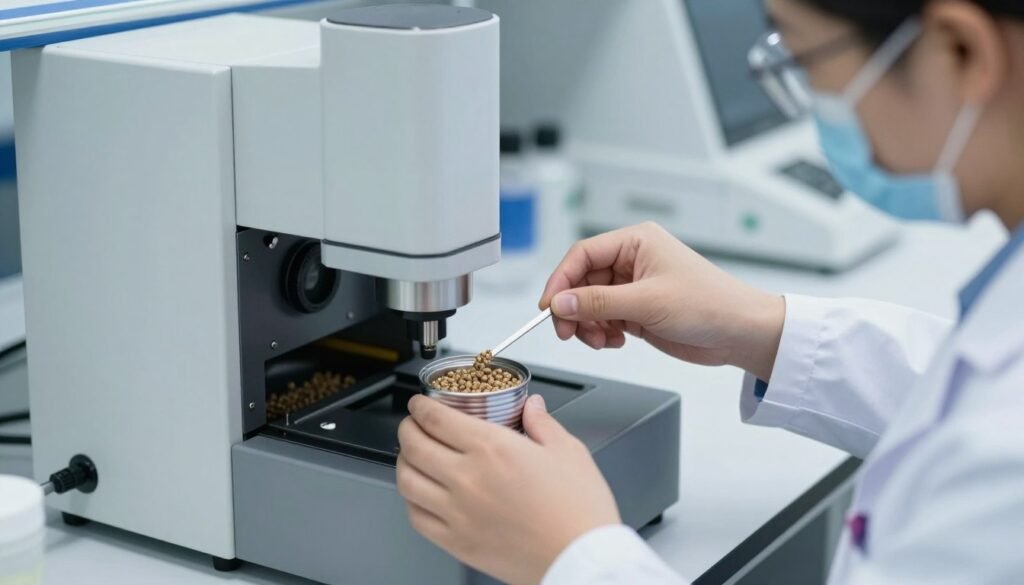
Feed Pellet Quality Parameters and Testing Standards
Pellet quality directly affects animal performance, feed waste, and production profitability. Understanding quality parameters and testing methods helps manufacturers maintain consistent product standards.
Critical Pellet Quality Measurements
| Quality Parameter | Testing Method | Target Range | Impact on Performance |
| Pellet Durability Index (PDI) | Tumbling can test (ASAE S269.4) | ≥95% for poultry, ≥92% for livestock | Low PDI increases fines, reduces feed intake |
| Moisture Content | Oven drying method (130°C, 2 hours) | 11.0-12.5% | High moisture promotes mold growth |
| Bulk Density | Volumetric measurement | 550-650 kg/m³ | Affects storage capacity and transport costs |
| Pellet Length | Calliper measurement (sample of 100) | 5-15mm (2-3× diameter) | Excessive length increases breakage |
| Fines Content | Screen separation (<1.5mm) | ≤3% for finished product | High fines reduce palatability |
| Pellet Hardness | Compression testing (kgf) | Species-dependent (5-25 kgf) | Affects animal consumption patterns |
| Water Stability (aqua feed) | Immersion test (30 minutes) | >85% integrity retention | Critical for fish and shrimp feeds |
Factors Affecting Pellet Quality
Multiple production variables influence final pellet quality. Understanding these factors enables process optimization and troubleshooting.
Raw Material Factors
Material composition significantly impacts pelleting performance and pellet characteristics.
- Starch content (natural binding agent)
- Protein levels and types
- Fibre content and structure
- Particle size distribution
- Fat and oil content
- Moisture uniformity
Processing Factors
Production parameters directly control pellet formation and quality outcomes.
- Steam conditioning temperature and time
- Die compression ratio selection
- Roller gap and pressure settings
- Production rate through the die
- Cooling air temperature and flow
- Equipment maintenance condition
Equipment Factors
Machine specifications and conditions affect pellet consistency and production efficiency.
- Die hole diameter and length
- Die material and surface finish
- Roller shell condition
- Conditioner design and capacity
- Cooling system efficiency
- Maintenance frequency and quality
Formulation Factors
Recipe composition determines pelleting ease and final pellet characteristics.
- Ingredient binding properties
- Addition of pellet binders
- Fat inclusion level and timing
- Inclusion of fibrous materials
- Presence of anti-nutritional factors
- Overall formulation balance
Quality Control Procedures
Systematic quality monitoring throughout production maintains consistent pellet characteristics and identifies problems early.
- Raw material testing: Verify moisture, particle size, and contamination upon receipt
- In-process monitoring: Check conditioning temperature, pellet mill amperage, and cooling efficiency
- Finished product testing: Conduct PDI, moisture, and size analysis on every production batch
- Documentation: Maintain quality records for traceability and continuous improvement
- Calibration: Regularly calibrate testing equipment to ensure measurement accuracy
- Training: Ensure operators understand quality standards and testing procedures
For specialized quality requirements across different feed types, consult our detailed guides on aquatic feed production line and pet feed production line quality standards.
Installation, Commissioning, and Operator Training Services
Successful equipment implementation requires proper installation, systematic commissioning, and comprehensive operator training. MAIKONG provides complete support throughout the project lifecycle, from initial site preparation through ongoing technical assistance.
Installation Planning and Execution
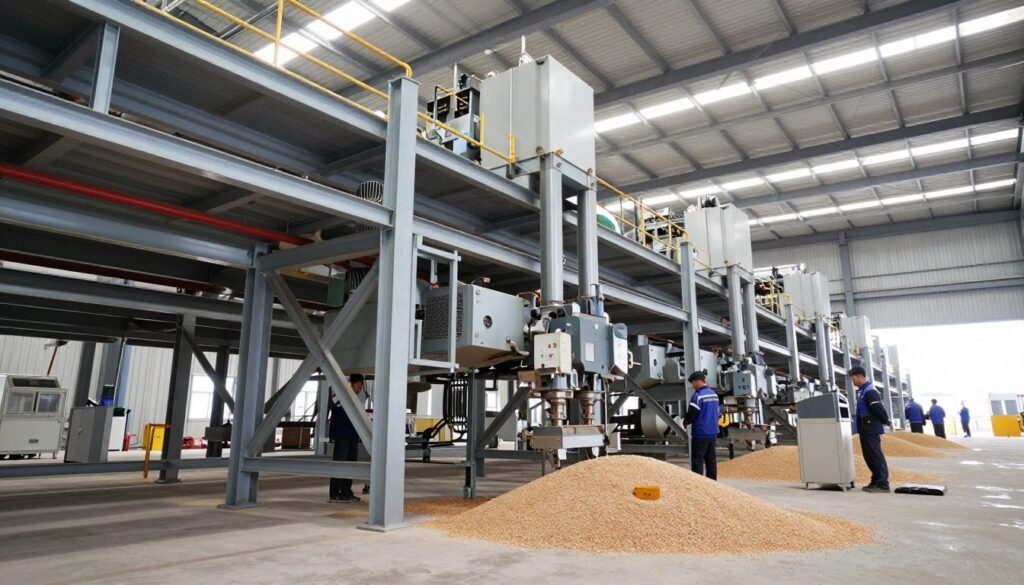
Pre-Installation Requirements
- Site preparation: Level concrete foundation with proper drainage
- Electrical infrastructure: Three-phase power supply with adequate capacity
- Steam supply: Boiler installation for conditioning (if required)
- Compressed air: Air compressor system for pneumatic controls
- Material handling: Loading dock and storage area preparation
- Environmental systems: Dust collection and ventilation installation
Installation Timeline
Standard installation schedules for complete feed pellet production lines:
- Small-scale lines (200-500 kg/h): 2-3 weeks installation
- Medium-scale lines (1-10 tonnes/h): 4-6 weeks installation
- Large-scale lines (10-50 tonnes/h): 8-12 weeks installation
- Industrial-scale lines (50-200 tonnes/h): 12-20 weeks installation
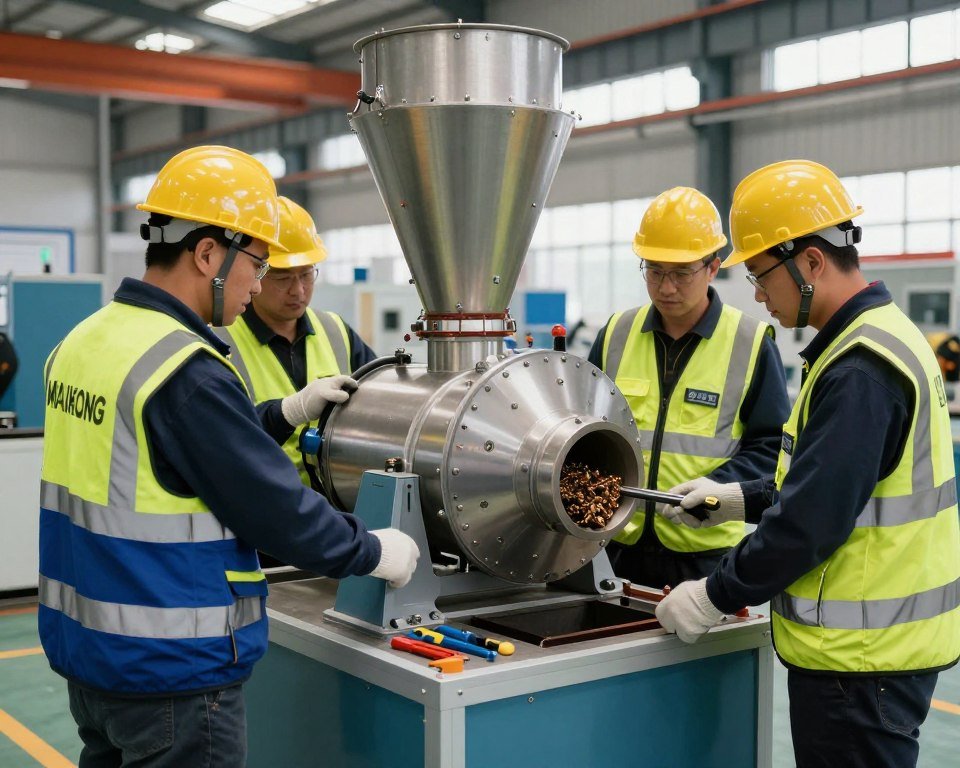
Commissioning Process
Systematic commissioning ensures equipment operates according to specifications and meets performance guarantees.
- Mechanical inspection: Verify all equipment installed correctly with proper alignment and fastening
- Electrical testing: Check motor rotation direction, voltage levels, and control system functionality
- Dry running: Operate equipment without material to verify mechanical operation
- Material testing: Process raw materials through individual equipment sections
- Integrated operation: Run complete production line with full material flow
- Performance verification: Measure production capacity, pellet quality, and energy consumption
- Optimization: Adjust parameters to achieve target specifications
- Documentation: Record operating parameters and prepare handover documentation
Comprehensive Operator Training
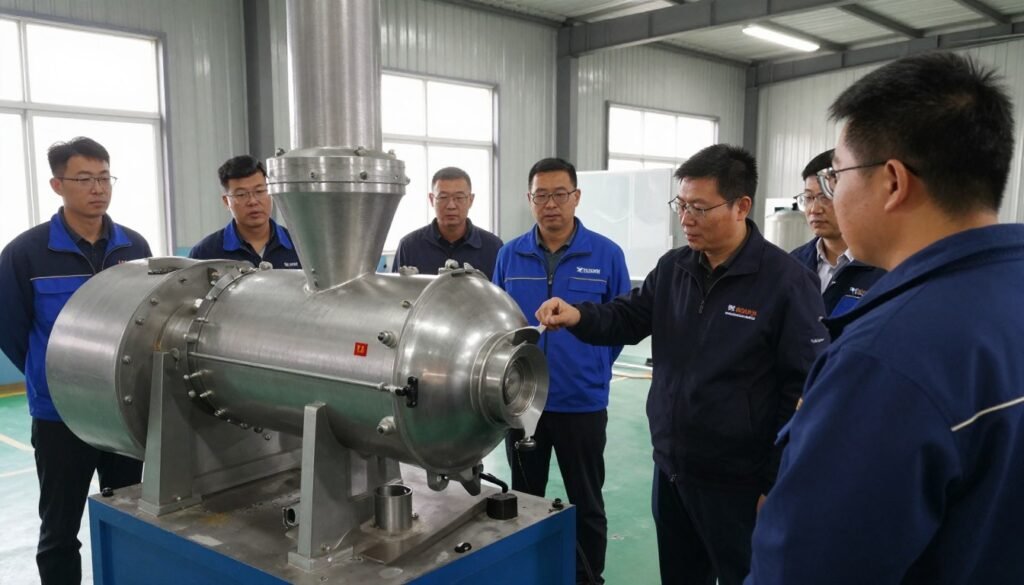
MAIKONG provides structured training programmes covering equipment operation, maintenance procedures, troubleshooting, and safety protocols.
Basic Operations Training
- Equipment start-up sequences
- Normal operating procedures
- Production monitoring
- Shutdown protocols
- Safety procedures
- Emergency responses
Duration: 3-5 days on-site
Maintenance Training
- Daily inspection routines
- Lubrication schedules
- Die and roller replacement
- Belt and chain maintenance
- Preventive maintenance
- Spare parts management
Duration: 5-7 days on-site
Advanced Troubleshooting
- Problem identification
- Process optimization
- Quality troubleshooting
- Performance monitoring
- Advanced adjustments
- Continuous improvement
Duration: 3-5 days on-site
After-Sales Technical Support
MAIKONG maintains ongoing technical support to ensure long-term equipment performance and customer success.
Included Support Services
- 24-month equipment warranty coverage
- Telephone and email technical support
- WhatsApp support for urgent issues
- Remote diagnostics assistance
- Operating manual and documentation
- Spare parts availability guarantee
- Annual maintenance inspection (optional)
Extended Service Options
- Extended warranty programmes
- Preventive maintenance contracts
- On-site technical visits
- Performance optimization reviews
- Operator refresher training
- Equipment upgrade consulting
- Production efficiency audits
UK-Based Support Advantages
- Local technical team availability
- Faster response to service requests
- Easier spare parts logistics
- UK regulatory compliance support
- English-language documentation
- Time zone alignment for support
- Regional training opportunities
Schedule Installation and Training
Contact our project management team to discuss installation timelines, commissioning procedures, and training programme scheduling for your feed pellet production line project.
Energy Efficiency and Operational Cost Optimization
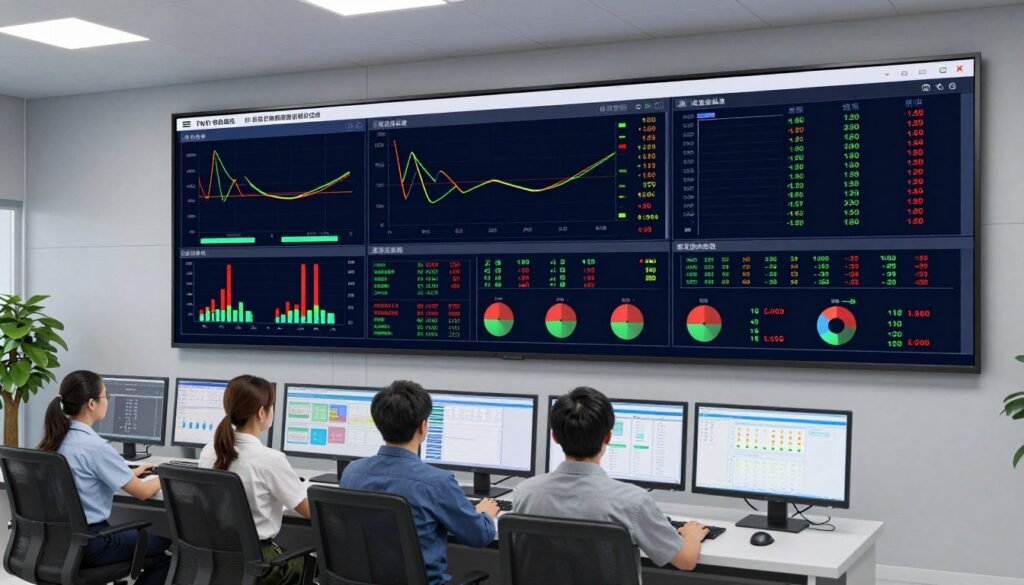
Energy consumption represents a significant portion of feed pellet production costs. Understanding energy requirements, efficiency measures, and cost optimization strategies helps manufacturers reduce operating expenses whilst maintaining production quality.
Energy Consumption Analysis
| Equipment Component | Power Consumption | % of Total Energy | Optimization Opportunities |
| Feed Crusher/Grinder | 25-35 kWh/tonne | 35-45% | Proper screen selection, hammer maintenance, material pre-screening |
| Pellet Mill | 15-25 kWh/tonne | 25-35% | Proper conditioning, die maintenance, optimal production rate |
| Mixer | 2-4 kWh/tonne | 3-5% | Optimal batch size, mixing time reduction, load management |
| Conveying Systems | 3-6 kWh/tonne | 5-8% | Minimize conveying distances, proper belt tensioning |
| Cooling System | 2-4 kWh/tonne | 3-5% | Ambient air utilization, fan efficiency, airflow optimization |
| Auxiliary Equipment | 3-5 kWh/tonne | 4-7% | Dust collection optimization, compressed air leak reduction |
| Steam Boiler (if applicable) | 5-8 kg steam/tonne | Variable | Boiler efficiency, steam trap maintenance, insulation |
Cost Reduction Strategies
Implementing systematic cost reduction measures significantly improves feed production profitability over time.
Equipment-Level Efficiency
- Install variable frequency drives on major motors
- Implement high-efficiency motors (IE3 or IE4 class)
- Optimize die compression ratios for formulations
- Maintain proper equipment alignment and balance
- Replace worn components before efficiency degradation
- Use energy-efficient lighting throughout facility
Process-Level Optimization
- Optimize grinding screen size for application
- Improve conditioning effectiveness to reduce pellet mill load
- Batch production scheduling during off-peak electricity hours
- Minimize material handling and conveying distances
- Implement automated controls to eliminate idle running
- Recover and reuse waste heat where practical
Operational Cost Components
Beyond energy, understanding all operational costs enables comprehensive financial planning and cost management.
| Cost Category | Typical Cost per Tonne | Annual Cost (5 T/H, 6000 Hours) | Cost Reduction Approaches |
| Electrical Energy | £4.50 – £7.00 | £135,000 – £210,000 | Efficiency improvements, off-peak production |
| Steam Generation | £1.50 – £3.00 | £45,000 – £90,000 | Boiler efficiency, steam system optimization |
| Labour | £2.00 – £4.00 | £60,000 – £120,000 | Automation, operator training, efficiency |
| Maintenance | £1.50 – £3.00 | £45,000 – £90,000 | Preventive maintenance, quality spare parts |
| Spare Parts | £1.00 – £2.00 | £30,000 – £60,000 | Proper operation, inventory management |
| Quality Control | £0.30 – £0.60 | £9,000 – £18,000 | Efficient testing protocols, automation |
Additional resources on operational efficiency for different production scales are available through our feed production line optimization guides.
European Feed Pellet Production Line Success Cases
MAIKONG has successfully supplied and commissioned feed pellet production lines for numerous European customers across diverse agricultural sectors. These case studies demonstrate practical implementation, performance outcomes, and return on investment.
Case Study 1: United Kingdom Poultry Feed Producer
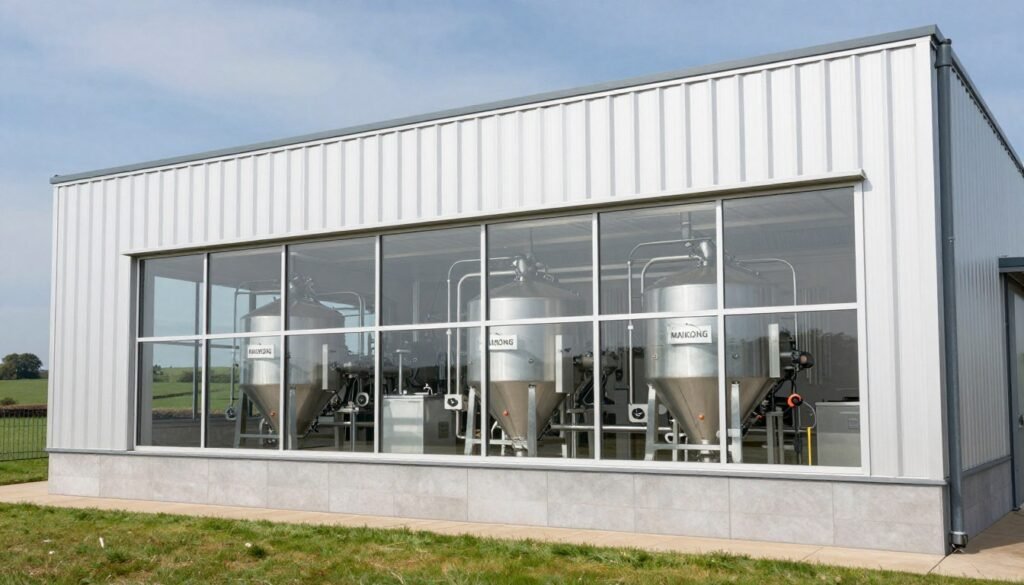
Project Overview
- Location: Gloucestershire, United Kingdom
- Customer type: Commercial poultry feed manufacturer
- Production capacity: 8 tonnes/hour
- Feed types: Layer, broiler, and breeder feeds
- Project timeline: 6 months from order to commissioning
- Investment value: £420,000 complete turnkey installation
Equipment Configuration
- MAIKONG MK-L008 pellet production line
- Four raw material storage silos (60 tonnes each)
- Automatic batching and weighing system
- Steam conditioning and pelleting system
- Two finished product silos (40 tonnes each)
- Automated bagging line with palletizing
Performance Results
- Production capacity: 8.2 tonnes/hour actual output
- Pellet durability index: 96-98% consistently
- Energy consumption: 48 kWh/tonne average
- Payback period: 3.2 years projected
- Labour reduction: 40% compared to previous system
Case Study 2: Netherlands Cattle Feed Cooperative
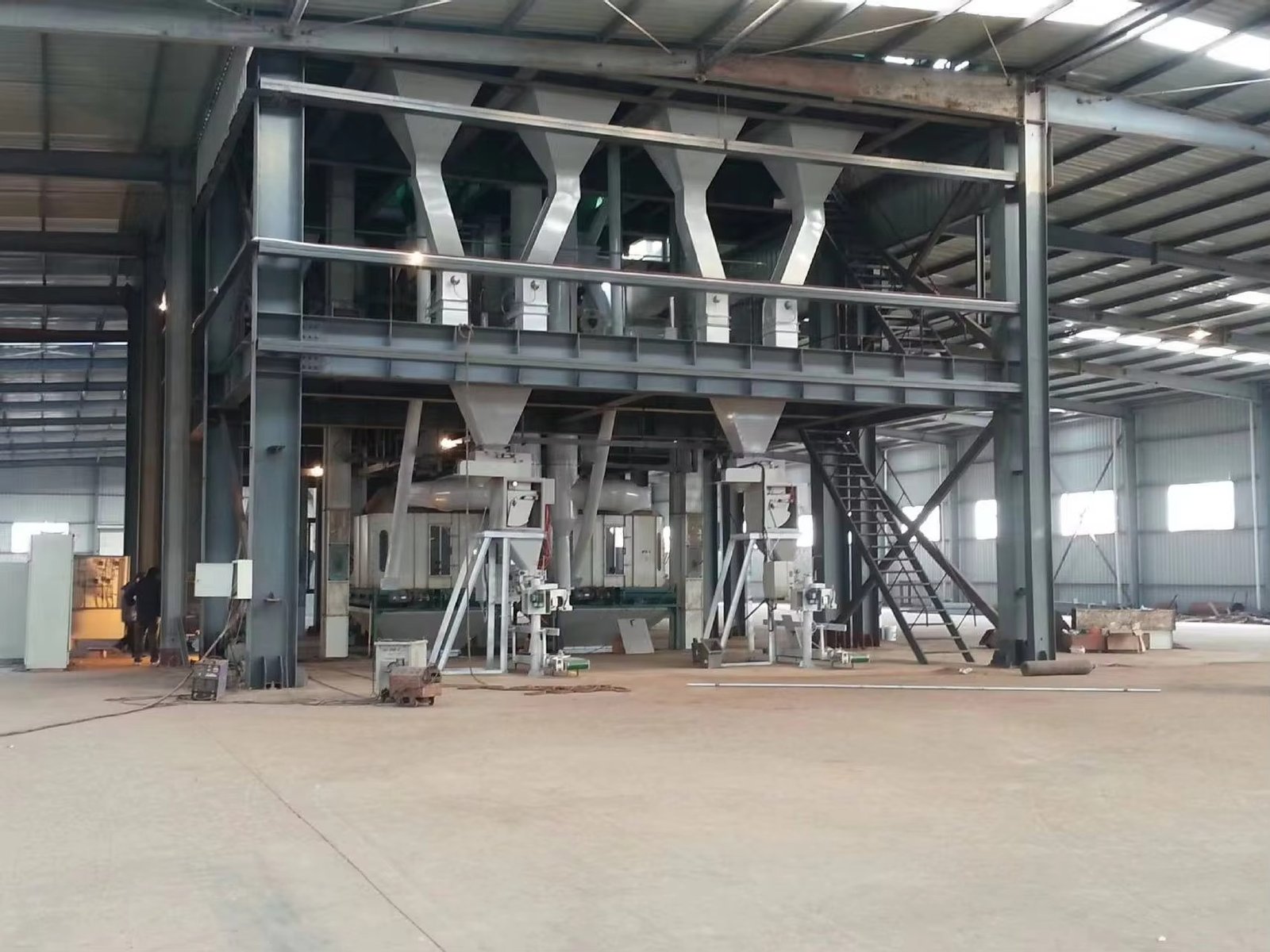
Project Highlights
- Location: North Brabant, Netherlands
- Capacity: 15 tonnes/hour
- Application: Dairy and beef cattle feeds
- Special requirements: High-fibre formulation processing
- Installation: 8-week turnkey project
- Investment: €620,000 complete system
Key Performance Indicators
- Production efficiency: 93% uptime achieved
- Pellet quality: 95% PDI for cattle feeds
- Energy efficiency: 42 kWh/tonne total consumption
- Production flexibility: 12 different formulations
- ROI achieved in 2.8 years of operation
Case Study 3: Poland Aqua Feed Manufacturing Plant
Project Specifications
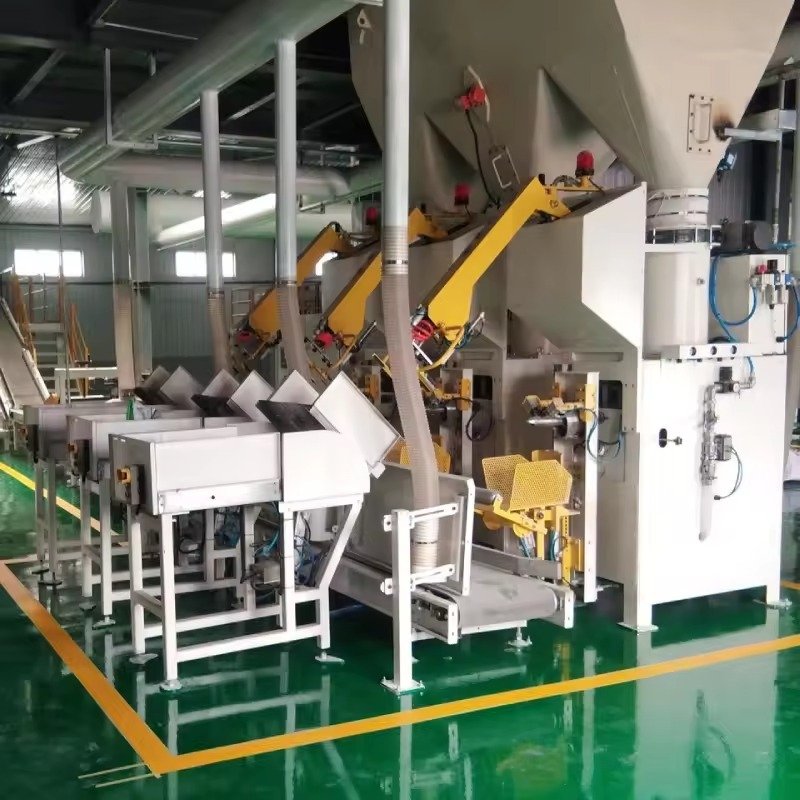
- Location: Masovian Voivodeship, Poland
- Capacity: 5 tonnes/hour floating fish feed
- Species focus: Trout, carp, and tilapia feeds
- Investment: €380,000 complete installation
- Timeline: 5 months delivery and commissioning
Technical Achievements
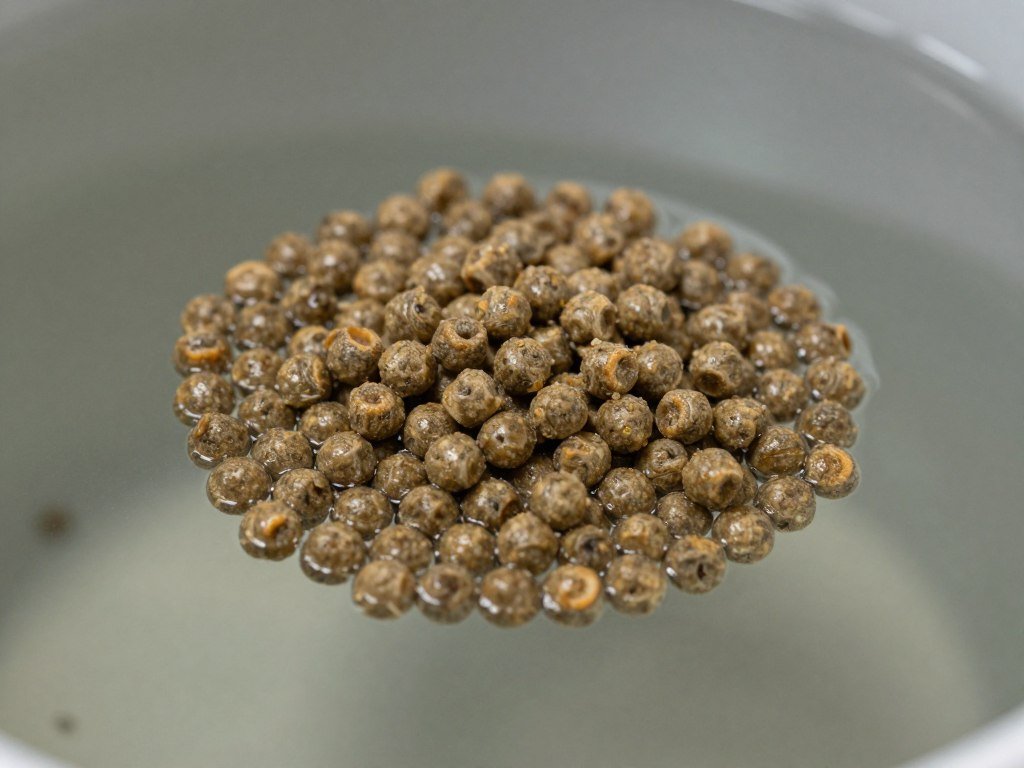
- Water stability: 88-92% after 30 minutes immersion
- Floating time: 8-12 hours depending on formulation
- Pellet uniformity: 97% within size specification
- Production reliability: 95% uptime first year
- Energy efficiency: 52 kWh/tonne (including drying)
Case Study 4: Belgium Pet Food Production Facility
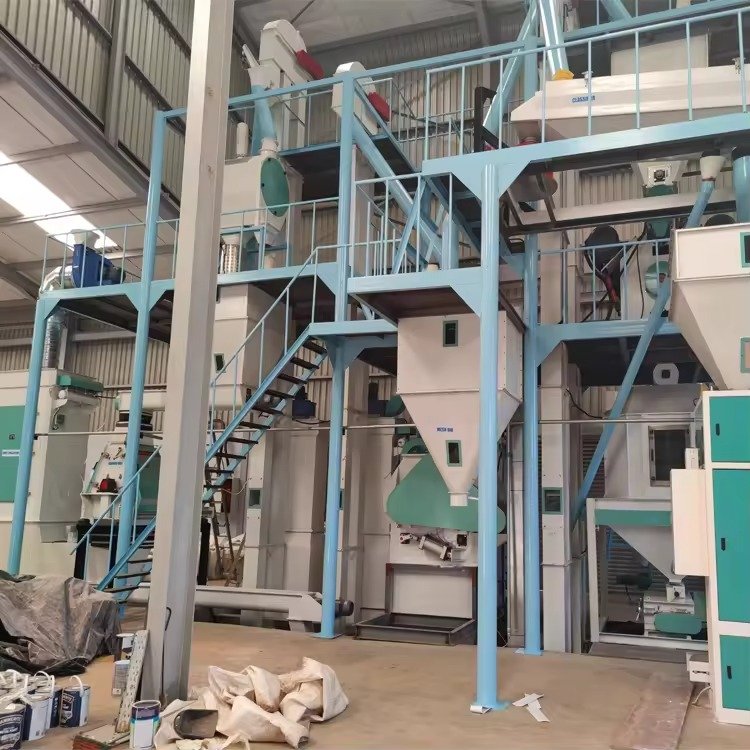
| Project Parameter | Specification | Performance Achievement |
| Location | Flanders, Belgium | Successful 7-week installation |
| Production Capacity | 3 tonnes/hour pet feed | 3.2 tonnes/hour actual output |
| Product Range | Dog and cat food pellets | 8 SKUs successfully produced |
| Investment Value | €290,000 turnkey system | 2.5-year projected payback |
| Quality Standards | EU pet food regulations | Full compliance achieved |
| Automation Level | PLC with recipe management | 40% labour reduction |
Common Success Factors Across European Projects
- Proper capacity sizing: Equipment matched to actual production requirements and growth projections
- Comprehensive training: Thorough operator and maintenance training ensuring optimal operation
- Quality equipment: Durable construction and quality components minimizing downtime
- Local support: UK-based technical team providing rapid response to questions and issues
- Process optimization: Ongoing support to refine production parameters for best efficiency
- Spare parts availability: Strategic spare parts stocking for minimal production interruption
For additional success stories across different feed types, explore our case studies on shrimp feed production line projects.
OEM/ODM Customization Services and Distributor Partnership Opportunities
MAIKONG offers comprehensive customization services and partnership opportunities for equipment distributors, feed machinery dealers, and agricultural equipment importers throughout the United Kingdom and Europe.
OEM/ODM Customization Capabilities

Our 22+ years of manufacturing experience enables comprehensive customization of feed pellet production lines to meet specific customer requirements, brand identities, and market positioning.
Technical Customization
- Production capacity modifications
- Voltage and frequency adaptations
- Control system specifications
- Material construction options
- Special process requirements
- Integration with existing equipment
- Automation level selection
- Custom safety features
Branding Customization
- Customer logo application
- Custom colour schemes
- Branded control panels
- Custom nameplates
- Packaging customization
- Documentation branding
- Marketing material support
- Technical manual customization
Market Adaptation
- Regional specification compliance
- Local safety standard certification
- Language localization
- Measurement unit adaptations
- Climate-specific modifications
- Regional spare parts planning
- Local service network integration
- Market-specific packaging
Distributor Partnership Programme
MAIKONG actively seeks qualified distribution partners to expand our presence in the United Kingdom and throughout European markets. Our partnership programme provides comprehensive support for business development and customer service.
Partner Benefits
- Exclusive territory options available
- Competitive distributor pricing structure
- Comprehensive product training
- Marketing materials and support
- Technical documentation library
- Lead generation assistance
- Joint customer visits
- Co-op advertising programmes
Partner Requirements
- Established presence in agricultural equipment sector
- Technical support capability
- Service and maintenance infrastructure
- Spare parts inventory capacity
- Minimum annual volume commitment
- Customer financing capabilities
- Installation team availability
- Quality reputation in market

Partnership Support Services
MAIKONG provides comprehensive support to distribution partners, ensuring mutual success in serving end customers.
- Product training: Technical and sales training at UK facility or partner location
- Marketing support: Branded materials, website content, trade show assistance
- Technical assistance: Remote and on-site support for complex projects
- Inventory planning: Assistance with spare parts and demonstration equipment
- Customer financing: Referrals to equipment financing partners
- Warranty administration: Streamlined warranty claim processing
- Lead sharing: Distribution of inbound inquiries from partner territories
- Business planning: Joint strategic planning and market development
OEM/ODM Project Process
- Initial consultation: Discuss technical requirements, customization needs, and business objectives
- Technical proposal: Receive detailed specifications, drawings, and quotations
- Design review: Collaborative refinement of specifications and design elements
- Sample approval: Review and approve prototype or first article
- Production authorization: Finalize order quantities, timelines, and delivery schedule
- Manufacturing: Production with quality checkpoints and progress updates
- Pre-shipment inspection: Factory acceptance testing and documentation
- Delivery and support: Logistics coordination and ongoing technical assistance
Explore Partnership and OEM Opportunities
Contact our business development team to discuss distributor partnerships, OEM customization projects, or white-label manufacturing opportunities. We welcome inquiries from established agricultural equipment businesses seeking reliable manufacturing partners.
Visit our company overview to learn more about MAIKONG’s capabilities and experience.
Common Production Challenges and Troubleshooting Solutions
Understanding common feed pellet production problems and their solutions helps operators maintain consistent quality, minimize downtime, and optimize equipment performance.
Pellet Quality Issues
Problem: High fines content (excessive powder in finished product)
Possible causes:
- Insufficient conditioning temperature or time
- Worn pellet die or rollers
- Inappropriate die compression ratio for formulation
- Excessive cooling air velocity
- Poor formulation binding characteristics
Solutions:
- Increase conditioning temperature to 75-85°C
- Replace worn die and roller components
- Select die with appropriate compression ratio (1:8 to 1:12)
- Reduce cooling fan speed
- Add pellet binders to formulation (bentonite, lignosulfonate)
- Adjust raw material particle size distribution
Problem: Soft or crumbly pellets (low pellet durability index)
Possible causes:
- Inadequate steam conditioning
- Insufficient compression in pellet mill
- High fat content in formulation
- Low starch content materials
- Excessive moisture in finished pellets
Solutions:
- Optimize conditioning with proper steam quality
- Adjust roller-to-die gap for proper compression
- Add fats post-pelleting rather than pre-pelleting
- Include ingredients with good binding properties
- Improve cooling efficiency to reduce final moisture
- Consider pellet binder additives
Problem: Inconsistent pellet length
Possible causes:
- Worn or damaged knife assembly
- Uneven die wear patterns
- Variable material flow rate
- Inconsistent conditioning
Solutions:
- Replace or sharpen pellet mill knives
- Rotate or replace pellet die
- Stabilize feeder operation for consistent flow
- Maintain steady steam pressure and temperature
- Adjust knife position for optimal cutting
Equipment Operation Challenges
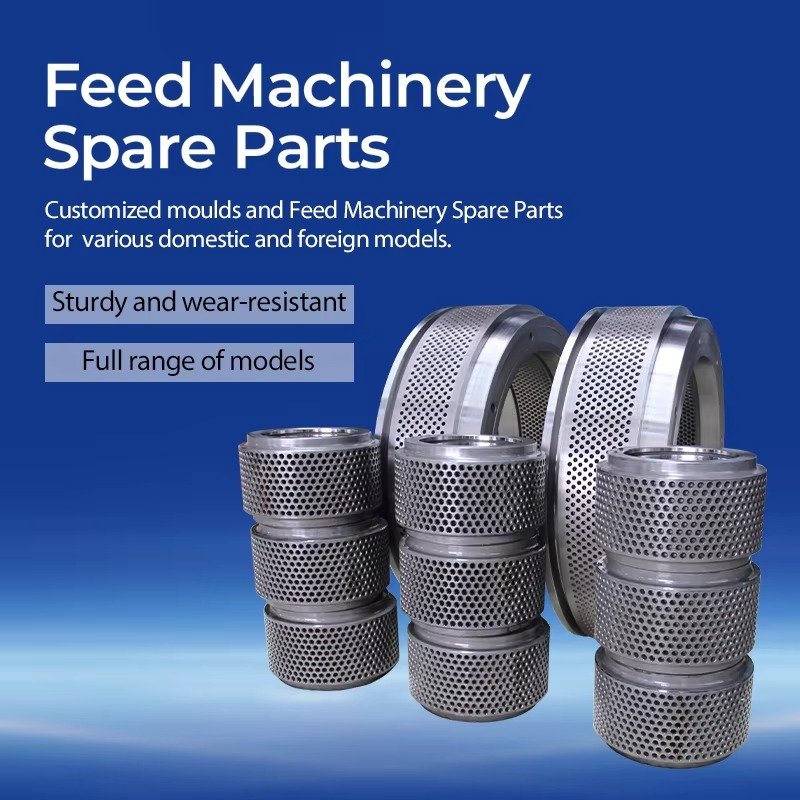
Problem: Material blockage in pellet die
Possible causes:
- Insufficient conditioning moisture
- Die holes too small for material characteristics
- Foreign material in feed stream
- Cold start without proper warm-up
- Excessive production rate
Solutions:
- Increase conditioning moisture to 14-16%
- Select larger die hole diameter
- Improve raw material cleaning procedures
- Implement proper start-up procedures with conditioning
- Reduce feed rate to appropriate level
- Drill out blocked holes and refurbish die
Problem: Excessive pellet mill amperage or motor overload
Possible causes:
- Worn roller shells requiring replacement
- Die and roller gap too tight
- Insufficient conditioning
- Formulation too difficult to pelletize
- Production rate exceeding equipment capacity
Solutions:
- Replace worn rollers and bearings
- Adjust roller-to-die gap (typically 0.1-0.3mm)
- Improve conditioning temperature and time
- Reformulate with more pelletable ingredients
- Reduce production rate to rated capacity
- Verify proper motor size for application
Problem: Inconsistent pellet mill production rate
Possible causes:
- Variable raw material flow to mill
- Fluctuating steam pressure
- Uneven die wear
- Inconsistent material characteristics
Solutions:
- Install or calibrate feeder controls
- Verify adequate boiler capacity and steam distribution
- Rotate or replace die at appropriate intervals
- Improve raw material quality control
- Implement automated production controls
Process Control Solutions
| Operating Parameter | Normal Range | Problem Indication | Corrective Action |
| Pellet mill amperage | 70-85% of motor rating | >90% indicates excessive load | Check die/roller wear, reduce feed rate, improve conditioning |
| Conditioning temperature | 75-85°C | <70°C poor pellet quality | Increase steam pressure, check steam quality, verify steam trap operation |
| Pellet temperature ex-mill | 75-85°C | >90°C risk of pellet damage | Reduce production rate, improve conditioning, check die condition |
| Cooler discharge temperature | Ambient +3-5°C | >Ambient +10°C insufficient cooling | Increase cooling air, reduce material depth, extend residence time |
| Final moisture content | 11.0-12.5% | >13% mold risk | Improve cooling, reduce conditioning moisture, increase residence time |
For additional technical guidance on specific feed types, consult our specialized troubleshooting resources for poultry feed production and fish feed production systems.
About MAIKONG: Your UK Partner for Feed Pellet Production Lines
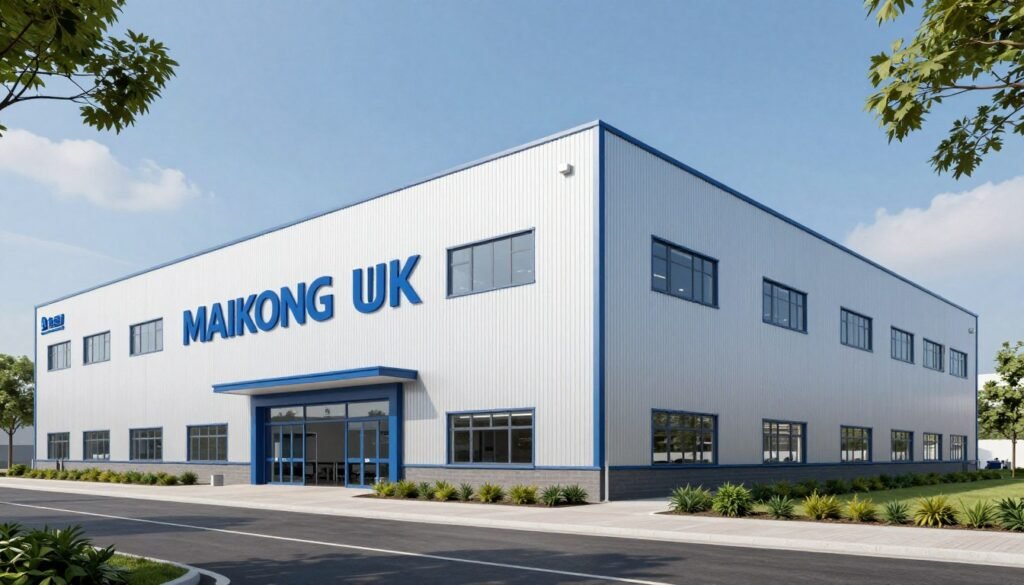
MAIKONG has manufactured feed production equipment for over 22 years, establishing a reputation for quality construction, reliable performance, and comprehensive customer support. Our UK presence provides local technical assistance, rapid spare parts availability, and understanding of British and European market requirements.
Company Capabilities and Experience
Manufacturing Excellence
- 22+ years feed equipment manufacturing experience
- ISO 9001 quality management certification
- Advanced manufacturing facility in Shenzhen, Guangdong
- Comprehensive testing and quality control procedures
- Experienced engineering and design team
- Continuous product development and improvement
Global Project Experience
- Equipment supplied to 130+ countries worldwide
- Extensive European project portfolio
- Successfully commissioned 200+ complete production lines
- Experience across all feed types and applications
- Proven performance in diverse climate conditions
- Long-term customer relationships and repeat business
Product Range
MAIKONG manufactures comprehensive feed production equipment serving the complete feed manufacturing industry.
Production Line Categories
Capacity Range Options
- Small-scale: 200 kg/h – 1 tonne/h
- Medium-scale: 1-10 tonnes/h
- Large-scale: 10-50 tonnes/h
- Industrial-scale: 50-200 tonnes/h
- Custom capacity configurations available
- Modular expansion capabilities
Service Territories
- United Kingdom (primary market)
- Ireland
- Netherlands
- Belgium
- France
- Germany
- Poland and Eastern Europe
- Scandinavia
- Southern Europe
Why Choose MAIKONG for Your Feed Pellet Production Line
Quality Advantages
- Premium component selection and construction
- Rigorous factory testing before shipment
- Proven equipment longevity and durability
- Consistent pellet quality output
- Reliable continuous operation
- Minimal unplanned downtime
Service Advantages
- UK-based technical support team
- Rapid response to inquiries and issues
- Comprehensive installation and training
- Extensive spare parts inventory
- 24-month equipment warranty
- Long-term partnership approach
Value Advantages
- Competitive pricing on equipment
- Lower operational costs through efficiency
- Reduced maintenance requirements
- Energy-efficient operation
- Strong resale value retention
- Excellent return on investment

Contact MAIKONG for Feed Pellet Production Line Solutions
Our experienced team provides consultation, quotations, and technical support for feed pellet production line projects across the United Kingdom and Europe. Whether you require a small-scale system for farm use or a large commercial production facility, MAIKONG offers solutions tailored to your requirements.
Get Started Today
Contact our team to discuss your feed production requirements, capacity needs, and project timeline. We provide:
- Free capacity assessment and consultation
- Detailed equipment specifications and quotations
- CAD layout drawings for your facility
- Project timeline and implementation planning
- Financing referrals when needed
- Ongoing technical support and service
Multiple Contact Options
Choose your preferred method to reach our team:
- Phone/WhatsApp: +86 135-1090-7401
- Email: Lucy@feedproductionline.uk
- Website: feedproductionline.uk
- Office hours: Monday-Friday, 9:00-17:00 GMT
- Emergency support: Available 24/7 for existing customers
Visit our contact page for additional communication options and inquiry forms.
Making the Right Feed Pellet Production Line Investment Decision
Selecting appropriate feed pellet production equipment represents a significant business decision affecting operational efficiency, product quality, and long-term profitability. The comprehensive information presented throughout this guide provides the technical foundation necessary for informed equipment evaluation and supplier selection.
Key Considerations for Your Production Line Investment
Successfully implementing a feed pellet production line requires careful attention to multiple factors beyond initial equipment cost.
- Capacity alignment: Match equipment capacity to current needs whilst accommodating reasonable growth projections
- Quality requirements: Select equipment capable of producing pellets meeting your quality standards consistently
- Raw material compatibility: Ensure equipment handles your specific ingredient types and formulations effectively
- Energy efficiency: Consider operational costs over equipment lifetime, not just initial purchase price
- Supplier support: Evaluate after-sales service capabilities, spare parts availability, and technical assistance quality
- Installation timeline: Plan for realistic implementation schedules including site preparation and commissioning
- Operator training: Budget adequate time and resources for comprehensive personnel training
- Automation level: Balance initial investment against labour savings and operational consistency benefits
Working with MAIKONG for Your Feed Production Success
MAIKONG’s 22+ years of feed equipment manufacturing experience, combined with our UK presence and European project portfolio, positions us as a reliable partner for your feed pellet production line implementation. Our commitment extends beyond equipment supply to encompass comprehensive support throughout your facility’s operational life.
From initial consultation through installation, training, and ongoing technical support, MAIKONG provides the expertise and service necessary for feed production success. Our equipment quality, combined with responsive UK-based support, delivers the reliable performance and peace of mind essential for profitable feed manufacturing operations.
Begin Your Feed Pellet Production Line Project
Contact MAIKONG today to discuss your feed production requirements, explore equipment options, and receive a detailed quotation for a production line configured to your specifications. We welcome inquiries from feed manufacturers, agricultural cooperatives, livestock operations, and equipment distributors throughout the UK and Europe.
Become a MAIKONG Distributor or Agent
MAIKONG actively seeks qualified distribution partners to represent our feed pellet production line equipment throughout the United Kingdom and European markets. We offer comprehensive support for distributors including competitive pricing, technical training, marketing assistance, and ongoing product development.
If you operate an established agricultural equipment business, feed industry supply company, or machinery distribution organization, we invite you to explore partnership opportunities with MAIKONG. Our distributor programme provides the foundation for mutually profitable long-term business relationships serving the growing feed production industry.
Contact our business development team at Lucy@feedproductionline.uk or call +86 135-1090-7401 to discuss distributor qualifications, territory availability, and partnership benefits.
Thank you for considering MAIKONG for your feed pellet production line requirements. We look forward to serving your feed production equipment needs.