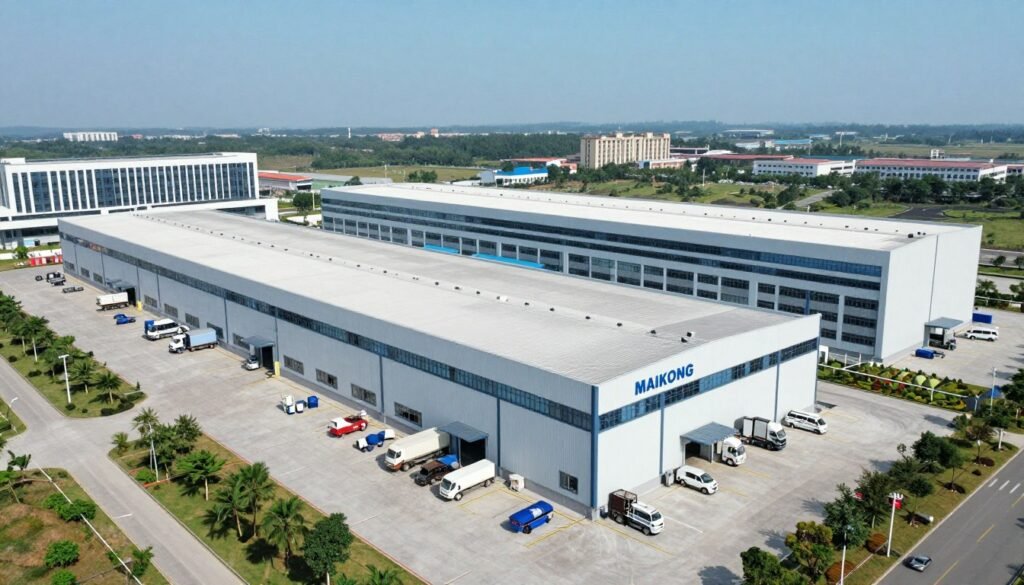
Fish Feed Production Line Guide: Complete UK Buyer’s Manual
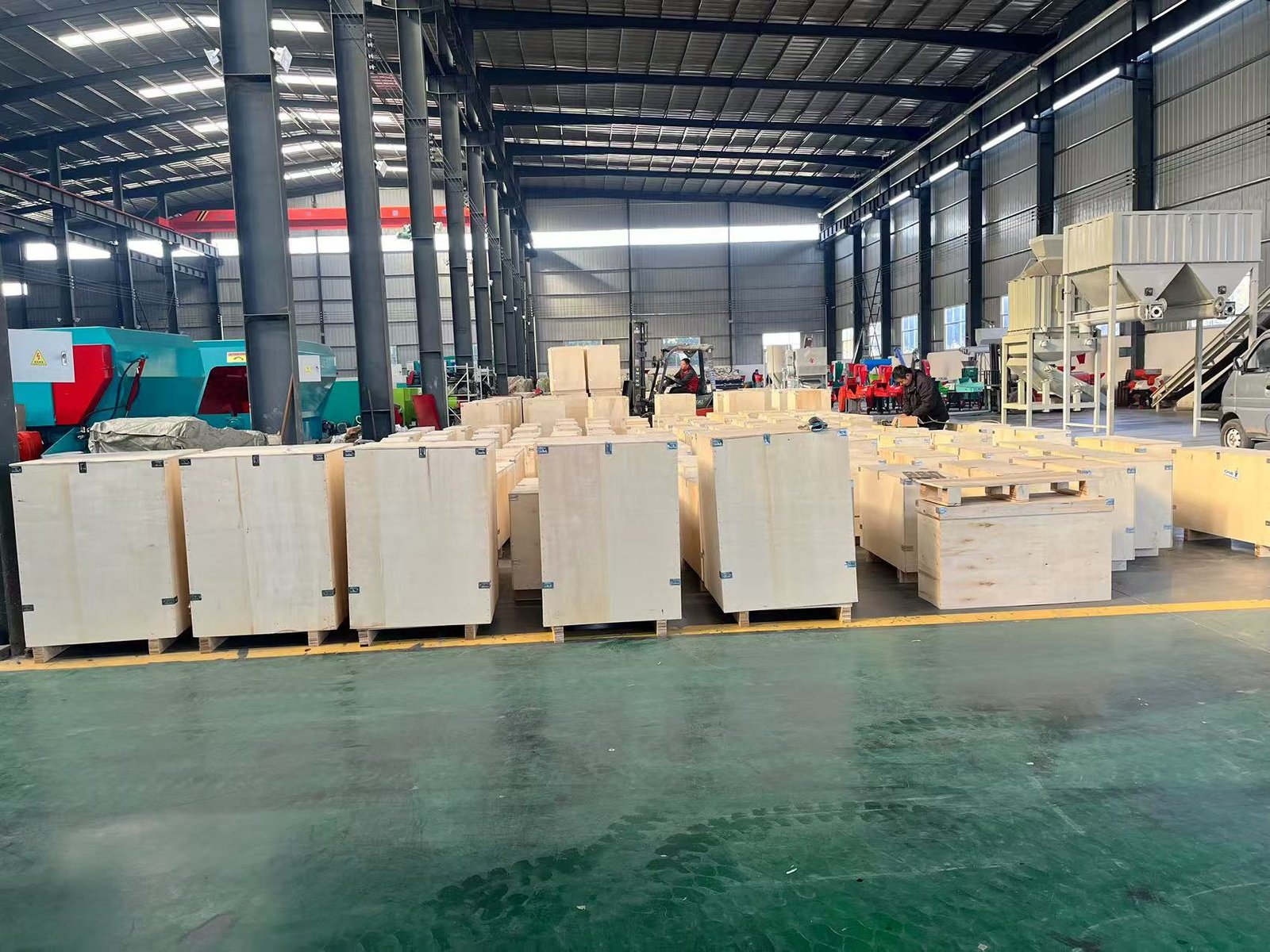
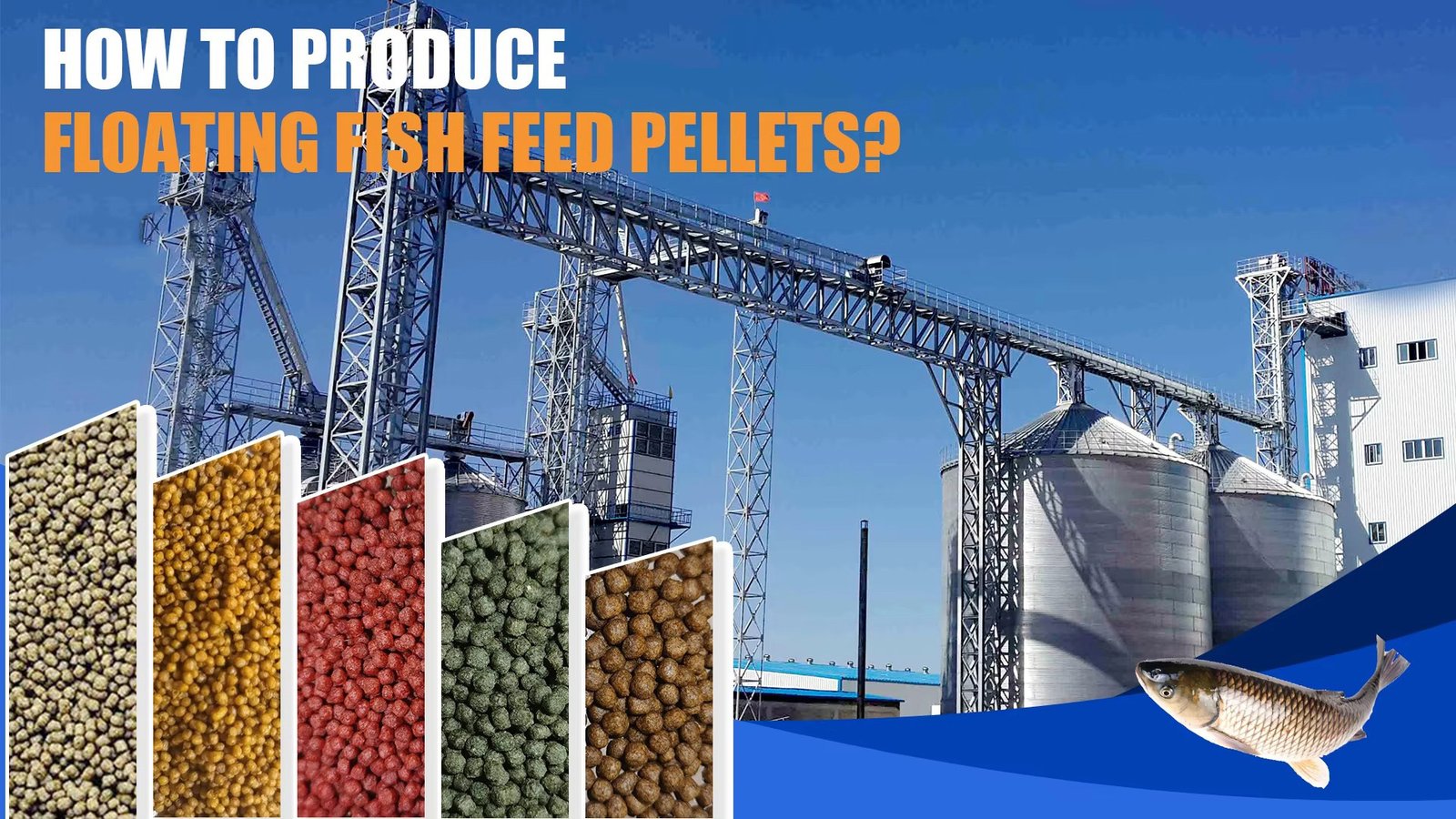
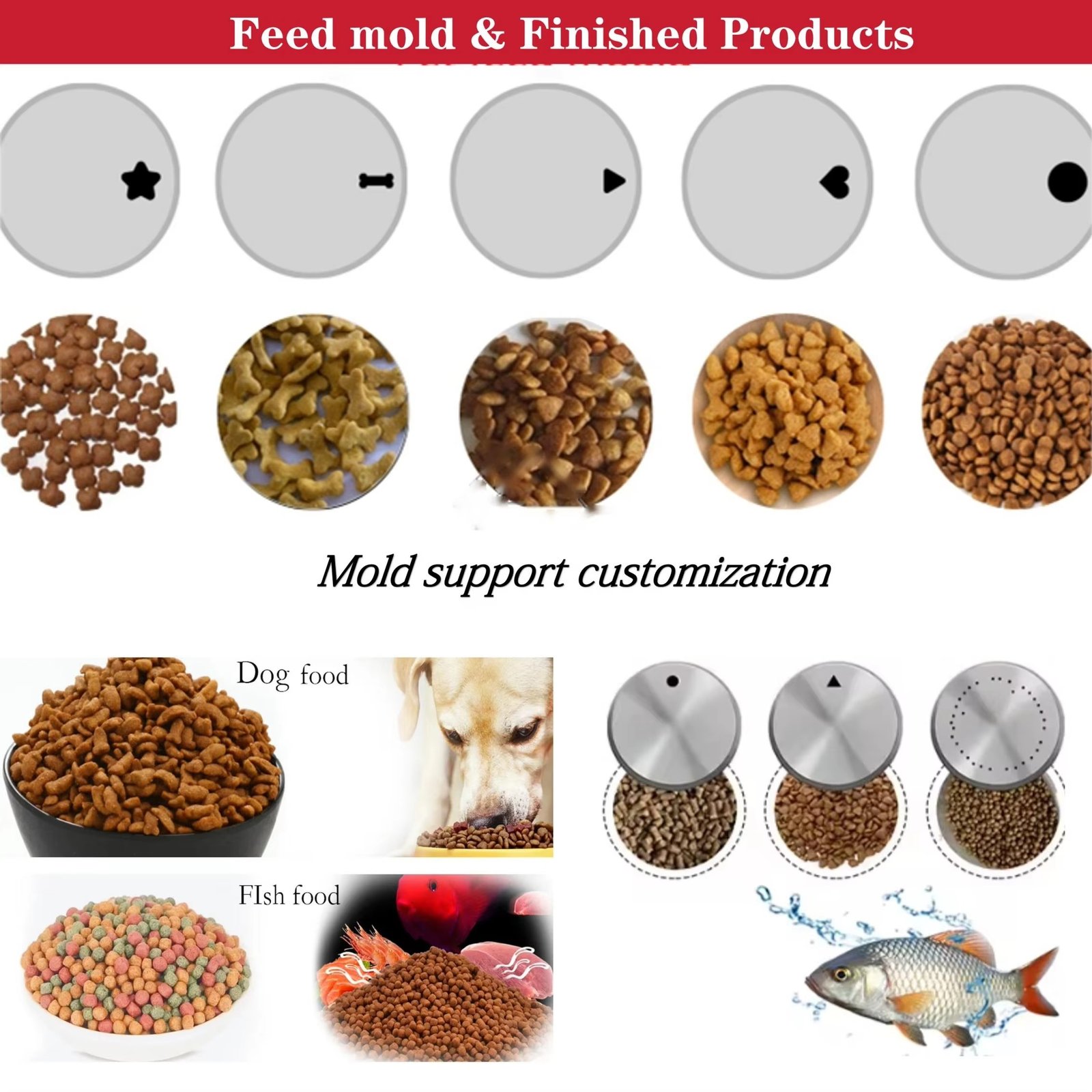
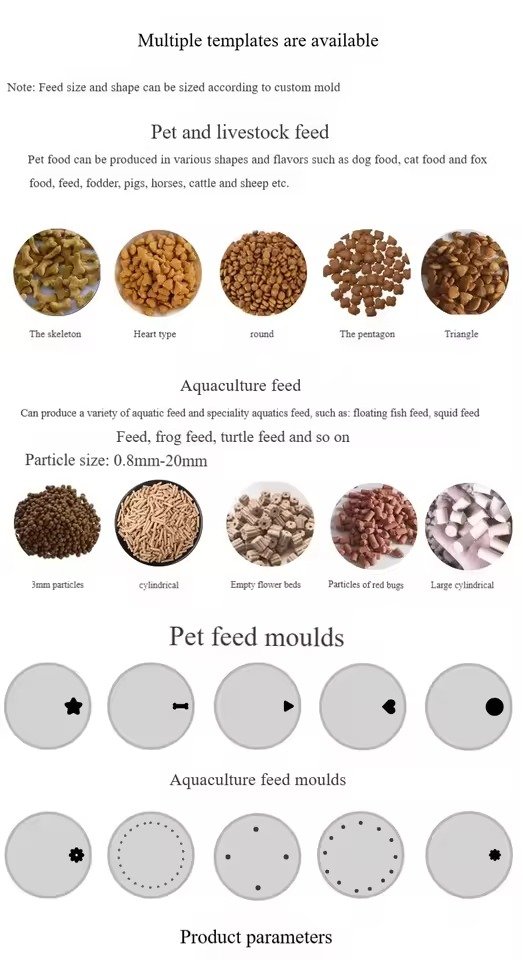
Quick technical questions? Our UK team is available via WhatsApp
Fish Feed Production Line Process: Extruded vs Pelleted Technology
The fundamental decision in any fish feed production line centres on processing technology. Extruded fish feed and pelleted fish feed serve different market segments, and understanding these differences affects your entire equipment specification.
Extruded Fish Feed Processing: High-Temperature Expansion Technology
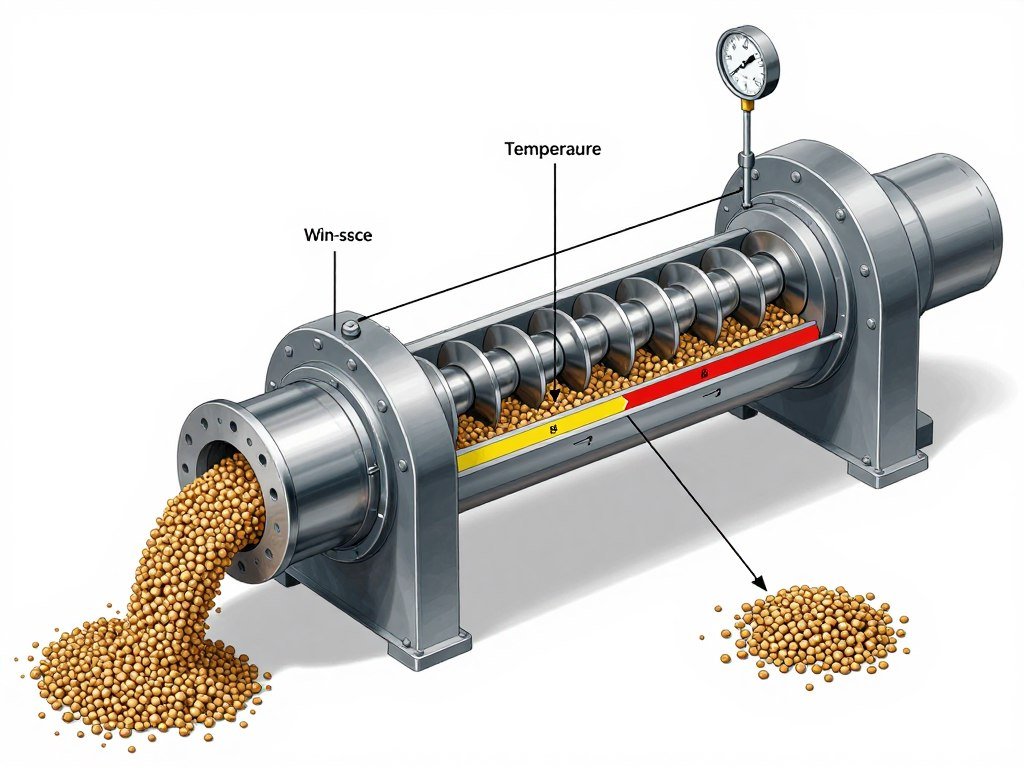
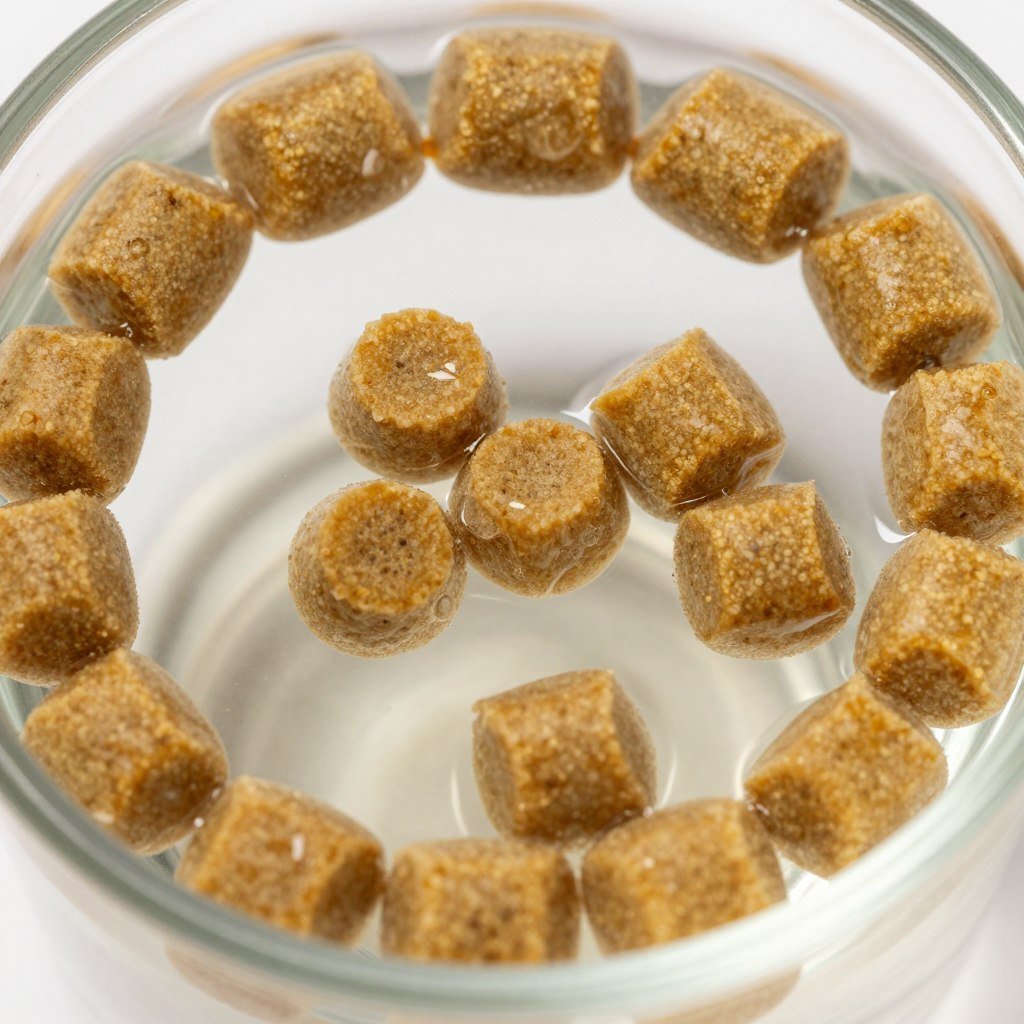
Extruded aqua feed production uses high-temperature, high-pressure cooking that gelatinizes starches and creates floating pellets. This process operates at 120-180°C with residence times of 20-40 seconds inside the extruder barrel. The sudden pressure release at the die exit causes steam expansion, creating the characteristic porous structure that allows pellets to float for 12-24 hours.
MAIKONG’s model MK-L003 twin-screw extruder achieves 95% gelatinization rates, essential for water stability exceeding 8 hours. The extruded process offers superior nutrient digestibility – protein digestibility improves by 8-12% compared to pelleted feed – because high-temperature treatment denatures anti-nutritional factors in raw materials like soybean meal.
Pelleted Fish Feed: Compression-Based Production
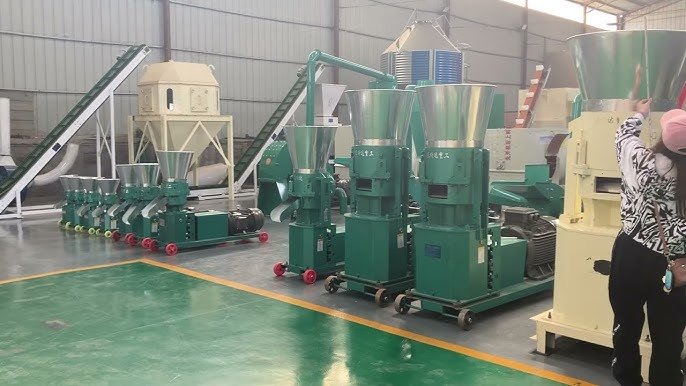
Pelleted fish feed production uses mechanical compression through a ring die pellet mill, operating at 75-85°C. This lower temperature preserves heat-sensitive vitamins but produces denser, sinking pellets suitable for bottom-feeding fish species like catfish and carp.
The feed pellet production line requires pre-conditioning with steam to achieve 15-17% moisture content before pelleting. Water stability for pelleted feed typically reaches 2-4 hours, sufficient for intensive pond culture where fish consume feed rapidly.
Extruded Feed Advantages
- Floating pellets ideal for surface-feeding species
- Enhanced nutrient digestibility (8-12% improvement)
- Extended water stability (12-24 hours)
- Lower feed conversion ratios
- Reduced water pollution from uneaten feed
- Suitable for high-value species: salmon, trout, marine fish
Pelleted Feed Advantages
- Lower equipment investment (30-40% less)
- Reduced energy consumption per tonne
- Sinking pellets for bottom feeders
- Simpler operation and maintenance
- Suitable for warm-water species: tilapia, catfish, carp
- Faster production cycles
Hybrid Production Systems for Versatile Operations
Many UK aquaculture businesses serving diverse markets require both floating and sinking feed capabilities. MAIKONG designs hybrid production lines incorporating both extrusion and pelleting equipment, allowing formula changeovers within 45-60 minutes. This flexibility proves valuable when supplying both marine aquaculture operations demanding floating feed and freshwater farms requiring sinking pellets.
Complete Fish Feed Production Line Equipment Configuration: From Raw Material to Finished Product
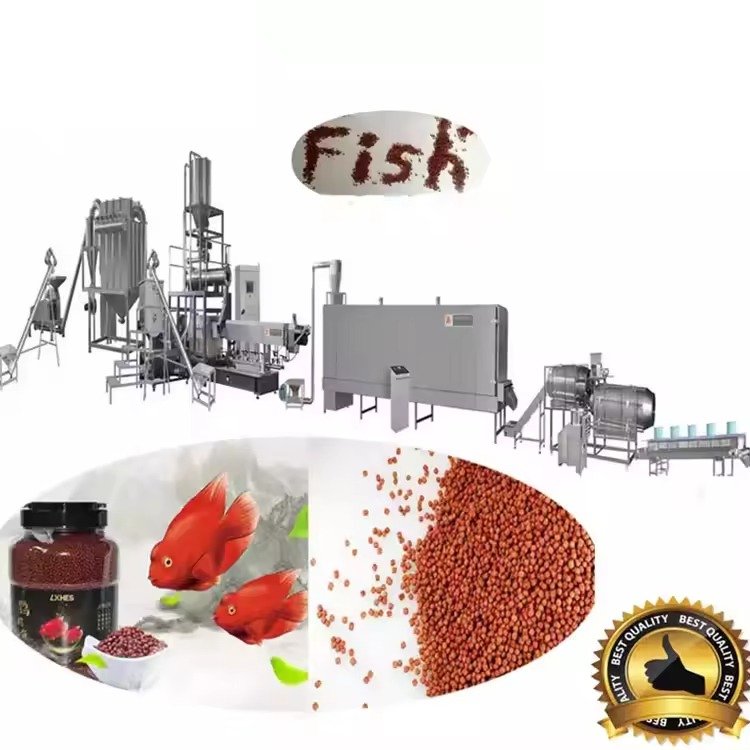
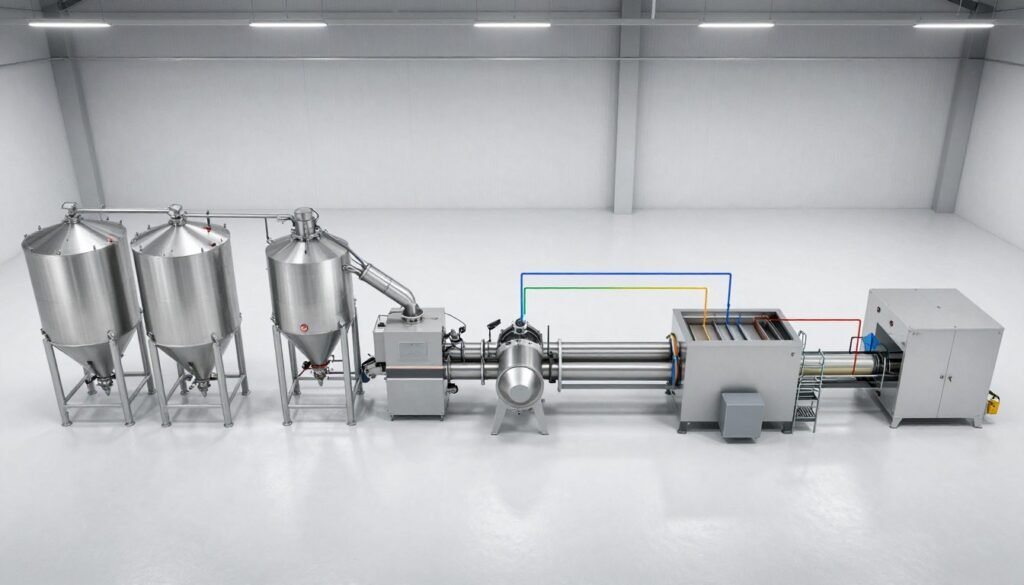
A professional fish feed production facility comprises eight integrated equipment modules. Each component plays a critical role in achieving target pellet quality, production efficiency, and operational reliability.
Module 1: Raw Material Receiving and Storage System
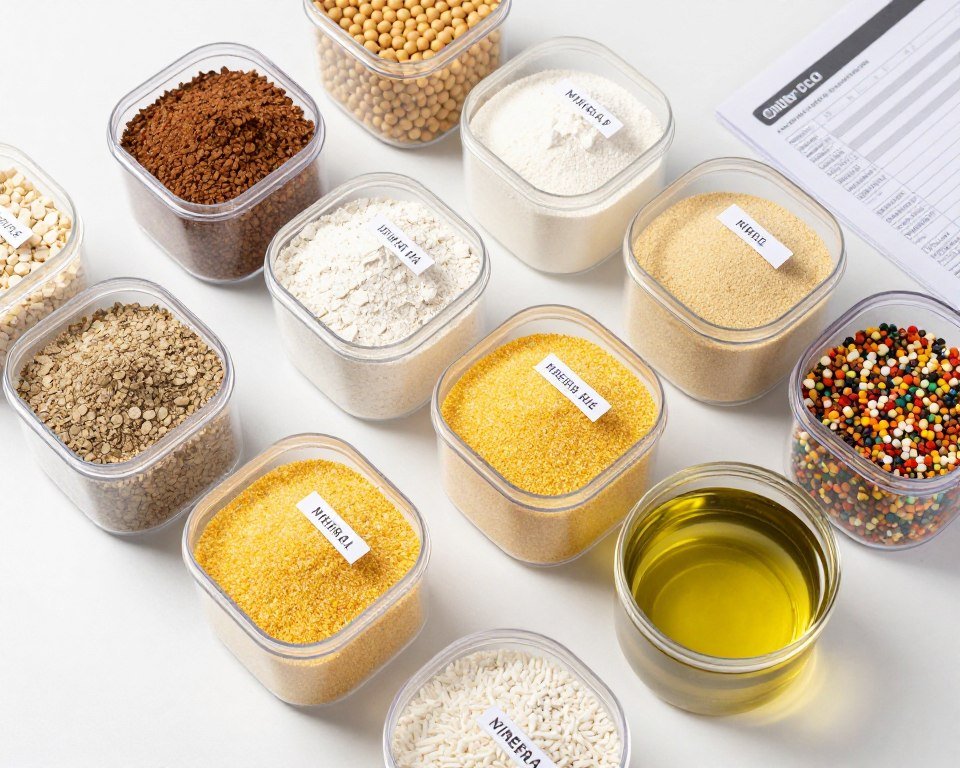
The production workflow begins with raw material intake. Modern fish feed formulations typically contain 8-15 different ingredients: fish meal (15-45%), soybean meal (20-35%), wheat flour (10-20%), fish oil (5-12%), vitamins, minerals, and binders. MAIKONG installs dedicated silos for bulk storage, with capacities ranging from 50 to 500 tonnes depending on production scale.
Material receiving systems include magnetic separators removing ferrous contamination and pre-cleaning screens eliminating oversized particles, stones, and foreign materials. This pre-processing protects downstream equipment from damage and maintains consistent material flow characteristics.
Module 2: Grinding and Size Reduction Equipment
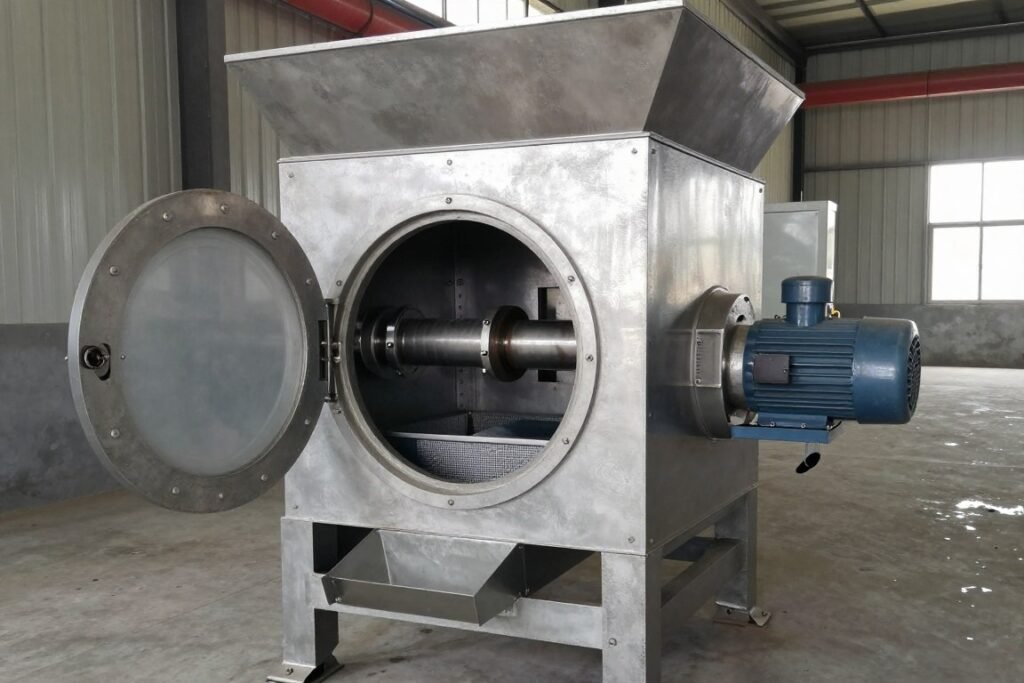
The hammer mill crushing section reduces ingredient particle size to 0.8-2.5mm, optimizing mixing uniformity and pelleting performance. MAIKONG’s MK-L003 production line incorporates variable-speed hammer mills with screen sizes from 1.5mm to 4mm, allowing operators to adjust fineness based on target fish species and pellet specifications.
Grinding consumes 40-60% of total energy in fish feed production. Our energy-efficient hammer mills achieve specific energy consumption of 12-18 kWh per tonne, significantly below industry averages of 20-25 kWh/t. Proper screen selection and maintenance schedules reduce energy waste while maintaining particle size consistency.
Module 3: Precise Batching and Weighing Systems
Accurate ingredient dosing determines feed quality consistency. MAIKONG supplies computerized batching systems with ±0.2% accuracy across all ingredients. The system manages both macro-ingredients (fish meal, grains) through loss-in-weight feeders and micro-ingredients (vitamins, minerals) via precision screw feeders.
For OEM clients requiring specific formulations, our PLC-controlled batching system stores 200+ recipes with automatic sequencing, ensuring your branded products maintain exact nutritional specifications across production runs.
Module 4: Intensive Mixing Technology
The ribbon mixer achieves 95% mixing uniformity in 4-6 minutes, distributing micro-nutrients throughout the batch. MAIKONG’s twin-shaft paddle mixers incorporate liquid addition systems for fish oil and vitamin pre-mixes, spraying liquids onto the mixing solids for uniform coating.
Proper mixing prevents vitamin and mineral segregation during transport and storage, crucial for maintaining consistent nutrition across each tonne of production. Inadequate mixing causes up to 15% variation in nutrient content, impacting fish growth rates and feed conversion efficiency.
Module 5: Conditioning and Thermal Processing
Pre-conditioning precedes either extrusion or pelleting, adding steam and moisture to improve pellet quality. The conditioning cylinder operates for 30-90 seconds residence time at 85-95°C, hydrating starches and improving binding characteristics.
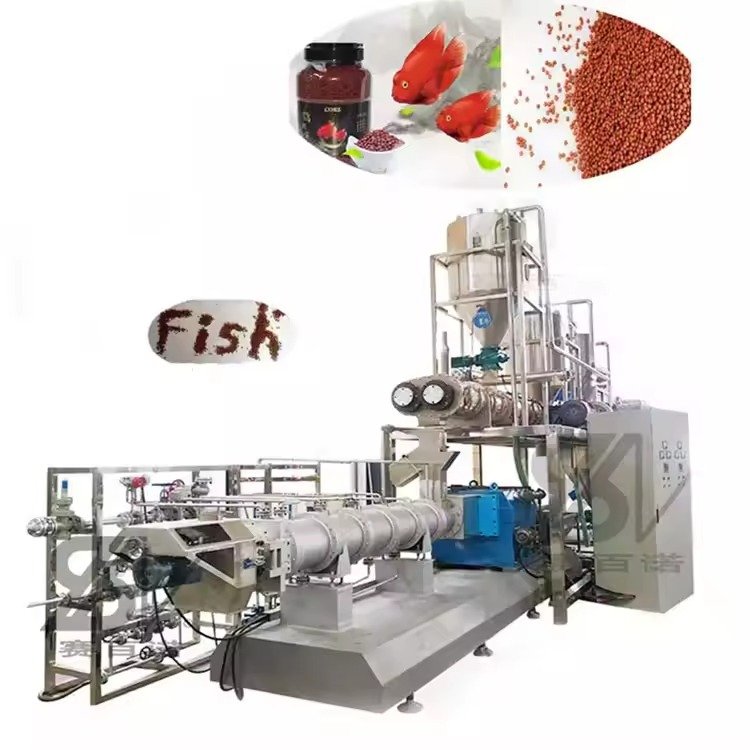
For extruded fish feed lines, the twin-screw extruder represents the core technology. MAIKONG’s model MK-L003 features:
- Modular screw configurations adaptable to different formulations
- Independent barrel temperature control (6-8 zones)
- Hydraulic die changing system for pellet size adjustment (2-12mm)
- Variable speed drive (300-500 RPM) for throughput control
- Integrated steam injection for moisture addition
The extrusion process creates physical and chemical changes improving feed quality. Starch gelatinization, protein denaturation, and pathogen elimination occur simultaneously, producing a hygienic, highly digestible product.
Need Expert Guidance on Equipment Configuration?
Our technical team provides free production line design reviews tailored to your specific fish species, capacity requirements, and facility constraints. With 22 years of experience supplying aquatic feed systems to UK and European clients, MAIKONG helps you select optimal equipment configuration while avoiding costly specification errors.
Module 6: Pellet Drying and Cooling
Extruded pellets exit the die at 100-120°C with 22-28% moisture. The counterflow cooler reduces temperature to 5-10°C above ambient and moisture to 10-12% for safe storage. Cooling takes 8-12 minutes depending on pellet size and ambient conditions.
Insufficient cooling causes several problems: premature mold growth during storage, bag condensation during transport, and pellet deformation from residual heat. MAIKONG’s MK-L003 line includes a 15-tonne/hour counterflow cooler with automated airflow control maintaining optimal cooling rates regardless of seasonal temperature variations.
Module 7: Screening and Size Classification
The vibrating screen separates finished pellets from fines (undersized particles) and oversized pieces. Fines typically represent 3-8% of extruder output and return to the mixing stage for reprocessing. Proper screening ensures uniform pellet size critical for consistent feeding behavior and reduced waste.
UK fish farmers particularly value size consistency because mixed pellet sizes cause competitive feeding, where larger fish consume oversized pellets while smaller fish struggle with inadequate nutrition. MAIKONG supplies multi-deck vibrating screens providing three size classifications simultaneously.
Module 8: Automated Packaging and Palletizing
The final stage involves weighing finished pellets into 25kg or 50kg bags using electronic packaging scales accurate to ±0.1%. For bulk customers, MAIKONG designs pneumatic loading systems filling trucks or containers directly, reducing handling costs and material degradation.
Automated bag sewing machines and palletizers handle outputs from 8 to 30 bags per minute, matching production line capacity. Proper packaging protects pellets from moisture absorption and physical damage during distribution to farms.
Fish Feed Production Line Capacity Planning: Matching Equipment to Market Demand
Selecting appropriate production capacity prevents both underutilization (wasting capital investment) and insufficient output (missing market opportunities). MAIKONG manufactures feed production line systems from 200kg/hour to 200 tonnes/hour, accommodating operations from small farm cooperatives to large commercial feed mills.
Small-Scale Operations: 200-500 kg/hour
Entry-level lines suit fish farms producing feed for on-site consumption. A 500kg/hour line operating 8 hours daily produces 4 tonnes, sufficient for 200-300 tonnes of fish biomass in intensive culture systems. These compact systems require minimal infrastructure: 150-200 square metres of floor space, 80-120 kW electrical connection, and 2-3 operators.
MAIKONG’s small-scale lines incorporate simplified automation maintaining quality standards while reducing initial investment. Typical equipment cost ranges from £85,000 to £145,000 depending on automation level and local installation requirements.
Medium-Scale Commercial Production: 1-5 tonnes/hour
Medium-capacity lines target regional feed distributors serving multiple fish farms. A 3-tonne/hour facility operating 16 hours produces 48 tonnes daily, supplying 2,500-3,500 tonnes of fish production. This scale justifies advanced automation, quality control systems, and formula flexibility for producing multiple product lines.
Space requirements increase to 500-800 square metres with electrical demands of 250-450 kW. Staff requirements grow to 6-8 operators plus maintenance personnel. MAIKONG’s medium-scale installations for UK clients typically cost £280,000-£520,000 including equipment, installation, and commissioning.
Large-Scale Industrial Production: 10-200 tonnes/hour
High-capacity operations serve national or export markets with diverse product portfolios. These facilities incorporate multiple production lines running simultaneously, each producing different formulations for various fish species and life stages. A 20-tonne/hour operation running 20 hours produces 400 tonnes daily, supporting 20,000-30,000 tonnes annual fish production.
Infrastructure becomes substantial: 2,000-5,000 square metres, 800-2,500 kW power supply, and 15-25 staff. Investment reaches £1.2-4.5 million depending on automation sophistication and auxiliary systems like waste water treatment and dust collection.
| Capacity Range | Hourly Output | Daily Production (16h) | Annual Output | Floor Space | Power Requirement | Staff Required | Typical Investment (£) |
| Small-Scale | 200-500 kg/h | 3-8 tonnes | 900-2,400 tonnes | 150-200 m² | 80-120 kW | 2-3 | 85,000-145,000 |
| Medium-Scale | 1-5 tonnes/h | 16-80 tonnes | 4,800-24,000 tonnes | 500-800 m² | 250-450 kW | 6-8 | 280,000-520,000 |
| Large-Scale | 10-50 tonnes/h | 160-800 tonnes | 48,000-240,000 tonnes | 2,000-5,000 m² | 800-2,500 kW | 15-25 | 1,200,000-4,500,000 |
Critical Capacity Planning Factors
Several variables affect optimal capacity selection beyond simple production volume targets. Raw material availability influences decisions – regions with unreliable ingredient supply benefit from larger buffer storage, affecting facility footprint and working capital requirements.
Market volatility creates demand fluctuations. Oversized equipment provides flexibility during peak seasons but increases per-tonne costs during low-demand periods. MAIKONG recommends sizing lines for 70-80% utilization during average demand periods, allowing 20-30% surge capacity without requiring substantial overtime operation.
Product diversification requirements matter significantly. Facilities producing 3-5 different formulations require more frequent changeovers, effectively reducing hourly throughput by 10-15% compared to single-product operations. Our engineering team factors these efficiency losses into capacity specifications during design consultations.
Fish Feed Raw Materials and Formulation Considerations for Production Line Design
Raw material characteristics profoundly influence equipment selection and process parameters. The fish feed production line guide must account for specific ingredient properties affecting grinding, mixing, pelleting, and final product quality.
Primary Protein Sources: Fish Meal and Plant Proteins
Fish meal remains the gold standard protein source, containing 60-72% crude protein with excellent amino acid profiles. However, prices exceeding £1,200-1,800 per tonne drive feed formulators toward plant alternatives. Soybean meal (44-48% protein) partially replaces fish meal in warm-water species diets, while specialist ingredients like insect protein and single-cell proteins emerge in premium formulations.
Different protein sources behave differently during processing. Fish meal’s high oil content (8-12%) improves pellet binding but may cause die blockages if grinding produces excessively fine particles. MAIKONG engineers specify appropriate screen sizes and hammer configurations based on your target formulation’s protein composition.
Energy Sources: Starches and Lipids
Carbohydrate sources provide binding properties essential for pellet integrity. Wheat flour (10-20% inclusion) offers superior binding compared to corn due to higher gluten content. Tapioca and cassava starches suit gluten-free formulations for specialized markets.
The starch gelatinization degree directly affects water stability. MAIKONG’s extruders achieve 92-98% gelatinization, creating strong pellet structures maintaining integrity for 12-24 hours in water. Insufficient gelatinization causes rapid disintegration, wasting feed and polluting culture systems.
Fish oil (5-15% inclusion) provides essential omega-3 fatty acids critical for marine fish health. Liquid addition systems spray oil during mixing, coating particles uniformly. Excessive oil causes pellet softening and increases dust formation during handling.
Functional Additives and Micro-nutrients
Vitamin and mineral premixes require careful handling during production. Heat-sensitive vitamins (especially vitamin C and B-complex) degrade at temperatures exceeding 85-90°C. MAIKONG’s temperature-controlled mixing and conditioning systems minimize nutrient losses while achieving necessary thermal processing for starch gelatinization and pathogen elimination.
Pellet binders like lignosulfonates or specialized starches improve water stability, particularly important for marine cage culture where pellets must remain intact despite wave action. These additives increase production costs by £15-35 per tonne but reduce feed waste by 8-15%.
Moisture Content Management Throughout Production
Material moisture content affects every processing stage. Raw materials arrive at 8-14% moisture, requiring drying or moisture adjustment before grinding. The hammer mill operates optimally at 10-12% moisture – excessive moisture causes material caking inside the mill chamber, while insufficient moisture increases dust generation and energy consumption.
During conditioning and extrusion, moisture increases to 22-28% through steam addition, then reduces to 10-12% during cooling. This moisture cycling enables starch gelatinization while producing shelf-stable finished product. MAIKONG’s production lines incorporate continuous moisture monitoring at critical process points, automatically adjusting steam injection and cooling parameters maintaining target specifications.
Achieving Target Fish Feed Pellet Quality: Floating Characteristics, Water Stability, and Durability
Feed quality determines farm productivity more than any other purchased input. The fish feed production line process must deliver consistent pellet characteristics meeting both nutritional and physical requirements.
Floating vs Sinking: Pellet Density Control
Pellet buoyancy depends on bulk density, controlled through extrusion parameters. Floating pellets maintain density below 600 kg/m³, achieved through controlled expansion during extrusion. MAIKONG’s extruders regulate density by adjusting screw speed, barrel temperature, moisture content, and die configuration.
Sinking pellets require density above 900 kg/m³, produced either through pelleting technology or modified extrusion with reduced expansion. Some formulations require slow-sinking characteristics (density 700-800 kg/m³) for mid-water feeding species, achieved through precise process control during extrusion.
Water Stability: Critical for Feed Efficiency
Water stability measures how long pellets maintain integrity when immersed. Premium floating feed remains intact for 12-24 hours, essential for marine cage culture where feed disperses across large areas. Inadequate stability causes pellets disintegrating within minutes, creating three problems: nutrition loss before fish consumption, increased water pollution, and difficulty assessing actual feed intake.
MAIKONG tests water stability during production line commissioning, adjusting extrusion parameters until achieving target performance. Key factors include:
- Starch gelatinization degree (target: 92-98%)
- Protein denaturation level affecting binding
- Pellet surface characteristics – smooth surfaces resist water penetration
- Internal porosity distribution – uniform pore structure maintains longer stability
- Oil coating application – external lipid layer delays water absorption
Pellet Durability Index (PDI): Handling Resistance
Physical durability prevents pellet breakage during transport, storage, and handling. The Pellet Durability Index measures resistance to mechanical stress, with premium feed achieving 95-98% PDI. Low durability creates fines that fish refuse, wasting 5-12% of production.
Durability depends on raw material composition and processing conditions. Formulations high in fibrous materials (wheat bran, rice bran) produce less durable pellets compared to starch-rich recipes. MAIKONG’s process control systems monitor PDI throughout production runs, alerting operators to parameter drift requiring adjustment.
Pellet Size Uniformity and Specification Ranges
Different fish species and life stages require specific pellet sizes. Larval fish consume 0.5-1.2mm crumbles, juveniles feed on 2-4mm pellets, while grow-out fish utilize 4-8mm sizes. MAIKONG manufactures die plates with hole diameters from 1.5mm to 12mm, easily exchanged to produce different sizes.
Size uniformity within a batch matters significantly. Mixed sizes cause competitive feeding, where dominant fish consume larger pellets while subordinate fish receive inadequate nutrition. Our screening systems maintain ±0.3mm tolerance, ensuring 95%+ pellets fall within target specifications.
Premium Quality Pellet Specifications
- Moisture Content: 10-12% (safe storage, prevents mold)
- Bulk Density: 550-650 kg/m³ (floating feed)
- Water Stability: 12-24 hours (marine/cage culture)
- Durability Index: 95-98% (minimal fines generation)
- Expansion Rate: 25-35% (optimal texture)
- Size Tolerance: ±0.3mm (uniform feeding)
Fish Feed Production Line Maintenance, Troubleshooting, and Operational Best Practices
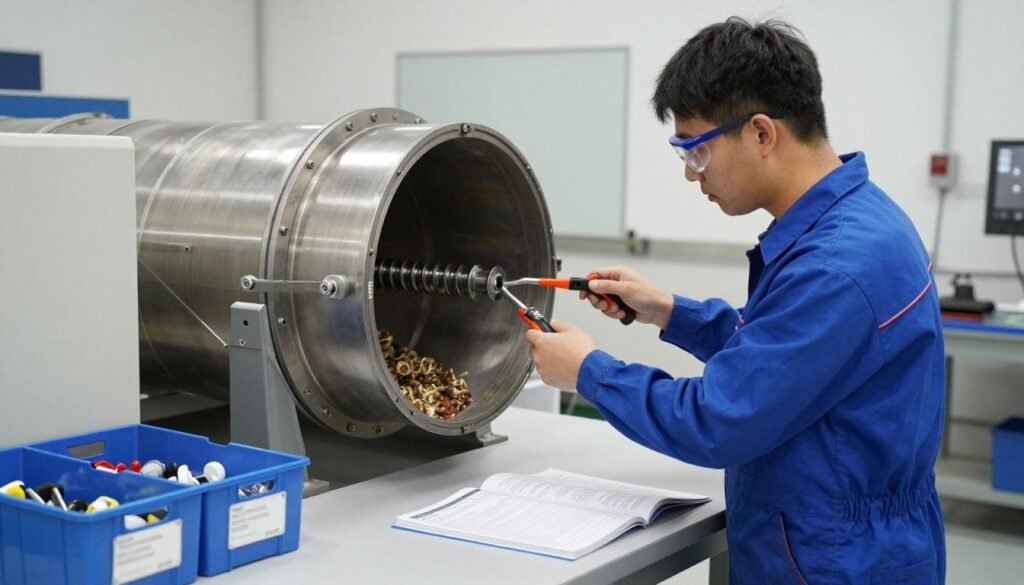
Production reliability determines profitability in competitive feed markets. MAIKONG’s fish feed production line maintenance program combines preventive schedules with rapid troubleshooting protocols, minimizing downtime and maximizing equipment lifespan.
Preventive Maintenance Schedule: Protecting Your Investment
Regular maintenance prevents 85-90% of equipment failures. MAIKONG provides comprehensive maintenance schedules covering daily, weekly, monthly, and annual tasks. Critical daily activities include:
- Hammer mill screen inspection – replace when wear exceeds 15% of hole area
- Mixer paddle clearance check – maintain 3-5mm gap to vessel wall
- Extruder barrel temperature verification – ensure all zones reach setpoints
- Die inspection for blockages – clean ports if throughput drops below 90%
- Cooler airflow monitoring – remove dust buildup affecting efficiency
- Lubrication of bearings and drive chains – follow manufacturer specifications
Weekly maintenance extends to filter cleaning, belt tension adjustment, and electrical connection inspection. Monthly tasks include gearbox oil analysis, motor insulation testing, and PLC backup verification.
Common Production Issues and Solutions
Despite proper operation, occasional problems emerge requiring systematic troubleshooting. MAIKONG trains customer staff during installation, providing diagnostic flowcharts for rapid problem resolution.
Problem: Die Blockage
- Cause: Excessive moisture or oil content
- Solution: Reduce steam injection by 5-8%
- Prevention: Monitor raw material moisture before processing
- Impact: 30-50% capacity reduction if unresolved
Problem: High Fines Generation
- Cause: Insufficient binding or over-drying
- Solution: Increase conditioning time by 10-15 seconds
- Prevention: Optimize binder levels in formulation
- Impact: 8-15% product waste, reduced revenue
Problem: Poor Water Stability
- Cause: Inadequate starch gelatinization
- Solution: Increase barrel temperature 8-12°C
- Prevention: Regular temperature sensor calibration
- Impact: Customer complaints, contract losses
Spare Parts Management and Local UK Support
Critical spare parts inventory prevents extended downtime. MAIKONG recommends maintaining:
- Hammer mill screens (2 sets) – most frequently replaced component
- Extruder screws and barrel segments (1 set) – 18-24 month replacement cycle
- Die plates in each size (2 plates) – allows immediate changeover
- Mixer paddles (1 set) – 12-18 month service life
- Motor bearings for critical equipment – reduces emergency procurement delays
- PLC backup modules – protects against electronic failures
As a UK-based supplier, MAIKONG maintains spare parts inventory in our GD Province, SZ City facility with 5-7 day delivery to European clients. Our technical support team provides remote diagnostics via video call, often resolving issues without on-site visits. For complex problems, MAIKONG dispatches engineers within 48-72 hours to UK locations.
Explore OEM/ODM Customization for Your Brand
MAIKONG specializes in developing branded fish feed production lines customized to your specific formulations, capacity requirements, and market positioning. Our OEM/ODM services include formula optimization, packaging design integration, quality control protocol development, and operator training programs. Over 22 years, we’ve helped UK and European distributors establish successful branded feed businesses with complete technical support from initial specification through commercial production.
Fish Feed Production Line Investment Analysis: Costs, Financing, and Return on Investment
Understanding total investment requirements and expected returns guides sound business decisions. MAIKONG provides transparent cost breakdowns helping UK clients secure financing and project realistic ROI timelines.
Capital Expenditure Components
Total project investment extends beyond equipment purchase. Comprehensive budgeting includes:
| Cost Category | Percentage of Total | Small-Scale (500 kg/h) | Medium-Scale (3 t/h) | Large-Scale (20 t/h) |
| Equipment Purchase | 50-60% | £85,000-£145,000 | £280,000-£520,000 | £1,200,000-£2,800,000 |
| Building & Infrastructure | 15-20% | £25,000-£48,000 | £85,000-£165,000 | £350,000-£720,000 |
| Installation & Commissioning | 8-12% | £12,000-£24,000 | £38,000-£78,000 | £145,000-£385,000 |
| Working Capital (3 months) | 15-20% | £22,000-£40,000 | £70,000-£135,000 | £280,000-£640,000 |
| Contingency & Misc. | 5-8% | £8,000-£16,000 | £28,000-£65,000 | £95,000-£260,000 |
Operating Cost Analysis
Annual operating expenses determine ongoing profitability. Major cost categories include:
Raw Materials: Typically 70-80% of total costs. Fish meal prices fluctuate £1,200-1,800/tonne, soybean meal £350-520/tonne, wheat £180-245/tonne. Formula optimization balances cost against nutritional requirements and target fish species performance.
Energy: Electricity consumption ranges 45-75 kWh per tonne produced, costing £6-11 per tonne at UK commercial rates. Natural gas for steam generation (if used) adds £3-7 per tonne. Energy-efficient equipment reduces these costs by 15-25%.
Labor: Staff costs vary with automation level. Small operations require 2-3 operators at £28,000-£38,000 annually each. Medium facilities need 6-8 staff including supervisors and quality control personnel. Large plants employ 15-25 workers across production, maintenance, and management roles.
Maintenance: Budget 3-5% of equipment value annually for routine maintenance and spare parts. Preventive programs reduce unplanned downtime costs exceeding £2,500-8,500 per day depending on facility scale.
Revenue Projections and Profitability
UK fish feed prices range £850-1,450 per tonne depending on formula, quality, and market positioning. Premium floating feeds for salmon and marine species command £1,200-1,450/tonne, while economy formulations for warm-water species sell £850-1,050/tonne.
Gross margins typically range 12-28% before overhead allocation. A 3-tonne/hour facility producing 45 tonnes daily (16-hour operation, 300 days annually) generates 13,500 tonnes annual output. At £1,100 average selling price and 18% gross margin, this facility produces £2,673,000 annual gross profit.
After deducting overhead (administration, marketing, finance costs), net margins reach 6-14% depending on operational efficiency and market positioning. Payback periods range 3-7 years for well-managed operations in established markets.
Financing Options for UK Buyers
MAIKONG assists clients accessing various financing mechanisms:
- Equipment Leasing: Preserve working capital by leasing equipment over 5-7 years
- Development Bank Loans: Many regions offer agricultural development financing at favorable rates
- Vendor Financing: MAIKONG provides flexible payment terms for qualified customers
- Partnership Structures: Joint ventures with existing feed distributors reduce individual capital requirements
MAIKONG Fish Feed Production Line Success Stories: Global Case Studies and UK Applications
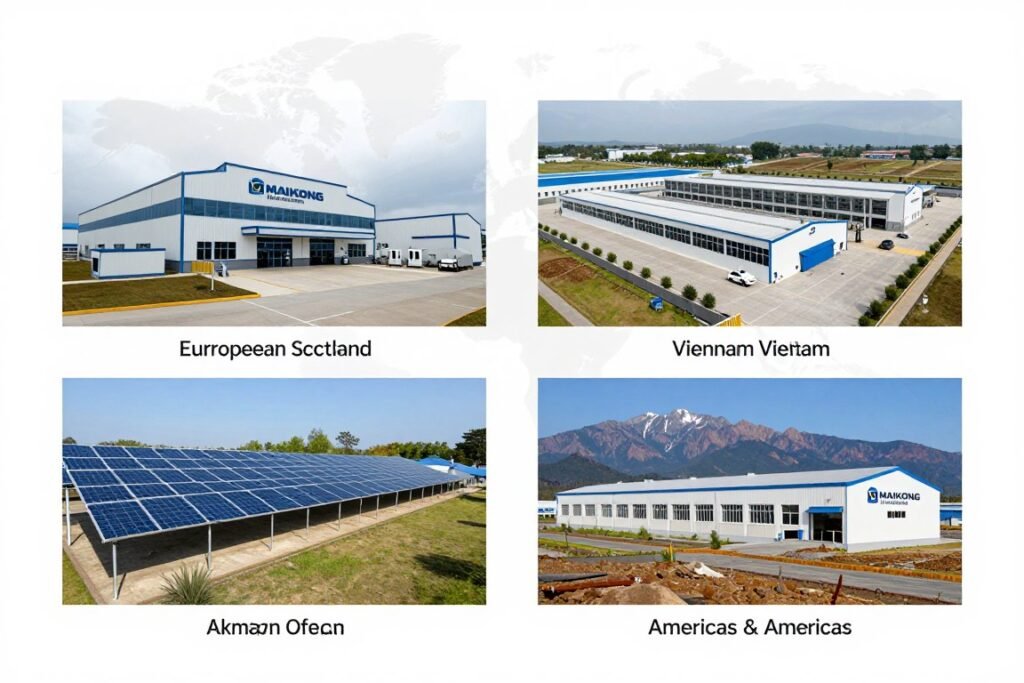
Real-world implementations demonstrate equipment performance and business outcomes. MAIKONG’s 22-year history includes successful poultry feed production line and aquatic feed installations across 130 countries.
European Case Study: Scottish Salmon Feed Producer
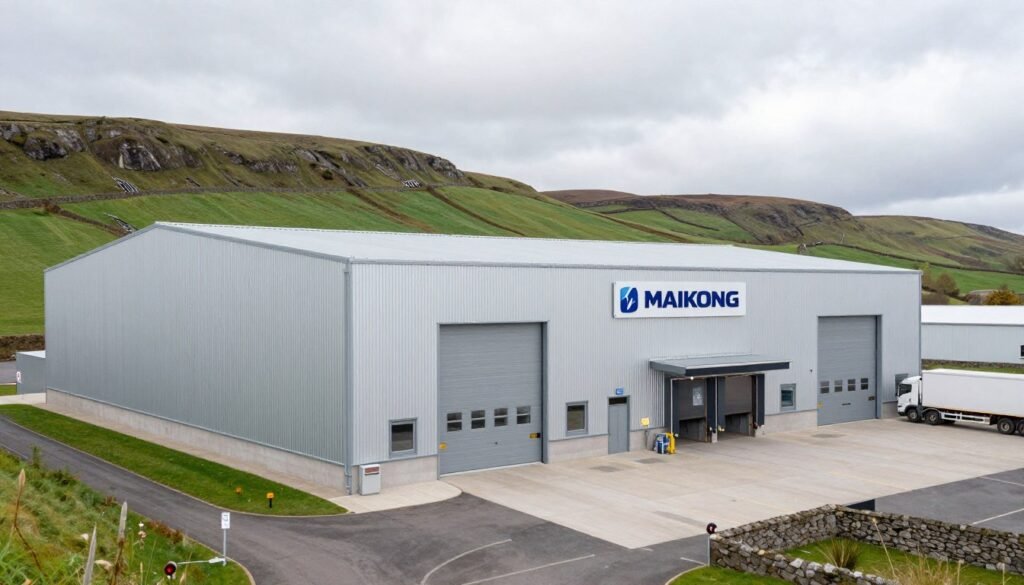
A Scottish aquaculture cooperative installed MAIKONG’s 2-tonne/hour extruded feed line in 2021, replacing imported feed costing £1,350/tonne. The facility now produces premium floating pellets at £920/tonne total cost, achieving 18.5% cost savings while improving feed conversion ratios by 0.12 points.
The installation serves 12 member farms cultivating 8,500 tonnes Atlantic salmon annually. Production focuses on high-energy formulations (45% protein, 22% lipid) optimized for cold-water growth. MAIKONG customized the system with enhanced oil injection capabilities and specialized cooling to handle high-fat formulations.
Key results after 18 months operation:
- Annual production: 9,200 tonnes (capacity utilization 82%)
- Feed cost reduction: £430 per tonne vs. imported feed
- Improved FCR: 1.08 vs. 1.20 with previous feed
- Water stability: 16-18 hours meeting marine cage requirements
- Member satisfaction: 94% (survey of 12 farms)
Asian Case Study: Vietnamese Pangasius Feed Mill
Vietnam’s largest catfish producer installed a 15-tonne/hour MAIKONG production line in 2020, consolidating five smaller facilities into one centralized operation. The sinking pellet system produces feeds for 45,000 tonnes annual pangasius production across the Mekong Delta region.
This high-capacity installation demonstrates MAIKONG’s capability handling extreme production demands in tropical conditions. Special moisture control systems combat Vietnam’s 85-95% humidity, preventing pellet degradation during storage and transport.
Operational highlights include:
- Daily output: 240 tonnes (16-hour operation)
- Formula varieties: 7 different life-stage diets
- Automation level: 92% (minimal manual intervention)
- Energy efficiency: 58 kWh/tonne (15% below industry average)
- Payback achieved: 4.2 years including consolidation costs
African Case Study: Kenyan Tilapia Feed Cooperative
A Kenyan smallholder cooperative pooled resources to establish a 800kg/hour facility serving 65 member fish farms around Lake Victoria. This installation demonstrates MAIKONG’s small-scale solutions enabling developing market access to quality feed production technology.
The system produces floating and slow-sinking feeds for tilapia culture in earthen ponds and cage systems. Simplified automation reduces operator training requirements while maintaining consistent quality. Solar power integration offsets 40% of energy costs, critical for profitability in regions with expensive electricity.
Impact assessment after 24 months:
- Member feed costs reduced 35% vs. commercial purchases
- Average farm productivity increased 28% with improved nutrition
- Cooperative generated £42,000 annual surplus distributed to members
- Employment created: 8 permanent staff from local community
- Technology transfer: 12 operators trained in feed production
Americas Case Study: Chilean Marine Feed Expansion
A Chilean company serving the marine fish farming industry expanded their capacity with MAIKONG’s 8-tonne/hour extruder line in 2019. The facility produces specialized feeds for sea bass, sea bream, and experimental marine species, positioning the company as a technical leader in South American aquaculture.
Advanced formulation capabilities include variable protein levels (42-52%), precise oil coating systems, and customized vitamin premix integration. MAIKONG’s technical team collaborated on formula development, conducting pilot trials before full-scale production implementation.
Strategic outcomes include:
- Market share growth: 18% to 31% in Chilean marine feed sector
- Premium product pricing: 12% above commodity feeds
- Export contracts secured: 2,400 tonnes annually to Peru and Ecuador
- R&D partnerships: Collaboration with three universities on novel ingredients
Partner with MAIKONG: UK and European Distributor Opportunities
MAIKONG actively seeks qualified distributors and agents throughout the United Kingdom and European markets. Our partnership program offers complete business support for established feed industry professionals ready to represent premium animal feed production line technology.
Why Become a MAIKONG Distribution Partner?
The UK aquaculture industry continues expanding, with domestic fish production projected to grow 6-8% annually through 2028. This growth drives demand for reliable, cost-effective feed production equipment. MAIKONG offers distribution partners:
Comprehensive Product Portfolio
Represent complete feed production solutions from 200kg/hour starter units to 200-tonne/hour industrial systems. Product diversity enables serving multiple market segments from small farms to large commercial operations.
- Extruded floating feed systems
- Pelleted sinking feed lines
- Hybrid production configurations
- Specialized equipment: shrimp feed, pet food, livestock feed
Technical and Sales Support
MAIKONG provides extensive partner support ensuring your success. Our 22-year manufacturing experience translates into practical guidance helping you close sales and satisfy customers.
- Technical training at our GD Province facility
- Sales literature and presentation materials
- Engineering support for customer proposals
- Joint customer visits for major projects
Ideal Partner Profile
MAIKONG seeks partners with existing aquaculture, agricultural equipment, or feed industry connections. Ideal distributors possess:
- Established business serving UK/European fish farming or feed sectors
- Technical staff capable of discussing equipment specifications with customers
- Workshop facilities for equipment demonstration and customer testing
- Financial capacity to maintain equipment inventory and spare parts stock
- Commitment to long-term partnership rather than transactional relationships
- Geographic coverage across UK regions or specific European countries
Partnership Benefits and Commercial Terms
MAIKONG structures partnerships for mutual profitability and sustained growth. Distribution agreements include:
Distributor Advantages
- Competitive wholesale pricing enabling healthy margins (18-28%)
- Exclusive territory protection (negotiated based on market size)
- Marketing development funds for promotional activities
- Technical training for 2-4 staff members annually
- Spare parts consignment inventory program
- Co-branding opportunities for established partners
- Flexible payment terms for qualified distributors
- Performance bonuses based on annual sales targets
Distributor Responsibilities
- Maintain minimum annual purchase commitments
- Provide first-level customer technical support
- Conduct quarterly market feedback reports
- Maintain demonstration facility or arrange customer factory visits
- Stock critical spare parts for rapid customer service
- Participate in industry exhibitions and trade events
- Coordinate installation and commissioning with MAIKONG engineers
Getting Started: Partnership Application Process
Interested parties begin with a confidential discussion exploring mutual fit and market opportunities. The partnership development process includes:
- Initial Consultation: 30-45 minute video call discussing your business, market experience, and partnership interest. Contact Lucy@feedproductionline.uk or WhatsApp +86 15815556422 to schedule.
- Market Assessment: MAIKONG conducts market analysis for your territory, identifying opportunity size and competitive landscape.
- Business Planning: Collaborative development of 3-year partnership plan including sales targets, marketing strategy, and support requirements.
- Agreement Finalization: Legal review and execution of distribution agreement with defined territories, terms, and obligations.
- Launch Preparation: Partner training, marketing material provision, initial inventory planning, and customer introduction strategies.
- Ongoing Partnership Management: Quarterly business reviews, continuous technical support, and collaborative growth initiatives.
Request Your Custom Fish Feed Production Line Quotation
Ready to discuss your specific requirements? Complete the form below to receive a detailed quotation tailored to your capacity needs, facility constraints, target fish species, and budget parameters. MAIKONG’s engineering team responds within 24 hours with comprehensive proposals including equipment specifications, layout drawings, investment estimates, and project timelines.
Alternative Contact Methods
Prefer direct communication? Reach our UK technical team immediately:
- WhatsApp/Phone: +86 15815556422 (24-hour response)
- Email: Lucy@feedproductionline.uk (responses within 24 hours)
- Website: feedproductionline.uk (complete product catalogue)
- Office Hours: Monday-Friday, 9:00-18:00 GMT (UK team available)
Conclusion: Making the Right Fish Feed Production Line Investment Decision
Selecting fish feed production equipment represents one of the most significant investment decisions in aquaculture business development. This comprehensive fish feed production line guide has examined every critical aspect: understanding extruded versus pelleted technology, configuring complete equipment systems, planning optimal production capacity, managing raw materials and formulations, achieving target pellet quality specifications, implementing preventive maintenance programs, analyzing investment requirements and returns, and learning from successful global implementations.
MAIKONG’s 22 years of manufacturing experience serving 130+ countries provides UK and European buyers with proven, reliable solutions. Our commitment extends beyond equipment supply to comprehensive partnership: technical consultation, OEM/ODM customization, installation and commissioning support, operator training, ongoing maintenance assistance, and rapid spare parts availability.
Whether you’re establishing a new fish feed mill, expanding existing capacity, or exploring distribution opportunities in the UK market, MAIKONG offers the technical expertise and business support ensuring your success. The aquaculture industry’s continued growth creates substantial opportunities for feed producers equipped with modern, efficient production technology.
Take the next step today. Contact our UK technical team to discuss your specific requirements, receive customized equipment recommendations, and obtain detailed quotations tailored to your business objectives. MAIKONG stands ready to become your long-term partner in aquatic feed production excellence.
Join the MAIKONG Partner Network – UK Distributor Opportunities
MAIKONG actively seeks qualified distributors throughout the United Kingdom and European markets. If you have existing connections in aquaculture, agricultural equipment, or feed industry sectors, partnering with MAIKONG offers substantial business growth opportunities. Our comprehensive distributor support program includes exclusive territories, competitive pricing, technical training, marketing support, and ongoing business development assistance. Over 22 years, we’ve built successful partnerships across 130 countries – now we’re expanding throughout the UK and Europe. Contact us today to explore this strategic business opportunity and join a globally recognized leader in feed production technology.
Website: feedproductionline.uk | Email: Lucy@feedproductionline.uk