
Equipment sitting idle wastes capital. Running production lines at partial capacity increases per-unit costs dramatically. Maintenance requirements don’t decrease just because you’re producing less than the equipment’s maximum output. For smaller UK farms producing between 5 and 50 tonnes of feed monthly, the fish feed pellet production line price becomes not just about initial purchase cost but long-term operational efficiency.
This guide examines practical capacity matching for UK aquaculture operations. We’ll analyze real-world production scenarios, compare equipment specifications suited to different farm scales, and provide decision frameworks that prevent costly over-investment. Whether you operate a modest trout farm in Scotland or a growing tilapia operation in southern England, understanding the true relationship between production capacity and operational costs will protect your investment.
Need Help Sizing Your Production Line? MAIKONG’s technical team offers free capacity assessments based on your farm’s specific requirements. With 22 years of manufacturing experience and installations across 130 countries, we understand the unique challenges facing UK aquaculture producers. Contact us on WhatsApp or email Lucy@feedproductionline.uk for personalized guidance.
Understanding Production Capacity Reality: Why Bigger Isn’t Always Better
The fish feed production line market offers equipment ranging from 200 kilograms per hour to over 200 tonnes per hour. This enormous range creates confusion for farm operators trying to match equipment to actual needs. The marketing materials from manufacturers often emphasize maximum theoretical capacity without addressing the practical implications of operating at partial loads.
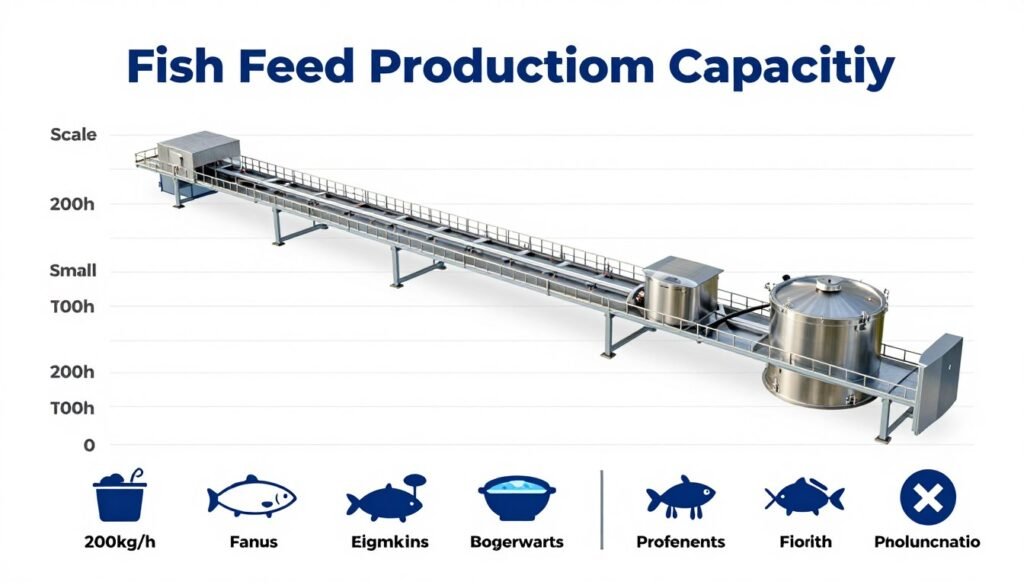
The Hidden Costs of Overcapacity
Running a 2-tonne-per-hour system to produce just 500 kilograms creates several inefficiencies. First, the energy consumption doesn’t scale linearly downward. The motors, heating elements, and auxiliary equipment still draw significant power even at reduced throughput. Second, wear patterns change when equipment operates below optimal capacity, sometimes accelerating component degradation rather than extending equipment life.
Third, and often overlooked, is the human factor. Operators become less engaged when monitoring equipment that runs sporadically or at minimal output. Quality control suffers when production batches are small relative to equipment capacity. The fish feed pellet plant price includes not just machinery but the entire operational ecosystem.
Matching Capacity to Actual Fish Population
Your current fish stock determines daily feed requirements with reasonable accuracy. A 10-tonne biomass of trout at 2% body weight feeding rate requires 200 kilograms of feed daily. Multiply by 30 days and you need 6 tonnes monthly. Adding 20% safety margin for growth and seasonal variation brings you to approximately 7.2 tonnes per month.
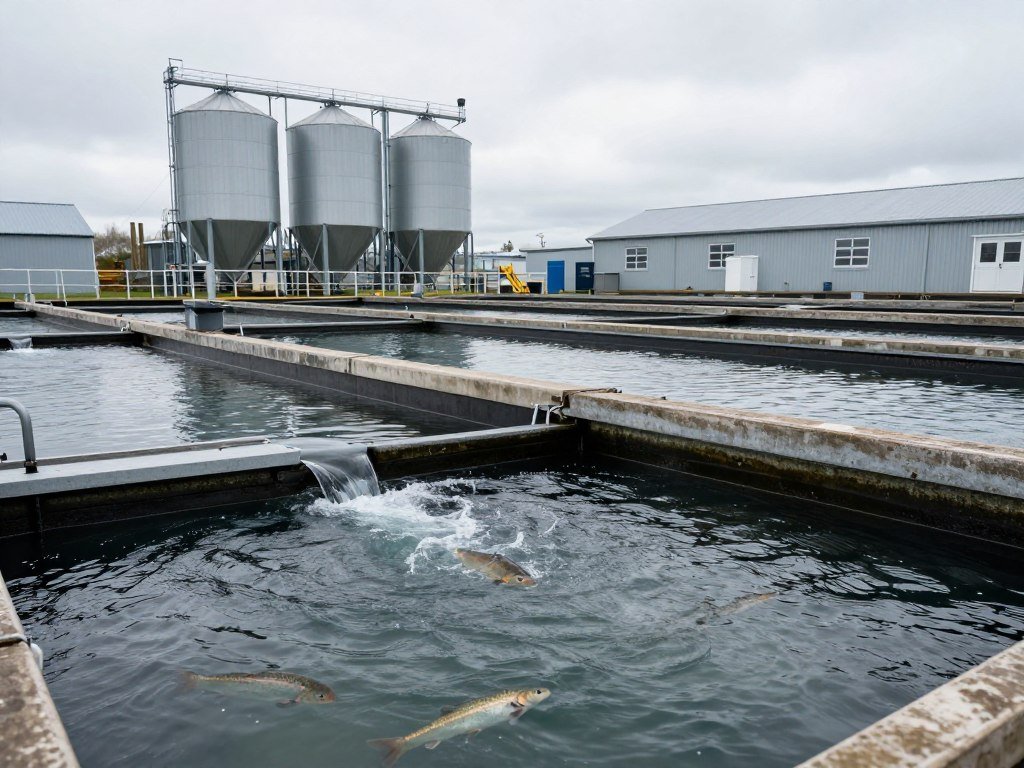
If you produce feed twice weekly, each production run needs to yield roughly 900 kilograms. Running this production over 2 hours requires a 450 kg/h capacity line. A 500 kg/h system provides appropriate headroom without massive overcapacity. This calculation seems straightforward, yet many farms purchase 1-2 tonne per hour systems “to allow for expansion” that may never materialize.
Conservative Capacity Matching Benefits
- Lower initial investment frees capital for other farm improvements
- Reduced energy consumption during every production run
- Better operator utilization and engagement
- Easier quality control with batch sizes matching equipment capacity
- Simpler maintenance with fewer oversized components
Expansion Path Strategy
Rather than buying excessive capacity upfront, consider modular expansion. Start with a feed pellet production line that matches current needs plus 30% growth capacity. If your operation genuinely expands beyond that threshold, your initial investment has already paid for itself through efficient operation. You can then add a second line or upgrade specific components rather than running oversized equipment inefficiently for years.
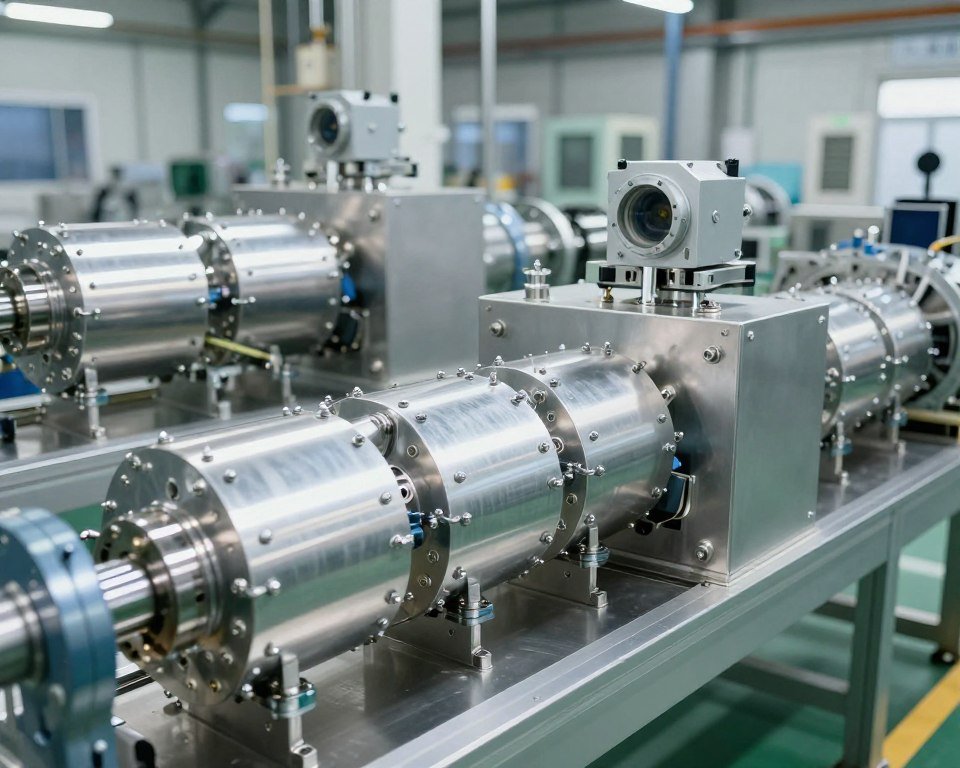
Capacity Tiers for UK Aquaculture: Practical Categories That Match Farm Realities
UK fish farms vary enormously in scale and species focus. The fish feed pellet machine price differences between capacity tiers often surprise buyers who haven’t researched thoroughly. Understanding which category matches your operation prevents both under-specification and costly over-investment.
Micro-Scale Production: 200-500 kg/h Systems
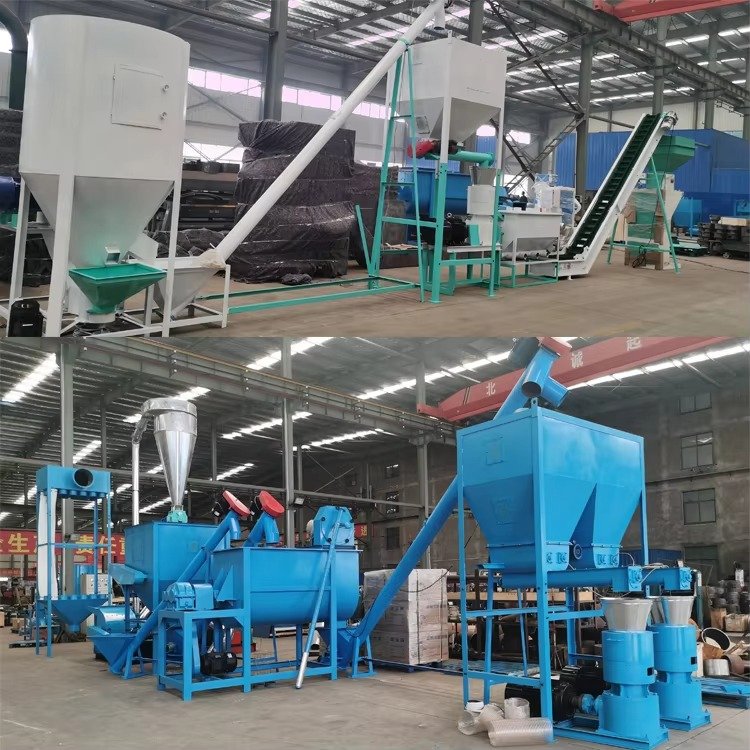
These systems suit farms with 5-15 tonnes of monthly feed requirements. Typical applications include small trout farms, ornamental fish operations, research facilities, and diversified farms adding aquaculture as a secondary enterprise. The equipment footprint remains compact, often fitting in a 30-40 square metre production space.
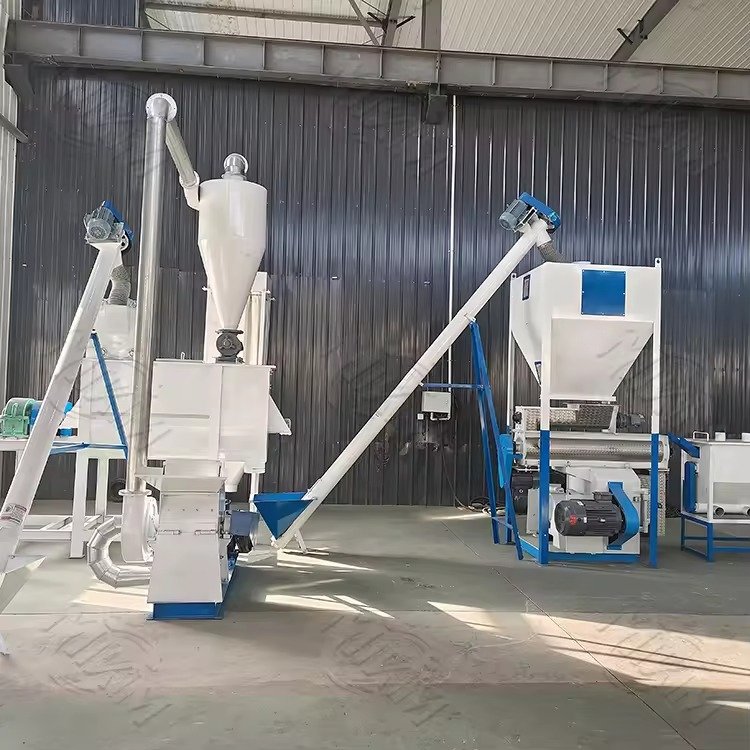
Power requirements typically range from 30-45 kW total connected load, manageable with standard UK industrial power supplies. The fish feed pellet production line price for this tier generally starts around £25,000-£45,000 for complete systems including installation and commissioning. MAIKONG’s MK-L003 model fits this category, offering customizable voltage configuration for UK 415V three-phase supplies.
Small-Scale Production: 500-1000 kg/h Systems
This capacity serves farms producing 15-35 tonnes monthly. Many established UK trout and carp operations fall into this category. The equipment becomes more robust, with heavier-duty pellet mills and larger mixers that handle batch sizes efficiently.
These systems require 50-75 kW connected power and approximately 50-70 square metres of production space. Investment typically ranges £45,000-£75,000 for turnkey installations. The economies of scale begin appearing at this tier—per-kilogram production costs drop noticeably compared to smaller systems, yet the equipment remains manageable for farms without dedicated production staff.
| Capacity Tier | Output (kg/h) | Monthly Production | Power Required | Floor Space | Typical Investment |
| Micro-Scale | 200-500 | 5-15 tonnes | 30-45 kW | 30-40 m² | £25,000-£45,000 |
| Small-Scale | 500-1000 | 15-35 tonnes | 50-75 kW | 50-70 m² | £45,000-£75,000 |
| Medium-Scale | 1000-2000 | 35-70 tonnes | 90-130 kW | 80-120 m² | £75,000-£125,000 |
| Large-Scale | 2000-5000 | 70-180 tonnes | 150-250 kW | 150-250 m² | £125,000-£225,000 |
Medium-Scale Production: 1-2 Tonne/h Systems
Farms producing 35-70 tonnes monthly require this capacity level. These operations often supply feed to multiple ponds or tanks, potentially across several farm sites. The fish feed pellet plant price reflects more sophisticated automation, better quality control systems, and components designed for continuous operation rather than batch production.
Connected power reaches 90-130 kW, requiring dedicated transformers in some locations. Floor space requirements increase to 80-120 square metres for efficient material flow. Investment ranges from £75,000 to £125,000. At this scale, the decision becomes less about avoiding overcapacity and more about ensuring sufficient automation to minimize labor costs.
Large-Scale and Industrial: Beyond 2 Tonnes/h
These systems serve commercial feed mills, large integrated aquaculture operations, or cooperative facilities serving multiple farms. Most smaller UK aquaculture operations will never require this capacity, yet some buyers purchase these systems hoping to sell feed commercially or dramatically expand production.
The reality is harsh: operating a 3-tonne-per-hour line to produce 15 tonnes monthly makes no economic sense. The feed production line price exceeds £150,000, power consumption during even minimal production runs remains high, and maintenance costs scale with equipment size, not actual usage.
Component Breakdown: How Each Element Impacts Overall Fish Feed Pellet Production Line Price
Understanding what drives cost in a pellet production line helps buyers make informed decisions about specifications. The complete system includes multiple components, each contributing to both initial investment and ongoing operational costs.
Material Reception and Storage Systems
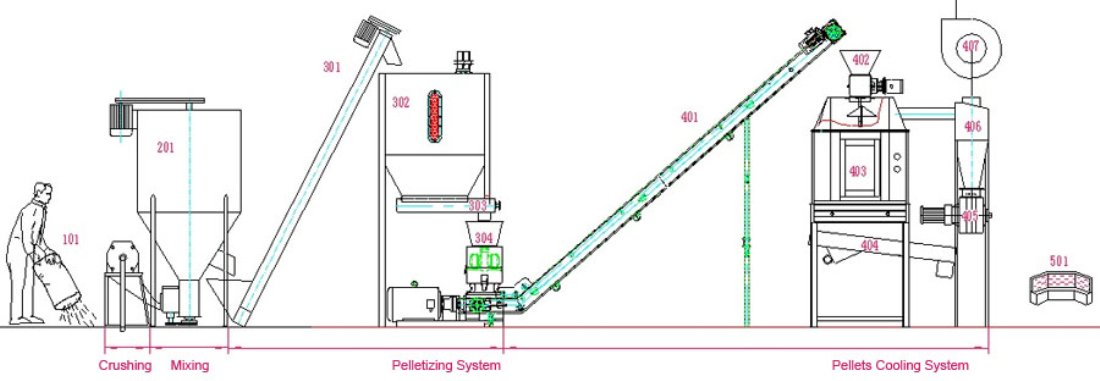
Raw material silos and intake systems represent 10-15% of total system cost. Smaller operations might use simple bag dump stations and screw conveyors, while larger systems incorporate pneumatic conveying and automated weighing. The temptation to over-spec this component comes from wanting to handle larger ingredient batches than production actually requires.
A 500 kg/h system producing for 4 hours weekly only processes 2 tonnes. Storage for 1-2 weeks of ingredients requires roughly 4-6 tonnes capacity across all ingredients. Specifying 20-tonne silos represents poor capital allocation unless clear expansion plans exist.
Grinding and Crushing Equipment
The hammer mill represents 15-20% of system cost. This component significantly impacts feed quality and energy consumption. Smaller mills (30-55 kW) handle 300-800 kg/h adequately. Larger mills (75-132 kW) process material faster but consume more power even at partial loads.
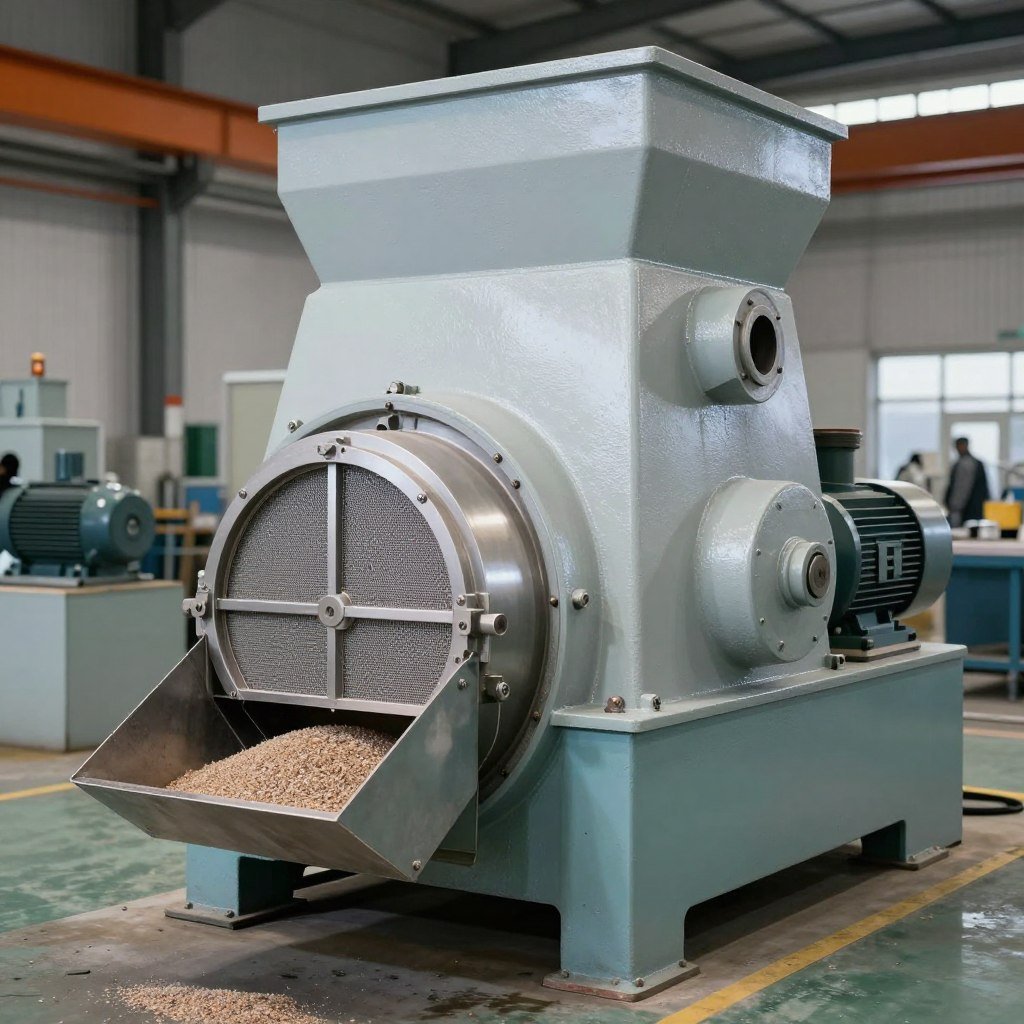
The particle size consistency matters more than raw throughput for most farms. A properly specified smaller mill operating at design capacity produces better, more consistent results than an oversized mill running sporadically. The fish feed pellet machine price includes grinding capacity matched to pelleting capacity for optimal results.
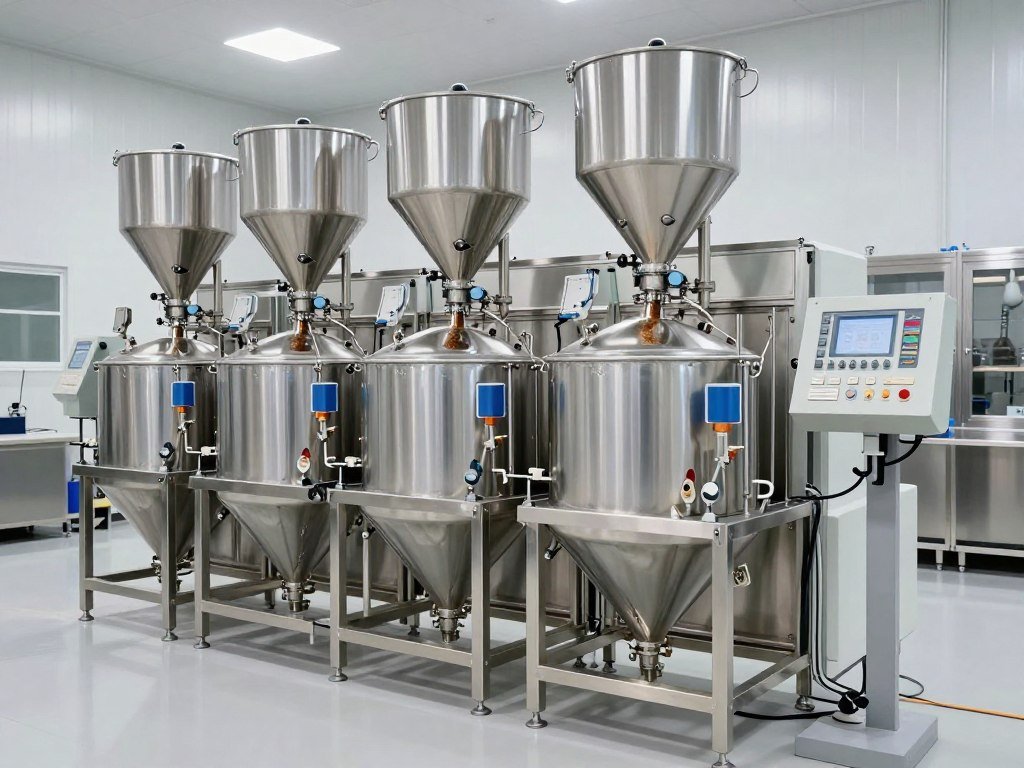
Batching and Mixing Systems
Accurate ingredient batching determines feed quality. These systems cost 12-18% of total investment. Micro-ingredient additions (vitamins, minerals) require precision typically achieved through small-scale dosing systems regardless of overall line capacity.
Mixer sizing should match typical batch sizes. A 500-kilogram mixer suits operations producing 1-2 tonne batches per session. Buying a 2-tonne mixer to handle occasional larger batches creates problems: smaller batches mix poorly in oversized equipment, and the larger mixer requires more power and floor space.
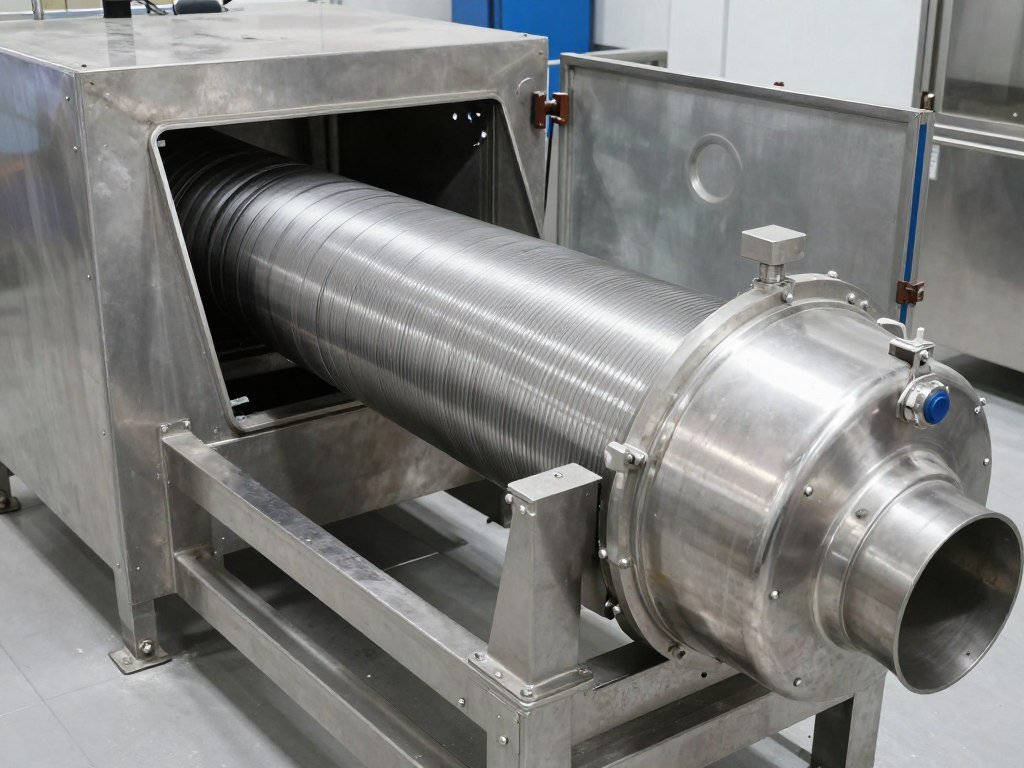
Pelleting Equipment: The Core Component
The pellet mill accounts for 25-35% of total system investment. This component determines pellet quality, durability, and production efficiency. Ring-die pellet mills suitable for aquaculture feed typically range from 30 kW to 160 kW depending on capacity.
A critical specification involves die diameter and compression ratio. Smaller mills (250-350mm die diameter) work well for farms producing 300-800 kg/h. Larger mills (400-550mm diameter) suit higher capacities but represent overkill for smaller operations. The MAIKONG MK-L003 series offers die sizes from 250mm to 508mm, allowing precise capacity matching.
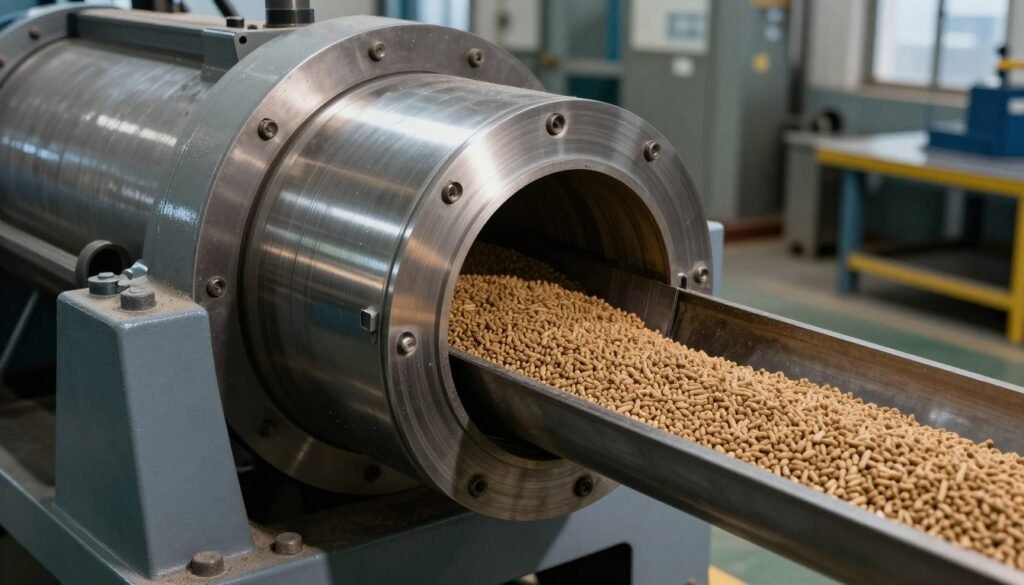
Die and roller wear represents ongoing costs. Larger dies cost more to replace but last longer when operated at design capacity. Running a large die at partial capacity doesn’t proportionally extend its life—the wear patterns change, sometimes creating uneven die surface degradation.
Cooling and Drying Systems
Fresh pellets exit the mill at 80-90°C with elevated moisture. Counterflow coolers reduce temperature to ambient plus 5-8°C and bring moisture to stable levels. These systems represent 10-15% of total investment. Capacity matching matters—undersized coolers create production bottlenecks, while oversized coolers waste energy conditioning air for minimal product throughput.
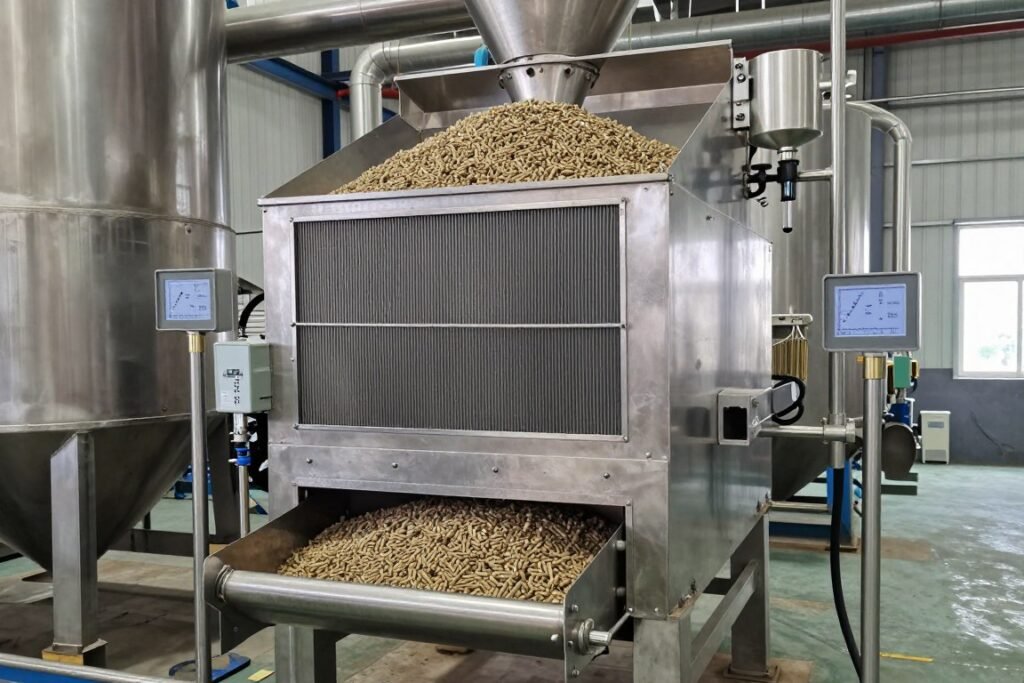
For small UK farms, simple horizontal belt coolers sometimes offer better value than vertical counterflow designs. The aquatic feed production line considerations include pellet durability in water, making thorough cooling essential regardless of production scale.
Packaging and Storage
Automated packaging systems add 8-12% to total cost. Small operations often use semi-automatic bag fillers with manual sealing. Larger farms justify fully automated systems. The decision point occurs around 15-20 tonnes monthly production—below that threshold, semi-automatic systems provide adequate throughput without excessive investment.
Finished product storage should match 1-2 weeks of production for most farms. Larger storage increases inventory costs and risks quality degradation. Smaller storage creates logistical challenges during peak feeding seasons.
Hammer Mill Component
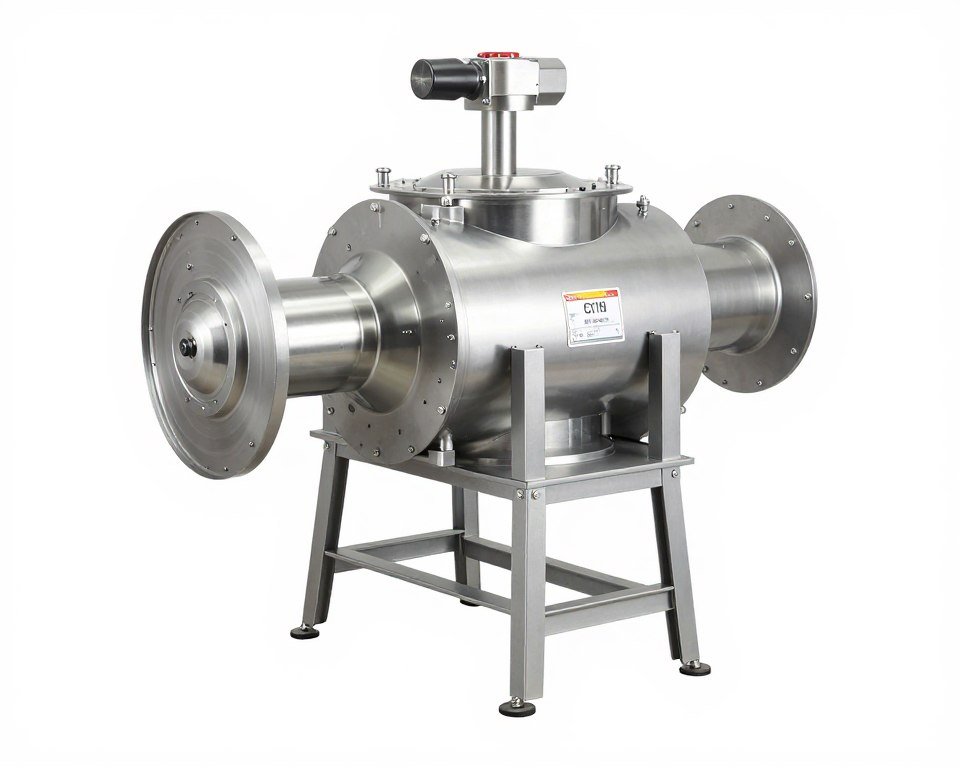
Cost Share: 15-20% of total system
Power Range: 30-132 kW
Capacity Impact: Must match pellet mill throughput
Pellet Mill Core
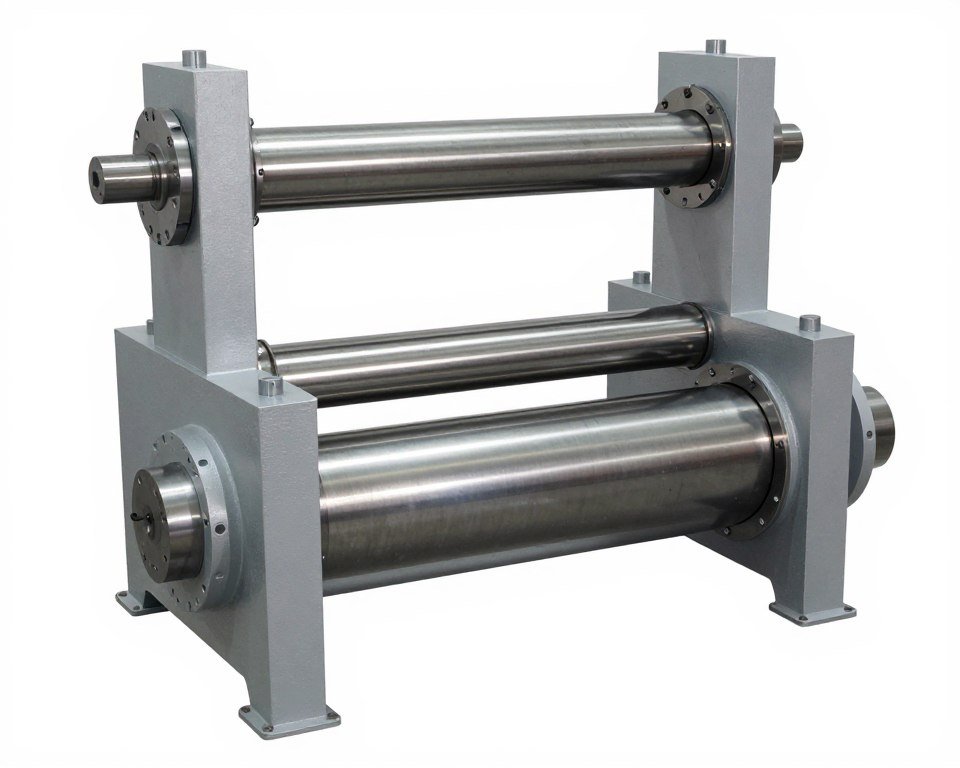
Cost Share: 25-35% of total system
Power Range: 30-160 kW
Capacity Impact: Primary production rate determinant
Cooling System
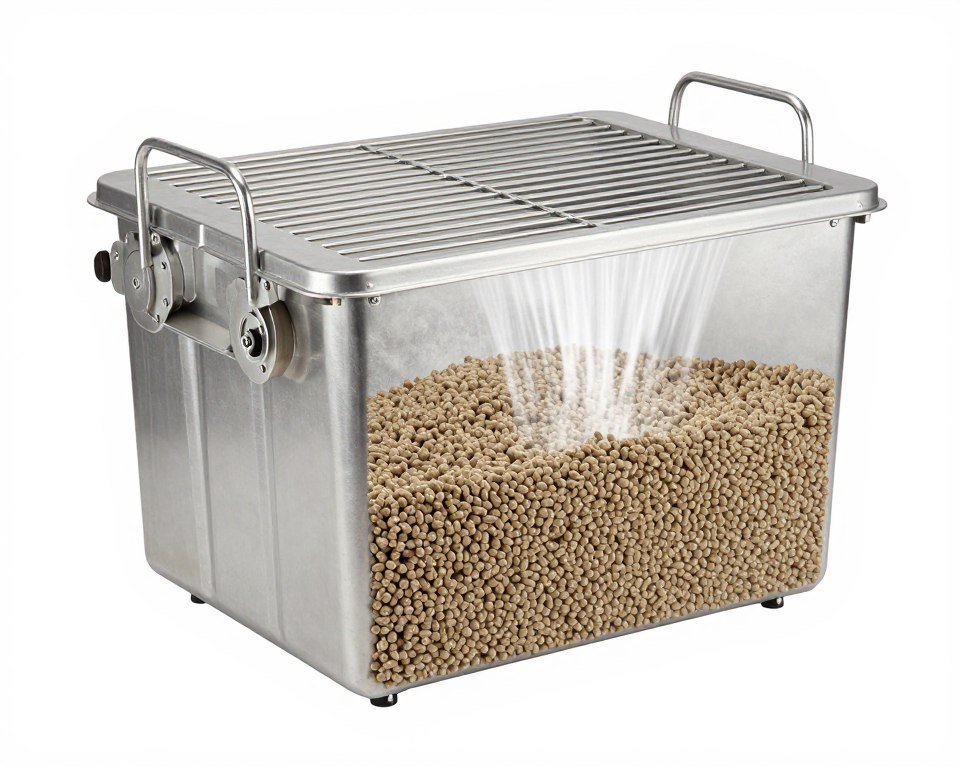
Cost Share: 10-15% of total system
Power Range: 5-18 kW
Capacity Impact: Must match pellet output to prevent bottlenecks
Operational Cost Analysis: The Real Price Beyond Purchase
The fish feed pellet production line price represents only the initial investment. UK farm operators must evaluate total cost of ownership across equipment lifespan. Energy costs, maintenance requirements, and labor demands vary dramatically between properly sized systems and oversized equipment running at partial capacity.
Energy Consumption at Different Load Levels
A 1-tonne-per-hour pellet mill rated at 90 kW doesn’t consume 45 kW at half capacity. The relationship isn’t linear. Core systems like motors, conditioning chambers, and auxiliary equipment draw baseline power regardless of throughput. Testing shows a 1000 kg/h system producing 500 kg/h typically consumes 65-70% of full-load power, not 50%.
UK industrial electricity costs average £0.15-£0.22 per kWh depending on contract terms and connection size. For a farm producing 10 tonnes monthly, compare two scenarios:
Properly Sized System (500 kg/h)
- Total connected load: 55 kW
- Operating at 80-90% capacity during production runs
- Effective power draw: 48 kW average
- Production time for 10 tonnes: 22-25 hours monthly
- Energy cost: 48 kW × 23.5 hours × £0.18 = £203 monthly
- Annual energy: £2,436
Oversized System (1500 kg/h)
- Total connected load: 125 kW
- Operating at 30-35% capacity during production runs
- Effective power draw: 82 kW average (due to non-linear scaling)
- Production time for 10 tonnes: 8-10 hours monthly
- Energy cost: 82 kW × 9 hours × £0.18 = £133 monthly
- Annual energy: £1,596
Surprisingly, the oversized system uses less total energy because production time decreases. However, this analysis ignores other critical factors that reverse the apparent advantage.
Maintenance Frequency and Component Wear
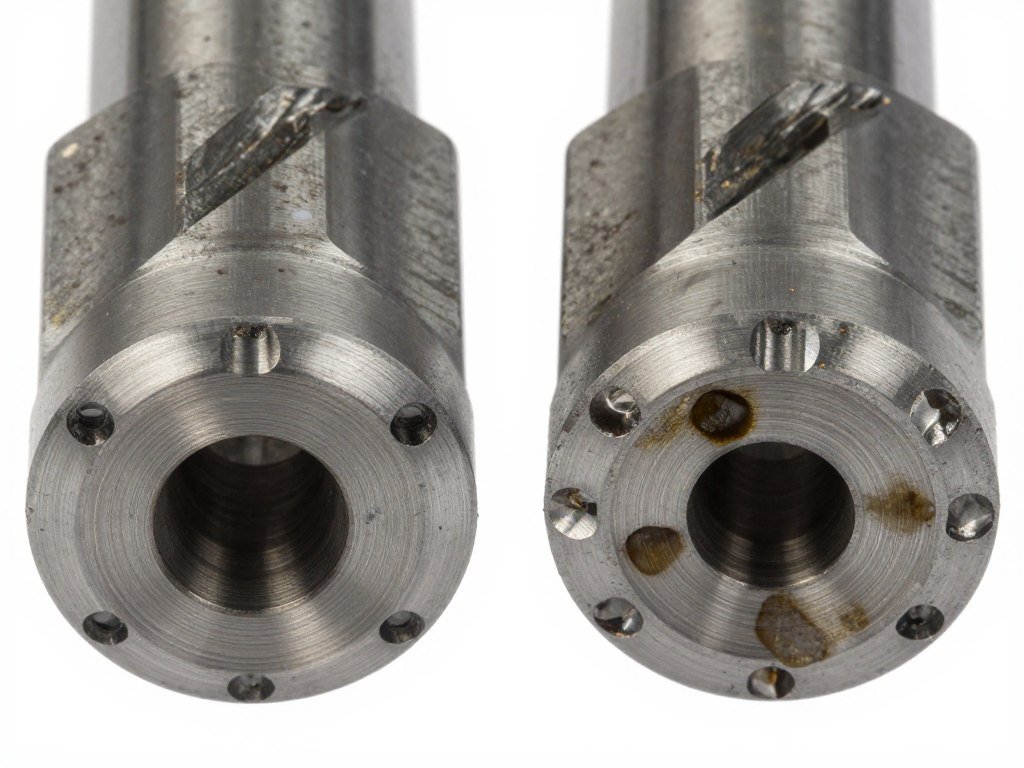
Pellet mill dies and rollers wear through two mechanisms: compression stress and material abrasion. Operating at design capacity distributes wear evenly across die surfaces. Partial-load operation creates irregular wear patterns, sometimes reducing die life by 20-30% despite lower total throughput.
A properly sized die might cost £1,800 and last 800-1000 operating hours. An oversized die costs £3,200 and should last 1500-1800 hours at design capacity. When run at 30% capacity, irregular wear patterns might reduce life to 1000-1200 hours. The cost per tonne produced increases rather than decreases.
Labor and Quality Control Considerations
Smaller systems operating near design capacity keep operators engaged. Production runs occur predictably, allowing better production planning and quality monitoring. Oversized systems create sporadic production schedules that complicate staffing and reduce operator efficiency.
Quality control becomes more challenging with oversized equipment. Sampling protocols designed for large batches become statistically questionable when applied to small batches in large equipment. A 2-tonne mixer producing 400-kilogram batches creates sampling challenges that don’t exist when the same 400-kilogram batch fills an appropriately sized 500-kilogram mixer.
Total Cost of Ownership Example: A UK trout farm producing 15 tonnes monthly compared a £52,000 properly-sized 600 kg/h system against a £88,000 oversized 1800 kg/h system. Over 10 years, the properly-sized system cost £127,400 total (including energy, maintenance, dies, and labor). The oversized system cost £156,800 despite initially seeming more “future-proof.” The £29,400 difference would have funded significant farm improvements or additional fish stock.
Real UK Farm Case Studies: Capacity Choices and Outcomes
Examining actual installations helps illustrate principles discussed. These examples come from MAIKONG’s UK and European client base, demonstrating both successful capacity matching and lessons learned from oversizing.
Scottish Trout Farm: Right-Sizing Success
A Perthshire trout operation with 45 tonnes annual production initially considered a 1200 kg/h system based on a competitor’s recommendation. Their reasoning: “We might expand to 80 tonnes in 3-5 years.” After consultation with MAIKONG technical staff, they installed a 500 kg/h MK-L003 system instead.
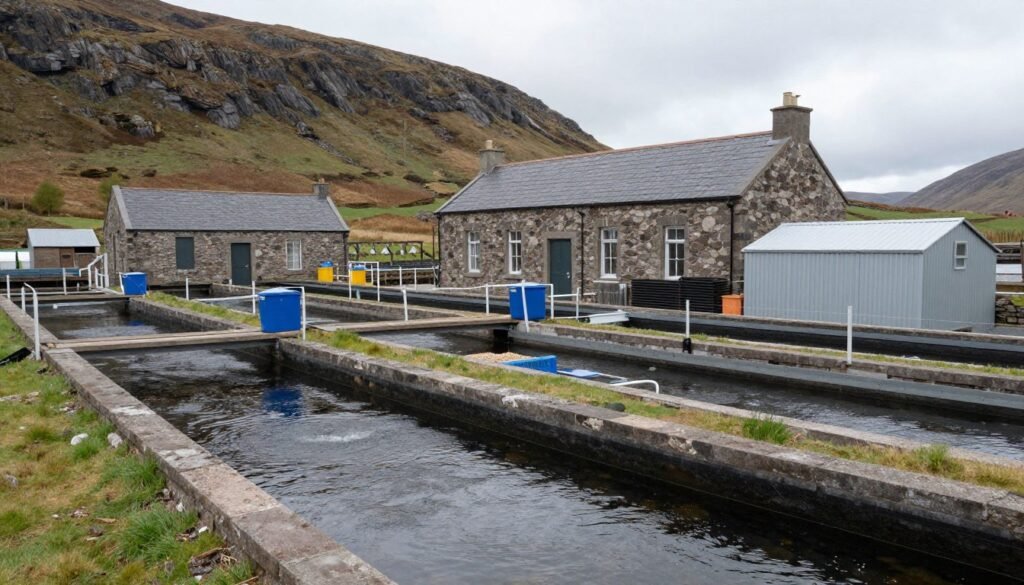
The installation occupied 45 square metres in a converted farm building. Total investment including electrical work and commissioning reached £47,500. After 18 months of operation, production costs averaged £684 per tonne of feed produced—competitive with commercial feed suppliers but with complete control over formulation.
The farm manager reported: “We run the line every Tuesday and Friday morning, 3-4 hours each session. The system operates at 85-90% capacity, everything works smoothly, and we’ve had no maintenance issues beyond routine bearing lubrication. If we’d bought the larger system, we’d be running it at 30% capacity twice weekly. I can’t see how that would have made sense.”
Welsh Carp Fishery: Overbuying Lesson
A commercial carp fishery in Powys purchased a 1500 kg/h system for their 30-tonne annual production. The equipment supplier convinced them that “economies of scale” would reduce per-unit costs. The reality proved different.
Their £92,000 investment included a system designed for commercial feed mill operations. Production runs occurred monthly, each lasting just 2.5-3 hours to produce the monthly requirement. At such short intervals, achieving stable operation proved challenging. The conditioning system never reached optimal temperature before production ended. Pellet quality suffered inconsistency batch-to-batch.
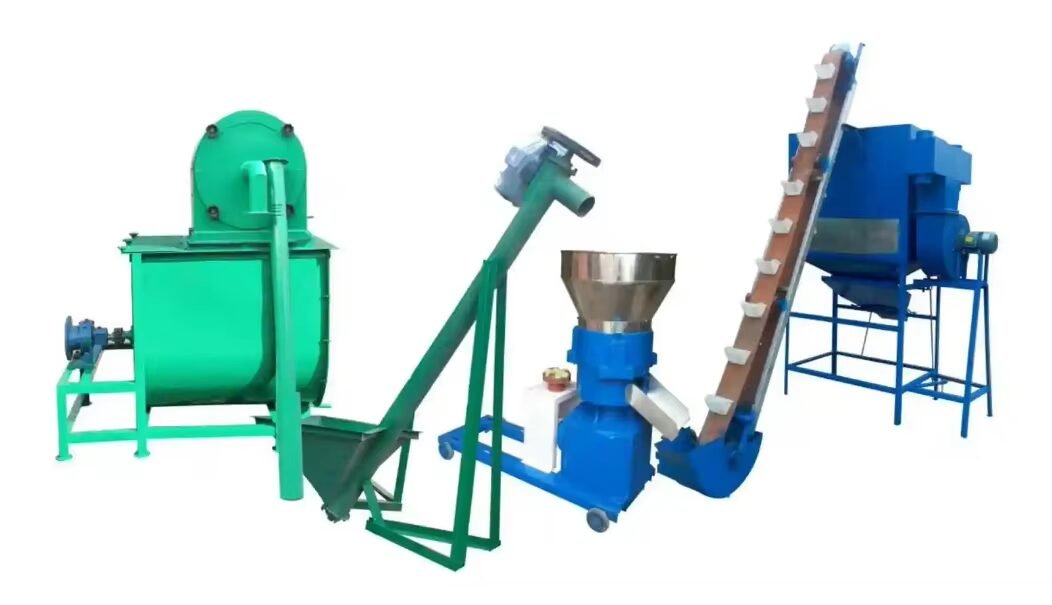
After two years, the fishery contacted MAIKONG about replacing the system with properly sized equipment. The manager explained: “We thought bigger would be better. Instead, we have equipment that’s difficult to operate efficiently, costs more to maintain than we expected, and produces inconsistent pellets because we can never get stable operating conditions in such short runs. We’d have been far better off with a 600 kg/h system running 6-8 hours monthly.”
Norfolk Aquaculture Cooperative: Modular Expansion
Six small fish farms in Norfolk formed a cooperative to share feed production costs. Rather than immediately installing large-capacity equipment, they began with a 800 kg/h MAIKONG system serving their combined 25-tonne monthly needs.
The cooperative operated the line three days weekly, producing 8-9 tonnes per day across two production shifts. After 30 months, production requirements grew to 42 tonnes monthly. Instead of replacing the original system, they added a second identical 800 kg/h line in a parallel production room.
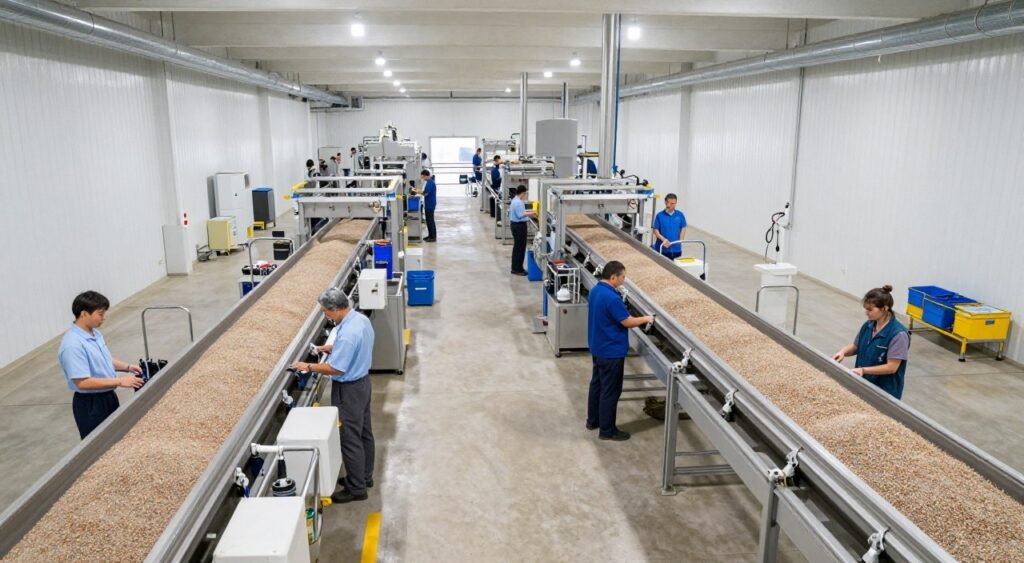
This modular approach provided several advantages. During maintenance on one line, production continued on the second. Different formulations could run simultaneously for different species. Capital investment occurred in stages as production genuinely increased rather than speculatively. The cooperative chairman noted: “We now have 1600 kg/h total capacity but can run one line at high efficiency when we need 20-25 tonnes monthly, or both lines when demand reaches 40-45 tonnes. The flexibility proves more valuable than having a single large system.”
| Farm Type | Annual Production | System Capacity | Investment | Outcome Assessment |
| Scottish Trout | 45 tonnes | 500 kg/h | £47,500 | Excellent match – operating at design capacity, consistent quality, low costs |
| Welsh Carp Fishery | 30 tonnes | 1500 kg/h (oversized) | £92,000 | Poor match – inconsistent operation, quality issues, considering replacement |
| Norfolk Cooperative | 25-42 tonnes (growing) | 800 kg/h × 2 (modular) | £63,000 + £61,000 | Excellent strategy – flexibility, redundancy, staged capital deployment |
| Devon Tilapia (planned) | 60 tonnes projected | 1000 kg/h recommended | £72,000 estimated | Appropriate sizing – allows for seasonal variation and modest growth |
Practical Specification Checklist: Questions to Ask Before Committing
Determining the right fish feed pellet production line price point requires honest assessment of operational needs. This checklist helps UK farm operators evaluate proposals systematically.
Production Volume Assessment
Calculate current annual feed requirements based on existing fish stock. Add 20% safety margin for seasonal variation and modest growth. This figure represents your realistic target, not aspirational expansion hopes. If current production is 35 tonnes annually, your planning figure should be approximately 42 tonnes, not 80 tonnes based on theoretical maximum stocking.
Volume Calculation Steps
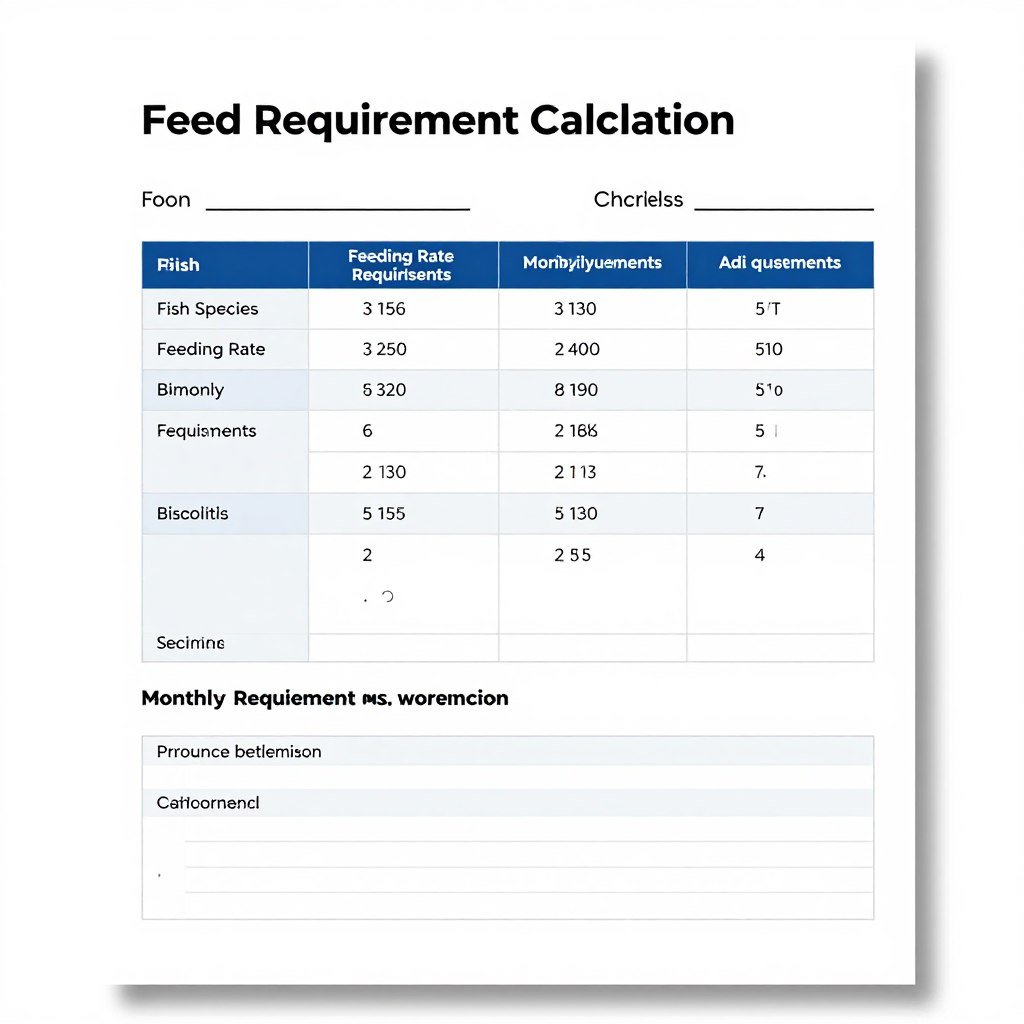
- List all fish species and current biomass for each
- Apply feeding rate percentage (typically 1.5-3% body weight daily depending on species and temperature)
- Calculate daily feed requirement for each species
- Multiply by 30 for monthly requirement
- Add 15-20% for seasonal peaks and growth
- This monthly figure guides capacity selection
Growth Projection Reality Check
Be realistic about expansion timelines. If you’ve operated at current scale for 3+ years without expanding, projecting dramatic growth within 2 years may be optimistic. Consider:
- Capital requirements for additional ponds/tanks
- Market development time for increased production
- Regulatory approvals for expansion (environmental permits, discharge consents)
- Labor availability and training needs
If genuine expansion occurs, equipment can be upgraded or supplemented. Initial overcapacity wastes resources in the interim.
Production Schedule Considerations
How frequently will you produce feed? Daily production suits large operations but creates unnecessary labor demands for smaller farms. Many UK aquaculture operations find twice-weekly or weekly production schedules work well. This decision impacts ideal equipment capacity.
For 42 tonnes monthly production with twice-weekly production (8 times monthly), each run produces approximately 5.25 tonnes. If each production session lasts 6 hours, you need roughly 875 kg/h capacity. A 1000 kg/h system provides appropriate headroom. Running a 2000 kg/h system for just 3 hours biweekly creates the problems discussed earlier.
Power Supply and Infrastructure
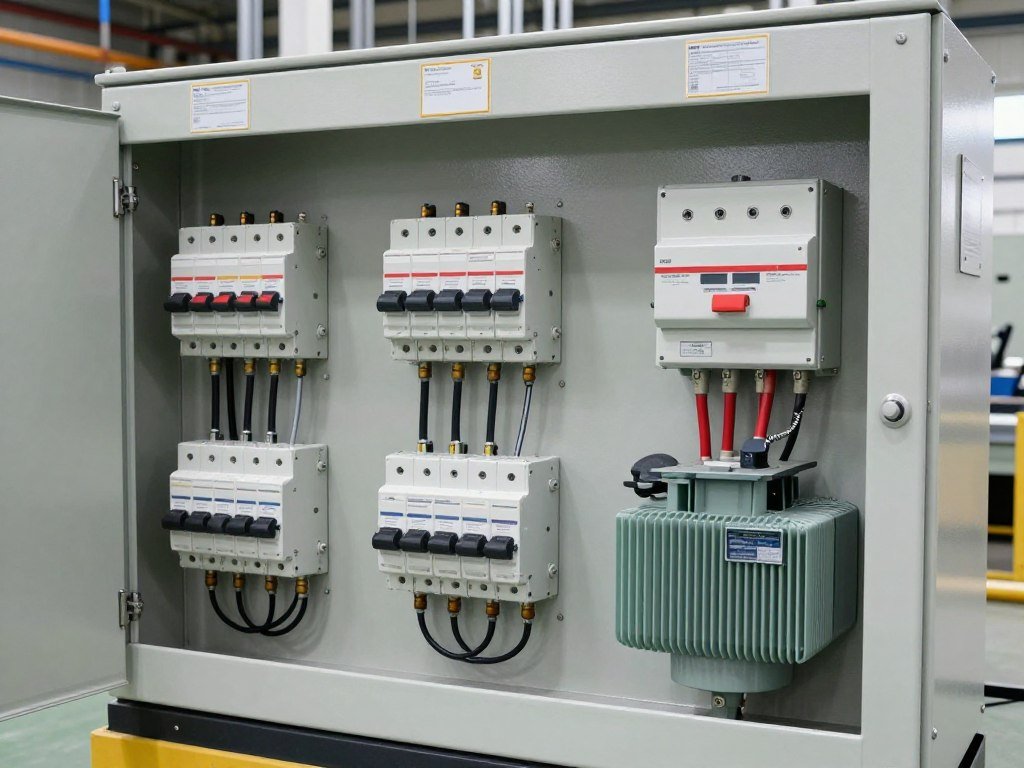
Check your existing electrical infrastructure before specifying equipment. Many UK farms have 100-200 amp three-phase supplies. Systems drawing more than 150 kW may require transformer upgrades or new connections, adding £5,000-£15,000 to total project cost. The fish feed pellet machine price must include these infrastructure costs for accurate budgeting.
Space Availability and Layout
Measure available production space carefully. Equipment manufacturers provide footprint specifications, but you need additional clearance for material flow, maintenance access, and operator movement. A system nominally requiring 60 square metres actually needs 75-85 square metres for practical operation.
Vertical systems (tower designs) minimize footprint but require adequate building height—typically 6-8 metres clear height. Horizontal systems need more floor space but work in buildings with standard 3.5-4 metre ceilings common in UK farm buildings.
Ingredient Sourcing and Storage
Can you source ingredients in quantities that match your production scale? Purchasing feed-grade fish meal, soybean meal, and other ingredients in 1-2 tonne lots may prove difficult or expensive. Suppliers often offer better pricing for 5-tonne minimum orders. Ensure your storage capacity and production volume align with practical ingredient purchasing.
Hidden Cost Alert: Small-scale ingredient purchases (under 2 tonnes) typically incur delivery surcharges of £75-£150 per delivery. A farm producing 15 tonnes monthly might need 18-20 tonnes of various ingredients. If forced to purchase in small lots due to limited storage, delivery surcharges alone could add £300-£450 monthly to ingredient costs—£3,600-£5,400 annually. This expense sometimes justifies slightly larger storage systems, but not necessarily larger production equipment.
Quality Control Capabilities
Do you have equipment and expertise to test feed quality? Pellet durability, moisture content, and nutritional consistency require specific testing capabilities. Smaller operations sometimes lack these resources, making consistent production more challenging. If quality testing is limited, choosing proven equipment with reliable performance history becomes more important than pursuing lowest purchase price.
MAIKONG Customization Options: Tailoring Systems to UK Requirements
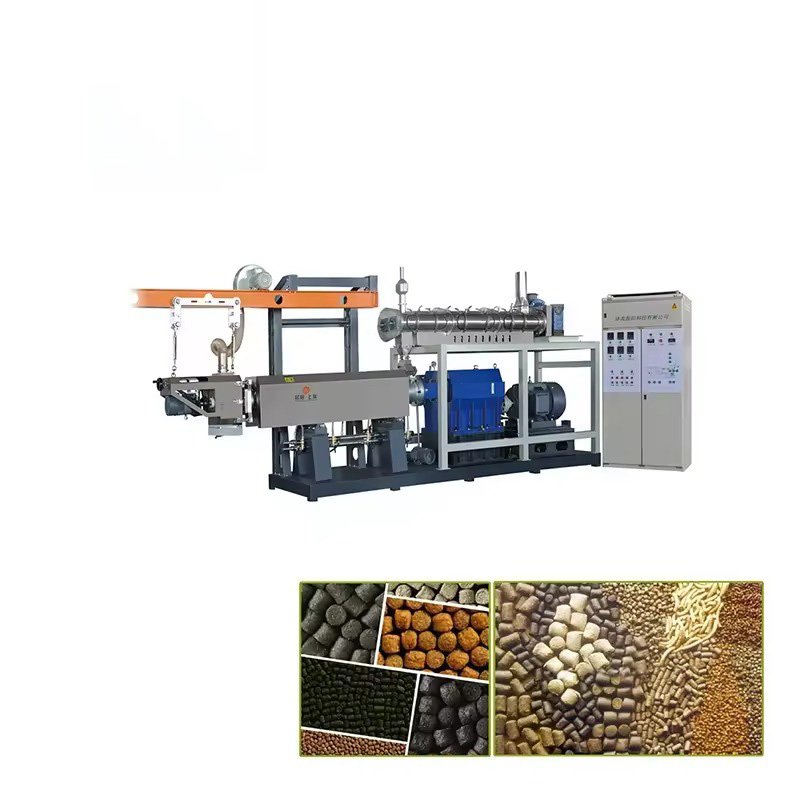
MAIKONG’s 22 years of manufacturing experience includes extensive customization capability. Our MK-L003 series and related models adapt to specific UK operational needs rather than forcing farms into standardized configurations. This flexibility helps match equipment precisely to operational requirements, avoiding both under-specification and costly overcapacity.
Voltage and Electrical Configuration
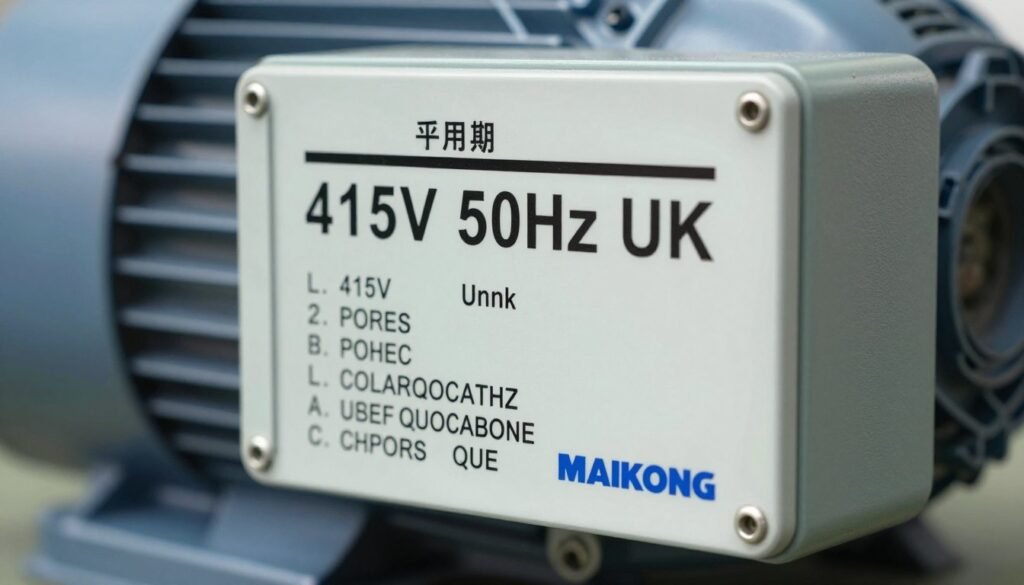
UK industrial power supplies operate at 415V three-phase, different from many other markets. All MAIKONG animal feed production line equipment ships with motors and controls configured for UK electrical standards unless otherwise specified. This includes proper earthing systems, isolation requirements, and control voltage (typically 24V DC for PLCs, 230V AC for instrumentation).
For farms with single-phase supplies, we can configure smaller systems (up to 300 kg/h) with single-phase motors, though three-phase power remains preferable for efficiency and motor longevity. Our technical team assesses your specific power supply situation and recommends optimal motor configurations.
Capacity Modularity and Future Expansion
MAIKONG systems design incorporates expansion capability. A 600 kg/h system can often be upgraded to 900-1000 kg/h capacity through pellet mill die changes and mixer motor upgrades rather than complete replacement. This approach allows starting with appropriately sized equipment that can grow with your operation.
Our engineering team provides expansion pathways during initial specification. You’ll understand exactly which components would need upgrading if capacity requirements increase, along with approximate costs. This transparency helps UK buyers plan long-term investment strategies rather than making speculative purchases upfront.
Pellet Size and Formulation Flexibility
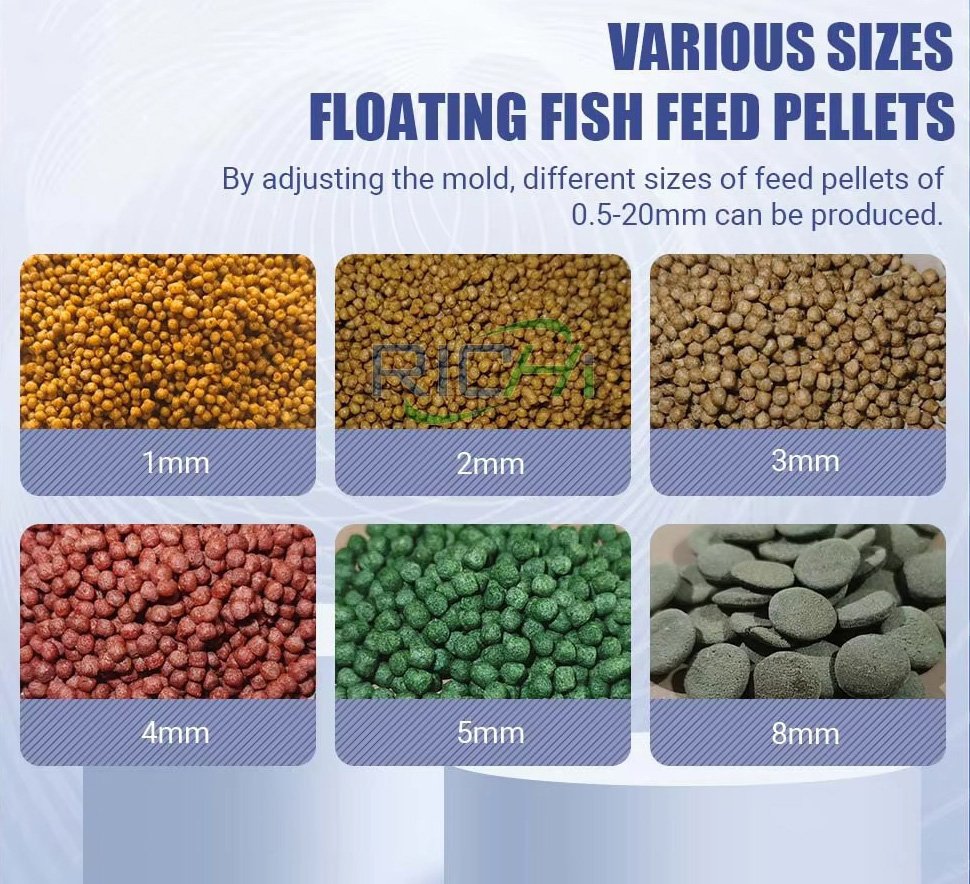
Different fish species and life stages require different pellet sizes. Trout fry need 1.5-2mm pellets, while market-size fish consume 4-6mm pellets efficiently. MAIKONG systems accommodate die changes allowing pellet size variation from 1.5mm to 8mm depending on mill specifications.
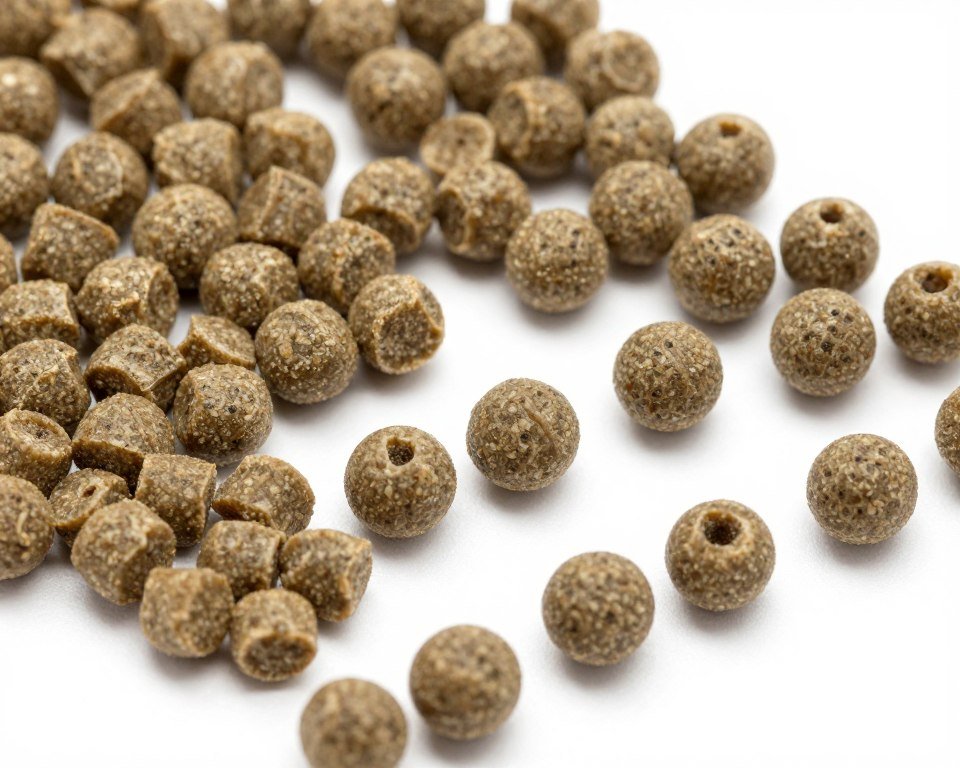
Die change procedures take 2-4 hours depending on mill size and operator experience. Farms producing feed for multiple species or life stages benefit from maintaining several die sizes, switching as production requirements change. The MK-L003 series uses industry-standard die patterns, allowing you to source replacement dies from multiple suppliers rather than relying exclusively on original equipment parts.
Automation Level Options
MAIKONG offers three automation levels suited to different operational preferences and budgets:
Manual/Semi-Automatic
- Operator controls each production stage
- Manual ingredient batching with scales
- Operator starts/stops each equipment section
- Visual monitoring of production process
- Lowest initial investment
- Best for: Smallest operations (under 500 kg/h), limited production frequency
- Typical addition to base price: Included in standard systems
Semi-Automatic with PLC
- Programmable controller manages equipment sequencing
- Automated batching with load cells for major ingredients
- Manual addition of micro-ingredients (vitamins, minerals)
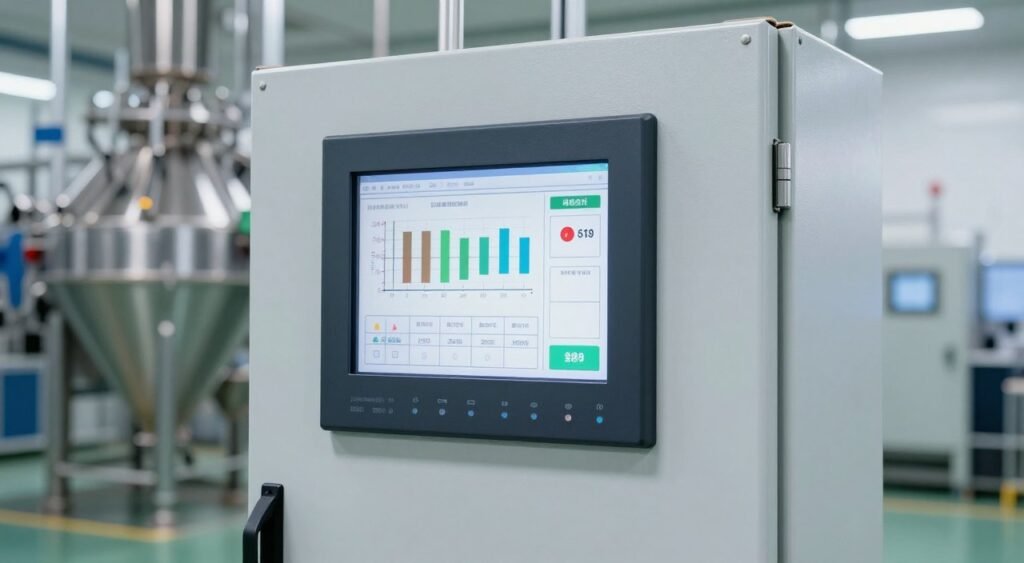
- Touchscreen interface for recipe selection and monitoring
- Moderate investment increase
- Best for: 500-1500 kg/h systems, regular production schedules
- Typical addition to base price: £6,500-£12,000
Fully Automatic
- Complete PLC/SCADA control system
- Automated batching including micro-ingredients
- Recipe storage and automatic sequencing
- Production data logging and reporting
- Remote monitoring capability
- Best for: Systems over 1500 kg/h, commercial operations
- Typical addition to base price: £15,000-£28,000
Most UK farms producing 15-50 tonnes monthly find semi-automatic systems with PLC control provide the best balance of functionality and cost. Full automation becomes economically justified when labor costs for operation exceed the automation investment payback period—typically at production volumes above 60-80 tonnes monthly.
Material Specification Options
Standard MAIKONG equipment uses carbon steel construction with food-grade coatings for product-contact surfaces. For operations requiring enhanced corrosion resistance (coastal locations, high-moisture environments), we offer stainless steel construction for critical components.
The pellet mill die, conditioning chamber, and mixer can be specified in 304 or 316 stainless steel. This upgrade adds 15-25% to component cost but provides longer service life in corrosive environments. UK coastal fish farms often benefit from this specification given the salt-air exposure.
Total Project Cost Estimation: Beyond Equipment Purchase Price
The fish feed pellet production line price quoted by manufacturers represents only part of the total project investment. UK buyers must budget for installation, commissioning, training, and initial operating supplies. Understanding complete project costs prevents budget surprises during implementation.
Installation and Civil Works
Equipment installation requirements vary with system size and existing building conditions. A small 500 kg/h system in a prepared building with existing power supply might require only 3-5 days for installation and commissioning, with costs around £3,500-£5,500 for local contractors plus MAIKONG technical supervision.
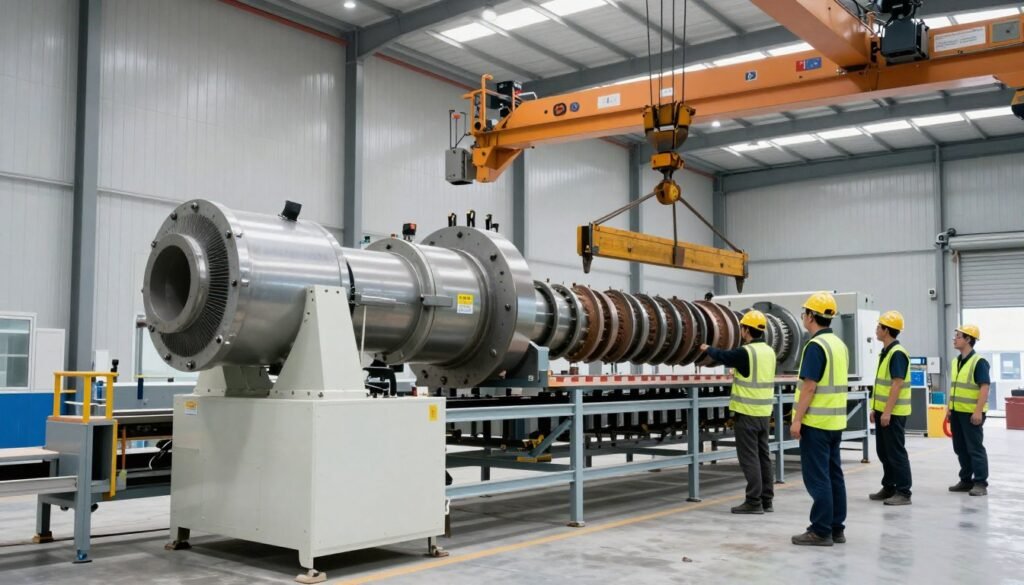
Larger systems or installations requiring building modifications increase these costs significantly. Foundation work for heavy pellet mills and mixers might add £2,000-£4,000. Electrical supply upgrades range from £1,500 for simple panel modifications to £12,000+ for transformer installation or new service connections.
Budgeting 12-18% of equipment cost for installation and associated civil works provides reasonable planning guidance. Systems requiring significant building modifications or power upgrades may reach 25-30% additional cost.
Commissioning and Operator Training
MAIKONG provides commissioning supervision as part of equipment supply. Our technicians spend 3-7 days on-site (depending on system complexity) ensuring proper installation, conducting initial test runs, and training your operators. While this service is included in the equipment price, you’ll incur costs for technician accommodation and local transportation—budget £800-£1,500 for these expenses.
Comprehensive operator training beyond basic commissioning can be arranged for an additional fee. For operations where feed production quality critically impacts fish health and growth, extended training (5-10 days) proves valuable. This training covers troubleshooting, maintenance procedures, formulation adjustments, and quality control—budget £2,500-£4,500 for extended training programs.
Initial Operating Supplies
Before producing commercial feed, you’ll need spare dies, screens, wear parts inventory, and initial ingredient stocks. Budget approximately:
- Spare pellet die: £1,600-£3,800 depending on mill size
- Spare crusher screens (3 different sizes): £280-£450
- Initial wear parts kit (bearings, seals, belts): £850-£1,200
- Basic testing equipment (moisture meter, scales): £400-£800
- Initial ingredient stocks (2 weeks production): £1,500-£4,000 depending on volume
Total initial supplies typically represent 8-12% of equipment cost for smaller systems, decreasing to 6-8% for larger installations.
| Cost Category | 500 kg/h System | 1000 kg/h System | 2000 kg/h System |
| Base Equipment (MAIKONG) | £48,000 | £73,000 | £118,000 |
| Shipping to UK Port | £2,400 | £3,200 | £4,800 |
| UK Customs & Duties | £2,800 | £4,200 | £6,800 |
| Installation & Civil Works | £6,500 | £11,000 | £18,000 |
| Electrical Connection Work | £2,200 | £4,500 | £8,500 |
| Commissioning Support Costs | £1,200 | £1,400 | £1,800 |
| Initial Spares & Supplies | £4,200 | £6,000 | £9,200 |
| Total Project Cost | £67,300 | £103,300 | £167,100 |
These estimates assume straightforward installations in prepared buildings with adequate power supplies. Complex installations may vary 15-25% from these figures. MAIKONG provides detailed project cost estimates during quotation phase, ensuring UK buyers understand complete investment requirements.
ROI and Payback Period: Making the Financial Case
Investing in on-farm feed production requires financial justification. The decision balances total investment (equipment, installation, operating costs) against savings from producing feed rather than purchasing commercial products. For smaller UK farms, this analysis determines whether self-production makes economic sense.
Commercial Feed Cost Baseline
UK commercial fish feeds vary widely in price depending on species, protein content, and purchase volume. Typical ranges for bulk delivery (1+ tonne orders):
- Trout grower feed (42-45% protein): £820-£950 per tonne
- Carp feed (30-35% protein): £680-£780 per tonne
- High-performance salmon feed (45%+ protein): £1,100-£1,350 per tonne
- Specialist feeds (organic, medication-incorporated): £1,200-£1,600 per tonne
Small-volume purchases (under 500kg) incur delivery surcharges and packaging costs, often adding 8-12% to per-tonne pricing. A farm purchasing 3 tonnes monthly faces commercial feed costs of £2,460-£2,850 for trout feed at small-volume pricing.
Self-Production Cost Structure
Calculating the true cost of self-produced feed requires accounting for all expenses:
Direct Production Costs (per tonne)
- Raw ingredients: £480-£620 depending on formulation
- Electricity: £18-£28 per tonne produced
- Die and roller wear: £12-£22 per tonne
- Other consumables: £5-£8 per tonne
- Labor: £25-£45 per tonne (varies with batch size)
- Subtotal direct costs: £540-£723 per tonne
Indirect Costs (Annual, Allocated Per Tonne)
- Equipment depreciation: 10-year life, straight-line
- Maintenance: 2-3% of equipment value annually
- Building space: Often sunk cost, but budget £500-£1,200/year
- Quality testing: £300-£600/year
- Insurance: £250-£500/year for equipment
For a farm producing 40 tonnes annually, indirect costs add approximately £85-£125 per tonne to production costs.
Example ROI Calculation
Consider a UK farm currently purchasing 40 tonnes of trout feed annually at £880 per tonne (£35,200/year). They’re evaluating a £67,300 total project cost for a 500 kg/h MAIKONG system.
Current annual feed cost: £35,200
Projected self-production costs:
- Direct costs: £625/tonne × 40 tonnes = £25,000
- Indirect costs: £105/tonne × 40 tonnes = £4,200
- Total annual cost: £29,200
Annual savings: £35,200 – £29,200 = £6,000
Simple payback: £67,300 ÷ £6,000 = 11.2 years
This simplified calculation shows marginal economics. However, several factors improve the real-world picture:
Additional Value Factors Not Captured in Simple ROI:
- Formulation control: Ability to adjust protein, fat, and micronutrient levels optimizes fish performance and reduces overall feed conversion ratio by 5-12%, reducing total feed requirements
- Supply reliability: Production independence eliminates delivery delays and stockouts that can impact fish health
- Medication incorporation: Ability to add medications or supplements as needed rather than purchasing pre-medicated feeds at premium pricing
- Quality assurance: Complete knowledge of ingredient sources and processing conditions
- Operational learning: Understanding feed production deepens overall aquaculture knowledge and operational capability
Improving ROI Through Scale
Self-production economics improve significantly as volume increases. The same £67,300 investment for a farm producing 60 tonnes annually shows different results:
Current annual feed cost: 60 tonnes × £880 = £52,800
Self-production costs:
- Direct costs: £615/tonne × 60 tonnes = £36,900 (economies improve slightly with larger batches)
- Indirect costs: £75/tonne × 60 tonnes = £4,500 (fixed costs spread across more tonnage)
- Total: £41,400
Annual savings: £52,800 – £41,400 = £11,400
Payback: £67,300 ÷ £11,400 = 5.9 years
The economics become compelling at this production level. Farms producing 80-100+ tonnes annually typically achieve payback in 4-5 years while gaining significant operational benefits.
UK Import Logistics: Bringing MAIKONG Equipment from China Post-Brexit
Brexit changed import procedures for UK businesses purchasing from non-EU suppliers. Understanding the current logistics process helps UK farms budget accurately and plan realistic project timelines when importing feed production line manufacturer equipment from China.
Shipping and Transportation
MAIKONG arranges shipping to major UK ports (Felixstowe, Southampton, Liverpool) as part of our turnkey supply. Container shipping typically takes 28-35 days from our GD province facility to UK arrival. We use established freight forwarders experienced with machinery shipments, ensuring proper loading, securing, and documentation.
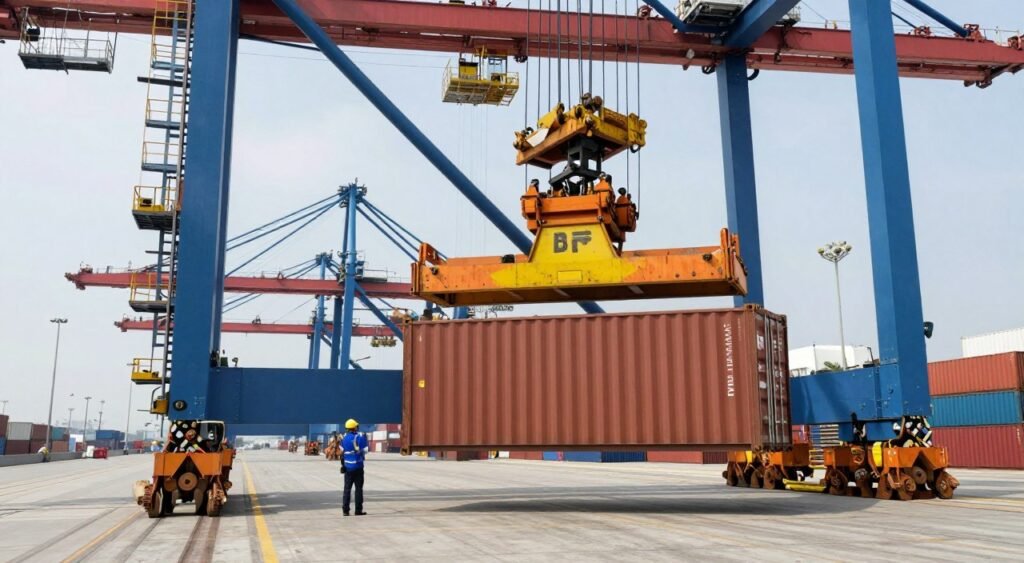
Equipment up to 800 kg/h capacity typically fits in a single 20-foot container. Larger systems require 40-foot containers or multiple container shipments. Shipping costs from China to UK ports currently average:
- 20-foot container: £1,800-£2,600
- 40-foot container: £2,400-£3,600
These rates fluctuate with global shipping market conditions. MAIKONG provides current shipping quotes during the quotation process rather than using outdated figures.
Customs Clearance and Import Duties
Post-Brexit UK customs procedures require more documentation than previously needed for EU imports. MAIKONG provides complete export documentation including commercial invoice, packing list, certificate of origin, and technical specifications required for UK customs clearance.
Import duties for fish feed production machinery currently stand at 0-2.2% depending on specific equipment classification under UK Global Tariff codes. VAT at 20% applies to the CIF value (equipment cost + shipping + insurance). MAIKONG works with UK customs brokers who handle clearance procedures efficiently.
Budget approximately 5-8% of equipment cost for combined customs duties, VAT (which you can reclaim if VAT-registered), customs broker fees, and port handling charges. A £50,000 equipment shipment typically incurs £2,500-£4,000 in UK import-related costs.
Delivery to Farm Site
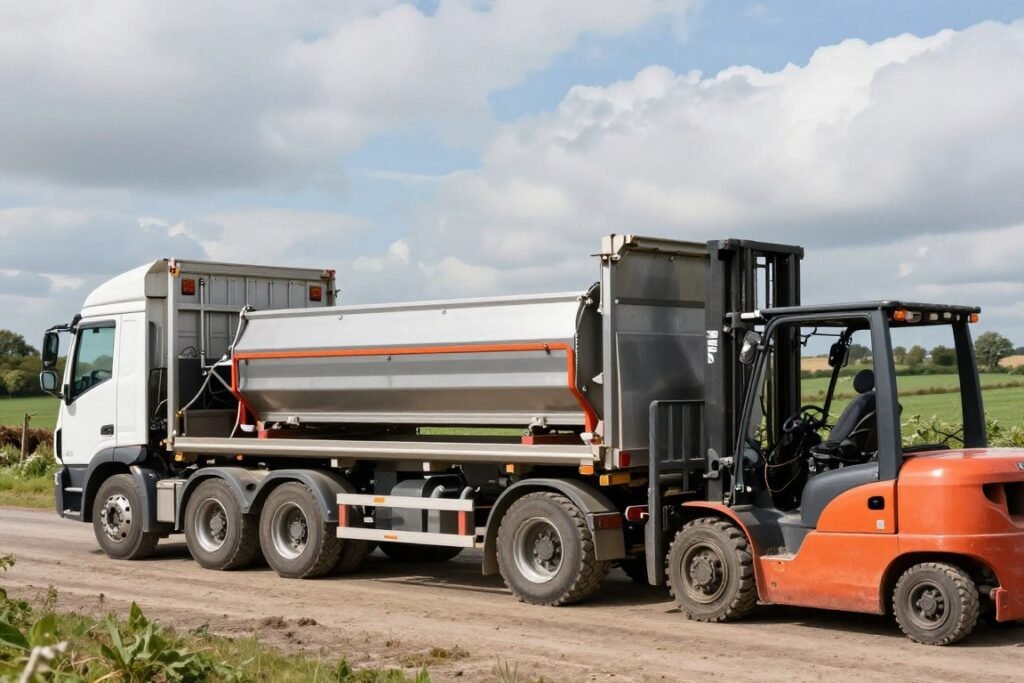
Once cleared through UK customs, equipment moves from the port to your farm location. This final-mile delivery requires specialized transport for heavy machinery. Costs vary with distance from the port and site accessibility:
| Distance from Port | Small System (20ft container) | Large System (40ft container) |
| Under 100 miles | £450-£650 | £650-£950 |
| 100-200 miles | £650-£900 | £900-£1,400 |
| 200-300 miles | £850-£1,200 | £1,200-£1,800 |
| Over 300 miles (Scotland) | £1,100-£1,600 | £1,600-£2,400 |
Difficult site access (narrow lanes, weight-restricted bridges, lack of unloading equipment) may increase delivery costs. Inform MAIKONG of any access limitations during project planning so appropriate transport can be arranged.
Total Timeline Planning
From order confirmation to operational production, UK buyers should plan for the following timeline:
- Manufacturing: 45-65 days depending on system complexity and current production schedule
- Shipping: 28-35 days ocean freight to UK port
- Customs clearance: 3-7 days for documentation processing and release
- Delivery to site: 2-5 days depending on distance and scheduling
- Installation: 3-10 days depending on system size and building readiness
- Commissioning and training: 2-5 days for testing and operator familiarization
Total project duration from order to production typically ranges 90-130 days. Plan accordingly, especially if you need production capacity by a specific date (e.g., before peak feeding season). MAIKONG provides detailed project schedules during quotation, allowing you to coordinate building preparation, power installation, and other prerequisites.
Maintenance Requirements and Long-Term UK Support
Equipment longevity and reliable performance depend on proper maintenance. The fish feed production line guide to maintenance helps UK operators understand ongoing requirements and plan for long-term support needs.
Routine Maintenance Schedules
MAIKONG equipment requires several levels of maintenance depending on frequency and complexity. Establishing consistent maintenance routines prevents unexpected breakdowns and extends equipment life significantly.
Daily Tasks (5-10 minutes)
- Visual inspection of all equipment for unusual noise, vibration, or heat
- Check bearing temperatures on pellet mill, mixer, and conveyors
- Verify proper material flow through all sections
- Clean spillage and dust from equipment surfaces
- Check emergency stop functions
Weekly Tasks (30-45 minutes)
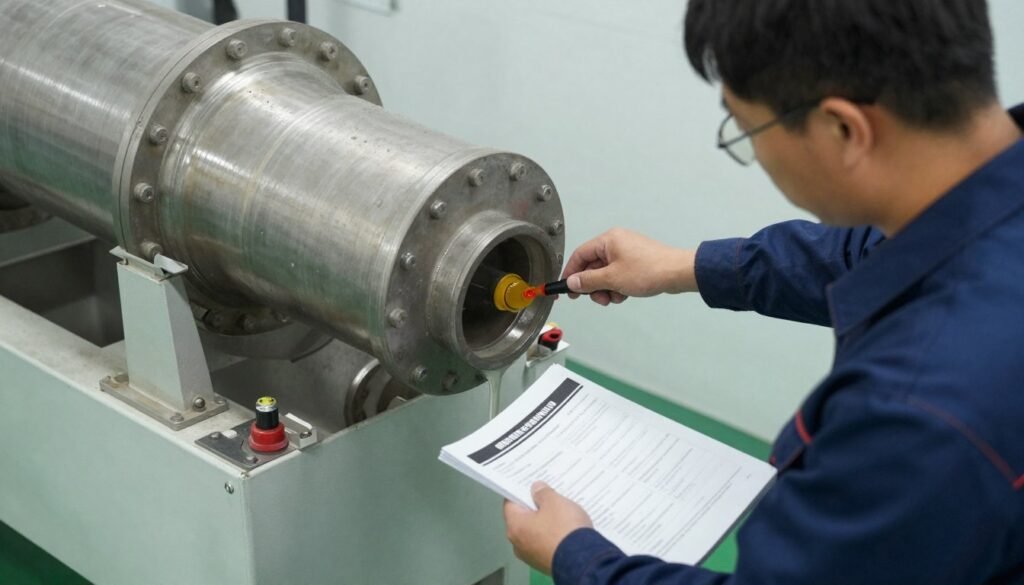
- Lubricate all bearing points per manufacturer schedule
- Inspect and tension drive belts
- Check mixer blade clearances and adjust if needed
- Clean screens and filters
- Inspect electrical connections for tightness and signs of heating
Monthly Tasks (2-3 hours)
- Deep clean all equipment internally
- Inspect pellet mill die and rollers for wear patterns
- Check conditioning chamber steam injection nozzles
- Calibrate weighing systems and flow meters
- Inspect chain drives and adjust tension
- Review production logs for performance trends
Annual Tasks (1-2 days)
- Complete disassembly and inspection of pellet mill
- Replace all belts regardless of apparent condition
- Replace all bearings showing any wear indicators
- Professional electrical inspection and testing
- Structural inspection of frames, supports, and platforms
- Update all safety labels and operational instructions
Spare Parts Inventory and UK Availability
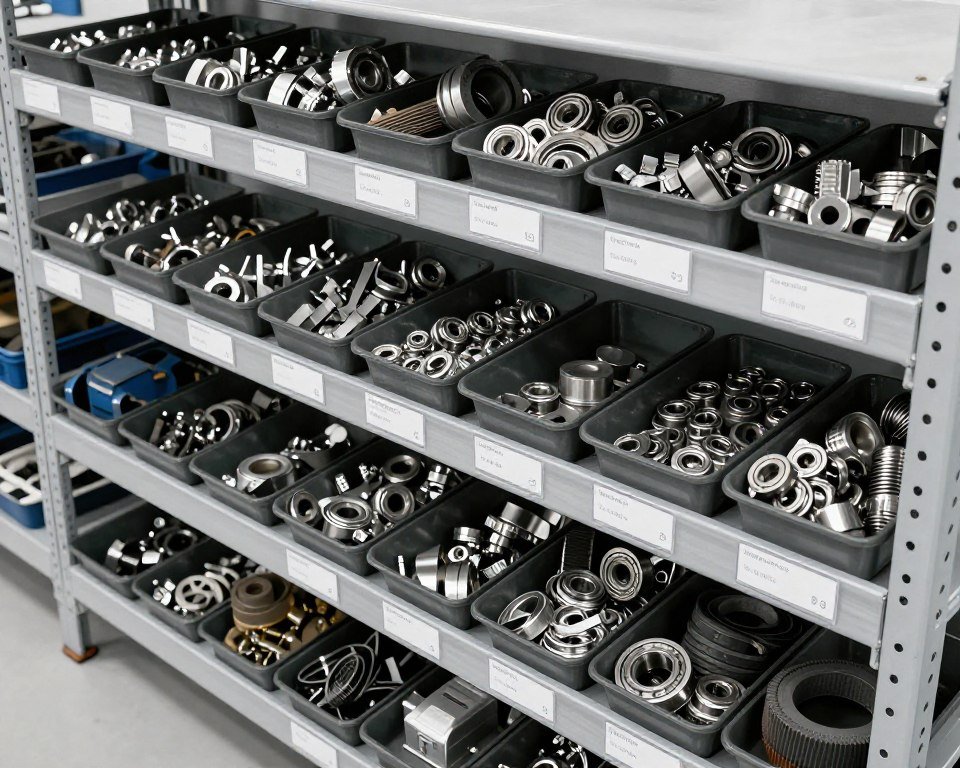
Maintaining a basic spare parts inventory minimizes downtime when components require replacement. MAIKONG recommends UK operators stock critical wear items locally rather than waiting for shipment from China when failures occur.
Recommended Initial Spare Parts
- One complete spare pellet mill die
- Complete set of hammer mill screens (coarse, medium, fine)
- Mixer paddle set
- Drive belts for all belt-driven components
- Bearing set for pellet mill main shaft
- Electrical contactors and overload relays
- PLC backup and programming cable (if applicable)
Total investment: approximately £3,500-£6,500 depending on system size. This inventory provides protection against most common failure modes.
UK Technical Support Structure
MAIKONG provides multi-level technical support for UK customers. Our 22 years of experience includes support systems designed to minimize downtime regardless of geographic distance from our manufacturing facility.
Level 1 – Remote Support: Email and WhatsApp support available during UK business hours (with some coverage extending into evenings due to time zone overlap with our China engineering team). Most operational questions, troubleshooting guidance, and minor adjustments can be handled remotely. Response time targets: within 4 hours during UK business days.
Level 2 – Video Consultation: For complex issues requiring visual inspection, our technical team conducts video calls where UK operators show equipment operation and symptoms. Our engineers can often diagnose problems and guide repairs through video consultation. Available by appointment, typically scheduled within 24 hours of request.
Level 3 – On-Site Service: For issues requiring hands-on intervention, MAIKONG can arrange technician visits to UK locations. We maintain relationships with several UK-based technical service providers familiar with our equipment, reducing response time compared to dispatching technicians from China. For warranty-covered issues, we cover technician costs. For post-warranty service, expect day rates of £450-£650 plus travel expenses.

We’re actively building our UK distributor and service network. Farms purchasing MAIKONG equipment in 2024-2025 benefit from priority access to our expanding UK support infrastructure as we establish local presence.
Frequently Asked Questions: Fish Feed Pellet Production Line Price and Specifications
What capacity fish feed pellet production line do I need for a 30-tonne annual production UK trout farm?
For 30 tonnes annual production (approximately 2.5 tonnes monthly), a 400-500 kg/h capacity system provides appropriate sizing. This allows you to produce your monthly requirement in 5-6 hours of operation, typically spread across 2-3 production sessions. Running at 75-85% of rated capacity ensures optimal pellet quality and equipment longevity.
A larger system (800-1000 kg/h) would complete production faster but operates inefficiently at only 30-35% capacity. The initial investment savings with a properly sized 500 kg/h system (approximately £20,000-£25,000 less than the larger alternative) can fund other farm improvements while providing better long-term operational economics.
How does fish feed pellet production line price compare between Chinese manufacturers like MAIKONG and European suppliers?
European-manufactured equipment typically costs 140-180% more than equivalent Chinese equipment for similar capacity and specifications. A 600 kg/h system from MAIKONG might cost £48,000 for the complete line, while European alternatives range £85,000-£130,000. The price difference reflects labor costs, manufacturing scale, and market positioning rather than necessarily indicating quality differences.
MAIKONG equipment meets the same international standards (CE, ISO) as European manufacturers. Our 22-year manufacturing history and installations in 130 countries demonstrate reliability. The value proposition lies in receiving comparable quality and performance at significantly lower investment, improving project ROI for UK farms.
When comparing prices, ensure you’re evaluating complete systems with equivalent specifications—same automation level, similar component brands for motors and electrical components, and comparable capacity. Basic price comparison without specification matching can be misleading.
What are typical maintenance costs for a small fish feed pellet production line in the UK?
Annual maintenance costs for a 500-600 kg/h system producing 30-40 tonnes yearly typically range £2,200-£3,500, broken down as follows:
- Die replacement (every 12-18 months): £1,600-£2,000
- Routine wearing parts (belts, bearings, seals): £350-£550
- Lubrication and consumables: £120-£180
- Professional annual inspection/service: £400-£600
- Minor repairs and adjustments: £200-£400
These costs assume normal operation and proper routine maintenance. Neglecting daily and weekly maintenance tasks can increase annual costs by 40-60% due to accelerated wear and unexpected failures. Operating equipment beyond rated capacity or with poor-quality ingredients also increases wear rates significantly.
Can I produce floating fish feed pellets with a standard pellet production line?
Standard pellet mills produce sinking pellets suitable for many fish species. Creating floating pellets requires an extruder-based system rather than traditional pellet mills. The production process differs fundamentally—extruders use higher temperature and pressure to create a puffed structure that floats, while standard pellet mills compress material into dense sinking pellets.
MAIKONG manufactures both systems. If your fish species require floating feed (common for surface feeders, ornamental fish, and some aquaculture species), specify this requirement during quotation. Fish feed production line extruder systems typically cost 25-40% more than equivalent capacity pellet mills due to the more complex processing technology.
Some operations use combination systems: a pellet mill for sinking feed during grow-out phases and a smaller extruder for floating starter feeds. MAIKONG can design integrated systems accommodating both production methods if your operation requires this flexibility.
How long does a fish feed pellet mill die last, and what affects its lifespan?
Pellet mill die lifespan varies from 600 to 1,800 operating hours depending on several factors. For a UK farm producing 35 tonnes annually with a 500 kg/h system, expect 70-90 hours of annual operation, meaning a die should last 8-20 months depending on the conditions listed below.
Factors extending die life:
- Consistent operation at 70-90% of rated capacity (optimal loading)
- Properly conditioned feed material with adequate moisture and temperature
- High-quality ingredients free from sand, stones, and metallic contamination
- Regular die cleaning to prevent hole blockage
- Correct roller-to-die clearance adjustment
Factors reducing die life:
- Operation at very low capacity (under 40% rated output)
- Abrasive ingredients (high ash content, inadequate cleaning)
- Inconsistent material moisture causing uneven compression
- Allowing die to cool then restart without proper warm-up
- Poor ingredient grinding (oversized particles)
MAIKONG dies use high-alloy steel with proper heat treatment. Replacement dies cost £1,600-£3,200 depending on diameter and hole configuration. We recommend purchasing one spare die with your initial system so you have backup when replacement becomes necessary.
Opportunity for UK Distributors: Join MAIKONG’s Expansion
MAIKONG actively seeks established distributors and agents throughout the United Kingdom to support our growing customer base. With 22 years manufacturing experience and systems operating across 130 countries, we’re expanding our UK presence through partnership with local businesses who understand the aquaculture and agricultural sectors.

Distributor Benefits and Support
MAIKONG provides comprehensive support for UK distribution partners, ensuring you can effectively serve local customers while building profitable business relationships. Our distributor program includes:
Competitive Pricing Structure
Access distributor pricing that provides healthy margins while remaining competitive in the UK market. Volume-based pricing tiers reward growing sales. Exclusive territory protection in your region prevents internal competition.
Technical Training
Comprehensive product training covering all MAIKONG equipment lines, installation procedures, commissioning protocols, and troubleshooting. Annual update training ensures you stay current with new products and technologies.
Marketing Support
Co-branded marketing materials, product catalogs, technical specifications, and demonstration videos. Digital marketing support including website content, social media assets, and lead generation assistance.
After-Sales Backing
Direct technical support from MAIKONG engineering team for complex customer issues. Warranty administration support. Priority spare parts supply to ensure your customers receive rapid service.
Demonstration Equipment
Access to demonstration units for customer trials and exhibitions. Support for agricultural shows and industry events where MAIKONG equipment can be showcased to potential customers.
OEM/ODM Opportunities
For established distributors, MAIKONG offers OEM manufacturing allowing you to market equipment under your own brand. Custom configurations matched to specific UK market requirements available.
Ideal Distributor Profile
MAIKONG seeks partners with established presence in UK agricultural, aquaculture, or industrial equipment sectors. Ideal distributor candidates include:
- Agricultural equipment dealers with customer base in livestock or aquaculture sectors
- Industrial machinery distributors seeking to expand into agricultural processing
- Aquaculture supply companies wanting to add feed production equipment
- Engineering firms specializing in food or feed processing installations
- Established importers of Chinese or Asian industrial equipment
We value partners who bring local market knowledge, customer relationships, and service capability rather than simply seeking products to add to a catalog. The most successful MAIKONG distributors globally are those who view the partnership as building long-term customer relationships through quality equipment and reliable support.
Interested in MAIKONG UK Distribution?
We’re actively reviewing applications from qualified UK businesses interested in representing MAIKONG feed production equipment. Contact our International Partnership Manager Lucy to discuss distribution opportunities, territory availability, and partnership terms.
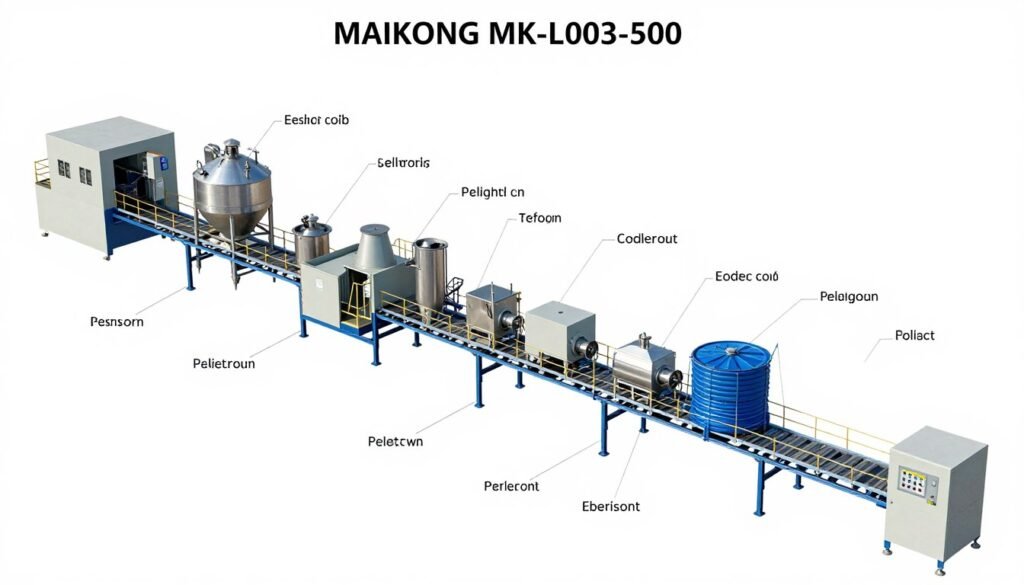
Technical Specifications: MAIKONG MK-L003 Series
The MK-L003 series represents MAIKONG’s core offering for small-to-medium scale fish feed production. These systems incorporate 22 years of manufacturing refinement, balancing affordability with reliability for UK farm operations.
MK-L003-500 Model Specifications
| Specification | Detail |
| Model Designation | MAIKONG MK-L003-500 |
| Rated Capacity | 500 kg/h (0.5 tonnes/hour) |
| Total Connected Power | 55 kW (415V 3-phase 50Hz UK standard) |
| Pellet Die Diameter | 320mm |
| Pellet Size Range | 2.0mm – 6.0mm (die change required) |
| Overall Dimensions (L×W×H) | 8,500mm × 3,200mm × 3,800mm |
| System Weight | 4,200 kg (approximate) |
| Material | Carbon steel frame, ABS control enclosures, stainless steel product-contact surfaces |
| Control Mode | Semi-Automatic with PLC (manual operation option available) |
| Available Colors | Industrial Blue (standard), Custom colors for OEM orders |
| Stock Availability | Production lead time 45-55 days |
| Warranty Period | 12 months from commissioning date |
| Estimated UK Delivered Price | £48,000 – £52,000 (varies with specification and current exchange rates) |
Component Details
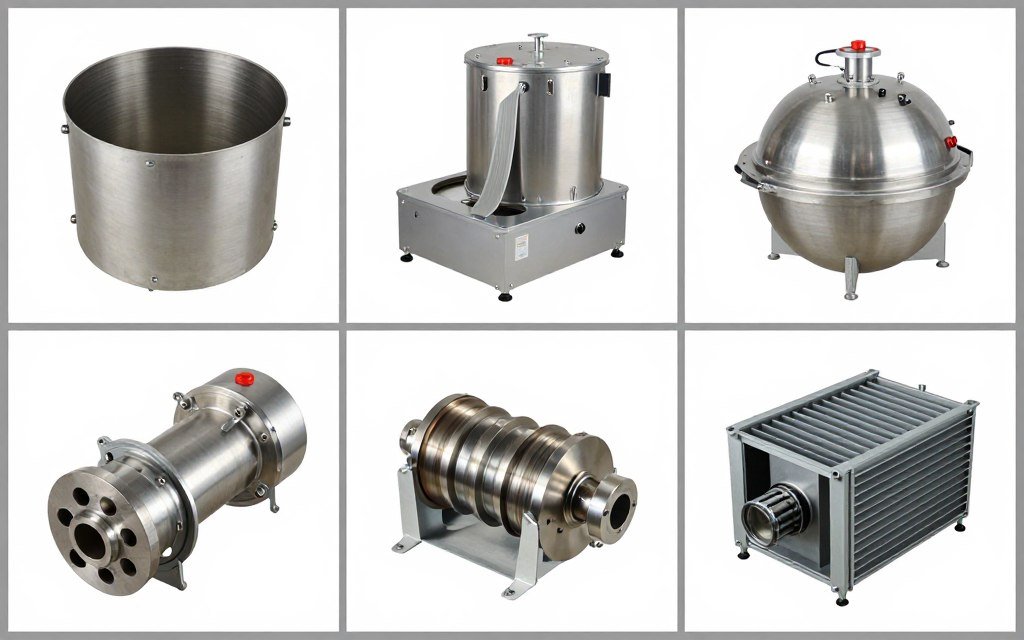
Grinding Section
- Hammer Mill: 37 kW, 600-800 kg/h capacity
- Screen Options: 2mm, 3mm, 4mm perforations
- Rotor Speed: 2,900 RPM
- Hammers: Replaceable hardened steel, 48 pieces
Mixing Section
- Mixer Type: Horizontal ribbon mixer
- Capacity: 500 kg batch
- Mix Time: 4-6 minutes
- Motor Power: 7.5 kW
- Discharge: Pneumatic gate valve
Pelleting Section
- Pellet Mill: Ring die type, 320mm diameter
- Main Motor: 37 kW with VFD control
- Feeder Motor: 1.5 kW variable speed
- Conditioner: Single-shaft with steam injection
- Die Speed: Variable 250-350 RPM
Cooling & Packing
- Cooler: Counterflow type, 3m² cooling area
- Cooling Fan: 3 kW centrifugal blower
- Packing: Semi-automatic with 50kg scale
- Throughput: 6-8 bags per hour
Making Your Decision: Next Steps for UK Farms
Selecting the right fish feed pellet production line price point balances numerous factors—current production needs, realistic growth projections, available capital, operational capabilities, and long-term strategic direction. The most expensive mistake UK farms make is purchasing based solely on price without considering total cost of ownership and capacity matching.
MAIKONG’s experience with UK and European aquaculture operations demonstrates that properly sized equipment operating at design capacity consistently outperforms oversized systems running at partial loads. The economics favor conservative capacity matching with modular expansion capability over speculative overbuying.
Your Assessment Roadmap
Follow this systematic approach to determine your optimal equipment specification:
- Calculate actual annual feed requirements based on current fish stock and verified feeding rates
- Add conservative growth allowance (15-25% maximum unless you have committed expansion plans with capital allocated)
- Determine preferred production frequency (daily, twice-weekly, weekly) based on labor availability and operational preferences
- Calculate required hourly capacity by dividing monthly production by available production hours
- Assess infrastructure readiness including building space, power supply, ingredient storage, and access for delivery
- Establish realistic budget including equipment, shipping, installation, commissioning, and initial supplies
- Request detailed quotations from 2-3 suppliers with identical specifications for fair comparison
- Evaluate total cost of ownership over 10-year equipment life, not just initial purchase price
- Check references from existing users of equivalent equipment in similar applications
- Plan implementation timeline coordinating equipment delivery with building preparation and seasonal farm demands
Working with MAIKONG
MAIKONG provides comprehensive support throughout your decision process. We don’t simply quote prices—we work to understand your specific operation, recommend appropriate configurations, and ensure you make an informed decision aligned with your farm’s actual needs.
What We Provide
- Free capacity assessment and equipment sizing consultation
- Detailed technical specifications tailored to your requirements
- Transparent pricing including all project costs (equipment, shipping, duties, installation)
- Reference contacts from existing UK and European installations
- Layout drawings and space planning assistance
- ROI calculations based on your specific production costs and volumes
- Flexible payment terms for qualified buyers
- Comprehensive warranty and long-term support commitment

Contact MAIKONG for Your Project
Whether you’re ready to purchase or still in the research phase, MAIKONG welcomes inquiries from UK aquaculture operations. Our 22 years of manufacturing experience serves customers globally, and we’re committed to expanding our UK presence through quality equipment and reliable support.
Start Your Feed Production Project Discussion
Contact Lucy, our International Business Manager, to discuss your fish feed production requirements. We’ll provide a free capacity assessment, equipment recommendations tailored to your operation, and transparent pricing for complete project implementation.
For UK businesses interested in becoming MAIKONG distributors, please identify your inquiry as a distribution partnership discussion. We’re actively building our UK network and welcome conversations with established agricultural equipment dealers, aquaculture suppliers, and industrial equipment importers.
MAIKONG Manufacturing Credentials:
- 22+ years in feed production equipment manufacturing
- Installations across 130 countries including extensive European presence
- Capacity range from 200 kg/h to 200 tonnes/h serving all farm scales
- Complete product lines: aquatic feed production line, poultry feed production line, cattle feed production line, pig feed production line, and pet feed production line
- OEM/ODM customization capability for branded partners
- CE certification and ISO quality management systems
- UK-focused support infrastructure under development
- Factory Location: GD Province, SZ City, China
Investment in feed production equipment represents a significant decision for UK farms. MAIKONG’s commitment extends beyond the initial sale—we view every installation as the beginning of a long-term relationship supporting your aquaculture success through reliable equipment, technical expertise, and responsive service.
The right fish feed pellet production line price isn’t simply the lowest quote—it’s the investment that delivers optimal value through proper capacity matching, reliable performance, manageable operating costs, and long-term supplier support. MAIKONG looks forward to helping your operation achieve these goals.