
Feed Pellet Production Line Manufacturer | MAIKONG UK
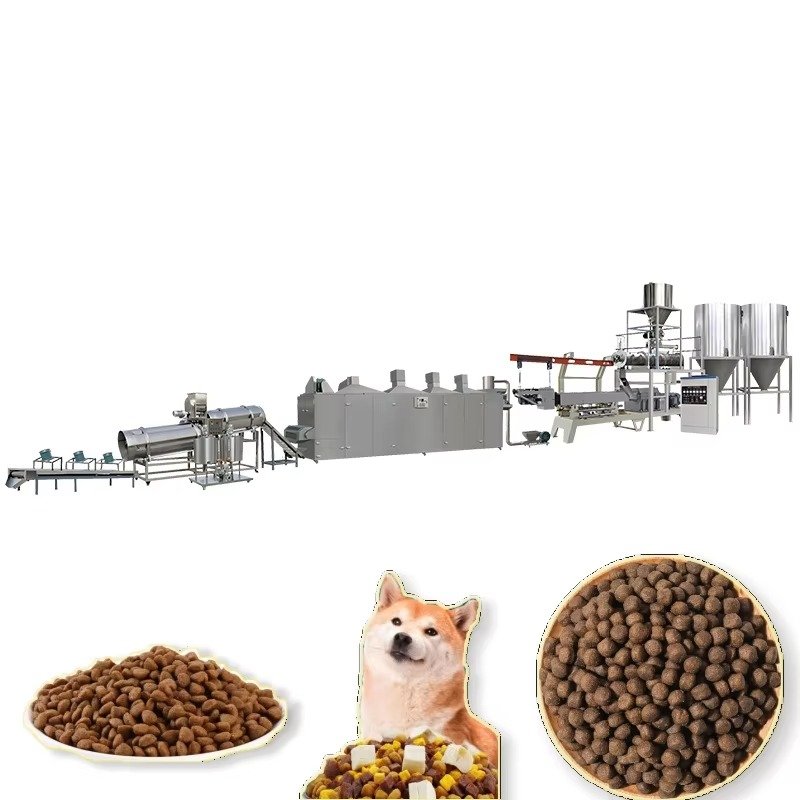
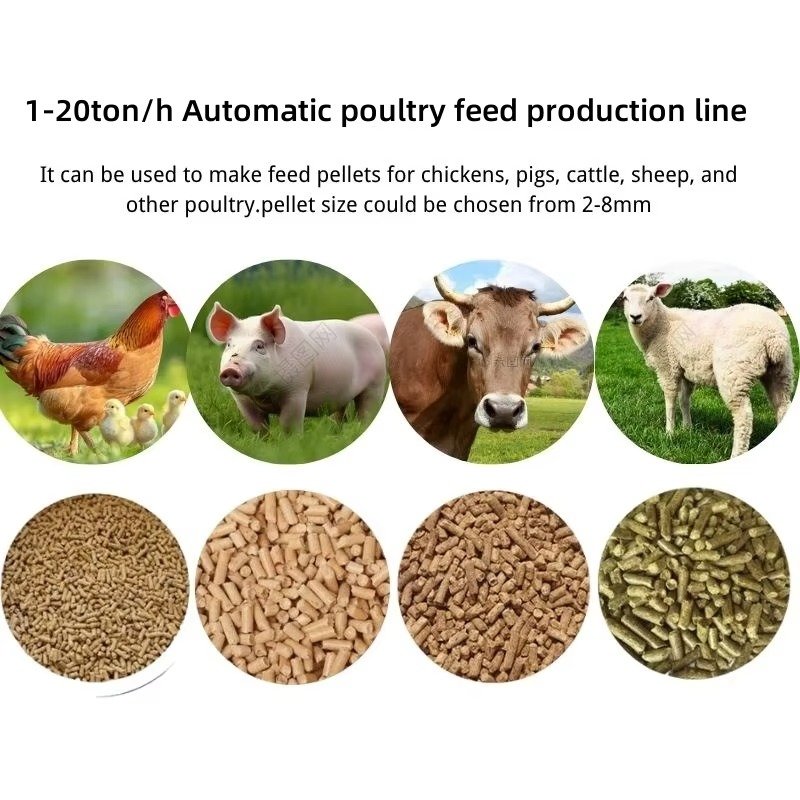
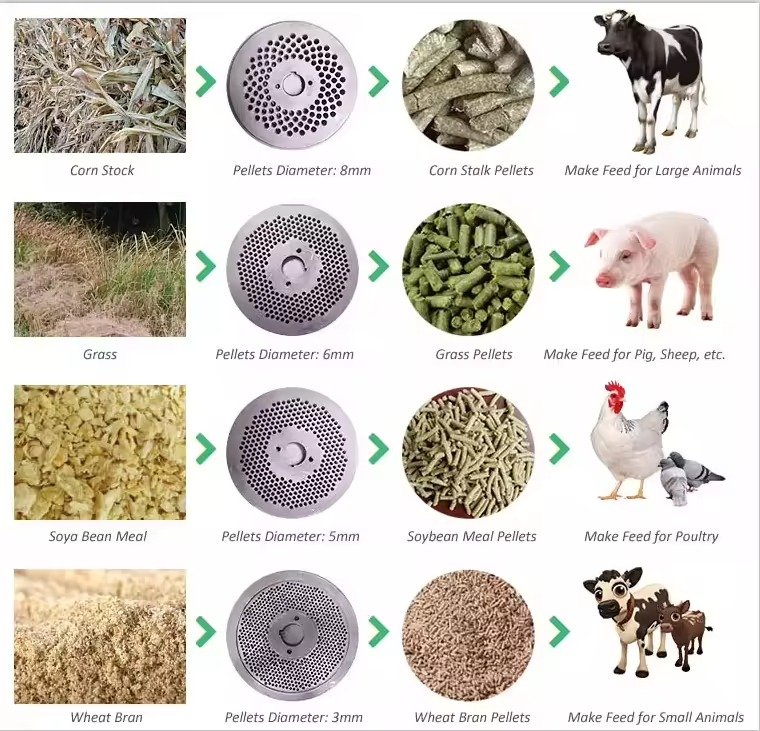
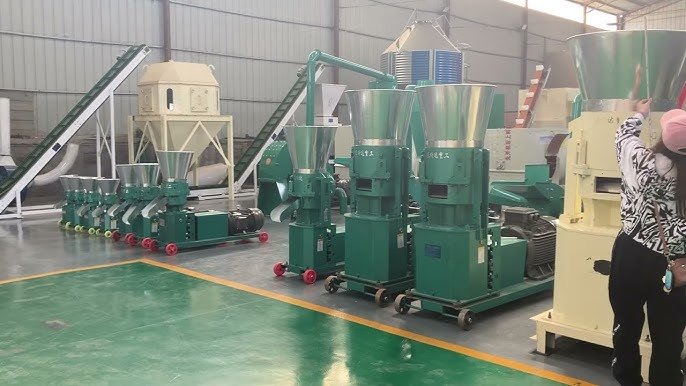
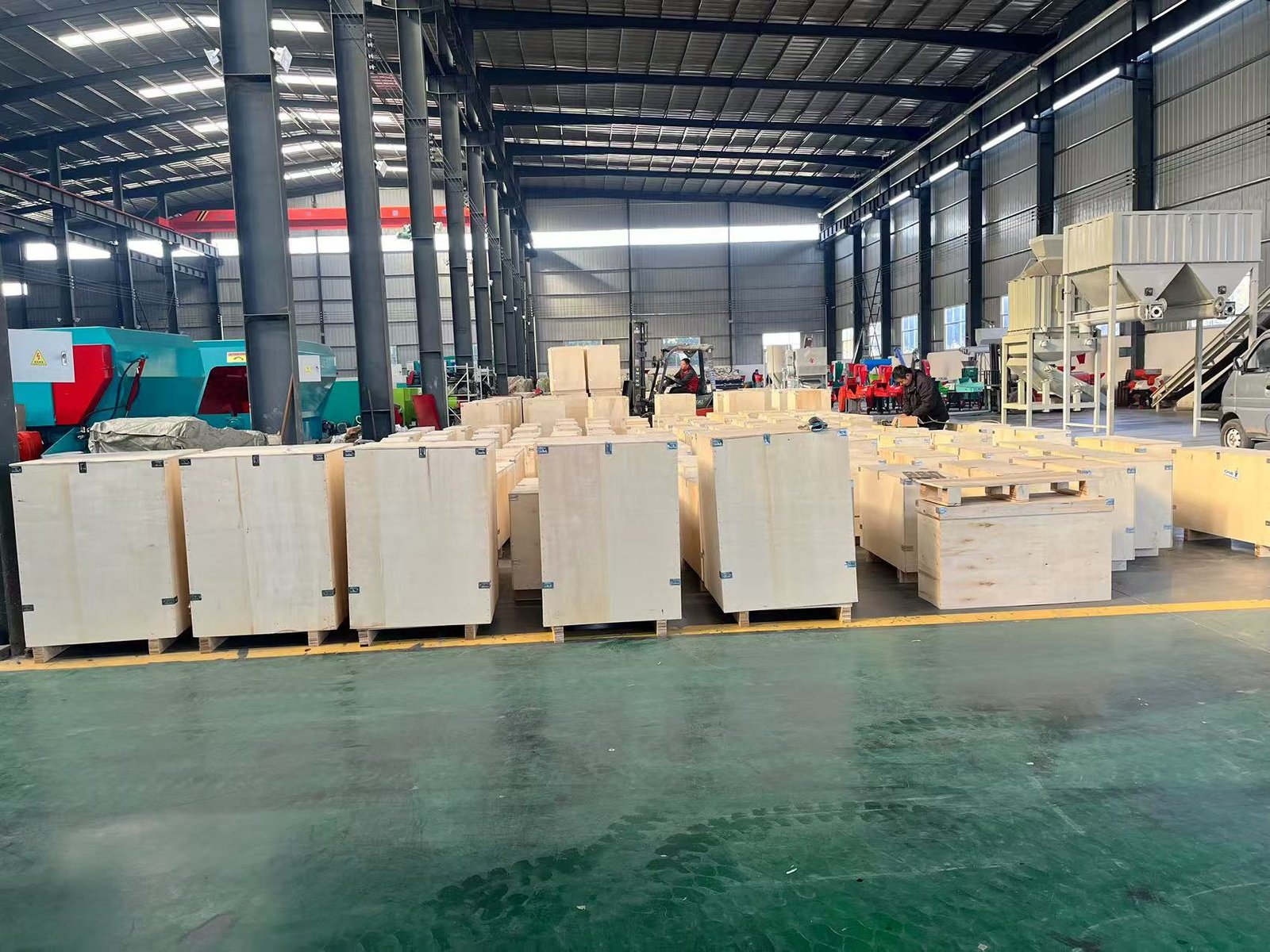 Choosing the right feed pellet production line manufacturer determines whether your animal feed business achieves efficient, profitable production or struggles with equipment failures and quality inconsistencies. For UK feed mill owners, livestock producers, and animal feed investors, selecting a qualified manufacturer goes far beyond comparing price lists. It requires understanding production capacity requirements, customisation capabilities, after-sales support infrastructure, and genuine OEM manufacturing credentials.The UK animal feed sector demands reliable equipment that meets British standards whilst delivering consistent pellet quality for poultry, cattle, aquatic species, and pet food applications. Production lines must handle diverse raw materials, maintain precise nutritional specifications, and operate efficiently across capacities from small farm operations at 200 kilograms per hour to industrial installations processing 200 tonnes hourly.This comprehensive guide examines what UK buyers should verify when evaluating pellet feed plant manufacturers. We explore equipment configurations, technical specifications, customisation options, quality assurance protocols, and the critical supplier capabilities that separate genuine manufacturers from trading companies. Whether you’re establishing a new feed mill, upgrading existing equipment, or seeking distribution partnerships, understanding these factors protects your investment and ensures operational success.
Understanding Feed Pellet Production Line Components and Configuration
A complete feed pellet production line integrates multiple specialised equipment modules that work sequentially to transform raw materials into finished pellet feed. Understanding these components helps UK buyers specify appropriate configurations for their production requirements and animal feed applications.
Essential Equipment Modules in Feed Pellet Production
Professional feed production systems comprise six primary modules. Each serves a critical function in the manufacturing process, and equipment quality directly impacts final product consistency and production efficiency.
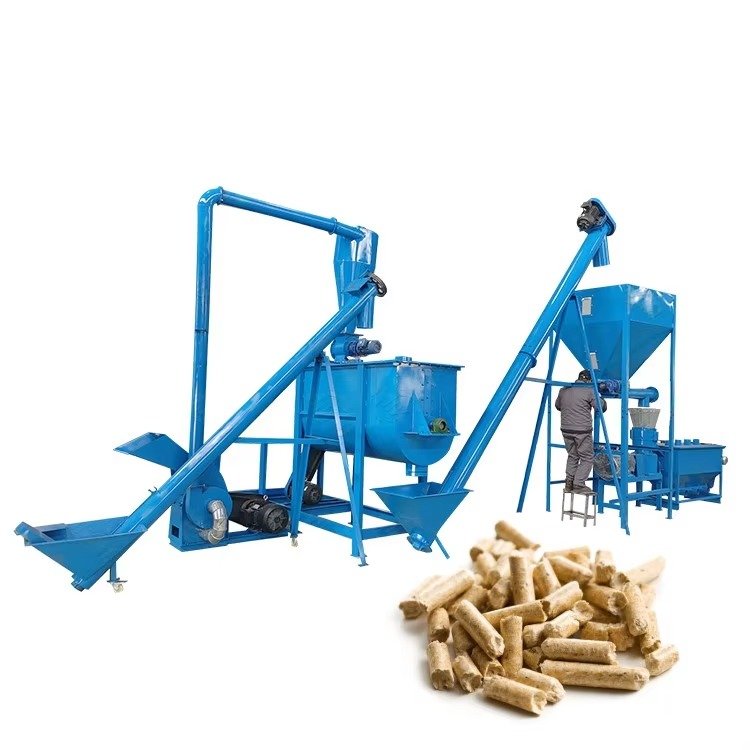
Raw Material Reception and Storage
Bulk ingredients arrive at the feed mill requiring proper reception, cleaning, and storage before processing. Modern systems employ:
- Permanent magnetic cylinders removing metallic contaminants
- Primary cleaning screens separating straw, stones, and debris
- Steel silo storage maintaining ingredient quality and enabling continuous production
- Bucket elevators and screw conveyors distributing materials to production areas
Crushing and Size Reduction
Particle size significantly affects pellet quality and animal digestibility. The crushing section includes:
- Hammer mills grinding grains, oilseeds, and fibrous materials
- Variable screen sizes controlling final particle dimensions
- Dust collection systems maintaining clean working environments
- Capacity matched to overall production line throughput requirements
Mixing, Pelleting, and Finishing Operations
After grinding, ingredients proceed through precise batching, thorough mixing, pellet formation, cooling, and packaging stages. These operations determine final product quality and production efficiency.
Batching and Mixing Systems
Accurate ingredient proportioning ensures nutritional consistency across production batches:
- Automated batching scales weighing each ingredient precisely
- Horizontal ribbon mixers or vertical screw mixers achieving uniform blending
- Liquid addition systems for oils, molasses, or water injection
- Mixing cycle times between 3-8 minutes depending on formula complexity
Pellet Mill and Ring Die System
The pellet mill represents the production line’s core equipment:
- Ring die pellet mills forcing material through die holes under pressure
- Die compression ratios customised for different raw materials and animal species
- Steam conditioning increasing temperature and moisture for better pellet formation
- Variable pellet diameters from 2mm to 12mm accommodating different livestock
Cooling, Screening, and Packaging
Freshly formed pellets exit the mill at high temperature and moisture content. Proper cooling and finishing prevent spoilage during storage and transport.
Counterflow Cooling Systems
Cooling equipment reduces pellet temperature to within 3-5 degrees Celsius above ambient whilst lowering moisture content to safe storage levels below 12.5 percent. Counterflow coolers pass ambient air through the pellet bed, gradually reducing temperature without thermal shock that could crack pellets.
Cooling capacity must match pellet mill output. Insufficient cooling creates bottlenecks, whilst oversized coolers waste energy and floor space. UK installations typically specify cooling systems sized at 1.2 to 1.5 times pellet mill capacity, providing operational flexibility.
Screening and Packaging
After cooling, rotary grading screens separate fines and oversized particles, ensuring consistent pellet dimensions. Recovered fines return to the mixer for reprocessing, maximising raw material utilisation.
Automated packaging scales weigh finished pellets into bags or load bulk trucks. Modern systems achieve weighing accuracy within ±0.2 percent, meeting commercial requirements whilst maintaining high throughput rates.
Configure Your Custom Feed Production Line
Discuss your specific raw materials, animal feed types, and production capacity requirements with MAIKONG’s technical team. We’ll recommend the optimal equipment configuration for your UK operation.
Production Capacity Selection and Technical Performance Parameters
Selecting appropriate production capacity represents one of the most critical decisions UK feed mill investors face. Undersized equipment limits business growth, whilst oversized installations waste capital and increase operational costs. Understanding capacity factors and technical specifications enables informed equipment selection.
Capacity Range and Scalability Considerations
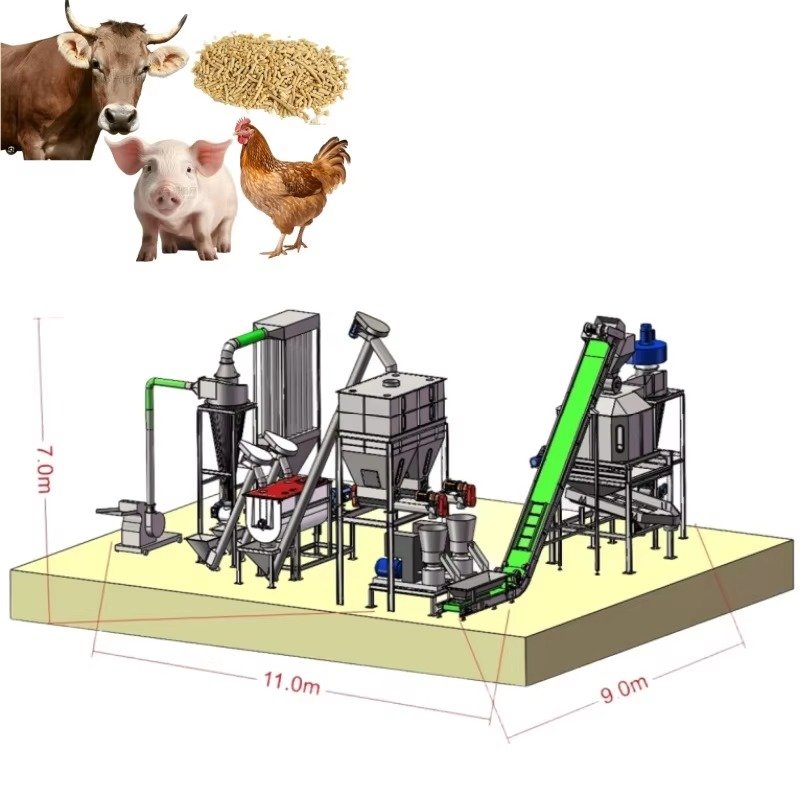
Feed pellet production lines span enormous capacity ranges, from small farm-scale operations to industrial installations serving regional markets. UK buyers should evaluate current requirements alongside projected growth over five to seven years.
| Production Scale | Capacity Range | Typical Applications | Equipment Footprint | Operator Requirements |
| Small Farm Scale | 200-1000 kg/h | Single farm operations, speciality feeds, organic production | 50-100 m² | 1-2 operators |
| Medium Commercial | 1-10 tonnes/h | Regional feed mills, cooperative operations, mixed species production | 200-500 m² | 3-5 operators |
| Large Industrial | 10-50 tonnes/h | Major feed manufacturers, integrated livestock operations, export markets | 800-2000 m² | 8-15 operators |
| Mega Industrial | 50-200 tonnes/h | National feed brands, multinational operations, port facilities | 3000+ m² | 20+ operators |
Raw Material Specifications and Feed Formulation Factors
Different raw materials exhibit varying characteristics affecting equipment selection and pellet quality. UK feed mills commonly process diverse ingredients requiring equipment versatility and customisation.
Grain-Based Formulations
Wheat, barley, maize, and oats form the foundation of most livestock feeds. These materials require:
- Moisture content between 12-14 percent for optimal pelleting
- Medium grinding (2-4mm particles) before mixing
- Steam conditioning at 75-85°C improving starch gelatinisation
- Die compression ratios 1:10 to 1:12 for quality pellets
Protein Concentrate Feeds
Soybean meal, rapeseed meal, and fishmeal require careful processing:
- Lower moisture tolerance (10-12 percent) preventing spoilage
- Fine grinding enhancing nutritional availability
- Reduced conditioning temperature protecting heat-sensitive nutrients
- Higher compression ratios (1:12 to 1:15) achieving proper binding
Fibrous Materials
Grass meal, alfalfa, and straw challenge equipment capabilities:
- Higher initial moisture (14-16 percent) improving plasticity
- Coarse grinding with specialised screens
- Extended conditioning time (30-45 seconds)
- Lower compression ratios (1:8 to 1:10) reducing equipment wear
Energy Consumption and Operational Efficiency
Electricity costs represent significant operational expenses for UK feed mills. Modern equipment designs substantially reduce energy consumption compared to older technology, improving profitability and environmental performance.
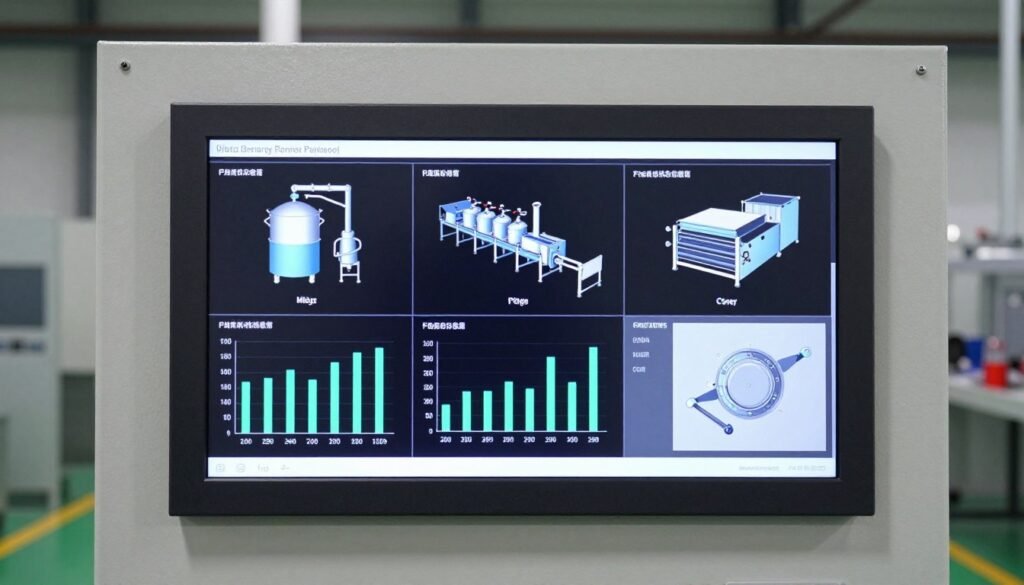
A typical 5-tonne per hour feed pellet production line consumes approximately 80-100 kilowatt-hours of electricity per tonne produced. Breaking down consumption by equipment module:
- Hammer mill crusher: 18-22 kWh per tonne (largest single consumer)
- Pellet mill main motor: 15-18 kWh per tonne
- Steam boiler or conditioner: 12-15 kWh per tonne
- Mixing equipment: 5-7 kWh per tonne
- Cooling and conveying systems: 8-12 kWh per tonne
- Auxiliary equipment and controls: 3-5 kWh per tonne
UK installations benefit from specifying energy-efficient motors meeting IE3 or IE4 efficiency standards. Variable frequency drives on major motors further reduce consumption during partial-load operation, common in batch production schedules.
+86 158-1555-6422Speak with MAIKONG technical specialists about energy-efficient configurations for UK operations
Raw Material Versatility and Animal Feed Type Applications
Modern feed pellet production lines must accommodate diverse raw materials and produce feeds for multiple animal species. This versatility enables feed manufacturers to respond to market demands, seasonal ingredient availability, and customer requirements without equipment limitations.
Poultry Feed Production Specifications
Poultry feed represents the largest sector in UK animal feed markets. Chickens, turkeys, ducks, and game birds require specific pellet characteristics matching their beak size, digestive physiology, and production stage.
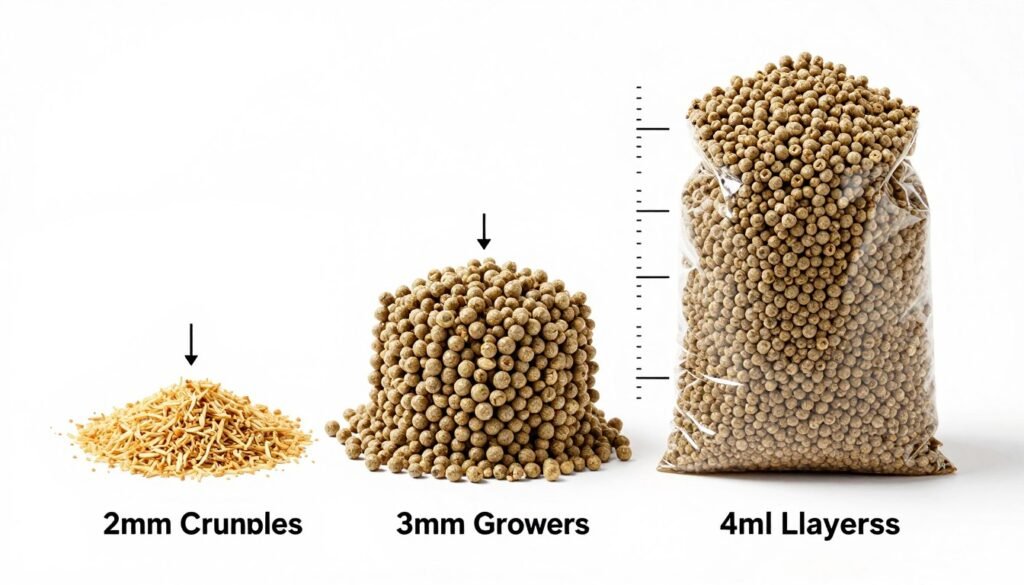
Broiler Feed Formulations
Broiler chicken production demands high-energy feeds supporting rapid growth from day-old chicks to market weight in 35-42 days. Poultry feed production line equipment must produce:
- Starter crumbles (2-2.5mm) for chicks aged 0-10 days
- Grower pellets (3-3.5mm) for birds aged 11-24 days
- Finisher pellets (4-5mm) for birds aged 25 days to market
- Pellet durability index above 95 percent preventing excessive fines
- Uniform pellet length between 6-10mm for optimal feed intake
Raw material formulations typically comprise 50-60 percent maize or wheat, 30-35 percent soybean meal or other protein sources, 5-8 percent vegetable oils, with vitamins, minerals, and additives completing the formulation.
Layer Feed Production
Egg-laying hens require nutritionally balanced feeds maintaining production whilst supporting shell quality and bird health over extended laying cycles. Layer feeds differ from broiler formulations through:
- Higher calcium content (3.5-4.2 percent) supporting shell formation
- Moderate protein levels (16-18 percent) suited to maintenance requirements
- Pellet size 3-4mm matching layer beak dimensions
- Lower energy density compared to broiler feeds
- Enhanced vitamin and mineral supplementation for reproductive function
Layer feed formulations incorporate more diverse ingredients including limestone, dicalcium phosphate, and synthetic amino acids, requiring precise batching accuracy and thorough mixing.
Cattle and Ruminant Feed Production
Cattle, sheep, and goats possess complex digestive systems capable of utilising fibrous materials inefficiently processed by monogastric animals. Cattle feed production line configurations differ substantially from poultry equipment.
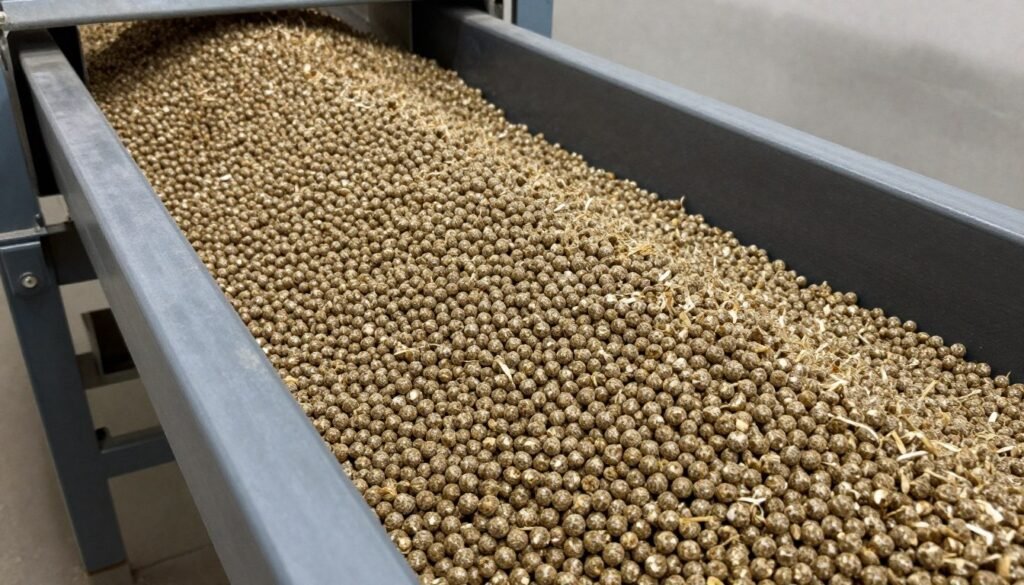
Ruminant feeds commonly utilise larger pellet diameters between 6-10mm, accommodating the animals’ grazing-adapted mouths and rumen fermentation requirements. Equipment must handle fibrous ingredients including:
- Grass meal and dried forage requiring specialised grinding equipment
- Molasses addition systems for palatability and dust control
- Urea or other non-protein nitrogen sources demanding careful mixing
- Mineral blocks or loose minerals requiring separate production capabilities
Dairy cattle concentrates, beef finishing rations, and sheep supplementary feeds each demand specific formulations. Modern production lines accommodate these variations through programmable recipe management and flexible equipment configurations.
Aquatic and Fish Feed Manufacturing
Aquaculture represents one of the fastest-growing animal protein sectors globally, with UK operations producing salmon, trout, and various warmwater species. Fish feed production line technology differs significantly from terrestrial animal feed equipment.
Floating Feed Production
Most finfish production utilises floating (extruded) feeds visible on the water surface, enabling farmers to monitor consumption and reduce waste. Production requires:
- Extrusion equipment, not standard pellet mills
- Higher temperature processing (120-150°C) gelatinising starches
- Oil coating systems achieving 15-25 percent lipid content
- Precise moisture control (8-10 percent) ensuring float characteristics
Sinking Feed for Bottom Feeders
Prawns, shrimp, catfish, and some marine species require sinking feeds. Standard ring die pellet mills produce these feeds with modifications:
- Water-stable pellets resisting disintegration for 4-8 hours
- High fishmeal content (30-50 percent) improving binding
- Smaller pellet diameters (2-6mm) matching species mouth size
- Enhanced vitamin coating protecting nutrients from water leaching
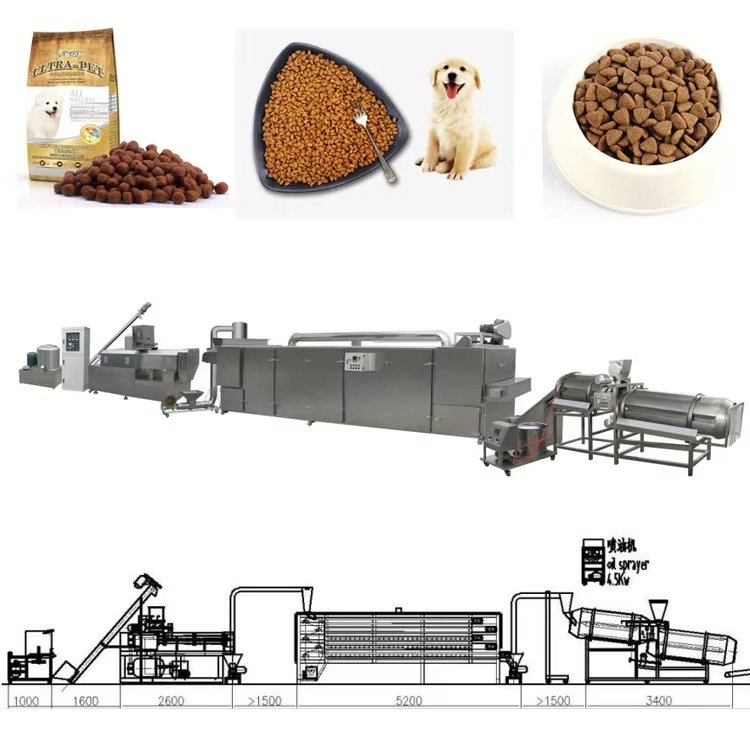
Pet Food and Speciality Feed Production
The UK pet food market demands premium quality standards, diverse formulations, and smaller production batches compared to livestock feeds. Pet feed production line equipment must accommodate frequent recipe changes and stringent quality control.

Dog and cat food production increasingly utilises high-meat formulations, requiring equipment capable of processing fresh or frozen meat ingredients alongside traditional grains and proteins. Speciality feeds for rabbits, guinea pigs, and other companion animals demand precise pellet sizing and enhanced nutritional supplementation.
Batch production flexibility becomes essential, as pet food manufacturers produce multiple formulations targeting different life stages, breeds, and health conditions. Modern control systems store hundreds of recipes, automatically adjusting equipment parameters for each production run.
Discuss Your Specific Feed Type Requirements
MAIKONG engineers specialise in configuring production lines for diverse animal feed applications. Whether you’re producing poultry, cattle, aquatic, or pet feeds, we’ll recommend equipment specifications ensuring optimal pellet quality and production efficiency.
Quality Assurance Protocols and Equipment Testing Standards
Distinguishing genuine feed pellet production line manufacturers from trading companies requires examining their quality control infrastructure, testing capabilities, and manufacturing standards. UK buyers investing substantial capital in production equipment need assurance that manufacturers maintain rigorous quality protocols throughout design, fabrication, and commissioning stages.
Manufacturing Standards and Certification
Professional manufacturers operate certified facilities adhering to international quality management systems. These certifications demonstrate organisational commitment to consistent quality and provide buyers with recourse should equipment fail to meet specifications.
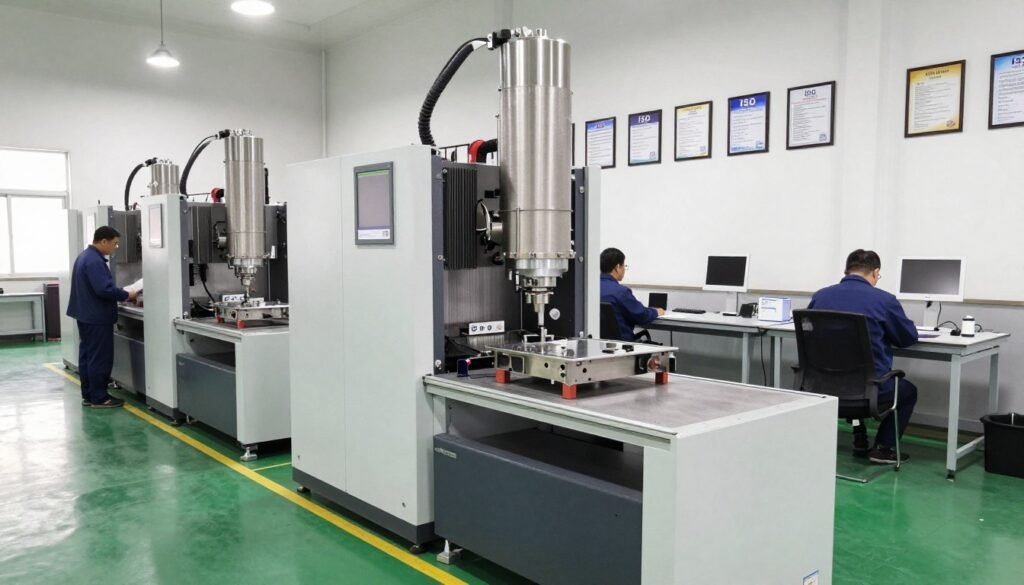
ISO 9001 Quality Management
Manufacturers certified to ISO 9001 standards demonstrate:
- Documented quality procedures covering design through delivery
- Regular internal audits identifying process improvements
- Supplier quality management ensuring component consistency
- Customer feedback systems driving continuous improvement
CE Marking for European Markets
Equipment destined for UK and European installations requires CE certification showing:
- Compliance with EU machinery safety directives
- Electrical safety standards protecting operators
- Noise emission controls meeting workplace regulations
- Technical file documentation available for inspection
Industry-Specific Standards
Feed equipment manufacturers should reference standards including:
- ASAE standards for agricultural machinery design
- AFMA guidelines for feed mill equipment safety
- British Standards for industrial electrical installations
- Food safety certifications where equipment contacts feed ingredients
Factory Testing and Equipment Validation
Reputable manufacturers conduct comprehensive factory testing before shipment, validating equipment performance against specified parameters. UK buyers should request documented test results or arrange factory inspections.
Component Testing Procedures
Individual equipment modules undergo testing validating:
- Motor performance under rated load conditions
- Bearing assemblies checked for vibration and temperature
- Electrical control systems verified through simulation
- Safety interlocks tested confirming proper operation
- Welding quality inspected using non-destructive testing methods
Critical components such as pellet mill ring dies receive dimensional inspection, hardness testing, and surface finish evaluation. Dies failing to meet specifications undergo rework or replacement before installation.
Integrated System Testing
After individual module validation, complete production lines run integrated tests simulating actual production conditions:
- Throughput capacity verified using representative raw materials
- Pellet quality assessed measuring durability, length, and diameter
- Energy consumption monitored across production cycles
- Control system functionality tested through recipe changes
- Safety systems activated confirming emergency stop operation
Factory acceptance testing allows buyers to witness equipment performance before shipment, identifying any deficiencies requiring correction whilst equipment remains at the manufacturing facility.
Material Selection and Component Quality
Equipment longevity and reliability stem from appropriate material selection for components experiencing wear, corrosion, or high stress. Professional manufacturers specify materials based on engineering analysis rather than cost minimisation.
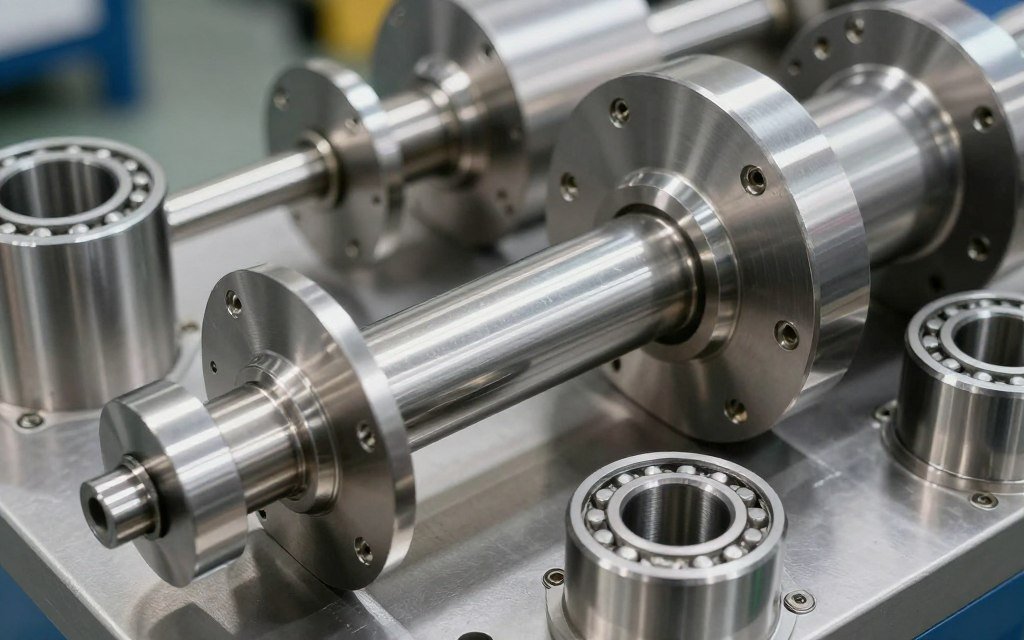
| Component Category | Standard Materials | Premium Alternatives | Application Benefit |
| Pellet Mill Die | Alloy steel 20CrMnTi | Stainless steel 4Cr13, Tungsten carbide coating | Extended die life, reduced contamination risk |
| Compression Rollers | Alloy steel with standard hardening | Vacuum heat-treated alloy steel | Uniform hardness, reduced cracking, longer service life |
| Mixer Paddles | Mild steel with epoxy coating | Stainless steel 304 or 316 | Improved sanitation, no coating delamination |
| Hammer Mill Screens | Perforated mild steel | Hardened steel or polyurethane screens | Reduced screen replacement frequency |
| Bearing Assemblies | Standard deep groove ball bearings | Sealed spherical roller bearings (SKF, FAG) | Extended lubrication intervals, higher load capacity |
UK buyers should request detailed material specifications for critical wear components. Manufacturers unwilling to provide this documentation or using generic descriptions likely source lower-grade materials compromising equipment reliability.
Customisation Capabilities and OEM Manufacturing Services
Standard equipment configurations rarely optimise performance for specific raw materials, facility layouts, or production requirements. Professional feed pellet production line manufacturers offer extensive customisation services, adapting equipment to unique customer situations rather than forcing buyers to accept off-the-shelf solutions.
Electrical and Control System Customisation for UK Standards
UK installations require specific electrical configurations matching British standards and regional power supply characteristics. Manufacturers experienced in European markets accommodate these requirements systematically.
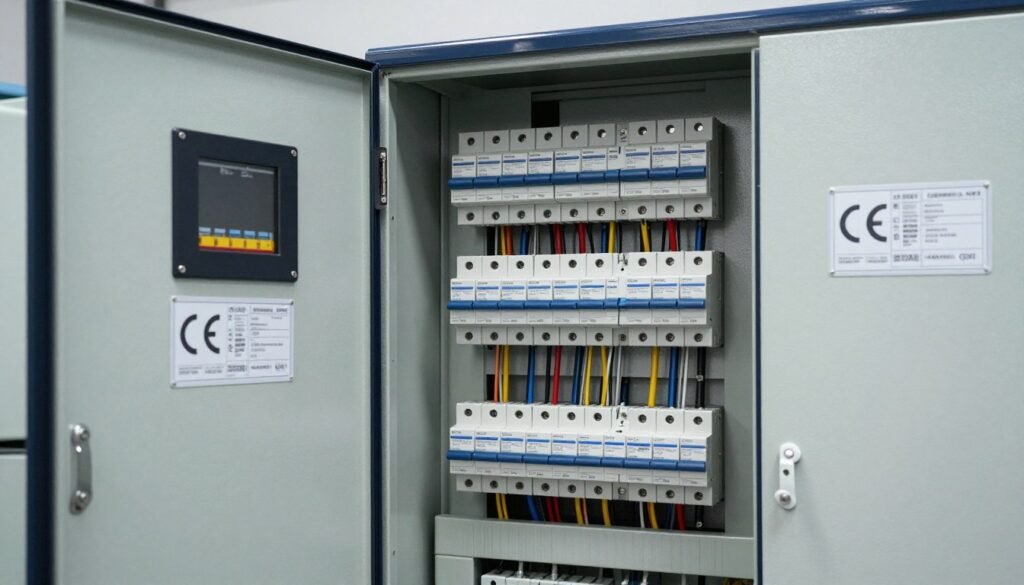
Voltage and Frequency Adaptation
Standard UK industrial power supplies deliver 400 volts three-phase at 50 hertz. Equipment manufactured for other markets may require modification:
- Motor windings specified for 400V operation
- Control transformers providing appropriate secondary voltages
- Variable frequency drives programmed for 50Hz base frequency
- Electrical schematics reflecting British standard symbols and terminology
Control System Configuration
Modern production lines employ programmable logic controllers (PLCs) managing equipment operation. UK-specific programming includes:
- Human-machine interfaces displaying text in English
- Date and time formats following British conventions
- Units of measurement in metric system (tonnes, kilograms, degrees Celsius)
- Recipe management systems accommodating UK feed formulations
Mechanical Configuration and Layout Adaptation
Physical space constraints, building structures, and material flow requirements necessitate equipment layout customisation. Manufacturers with in-house engineering capabilities design solutions fitting customer facilities efficiently.
Typical customisation scenarios include:
- Equipment arranged across multiple building levels maximising vertical space
- Conveying systems routed around structural obstacles
- Production capacity split between parallel processing lines for operational flexibility
- Dust collection systems integrated within existing building ventilation
- Raw material storage positioned minimising horizontal conveying distances
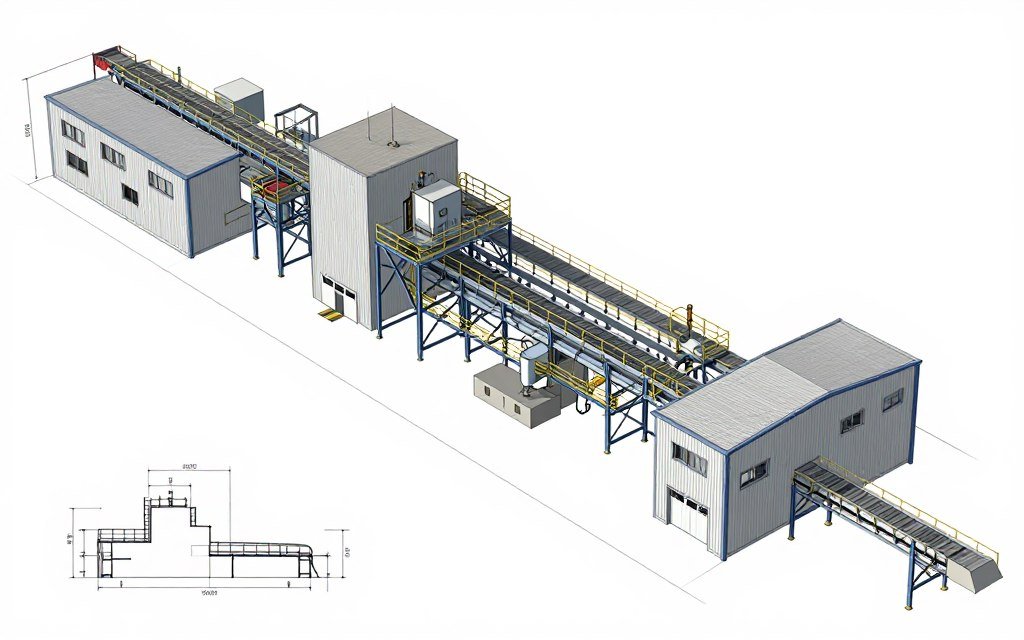
Professional manufacturers provide detailed layout drawings showing equipment positions, access requirements, utility connections, and structural load points. These drawings enable building modifications to proceed whilst equipment fabrication progresses, reducing installation time and costs.
OEM and Private Label Manufacturing
Feed equipment dealers, agricultural cooperatives, and integrated livestock companies increasingly specify private label or OEM arrangements. This approach combines the manufacturer’s technical expertise with the buyer’s brand recognition and market relationships.
OEM Service Scope
Comprehensive OEM partnerships encompass:
- Equipment bearing the customer’s brand name and logo
- Custom colours matching corporate identity standards
- Packaging and documentation reflecting customer branding
- Operator training materials customised with customer information
- Ongoing technical support coordinated through the customer’s organisation
OEM arrangements require manufacturers capable of flexible production, sophisticated quality control, and long-term partnership orientation. MAIKONG’s 22 years manufacturing experience positions us to support OEM customers effectively, whether producing single installations or multiple units for distribution networks.
Benefits for UK Distributors
Distributors and dealers representing feed equipment in UK markets gain substantial advantages through OEM partnerships:
- Market differentiation through exclusive branded product lines
- Higher margins compared to representing multiple competing brands
- Technical support from manufacturers whilst maintaining customer relationships
- Flexibility to specify features addressing regional customer preferences
- Inventory management support reducing working capital requirements
Successful OEM relationships depend on open communication, aligned quality expectations, and mutual commercial understanding. Prospective partners should thoroughly discuss capabilities, lead times, and support structures before committing to agreements.
Installation Services, Operator Training, and After-Sales Technical Support
Equipment purchase represents only the initial investment in establishing feed production capability. Successful operation depends equally on proper installation, comprehensive operator training, and reliable ongoing technical support. UK buyers should evaluate manufacturer capabilities in these critical areas before committing to equipment purchases.
Installation and Commissioning Services
Professional manufacturers provide installation support ensuring equipment performs to specifications from initial startup. Installation scope and responsibilities require clear definition during contract negotiations.
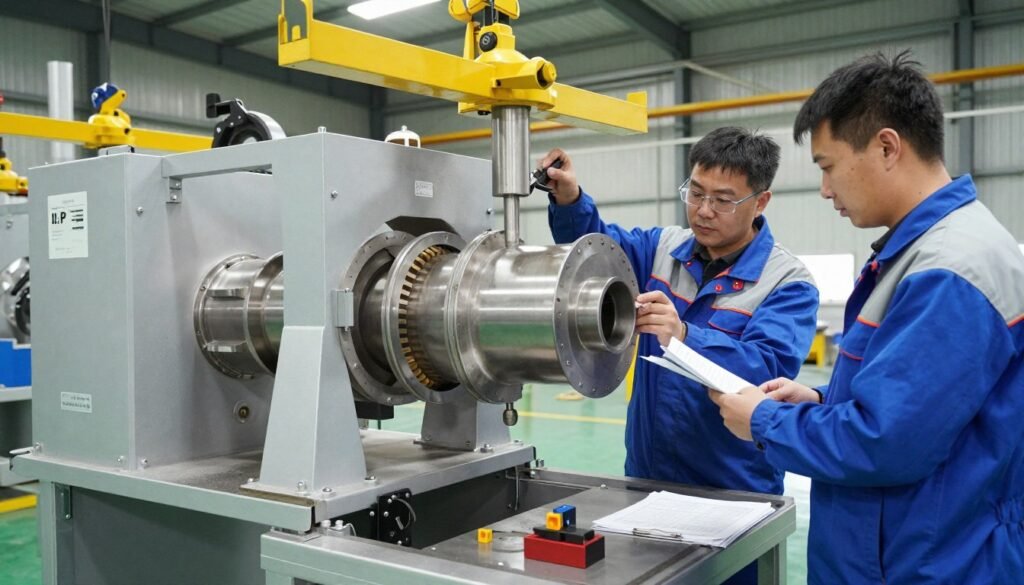
On-Site Installation Support
Manufacturers typically provide:
- Experienced technicians supervising equipment installation
- Alignment and levelling procedures for rotating machinery
- Electrical connection verification and motor rotation checks
- Control system programming and communication network setup
- Initial equipment startup and parameter adjustment
Installation duration varies from 2-3 weeks for compact lines to 6-8 weeks for large industrial installations.
Commissioning and Performance Validation
After mechanical and electrical installation completes, commissioning validates:
- Individual equipment module operation without load
- System integration with materials flowing through complete process
- Production capacity achievement using customer raw materials
- Pellet quality assessment against specified parameters
- Operator control panel training during actual production
Successful commissioning culminates in documented performance tests witnessed by customer representatives.
Operator Training and Knowledge Transfer
Sophisticated equipment delivers value only when operators understand proper operation, routine maintenance, and basic troubleshooting. Comprehensive training programmes transfer manufacturer knowledge to customer staff.
Equipment Operation Training
- Startup and shutdown procedures
- Production parameter adjustment for different formulations
- Quality control monitoring and assessment
- Basic troubleshooting of common operational issues
- Safety systems and emergency procedures
Maintenance Procedures Training
- Routine lubrication schedules and procedures
- Wear component inspection and replacement timing
- Bearing maintenance and replacement techniques
- Belt and chain tension adjustment
- Documentation of maintenance activities
Advanced Technical Training
- Control system programming and recipe management
- Electrical troubleshooting and component replacement
- Die and roller reconditioning procedures
- Production optimisation for energy efficiency
- Preventative maintenance programme development
MAIKONG provides comprehensive training documentation in English with photographs, diagrams, and step-by-step procedures. Video recordings of training sessions create reference materials for future staff or refresher training.
Spare Parts Availability and Supply
Equipment inevitably requires replacement parts due to wear or damage. Manufacturers should maintain spare parts inventory enabling rapid delivery to UK locations, minimising production downtime.
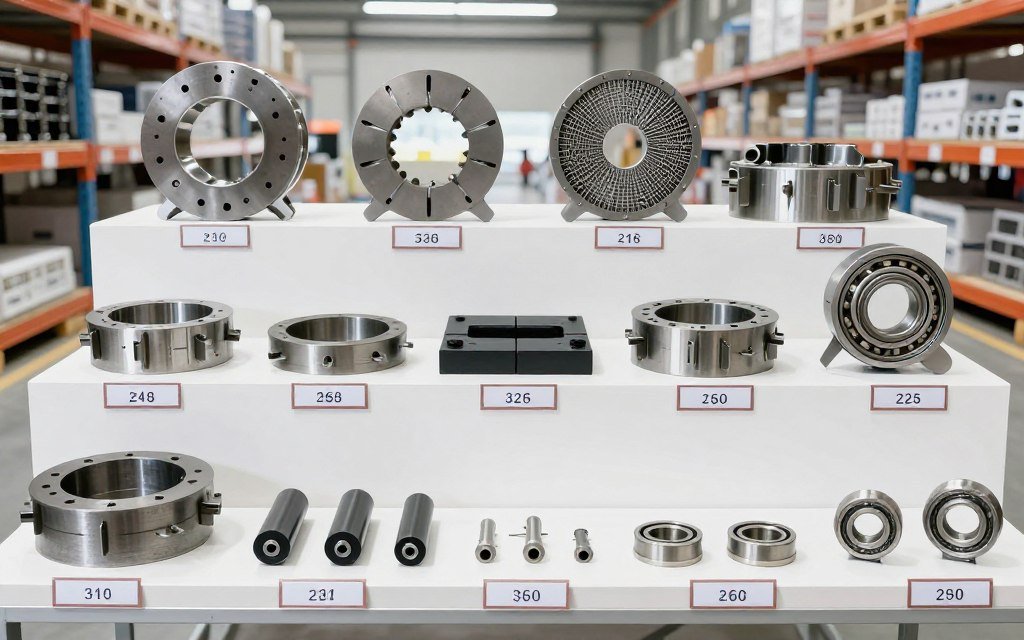
Critical Wear Component Inventory
Parts experiencing regular wear and requiring periodic replacement include:
- Ring dies for pellet mills (service life 800-1500 operating hours depending on materials)
- Compression rollers (service life 1500-2500 hours)
- Hammer mill screens and hammers (replacement every 2-6 months depending on throughput)
- Mixer paddle assemblies (inspection every 6 months, replacement as needed)
- Bearing assemblies for all rotating equipment
Professional manufacturers provide recommended spare parts lists with initial equipment purchases, enabling customers to stock critical components before initial wear-out occurs.
Spare Parts Ordering and Delivery
Efficient parts supply requires:
- Clear parts numbering system referencing equipment serial numbers
- Online parts catalogues with diagrams identifying components
- Email and phone ordering accepted with credit terms for established customers
- Express shipping options for urgent requirements
- UK or European warehouse stock for fast-moving components
MAIKONG maintains comprehensive parts inventory supporting equipment installed globally. Standard delivery to UK locations typically requires 5-7 business days, with express options available for production-critical situations.
Technical Support and Remote Assistance
Modern communication technology enables manufacturers to provide technical support remotely, often resolving issues without expensive technician travel to customer sites.
Remote Support Capabilities
Technical assistance methods include:
- Email and WhatsApp support for non-urgent inquiries
- Video calls enabling visual equipment inspection and guidance
- Remote access to control systems for programming assistance
- Diagnostic data analysis identifying performance issues
- Technical documentation library providing reference materials
On-Site Service Visits
When remote support proves insufficient:
- Factory technicians travel to customer locations
- Complex repairs or major equipment modifications
- Annual maintenance inspections and performance assessments
- Operator refresher training or new employee training
- Production optimisation consulting services
+86 158-1555-6422Connect via WhatsApp for immediate technical support from MAIKONG engineers
Successful Feed Production Line Installations in European Markets
Examining manufacturer experience with European installations provides UK buyers confidence in technical capabilities, regulatory compliance, and cultural understanding. MAIKONG’s portfolio includes numerous successful projects across Europe, demonstrating our ability to serve UK and continental markets effectively.
Poultry Feed Production Line Case Study: United Kingdom Installation
A large poultry operation in northern England required expanding production capacity to support their growing broiler and layer businesses. Their existing 3-tonne per hour line could not meet demand, necessitating a new 10-tonne per hour installation.
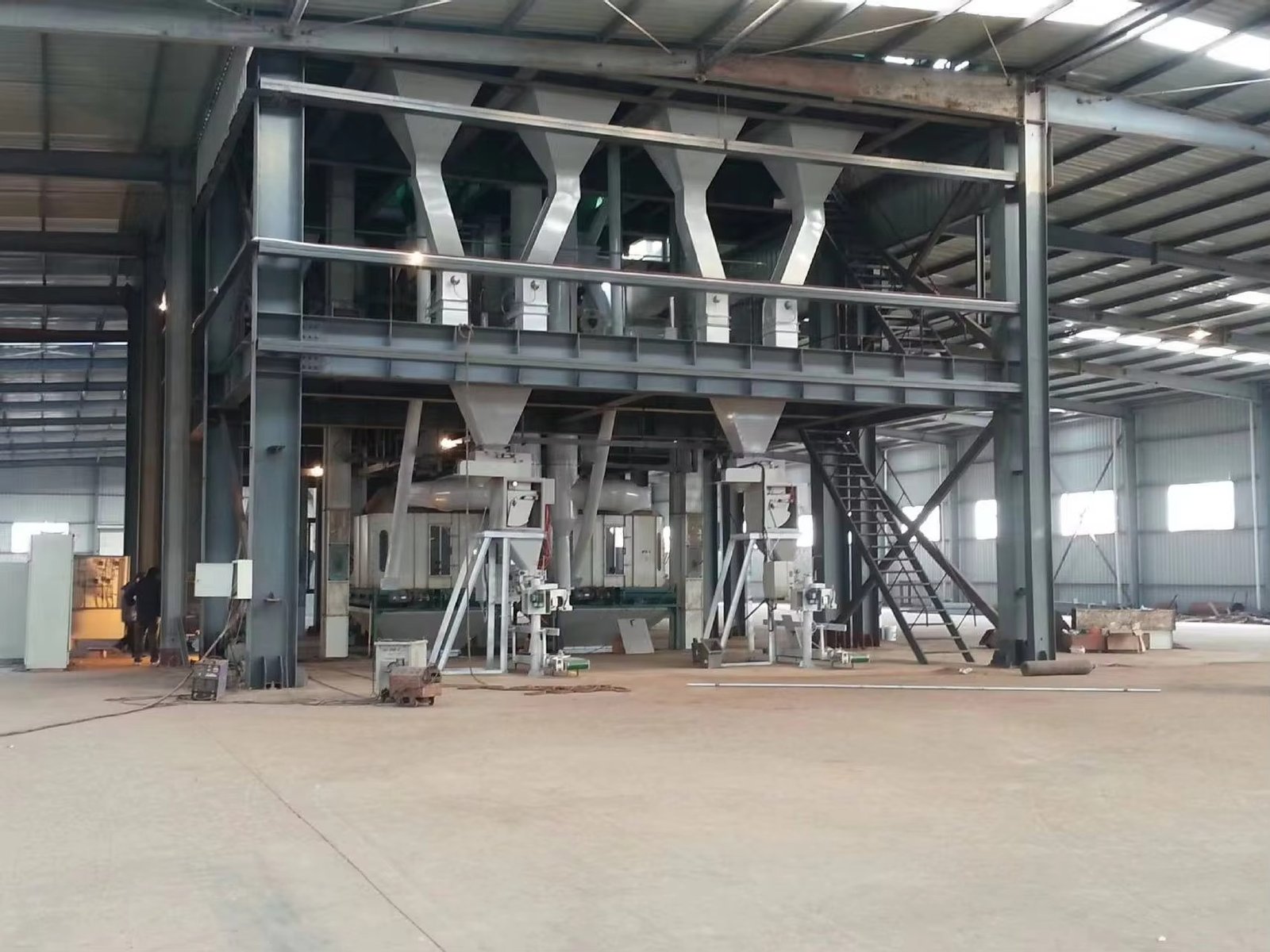
Project Specifications
- Capacity: 10 tonnes per hour
- Feed Types: Broiler starter, grower, finisher; Layer feeds
- Pellet Sizes: 2mm crumbles to 5mm pellets
- Raw Material Storage: 500 tonnes in steel silos
- Building: New construction, 1200 square metres
Equipment Configuration
- Dual hammer mills (5 tonnes/hour each) for production flexibility
- Two 2-tonne batch mixers with liquid addition
- MAIKONG MK-420 ring die pellet mill
- 12-tonne counterflow cooler
- Automated bagging system with 25kg and 50kg options
Performance Achievements
- Consistent 10.2 tonnes/hour actual production
- Pellet durability index averaging 97.3 percent
- Energy consumption 88 kWh per tonne produced
- Downtime less than 2 percent during first year
- Feed quality improvements reduced flock mortality by 1.2 percent
The customer reported that MAIKONG’s installation team completed commissioning three days ahead of schedule. Technical training provided their operators with confidence to optimise production parameters for different formulations. After 18 months of operation, the customer contacted MAIKONG to discuss expanding capacity further, the strongest endorsement of equipment performance and manufacturer support.
Cattle Feed Manufacturing Success: Netherlands Dairy Cooperative
A Dutch dairy cooperative serving 350 member farms needed modern equipment producing high-quality cattle concentrates and dairy rations. Their 40-year-old equipment consumed excessive energy whilst producing inconsistent pellet quality.
Technical Challenges Addressed
The cooperative’s formulations included challenging ingredients:
- High molasses content (12-15 percent) requiring specialised addition systems
- Grass meal and alfalfa requiring robust grinding equipment
- Urea addition demanding precise batching and thorough mixing
- Large pellet diameter (8mm) for dairy cows
MAIKONG designed a 6-tonne per hour system specifically addressing these requirements. A double-shaft paddle mixer provided thorough blending despite challenging ingredient properties. The pellet mill utilised a 8mm die with 1:10 compression ratio optimised for fibrous materials.
Operational Results
After 12 months of operation, the cooperative documented significant improvements:
- 37 percent reduction in electricity consumption per tonne produced
- Pellet durability improved from 89 percent to 96 percent
- Production consistency enabling more accurate member delivery scheduling
- Maintenance costs reduced 42 percent compared to previous equipment
- Milk production from member farms increased 3.2 percent attributed to improved feed quality
The cooperative’s operations manager stated that working with MAIKONG felt like partnering with a European manufacturer rather than a distant Asian supplier, citing responsive communication and thorough understanding of European dairy feed requirements.
Aquatic Feed Production: Scottish Salmon Feed Manufacturer
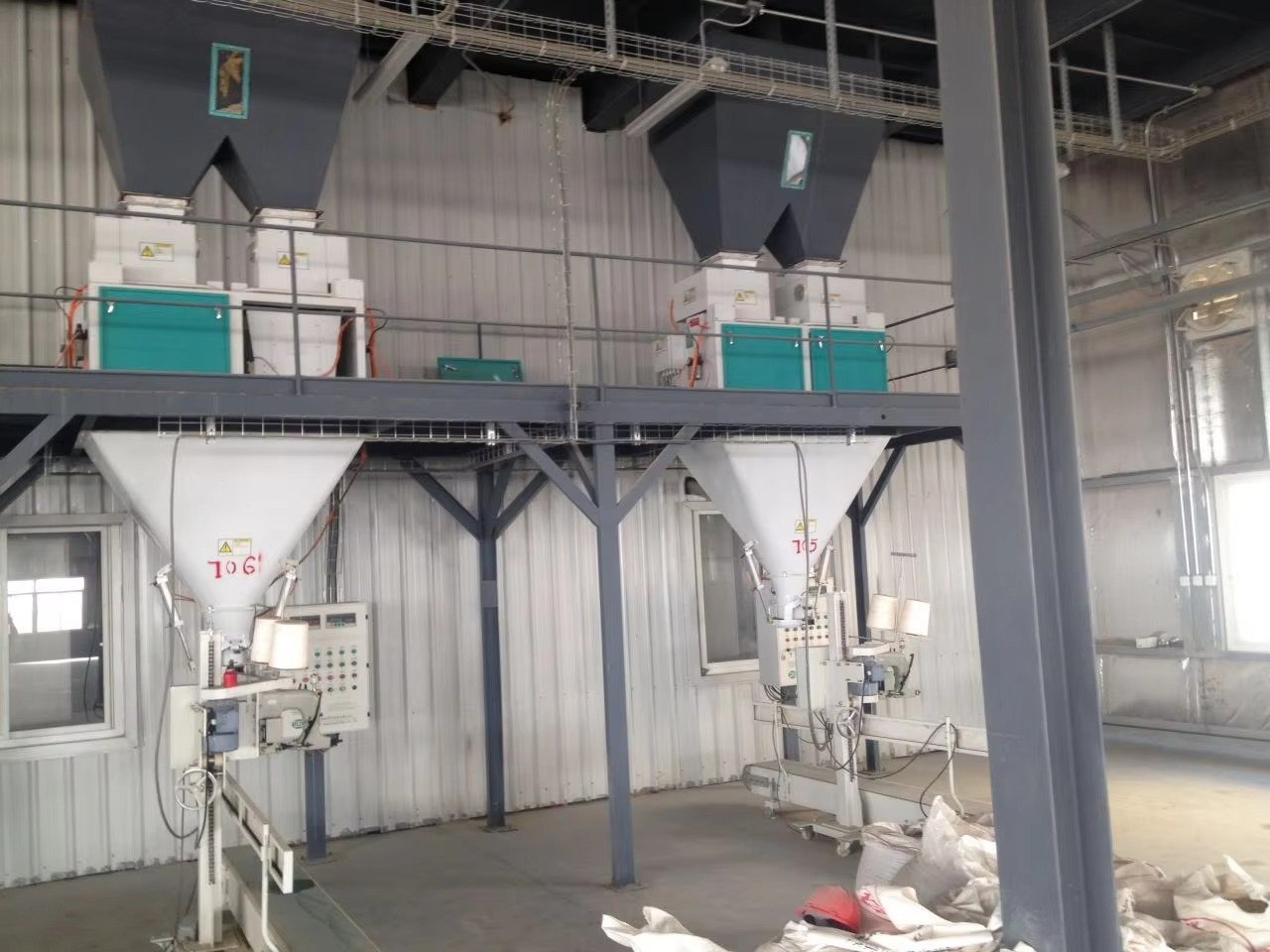
A Scottish company producing feeds for Atlantic salmon farming required specialised equipment handling high oil content formulations and producing water-stable pellets. Their previous supplier’s equipment experienced frequent die cracking and produced pellets with inadequate water stability.
| Performance Parameter | Previous Equipment | MAIKONG System | Improvement |
| Production Capacity | 2.8 tonnes/hour | 4.2 tonnes/hour | +50% |
| Water Stability (4 hours) | 83% pellet integrity | 94% pellet integrity | +11 percentage points |
| Oil Content Achievement | 18% (target 22%) | 21.5% (target 22%) | Target met consistently |
| Die Service Life | 650 hours average | 1150 hours average | +77% |
| Equipment Downtime | 18% of production time | 3.5% of production time | -81% |
The customer particularly valued MAIKONG’s willingness to conduct extensive trials with their specific formulations during factory acceptance testing. This collaborative approach identified optimal equipment settings before shipment, dramatically reducing commissioning time at their Scottish facility.
Review More European Installation Case Studies
MAIKONG maintains detailed documentation of installations across Europe, including technical specifications, performance data, and customer testimonials. Request access to case studies relevant to your specific feed type and production scale.
Addressing Common Buyer Concerns and Investment Risk Mitigation
Investing in feed pellet production equipment represents substantial capital commitment for UK businesses. Prudent buyers naturally harbour concerns about equipment performance, supplier reliability, and return on investment. Addressing these concerns transparently helps buyers make confident decisions.
Equipment Performance and Reliability Concerns
Will the equipment perform as specified? This fundamental question underlies most buyer anxiety. Professional manufacturers mitigate performance concerns through transparent specifications, documented testing, and comprehensive warranties.
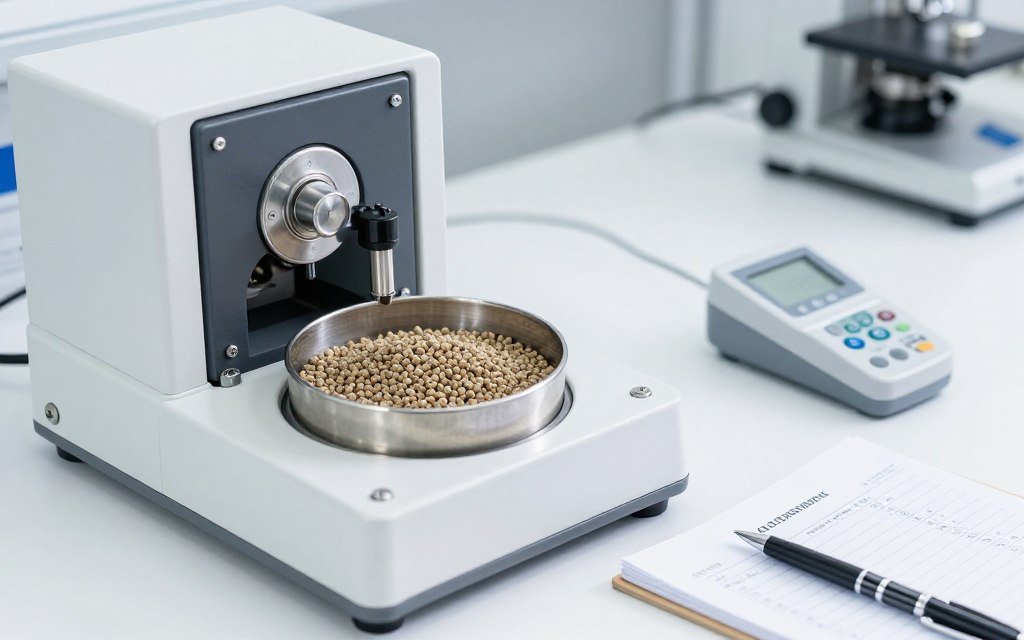
Common Performance Concerns
- Capacity achievement: Will the line actually produce stated tonnage?
- Pellet quality: Will pellets meet durability and appearance standards?
- Material blockages: How frequently do crushers, mixers, or pellet mills block?
- Powdering rate: What percentage of production becomes unusable fines?
- Pellet hardness: Will pellets withstand handling without crumbling?
MAIKONG’s Performance Assurance
- Guaranteed capacity specifications with documented factory testing
- Pellet samples produced during commissioning meeting quality standards
- Equipment designed with adequate clearances minimising blockage risk
- Properly sized cooling and screening reducing fines below 3 percent
- Die compression ratios optimised for customer raw materials ensuring adequate hardness
Supplier Verification and Manufacturer Authenticity
The industrial equipment sector unfortunately includes trading companies misrepresenting themselves as manufacturers. UK buyers should conduct due diligence verifying genuine manufacturing capabilities.
Red Flags Indicating Trading Companies
- Unwillingness to provide factory tour or video inspection
- Generic equipment descriptions lacking specific model numbers
- Inability to discuss technical specifications in detail
- Offering wildly different equipment types (suggesting reselling various sources)
- Reluctance to provide customer references
Genuine Manufacturer Indicators
- Specific factory address with verifiable business registration
- Detailed technical documentation with company branding
- Engineering staff capable of discussing design considerations
- Quality certifications (ISO 9001, CE marking) with verification numbers
- Multiple customer references willing to discuss experiences
MAIKONG Verification
- Factory located in SZ city, GD province with 22 years operating history
- Virtual or in-person factory tours available to prospective customers
- Comprehensive technical documentation library
- ISO 9001:2015 certified with certificate available for review
- European customer references provided upon request
After-Sales Support and Spare Parts Availability
Equipment inevitably requires maintenance and occasional repairs. Concerns about manufacturer responsiveness and parts availability represent valid considerations when selecting suppliers.
Support Advantages with Established Manufacturers
- Comprehensive spare parts inventory maintained for all equipment models
- Technical support staff familiar with specific equipment configurations
- Documented maintenance procedures reducing downtime
- Long-term parts availability even for older equipment models
- Training documentation enabling operators to perform routine maintenance
- Established logistics for rapid parts delivery to UK locations
Support Challenges with Inexperienced Suppliers
- Limited parts inventory requiring long delivery times
- Technical support staff unfamiliar with specific installations
- Generic troubleshooting advice not addressing actual problems
- Discontinued equipment models with unavailable replacement parts
- Poor or nonexistent maintenance documentation
- Unreliable communication making urgent issues difficult to resolve
Investment Return and Total Cost of Ownership
Purchase price represents only a portion of total ownership costs. Prudent buyers evaluate ongoing operational expenses, maintenance requirements, and expected equipment lifespan when assessing investment returns.
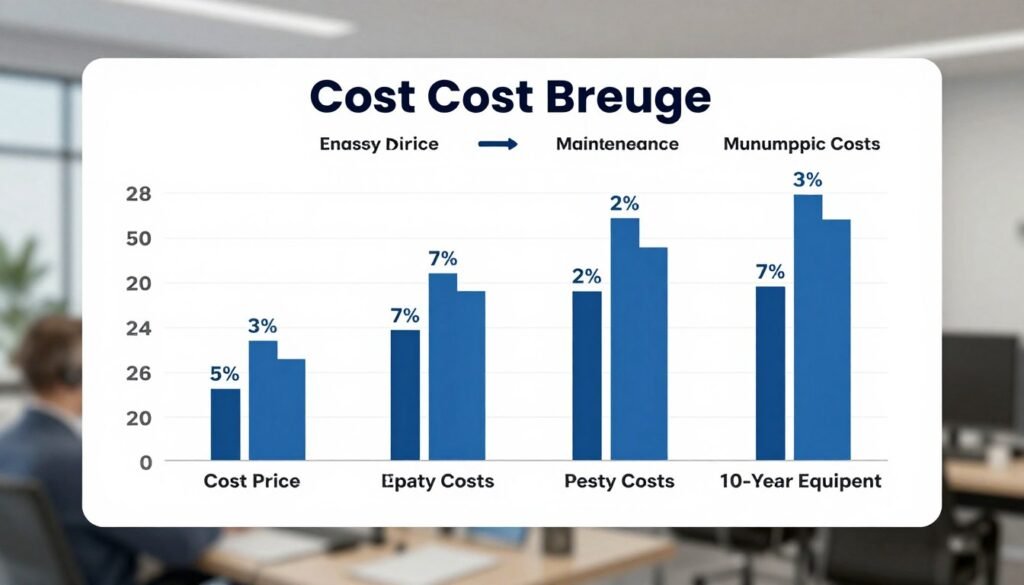
| Cost Category | Percentage of Total 10-Year Cost | Annual Amount (5 t/h line, 4000 hours/year) |
| Initial Equipment Purchase | 28-35% | £15,000-£18,000 amortised |
| Electricity Consumption | 35-42% | £24,000-£28,000 (at £0.15/kWh) |
| Operator Labour | 18-22% | £32,000-£38,000 (2 operators) |
| Routine Maintenance and Parts | 8-12% | £6,000-£9,000 |
| Major Component Replacements | 5-8% | £4,000-£6,000 averaged |
These figures illustrate that lower purchase prices often prove false economy if equipment consumes excessive energy or requires frequent repairs. MAIKONG equipment specifications emphasise energy efficiency and component durability, reducing total ownership costs substantially compared to cheaper alternatives.
MAIKONG: Your Trusted Feed Pellet Production Line Manufacturer Partner
MAIKONG brings 22 years of specialised experience manufacturing feed production equipment for livestock, poultry, aquatic, and pet food applications. Our UK-focused approach combines technical expertise with understanding of British market requirements, regulatory standards, and customer service expectations.
Manufacturing Capabilities and Technical Expertise
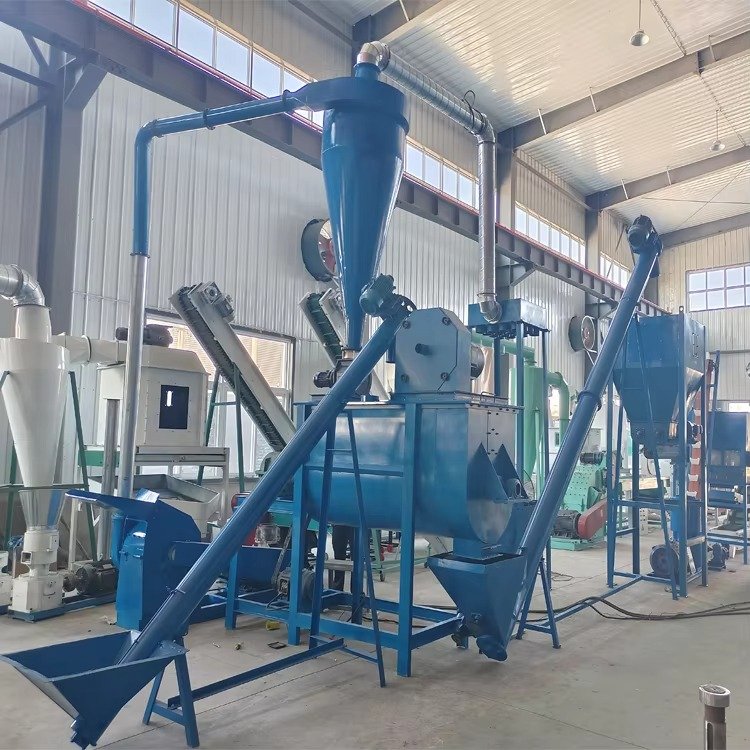
Our SZ city facility encompasses 18,000 square metres of manufacturing space equipped with modern fabrication, machining, and assembly capabilities. This integrated facility enables complete production line manufacturing under unified quality control.
Core Manufacturing Strengths
- In-house engineering team designing custom solutions
- Advanced CNC machining producing precision components
- Robotic welding ensuring consistent quality
- Comprehensive testing facilities validating performance
- Experienced assembly technicians with specialised training
Quality Management Systems
- ISO 9001:2015 certified quality management
- CE marking for European market compliance
- Documented manufacturing procedures
- Component traceability throughout production
- Final inspection and testing before shipment
Product Range and Customisation Capabilities
MAIKONG manufactures complete animal feed production line systems spanning capacities from 200 kilograms per hour to 200 tonnes per hour. Our modular approach enables configuration matching specific customer requirements whilst maintaining standardised components simplifying maintenance and parts supply.
UK Market Focus and Distributor Opportunities
MAIKONG actively seeks partnerships with established UK distributors, agricultural equipment dealers, and feed industry suppliers. Our distributor programme provides comprehensive support enabling partners to confidently represent our equipment in local markets.
Distributor Benefits
- Exclusive territory protection in designated regions
- Competitive distributor pricing enabling healthy margins
- Technical training for sales and service staff
- Marketing materials customised for UK market
- Demonstration equipment programmes
Ongoing Support
- Technical assistance for customer inquiries
- Joint customer visits for major projects
- Warranty support and parts supply
- Installation supervision when required
- Customer training coordination
OEM Opportunities
- Private label manufacturing with your branding
- Custom colour schemes and styling
- Modified specifications for niche markets
- Flexible minimum order quantities
- Confidential manufacturing agreements
Become a MAIKONG UK Distributor or Agent
Join our network of successful distributors representing MAIKONG equipment in UK and European markets. We offer comprehensive support, competitive terms, and proven products enabling you to grow profitable feed equipment sales in your territory. With 22 years manufacturing experience and installations in 130+ countries, MAIKONG provides the foundation for successful partnerships.
Contact Lucy at Lucy@feedproductionline.uk or call +86 158-1555-6422 to discuss exclusive territory opportunities, support programmes, and partnership terms. We respond to all inquiries within 24 business hours.
Making Informed Equipment Investment Decisions
Selecting the right feed pellet production line manufacturer significantly impacts your business success over the equipment’s operational lifespan. This comprehensive examination has explored critical evaluation factors including equipment configuration, capacity selection, technical specifications, quality assurance protocols, customisation capabilities, installation support, and after-sales service.
UK feed mill owners, livestock producers, and agricultural investors face complex decisions balancing initial costs against long-term operational efficiency, equipment reliability, and manufacturer support quality. The lowest purchase price rarely delivers optimal value when energy consumption, maintenance requirements, and downtime costs accumulate over years of operation.
Professional manufacturers distinguish themselves through transparent communication, documented capabilities, proven installation experience, and comprehensive customer support infrastructure. Factory verification, customer references, quality certifications, and technical competence provide confidence that your investment will deliver promised performance.
MAIKONG’s 22 years specialising in feed production equipment, combined with our successful European installations and commitment to UK market support, positions us as your reliable manufacturing partner. Whether you’re establishing a new feed mill, upgrading existing equipment, or seeking OEM partnerships, our technical team brings experience and expertise ensuring your project success.
The UK animal feed sector continues evolving with increasing quality standards, traceability requirements, and sustainability expectations. Modern production equipment must accommodate these demands whilst maintaining operational efficiency and financial viability. Partnering with manufacturers understanding these market dynamics protects your investment and supports long-term business growth.
We invite you to discuss your specific requirements with MAIKONG’s technical specialists. Whether you need detailed capacity analysis, customised equipment configurations, or information about our UK distributor programme, our team stands ready to assist. Contact us today to begin your journey toward enhanced feed production capability.
Contact MAIKONG Technical Team
Discuss your feed production requirements, request technical documentation, or arrange factory video tours.
WhatsApp: Click to connect instantly
Email: Lucy@feedproductionline.uk
Website: feedproductionline.uk
Our technical team typically responds within 24 hours during UK business days. For urgent technical inquiries or breakdown support, WhatsApp provides the fastest response channel.
Explore Additional Resources
MAIKONG provides comprehensive information about feed production equipment, applications, and technical considerations:
- Animal Feed Production Line Complete Guide
- Poultry Feed Production Line Technical Guide
- Fish Feed Production Line Planning Guide
- Feed Production Line Pricing Information
- Contact MAIKONG UK
- About MAIKONG Manufacturing
These resources provide detailed information about equipment selection, capacity planning, technical specifications, and successful installation examples supporting your decision-making process.