
22+ Years Manufacturing Experience
130+ Countries Served
UK Technical Support
What Is an Animal Feed Production Line?
An animal feed production line is an integrated system of industrial machinery designed to convert raw agricultural materials into finished feed products. These production systems can manufacture pellets, mash, crumbles, and extruded feeds tailored to the nutritional requirements of specific animal species.
Modern feed production lines combine multiple processing stages into a continuous workflow. Raw materials such as grains, protein meals, minerals, and vitamin premixes move through crushing, batching, mixing, conditioning, pelleting, cooling, and packaging modules. The entire system operates under precise control to maintain consistent feed quality, nutritional accuracy, and production efficiency.
Core Production Capabilities
Contemporary animal feed manufacturing systems offer remarkable versatility. A single production line can process feeds for multiple species by adjusting formulations, pellet die specifications, and process parameters. This flexibility proves especially valuable for commercial feed mills serving diverse agricultural markets.
Production capacity ranges from small-scale operations processing 200 kilograms per hour to industrial facilities handling 200 tonnes hourly. Equipment manufacturers like MAIKONG provide customizable configurations matching specific throughput requirements, available floor space, and investment budgets.
Applications Across Livestock Sectors
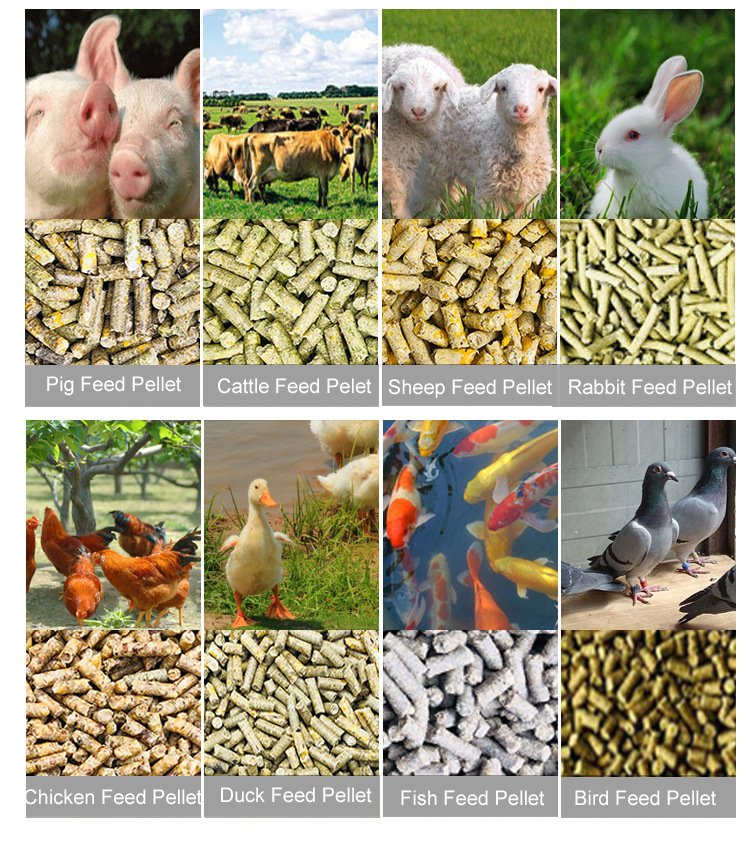
Feed production lines serve multiple agricultural segments. Poultry feed production lines manufacture starter, grower, and layer feeds for chickens, ducks, turkeys, and game birds. Cattle feed production lines create rations for dairy cows, beef cattle, and young stock. Aquaculture operations rely on specialized fish feed production lines and shrimp feed production lines that produce floating or sinking pellets with specific water stability characteristics.
Pig feed production lines handle the demanding requirements of swine nutrition across breeding, gestation, lactation, and finishing stages. Pet feed production lines manufacture dog and cat foods with precise ingredient control and palatability enhancement. Even niche markets like rabbit farming, sheep operations, and exotic animal facilities benefit from customizable feed manufacturing solutions.
Complete Animal Feed Production Process Workflow
Understanding the animal feed production line process is essential for capacity planning, equipment selection, and quality control. Each processing stage serves specific functions that contribute to the nutritional value, physical characteristics, and storage stability of finished feed products.
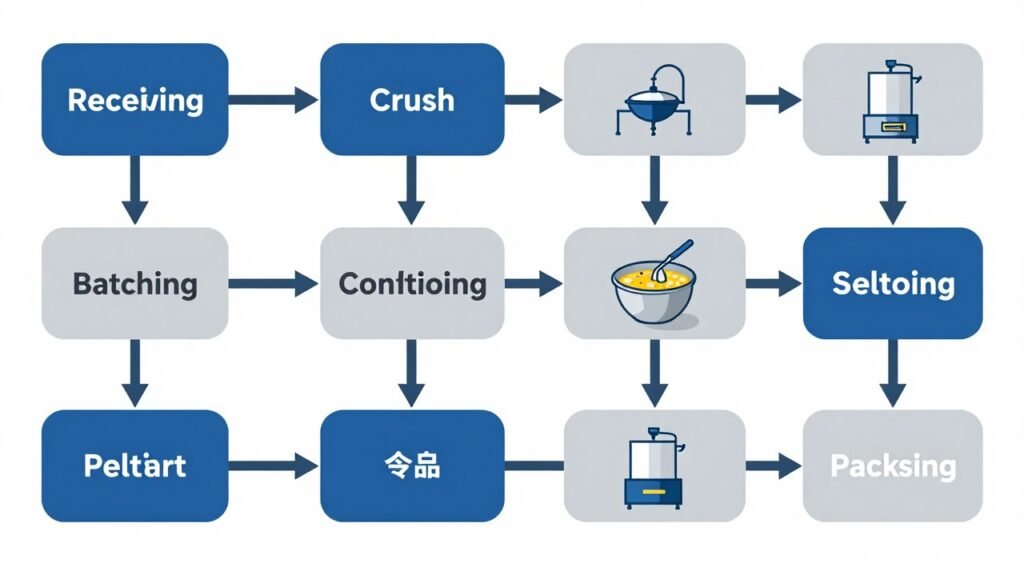
Stage 1: Raw Material Receiving and Storage
The production workflow begins with ingredient reception and pre-cleaning. Bulk materials arrive via truck, rail, or ship and transfer to storage silos. Pre-cleaning equipment removes foreign objects including stones, metal fragments, threads, and oversized particles that could damage downstream machinery or contaminate finished products.
Proper storage facilities maintain ingredient quality before processing. Temperature-controlled silos prevent moisture absorption, mold growth, and nutrient degradation. Grain types, protein meals, and mineral additives require separate storage to prevent cross-contamination. Inventory management systems track batch numbers and production dates for traceability compliance.
Stage 2: Crushing and Particle Size Reduction
Feed hammermills reduce ingredient particle size to optimize digestibility and mixing uniformity. Grinding corn, wheat, barley, and other grains creates surfaces for enzyme action during animal digestion. Screen sizes in the hammermill determine final particle dimensions, typically ranging from 0.5mm to 4mm depending on animal species and age.
Crushing parameters significantly impact feed quality and production costs. Finer grinding improves nutrient utilization but increases energy consumption and equipment wear. Coarser particles reduce processing costs but may compromise digestibility. The optimal particle size balance depends on animal type, feed formulation, and production economics. Modern hammermills from manufacturers like MAIKONG process 3-25 tonnes per hour with main power ratings from 30-160kW.
Stage 3: Ingredient Batching and Weighing
Precise ingredient batching ensures nutritional consistency across production runs. Computerized batching systems weigh multiple ingredients simultaneously according to formulation recipes. Accuracy tolerances typically range from ±0.1% to ±0.5% depending on ingredient quantities and mixer capacity.
Batching sequences follow specific protocols to prevent ingredient segregation and ensure complete mixing. Micro-ingredients including vitamins, minerals, amino acids, and medications require special handling. Pre-mixing these components with carriers before adding to the main batch improves distribution uniformity throughout the final feed product.
Batching System Components
- Load cells with digital weight indicators
- Pneumatic or mechanical ingredient gates
- PLC control systems with recipe storage
- Ingredient flow monitoring sensors
- Automated sequence controllers
- Data logging and production reporting
Critical Batching Considerations
- Ingredient flow characteristics and bridging
- Dust control and environmental compliance
- Batch size relative to mixer capacity
- Micro-ingredient handling procedures
- Calibration frequency and accuracy verification
- Recipe security and version control
Stage 4: Mixing and Homogenization
Feed mixers blend ingredients into uniform compositions. Paddle mixers, ribbon mixers, and vertical mixers each offer distinct advantages for different applications. Mixing time, batch volume, and mixer design determine final feed uniformity. Industry standards require coefficient of variation below 10% for proper ingredient distribution.
Liquid ingredient addition occurs during the mixing stage. Fats, oils, molasses, and liquid vitamin solutions spray into the mixer through atomizing nozzles. Proper liquid distribution prevents ingredient clumping and ensures consistent energy density throughout the batch. MAIKONG mixing equipment handles capacities from 250kg to 2000kg with main power ranging from 4-55kW.
Stage 5: Conditioning and Steam Treatment
Conditioning prepares the mash for pelleting by adding heat and moisture. Steam injection in the conditioner raises material temperature to 70-90°C and increases moisture content to 15-17%. This thermal treatment gelatinizes starches, denatures proteins, improves pellet durability, and reduces pathogen loads.
Conditioning time, temperature, and moisture levels directly affect pellet quality and production efficiency. Insufficient conditioning produces soft, crumbly pellets with high fines percentage. Excessive conditioning wastes energy and may degrade heat-sensitive nutrients like vitamins. Optimal conditioning parameters vary by formulation composition and animal species requirements.
Stage 6: Pelleting and Extrusion
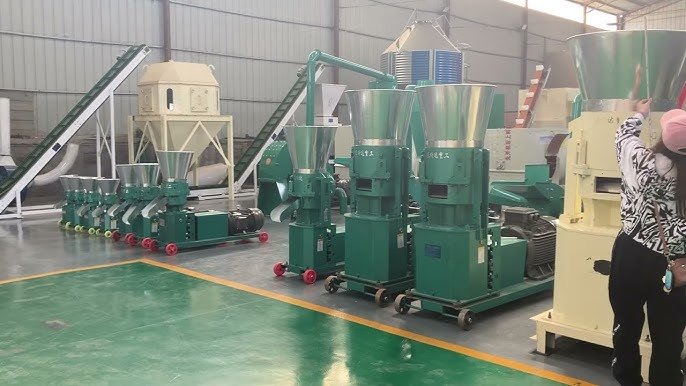
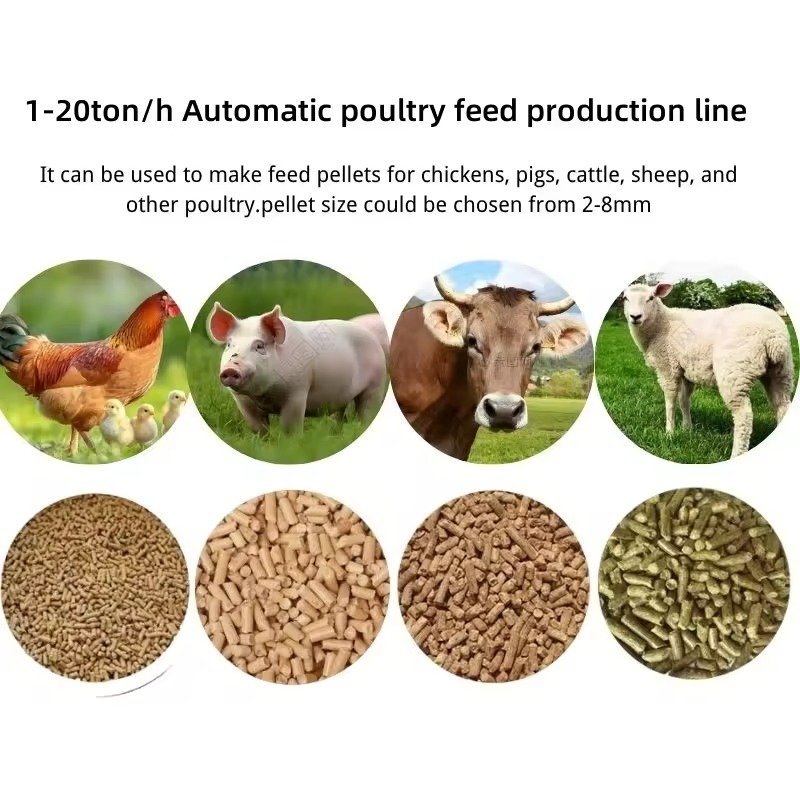
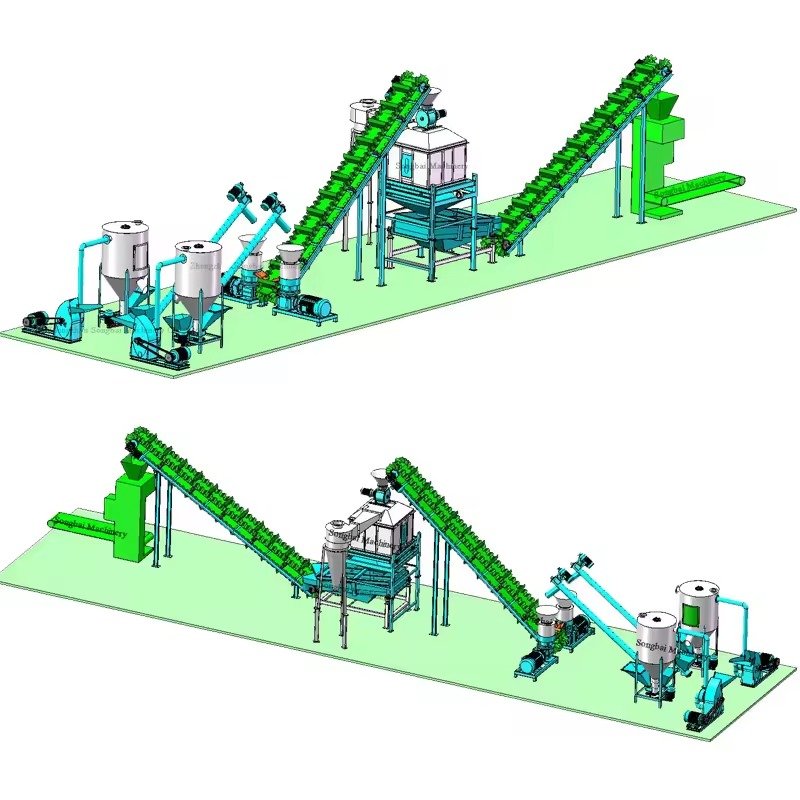
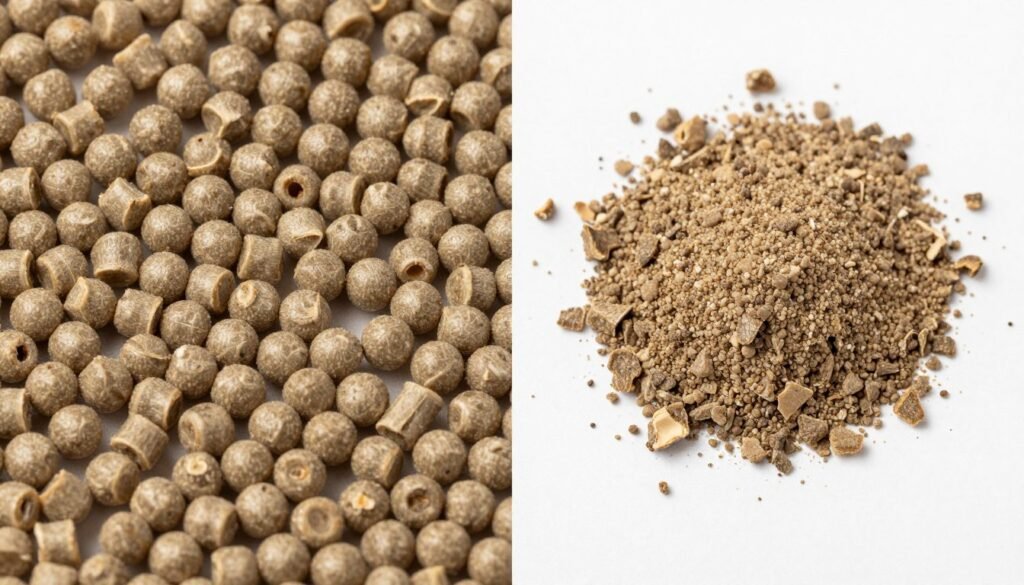
The feed pellet production line core is the pellet mill, which compresses conditioned mash through die holes using rotating rollers. Friction and pressure generate additional heat, binding ingredients into dense cylindrical pellets. Die hole diameter determines pellet size, typically ranging from 2mm to 8mm for different animal species.
Pellet mill capacity depends on die diameter, hole configuration, raw material characteristics, and desired pellet quality. Ring die pellet mills offer higher capacity than flat die designs, making them standard for commercial feed production. Production rates range from 1-42 tonnes per hour with main power requirements from 22-315kW in MAIKONG equipment.
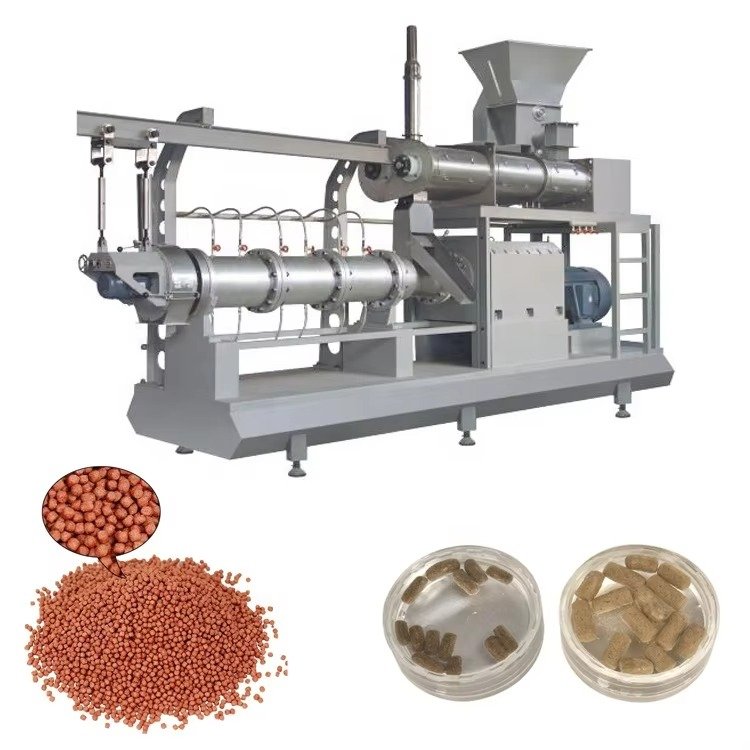
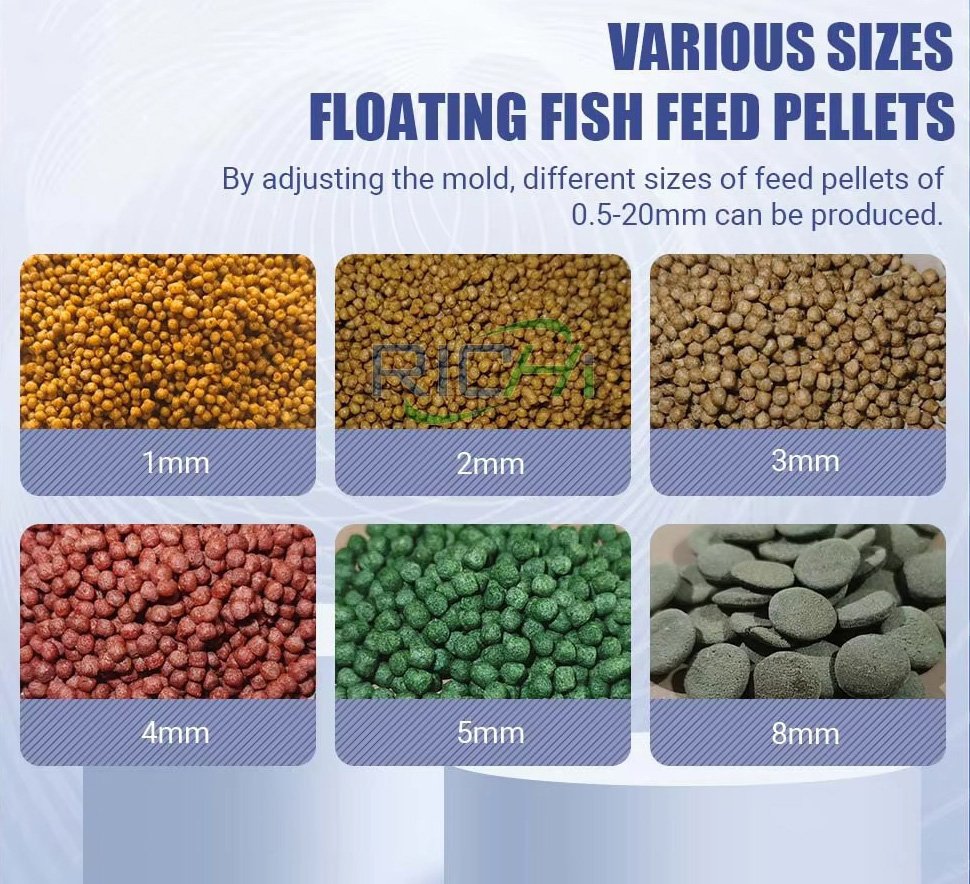
Aquatic feeds often require extrusion rather than pelleting. Aquatic feed production lines use twin-screw extruders that cook ingredients under high temperature and pressure, then expand the material through die openings. This process creates floating pellets with specific density and water stability characteristics essential for fish and shrimp farming.
Stage 7: Cooling and Drying
Freshly formed pellets emerge from the die at 75-85°C with 16-18% moisture. Counterflow coolers rapidly reduce pellet temperature to within 5°C of ambient while lowering moisture content to 12-13%. Cooling prevents mold growth, extends storage life, and prepares pellets for safe handling and transport.
Cooling air flows upward through the descending pellet column in the cooler. Residence time, air volume, and ambient conditions affect cooling efficiency. Insufficient cooling leaves pellets prone to spoilage. Excessive cooling time reduces production throughput without additional quality benefits. Modern counterflow coolers process 3-25 tonnes per hour matching upstream pelleting capacity.
Stage 8: Crumbling for Specific Applications
Young poultry and small animals require smaller particle sizes than standard pellets. Crumblers break cooled pellets into fragments while maintaining pellet durability benefits. Crumble size varies by application, from fine crumbles for chicks to coarse crumbles for growing birds.
Adjustable gap settings in the crumbler control fragment size. Integrated screening separates desired crumble sizes from fines and oversized pieces. Fines return to the mixer for reprocessing, while oversized fragments recirculate through the crumbler. This closed-loop system maximizes production efficiency and minimizes waste.
Stage 9: Screening and Size Classification
Screening equipment separates finished pellets by size and removes fines. Vibrating screens with multiple deck configurations classify products into distinct size ranges. Fines content significantly affects feed value, with industry targets typically below 3-5% depending on animal species.
Proper screening improves feed quality and customer satisfaction. Excessive fines create dust during handling, reduce feed conversion efficiency, and indicate production problems. Regular screen maintenance, including hole cleaning and mesh replacement, maintains separation efficiency throughout production runs.
Stage 10: Packaging and Dispatch
Finished feed moves to packaging equipment for bagging or bulk loading. Automatic bagging scales fill bags to precise weights, typically 20kg, 25kg, or 50kg for retail products. Bag sewing machines seal packages, and palletizers arrange bags for warehouse storage or truck loading.
Large-scale operations often deliver bulk feed directly to farms using specialized trucks. Bulk handling eliminates packaging costs and labor while reducing waste. However, bagged feed remains essential for retail distribution, smaller farms, and export markets. MAIKONG packaging machines operate at 6-12 bags per minute with main power from 1.1-5kW.
Essential Equipment Modules and Specifications
Each equipment module in an animal feed production line performs specific functions requiring careful selection based on production goals, formulation requirements, and operational budgets. Understanding equipment specifications, performance parameters, and maintenance requirements enables informed purchasing decisions.
Designing a Feed Mill? Get Expert Guidance on Equipment Selection
Our engineering team helps you select the optimal equipment configuration for your capacity requirements, animal species, and budget constraints. With 22 years of manufacturing experience and installations in 130+ countries, we provide proven solutions for successful feed production operations.
Feed Hammermill Specifications
Hammermills crush raw materials to required particle sizes using high-speed rotating hammers. Screen openings determine final particle dimensions while rotor speed, hammer configuration, and feed rate influence grinding efficiency and energy consumption.
| Specification | Range | Application Notes |
| Capacity | 3-25 T/H | Select based on target production volume |
| Main Power | 30-160 kW | Higher power for finer grinding and harder grains |
| Screen Size | 0.5-4 mm | Smaller openings for poultry, larger for cattle |
| Rotor Speed | 2800-3600 RPM | Variable speed for different materials |
Hammermill selection depends on grain types, desired fineness, and production throughput. Hard grains like corn require more power than soft wheat. Finer grinding for poultry feeds demands smaller screens and higher energy input compared to coarse grinding for cattle rations. Proper hammermill sizing prevents bottlenecks in the production workflow.
Feed Mixing Machine Specifications
Mixers homogenize ingredients into uniform blends. Ribbon mixers provide gentle blending for fragile ingredients. Paddle mixers offer intensive action for difficult-to-mix formulations. Batch capacity, mixing time, and discharge design influence production efficiency.
| Specification | Range | Application Notes |
| Capacity | 250-2000 kg | Match to batch formulation requirements |
| Main Power | 4-55 kW | Higher power for larger batches and liquid addition |
| Mixing Time | 3-8 minutes | Longer time for micro-ingredient uniformity |
| Uniformity CV | Industry standard for ingredient distribution |
Mixer selection balances batch size with downstream equipment capacity. Oversized mixers reduce batch frequency but may operate inefficiently at partial loads. Undersized mixers create production bottlenecks requiring frequent loading cycles. MAIKONG offers mixer capacities precisely matched to complete production line throughput.
Pellet Mill Specifications
Pellet mills represent the heart of feed production line systems. Ring die pellet mills compress conditioned mash through die openings using rotating rollers. Die specifications, roller configuration, and drive power determine production capacity and pellet characteristics.
| Specification | Range | Application Notes |
| Capacity | 1-42 T/H | Wide range for small farms to industrial mills |
| Main Power | 22-315 kW | Power consumption major operating cost factor |
| Die Diameter | 350-768 mm | Larger dies increase capacity and efficiency |
| Pellet Size | 2-8 mm | Determined by die hole diameter |
Pellet quality depends on formulation characteristics, conditioning effectiveness, and die specifications. High-starch formulations pellet more easily than high-fiber rations. Proper die hole length-to-diameter ratio ensures adequate compression for durable pellets. Die material quality affects wear life and replacement frequency.
Counterflow Cooler Specifications
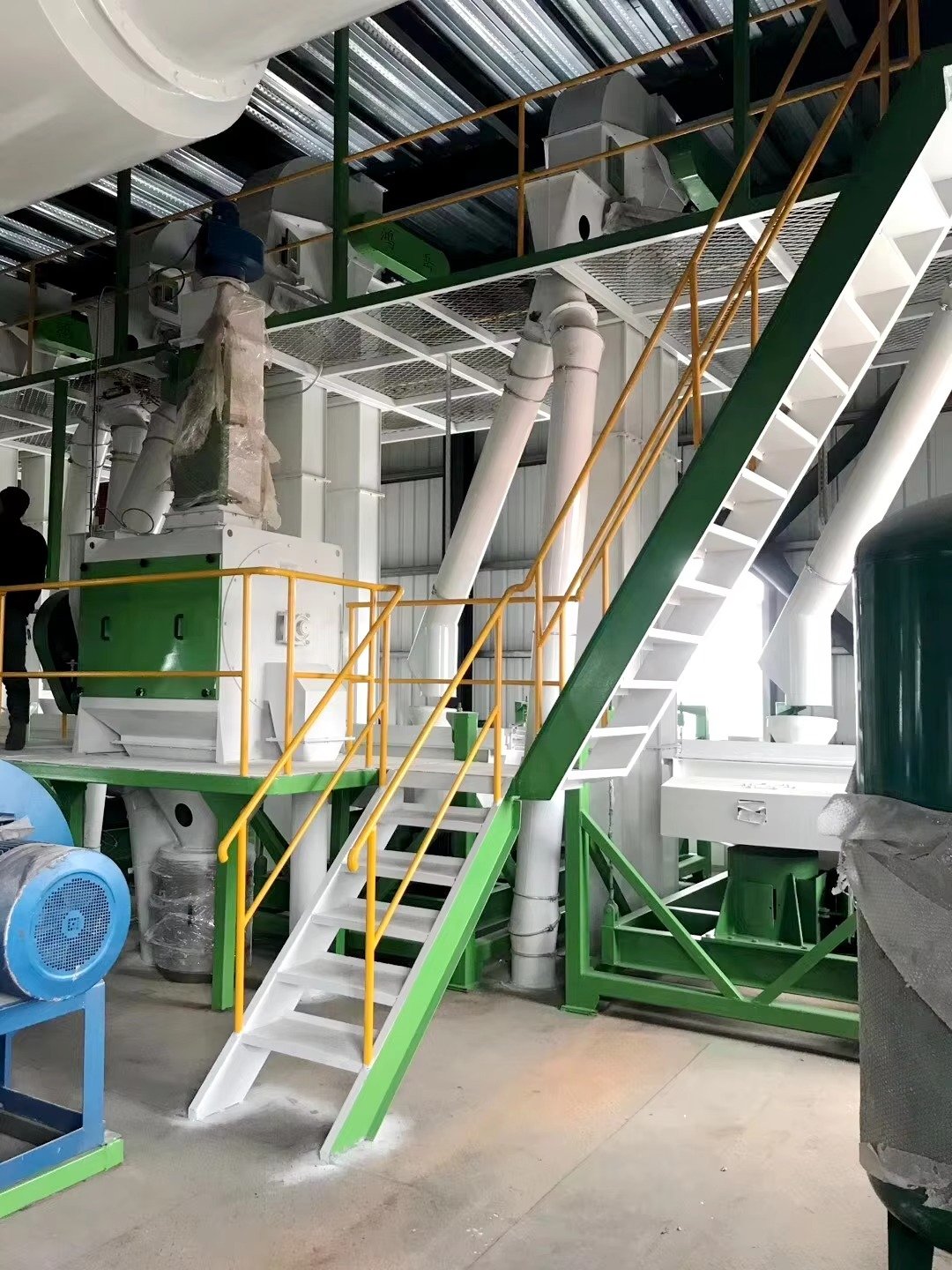
Pellet coolers reduce product temperature and moisture to safe storage levels. Counterflow design maximizes cooling efficiency while preventing pellet breakage. Cooling capacity must match pelleting output to prevent production bottlenecks.
| Specification | Range | Application Notes |
| Capacity | 3-25 T/H | Must match or exceed pellet mill output |
| Main Power | 1.5-7.5 kW | Fan and discharge mechanisms |
| Cooling Time | 8-15 minutes | Depends on pellet size and ambient conditions |
| Temperature Drop | To ambient +5°C | Ensures safe storage and handling |
Feed Extruder for Aquatic Applications
Extruders cook and expand ingredients for floating aquatic feeds. Twin-screw designs offer superior control over density, expansion, and water stability compared to single-screw models. Extrusion temperature, screw speed, and die design determine final pellet characteristics.
| Specification | Range | Application Notes |
| Capacity | 1-12 T/H | Aquaculture operations require specialized sizing |
| Main Power | 75-355 kW | High power for cooking and expansion |
| Screw Configuration | Twin-screw co-rotating | Superior mixing and cooking uniformity |
| Temperature Range | 110-180°C | Varies by formulation and desired expansion |
Packaging Equipment Specifications
Automated packaging systems increase labor efficiency and improve bag weight accuracy. Electronic scales, bag filling mechanisms, and sewing machines create complete packaging solutions for bagged feed products.
| Specification | Range | Application Notes |
| Packing Speed | 6-12 bags/min | Match to production line output |
| Main Power | 1.1-5 kW | Includes scale, filler, and sewing components |
| Bag Weight Range | 10-50 kg | Adjustable for different market requirements |
| Weighing Accuracy | ±0.1-0.2% | Electronic load cells ensure precision |
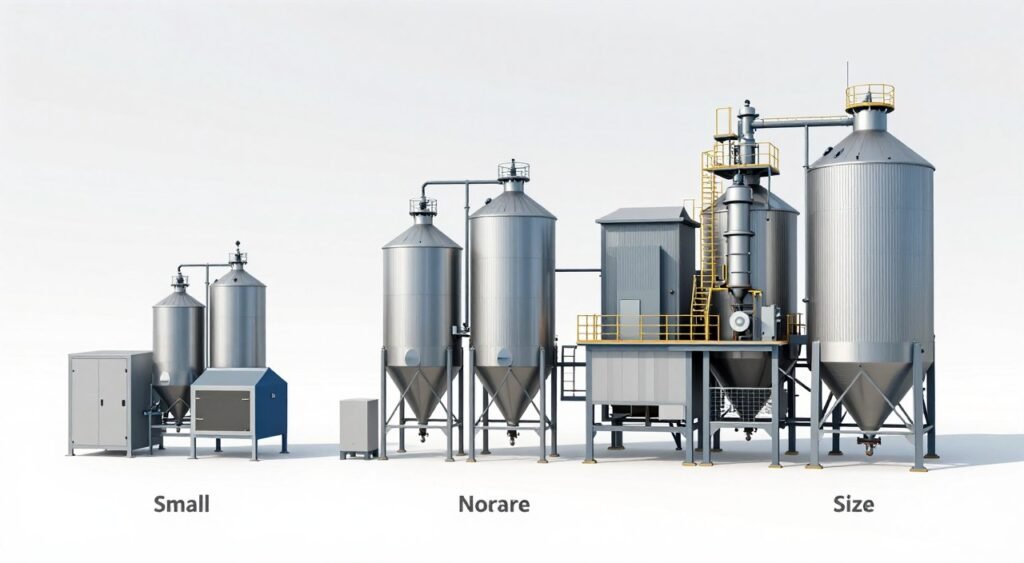
Production Line Capacity Planning and Configuration
Selecting appropriate production capacity represents a critical decision affecting initial investment, operating costs, and business scalability. Capacity planning requires analyzing current demand, growth projections, shift patterns, and market dynamics specific to your operation.
Capacity Range Overview
Modern animal feed production lines span capacity ranges from small farm operations to large industrial facilities. Understanding the relationship between capacity, investment, and operating efficiency helps match equipment to business objectives.
Small-Scale Operations
Capacity: 200 kg/h – 2 T/H
Applications: On-farm feed production, small commercial mills, specialty feeds, research facilities
Investment Range: £25,000 – £150,000
Labor Requirements: 1-3 operators
Advantages: Lower capital investment, flexibility for custom formulations, simple operation
Medium-Scale Production
Capacity: 3 T/H – 15 T/H
Applications: Regional feed mills, cooperative operations, multi-species production
Investment Range: £200,000 – £800,000
Labor Requirements: 3-8 operators per shift
Advantages: Balance of capacity and flexibility, reasonable automation, good efficiency
Industrial-Scale Facilities
Capacity: 20 T/H – 200 T/H
Applications: Large commercial mills, integrated poultry operations, export-focused production
Investment Range: £1,000,000 – £10,000,000+
Labor Requirements: 8-20 operators per shift
Advantages: Lowest per-tonne production cost, high automation, maximum efficiency
Automation Level Selection
Production lines operate at varying automation levels affecting labor requirements, precision, and investment costs. The optimal automation level depends on production volume, labor availability, quality requirements, and budget constraints.
Manual Operation
- Operator-controlled batching and mixing
- Manual bag filling and sewing
- Visual process monitoring
- Lowest equipment investment
- Highest labor requirements
- Suitable for small operations under 2 T/H
Semi-Automatic Operation
- Computerized batching with manual verification
- Automated pelleting and cooling
- Electronic packaging scales
- Moderate equipment investment
- Balanced labor efficiency
- Optimal for 3-15 T/H capacity range
Fully Automatic Operation
- Fully computerized recipe control and batching
- Automated material handling throughout
- Integrated packaging and palletizing
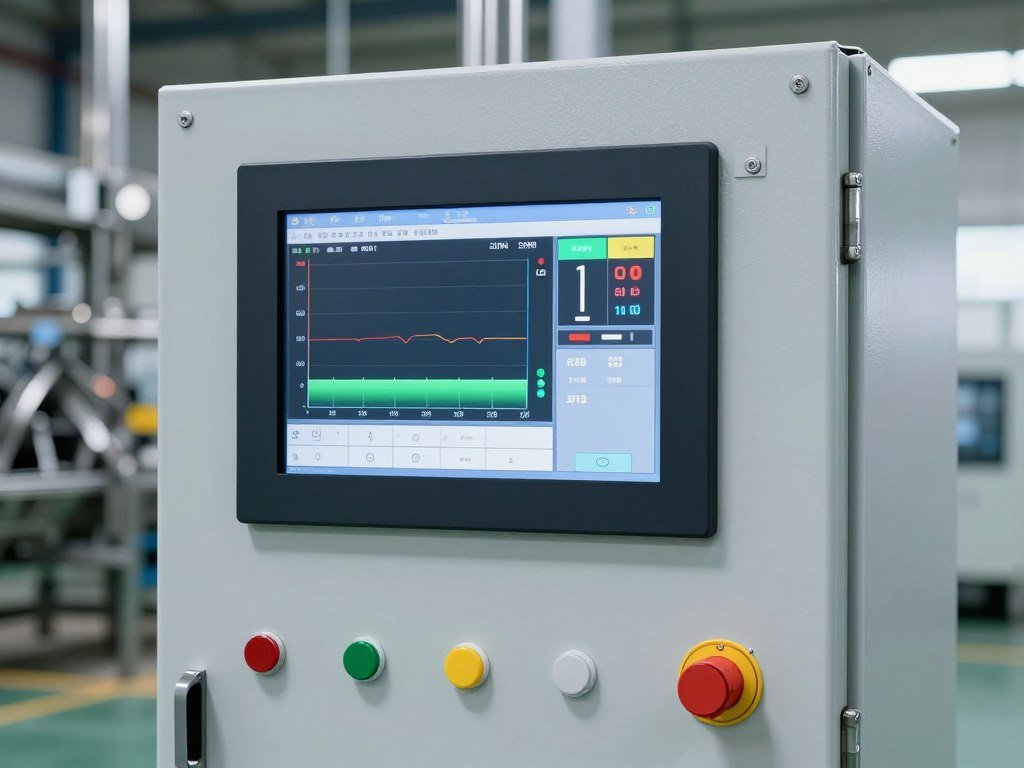
- SCADA monitoring and data logging
- Minimal labor requirements
- Essential for operations above 20 T/H
Feed Type and Format Considerations
Different animal species and production stages require distinct feed formats. Production line configuration must accommodate target feed types while maintaining flexibility for market changes.
Pellet Feed Production
Pelleted feeds dominate commercial animal agriculture due to improved handling characteristics, reduced ingredient separation, and enhanced digestibility. Pellet size varies by species: 2-3mm for chicks and small fish, 4-6mm for growing poultry and pigs, 6-8mm for cattle and large fish.
Pellet durability index (PDI) measures resistance to breakage during handling. Target PDI values typically exceed 95% for poultry feeds, 90% for swine rations, and 85% for cattle feeds. Die specifications, conditioning parameters, and formulation composition all influence pellet quality.
Mash and Crumble Production
Mash feeds consist of finely ground ingredients without pelleting. Some poultry operations prefer mash for young chicks or layers. Crumbles represent intermediate particle sizes created by crushing pellets, popular for starter feeds and transition rations.
Production lines configured for mash eliminate pelleting, cooling, and crumbling equipment, reducing capital investment. However, mash feeds create dust, segregate during handling, and offer lower feed conversion compared to pellets. Most commercial operations prioritize pellet capability with optional crumble production.
Raw Materials and Formulation Considerations
Understanding raw material characteristics and nutritional requirements guides formulation development and equipment selection. Different animal species demand specific nutrient profiles, while ingredient availability and costs vary by region and season.
Common Feed Ingredients and Processing Requirements
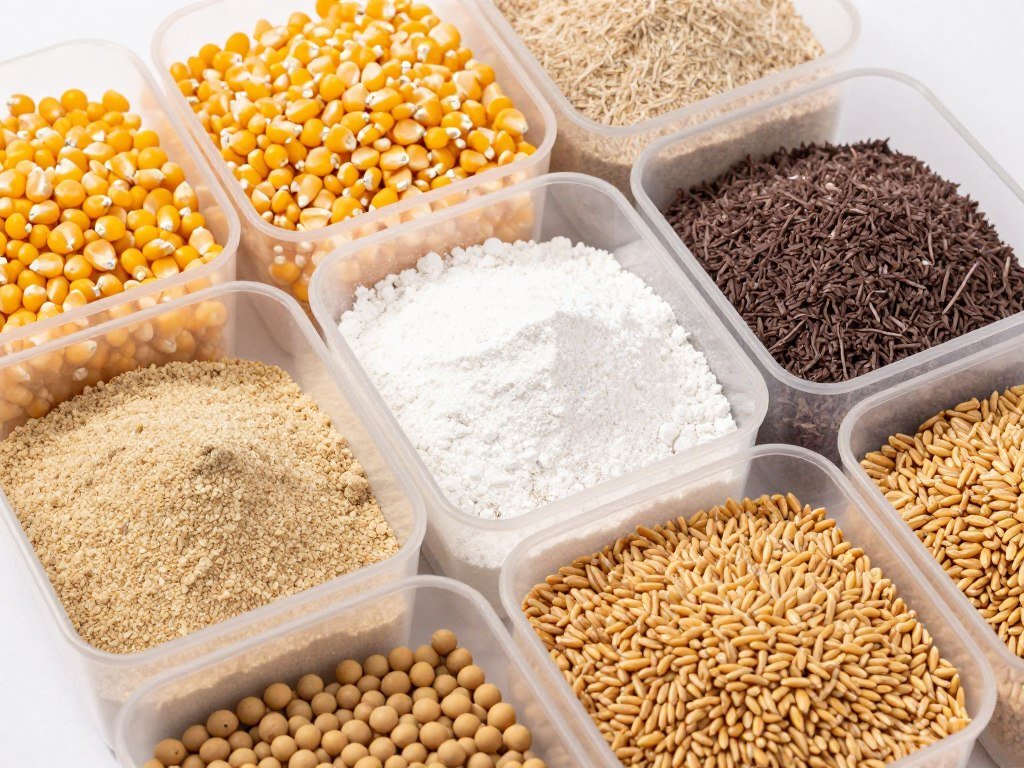
Animal feed formulations combine energy sources, protein meals, fiber sources, minerals, vitamins, and functional additives. Each ingredient class presents distinct handling and processing characteristics affecting equipment performance.
| Ingredient Category | Common Examples | Typical Inclusion Rate | Processing Considerations |
| Energy Grains | Corn, wheat, barley, sorghum | 40-70% | Require grinding, moisture content affects storage |
| Protein Meals | Soybean meal, rapeseed meal, fish meal | 15-35% | Dust control important, variable pellet binding |
| Fiber Sources | Wheat bran, rice bran, beet pulp | 5-20% | Reduce pellet durability, require balanced formulation |
| Fats and Oils | Soybean oil, palm oil, tallow | 2-8% | Liquid addition systems required, affect pellet hardness |
| Mineral Premixes | Limestone, dicalcium phosphate, salt | 3-8% | Abrasive to equipment, require precise batching |
| Vitamin Premixes | Vitamin A, D, E, B-complex | 0.1-0.5% | Heat-sensitive, require careful handling and mixing |
Moisture Content Management
Raw material moisture content significantly impacts processing efficiency, pellet quality, and storage stability. Grains typically arrive at 12-14% moisture, increasing to 15-17% during conditioning before pelleting. Finished pellets should reach 12-13% moisture after cooling.
Excessive moisture promotes mold growth during storage. Insufficient moisture creates dust, reduces pellet durability, and increases equipment wear. Production lines require moisture monitoring at multiple stages with adjustment capability for varying raw material conditions.
Formulation Optimization for Different Species
Animal nutritional requirements vary dramatically across species, production stages, and performance objectives. Poultry, cattle, swine, and aquatic species each demand specialized formulation approaches affecting ingredient selection and production parameters.
Poultry Nutrition
Chickens require high-energy, low-fiber diets supporting rapid growth and egg production. Corn and soybean meal form the foundation with careful amino acid balancing.
- Protein: 18-22% for layers, 20-24% for broilers
- Energy: 2800-3200 kcal/kg metabolizable energy
- Calcium: 3.5-4.5% for layers, 0.9-1.2% for broilers
- Pellet size: 2-3mm starters, 3-4mm growers, 4-5mm finishers
Cattle Nutrition
Ruminants utilize fiber through microbial fermentation, allowing higher inclusion of forages and by-products. Energy density varies by production stage and purpose.
- Protein: 12-18% depending on production stage
- Fiber: 15-25% for proper rumen function
- Energy varies: maintenance vs. lactation vs. finishing
- Pellet size: 6-8mm for easier consumption
Swine Nutrition
Pigs require balanced energy and protein with careful attention to digestible amino acids. Phase feeding optimizes nutrient delivery across growth stages.
- Protein: 14-22% declining as pigs mature
- Lysine: 0.9-1.4% as key limiting amino acid
- Energy: 3200-3400 kcal/kg digestible energy
- Pellet size: 3-4mm weaners, 5-6mm finishers
Aquaculture Nutrition
Fish and shrimp demand high-protein diets with specific water stability. Floating vs. sinking pellets depend on species feeding behavior.
- Protein: 28-50% depending on species
- Fishmeal: 10-40% as high-quality protein source
- Water stability: 2-24 hours depending on application
- Pellet density: floating (fish) or sinking (shrimp)
Common Production Challenges and Solutions
Feed manufacturing operations encounter predictable challenges affecting production efficiency, product quality, and equipment longevity. Understanding these issues and implementing preventive strategies minimizes downtime and maintains consistent output.
Pellet Mill Blockages and Die Plugging
Blockages occur when material flow through the pellet die stops, requiring production shutdown for clearing. Common causes include insufficient conditioning, formulation changes, die wear, and raw material variability. Prevention strategies focus on consistent feed preparation and proactive maintenance.
Blockage Prevention Strategies
- Maintain consistent conditioning: Monitor steam quality, temperature, and moisture addition
- Gradual formulation transitions: Blend new formulas with existing batches during changeovers
- Regular die inspection: Replace worn dies before complete failure occurs
- Raw material quality control: Test moisture, particle size, and composition consistency
- Proper startup procedures: Follow manufacturer protocols when beginning production runs
When blockages do occur, systematic clearing procedures minimize equipment damage. Never force material through blocked dies with excessive pressure. Instead, stop production, allow the die to cool, and carefully remove material. Investigating root causes prevents recurrence.
High Fines Percentage and Poor Pellet Durability
Excessive fines (broken pellet fragments) reduce feed value and indicate production problems. Target fines levels below 3-5% maintain quality standards. Multiple factors contribute to pellet breakage including formulation composition, conditioning effectiveness, cooling procedures, and handling practices.
Formulation Factors
Ingredient composition directly affects pellet binding. High-starch ingredients like corn and wheat improve binding through gelatinization during conditioning. Fiber sources and protein meals may reduce pellet durability.
Adding pellet binders (lignin sulfonates, bentonite clay) at 0.5-2% inclusion improves durability in challenging formulations. However, binders increase costs and may affect nutritional balance. Formulation optimization through ingredient selection often proves more economical.
Process Optimization
Proper conditioning represents the most critical factor for pellet quality. Adequate steam addition (4-6% moisture increase), sufficient temperature (75-85°C), and appropriate retention time (30-60 seconds) enable starch gelatinization and protein denaturation that bind pellets.
Cooling procedures also impact durability. Rapid cooling creates thermal stress causing pellet cracking. Gradual temperature reduction in counterflow coolers minimizes breakage. Proper air flow distribution ensures uniform cooling across the pellet bed.
Equipment Wear and Maintenance Requirements
Feed production equipment operates under demanding conditions with abrasive materials, high temperatures, and continuous operation. Establishing preventive maintenance programs extends equipment life and prevents unexpected failures disrupting production schedules.
| Equipment Component | Wear Factors | Maintenance Interval | Typical Service Life |
| Hammermill Screens | Material abrasion, hole enlargement | Inspect weekly, replace as needed | 500-2000 operating hours |
| Hammermill Hammers | Impact wear, edge dulling | Rotate/flip every 200 hours | 2000-5000 hours total |
| Mixer Ribbons/Paddles | Edge wear, welded joint fatigue | Inspect monthly | 5000-10000 hours |
| Pellet Mill Die | Hole enlargement, surface wear | Monitor pellet quality daily | 500-1500 tonnes throughput |
| Pellet Mill Rollers | Surface grooves, bearing wear | Inspect every 500 hours | 2000-5000 hours |
| Cooler Screens | Hole blockage, corrosion | Clean weekly, inspect monthly | 3-5 years |
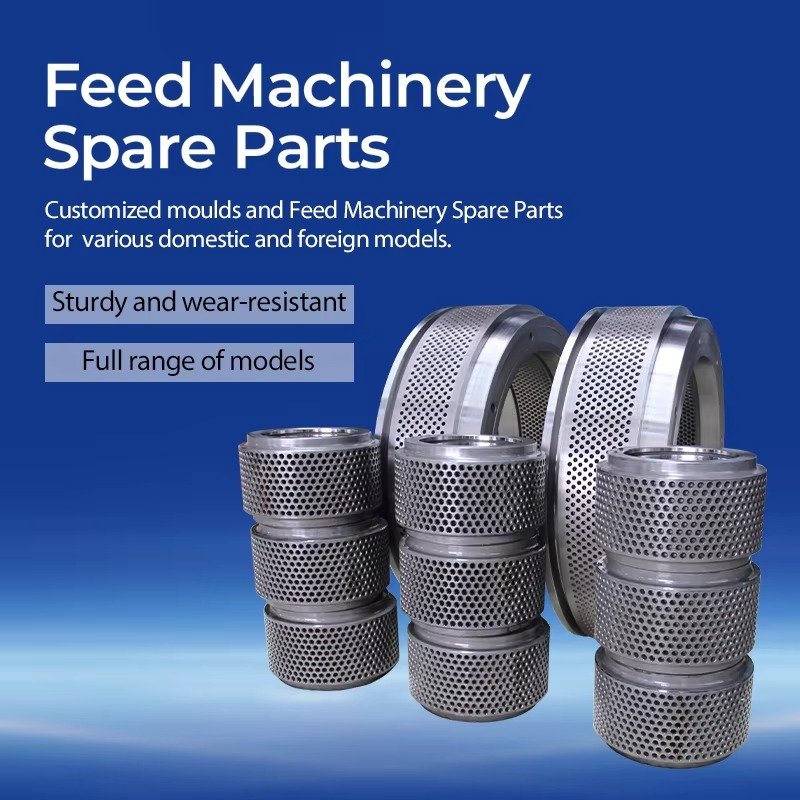
Maintaining adequate spare parts inventory prevents extended downtime. Critical wear components including hammermill screens, pellet dies, and mixer seals should remain in stock. MAIKONG provides comprehensive spare parts support with rapid delivery to UK and European customers, minimizing production interruptions.
Need Guidance on Maintenance Optimization?
Our technical support team (available 24 hours via WhatsApp: +86 15815556422) helps you develop preventive maintenance schedules tailored to your production volume, formulations, and operating conditions. Proper maintenance programs reduce total cost of ownership while maximizing equipment uptime.
MAIKONG Animal Feed Production Line: Model MK-L003 Specifications
MAIKONG offers the MK-L003 modular animal feed production line designed for medium-scale operations requiring flexibility across multiple animal species. This proven configuration serves feed mills, agricultural cooperatives, and integrated livestock operations throughout the UK and European markets.
Technical Specifications
| Specification | Value |
| Model Number | MK-L003 |
| Production Capacity | 5-8 T/H (adjustable) |
| Total Installed Power | 185 kW |
| Voltage Options | 380V/50Hz or custom |
| Control Mode | Semi-automatic with PLC option |
| Pellet Size Range | 2-8 mm (interchangeable dies) |
| Feed Types | Poultry, cattle, pig, fish, rabbit |
| Floor Space Required | 25m × 12m × 8m (L×W×H) |
| Material Construction | Carbon steel with stainless contact surfaces |
| Estimated Weight | 18,500 kg (complete system) |
| Colour Options | Industrial grey (standard), custom available |
| Lead Time | 45-60 days from order confirmation |
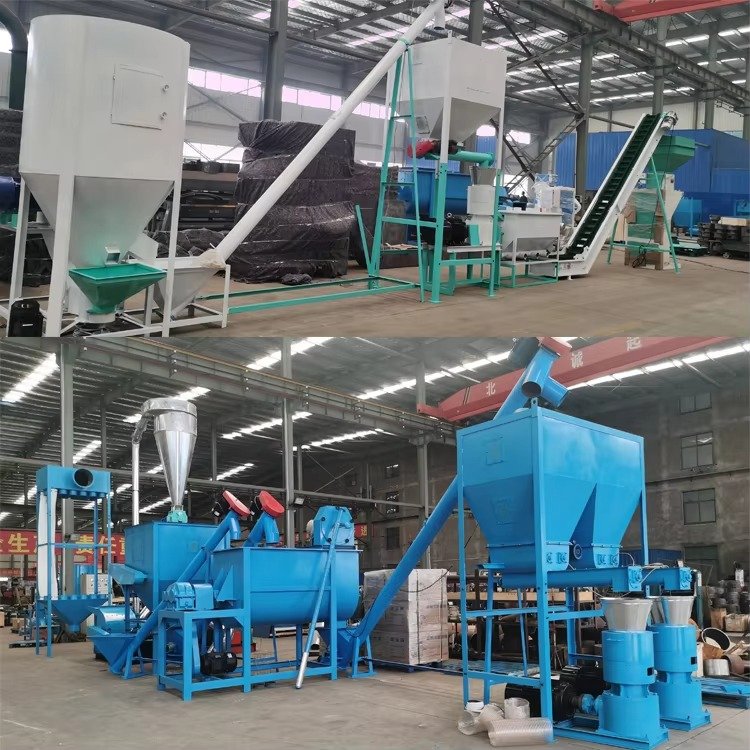
Standard Equipment Package
- Raw material receiving and cleaning system
- MK-HC08 Hammermill (8 T/H capacity, 75kW)
- MK-BT1000 Batching system (1000kg capacity)
- MK-MX1500 Horizontal ribbon mixer (1500kg, 18.5kW)
- MK-CD350 Steam conditioner
- MK-PM420 Ring die pellet mill (6 T/H, 90kW)
- MK-CL06 Counterflow cooler (6 T/H capacity)
- MK-CR02 Pellet crumbler (optional)
- MK-SC05 Vibrating screener
- MK-PKG10 Automatic packaging scale (10 bags/min)
- Bucket elevators and screw conveyors
- Dust collection system
- Electrical control panel with PLC option
Pricing and Investment Information
The MK-L003 complete production line represents excellent value for medium-scale operations. Investment costs vary based on automation level, voltage requirements, and optional equipment. Contact our sales team for detailed quotations tailored to your specific requirements.
Estimated Investment Range: £285,000 – £375,000 (varies by configuration and delivery location)
Financing Options: MAIKONG works with UK and European equipment finance providers to offer flexible payment terms for qualified buyers.
Customization Capabilities (OEM/ODM)
Every feed mill operation presents unique requirements based on formulations, animal species, facility layout, and production volumes. MAIKONG specializes in customized solutions adapting the MK-L003 base design to specific operational needs.
Capacity Customization
Scale production capacity from 200 kg/h to 200 T/H by adjusting equipment sizes and module quantities. Our engineering team designs systems matching your exact throughput requirements without over-investing in unnecessary capacity.
Voltage Adaptation
Equipment configures for UK standard 415V three-phase power or any European voltage specification. Frequency converters accommodate 50Hz or 60Hz requirements for international installations or generator-powered operations.
Layout Optimization
Production lines adapt to existing building dimensions and structural constraints. Our designers create efficient layouts maximizing workflow within available space, whether horizontal, vertical, or hybrid configurations.
White-Label Manufacturing (OEM Services)
Agricultural equipment distributors and brand owners can specify custom branding, colour schemes, and control panel designs. MAIKONG manufactures production lines under your brand identity, providing complete OEM solutions including documentation, spare parts packaging, and technical support materials bearing your company name.
Contact our OEM division: Lucy@feedproductionline.uk to discuss white-label opportunities and distributor programs.
Successful Installations in Europe and Worldwide
MAIKONG animal feed production lines operate in 130+ countries across six continents. Our European installations demonstrate proven performance in markets with demanding quality standards, stringent regulations, and sophisticated agricultural operations similar to UK requirements.
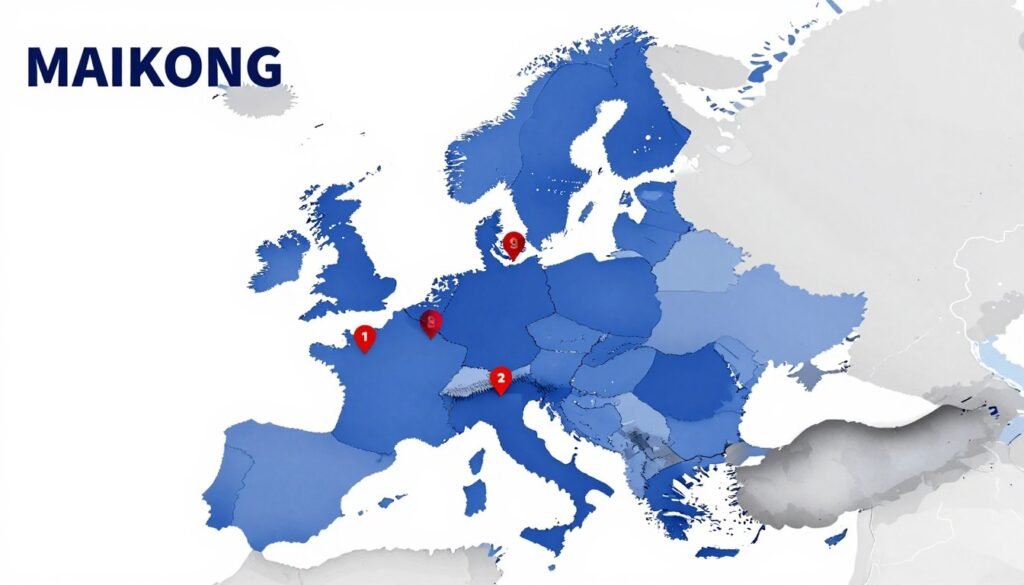
European Case Study: Germany Poultry Feed Operation
A family-owned poultry integration in Bavaria, Germany installed a MAIKONG MK-L005 production line in 2021. The 10 T/H system produces starter, grower, and layer feeds for their 500,000-bird operation plus commercial sales to regional farms.
Installation Details
- Location: Bavaria, Germany
- Production Line: MK-L005 (10 T/H capacity)
- Feed Types: Poultry starter, grower, layer pellets
- Installation Date: March 2021
- Building Type: New construction, steel frame
- Automation Level: Fully automatic with SCADA
- Special Features: Liquid fat addition, automated bagging
Performance Results
- Daily Production: 80-120 tonnes (two shifts)
- Pellet Durability: Consistently above 96% PDI
- Fines Percentage: Below 2% on average
- Energy Efficiency: 28 kWh per tonne produced
- Labor Requirements: 4 operators per shift
- Uptime Achievement: 94% equipment availability
- Customer Satisfaction: Excellent (repeat order 2023)
European Case Study: Netherlands Cattle Feed Cooperative
A dairy farmer cooperative in the Netherlands commissioned a MAIKONG MK-L007 system in 2020 to produce custom cattle rations for member farms. The 15 T/H line manufactures pelleted concentrates and TMR supplements serving 3,500 dairy cows across 42 member operations.
“The MAIKONG production line exceeded our expectations for both quality and reliability. Their technical team provided excellent support during installation and startup. We particularly appreciate the flexibility to produce different formulations efficiently with minimal changeover time.”
Additional European Installations
Belgium Fish Feed Producer
Application: Aquaculture feeds for trout and carp farms
Capacity: 3 T/H extruded floating pellets
Installation: 2019, operating successfully
Key Feature: Twin-screw extruder for precise density control
Austria Pig Feed Manufacturer
Application: Commercial pig feed production
Capacity: 12 T/H pelleted swine rations
Installation: 2020, expanded 2022
Key Feature: Phase feeding capability, liquid addition
Portugal Pet Food Producer
Application: Premium dog and cat food manufacturing
Capacity: 2 T/H extruded pet foods
Installation: 2022, OEM branded equipment
Key Feature: Custom shapes, coating system, nitrogen flushing
Global Installation Experience
Beyond Europe, MAIKONG production lines operate successfully across diverse markets and challenging environments. Our installations span tropical aquaculture operations in Southeast Asia, large-scale cattle feeding in North America, integrated poultry production in Africa, and specialty feed manufacturing in Australia and New Zealand.
This global experience informs continuous product improvement and ensures our equipment meets international quality standards including CE certification for European markets, ISO 9001 manufacturing quality management, and compliance with relevant food safety regulations.
View Similar UK & European Installations Relevant to Your Operation
Connect with our European sales team to discuss case studies matching your production requirements, animal species, and facility constraints. We provide detailed references, performance data, and customer contacts for verification.
Installation, Training, and Technical Support Services
Successful feed production line implementation extends beyond equipment delivery. MAIKONG provides comprehensive installation supervision, operator training, and ongoing technical support ensuring your operation achieves target production capacity and product quality from startup through years of reliable operation.
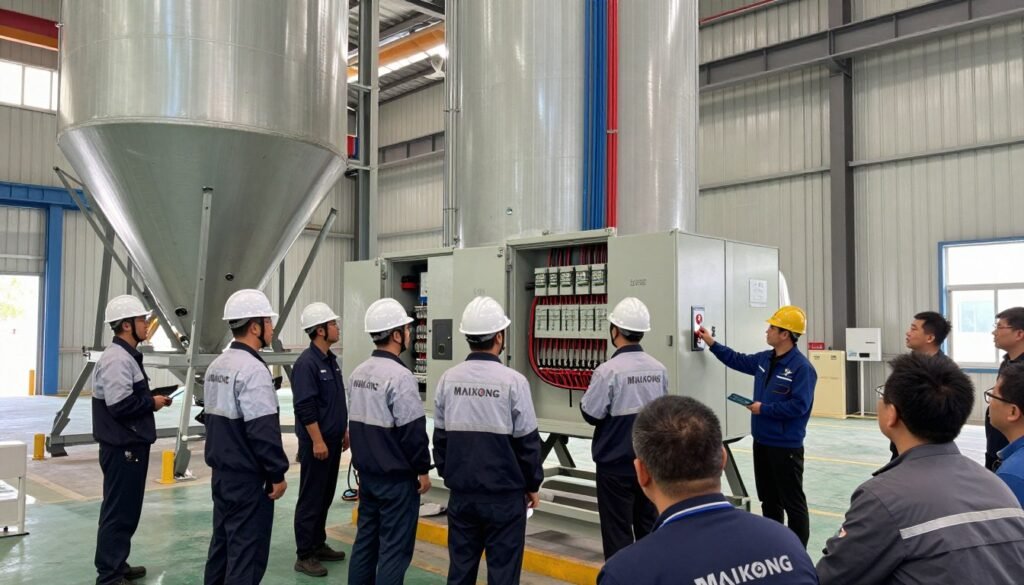
Installation and Commissioning Process
Equipment installation follows structured methodologies developed through 130+ successful projects worldwide. Our installation approach minimizes disruption, accelerates startup, and ensures safe, efficient operation from day one.
- Pre-Installation Planning: Site preparation specifications, foundation drawings, electrical requirements, material handling logistics provided 60 days before shipment
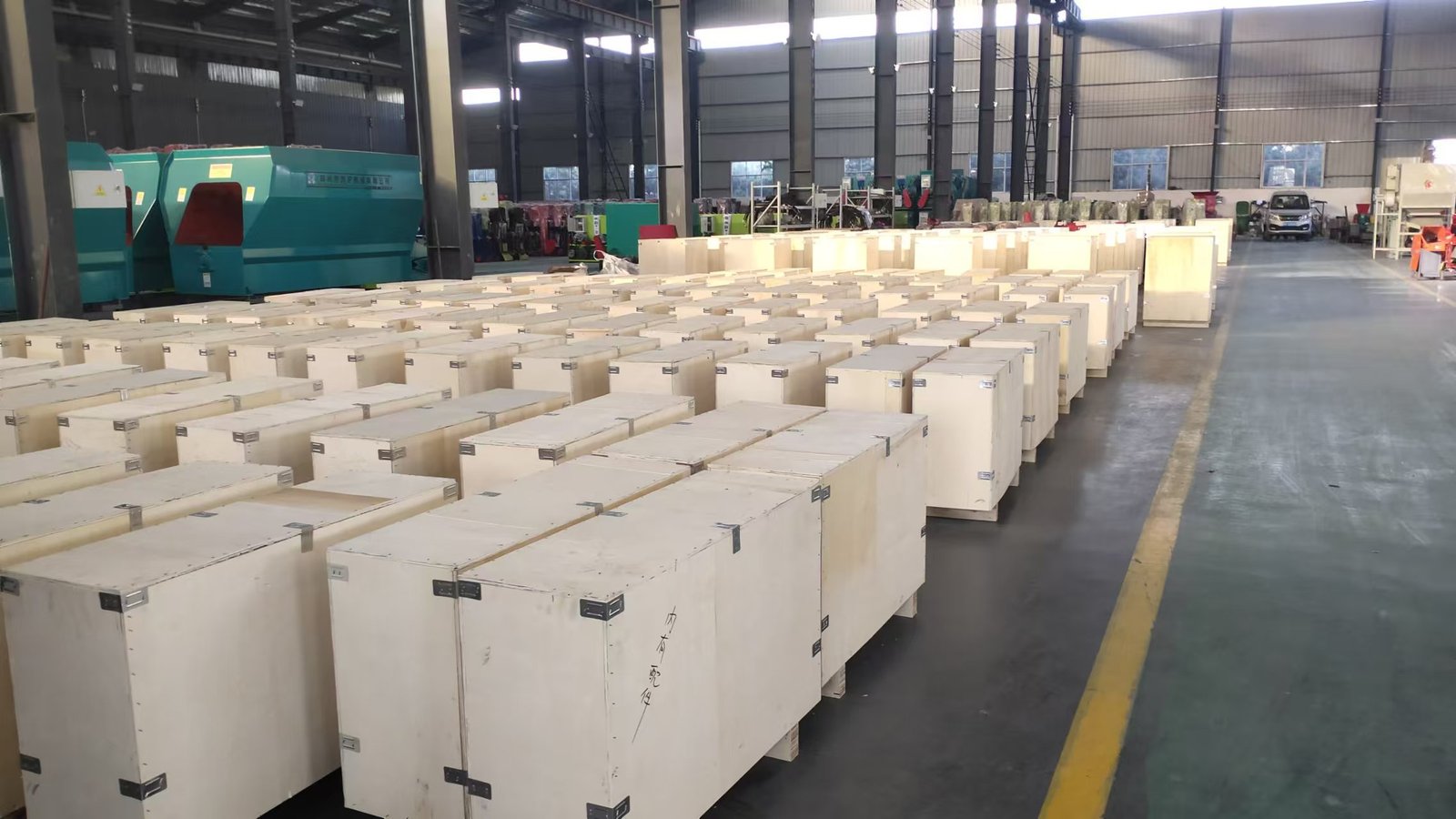
- Equipment Delivery: Export packaging protects components during international shipping; detailed packing lists facilitate customs clearance and receiving inspection
- Installation Supervision: MAIKONG engineers travel to your facility for 10-15 days providing technical guidance during equipment positioning, assembly, and connection
- Electrical Integration: Control panel installation, sensor calibration, safety system verification, and PLC programming (if applicable)
- Mechanical Commissioning: Equipment alignment, belt tensioning, bearing lubrication, drive calibration performed to manufacturer specifications
- Trial Production Runs: Supervised production using your formulations to verify capacity, adjust parameters, and optimize performance
- Performance Verification: Documented testing confirms equipment meets guaranteed specifications before final acceptance
- Handover and Documentation: Complete operation manuals, maintenance schedules, spare parts lists, and warranty certificates provided
Operator Training Programs
Effective equipment operation requires skilled personnel understanding both mechanical systems and production principles. MAIKONG training programs develop competent operators capable of running production lines efficiently while recognizing and addressing potential issues before they escalate.
On-Site Training (Included)
During installation and commissioning, our engineers conduct hands-on training for your operations team. Training covers:
- Equipment startup and shutdown procedures
- Production parameter adjustment and optimization
- Quality control testing and troubleshooting
- Basic maintenance and routine inspections
- Safety protocols and emergency procedures
- Record keeping and production documentation
Duration: 5-7 days during commissioning
Participants: Up to 8 operators/supervisors
Advanced Technical Training (Optional)
Extended training programs available at MAIKONG facilities in China or customer locations cover advanced topics:
- Formulation optimization for different species
- Advanced troubleshooting and diagnostics
- Preventive maintenance program development
- Spare parts identification and procurement
- Production efficiency improvement methods
- Equipment modification and upgrading
Duration: 2-3 weeks
Location: Customer facility or MAIKONG factory
Ongoing Technical Support
MAIKONG maintains dedicated technical support serving UK and European customers. Our support philosophy emphasizes rapid response, practical solutions, and continuous relationship development beyond initial installation.
24-Hour Emergency Support
Critical production issues receive immediate attention through our emergency support line. Technical specialists available via WhatsApp (+86 15815556422) or email (Lucy@feedproductionline.uk) provide remote diagnostics, troubleshooting guidance, and expedited spare parts dispatch.
Response Time: Within 2 hours for emergency issues
Remote Monitoring (Optional)
Internet-connected production lines enable remote monitoring and diagnostics. Our engineers access system data, identify performance trends, and provide proactive maintenance recommendations preventing unexpected failures.
Availability: For PLC-controlled systems with customer network access
Spare Parts Support
Genuine MAIKONG spare parts available with delivery to UK and European locations. We maintain inventory of critical wear components ensuring rapid availability minimizing production downtime.
Delivery Time: 5-10 days to UK for stock items
Warranty and Service Agreements
Standard MAIKONG equipment warranty covers manufacturing defects and component failures for 12 months from commissioning or 18 months from shipment, whichever occurs first. Warranty includes replacement parts and technical support for covered issues.
Extended service agreements available providing additional protection, preventive maintenance visits, priority support response, and discounted spare parts pricing. These programs prove valuable for operations requiring maximum uptime and minimal production risk.
UK Distributor and Agent Partnership Opportunities
MAIKONG actively seeks experienced agricultural equipment distributors, feed mill consultants, and agricultural engineering firms to represent our animal feed production line products throughout the United Kingdom and Ireland. Our distributor program offers attractive commercial terms, comprehensive technical support, and exclusive territory protection for qualified partners.

Why Partner with MAIKONG?
Established Manufacturing Excellence
22+ years of feed equipment manufacturing experience ensures product reliability and continuous improvement. Our ISO 9001 certified facilities produce equipment meeting international quality standards with CE certification for European markets.
Production capacity exceeding 500 complete lines annually supports rapid delivery and consistent product availability. Vertical integration controlling key component manufacturing maintains quality while controlling costs.
Comprehensive Product Range
Complete portfolio spanning small farm operations (200 kg/h) through industrial facilities (200 T/H) addresses diverse market segments. Specialized solutions for poultry, cattle, swine, aquaculture, and pet food production provide cross-selling opportunities.
OEM/ODM capabilities enable white-label manufacturing supporting distributor brand development. Custom engineering adapts standard designs to unique customer requirements creating competitive differentiation.
Distributor Support and Benefits
Technical Resources
- Detailed product specifications and CAD drawings
- Installation and operation manuals
- Technical training at factory or customer sites
- Remote support for customer installations
- Engineering consultation for custom projects
Marketing Support
- Product photography and promotional materials
- Trade show participation support
- Digital marketing collateral and web resources
- Case study documentation and references
- Lead generation assistance
Commercial Terms
- Competitive distributor pricing with volume incentives
- Exclusive territory protection in designated regions
- Flexible payment terms for qualified partners
- Spare parts inventory support
- Performance bonus programs
Ideal Partner Profile
We seek distributors with established presence in UK agricultural markets, particularly those currently serving feed mills, livestock operations, or agricultural equipment sectors. Ideal partners demonstrate:
- Existing customer relationships in animal agriculture
- Technical sales capability understanding feed production
- After-sales service infrastructure and personnel
- Financial stability supporting inventory investment
- Commitment to territory development and growth
- Experience with capital equipment sales cycles
- Engineering or agricultural education background
- Willingness to invest in product training
- Professional reputation and industry connections
- Long-term partnership orientation
Getting Started as a MAIKONG Distributor
The distributor application process begins with initial discussions about your business background, market coverage, and growth objectives. Following qualification, we provide comprehensive product information, commercial terms, and territory proposals for evaluation.
Selected partners receive intensive factory training including product familiarization, installation procedures, maintenance protocols, and sales techniques. Ongoing support ensures distributor success through regular communication, technical assistance, and business development collaboration.
Become a MAIKONG Distributor in the United Kingdom
We’re actively seeking experienced agricultural equipment distributors and feed industry professionals to represent MAIKONG animal feed production lines throughout the UK and Ireland. Exclusive territory opportunities available for qualified applicants offering attractive margins, comprehensive support, and proven products serving 130+ countries worldwide.
Contact: Lucy Thompson, European Business Development
Email: Lucy@feedproductionline.uk
WhatsApp/Tel: +86 15815556422
Website: feedproductionline.uk
Frequently Asked Questions About Animal Feed Production Lines
What production capacity should I choose for my operation?
Capacity selection depends on your daily feed requirements, operating schedule, and growth projections. Calculate your daily need based on animal numbers and consumption rates. For example, 10,000 layer chickens consuming 120g daily require 1.2 tonnes per day. Operating one 8-hour shift suggests a 1-2 T/H line provides adequate capacity with safety margin.
Consider future expansion when sizing equipment. Purchasing slightly larger capacity costs less than replacing undersized equipment within a few years. However, avoid excessive overcapacity reducing operational efficiency and increasing per-tonne production costs.
Can one production line make feeds for different animal species?
Yes, modern feed production lines accommodate multiple species by changing formulations and pellet dies. The same equipment produces poultry, pig, cattle, and fish feeds with appropriate recipe adjustments and die specifications. Pellet size changes require swapping dies (30-60 minute procedure) while formulation changes simply update batching recipes.
Multi-species capability provides operational flexibility and improves equipment utilization. However, thorough cleaning between species prevents cross-contamination, especially important when transitioning from medicated feeds or when producing certified organic products.
What are typical production costs per tonne of feed?
Production costs vary significantly based on capacity, automation level, energy prices, and labor rates. As a general guide, UK operations typically experience:
- Energy costs: £8-15 per tonne (electricity for motors, steam generation)
- Labor costs: £5-12 per tonne (depending on automation and capacity)
- Maintenance and wear parts: £3-6 per tonne
- Packaging materials: £2-4 per tonne (for bagged products)
- Total conversion cost: £18-37 per tonne excluding raw materials
Larger capacity operations with higher automation achieve lower per-tonne costs through economies of scale. Raw material costs represent 85-92% of total feed cost, making formulation optimization and ingredient procurement the most significant cost factors.
How long does installation and commissioning take?
Installation timelines depend on equipment complexity, facility readiness, and customization requirements. Typical schedules for standard systems include:
- Site preparation: 2-4 weeks (foundations, electrical, structural work)
- Equipment delivery: 45-60 days from order confirmation
- Mechanical installation: 2-3 weeks (positioning, assembly, connections)
- Electrical installation: 1-2 weeks (wiring, controls, sensors)
- Commissioning and testing: 1-2 weeks (calibration, trial runs, training)
- Total project duration: 12-16 weeks from order to full production
Larger or highly customized systems may require extended timelines. MAIKONG provides detailed project schedules during quotation stage enabling accurate planning and coordination.
What ongoing maintenance is required?
Regular maintenance extends equipment life and prevents unexpected failures. Essential maintenance activities include:
- Daily: Visual inspections, bearing temperature checks, belt tension verification, clean dust collection
- Weekly: Detailed equipment inspection, screen cleaning, lubrication points service
- Monthly: Comprehensive system review, wear part assessment, calibration verification
- Quarterly: Major component inspection, bearing replacement as needed, electrical connection tightening
- Annually: Complete system overhaul, precision alignment, full calibration, safety system testing
Maintaining adequate spare parts inventory for critical wear items (hammermill screens, pellet dies, mixer seals) minimizes downtime when replacements become necessary. MAIKONG provides detailed maintenance manuals and recommended spare parts lists with every installation.
Do you provide financing options for UK buyers?
While MAIKONG does not directly provide financing, we work with several UK and European equipment finance companies familiar with agricultural machinery purchases. These partners offer lease-purchase agreements, hire-purchase contracts, and equipment loans tailored to feed production equipment.
Financing terms typically range from 3-7 years with deposit requirements of 10-30% depending on buyer credit standing and business history. Monthly payments make capital equipment accessible while preserving working capital for raw materials and operations. Contact our sales team for introductions to appropriate finance providers and assistance with application documentation.
What certifications and standards do MAIKONG production lines meet?
MAIKONG manufacturing facilities maintain ISO 9001:2015 quality management certification ensuring consistent production standards and continuous improvement processes. Our animal feed production equipment carries CE marking indicating compliance with European safety, health, and environmental protection requirements.
Equipment designs incorporate HACCP principles for food safety, facilitating customer compliance with feed manufacturing regulations. Electrical components meet IEC standards while mechanical safety features comply with EN machinery directives. Documentation packages include declarations of conformity and technical files supporting regulatory compliance in UK and EU markets.
Can you customize production lines for specific formulations or building constraints?
Absolutely. MAIKONG specializes in customized solutions adapting standard equipment configurations to unique operational requirements. Common customizations include:
- Capacity scaling to exact throughput requirements
- Layout optimization for existing building dimensions
- Specialized equipment for unique ingredients (whole grains, liquid additives, heat-sensitive components)
- Voltage and frequency adaptation for specific power supplies
- Integration with existing equipment or automation systems
- Multi-line installations for simultaneous different product manufacturing
- White-label branding for distributor or private-label operations
Our engineering team reviews your specific requirements providing customized designs, equipment specifications, and investment quotations. Site visits available for complex projects requiring detailed facility assessment and integration planning.
Making Your Animal Feed Production Line Investment Decision
Selecting and implementing an animal feed production line represents a significant commitment affecting your operation’s efficiency, product quality, and profitability for many years. This guide has examined the essential considerations including process workflows, equipment specifications, capacity planning, raw material management, common challenges, and support services that contribute to successful feed manufacturing operations.
The UK and European agricultural sectors demand reliable equipment meeting stringent quality standards while delivering consistent performance across diverse applications. MAIKONG animal feed production lines combine proven manufacturing expertise, comprehensive customization capabilities, and dedicated customer support addressing these market requirements.
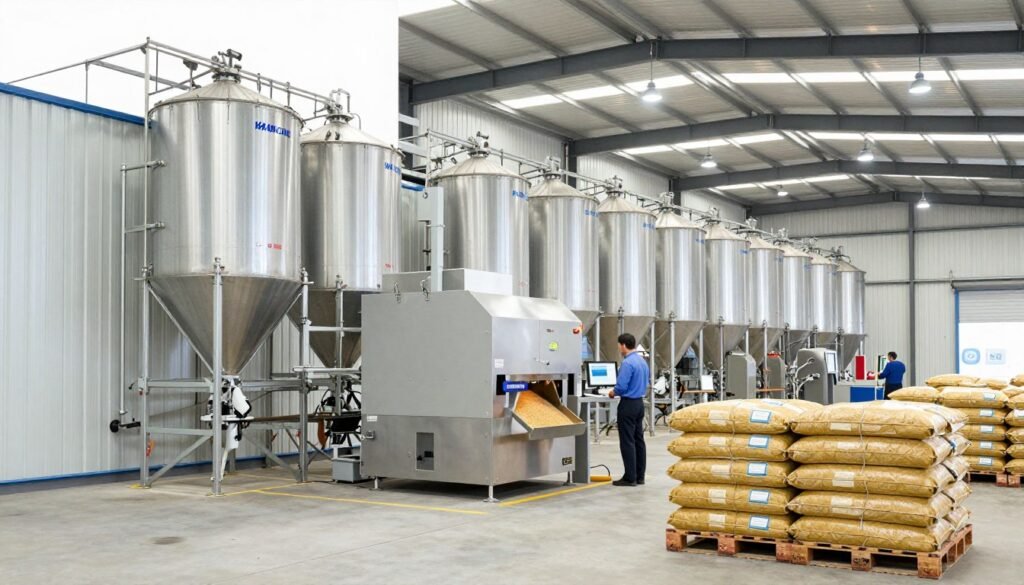
Key Investment Considerations
As you evaluate production line options for your operation, focus on factors with long-term impact beyond initial purchase price. Equipment reliability, after-sales support quality, customization capability, and supplier experience prove more valuable than minor cost differences. Consider:
- Total cost of ownership: Including energy consumption, maintenance requirements, spare parts availability, and expected service life
- Production flexibility: Ability to accommodate multiple species, varying formulations, and future capacity needs
- Quality consistency: Equipment capability to maintain product specifications batch after batch
- Support accessibility: Supplier responsiveness, technical expertise, and parts availability in your region
- Scalability: Options for future expansion without complete system replacement
- Automation appropriateness: Technology level matching your operation size and labor availability
- Regulatory compliance: Equipment meeting UK and EU standards for safety and food production
- Return on investment: Realistic payback period based on your production economics
Working with MAIKONG
Whether you’re establishing a new feed mill, upgrading existing equipment, or exploring white-label manufacturing opportunities, MAIKONG provides the technical expertise, product quality, and customer support essential for success. Our 22 years of manufacturing experience serving 130+ countries demonstrates consistent performance across diverse applications and challenging markets.
UK and European customers benefit from our understanding of regional requirements including CE certification, voltage standards, support expectations, and agricultural practices. Our growing installed base across Germany, Netherlands, Belgium, Austria, Portugal, and other European markets provides relevant references and proven performance in conditions similar to UK operations.
Take the Next Step
We invite you to contact our technical team to discuss your specific feed production requirements, facility constraints, and business objectives. Whether you need a complete production line quotation, technical consultation on capacity planning, or information about distributor partnerships, we’re here to assist.
Ready to Discuss Your Animal Feed Production Line Requirements?
Contact MAIKONG today for personalized consultation on equipment selection, capacity planning, customization options, and investment quotations. Our experienced engineering team helps you design the optimal solution for your operation, backed by 22 years of manufacturing excellence and comprehensive support services.
Additional Resources:
Visit Our Website |
About MAIKONG |
Contact Us
MAIKONG Manufacturing Ltd. | UK & European Animal Feed Production Line Specialist
22+ Years Experience | 130+ Countries Served | CE Certified Equipment | Comprehensive Support
Thank you for reviewing this comprehensive guide to animal feed production lines. We look forward to supporting your feed manufacturing success.