

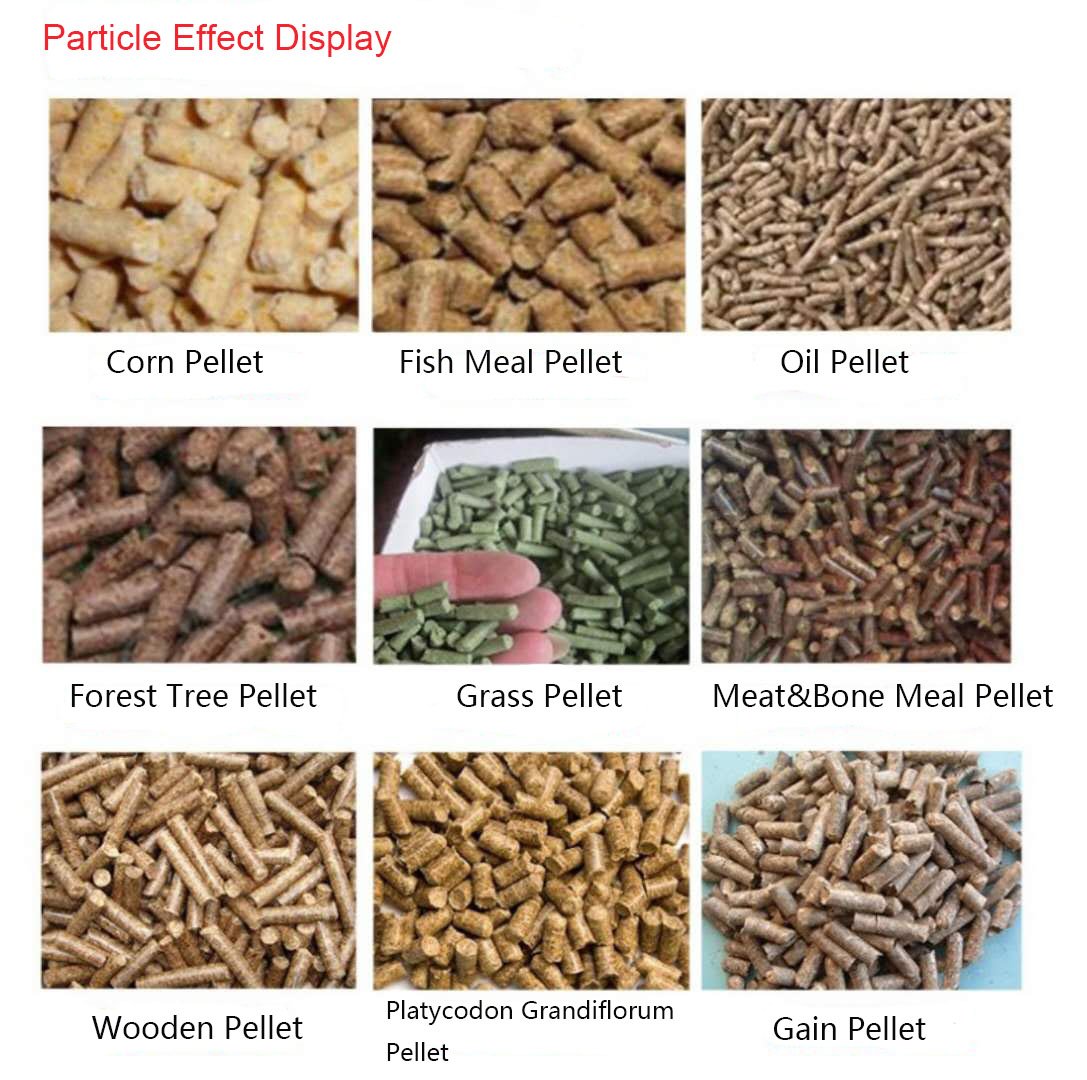
Rising energy costs across the United Kingdom have forced feed producers to reconsider expansion strategies. Factory owners face a critical decision: should they maximise existing equipment through extended shifts, or invest in modular production capacity that scales with demand? This question matters more today than ever before, as Brexit complexities and supply chain uncertainties reshape how British aquaculture operations plan for growth.
For operations currently producing between 200 kilograms and five tonnes hourly, the choice between intensive utilisation and flexible expansion determines profitability for years ahead. A fish feed pellet production line manufacturer with two decades of UK market experience reveals that most expansion failures stem from misaligned capacity planning rather than equipment quality.
Understanding the true costs of each approach requires examining power consumption patterns, labour availability, maintenance windows, and market demand volatility specific to British fish farming operations.
Expanding Your Feed Production Capacity?
Speak with our UK expansion specialist about your specific production challenges. We’ll help you evaluate one-line intensive operation versus modular growth based on your facility constraints and market outlook.
Understanding Production Capacity Requirements for UK Fish Feed Operations
Capacity planning begins with accurate demand forecasting. UK aquaculture facilities typically experience seasonal fluctuations between March and October, when water temperatures support active fish growth. A fish feed production line designed for steady year-round output often creates inefficiencies during low-demand winter months.
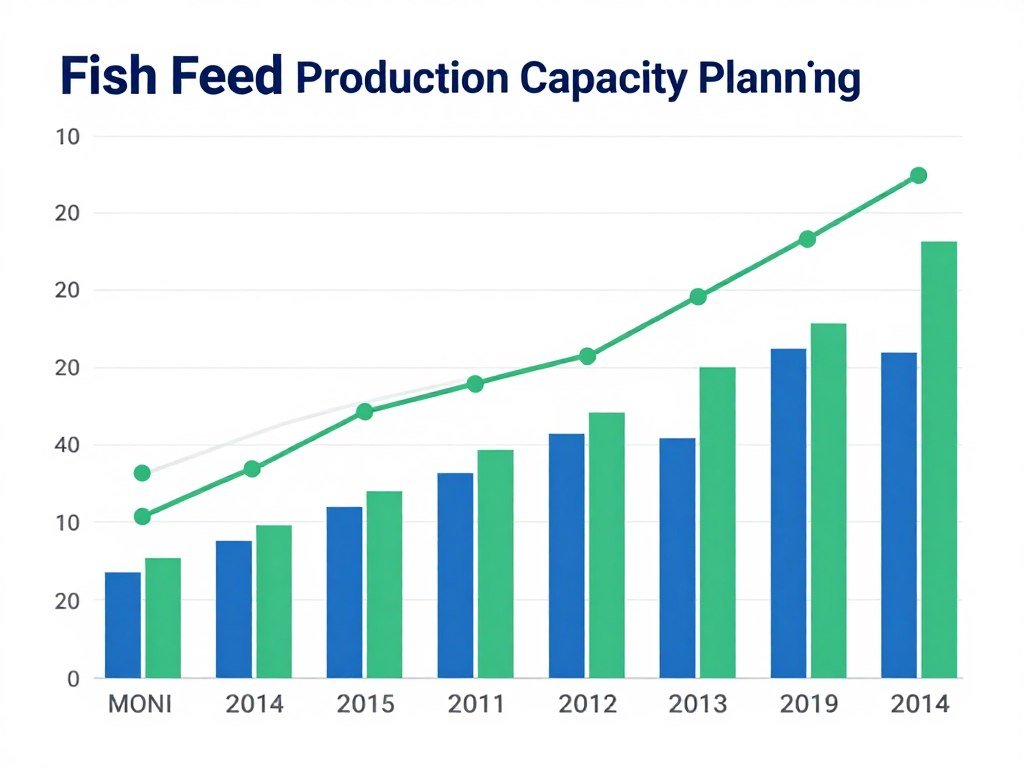
Critical Capacity Calculation Parameters
Three factors determine optimal production line sizing. First, peak monthly demand establishes your maximum capacity requirement. Second, average monthly demand reveals utilisation rates. Third, growth projections over three to five years indicate whether modular expansion suits your trajectory better than intensive single-line operation.
British feed producers serving salmon, trout, and tilapia operations report different pellet size requirements. Salmon growers need larger pellets ranging from four to six millimetres, whilst trout operations prefer two to four millimetre sizes. A versatile feed pellet production line accommodates these variations through die changes rather than complete equipment replacement.
Raw Material Storage and Handling Considerations
Storage capacity often limits production more than equipment capability. Fish meal, soybean meal, wheat middlings, and fish oil require climate-controlled conditions. British facilities must account for humidity variations between seasons. Proper raw material handling protects nutritional quality and prevents mycotoxin contamination.
| Production Scale | Hourly Capacity | Storage Required | Typical UK Application |
| Small Operation | 200-500 kg/h | 15-25 tonnes | Single farm supply |
| Medium Facility | 1-3 tonnes/h | 50-100 tonnes | Regional distribution |
| Large Production | 5-10 tonnes/h | 200-400 tonnes | Commercial wholesale |
| Industrial Scale | 15-100 tonnes/h | 500+ tonnes | Export operations |
Electricity Infrastructure and UK Energy Costs
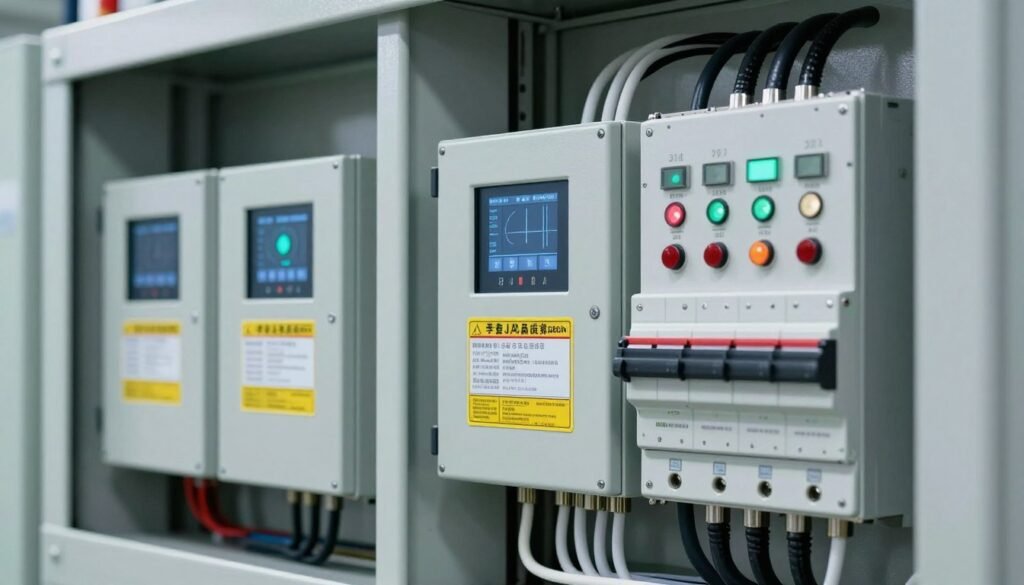
Power availability determines production line feasibility more than any other infrastructure factor. The MK-L003 model requires three-phase 400-volt supply with capacity ranging from 75 to 500 kilowatts depending on configuration. UK industrial electricity costs averaged 24 pence per kilowatt-hour in 2024, making energy efficiency a critical selection criterion.
Variable frequency drives reduce motor power consumption by 20 to 30 percent compared to fixed-speed systems. British operations benefit significantly from this technology during partial-load conditions. A properly configured animal feed production line incorporates energy recovery from pellet cooling processes to pre-heat conditioning steam.
One Production Line, Two Shifts: Intensive Utilisation Strategy
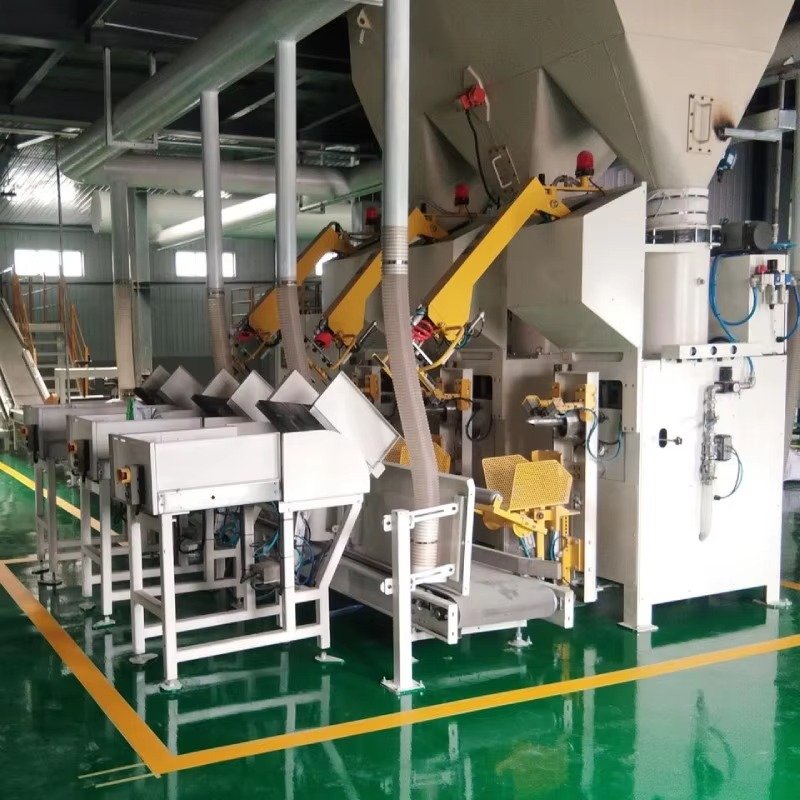
Operating a single production line across two shifts maximises capital efficiency but introduces labour and maintenance complexities. This approach suits operations with consistent demand and reliable workforce availability. British producers using this model report 70 to 85 percent equipment utilisation rates when properly implemented.
Labour Requirements and UK Employment Considerations
Two-shift operation demands duplicate trained operators. Each shift requires at minimum one line operator, one quality control technician, and one maintenance support person. UK employment regulations mandate proper rest periods between shifts. Recruitment challenges in rural areas where many aquaculture facilities locate can limit this strategy’s viability.
Training costs multiply with shift duplication. New operators require three to six weeks before achieving full productivity on pellet production line equipment. Inconsistent operation between shifts often creates quality variations that affect feed conversion ratios in fish ponds.
Maintenance Window Challenges
Continuous operation reduces available maintenance time. Critical components including pellet dies, roller shells, and hammer mill screens require regular replacement. Scheduling these interventions without disrupting production commitments becomes increasingly difficult as utilisation climbs above 75 percent.
Advantages of Two-Shift Operation
This intensive approach offers specific benefits for established operations with steady customer demand.
- Lower capital investment per tonne of capacity
- Reduced facility footprint requirements
- Simplified raw material handling logistics
- Single equipment maintenance programme
- Faster return on investment timeline
Disadvantages of Two-Shift Operation
Intensive utilisation introduces operational risks that affect long-term sustainability.
- Higher wear rates on critical components
- Limited maintenance access windows
- Duplicate labour costs and training burden
- Quality consistency challenges between shifts
- Complete production halt during breakdowns
Optimal Conditions for This Approach
Certain operating contexts favour intensive single-line utilisation over modular expansion.
- Stable year-round demand patterns
- Experienced operator pool available locally
- Limited facility expansion space
- Capital constraints preventing modular investment
- Short-term capacity needs (2-3 years)
Risk Mitigation Strategies
Successful two-shift operations implement specific practices to manage inherent challenges.
- Comprehensive spare parts inventory on site
- Cross-training between day and evening shifts
- Predictive maintenance monitoring systems
- Quality control checkpoints at shift changes
- Emergency backup production arrangements
Energy Consumption Patterns
Two-shift operation spreads energy costs across more production hours but may incur premium rates during peak demand periods. UK electricity pricing varies significantly between day and evening rates. Smart producers coordinate high-consumption processes like pellet drying with lower-rate periods.
The MK-L003 fish feed pellet production line manufacturer model incorporates power monitoring that tracks consumption by production stage. This visibility enables shift supervisors to optimise energy-intensive processes including crushing, conditioning, and cooling.
Modular Production Growth: Flexible Capacity Expansion
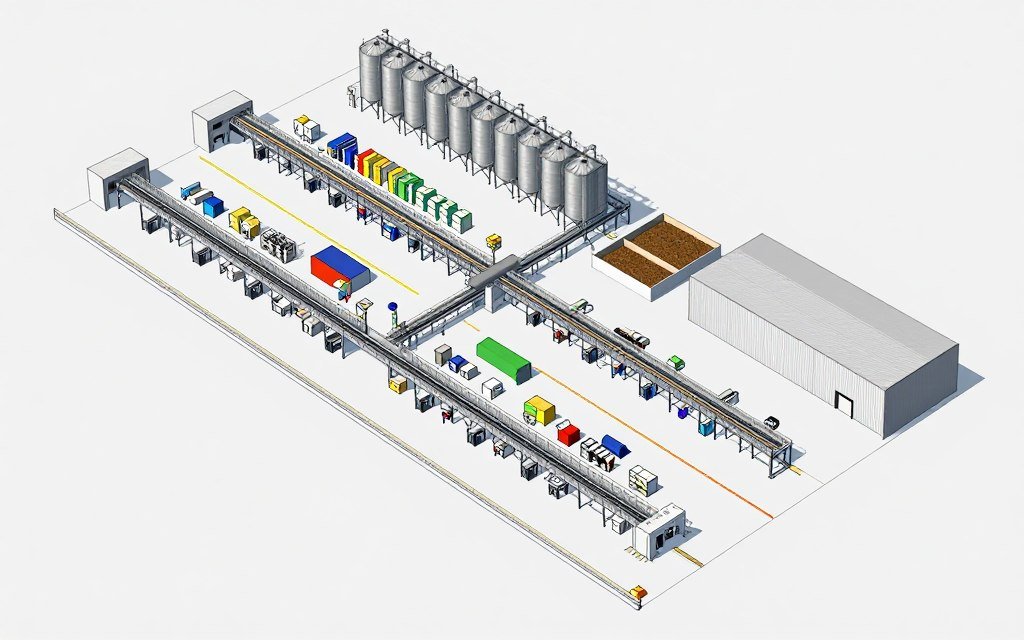
Modular expansion adds production lines incrementally as demand grows. This strategy reduces operational risk but requires higher initial capital and larger facility footprints. British operations serving volatile export markets favour this flexibility despite increased complexity.
Scalability Advantages for Growing Operations
Starting with one line and adding capacity in 500 kilogram to two tonne hourly increments matches revenue growth to capital deployment. New market opportunities can be pursued without over-committing resources. Equipment failures impact only partial capacity rather than complete production shutdowns.
Product diversification becomes practical with multiple lines. Dedicated lines for different pellet sizes, nutritional formulations, or even species-specific feeds eliminate contamination risks and changeover downtime. A aquatic feed production line configured for salmon feeds cannot easily switch to tilapia formulations requiring different pellet densities.
Infrastructure Investment Implications
Modular growth demands upfront facility planning for eventual full buildout. Electrical supply, structural foundations, raw material handling, and finished product storage must accommodate future lines even when initially installing single-line capacity. This forward planning increases initial construction costs but prevents expensive retrofits later.
Phase One Installation
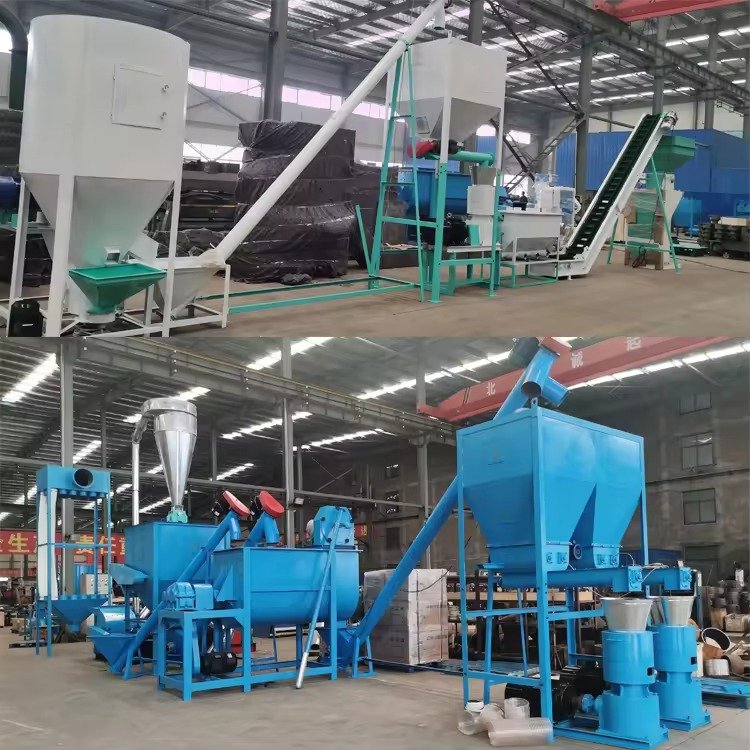
- Single production line: 1-2 T/H capacity
- Basic raw material storage: 50 tonnes
- Essential quality control laboratory
- Foundation prepared for two additional lines
- Electrical capacity: 200 kW installed, 600 kW provisioned
Phase Two Expansion
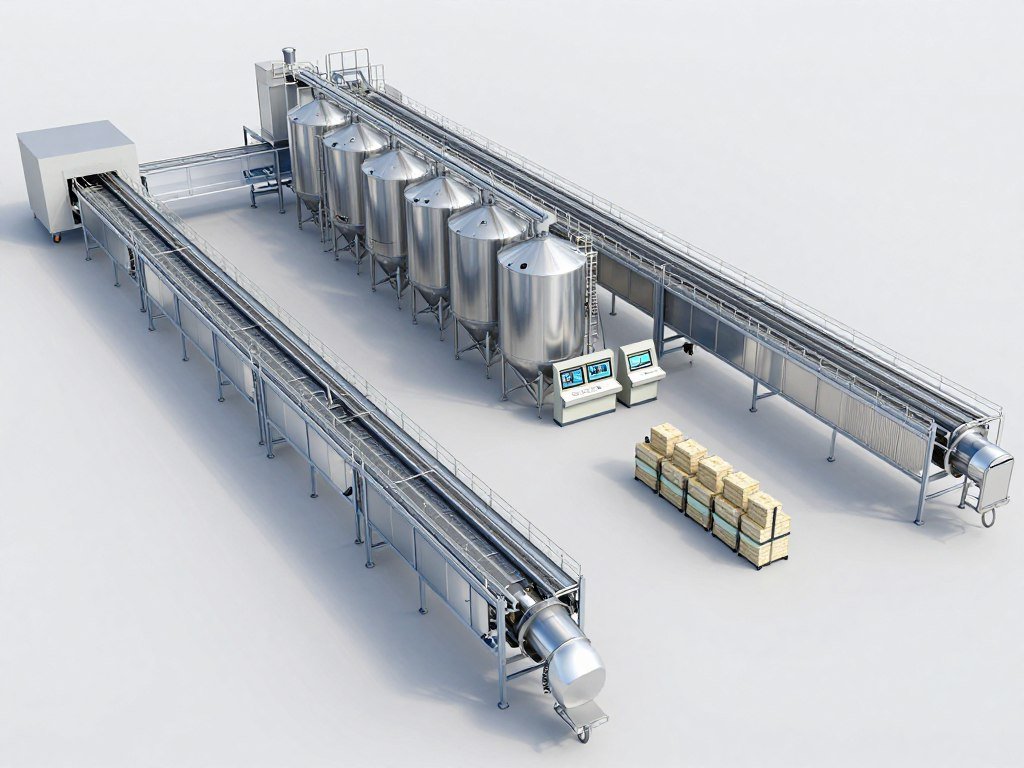
- Second production line added: total 2-4 T/H
- Expanded storage: 100 tonnes raw materials
- Shared control systems integration
- Dedicated maintenance workshop established
- Enhanced quality testing equipment
Phase Three Completion
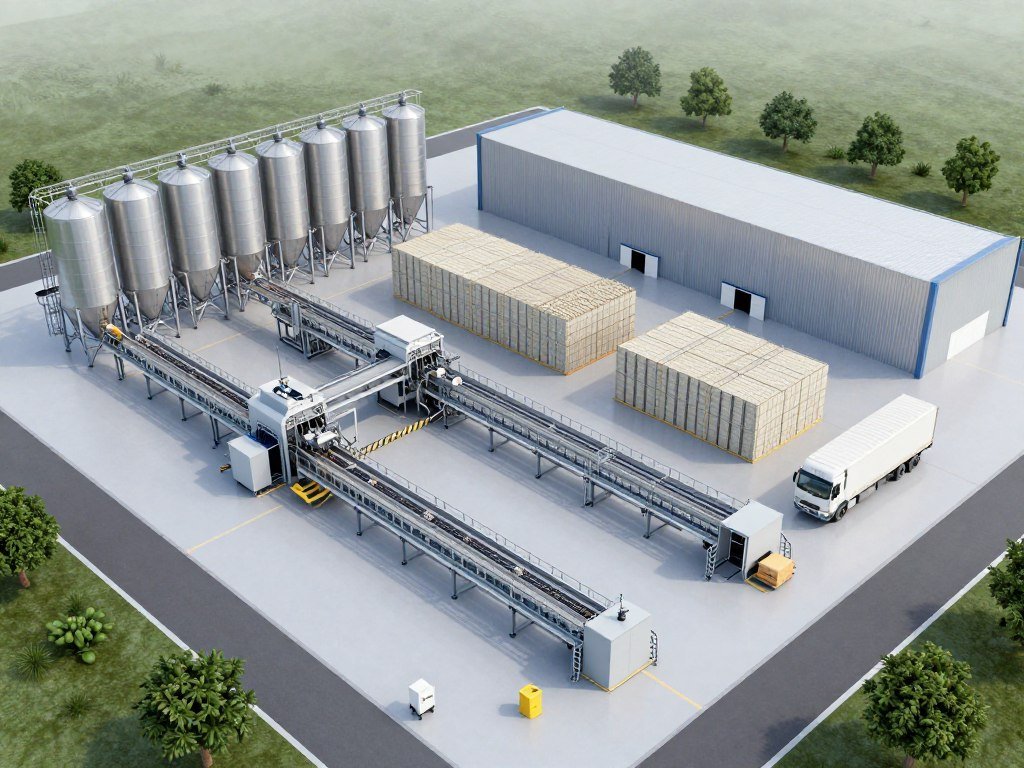
- Third line operational: total 3-6 T/H capacity
- Full automation and process control
- Maximum storage: 200 tonnes capacity
- Automated packaging and palletising
- Complete spare parts inventory system
Operational Flexibility Benefits
Multiple lines enable scheduled maintenance without production interruption. Individual line shutdowns for die changes, motor servicing, or component replacement proceed whilst other lines maintain output. This flexibility proves invaluable during peak demand periods when production continuity matters most.
Labour requirements shift from intensive shift patterns to single-shift operation with appropriate staffing levels. Equipment operators develop specialisation on individual lines rather than attempting to master all systems. Quality consistency improves when production teams maintain focused responsibility.
Request MK-L003 Modular Configuration Details
Get specifications for modular 1-100 T/H systems including UK pricing, energy consumption data, installation timelines, and Brexit-compliant import documentation.
Technical Specifications: MAIKONG MK-L003 Production Line
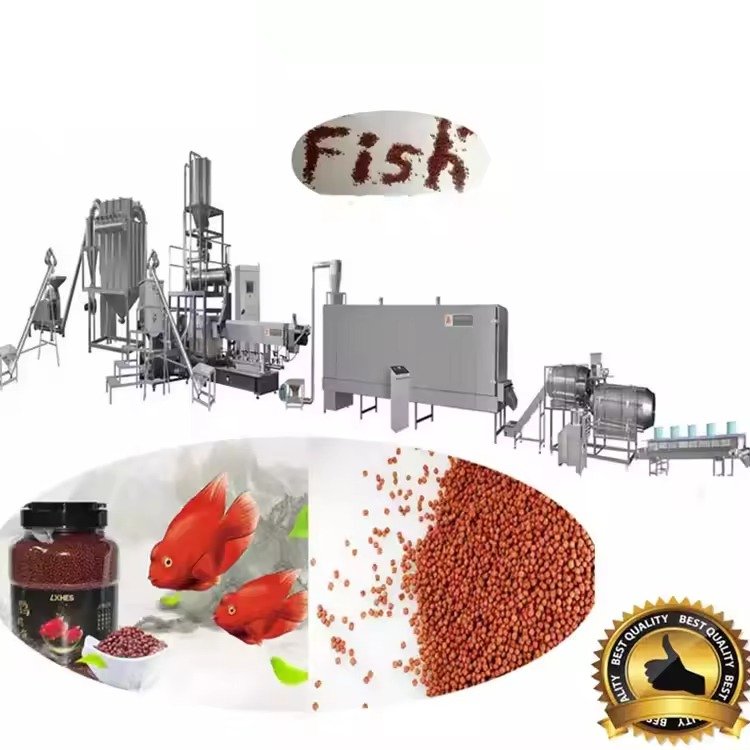
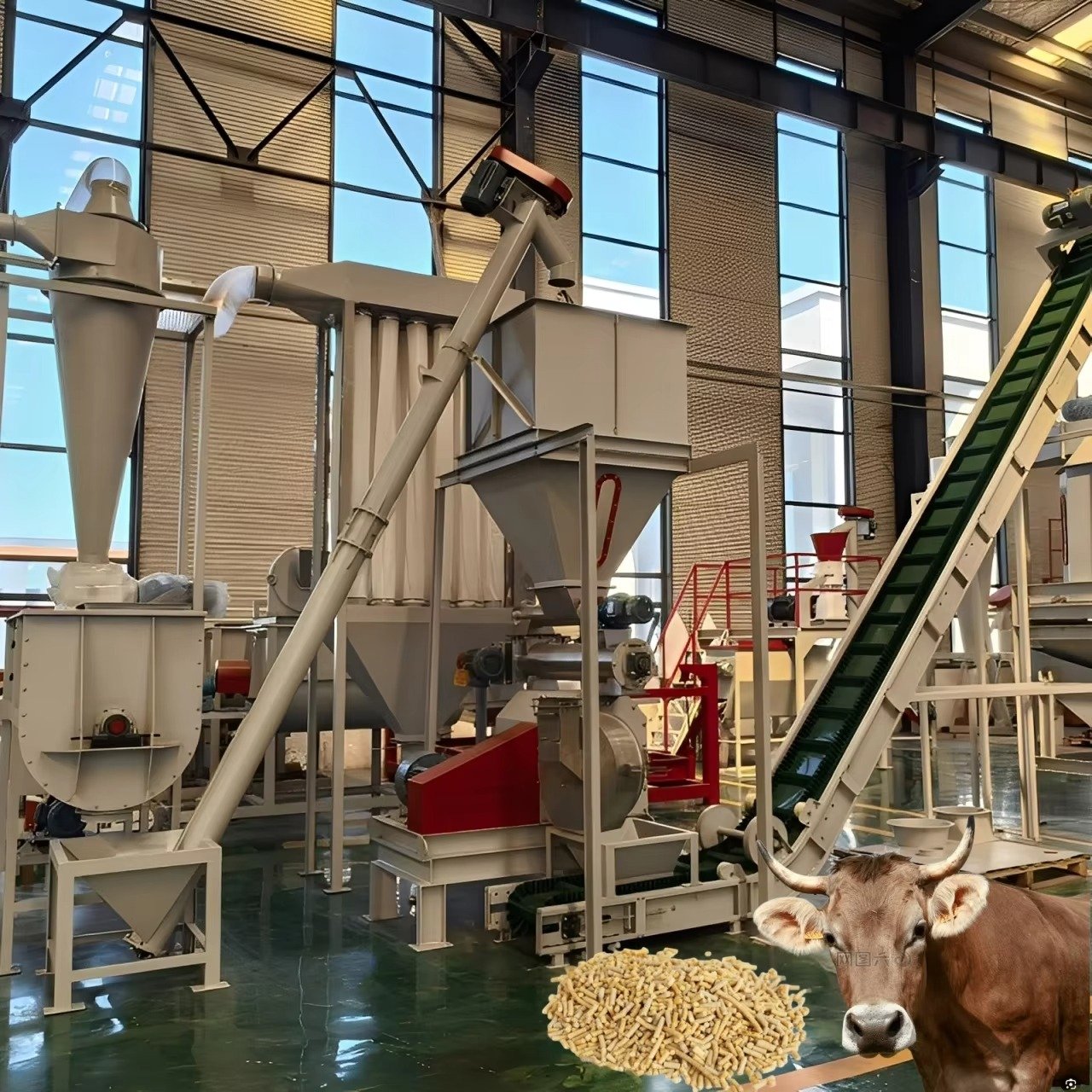
The MK-L003 represents 22 years of refinement in feed production line engineering. This modular system accommodates capacities from one to 100 tonnes hourly through component selection and configuration. British installations benefit from factory pre-configuration for 400-volt three-phase power and CE certification documentation.
Core Equipment Components
Each production line comprises eight primary sections. The crushing system processes whole grains and protein sources into consistent particle sizes. Automated batching ensures formula accuracy within 0.3 percent tolerance. Mixing achieves coefficient of variation below five percent through twin-shaft paddle design.
| Equipment Component | Model Designation | Capacity Range | Power Requirement | Key Feature |
| Feed Hammer Mill | MK-HM320 | 3-25 T/H | 30-160 kW | Variable screen sizes |
| Mixing Machine | MK-MX1500 | 250-2000 kg/batch | 4-55 kW | Twin-shaft paddle |
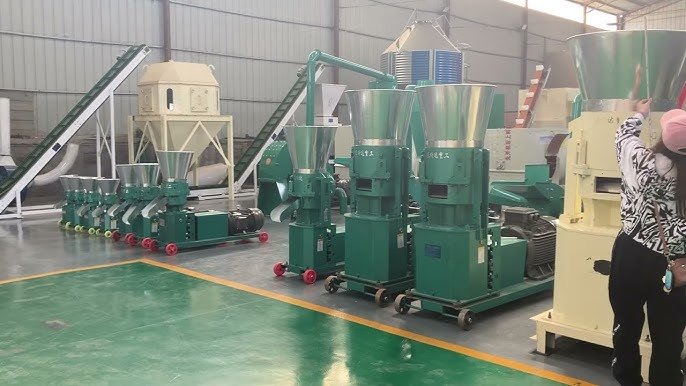
| Pellet Mill | MK-PM420 | 1-42 T/H | 22-315 kW | Ring die system |
| Pellet Cooler | MK-CL6 | 3-25 T/H | 30-160 kW | Counterflow design |
| Pellet Crumbler | MK-CR280 | 3-8 T/H | 7.5-18.5 kW | Adjustable gap |
| Screening Machine | MK-SC180 | 3-20 T/H | 1.5-5.5 kW | Multi-deck separation |
| Packaging Machine | MK-PK50 | 6-12 bags/min | 1.1-5 kW | Automatic weighing |
| Control System | MK-CS-PRO | Full line | 2.2 kW | PLC automation |
Production Process Flow
Raw materials enter through receiving hoppers equipped with magnetic separators and pre-cleaning screens. The hammer mill reduces particle size to specified ranges between 0.8 and three millimetres depending on final pellet requirements. Automated batching draws ingredients from individual bins according to programmed formulations.
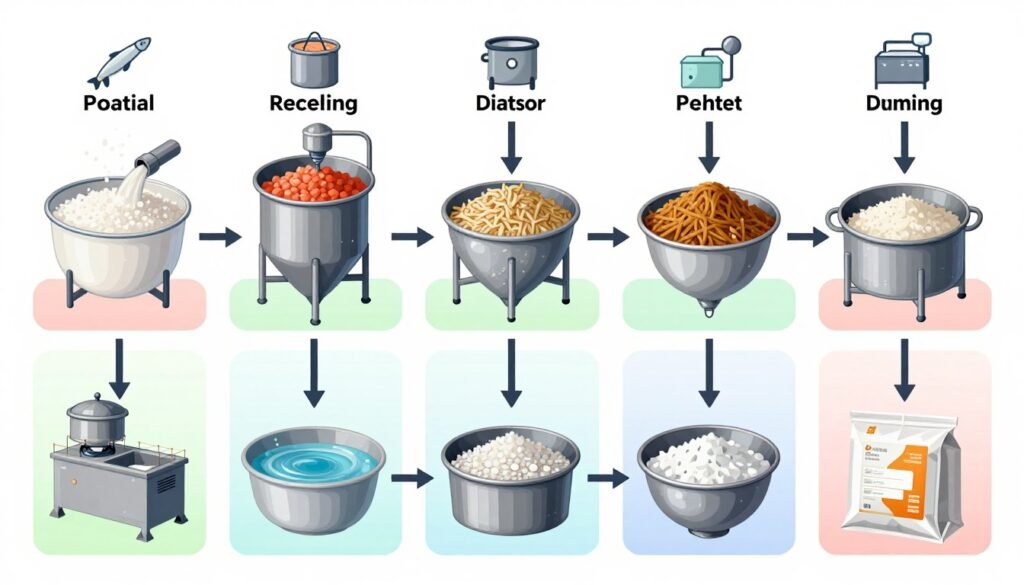
The twin-shaft mixer combines dry ingredients with liquid additives including fish oil and molasses. Mixing duration typically ranges from 90 to 180 seconds achieving uniformity coefficients below five percent. Properly mixed material feeds into the conditioning chamber where steam and additional moisture prepare the mass for pelleting.
Pellet formation occurs through the ring die press operating at 75 to 85 degrees Celsius. Die hole diameter and length determine final pellet size and density. Poultry feed production line dies differ significantly from aquatic feed specifications due to density requirements.
Quality Control Integration Points
Modern production lines incorporate automated quality monitoring at critical stages. Pellet durability index testing occurs post-cooling using standardised tumbling procedures. Moisture analysers ensure finished product falls within 10 to 12 percent moisture content preventing mould growth during storage.
Temperature monitoring throughout conditioning and pelleting stages protects heat-sensitive nutrients including vitamins and probiotics. British operations targeting premium aquaculture markets invest in near-infrared spectroscopy systems for real-time nutritional verification.
UK Import Process and Brexit Compliance Requirements
Importing feed production equipment from China to the United Kingdom involves specific documentation and compliance steps. MAIKONG provides comprehensive support throughout this process based on 22 years of international supply experience including 15 European installations.
Essential Import Documentation
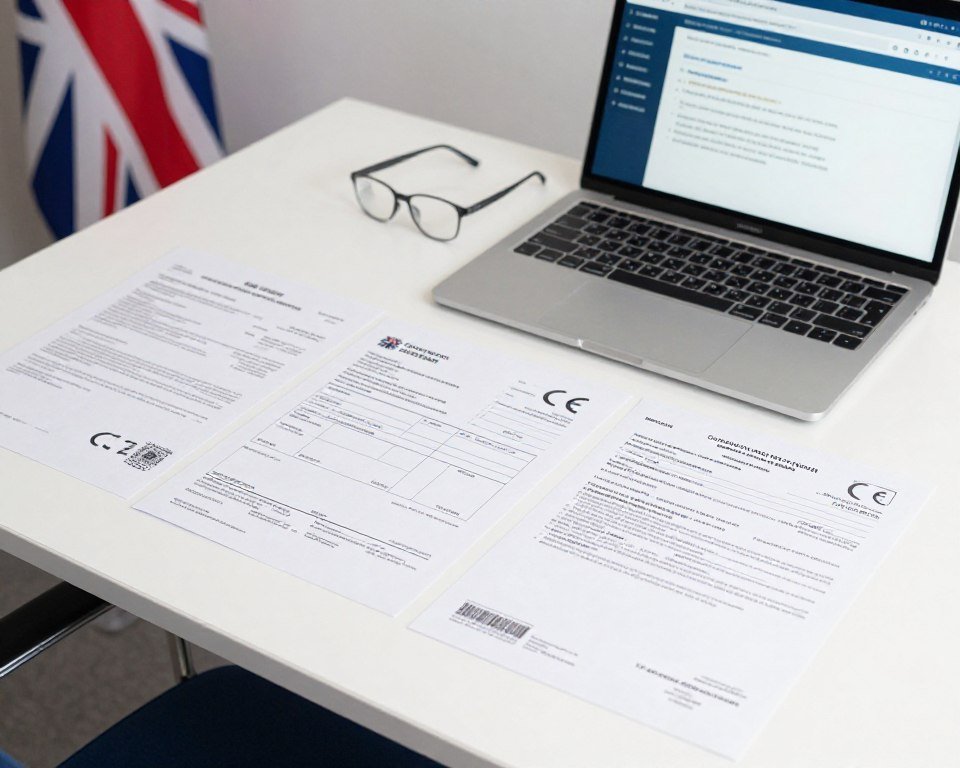
Complete shipments require commercial invoice detailing equipment specifications and values, packing list itemising all components and crates, bill of lading establishing ownership transfer, and certificate of origin. Post-Brexit regulations demand additional declarations including UK Conformity Assessed marking for certain electrical components.
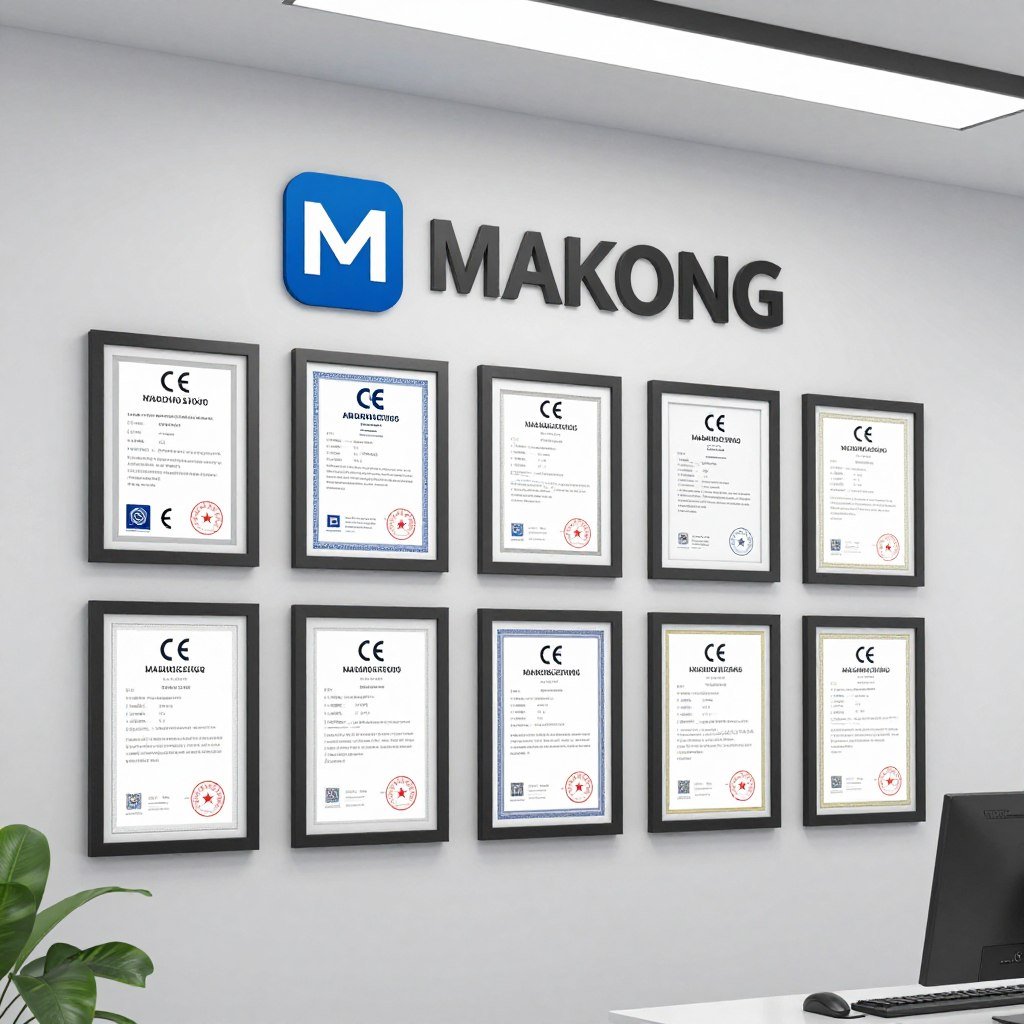
CE certification documents accompany all MAIKONG equipment. This certification demonstrates compliance with European health, safety, and environmental protection standards. UK authorities continue recognising CE marks during transition periods whilst developing UK Conformity Assessed equivalents.
Customs Classification and Duty Rates
Feed production equipment falls under HS code 8436 covering machinery for preparing animal feeding stuffs. Current UK import duty rates for this classification range from zero to 2.7 percent depending on specific sub-categories. Value-added tax applies at standard 20 percent rate calculated on combined equipment value plus shipping costs plus applicable duties.
Typical UK Import Cost Breakdown for MK-L003 System
Equipment FOB Value: £150,000
Sea Freight to UK Port: £4,500 – £6,000 (container)
Insurance (0.3%): £450
Import Duty (2.7%): £4,050
VAT (20%): £31,800
Customs Clearance: £400 – £600
Inland Transport: £800 – £1,500
Total Landed Cost: £192,000 – £194,500
Installation and Commissioning Support
MAIKONG provides factory-trained technicians for UK installations. Typical commissioning periods range from five to ten working days depending on production line complexity. This service includes equipment assembly, electrical connections verification, trial production runs, and operator training.
Remote technical support continues post-installation through video conferencing and diagnostic software. Critical spare parts stock recommendations ensure British operations maintain production continuity. A pet feed production line shares many components with aquatic feed systems enabling consolidated spare parts inventory.
European Installation Success Stories
Real-world performance data from European installations demonstrates how different expansion strategies perform under varying market conditions. These examples provide insight into decision factors that determined optimal approaches for specific operational contexts.
Netherlands Aquaculture Feed Cooperative
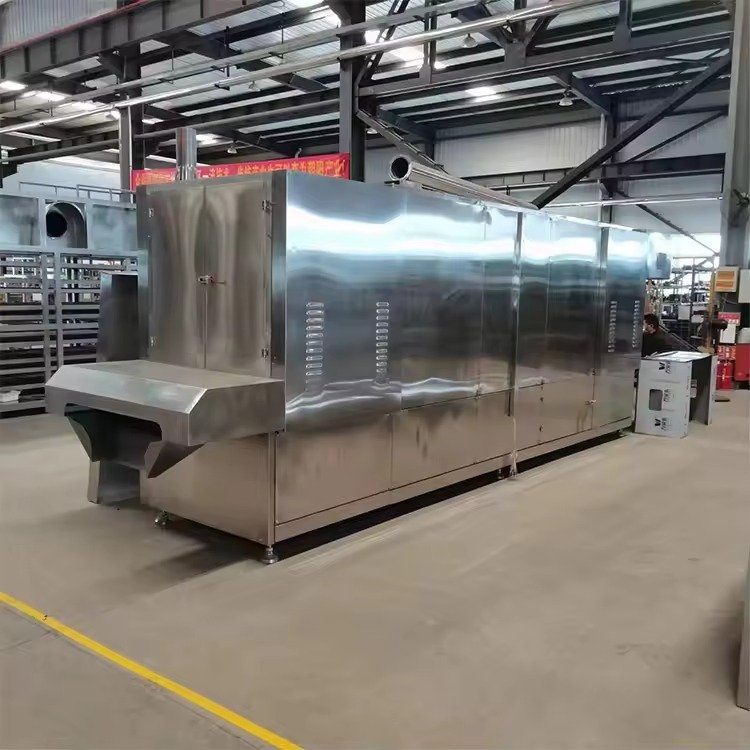
A Dutch cooperative serving 47 fish farms initially installed single MK-L003 line with two-shift operation. Within 18 months, unscheduled maintenance during peak spring demand created supply disruptions affecting member farms. They subsequently added a second parallel line operating single shift, which eliminated production vulnerability whilst reducing operator fatigue.
This transition increased capital investment by £140,000 but improved average equipment uptime from 73 percent to 94 percent. Member satisfaction scores rose significantly as delivery reliability improved. The cooperative now operates both lines during March through August, then consolidates to single-line operation during winter months.
Scottish Salmon Feed Producer
A Scottish operation chose modular expansion from inception, installing 1.5 tonne hourly capacity initially with facility infrastructure supporting eventual 4.5 tonne hourly capacity. As contracts with salmon farms grew, they added second and third lines at 18-month intervals. This phased approach matched capital deployment to revenue growth whilst maintaining cash flow.
Total investment over four years reached £385,000 compared to estimated £420,000 for equivalent capacity installed simultaneously. Energy consumption optimisation between lines reduced per-tonne production costs by 12 percent compared to intensive single-line operation.
Norwegian Tilapia Feed Manufacturer
A Norwegian producer targeting export markets implemented modular strategy with dedicated lines for different pellet sizes. Their three-line facility produces two-millimetre starter feeds, four-millimetre grower feeds, and six-millimetre finisher pellets simultaneously. This specialisation eliminated changeover downtime and contamination risks between formulations.
Customer retention rates improved as delivery lead times shortened from seven days to 48 hours. The ability to maintain perpetual inventory of all pellet sizes created competitive advantage worth the additional capital investment in multiple lines.
Decision Framework: Choosing Your Expansion Strategy
Selecting between intensive single-line operation and modular growth requires systematic evaluation of multiple factors. This framework guides British feed producers through critical decision points based on operational context and strategic objectives.
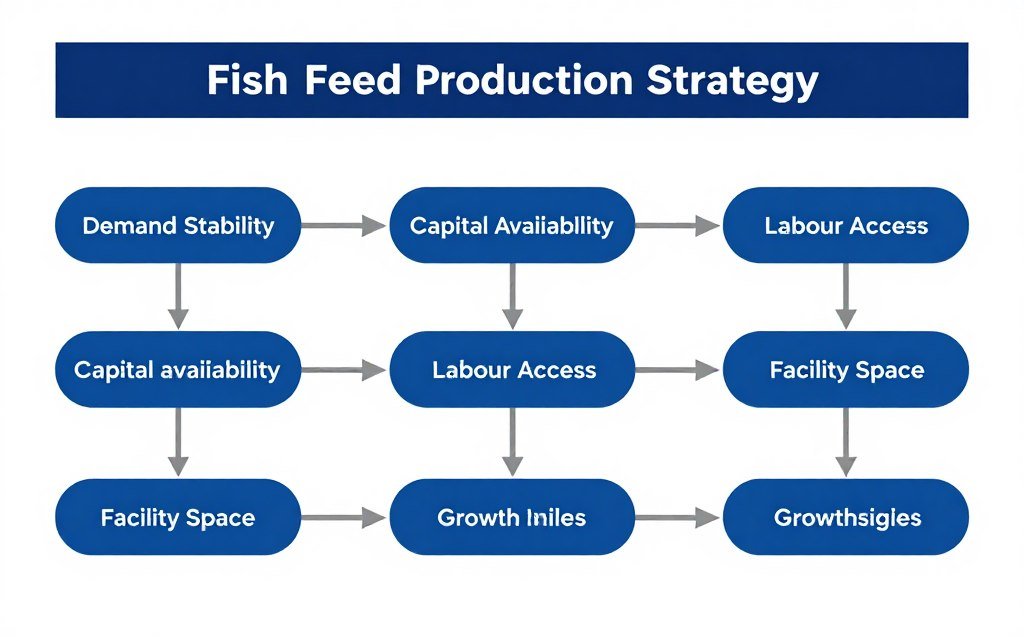
Demand Pattern Analysis
Examine 24 months of historical sales data identifying seasonal patterns and growth trends. Calculate coefficient of variation across monthly volumes. Values below 15 percent indicate stable demand favouring intensive operation, whilst values above 30 percent suggest modular flexibility provides better risk management.
Project forward demand across three, five, and ten-year horizons using conservative, moderate, and optimistic scenarios. Modular strategies prove superior when uncertainty spans broad ranges, whilst intensive operation suits predictable linear growth trajectories.
Financial Capacity Assessment
Compare available capital against total investment requirements for each strategy. Single-line intensive operation demands 35 to 45 percent less initial capital but generates higher ongoing operational costs through labour duplication and accelerated maintenance cycles.
Calculate net present value across both strategies using realistic discount rates reflecting UK business lending conditions. Include energy cost projections accounting for anticipated electricity price movements. British operations must factor carbon pricing impacts on energy-intensive processes.
What electricity capacity does the MK-L003 require for UK installations?
The MK-L003 requires three-phase 400-volt supply with capacity ranging from 75 to 500 kilowatts depending on hourly production target. A two-tonne hourly system typically demands 180 to 220 kilowatts total connected load. UK facilities should verify transformer capacity and consider power factor correction equipment to optimise electricity costs. MAIKONG provides detailed electrical specifications during quotation stage including motor schedules and control panel requirements.
How long does equipment shipping and installation take for UK deliveries?
Sea freight from Chinese manufacturing facilities to UK ports typically requires 28 to 35 days. Customs clearance adds three to seven working days post-Brexit. Inland transport and installation scheduling depends on facility readiness. Complete timeline from order confirmation to production startup averages 75 to 95 days. MAIKONG coordinates with UK logistics partners familiar with feed equipment handling and can expedite critical path items through air freight when justified.
Can the MK-L003 produce both floating and sinking fish feed pellets?
The standard MK-L003 configuration produces sinking pellets suitable for bottom-feeding species including tilapia and catfish. Floating pellet production requires extruder technology rather than standard ring die pelleting. MAIKONG offers the MK-EX series specifically designed for floating aquatic feeds with expansion chambers creating buoyant pellets. Combination facilities often install both systems serving different species requirements. Our technical team helps determine optimal equipment selection based on your target species and pellet specifications.
What warranty and spare parts support does MAIKONG provide for UK installations?
MAIKONG provides 24-month warranty covering manufacturing defects and component failures under normal operating conditions. Wear parts including pellet dies, roller shells, and hammer mill screens carry 90-day warranty as these items experience predictable consumption. We maintain UK-accessible spare parts inventory for critical components ensuring delivery within 48 to 72 hours. Technical support continues throughout equipment lifecycle through video conferencing, remote diagnostics, and periodic site visits. Extended warranty programmes available for operations requiring guaranteed uptime.
How does modular expansion affect per-tonne production costs compared to intensive single-line operation?
Modular installations typically show eight to 12 percent higher per-tonne costs during initial single-line operation due to facility overhead distribution across lower volumes. However, as subsequent lines activate, per-tonne costs decline 15 to 22 percent below equivalent intensive single-line scenarios. This occurs through improved maintenance efficiency, reduced overtime labour, better energy load management, and eliminated rush-order premiums for parts. British operations benefit particularly from flexibility to idle lines during low-demand periods avoiding unnecessary energy consumption whilst maintaining production capability.
Facility Constraint Evaluation
Measure available production floor space, ceiling height, and structural load capacity. Modular strategies require 40 to 60 percent more floor area than equivalent intensive single-line configurations. Vertical space limitations may prevent installation of taller components including surge bins and bucket elevators necessary for multi-line material handling.
Assess electrical infrastructure upgrade costs. Adding production capacity often requires transformer replacement or service entrance upgrades. These infrastructure investments favour strategies consolidating expansion into fewer, larger-capacity installations rather than multiple incremental additions.
Why UK Feed Producers Choose MAIKONG for Production Line Projects
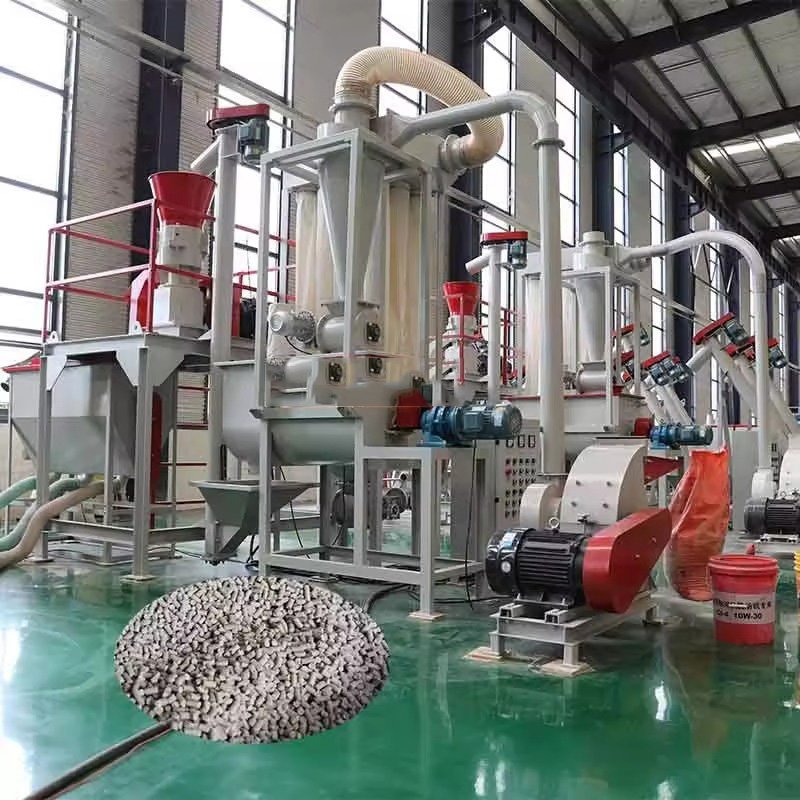
MAIKONG brings 22 years of specialised experience in feed production line manufacturer engineering serving 130 global installations. Our UK client support distinguishes us from competitors through Brexit-compliant processes, energy-efficient configurations, and long-term partnership commitment.
Customisation Capabilities for British Market Requirements
Every UK installation receives voltage configuration verification, CE certification documentation, and operational manual translation. We modify control systems to Imperial measurement displays when requested. Pellet die specifications adapt to British raw material characteristics including locally sourced wheat varieties and North Atlantic fish meal properties.
OEM and ODM programmes enable British distributors to develop branded feed equipment lines. Private labelling extends to control panel graphics, equipment colour schemes, and operational software interfaces. This flexibility supports partners building distinct market positions whilst leveraging MAIKONG manufacturing expertise.
Technical Support Infrastructure
UK time zone coverage ensures technical queries receive response within four business hours. Video diagnostic capabilities enable remote troubleshooting reducing on-site visit requirements. Comprehensive parts catalogues with UK pricing in pounds sterling simplify maintenance planning. Emergency parts shipment via air freight reaches British facilities within 48 hours when production continuity demands urgent intervention.
MAIKONG Competitive Advantages
- 22-year manufacturing heritage with continuous R&D investment
- 130 global installations including 15 European projects
- Complete capacity range from 200 kg/h to 200 tonnes/h
- Modular design enabling phased expansion investment
- Energy-efficient components reducing UK operating costs
- Brexit-compliant documentation and import support
- UK-based spare parts inventory for rapid delivery
- Multi-language technical support team availability
- OEM/ODM customisation for distributor partners
- Comprehensive installation training and commissioning
Partnership Opportunities for UK Distributors
MAIKONG actively seeks qualified UK distributors and agents for regional market development. Our partnership programme provides exclusive territory rights, competitive margin structures, technical training, marketing collateral, and lead generation support. Successful partners benefit from growing demand as British aquaculture and livestock sectors modernise production capabilities.
Distributor candidates demonstrate established relationships within UK feed production, agricultural equipment, or aquaculture supply sectors. Technical competence in equipment sales and customer support ensures partnership success. We invest in distributor development through factory visits, product training, and co-marketing initiatives.
Become a MAIKONG UK Distributor or Agent
Join our growing network of European partners. Exclusive territory opportunities available for qualified distributors with established feed industry relationships. Competitive margins, comprehensive technical training, marketing support, and 22-year manufacturer backing.
Contact: Lucy@feedproductionline.uk | WhatsApp/Tel: +86 1581 -5556-422
Making Your Expansion Decision With Confidence
Choosing between intensive single-line operation and modular production growth shapes your facility’s competitiveness for years ahead. British feed producers face unique considerations including volatile energy costs, Brexit import complexities, and evolving aquaculture market demands. Neither strategy proves universally superior; optimal selection depends on your specific operational context, financial capacity, and strategic timeline.
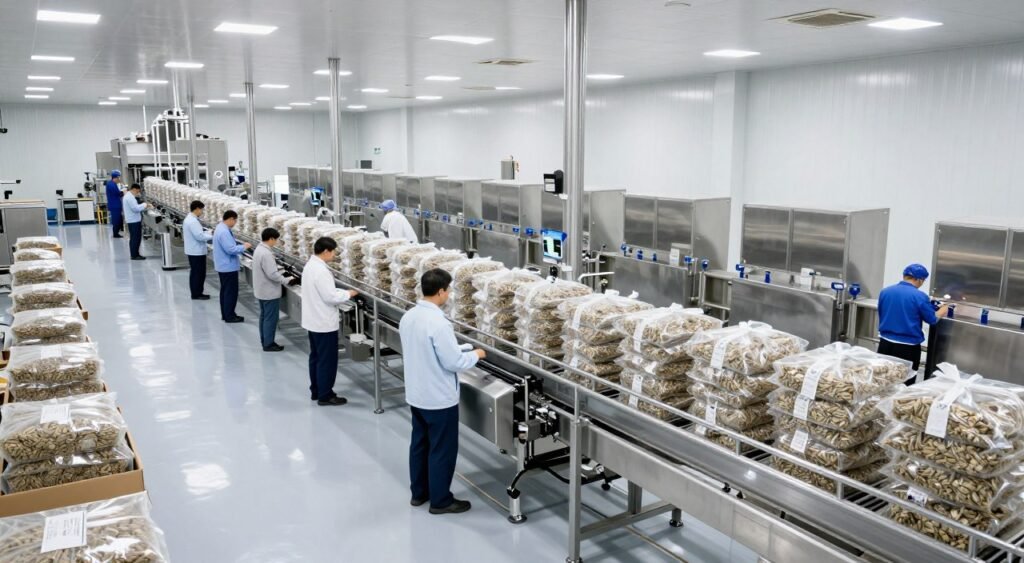
Demand stability analysis, capital availability assessment, and facility constraint evaluation form the foundation for sound decision-making. Operations serving steady year-round markets with limited expansion space may find intensive utilisation optimal despite labour and maintenance complexities. Conversely, producers facing demand volatility or pursuing growth trajectories benefit from modular flexibility despite higher initial infrastructure investment.
The MK-L003 production line from MAIKONG accommodates either strategy through modular component design and scalable configurations. Our 22 years serving UK and European clients provides insight into expansion approaches that succeed under varying market conditions. Whether you implement intensive operation or modular growth, equipment quality, technical support, and partnership commitment determine long-term success.
British aquaculture continues expanding as consumers seek sustainable protein sources. Feed producers investing wisely in production capacity today position themselves advantageously for coming growth. Take time evaluating your specific context systematically. The expansion decision warrants careful analysis given multi-year capital commitment and competitive implications.
MAIKONG stands ready to support your evaluation process with technical consultation, capacity planning assistance, and detailed quotations reflecting UK-specific requirements. Our goal extends beyond equipment sales to establishing partnerships that succeed throughout production line lifecycles. Contact our UK specialist team to discuss your expansion planning needs.