
Aquatic Feed Production Line Manufacturer: Complete Guide to Industrial Fish Shrimp Feed Processing Systems
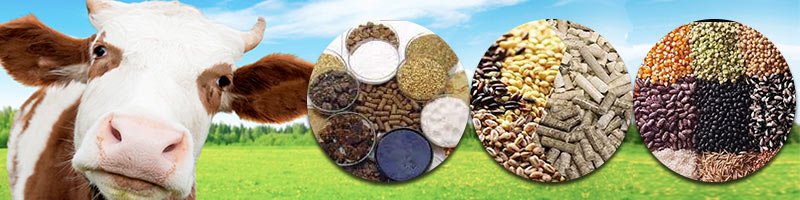
Selecting the right aquatic feed production line manufacturer determines whether your fish farm achieves optimal growth rates or struggles with poor feed conversion. The global aquaculture industry now consumes over 48 million tonnes of manufactured feed annually, yet many operations still grapple with pellet quality issues, production bottlenecks, and equipment failures that devastate profitability.
This comprehensive guide examines industrial aquatic feed production line systems from a UK manufacturing perspective. You will discover how production capacity, species-specific requirements, and equipment configuration impact your total cost of ownership.
We address critical buyer concerns including water stability testing, pellet uniformity standards, spare parts logistics, and after-sales technical support. Whether you operate a 5-tonne-per-hour salmon feed mill or plan a 50-tonne shrimp feed facility, you need equipment that delivers consistent output without constant maintenance intervention.
Free Production Line Design Consultation
Our technical team provides no-obligation capacity analysis and equipment recommendations tailored to your specific aquaculture operation. Get expert guidance on system configuration, species requirements, and production optimization.
UK Technical Support: +86 135-1090-7401
Aquatic Feed Production Line Components and Processing Flow
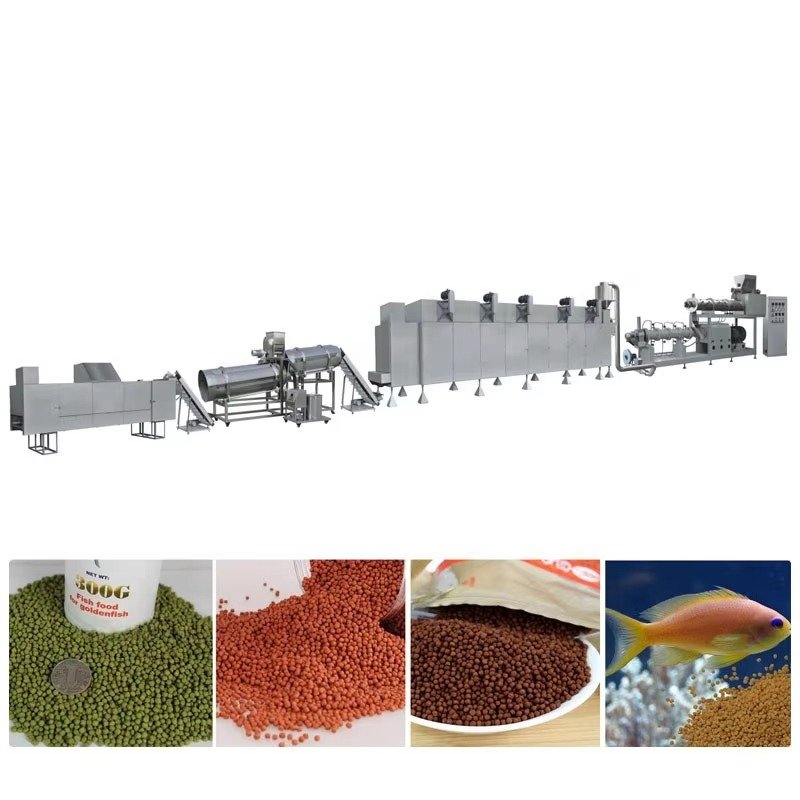
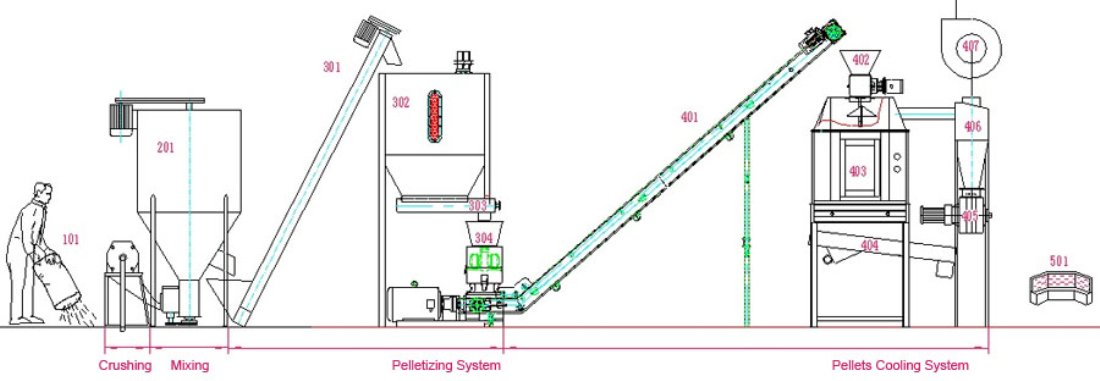
An industrial fish feed production line comprises six integrated processing modules that transform raw materials into water-stable pellets. Each module performs a specific function within the production sequence, and equipment selection at every stage affects final pellet quality.
Raw Material Reception and Pre-Cleaning Systems
The production process begins when raw materials arrive at your facility. Pre-cleaning equipment removes contaminants including metal fragments, stones, and oversized particles that damage downstream machinery. Magnetic separators extract ferrous metals, whilst vibrating screens eliminate debris.
A typical 10-tonne-per-hour system requires a pre-cleaning capacity of 12 tonnes per hour to accommodate material variations. Installation includes dust extraction units that maintain air quality and prevent material loss. The pre-cleaning stage accounts for approximately 8% of total system investment but prevents costly equipment damage.
Crushing and Size Reduction Equipment
Hammer mills reduce particle size to specifications required for optimal nutrient mixing and pellet formation. Aquatic feed production demands finer grinding than poultry or livestock applications. Fish feed typically requires particles between 0.5mm and 2.0mm diameter, depending on the target species.
Modern crushers incorporate screen mesh ranging from 1.5mm to 4mm apertures. A 15-tonne-per-hour fish feed line commonly employs a 75kW hammer mill with hardened steel hammers and replaceable screen panels. Maintenance intervals extend to 2,000 operating hours when processing standard fish meal and grain ingredients.
Crushing System Specifications
- Particle size output: 0.5-4.0mm depending on species requirements
- Screen mesh options: 1.5mm, 2.0mm, 2.5mm, 3.0mm, 4.0mm apertures
- Motor power range: 22kW to 160kW based on capacity
- Throughput capacity: 1-25 tonnes per hour
- Hammer replacement cycle: 1,500-2,500 hours normal operation
Precision Batching and Mixing Operations
Accurate ingredient dosing ensures nutritional consistency across production batches. Computer-controlled batching systems weigh each component to ±0.2% accuracy. A standard aquatic feed production line incorporates 8-12 ingredient bins with individual load cells.
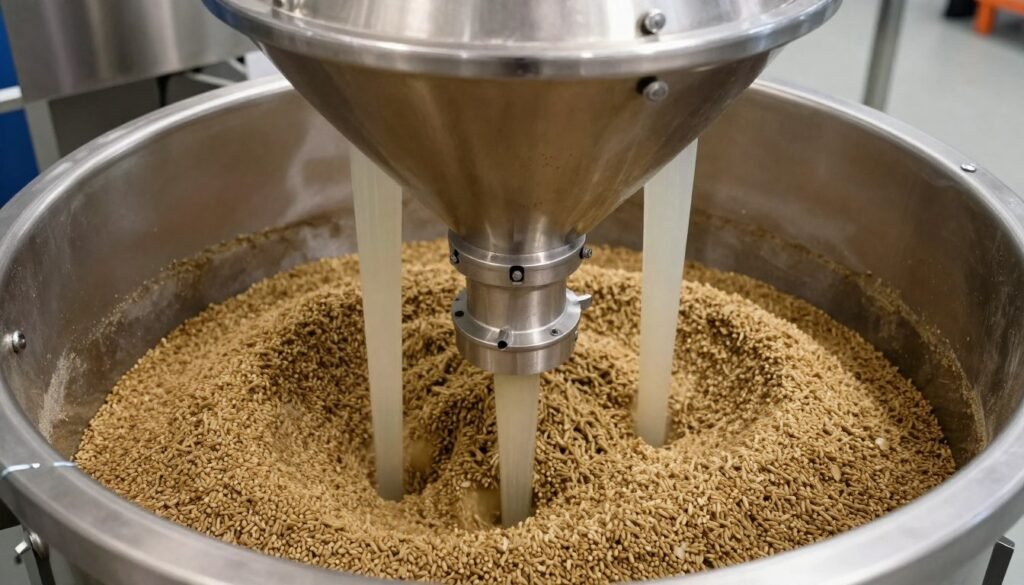
Twin-shaft paddle mixers achieve homogeneity within 3-5 minutes at batch sizes matching downstream pelleting capacity. Liquid addition systems inject fish oil, vitamins, and binders during the mixing cycle. Achieving proper uniformity requires mixer design that prevents ingredient segregation, particularly when combining materials with different bulk densities.
Pelleting Technology for Aquatic Feed Applications
The pelleting stage transforms mixed powder into dense, water-stable pellets suitable for aquatic species. This process requires specialized equipment configuration different from poultry feed production line systems.
Steam Conditioning Prior to Pellet Formation
Conditioners inject saturated steam into the feed mash before it enters the pellet mill. This heat treatment gelatinizes starches, improving pellet durability and water stability. Aquatic feeds require conditioning temperatures between 80°C and 95°C, held for 15-30 seconds.
The conditioning process affects pellet quality more than any other production variable. Insufficient steam treatment produces crumbly pellets with poor water stability. Excessive temperature degrades heat-sensitive vitamins and amino acids. Proper conditioner design maintains uniform temperature distribution across the material stream.
| Species Type | Conditioning Temperature | Retention Time | Moisture Addition | Pellet Durability Target |
| Salmon Feed | 85-90°C | 20-25 seconds | 2.5-3.5% | ≥95% |
| Shrimp Feed | 80-85°C | 15-20 seconds | 2.0-3.0% | ≥97% |
| Tilapia Feed | 82-88°C | 18-23 seconds | 2.5-3.5% | ≥93% |
| Catfish Feed | 80-86°C | 18-22 seconds | 2.0-3.0% | ≥92% |
| Trout Feed | 84-89°C | 20-24 seconds | 2.5-3.5% | ≥94% |
Ring Die Pellet Mills for Aquatic Feed
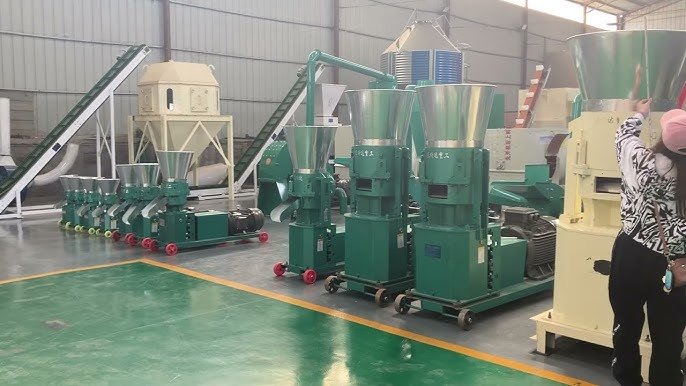
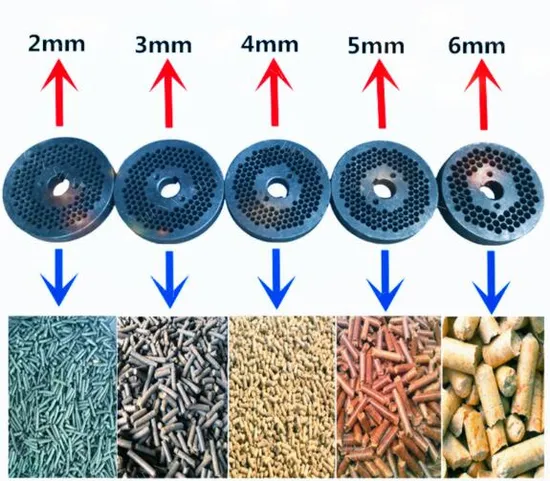
Ring die pellet mills force conditioned mash through die holes using pressure rollers. Die specifications including hole diameter, length-to-diameter ratio, and compression angle determine pellet characteristics. Aquatic feeds commonly use dies with 2.0mm to 6.0mm diameter holes.
A 20-tonne-per-hour capacity pellet mill typically operates with a 132kW main drive motor and requires die replacement every 600-800 operating hours when processing abrasive fish meal formulations. European-manufactured dies offer superior wear resistance but cost 40-60% more than standard options.
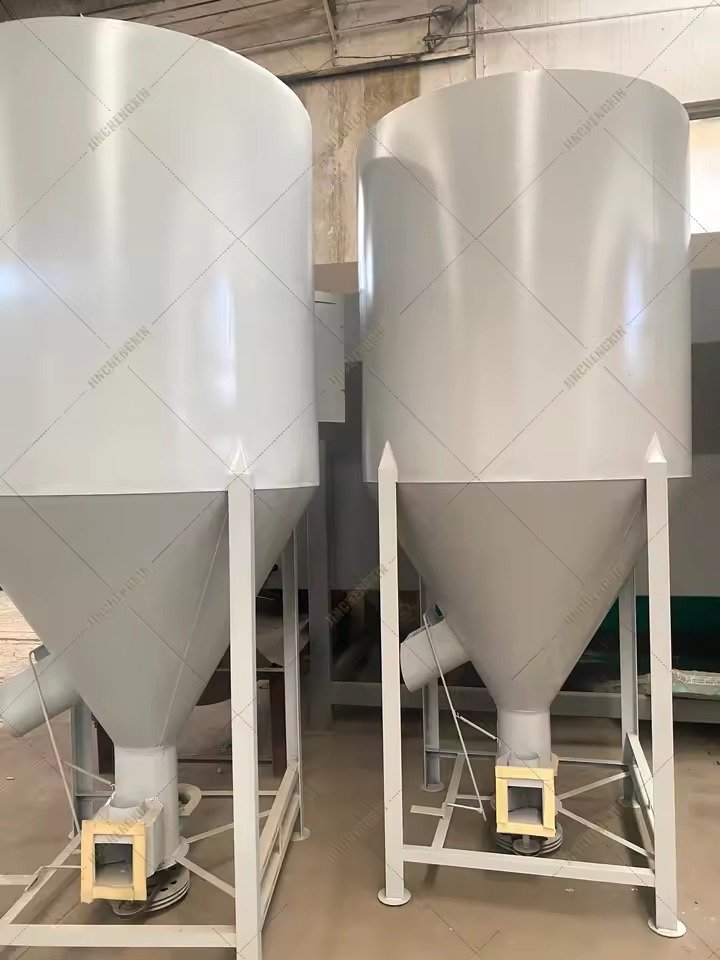
Pellet durability depends on die design, conditioning quality, and formulation characteristics. Measuring pellet durability index involves tumbling samples and calculating the percentage of intact pellets remaining after standardized agitation. Aquatic feeds require minimum 92% durability for salmon and 97% for shrimp applications.
Extrusion Processing for Floating Feeds
Floating feeds require extrusion technology rather than conventional pelleting. Twin-screw extruders cook the feed mixture under high temperature and pressure, then force it through shaped dies. The sudden pressure release at the die exit causes moisture to flash into steam, creating air pockets that provide buoyancy.
Extrusion systems cost approximately 3-4 times more than ring die pellet mills with equivalent capacity. However, extruded feeds offer superior digestibility, reduced water pollution, and better feed monitoring capabilities for intensive aquaculture operations. A 5-tonne-per-hour extruder line requires approximately 350kW total installed power.
Request Equipment Configuration Analysis
Our engineers will specify the optimal pelleting or extrusion system for your target species, production capacity, and feed formulation. Receive detailed equipment recommendations, power requirements, and production cost estimates.
Direct line: +86 135-1090-7401
Post-Pelleting Processing: Cooling, Crumbling, and Screening Systems
Pellets exit the pellet mill at 75-85°C with 15-16% moisture content. This temperature and moisture level promotes mould growth and reduces storage stability. Post-pelleting equipment reduces temperature and moisture to safe levels whilst separating size fractions.
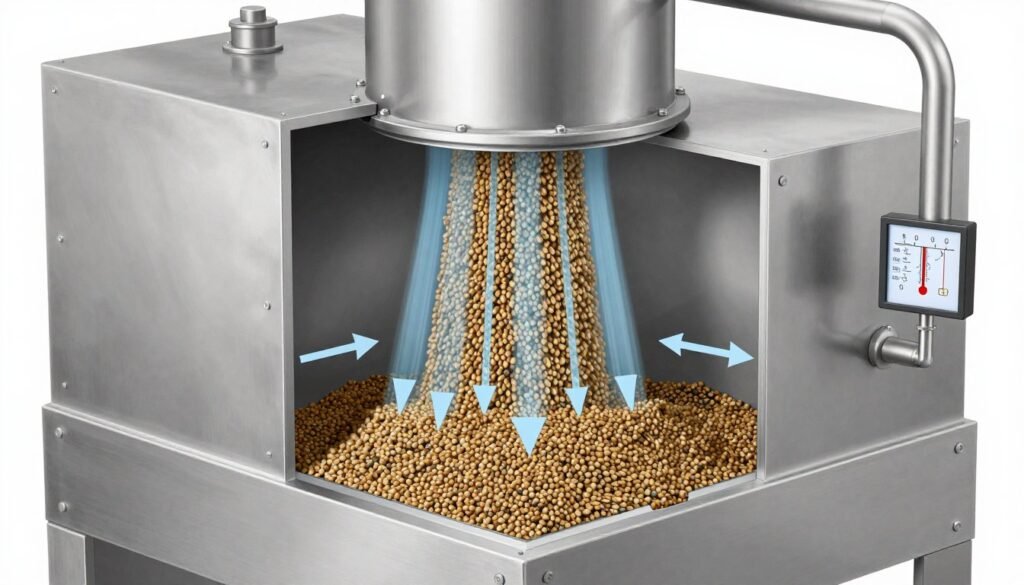
Counter-Flow Pellet Cooling Technology
Counter-flow coolers draw ambient air upward through a descending bed of hot pellets. This design achieves more efficient heat transfer than cross-flow systems. Properly sized coolers reduce pellet temperature to within 5°C of ambient conditions and decrease moisture content to 11-12%.
A 15-tonne-per-hour production line requires a cooler with approximately 6 square metres of cooling area. Pellet residence time in the cooling chamber should not exceed 8-10 minutes to prevent over-drying of the pellet surface, which causes surface cracking and increased fines production.
Crumbling Equipment for Small Pellet Sizes
Young fish and shrimp require smaller particle sizes than standard pellets. Crumbler machines break cooled pellets into controlled size fractions. Adjustable roller gap settings produce crumbles ranging from 0.8mm to 3.0mm.
The crumbling process generates approximately 15-20% fines that require screening and return to the mixer. Efficient crumbler design minimizes dust production whilst maintaining particle size uniformity. Crumble uniformity affects feeding behaviour and growth performance in juvenile aquatic species.
Multi-Deck Screening Systems
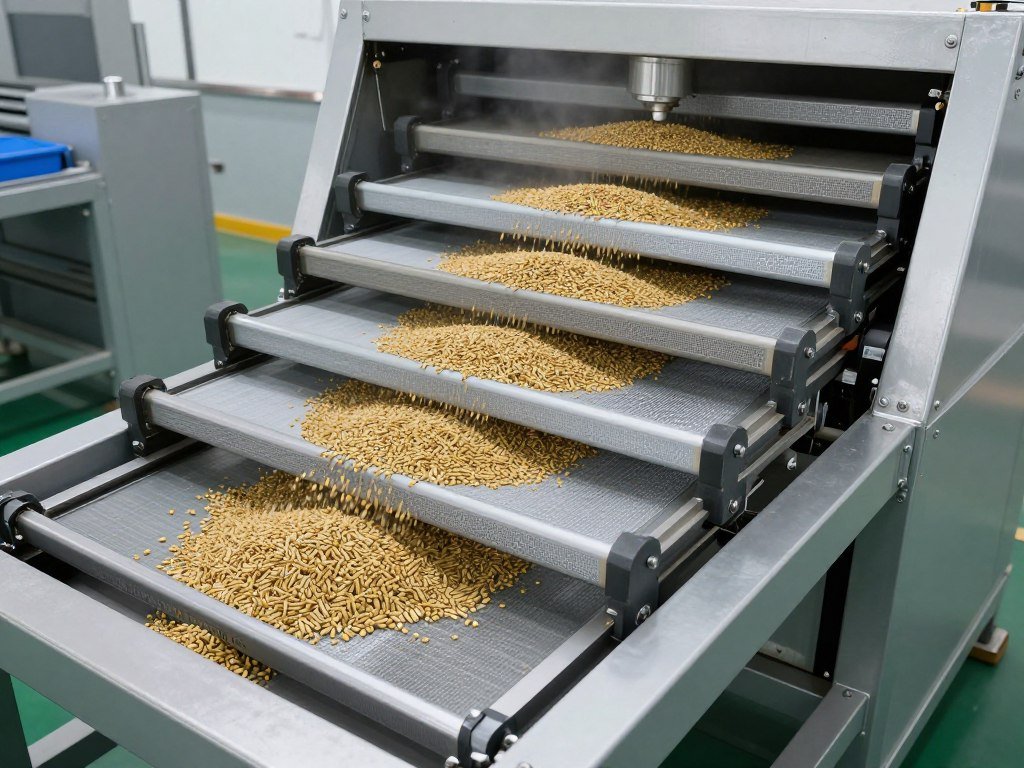
Vibrating screens separate pellets and crumbles into size classifications. Multi-deck screeners incorporate 2-4 screen levels with progressively finer mesh openings. Oversized particles return to the crumbler, whilst fines recycle to the mixer.
Screen mesh selection depends on target pellet size and acceptable tolerance ranges. A salmon feed operation producing 4.5mm pellets typically uses screens with 4.0mm and 5.0mm openings to separate undersized and oversized particles. Proper screening reduces size variation to ±0.3mm in finished products.
Screening System Capabilities
- Screen deck configurations: 2-4 levels for precise size separation
- Mesh size range: 0.8mm to 8.0mm openings available
- Throughput capacity: 3-25 tonnes per hour
- Vibration frequency: 960-1,440 RPM adjustable
- Size tolerance: ±0.2mm to ±0.5mm depending on pellet diameter
- Fines recovery rate: 12-18% typical for aquatic feeds
- Screen replacement interval: 3,000-5,000 hours operation
Automated Packaging and Quality Control Integration
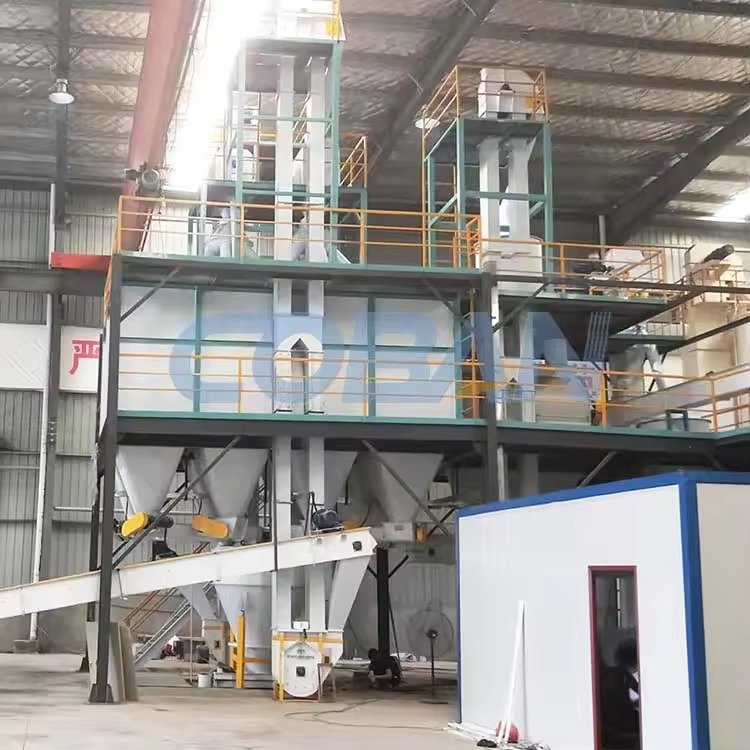
The final production stage packages finished feed into bags or bulk containers. Automated packaging systems reduce labour costs and improve filling accuracy compared to manual operations.
Electronic Weighing and Bag Filling Machines
Modern packaging lines incorporate load cell technology that achieves ±0.1% weighing accuracy. A 25kg bag fills in approximately 8-12 seconds with automatic tare weight compensation. Dust extraction systems capture airborne particles during the filling process.
Bag closing equipment options include sewing machines for woven polypropylene bags and heat sealers for laminated packaging. Automated systems can package 400-600 bags per hour depending on bag size and product characteristics. Integration with palletizing equipment further reduces manual handling requirements.
In-Line Quality Monitoring Equipment
Quality control integration includes pellet durability testers, moisture analysers, and metal detectors positioned at strategic production points. Real-time monitoring identifies quality deviations before large quantities of off-specification material accumulate.
Moisture meters use near-infrared technology to measure pellet moisture content without sample destruction. Metal detectors prevent contaminated product from reaching customers. Some advanced feed pellet production line installations incorporate machine vision systems that detect colour variations and foreign particles.
Production Capacity Planning and Equipment Sizing Considerations
Selecting appropriate production capacity requires analysis of current demand, growth projections, and operating schedule. Undersized systems create production bottlenecks, whilst oversized equipment increases capital costs and reduces operational efficiency.
Capacity Range Options for Aquatic Feed Operations
Aquatic feed production lines range from small farm-scale units producing 200kg per hour to large commercial installations exceeding 50 tonnes per hour. Mid-range systems between 5-15 tonnes per hour serve most commercial fish farming operations and regional feed distributors.
Small-Scale Systems
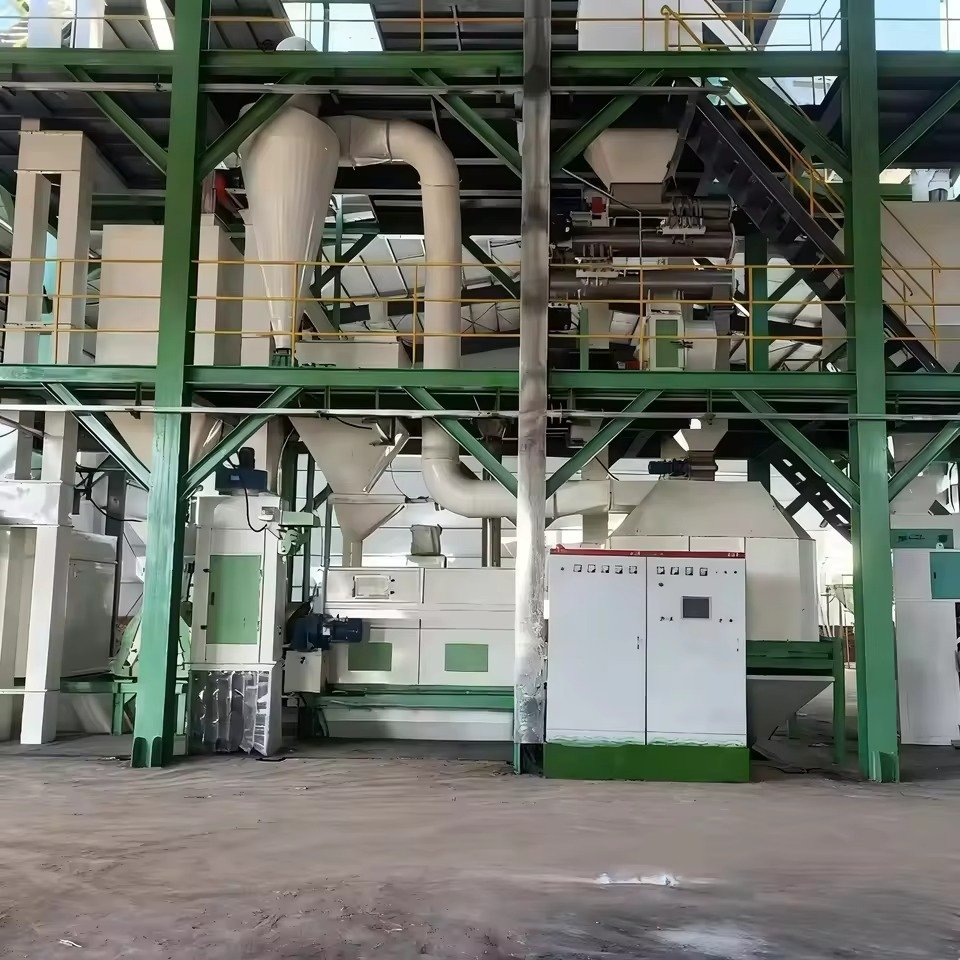
Capacity: 200kg – 2 tonnes per hour
Application: On-farm feed production, research facilities, small commercial operations
Installed Power: 45-85kW total
Floor Space: 120-250 square metres
Labour: 2-3 operators per shift
Investment Range: £65,000 – £145,000
Medium-Scale Systems
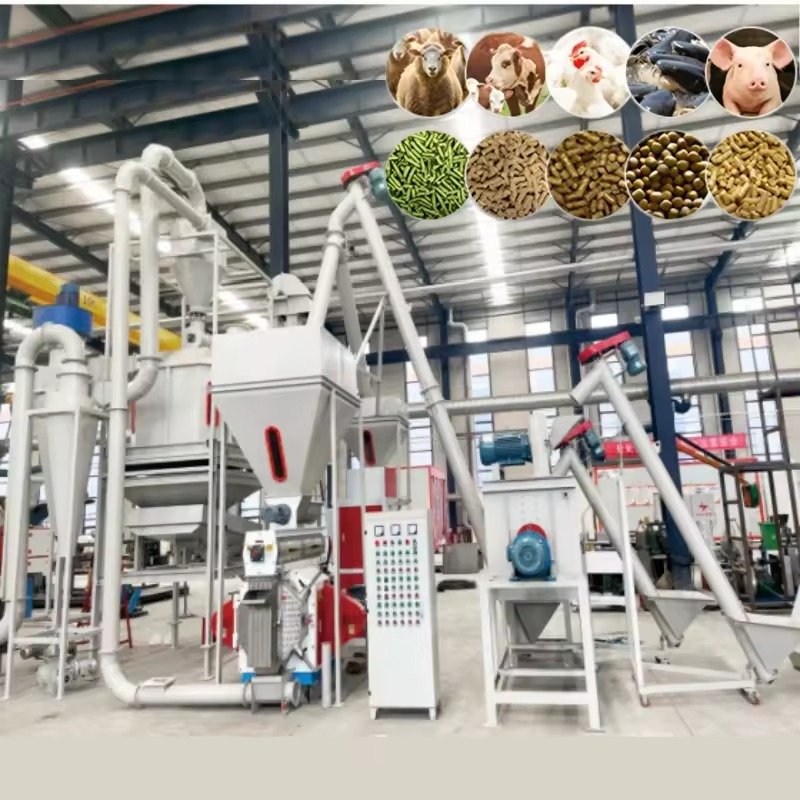
Capacity: 3 – 15 tonnes per hour
Application: Regional feed mills, aquaculture cooperatives, medium commercial producers
Installed Power: 180-420kW total
Floor Space: 450-850 square metres
Labour: 4-6 operators per shift
Investment Range: £285,000 – £720,000
Large-Scale Systems
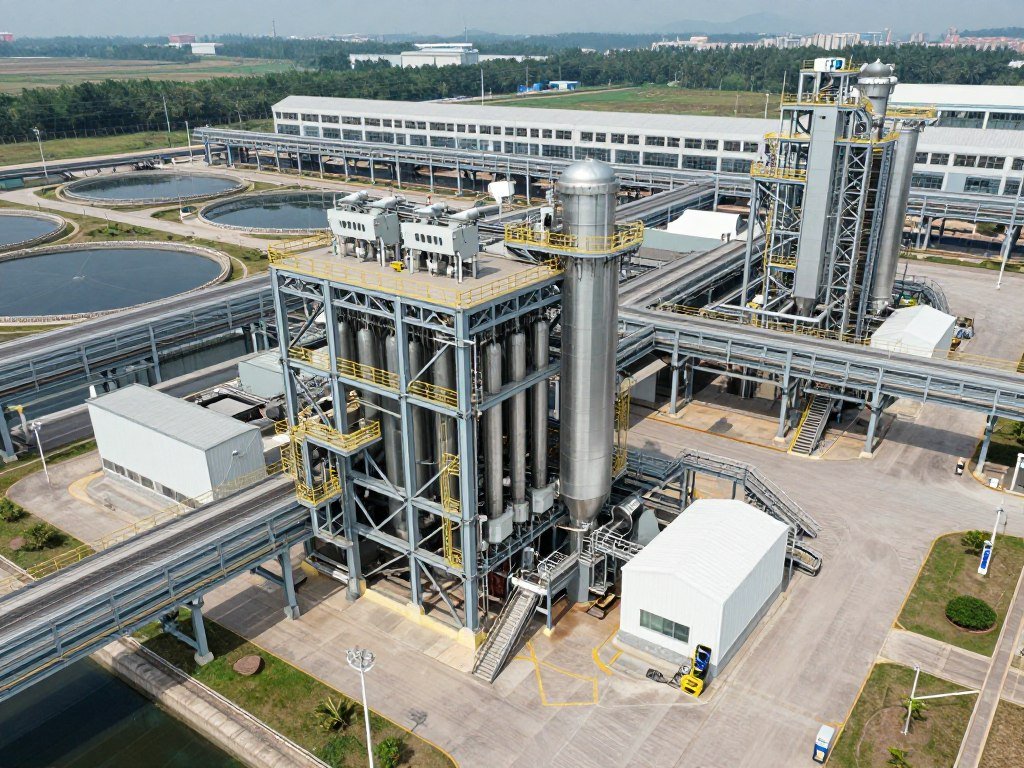
Capacity: 20 – 100+ tonnes per hour
Application: Major feed manufacturers, export-focused operations, integrated aquaculture companies
Installed Power: 650-2,500kW total
Floor Space: 1,200-3,500 square metres
Labour: 8-15 operators per shift
Investment Range: £1.2M – £5.5M+
Electrical Power Requirements and Utility Considerations
Total installed power includes all motors, control systems, and auxiliary equipment. A 10-tonne-per-hour system typically requires 280-320kW installed capacity with peak demand reaching 75-85% of installed power during normal operation.
UK installations must comply with British electrical standards and voltage specifications. Three-phase 400V power supply serves most industrial equipment, though some large motors require higher voltages. Power factor correction equipment reduces electricity costs and improves system efficiency.
Steam generation for conditioning requires boiler capacity matching pelleting demand. A 10-tonne-per-hour pellet mill consumes approximately 600-800kg of steam per hour. Boiler sizing should include 20-25% excess capacity to accommodate startup demands and production variations.
Species-Specific Feed Formulation and Processing Parameters
Different aquatic species require distinct feed characteristics regarding pellet size, density, water stability, and nutritional composition. Processing equipment must accommodate these variations to produce optimal feeds for each species.
Salmon and Trout Feed Production Requirements
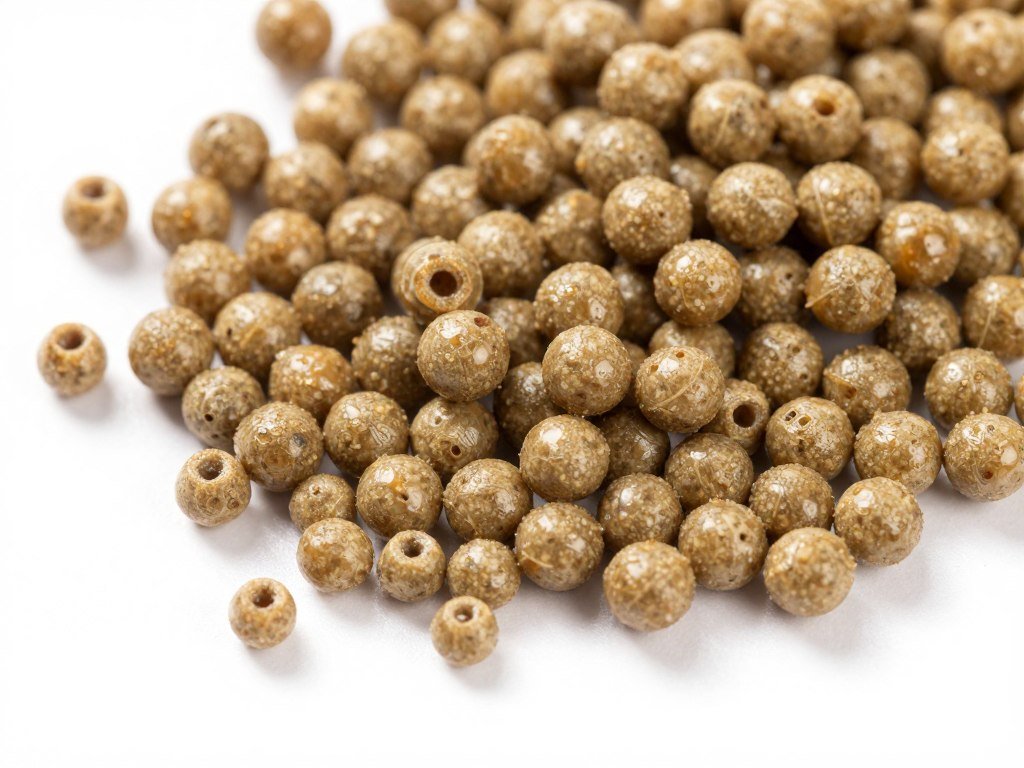
Salmonid feeds demand high fat content (18-24%) and excellent water stability. Pellet sizes range from 2mm for fry to 9mm for market-size fish. The high oil content requires specialized equipment to prevent die blockage and ensure proper pellet formation.
Salmon feed production incorporates vacuum coating systems that apply fish oil to cooled pellets rather than adding it during mixing. This approach improves pellet quality and increases oil inclusion rates. Water stability testing must demonstrate less than 10% nutrient leaching after 24 hours of immersion.
Salmon Feed Processing Parameters
- Pellet diameter range: 2.0mm to 9.0mm depending on fish size
- Pellet density: 1.08-1.15 g/cm³ (slow-sinking to sinking)
- Protein content: 38-46% depending on life stage
- Fat content: 18-24% with post-pelleting oil coating
- Conditioning temperature: 85-90°C optimal
- Water stability: >90% retention after 24 hours
- Pellet durability index: Minimum 95%
Shrimp Feed Processing Specifications
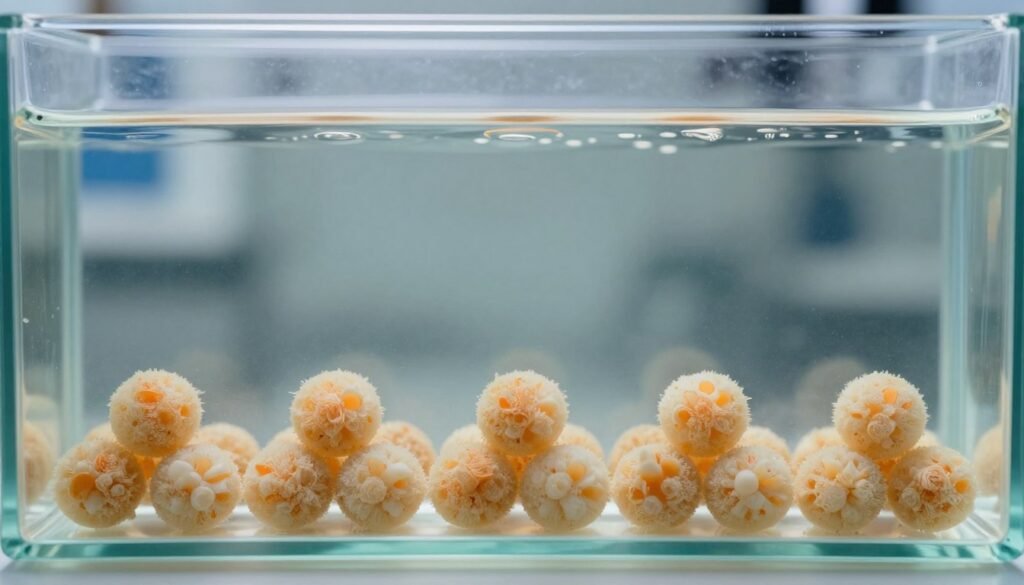
Shrimp feeds require the highest water stability standards among all aquatic feeds. Pellets must remain intact for 4-6 hours in water with minimal nutrient leaching. This demands precise conditioning, proper binder selection, and often requires extrusion processing rather than conventional pelleting.
Shrimp pellet sizes typically range from 0.8mm crumbles for post-larvae to 4.0mm pellets for adult shrimp. The small pellet sizes and high stability requirements make shrimp feed production technically challenging. Many producers use twin-screw extrusion technology to achieve required stability levels.
Tilapia and Catfish Feed Systems
Tilapia and catfish feeds represent the most economical segment of aquatic feed production. These species tolerate wider quality variations than salmonids or shrimp. Standard pelleting equipment produces acceptable feeds without specialized processing technology.
Floating feeds benefit tilapia and catfish operations by enabling feed monitoring and reducing waste. Extrusion produces floating pellets, whilst conventional pelleting creates sinking feeds. The choice between technologies depends on farming practices, production scale, and market requirements.
Species-Specific Feed Consultation
Discuss your target species requirements with our aquaculture nutrition specialists. We provide detailed recommendations on formulation parameters, processing conditions, and quality testing protocols for salmon, shrimp, tilapia, trout, or other aquatic species.
Raw Material Handling, Storage, and Inventory Management Systems
Efficient raw material management reduces production costs and maintains feed quality. Storage systems must protect ingredients from moisture, pests, and contamination whilst enabling accurate inventory control.
Bulk Storage Silo Design and Configuration
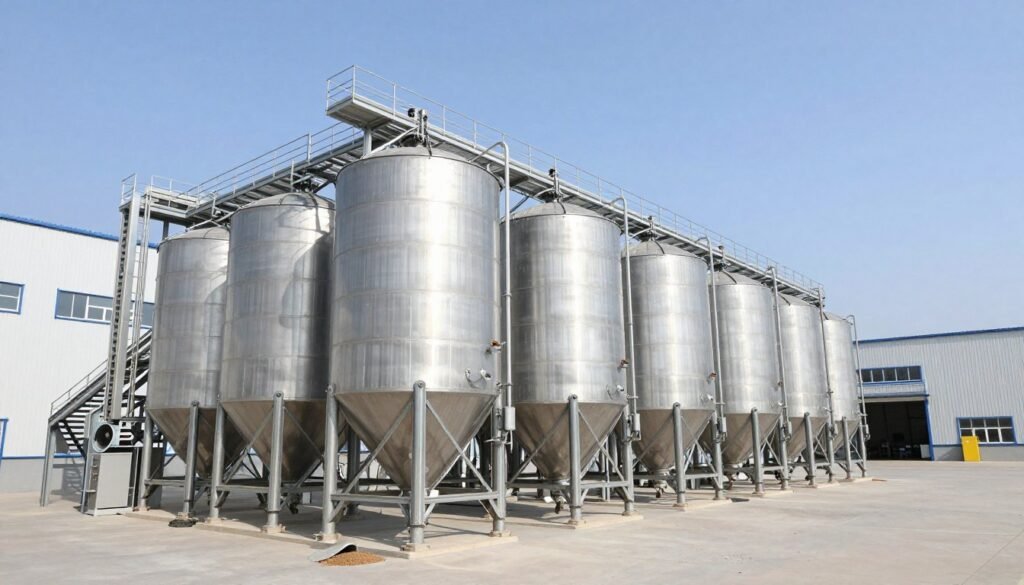
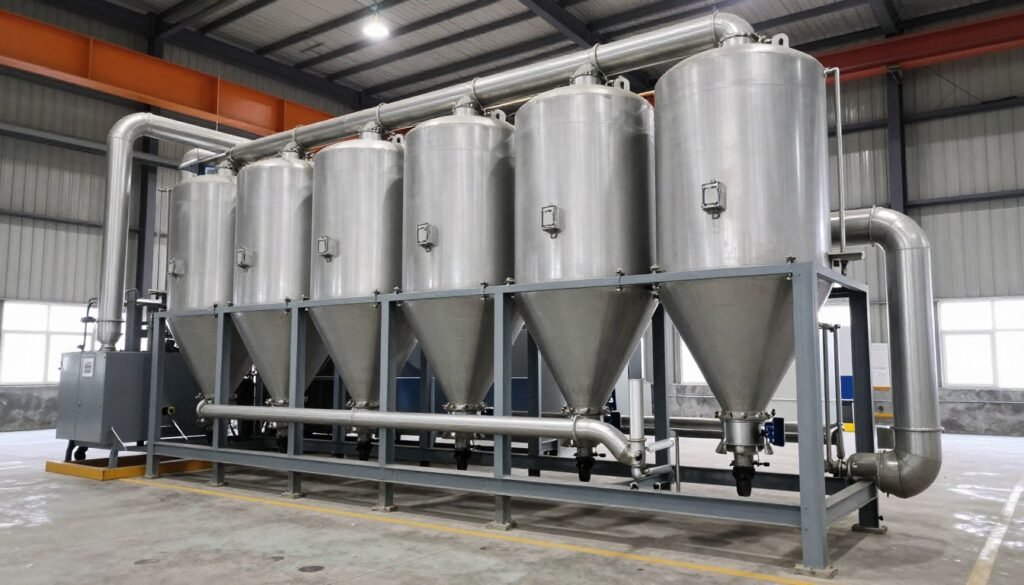
Steel silos store bulk ingredients including grains, fish meal, and soybean products. Silo capacity depends on ingredient consumption rates and delivery schedules. A 10-tonne-per-hour production facility typically requires 500-800 tonnes total raw material storage.
Proper silo design includes aeration systems preventing moisture accumulation and temperature monitoring detecting storage problems. Conical bottoms with steep angles prevent bridging and ensure complete discharge. Level sensors track inventory and trigger reorder alerts.
Ingredient Conveying and Transfer Systems
Pneumatic conveying moves powdered ingredients from storage to processing equipment. Chain conveyors and bucket elevators handle pelleted materials and finished products. System design must minimize ingredient degradation, prevent cross-contamination, and reduce dust emissions.
Conveying system capacity should exceed production line capacity by 15-20% to prevent bottlenecks. A 15-tonne-per-hour line requires conveying systems capable of 18-20 tonnes per hour peak capacity. Properly designed systems operate continuously without blockages or material spillage.
Production Automation and Process Control Technologies
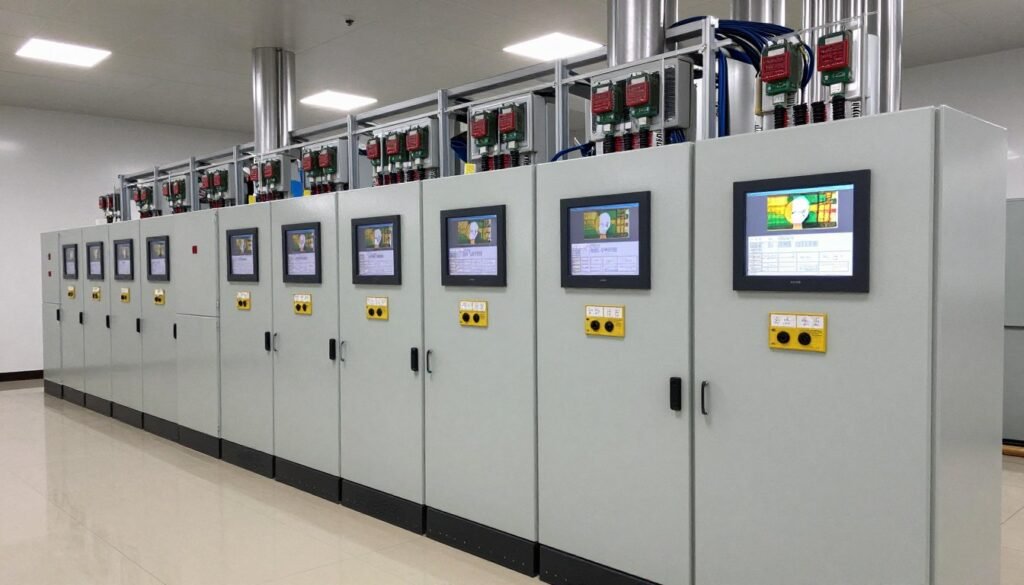
Modern animal feed production line systems incorporate computerized control enabling precise process management and production monitoring. Automation reduces labour costs, improves consistency, and enables data collection for quality management.
SCADA Systems and Production Monitoring
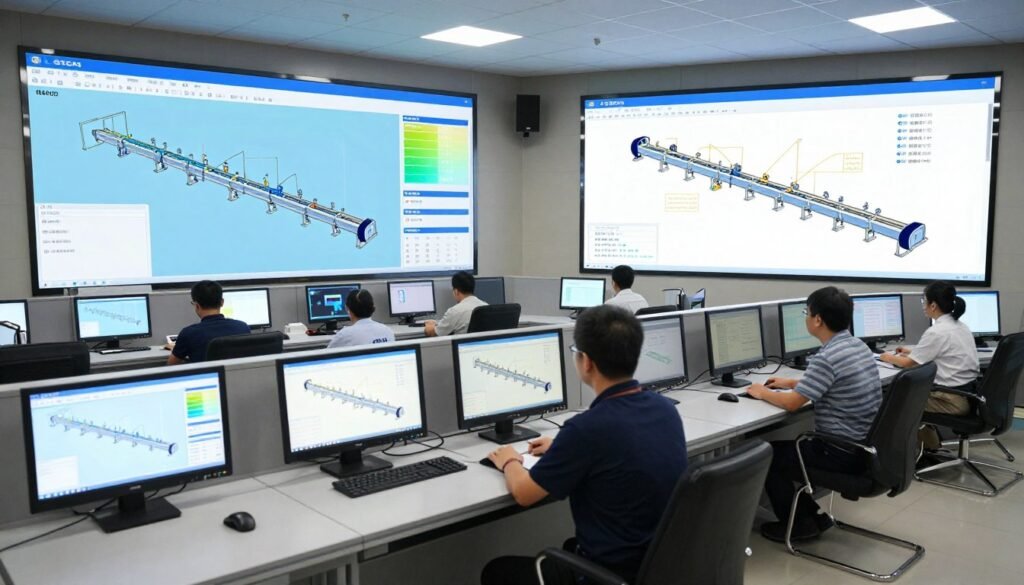
Supervisory Control and Data Acquisition systems provide centralized monitoring and control of the entire production process. Operators view real-time data including production rates, equipment status, and quality parameters from a single control room interface.
SCADA systems record production data enabling traceability and performance analysis. Historical data identifies trends, optimizes settings, and documents compliance with quality standards. Modern systems offer remote access allowing management to monitor operations from any location.
Automated Batching and Formula Management
Computer-controlled batching systems store multiple feed formulations and automatically weigh ingredients according to selected recipes. Operators select the desired formula and production quantity; the system manages the entire batching sequence without manual intervention.
Formula security features prevent unauthorized recipe changes and maintain formulation confidentiality. The system tracks ingredient consumption, calculates production costs, and generates batch reports for quality documentation. Integration with inventory management automatically updates stock levels as ingredients are consumed.
Quality Assurance Procedures and Testing Protocols
Systematic quality control throughout production ensures consistent feed quality and identifies problems before they affect large production quantities. Testing protocols examine raw materials, in-process samples, and finished products.
Raw Material Incoming Inspection
Every ingredient delivery requires verification before acceptance. Testing includes moisture content, protein levels, foreign material presence, and visual inspection for mould or contamination. Suppliers providing certificates of analysis receive reduced testing, but periodic verification maintains quality standards.
Ingredient specifications define acceptable ranges for key parameters. Fish meal protein content typically requires minimum 60% protein with maximum 10% moisture. Deviations outside specifications result in ingredient rejection or price adjustments. Maintaining strict incoming standards prevents quality problems in finished feeds.
In-Process Quality Monitoring
Production monitoring includes pellet durability testing, size distribution analysis, and visual inspection at multiple process points. Pellet durability testing occurs hourly using standardized tumbling devices. Results below target levels trigger investigation and corrective actions.
Moisture content affects storage stability and requires monitoring after cooling. Target moisture levels for aquatic feeds range between 10-12% depending on formulation and storage duration. Excess moisture promotes mould growth, whilst insufficient moisture causes surface cracking and increased fines.
| Test Parameter | Testing Frequency | Target Specification | Action Limit | Test Method |
| Pellet Durability Index | Every 60 minutes | ≥95% for salmon | Holmen tumbler test | |
| Moisture Content | Every 2 hours | 10.5-12.0% | >12.5% or | NIR or oven method |
| Pellet Size Distribution | Every 4 hours | ±0.3mm target size | >15% outside range | Screen analysis |
| Water Stability | Once per shift | >90% after 24h | Immersion test | |
| Bulk Density | Every batch | Species-specific | ±5% specification | Volumetric method |
Finished Product Quality Certification
Finished feed samples undergo comprehensive analysis including proximate composition, vitamin levels, and mycotoxin screening. Testing frequency depends on regulatory requirements and customer specifications. Export products typically require batch certificates with complete analytical data.
Third-party laboratory testing provides independent verification for critical parameters. Many buyers require SGS certification or equivalent third-party quality confirmation. Maintaining testing records demonstrates commitment to quality and supports regulatory compliance.
Common Production Challenges and Troubleshooting Solutions
Even properly designed systems encounter operational difficulties that affect production efficiency and product quality. Understanding common problems and their solutions minimizes downtime and maintains consistent output.
Pellet Mill Die Blockage and Throughput Reduction
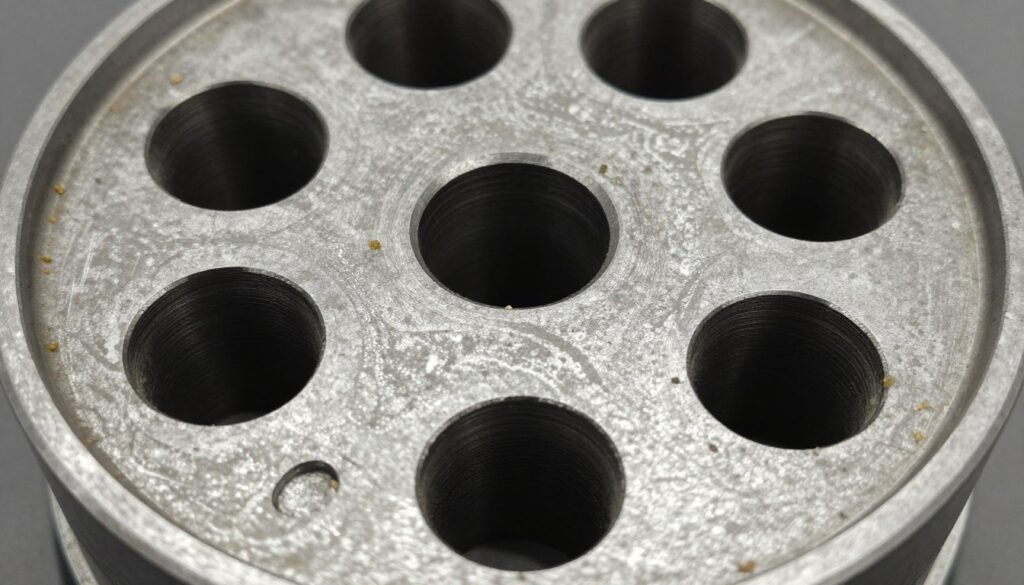
Die blockage represents the most frequent pelleting problem. Causes include insufficient conditioning, formula changes affecting flowability, and die wear. Blockage manifests as reduced throughput, increased power consumption, and poor pellet quality.
Solutions involve adjusting steam addition, modifying formulation ratios, or replacing worn dies. Regular die inspection identifies wear patterns before they cause complete blockage. Maintaining spare dies enables quick changeover when blockage occurs, minimizing production interruption.
Die Blockage Prevention Checklist
- Verify conditioning temperature reaches target range (±3°C)
- Confirm steam pressure maintains 4-6 bar at conditioner inlet
- Check mash moisture content entering pellet mill (14-16% optimal)
- Inspect die holes for wear, scoring, or damage every 200 hours
- Maintain roller-to-die gap within manufacturer specifications
- Monitor pellet mill amperage for gradual increases indicating restriction
- Clean die using purge formulations during extended shutdowns
Excessive Fines Production and Pellet Breakage
High fines levels (>8-10%) increase production costs through reprocessing and reduce feed quality. Causes include insufficient pellet durability, rough handling during conveying, and improper cooling. Measuring fines at multiple process points identifies the problem source.
Improving pellet durability addresses the root cause. This requires optimizing conditioning, selecting appropriate binders, and verifying proper die specifications. Reducing drop heights and using gentler conveying equipment minimizes mechanical damage to formed pellets.
Inconsistent Pellet Size and Uniformity Issues
Size variation affects feeding behaviour and may indicate screening problems or pellet mill instability. Proper screen maintenance ensures accurate size separation. Pellet mill problems including uneven die wear or roller misalignment produce non-uniform pellets requiring corrective maintenance.
Regular equipment inspection identifies wear before it significantly impacts quality. Replacing screens at recommended intervals maintains separation accuracy. Pellet mill alignment checks during scheduled maintenance prevent drift from optimal settings.
Critical Maintenance Alert: Delayed maintenance on screening equipment results in 20-30% more product outside target size specifications. This creates sorting problems, increases recycle rates, and may breach customer quality agreements. Schedule screen replacement every 3,000-5,000 operating hours depending on feed abrasiveness.
Preventive Maintenance Programs and Spare Parts Management
Systematic maintenance extends equipment life, reduces unplanned downtime, and maintains production efficiency. Spare parts inventory management ensures critical components remain available without excessive capital tied up in slow-moving items.
Scheduled Maintenance Intervals and Procedures
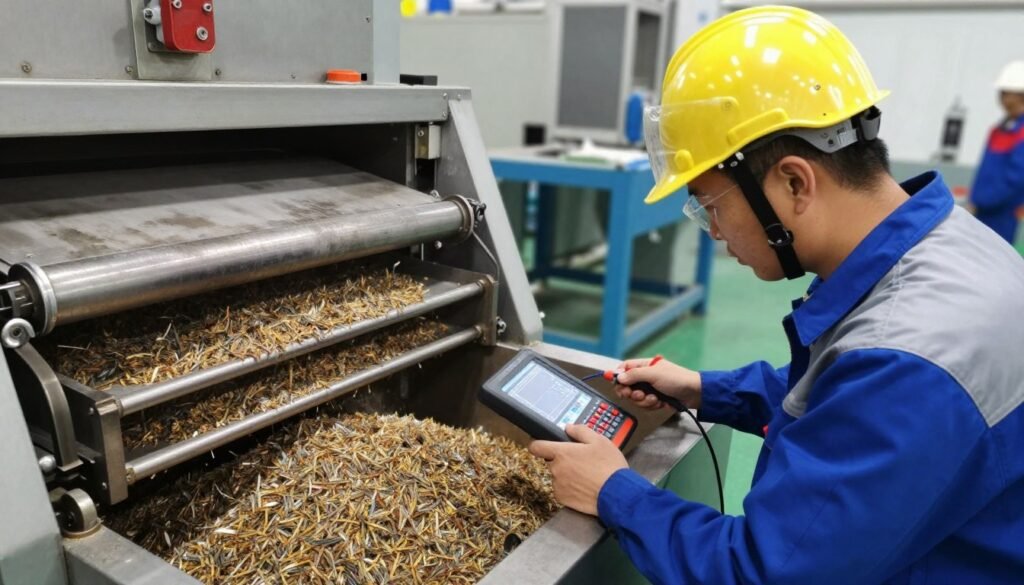
Equipment manufacturers specify maintenance schedules based on operating hours or calendar intervals. Typical schedules include daily inspections, weekly lubrication, monthly component checks, and annual overhauls. Following recommended schedules prevents premature failures and maintains warranty coverage.
Daily maintenance includes visual inspection, cleaning, and basic lubrication requiring 30-45 minutes per shift. Weekly tasks add bearing checks, belt tension verification, and safety system testing consuming approximately 3-4 hours. Monthly procedures involve detailed inspections, wear measurement, and minor adjustments requiring 8-12 hours.
Critical Spare Parts Inventory Requirements
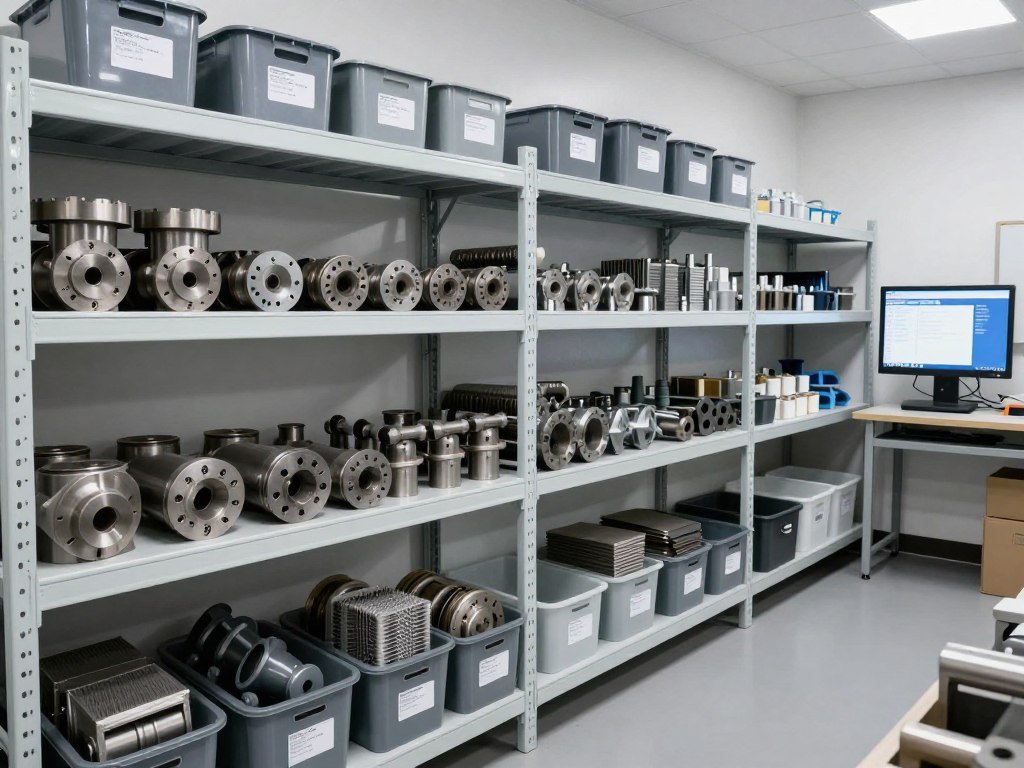
Maintaining appropriate spare parts reduces downtime when failures occur. Critical components including pellet mill dies, hammers, screens, and bearings should remain in stock based on replacement frequency and lead times. A 10-tonne-per-hour facility typically maintains £15,000-25,000 in spare parts inventory.
Essential Spare Parts List
- Pellet mill dies: 2-3 spare dies per mill (primary inventory item)
- Compression rollers: 1 set per pellet mill
- Hammer mill hammers: Complete replacement set
- Screen panels: 2-3 sets for each screen size used
- Main drive belts: 2 sets for critical equipment
- Bearings: Common sizes in stock (consult failure history)
- Mixer paddles: 1 complete set replacement paddles
- Conveyor chain: 20% of installed length
- Electrical contactors: 2-3 of each common size
- Pneumatic seals: Assortment for cylinders and valves
Supplier Support and Technical Assistance
Equipment manufacturers providing strong after-sales support reduce operational risks. Support includes technical hotlines, remote diagnostics, on-site service, and training programs. Evaluating supplier support capabilities during equipment selection prevents future frustrations.
MAIKONG maintains UK-based technical support with response times under 24 hours for urgent issues. Our spare parts distribution network ships critical components within 48 hours to UK and European customers. This support infrastructure distinguishes professional manufacturers from suppliers offering equipment without ongoing assistance.
Technical Support and Spare Parts Enquiry
Access our UK technical support team for maintenance guidance, troubleshooting assistance, and spare parts availability. We maintain comprehensive parts inventory for all MAIKONG equipment with rapid delivery throughout Europe.
Support email: Lucy@feedproductionline.uk | Phone: +86 135-1090-7401
Energy Efficiency and Environmental Sustainability Considerations
Energy costs represent 8-12% of total feed production expenses. Efficient equipment design and operational practices reduce electricity consumption without compromising production capacity. Environmental regulations increasingly affect facility design and operation.
Power Consumption Optimization Strategies
Energy-efficient motors, variable frequency drives, and optimized process sequences reduce power consumption. High-efficiency motors cost 15-20% more than standard units but recover the premium through reduced operating costs within 18-24 months.
Variable frequency drives on major motors including pellet mills and crushers reduce power consumption by 15-25% compared to fixed-speed operation. Drives enable soft-starting that reduces peak demand charges and extends motor life by eliminating mechanical stress from across-the-line starting.
| Equipment Component | Standard Power (kW/tonne) | Optimized Power (kW/tonne) | Savings Potential | Payback Period |
| Hammer Mill Crushing | 15-18 kW/tonne | 12-14 kW/tonne | 20-25% | 2.0-2.5 years |
| Pelleting Operation | 18-22 kW/tonne | 15-18 kW/tonne | 15-20% | 1.5-2.0 years |
| Cooling Systems | 2.5-3.5 kW/tonne | 1.8-2.5 kW/tonne | 25-30% | 1.0-1.5 years |
| Conveying Systems | 3.0-4.0 kW/tonne | 2.2-3.0 kW/tonne | 20-25% | 1.5-2.0 years |
Dust Control and Air Quality Management
Feed production generates dust requiring collection and containment. Dust collection systems protect worker health, prevent product loss, and comply with environmental regulations. Modern facilities incorporate centralized dust collection serving multiple process points.
Baghouse filters capture dust particles whilst returning cleaned air to the facility. This approach recovers product, maintains air quality, and reduces heating costs by retaining conditioned air. Filter sizing requires 1.5-2.0 air changes per minute at dust generation points for effective capture.
OEM/ODM Services and Custom Equipment Development
Standard production lines suit many applications, but some operations require customized equipment addressing unique production challenges or market requirements. MAIKONG offers comprehensive OEM and ODM services for buyers needing tailored solutions.
Custom Capacity and Configuration Design
Our engineering team designs systems matching specific capacity requirements, facility constraints, and species applications. Custom projects have included 3.5-tonne-per-hour salmon feed lines, 25-tonne-per-hour tilapia systems, and specialized shrimp feed extruders producing 0.5mm micro-pellets.
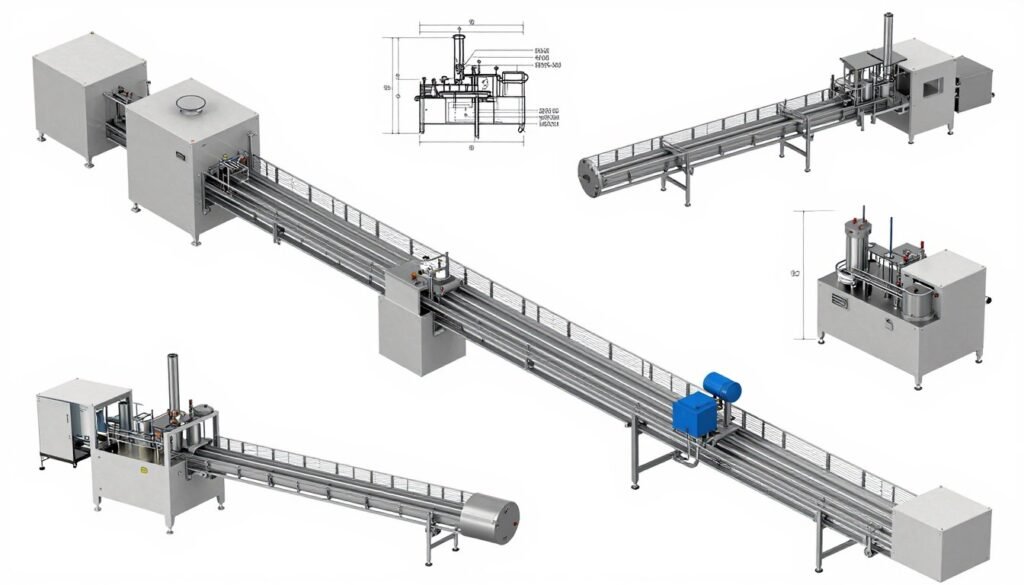
Design services encompass layout optimization, equipment specification, utility requirements, and installation planning. We provide complete engineering drawings, equipment schedules, and construction documentation enabling efficient project execution. This comprehensive approach reduces installation time and prevents costly field modifications.
Private Label Manufacturing and Branding
OEM partnerships enable equipment distributors and feed companies to offer production systems under their own brands. MAIKONG manufactures complete systems with customer-specified nameplates, colors, and documentation. This arrangement supports distributors building their brand without manufacturing investment.
Minimum order quantities for OEM projects typically start at single complete production lines. We maintain confidentiality regarding OEM relationships and provide technical support directly to end-users when requested by our partners. This flexible approach accommodates various business models and market strategies.
Technology Transfer and Joint Development Projects
Some partnerships involve technology sharing and joint product development. MAIKONG collaborates with research institutions, feed companies, and equipment distributors developing innovative processing technologies. Recent projects addressed ultra-high protein shrimp feeds, slow-release medications delivery systems, and energy-efficient drying technologies.
Joint development spreads research costs whilst accelerating commercialization of new technologies. Partners gain early access to innovations that provide competitive advantages in their markets. This collaborative approach benefits both parties through shared expertise and resources.
OEM/ODM Partnership Enquiry
Explore customization possibilities for your specific production requirements or discuss OEM partnership opportunities. Our engineering team provides detailed proposals including custom design options, production timelines, and commercial terms.
OEM/ODM Contact: Lucy@feedproductionline.uk | Direct: +86 135-1090-7401
Installation, Commissioning, and Operator Training Services
Successful equipment installation requires careful planning, experienced installation crews, and comprehensive operator training. MAIKONG provides turnkey installation services ensuring systems operate at design capacity from initial startup.
Site Preparation and Installation Planning
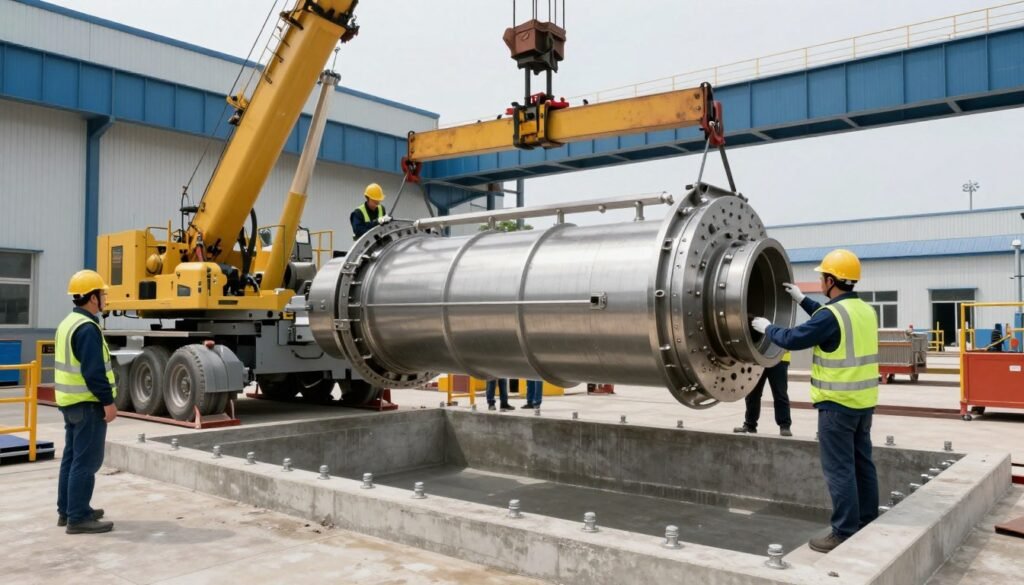
Installation begins months before equipment arrives through detailed site preparation planning. We provide foundation drawings, utility connection requirements, and space allocation diagrams. Proper preparation reduces installation time and prevents costly delays from inadequate infrastructure.
Foundation requirements include concrete specifications, anchor bolt layouts, and floor loading calculations. Electrical infrastructure must provide adequate power capacity, proper grounding, and safety disconnects. Compressed air systems, water supply, and drainage require advance planning to support production operations.
Equipment Commissioning and Performance Verification
Commissioning validates that installed equipment meets performance specifications. Our technicians supervise initial startup, adjust critical parameters, and conduct performance testing. This process typically requires 5-10 days depending on system complexity.
Performance verification includes capacity testing, quality assessment, and safety system checks. We produce documented test results confirming the system achieves guaranteed specifications. This documentation provides confidence in equipment capabilities and establishes baseline performance data for future reference.
Comprehensive Operator and Maintenance Training
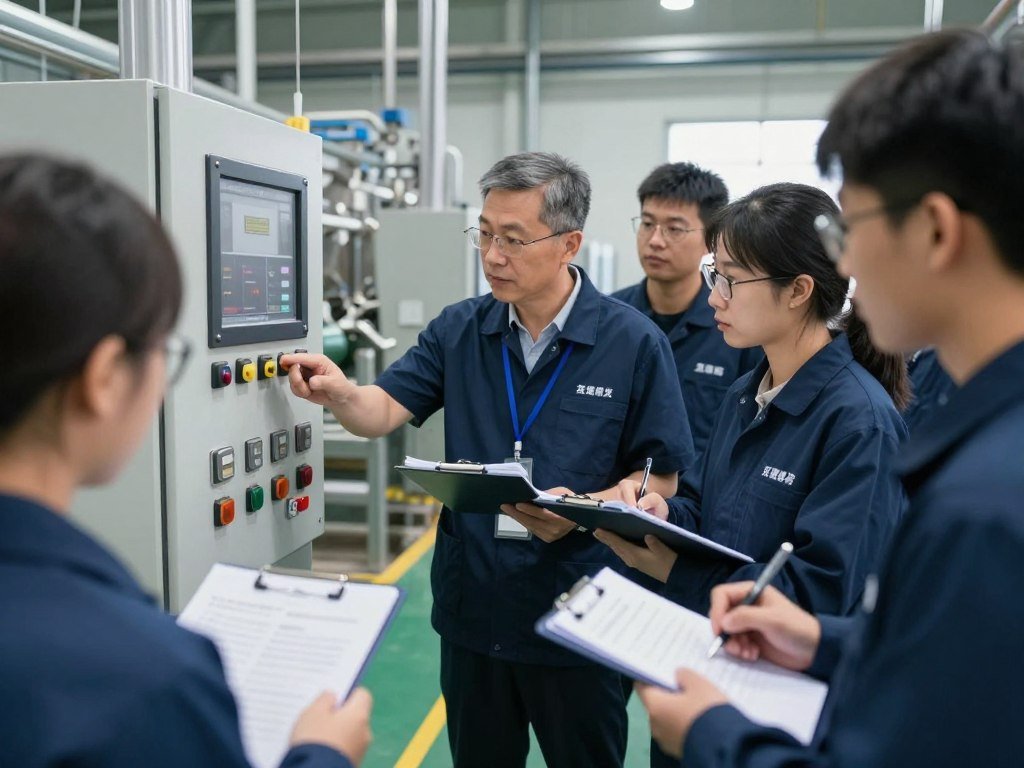
Training programs prepare your staff to operate and maintain equipment effectively. Operator training covers startup procedures, normal operation, quality monitoring, troubleshooting, and shutdown protocols. Maintenance training addresses routine maintenance, adjustment procedures, and safety requirements.
Standard training programs span 5-7 days with hands-on practice on the installed equipment. We provide training manuals, maintenance checklists, and spare parts catalogs in English. Advanced training for maintenance supervisors includes detailed equipment theory, advanced troubleshooting, and predictive maintenance techniques.
Training Program Components
- Equipment operation fundamentals: 2 days classroom and practical
- Quality control procedures: 1 day with testing practice
- Routine maintenance training: 1.5 days hands-on practice
- Troubleshooting methods: 1 day problem-solving scenarios
- Safety systems and emergency procedures: 0.5 days
- SCADA system operation: 1 day for control room staff
- Detailed maintenance theory: 2 days for technical supervisors
Export Success Cases: Aquatic Feed Production Lines in European Markets
MAIKONG has supplied aquatic feed production systems to operations throughout Europe, demonstrating our capability to meet stringent European quality standards and regulatory requirements. These installations showcase diverse applications and capacity ranges.
Norwegian Salmon Feed Production Facility
In 2021, we delivered a 12-tonne-per-hour salmon feed production line to a Norwegian aquaculture company. The system produces high-fat salmon feeds with oil contents reaching 24%. Special vacuum coating equipment applies fish oil after pelleting, achieving exceptional pellet quality.
The installation incorporates energy recovery systems that capture waste heat from the pellet cooling process, reducing boiler fuel consumption by 18%. This sustainability feature aligned with Norwegian environmental regulations whilst reducing operating costs. The facility has operated continuously since commissioning with 99.2% uptime.
Scottish Trout Feed Mill Upgrade Project
A Scottish feed manufacturer replaced aging equipment with a MAIKONG 8-tonne-per-hour system in 2022. The upgrade increased production capacity by 60% whilst reducing energy consumption per tonne by 28%. The compact design fit within the existing building envelope without facility expansion.
Automated batching and SCADA integration reduced labour requirements from 6 to 4 operators per shift. Quality consistency improved significantly, with pellet durability index standard deviation dropping from ±3.2% to ±0.8%. The customer reports payback period of 3.2 years based on increased capacity and reduced operating costs.
Spanish Aquaculture Feed Production Complex
MAIKONG supplied a multi-species feed production facility in Spain producing feeds for sea bass, sea bream, and turbot. The 15-tonne-per-hour system incorporates separate pelleting lines for different species with shared raw material handling and packaging systems.
The facility produces both sinking and floating feeds using combination pelleting and extrusion technology. Automated recipe management enables rapid changeover between species formulations. The customer produces 22 distinct feed products serving Mediterranean aquaculture operations throughout southern Europe.
UK Shrimp Feed Expansion
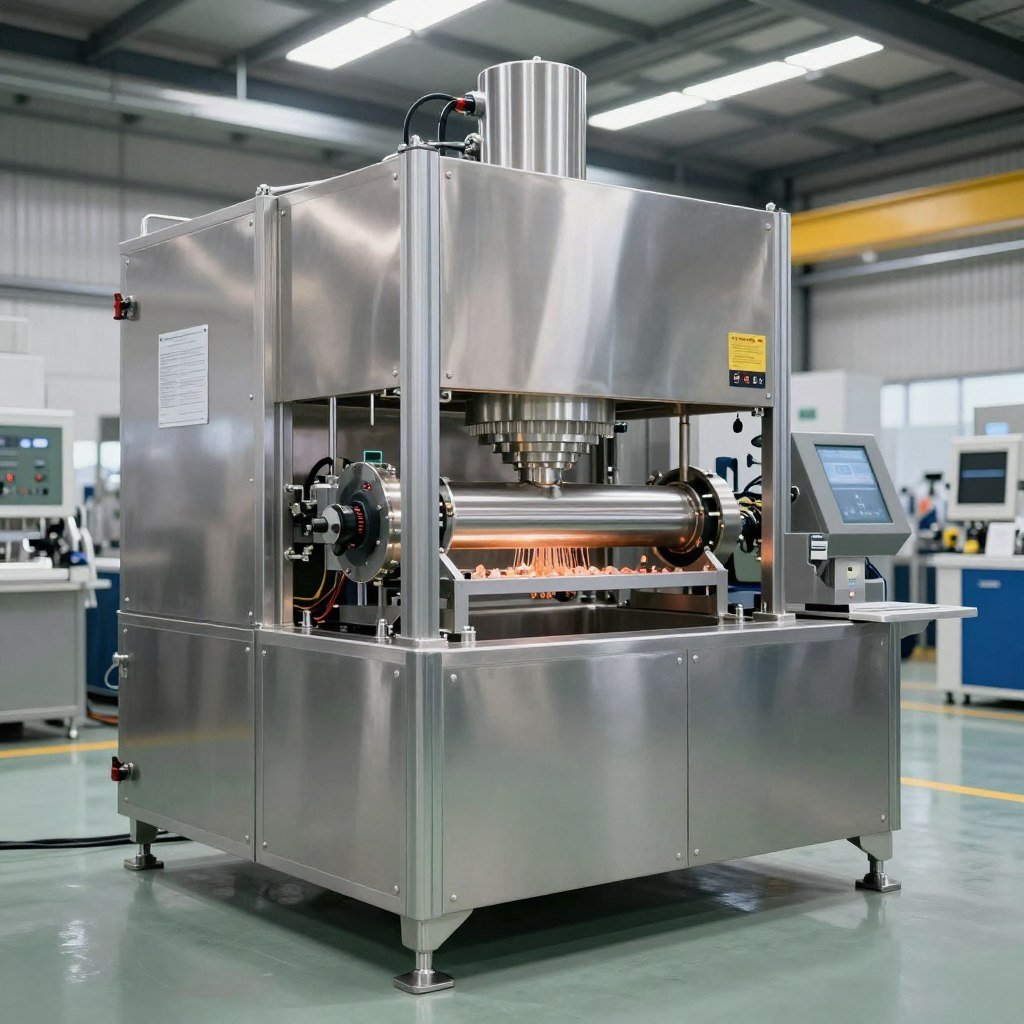
Location: South England
Capacity: 4 tonnes per hour
Application: High-stability shrimp feed for export markets
Technology: Twin-screw extrusion with post-coating
Commissioning: March 2023
Key Feature: Achieves 6-hour water stability for premium shrimp feeds
Netherlands Tilapia Feed Plant
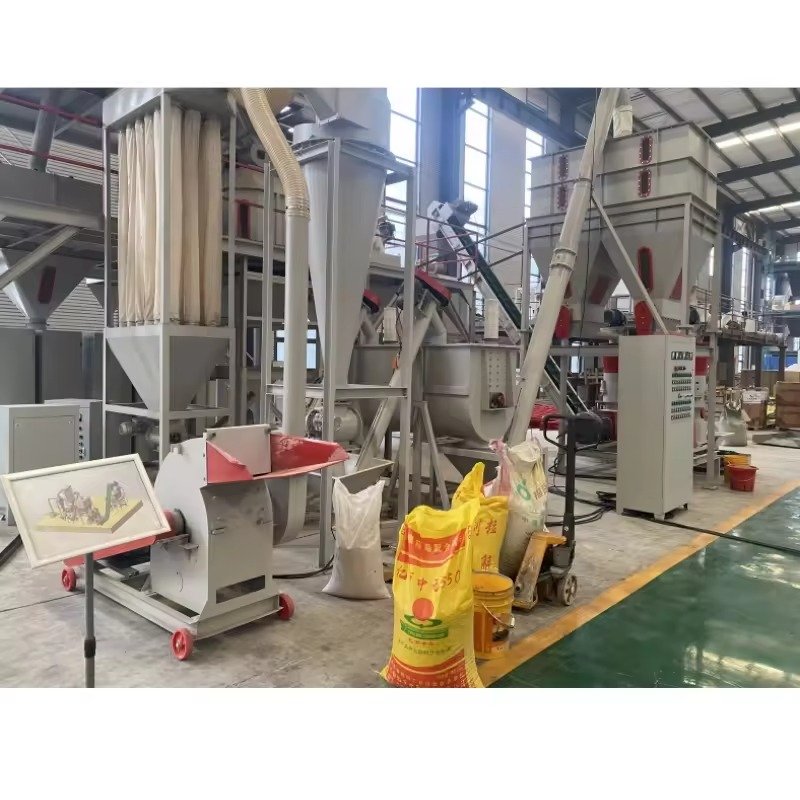
Location: North Holland
Capacity: 18 tonnes per hour
Application: Floating and sinking tilapia feeds
Technology: Dual pelleting/extrusion configuration
Commissioning: September 2022
Key Feature: Integrated quality lab with automated testing
Ireland Salmon Starter Feed
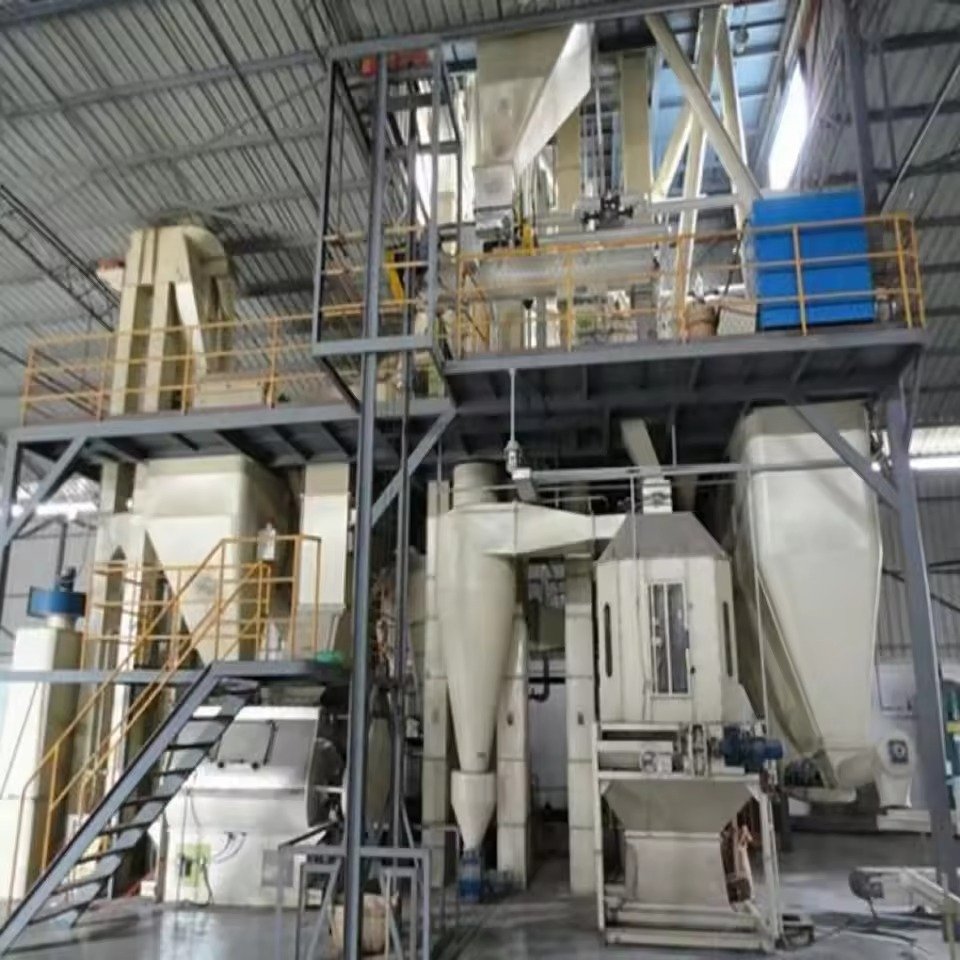
Location: County Cork
Capacity: 3 tonnes per hour
Application: Micro-pellets for salmon fry and parr
Technology: Specialized micro-pelleting with crumbling
Commissioning: June 2023
Key Feature: Produces 0.5mm to 2.0mm starter feeds
Regulatory Compliance and International Certifications
Equipment supplied to European markets must comply with machinery directives, safety standards, and industry-specific regulations. MAIKONG maintains certifications enabling equipment operation throughout the UK and European Union.
CE Marking and Machinery Directive Compliance
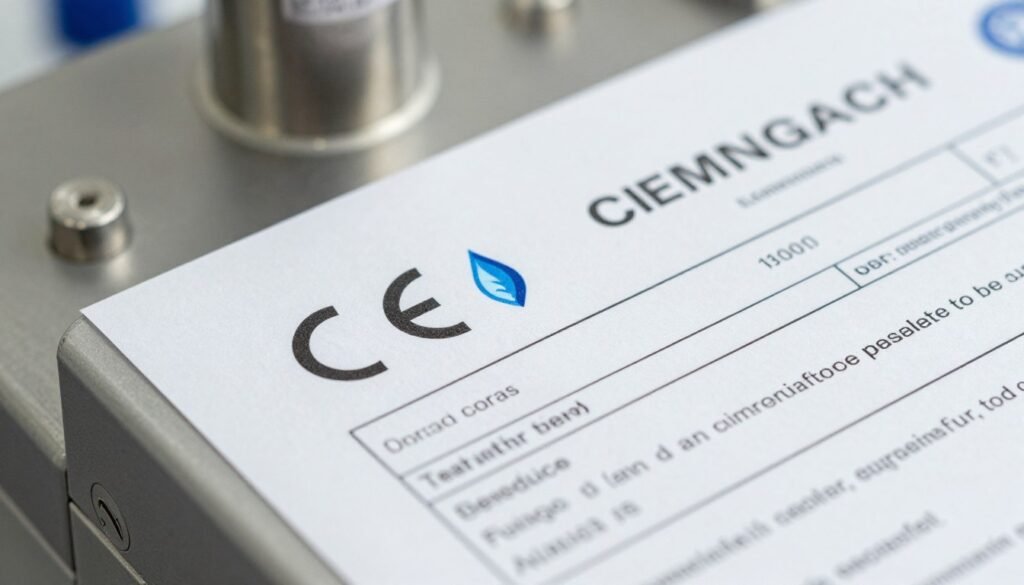
All MAIKONG production equipment carries CE marking confirming compliance with European machinery directives. This certification addresses safety requirements including machine guarding, emergency stops, electrical safety, and noise emission standards.
Technical documentation includes risk assessments, safety calculations, and compliance statements. We provide complete documentation supporting regulatory approval and insurance requirements. Equipment design incorporates safety features exceeding minimum regulatory standards, protecting operators and maintenance personnel.
Quality Management and SGS Verification
MAIKONG operates under ISO 9001 quality management systems ensuring consistent manufacturing standards. Our production processes undergo regular SGS audits verifying compliance with international quality standards. This third-party verification provides buyers confidence in equipment reliability.
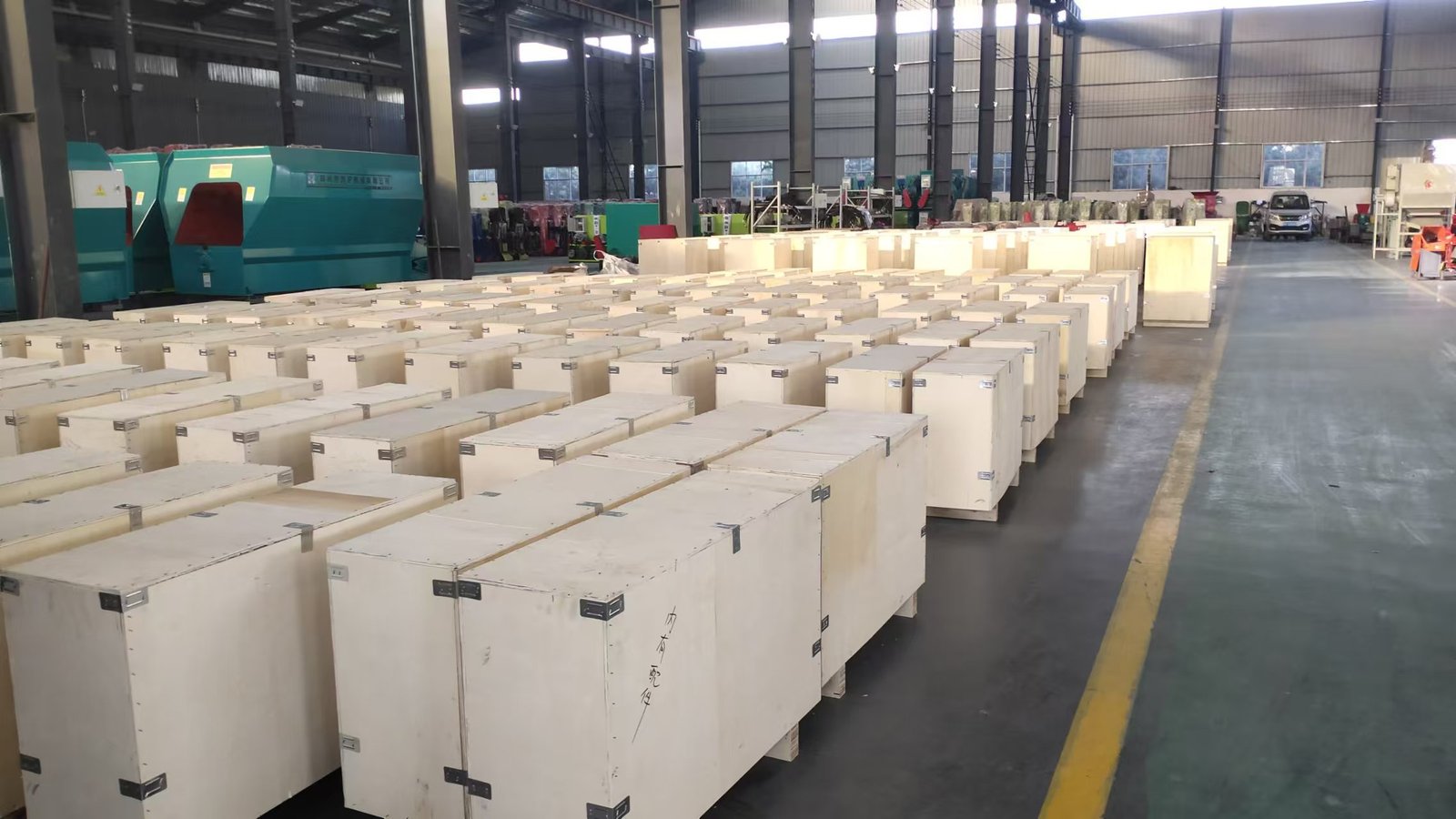
SGS pre-shipment inspection services are available for buyers requiring independent quality confirmation before equipment leaves our factory. Inspection reports document equipment condition, verify specifications, and confirm proper packaging for international shipment. Many buyers specify SGS inspection as contract requirement.
British Electrical Standards and Voltage Compatibility
Equipment destined for UK installation configures to British electrical standards including 400V three-phase power supply. Electrical components source from European manufacturers meeting BS standards. Control panels incorporate British-style emergency stops, isolation switches, and circuit protection devices.
Documentation includes electrical schematics using British symbols and terminology. This attention to local standards simplifies installation, inspection approval, and ongoing maintenance using UK-sourced electrical components when replacements become necessary.
Project Timeline, Investment Planning, and ROI Considerations
Planning an aquatic feed production facility requires understanding project phases, investment requirements, and financial returns. Realistic timeline expectations and thorough financial analysis support successful project execution.
Typical Project Implementation Timeline
From initial inquiry to production startup, a complete production line project spans 6-10 months depending on system complexity and site conditions. The timeline includes equipment manufacturing, shipping, installation, and commissioning phases.
| Project Phase | Duration | Key Activities | Customer Involvement |
| Initial Consultation & Design | 2-4 weeks | Requirements gathering, capacity planning, preliminary design, quotation preparation | Provide specifications, review designs, approve proposal |
| Contract & Engineering | 3-5 weeks | Contract finalization, detailed engineering, foundation drawings, utility specifications | Contract signing, deposit payment, review engineering documents |
| Manufacturing | 12-16 weeks | Equipment fabrication, quality testing, factory acceptance testing if requested | Progress payments, optional factory visit and testing |
| Shipping & Logistics | 4-6 weeks | Export packaging, customs documentation, ocean/land freight, customs clearance | Import documentation, customs coordination, delivery arrangement |
| Site Preparation | 4-8 weeks | Foundation construction, utility installation, building modifications if needed | Execute civil works, prepare utilities, coordinate with contractors |
| Installation & Commissioning | 3-5 weeks | Equipment assembly, electrical connections, system testing, performance verification | Provide site access, support installation crew, prepare for training |
| Training & Startup | 1-2 weeks | Operator training, maintenance training, initial production runs, optimization | Participate in training, operate under supervision, final acceptance |
Investment Components and Capital Requirements
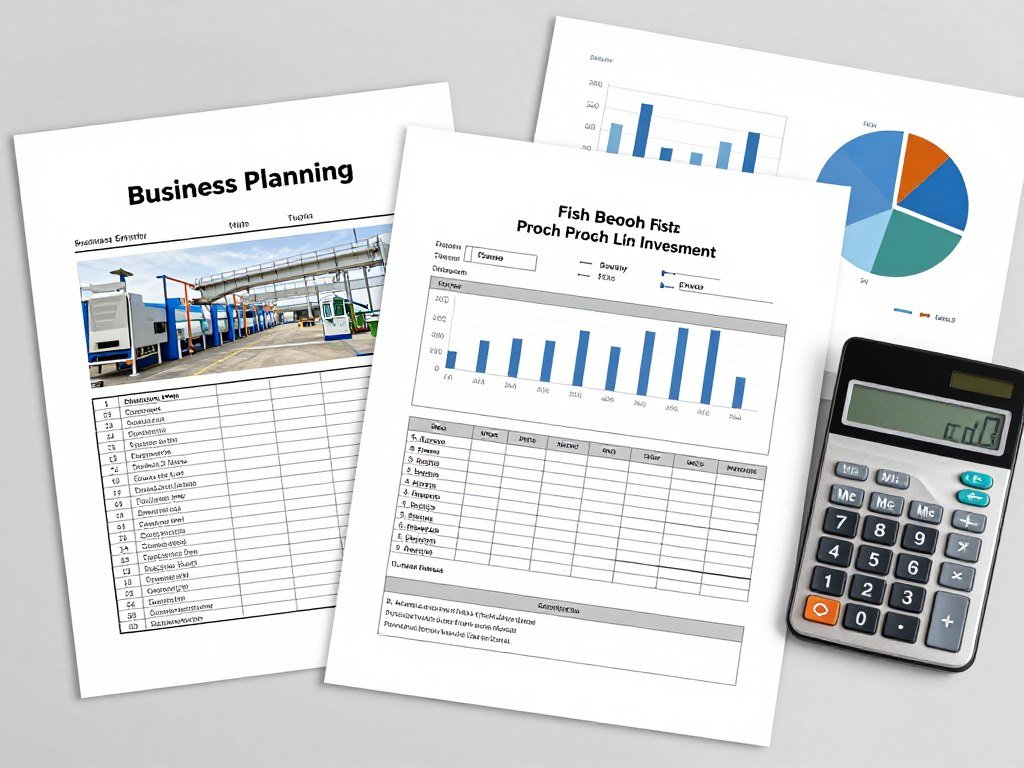
Total project investment extends beyond equipment purchase price. Complete budgeting includes civil works, utilities, installation, and working capital. A 10-tonne-per-hour facility typically requires total investment distributed as follows:
- Equipment Purchase: 60-65% of total investment – includes all processing machinery, control systems, and standard accessories
- Shipping & Logistics: 5-8% – ocean freight, insurance, customs duties, inland transportation to site
- Civil Works: 10-15% – building modifications, foundations, floor strengthening, overhead supports
- Utilities Installation: 8-12% – electrical service, steam boiler, compressed air, water supply, drainage
- Installation Labour: 4-6% – equipment assembly, electrical connections, testing, commissioning
- Initial Inventory: 3-5% – spare parts, initial raw materials, packaging supplies
- Contingency: 5-8% – unexpected costs, modifications, extended installation time
Return on Investment Analysis
Production line investment generates returns through direct feed sales, contract manufacturing, or captive use reducing purchased feed costs. ROI calculation must account for all revenue sources and operating expenses including raw materials, labour, utilities, and maintenance.
A typical 10-tonne-per-hour commercial feed mill achieves payback in 3.5-5 years operating at 70% capacity utilization. Higher capacity utilization, premium product pricing, or vertically integrated aquaculture operations achieve faster payback. Operating cost per tonne typically ranges £180-240 for aquatic feeds depending on formulation and local input costs.
Selecting the Right Aquatic Feed Production Line Manufacturer
Choosing an equipment supplier affects project success and long-term operational performance. Evaluation should examine multiple factors beyond initial purchase price to identify suppliers capable of delivering reliable equipment with ongoing support.
Manufacturing Experience and Technical Capability
Manufacturer experience in aquatic feed equipment distinguishes specialized suppliers from general machinery producers. MAIKONG brings 22 years of dedicated focus on feed production line manufacturer systems including extensive aquaculture feed applications.
Our engineering team includes aquaculture nutritionists, process engineers, and mechanical specialists who understand relationships between equipment design, processing parameters, and final feed quality. This knowledge enables us to recommend optimal configurations for specific applications rather than simply selling standard equipment packages.
Reference Projects and Customer Testimonials
Verifiable installations demonstrate manufacturer capability and provide contacts for reference checking. Request customer references in similar applications and contact them to discuss their experience. Questions should address equipment performance, supplier responsiveness, and post-installation support quality.
MAIKONG provides detailed reference lists including contact information for customers who have agreed to discuss their projects with prospective buyers. We encourage facility visits to operating installations where feasible, enabling you to observe equipment performance firsthand and discuss operational experiences directly with users.
After-Sales Support Infrastructure
Long-term support capability matters as much as equipment quality. Evaluate supplier responsiveness, spare parts availability, technical support access, and service coverage in your region. Manufacturers with established UK or European presence provide faster support than suppliers operating solely from Asia.
MAIKONG maintains UK technical support with English-speaking engineers available during European business hours. Our spare parts distribution includes UK inventory for critical components with 48-hour delivery throughout Britain and 72-96 hour delivery to continental Europe. This local presence distinguishes us from competitors requiring 3-4 week shipping from China for all parts.

UK Distributor and Agent Partnership Opportunities with MAIKONG
MAIKONG actively seeks partnerships with established equipment distributors, agricultural suppliers, and aquaculture industry specialists throughout the United Kingdom. Our partnership program offers attractive margins, comprehensive technical support, and marketing assistance for qualified partners.
Partnership Benefits and Support Structure
MAIKONG distributor partners receive exclusive territory rights, technical training, sales support materials, and co-marketing funding. We provide competitive wholesale pricing enabling healthy margins whilst maintaining market competitiveness. Minimum annual commitments ensure partners maintain active market presence without imposing unrealistic volume requirements.
Distributor Partnership Advantages
- Exclusive territory protection in designated UK regions
- Competitive wholesale pricing with volume incentives
- Comprehensive technical training at UK or factory location
- Sales support materials including brochures, presentations, technical data
- Co-marketing funding for trade shows, advertising, demonstrations
- Direct technical support line for distributor sales team
- Demonstration equipment programs for qualified partners
- Lead generation support through digital marketing
- Flexible payment terms for established partners
- OEM/private label options for larger distributors
Ideal Partner Profile and Requirements
We seek partners with established presence in agricultural equipment, aquaculture supplies, or feed industry segments. Ideal partners possess technical sales capability, service infrastructure, and customer relationships within target markets. Previous experience with industrial equipment strengthens partnership potential but is not mandatory for partners demonstrating commitment and market access.
Partnership requirements include business registration in the UK, adequate working capital for inventory, technical staff capability for basic customer support, and commitment to professional market representation. MAIKONG provides training and support enabling partners to develop expertise even without prior feed equipment experience.
Application Process and Getting Started
Partnership applications begin with initial discussion covering your market position, customer base, technical capabilities, and business objectives. We evaluate territory availability and assess alignment between your capabilities and market opportunities.
Qualified applicants receive detailed partnership terms including pricing structures, territory definitions, support provisions, and performance expectations. Following agreement, we schedule comprehensive training covering technical aspects, sales methodology, and customer support procedures. Partners receive starter marketing materials and initial sales leads to support market entry.
Become a MAIKONG UK Distribution Partner
Join our growing network of successful distribution partners throughout Europe. We offer exceptional support, competitive margins, and proven products serving the expanding aquaculture feed industry. Contact our partnership team to discuss opportunities in your territory.
Direct Partnership Enquiries: Lucy@feedproductionline.uk | +86 135-1090-7401
Frequently Asked Questions About Aquatic Feed Production Lines
What production capacity should I choose for my aquatic feed operation?
Capacity selection depends on your current feed consumption, growth projections, and whether you plan commercial sales beyond captive use. Calculate daily feed requirements based on your fish population and feeding rates, then add 30-40% for growth and potential commercial customers.
For example, if your current operation consumes 15 tonnes daily and you operate 16 hours per day, you need minimum 1 tonne per hour capacity (15 ÷ 16 = 0.94). Selecting a 2-3 tonne per hour system provides growth capacity without massive overcapacity.
Commercial feed mills should base capacity on market analysis and competitor assessment. Equipment operates most efficiently at 70-85% utilization, so size accordingly. Larger systems offer better economics per tonne but require higher utilization to justify investment.
How much does a complete aquatic feed production line cost?
Equipment pricing varies significantly based on capacity, automation level, and component specifications. Small 1-2 tonne per hour systems start around £85,000-145,000 for basic configurations. Mid-range 5-10 tonne per hour systems typically cost £285,000-580,000. Large 20+ tonne per hour installations exceed £1,200,000.
Remember that equipment cost represents only 60-65% of total project investment. Factor in shipping (5-8%), civil works (10-15%), utilities (8-12%), installation (4-6%), and working capital (3-5%). A realistic budget for a 10-tonne system totals £450,000-720,000 all-inclusive.
Request detailed quotations specifying exactly what is included. Some suppliers quote equipment only, whilst others provide turnkey pricing including installation and training. Compare equivalent scope when evaluating proposals.
What is the difference between pelleting and extrusion for aquatic feeds?
Pelleting forces conditioned feed through die holes using mechanical pressure, creating dense sinking pellets. This mature technology suits most fish species at lower investment cost. Pellet mills cost approximately £45,000-185,000 depending on capacity.
Extrusion cooks feed under high temperature and pressure, then forces it through dies where pressure release creates expansion and buoyancy. Extruded feeds float, improve digestibility, and reduce water pollution. However, extrusion systems cost 3-4 times more than pelleting equipment with equivalent capacity.
Choose pelleting for sinking feeds, cost-sensitive applications, and species accepting conventional pellets (salmon, trout, most freshwater species). Select extrusion for floating feeds, premium products, intensive culture systems benefiting from feeding observation, and species requiring high digestibility.
How long does installation and commissioning take?
Installation duration depends on system size and site readiness. Small systems (1-3 tonnes per hour) require 2-3 weeks for installation and 1 week commissioning. Medium systems (5-15 tonnes per hour) need 3-4 weeks installation and 1-2 weeks commissioning. Large systems (20+ tonnes per hour) may require 5-8 weeks installation plus 2-3 weeks commissioning.
These timelines assume your site is prepared with completed foundations, utility connections, and building modifications. Delays in civil works extend overall project duration. Start site preparation before equipment ships to avoid installation delays.
Factor in training time (5-7 days typically) and initial production optimization (1-2 weeks) after commissioning. Plan for 6-10 weeks total from equipment arrival to consistent production at design capacity.
What spare parts should I stock and what is their availability?
Essential spare parts include pellet mill dies (2-3 spares), compression rollers (1 set), hammer mill hammers (full set), screen panels (2-3 sets each size), drive belts (2 sets for critical equipment), and common bearing sizes. Initial spare parts investment typically runs £15,000-25,000 for a 10-tonne system.
MAIKONG maintains UK spare parts inventory for critical components with 48-hour delivery throughout Britain. Standard items ship from our European distribution center within 72-96 hours. Specialty items requiring factory manufacture ship from China within 2-3 weeks.
We provide recommended spare parts lists with all equipment orders. Stock high-wear items (dies, hammers, screens) locally at your facility. Less-critical components can source as needed from our UK or European inventory.
Can the system produce feeds for multiple species?
Yes, properly designed systems accommodate multiple species by changing dies, adjusting process parameters, and using different formulations. A single production line commonly produces salmon, trout, and tilapia feeds by switching 4mm dies for salmon to 6mm for larger fish, adjusting conditioning temperature, and changing recipes.
Changeover between species requires 2-4 hours including die replacement, system cleaning, and parameter adjustment. Some operations dedicate specific days to each species to minimize changeovers. Very different feed types (e.g., high-oil salmon feed vs. low-oil tilapia feed) may benefit from dedicated lines to avoid cross-contamination and frequent cleaning.
Discuss multi-species requirements during system design. We optimize equipment configurations for the specific species range you plan to produce, ensuring suitable capacity and process flexibility.
What technical support is available after installation?
MAIKONG provides comprehensive technical support including phone/email consultation, remote diagnostics, on-site service visits, and spare parts supply. Our UK support team operates during European business hours with typical response times under 4 hours for urgent issues and 24 hours for routine questions.
Support includes troubleshooting assistance, process optimization guidance, maintenance advice, and quality problem resolution. We use remote access to SCADA systems (where customer permits) for diagnostic support without site visits. Complex problems may require on-site technician dispatch available typically within 72 hours in UK.
Standard warranty covers 12 months from commissioning including parts and labour for manufacturing defects. Extended warranty and service contracts are available providing predictable support costs and priority response. Many customers purchase annual service agreements including preventive maintenance visits and priority support.
How energy-efficient are modern aquatic feed production systems?
Energy consumption per tonne varies with equipment design, production capacity, and feed characteristics. Modern systems typically consume 35-50 kWh per tonne for conventional pelleting and 65-95 kWh per tonne for extrusion processing.
Energy-efficient features include high-efficiency motors (reducing consumption 15-20%), variable frequency drives on major equipment (saving 15-25%), optimized conveying layouts (minimizing unnecessary material movement), and heat recovery systems (reducing boiler fuel 12-18%).
MAIKONG systems incorporate efficiency features as standard on medium and large capacity lines. Energy consumption calculations are provided during quotation enabling you to estimate operating costs accurately. Investing in efficiency features typically achieves payback within 18-30 months through reduced electricity costs.
What certifications and compliance standards do your systems meet?
All MAIKONG equipment carries CE marking confirming compliance with European machinery directives including safety, electrical, and noise emission standards. We provide complete technical documentation supporting regulatory approval and insurance requirements.
Our manufacturing facility operates under ISO 9001 quality management certification. Equipment undergoes SGS inspection when specified by customers, providing independent verification of quality and specifications. Electrical components source from European manufacturers meeting British standards for UK installations.
Equipment configures to UK electrical specifications including 400V three-phase power and British-style safety devices. We provide all documentation required for UK installation approval including electrical schematics, safety assessments, and compliance declarations.
Can I visit your factory before placing an order?
Yes, we welcome factory visits and encourage prospective buyers to inspect our manufacturing facility, observe equipment production, and witness testing procedures. Factory visits provide confidence in our capabilities and enable detailed technical discussions with our engineering team.
Our factory location in GD province, SZ city is accessible via major international airports. We arrange hotel accommodation and factory transportation for visiting customers. Visits typically span 2-3 days including facility tour, equipment demonstrations, technical meetings, and nearby reference installation visits if desired.
Contact our team to schedule factory visits. We recommend visiting during equipment manufacturing phase for your project, enabling you to inspect your specific machines before shipment and participate in factory acceptance testing if desired.
Making Your Aquatic Feed Production Investment Decision
Selecting an aquatic feed production line manufacturer represents a significant investment affecting your operation for decades. The information presented throughout this guide equips you to evaluate options systematically and identify suppliers capable of delivering reliable equipment with ongoing support.
Successful projects balance equipment quality, supplier capability, and total cost of ownership. The lowest initial price rarely provides best long-term value when considering maintenance costs, production efficiency, and support quality. Conversely, premium pricing doesn’t guarantee superior equipment if the supplier lacks aquaculture feed expertise.
Key Decision Factors to Evaluate
Your evaluation should weigh manufacturer experience in aquatic feed applications, reference project verification, technical support infrastructure in your region, spare parts availability, compliance with local regulations, and total project cost including installation and commissioning. Companies demonstrating strength across all factors provide lowest implementation risk.
MAIKONG offers proven aquatic feed expertise through 22 years of specialized manufacturing experience. Our European installations demonstrate capability to meet stringent quality standards whilst providing ongoing support through UK-based technical resources. This combination of experience, proven performance, and local support distinguishes us from competitors lacking European presence or aquaculture feed specialization.
Taking the Next Step
Whether you’re planning a new feed mill, upgrading existing equipment, or exploring OEM partnerships, we invite detailed discussion of your specific requirements. Our technical team provides customized recommendations addressing your unique production challenges, species mix, capacity needs, and budget constraints.
Initial consultations involve no obligation and provide valuable insights even if you ultimately select a different supplier. We believe educated buyers make better decisions and prefer thorough evaluation to rushed purchases. Contact us to begin discussions about your aquatic feed production requirements.
Start Your Aquatic Feed Production Project
Connect with MAIKONG’s aquatic feed specialists to discuss your production requirements, receive customized equipment recommendations, and obtain detailed project proposals. We provide comprehensive support from initial planning through production startup and beyond.
UK Technical Hotline:
+86 135-1090-7401
Company: MAIKONG Manufacturing | Location: GD Province, SZ City | Website: feedproductionline.uk
About MAIKONG
MAIKONG has specialized in animal feed production line manufacturer systems for over 22 years, serving aquaculture operations, livestock farms, and commercial feed mills throughout 130 countries. Our product range includes complete processing systems for aquatic feeds, poultry feed production line manufacturer equipment, pet feed production line manufacturer systems, and specialized applications.
We support OEM/ODM partnerships and actively recruit distributors throughout the UK and Europe. Our commitment to quality, technical innovation, and customer support has established MAIKONG as a trusted partner for feed production operations worldwide. Learn more about MAIKONG or contact our team to discuss your specific requirements.