
Cattle Feed Production Line Manufacturer: Complete Guide to Equipment Selection and Supplier Verification
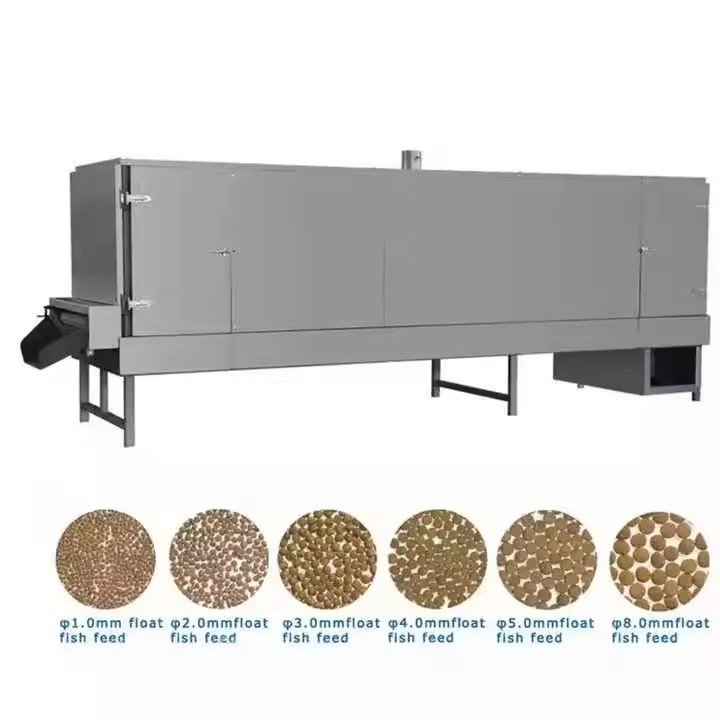
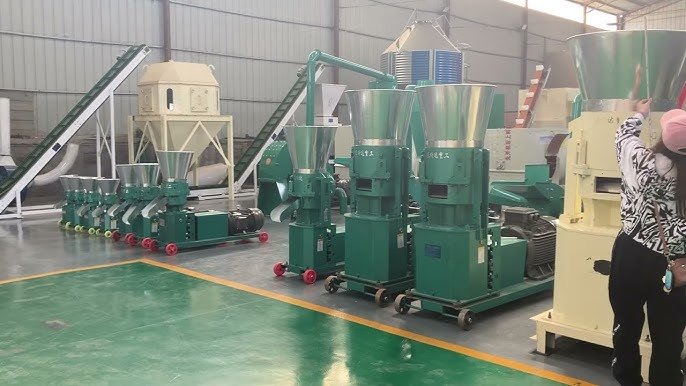
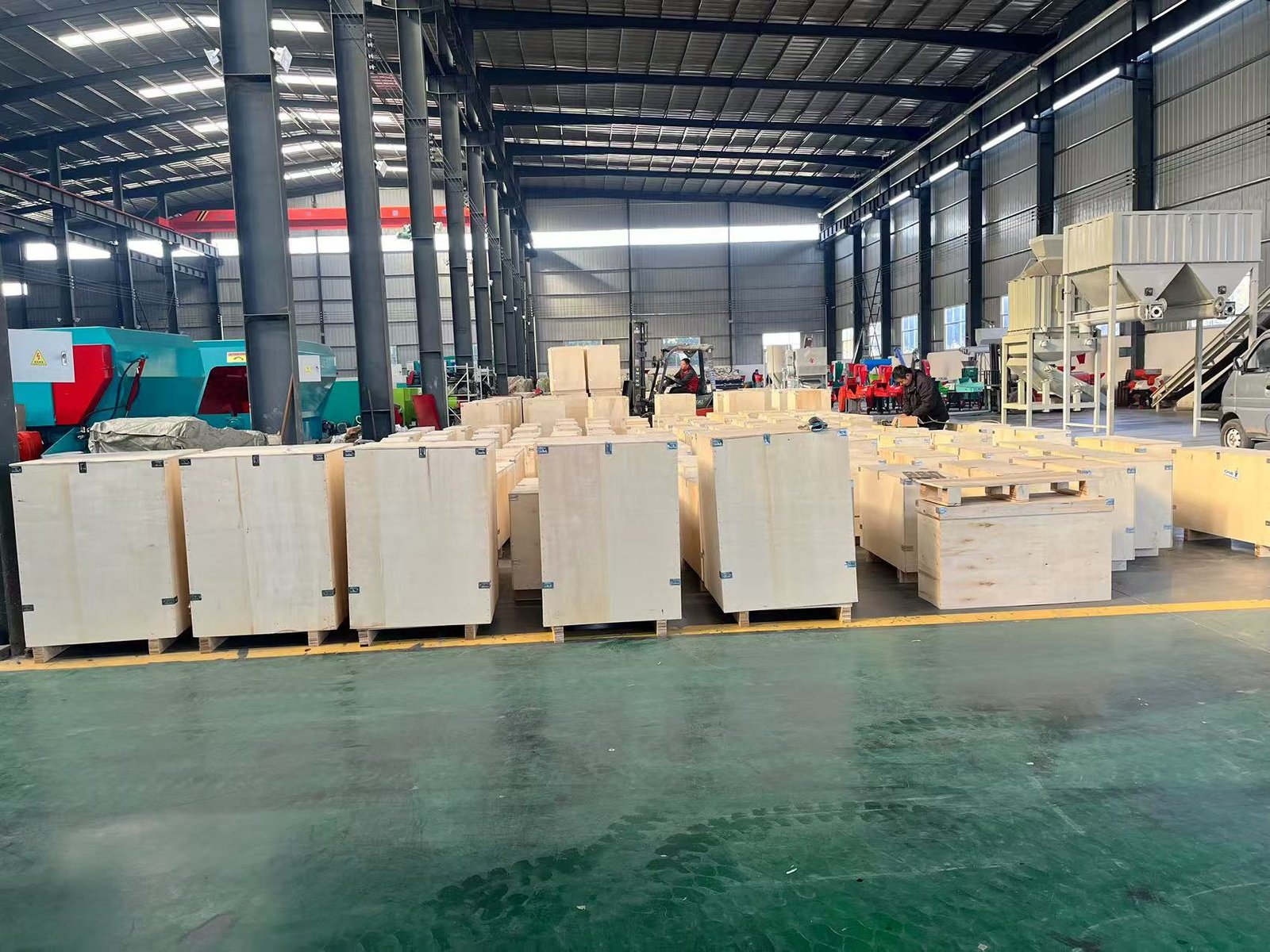
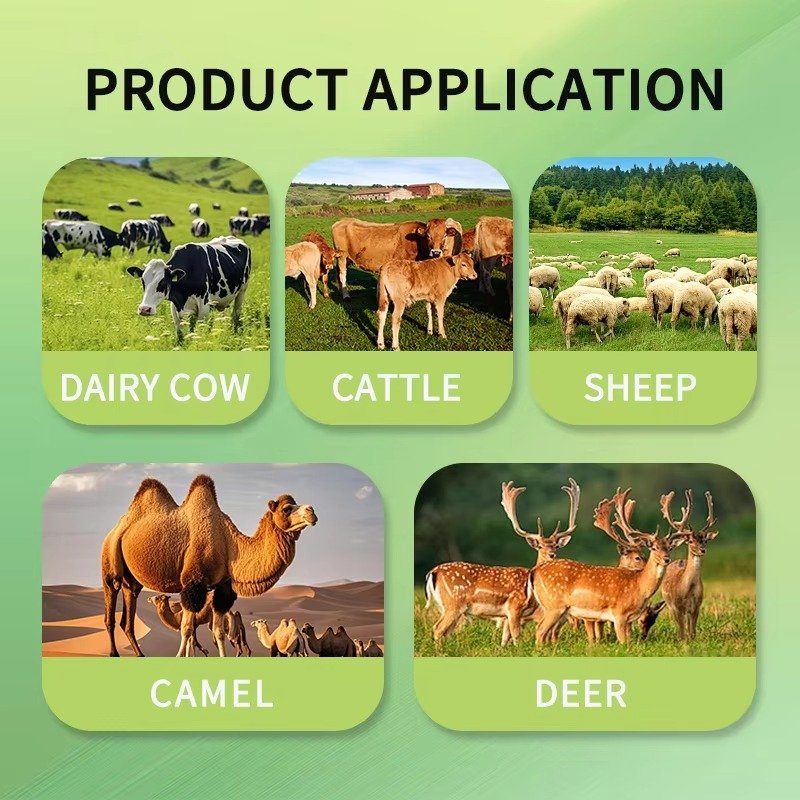
 Selecting the right cattle feed production line manufacturer represents one of the most critical decisions for dairy operations and beef cattle farms. The equipment you choose directly impacts feed quality, production efficiency, operational costs, and ultimately, animal health and productivity. This comprehensive guide examines the essential factors UK and European buyers must consider when evaluating cattle feed pellet production line suppliers.The global animal feed industry continues to expand. Cattle farming operations increasingly demand specialized equipment that handles high-fiber roughage materials effectively. Unlike poultry or pig feed systems, cattle feed production lines must process coarse materials like hay, grass, straw, and silage. These materials require specific engineering approaches to achieve proper pellet formation without excessive wear on machinery.MAIKONG brings over 22 years of manufacturing experience to the cattle feed processing sector. Our engineering team specializes in ruminant nutrition requirements. We design production lines that accommodate the unique challenges of grass-based and roughage-heavy feed formulations common in UK and European cattle operations.
Essential Equipment Components in a Complete Cattle Feed Production Line
A professional cattle feed production line integrates multiple processing stages. Each component performs a specific function in transforming raw ingredients into finished pellets. Understanding these elements helps buyers evaluate manufacturer capabilities and system completeness.
Primary Processing Equipment
The core machinery creates the foundation of your production system. These units handle the heaviest workloads and require robust engineering.
- Hammer Mill Crusher: Reduces raw materials to optimal particle size (typically 2-4mm for cattle feed). Must handle fibrous materials without frequent clogging.
- Paddle or Ribbon Mixer: Ensures uniform distribution of ingredients, vitamins, and minerals throughout the batch. Mixing time typically ranges from 3-8 minutes depending on batch size.
- Ring Die Pellet Mill: The heart of the system. Extrudes mixed material through die holes to form pellets. Requires proper die selection based on raw material characteristics.
- Counterflow Cooler: Reduces pellet temperature and moisture content to safe storage levels. Critical for preventing mold growth and maintaining pellet hardness.
Supporting Systems and Auxiliary Equipment
Secondary equipment ensures smooth material flow, quality control, and finished product handling. These components often differentiate basic systems from professional installations.
Material Handling
Conveyors, elevators, and distribution systems move ingredients and finished product through each processing stage efficiently.
- Bucket elevators for vertical transport
- Screw conveyors for horizontal movement
- Pneumatic systems for dust-free transfer
Quality Control
Screening and grading equipment ensures consistent pellet size and removes fines or oversized particles.
- Vibrating screens separate finished pellets
- Crumbler breaks oversized pellets
- Dust collection systems improve environment
Packaging Solutions
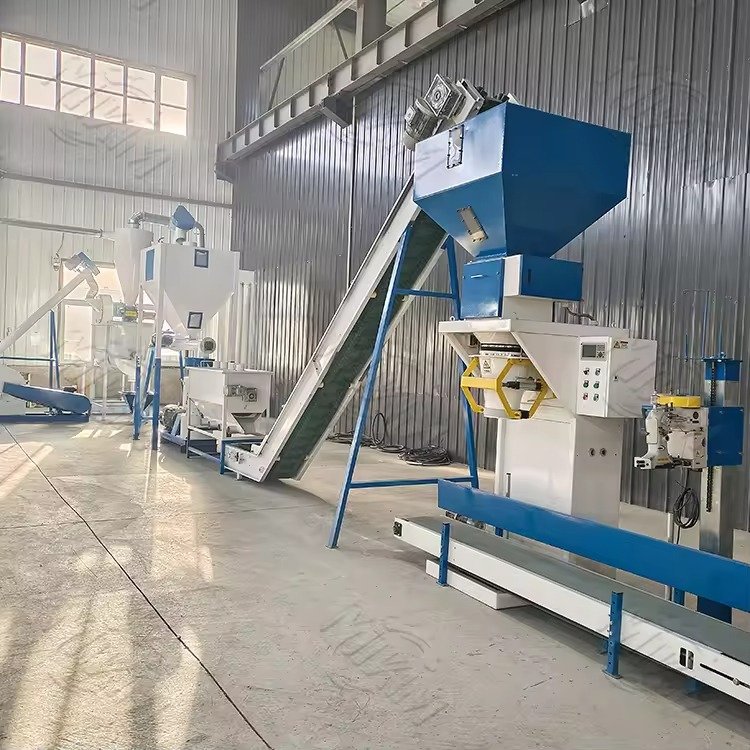
Automated weighing and bagging systems prepare finished feed for storage or distribution to cattle facilities.
- Electronic weighing scales (6-12 bags/minute)
- Automatic bag sewers
- Palletizing systems for bulk handling
Understanding the complete equipment configuration helps buyers assess whether a manufacturer offers truly integrated solutions or simply resells individual components. A reliable cattle feed production line supplier provides engineered systems where all components work harmoniously. Need guidance selecting the optimal configuration for your raw materials and production targets? Contact our UK technical team for a consultation on equipment matching your specific requirements.
Production Capacity Options and Technical Specifications
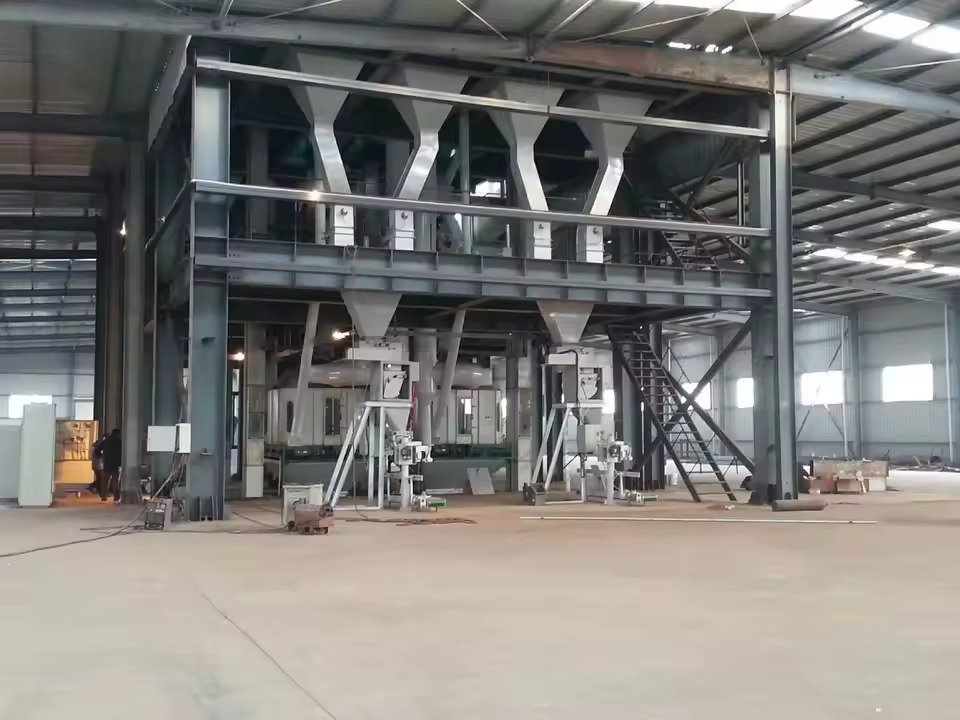
Cattle feed production lines span a remarkable capacity range. Small farm operations may require 200-500kg per hour. Large commercial feed mills might demand 20-50 tonnes per hour or more. Matching production capacity to your actual needs prevents both bottlenecks and wasteful over-investment.
Capacity Classification System
| Capacity Range | Typical Applications | Main Power Requirements | Footprint Area | Operator Requirements |
| 200-500 kg/h | Small family farms, research facilities, specialty cattle operations | 45-75 kW | 150-250 m² | 1-2 workers |
| 1-3 T/h | Medium dairy farms, beef fattening operations, agricultural cooperatives | 90-150 kW | 300-500 m² | 2-3 workers |
| 5-10 T/h | Large-scale cattle farms, regional feed mills, commercial operations | 180-280 kW | 600-1000 m² | 3-5 workers |
| 15-30 T/h | Major feed production facilities, industrial-scale cattle operations | 350-550 kW | 1200-2000 m² | 5-8 workers |
| 50-100 T/h | National feed manufacturers, export-oriented production facilities | 700-1200 kW | 2500-4000 m² | 8-12 workers |
Critical Technical Parameters Beyond Capacity
Production volume represents just one specification. Several other technical parameters significantly affect system performance and suitability for cattle feed production.
Raw Material Considerations
- Moisture Content Range: Cattle feed ingredients typically arrive with 10-14% moisture. Equipment must handle this range without requiring extensive pre-drying.
- Fiber Content Tolerance: Ruminant diets contain 15-30% crude fiber. Hammer mills and pellet dies must accommodate these abrasive, tough materials without excessive wear.
- Particle Size Requirements: Final grind size affects pellet quality. Cattle feed generally requires 2-4mm particles before pelleting.
- Bulk Density Variation: Hay, silage, and concentrate ingredients have vastly different bulk densities. Dosing and conveying systems must accommodate this variation.
Output Quality Standards
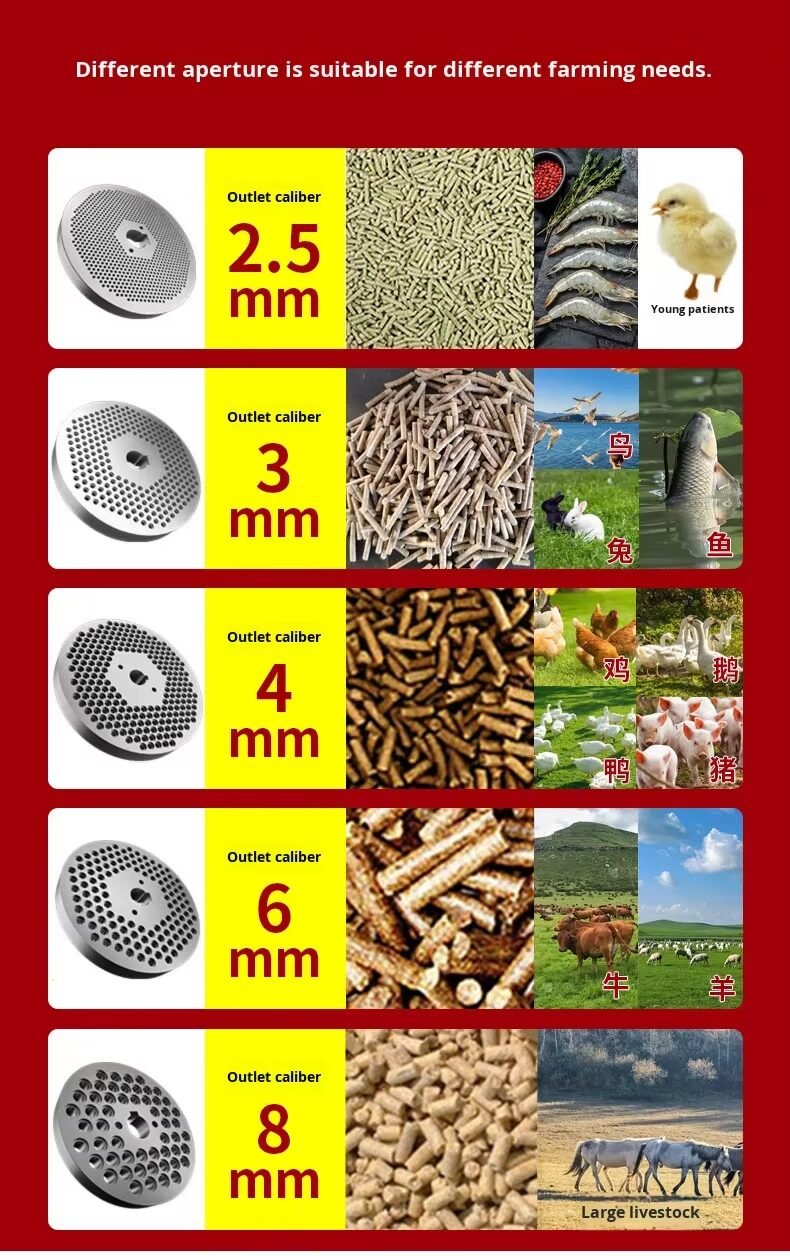
- Pellet Diameter Options: Cattle operations typically use 4-8mm diameter pellets depending on animal age and type. System should accommodate die changes.
- Pellet Durability Index (PDI): Minimum 85-90% PDI ensures pellets withstand handling and storage without excessive breakage.
- Fines Percentage: Well-designed cooling and screening should keep fines below 5% of total production.
- Temperature Control: Finished pellets should exit cooler below 30°C ambient +5°C to prevent mold and maintain vitamin stability.
These specifications directly relate to long-term operational success. A cattle feed production line manufacturer who understands these parameters demonstrates genuine expertise in ruminant nutrition and feed processing engineering.
Complete Process Workflow and Production Line Design
Understanding the complete feed production workflow helps buyers evaluate whether a supplier provides comprehensive solutions. Professional manufacturers design integrated systems where each stage flows logically into the next.
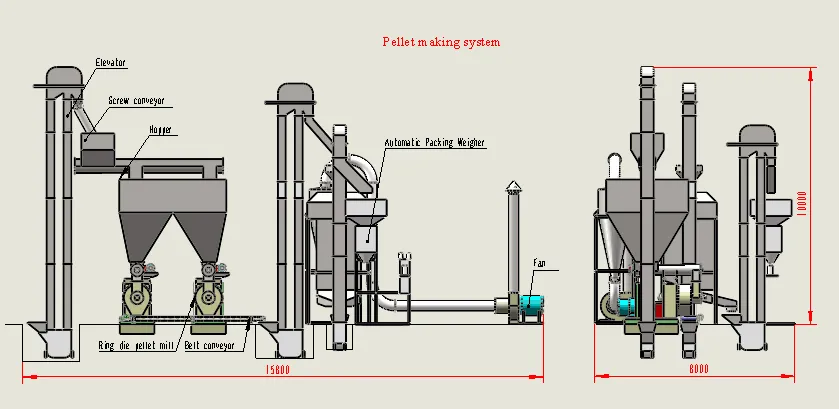
Stage-by-Stage Production Sequence
1. Receiving & Storage
Raw materials arrive and require proper storage before processing begins.
- Ingredient receiving hoppers
- Cleaning screens remove contaminants
- Bulk storage silos for major ingredients
- Separate bins for micro-ingredients
2. Dosing & Weighing
Precise ingredient proportioning ensures consistent nutritional profiles batch after batch.
- Automated batching scales
- Formula management software
- Micro-ingredient dosing for vitamins/minerals
- Liquid ingredient addition systems
3. Grinding & Mixing
Particle size reduction and thorough blending create uniform feed material ready for pelleting.
- Hammer mill reduces particle size
- Paddle or ribbon mixer homogenizes batch
- Mixing cycle 3-8 minutes typically
- Dust extraction prevents product loss
4. Conditioning
Steam and heat prepare material for pellet formation while partially cooking starch components.
- Steam injection raises temperature
- Moisture addition improves binding
- Residence time 30-60 seconds
- Temperature reaches 75-85°C
5. Pelleting
The ring die pellet mill extrudes conditioned material through die holes to form dense pellets.
- Ring die pellet mill operation
- Die hole diameter determines pellet size
- Compression ratio affects pellet density
- Hot pellets exit at 75-90°C
6. Cooling
Rapid cooling solidifies pellets and reduces moisture to safe storage levels.
- Counterflow cooler design
- Ambient air removes heat
- Pellet temperature drops to ambient +5°C
- Moisture content reduced to 10-12%
7. Screening & Crumbling
Quality control removes fines and oversized particles for uniform final product.
- Vibrating screens classify pellets
- Oversized pellets returned to crumbler
- Fines recycled to mixer
- Only quality pellets proceed to packing
8. Packaging & Storage
Final weighing and bagging prepare finished cattle feed for distribution or farm use.
- Automatic weighing scales
- Bag filling 6-12 bags/minute
- Finished product warehouse
- Bulk loading for large operations
Get Your Custom Cattle Feed Line Design
Our engineering team will create a production system optimized for your specific raw materials, capacity requirements, and facility constraints. Receive detailed equipment specifications, layout drawings, and transparent pricing within 24 hours.
Automation Levels and Control Systems
Modern cattle feed production lines offer varying degrees of automation. The appropriate level depends on production scale, labor availability, and budget constraints.
Fully Automated Systems
- PLC-based central control
- Touchscreen operator interface
- Automatic formula management
- Real-time production monitoring
- Remote diagnostics capability
- Minimal operator intervention required
- Best for 5+ T/h capacity lines
Semi-Automated Systems
- Manual batching with electronic scales
- Automated grinding and pelleting
- Operator controls key transitions
- Basic production data logging
- Lower initial investment
- Suitable for 1-5 T/h operations
- Flexible for variable production schedules
Manual Control Systems
- Operator manages all stages
- Individual machine start/stop controls
- Manual formula calculation
- Visual quality monitoring
- Lowest equipment cost
- Best for under 1 T/h capacity
- Requires skilled operators
MAIKONG offers all three automation levels. We help buyers select the control system that matches their operational requirements and budget. Our Model MK-L003 comes standard with semi-automatic controls but can be upgraded to full automation as production volumes grow.
Featured Product: MAIKONG Model MK-L003 Cattle Feed Production Line
The MK-L003 represents MAIKONG’s purpose-designed solution for medium-scale cattle feed production. This system addresses the specific challenges of processing high-fiber roughage materials while maintaining production efficiency and pellet quality.
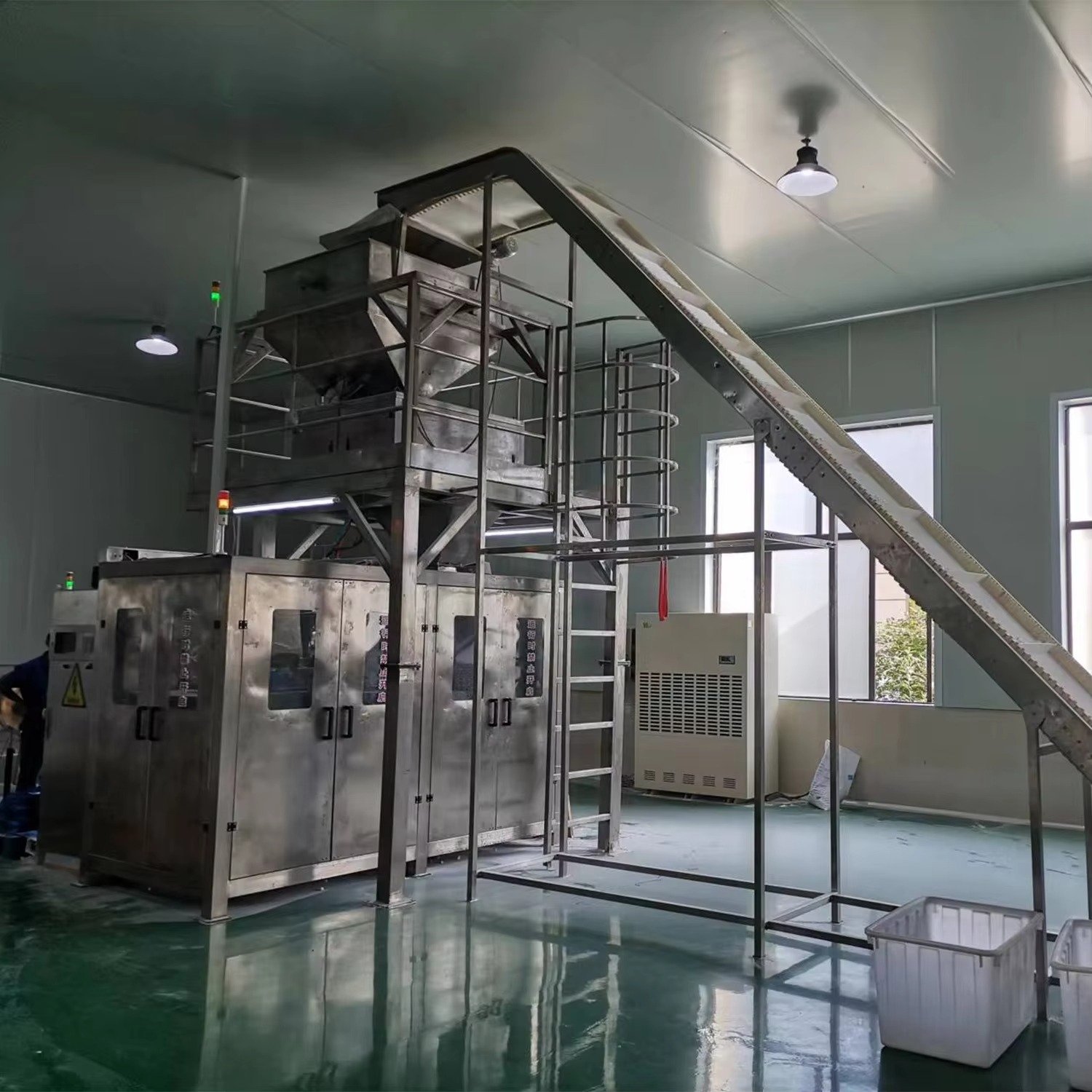
Technical Specifications – MK-L003
| Model Number | MK-L003 |
| Production Capacity | 3-5 T/h (tonnes per hour) |
| Control Mode | Semi-Automatic / Fully Automatic (optional upgrade) |
| Main Power Requirement | 150 kW total installed power |
| Voltage Options | 380V/50Hz (UK standard) or customizable |
| Pellet Size Range | 4mm, 6mm, 8mm (die change required) |
| Feed Material | Grass, hay, silage, grains, protein meals, supplements |
| Dimensions (L×W×H) | 18m × 8m × 6m (requires 400m² facility minimum) |
| Equipment Weight | 12,500 kg (total system weight) |
| Construction Material | Carbon steel frame, stainless steel contact surfaces, ABS control panels |
| Colour Options | Industrial grey (standard), custom colors available for OEM |
| Operator Requirements | 2-3 workers per shift |
| Installation Timeline | 14-21 days (including commissioning and training) |
| Warranty Coverage | 24 months on core equipment, lifetime technical support |
| Stock Availability | In stock – ready for immediate shipment |
Key Features and Advantages
- Fiber-Optimized Design: Reinforced hammer mill and specialized die configuration handle high-roughage cattle feed formulations without excessive wear
- Low-Dust Operation: Enclosed transfer points and integrated dust collection maintain clean working environment
- Energy Efficiency: Modern motor designs and optimized process flow reduce power consumption by 15-20% compared to older systems
- Modular Construction: System can be expanded with additional capacity or automation as business grows
- Easy Maintenance Access: Quick-release panels and service points minimize downtime during routine maintenance
- UK Voltage Compatibility: Factory-configured for UK 380V/50Hz power standard, no additional transformers required
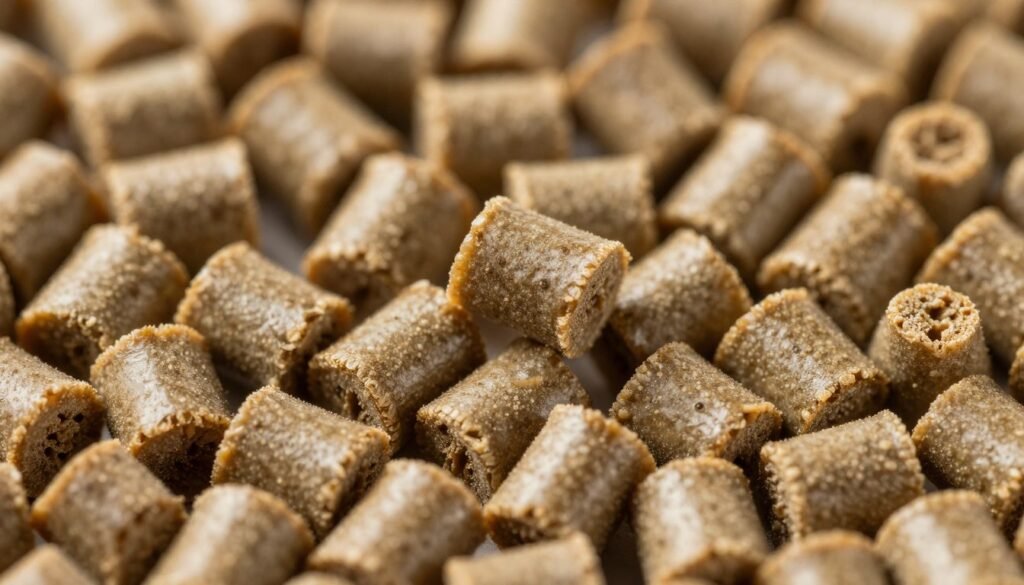
Price Indication: The MK-L003 complete system with semi-automatic controls ranges from £145,000-£175,000 depending on specific configuration, automation level, and shipping requirements. Fully automated versions with advanced PLC controls range from £195,000-£225,000. All prices include installation supervision, operator training, and 24-month warranty. Request a detailed quotation with your specific requirements for exact pricing.
Addressing Common Buyer Concerns and Technical Challenges
Experience working with hundreds of animal feed production installations reveals recurring concerns UK and European buyers raise when evaluating cattle feed pellet production line suppliers. Addressing these issues transparently builds confidence in manufacturer selection.
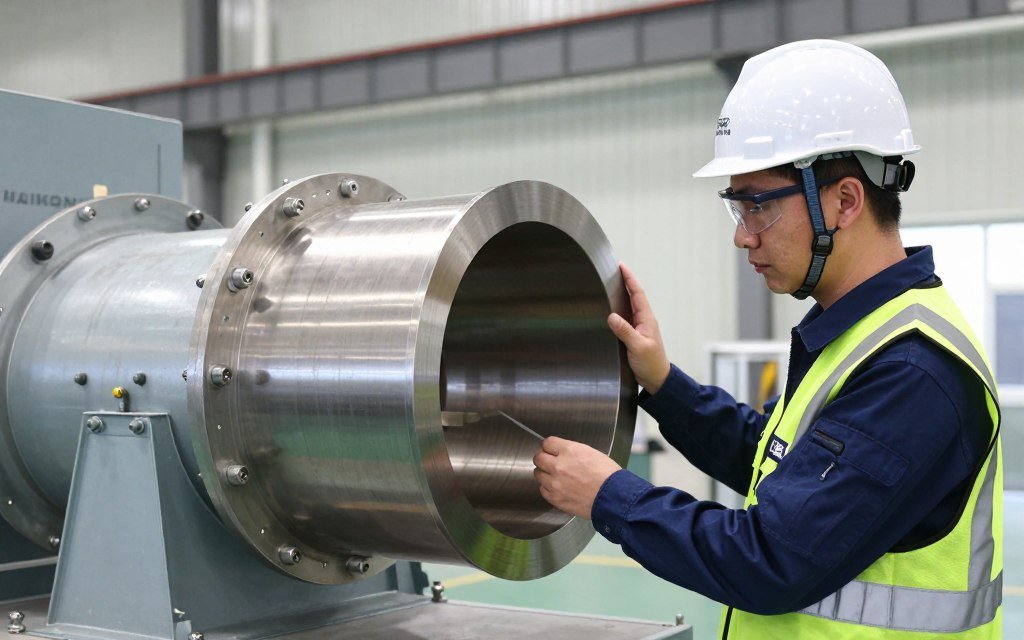
Equipment Reliability and Maintenance Requirements
Design Elements That Enhance Reliability
- Oversized bearings in pellet mill extend service life to 8,000+ operating hours
- Wear-resistant steel alloy in critical components reduces replacement frequency
- Accessible maintenance points allow service without complete disassembly
- Comprehensive spare parts kits included with initial equipment purchase
- Remote diagnostic capability identifies issues before they cause breakdowns
Maintenance Points Requiring Regular Attention
- Pellet die and roller replacement every 1,500-2,500 hours depending on material abrasiveness
- Hammer mill screen and hammer replacement every 800-1,200 operating hours
- Mixer paddle inspection and adjustment every 500 hours to maintain uniformity
- Belt tension and alignment checks every 100 operating hours prevent premature wear
- Lubrication requirements at specified intervals critical for bearing longevity
MAIKONG provides detailed maintenance schedules and training during installation. Our UK technical support team can guide your operators through routine maintenance procedures remotely. Critical spare parts ship within 48 hours to minimize production interruptions.
Material Flow Problems and Solutions
Cattle feed production presents unique material handling challenges. Fibrous ingredients bridge in hoppers. Low-density roughage compresses unevenly. Moisture variations affect flowability. Professional manufacturers design systems that anticipate and overcome these issues.
Common Material Flow Issues
- Bridging in Storage Bins: Long-fiber hay and straw create arches in silos, blocking gravity flow and causing production stoppages.
- Inconsistent Dosing: Variable bulk density between ingredients leads to formula errors if volumetric systems used instead of gravimetric weighing.
- Mixer Overloading: Compacted material balls in mixer corners, preventing proper blending and causing motor strain.
- Die Blockage: Insufficient conditioning or improper moisture content causes material to plug pellet die holes.
- Dust Generation: Fine particles become airborne during transfer, creating housekeeping issues and product loss.
Engineering Solutions
- Bin Activators and Vibrators: Mechanical or pneumatic devices prevent bridging and ensure consistent material discharge from storage.
- Gravimetric Batching: Weight-based dosing systems maintain formula accuracy regardless of ingredient bulk density variations.
- High-Speed Paddle Mixers: Aggressive mixing action breaks up compacted material and achieves homogeneity in 4-6 minutes.
- Steam Conditioning: Proper temperature and moisture addition plasticizes material for smooth die flow and pellet formation.
- Enclosed Conveyors: Dust-tight material transfer systems capture fines and return them to the process stream.
Pellet Quality Optimization
Achieving consistent pellet quality with variable cattle feed ingredients requires understanding the factors affecting pellet formation. Several parameters interact to determine final pellet characteristics.
| Quality Parameter | Target Range | Primary Influencing Factors | Adjustment Methods |
| Pellet Durability Index (PDI) | 85-92% | Steam conditioning temperature, die compression ratio, ingredient grind size | Increase conditioning time/temp, reduce grind size, optimize die L/D ratio |
| Pellet Hardness | 15-25 kg force | Die compression ratio, conditioning parameters, ingredient composition | Select appropriate die design, adjust steam addition, modify formula binders |
| Fines Percentage | Below 5% | Cooling efficiency, pellet durability, handling system design | Improve cooling time, increase PDI, minimize drop distances in conveyors |
| Moisture Content | 10-12% | Cooling time, air flow rate, ambient conditions, incoming material moisture | Extend cooling residence time, increase air flow, monitor incoming materials |
| Pellet Temperature | Ambient +5°C | Cooler design, retention time, air flow volume | Increase cooling time, optimize air distribution, ensure adequate cooler capacity |
MAIKONG engineers conduct pellet quality testing during commissioning. We document optimal parameter settings for your specific ingredients and formula. Our training program teaches operators how to recognize quality deviations and make appropriate adjustments. Still have questions about achieving your target pellet specifications? Our technical specialists respond to inquiries within 24 hours. Email your specific concerns for expert guidance.
After-Sales Support and Spare Parts Availability
Equipment purchases represent long-term investments. Reliable technical support and spare parts availability directly affect production uptime and total cost of ownership. Evaluating a manufacturer’s after-sales capabilities should weigh as heavily as initial equipment quality.
MAIKONG After-Sales Commitment
Technical Support Response: Email inquiries answered within 4 business hours. Emergency technical issues receive phone support within 2 hours.
Spare Parts Inventory: Critical wear components maintained in UK stock for 48-hour delivery. Non-stock items ship from factory within 7-10 days.
Installation and Training: Factory technician supervises installation and commissioning. 5-day operator training program covers operation, routine maintenance, and troubleshooting.
Warranty Coverage: 24-month warranty on core equipment (pellet mill, mixer, crusher). Wear parts covered for 6 months or specified operating hours.
Lifetime Technical Support: No time limit on technical consultation availability. Our engineering team supports equipment throughout its operational life.
Delivery Timeline and Installation Process
Understanding the complete timeline from order to production helps buyers plan facility preparation and manage expectations. A transparent cattle feed production line manufacturer provides realistic schedules without over-promising.
- Order Confirmation to Manufacturing Start: 3-5 business days for final specification review, contract signing, and advance payment processing
- Manufacturing Period: 35-45 days for standard MK-L003 configuration. Custom OEM/ODM projects may require 50-60 days depending on specification changes
- Quality Testing and Inspection: 5-7 days for complete system testing, load testing of all components, and quality documentation preparation
- Shipping and Logistics: 18-25 days ocean freight to UK ports. Air freight available for urgent requirements (5-7 days) at additional cost
- Customs Clearance: 3-5 days typically. MAIKONG provides all necessary export documentation. Buyer arranges import clearance with customs agent
- Installation and Commissioning: 14-21 days on-site. Includes equipment positioning, connections, system integration, testing, and operator training
Total Timeline: Approximately 90-110 days from order confirmation to full production operation. This assumes timely facility preparation by buyer and no unexpected customs delays.
Buyer Preparation Requirements: Factory building must be complete with adequate floor loading capacity (minimum 800 kg/m² for MK-L003). Electrical infrastructure installed to equipment specifications. Raw material storage arranged. These preparations should occur during manufacturing period to avoid installation delays.
International Success Cases and Customer Testimonials
Real-world installations demonstrate manufacturer capability better than specifications alone. MAIKONG cattle feed production lines operate successfully across multiple continents. These cases illustrate our adaptability to different raw materials, facility constraints, and production requirements.
European Market Installations
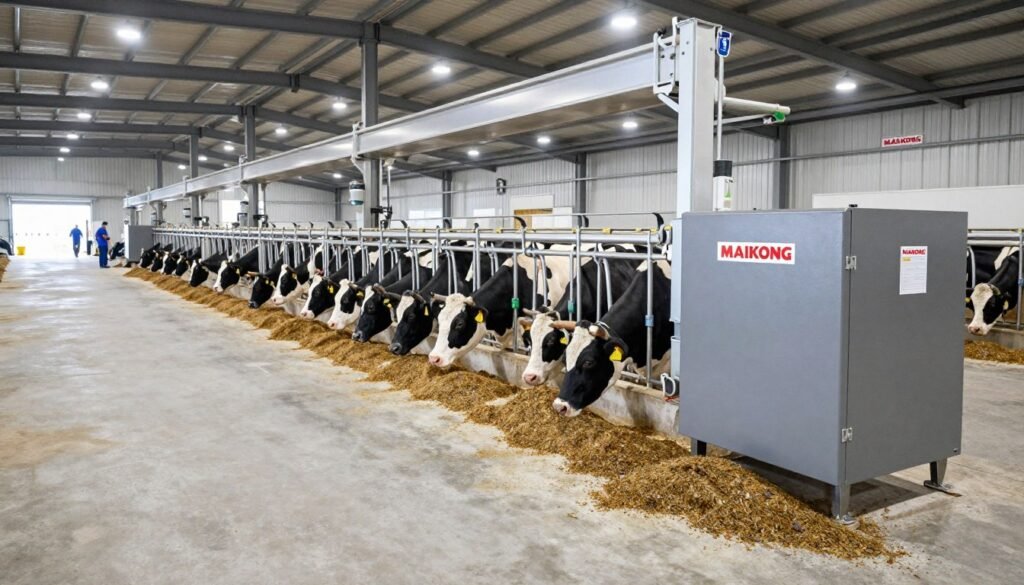
Netherlands Dairy Cooperative – 5 T/h System
Challenge: Regional cooperative needed to produce consistent cattle feed pellets for 47 member farms. High grass silage content in formulas required specialized equipment configuration.
Solution: MAIKONG MK-L003 with reinforced die assembly and extended conditioning system. Custom hopper designs accommodate silage material characteristics.
Results: System operates 16 hours daily, producing 75 tonnes of pelleted cattle feed. Pellet durability exceeds 88%, meeting cooperative’s strict quality standards. 23-month operation with only routine maintenance requirements.
UK Beef Farm Group – 3 T/h Custom Configuration
Challenge: Consortium of beef fattening operations required OEM-branded feed production for competitive advantage. Needed flexibility for seasonal formula changes and ability to process locally-sourced ingredients.
Solution: MAIKONG provided OEM production line branded with farm group identity. Equipment configured with quick-change die system for rapid pellet size adjustments. Training program certified farm staff as equipment operators.
Results: Farm group now produces proprietary cattle feed brand at 40% lower cost than purchased feed. Equipment reliability enables consistent production schedule. After-sales support from MAIKONG UK team resolves questions within 24 hours.
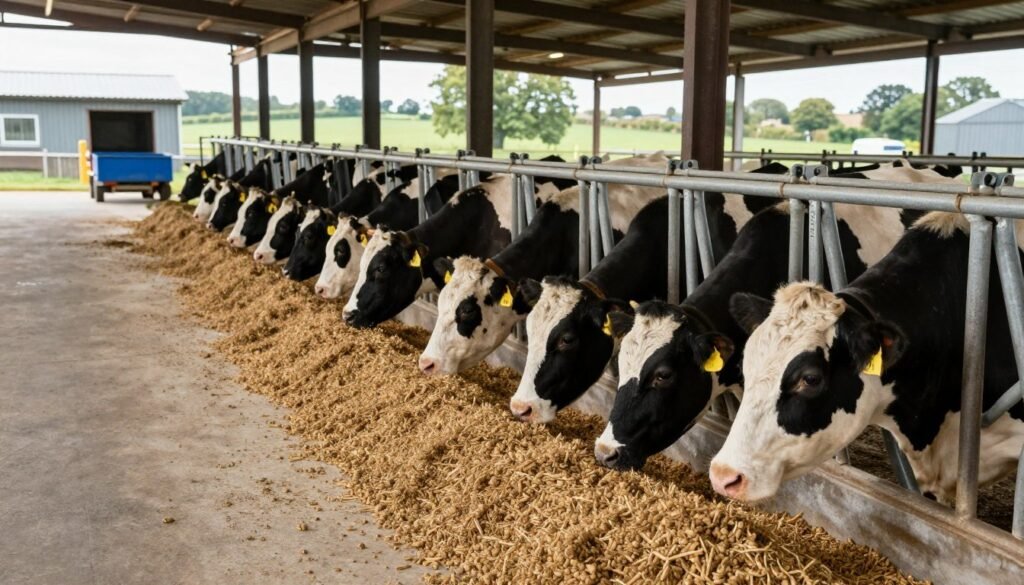
Additional International References
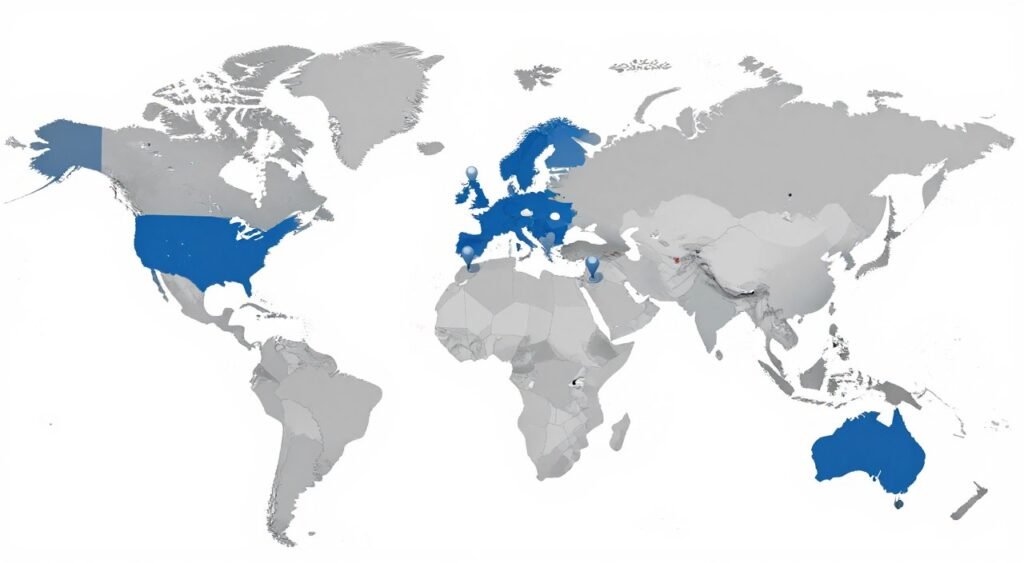
MAIKONG cattle feed production equipment operates in more than 35 countries worldwide. Our experience spans diverse climates, raw material types, and production scales.
Asia Pacific Region
- Thailand: 8 T/h line processing tropical grass varieties for dairy operations
- Australia: 15 T/h system at major beef producer, handling native pasture materials
- Malaysia: 4 T/h installation producing cattle feed for export market
Americas
- United States: Multiple 10-20 T/h installations at regional feed mills
- Brazil: 25 T/h line supporting large-scale cattle ranching operation
- Argentina: 6 T/h system processing alfalfa-based cattle feed formulations
Africa & Middle East
- South Africa: 12 T/h production line for commercial cattle feed manufacturer
- Kenya: 3 T/h system supporting dairy development project
- Saudi Arabia: 8 T/h installation processing imported and local ingredients
“MAIKONG’s technical support exceeded our expectations. Their engineers understood our specific requirements for processing high-moisture grass silage. The equipment performs reliably, and their UK support team responds promptly when we need assistance. We’re now discussing a second line to expand our capacity.”
“After evaluating seven manufacturers, we selected MAIKONG for their proven experience with ruminant feed production and willingness to customize the system for our specific needs. Twenty months of operation confirms we made the right choice. The equipment runs consistently, maintenance is straightforward, and pellet quality meets our strict standards.”
These installations demonstrate MAIKONG’s capability to deliver reliable cattle feed production solutions across varying climates, raw materials, and operational scales. Our engineering team adapts equipment configurations to match specific requirements while maintaining proven core technology. Review our complete portfolio of poultry feed production line and other animal feed systems for additional reference projects.
UK Distributor and Agent Partnership Opportunity

MAIKONG actively seeks qualified distributors and agents to expand our presence in the United Kingdom and broader European market. Our 22-year manufacturing heritage and comprehensive product range provide strong foundation for profitable partnerships.
Why Partner with MAIKONG?
Manufacturer Advantages
- Direct Factory Pricing: Eliminate middlemen and offer competitive pricing to end customers while maintaining healthy margins
- Complete Product Range: Represent full portfolio from 200kg/h to 200T/h capacity systems across multiple animal species
- OEM/ODM Capability: Offer customers fully customized solutions with their own branding and specifications
- Proven Track Record: Reference 500+ successful installations worldwide demonstrating reliability and performance
- Technical Expertise: Access factory engineering team for pre-sales support, custom designs, and technical problem-solving
- Quality Assurance: ISO-certified manufacturing processes ensure consistent equipment quality and compliance
Partner Support Program
- Protected Territory: Exclusive distribution rights within agreed geographic areas prevent internal competition
- Marketing Materials: Professional catalogs, technical documentation, case studies, and digital content provided
- Training Program: Comprehensive technical training on equipment operation, maintenance, and troubleshooting
- Attractive Margins: Competitive commission structure rewards active market development and customer service
- Demo Equipment: Access to demonstration units for customer trials and exhibitions
- Fast Response: Dedicated partner support team ensures prompt quotations and technical assistance
Ideal Partner Profile
We seek established businesses with relevant industry experience and commitment to customer success. The following characteristics represent our ideal distributor partners:
- Industry Experience: Background in agricultural equipment, feed production, or animal husbandry sectors
- Customer Network: Existing relationships with feed mills, cattle farms, agricultural cooperatives, or equipment buyers
- Technical Capability: Engineering or technical staff who can discuss specifications and applications with customers
- Service Infrastructure: Ability to provide after-sales support, routine maintenance, and spare parts distribution
- Business Stability: Established business with financial capacity to maintain inventory and support customers
- Growth Ambition: Commitment to actively developing market presence and customer base
Become a MAIKONG UK Distributor
Join our growing network of successful distribution partners. MAIKONG offers complete support, competitive terms, and proven products that customers value. Start a conversation about partnership opportunities in your region today.
Include your company background, target market areas, and current product lines in your inquiry. Our partnership development team will respond within 48 hours.
What Partners Say About MAIKONG
“We’ve represented MAIKONG equipment for three years now. Their product quality is excellent, but what really sets them apart is their technical support. When customers have questions or need customization, MAIKONG’s engineers respond quickly with practical solutions. This makes our sales process much easier and keeps customers satisfied.”
“As a new distributor, we appreciated MAIKONG’s comprehensive training and marketing support. They provided everything we needed to confidently represent their product line. Our customers value the competitive pricing and reliable equipment. The partnership has been profitable from year one.”
Making Your Cattle Feed Production Line Investment Decision
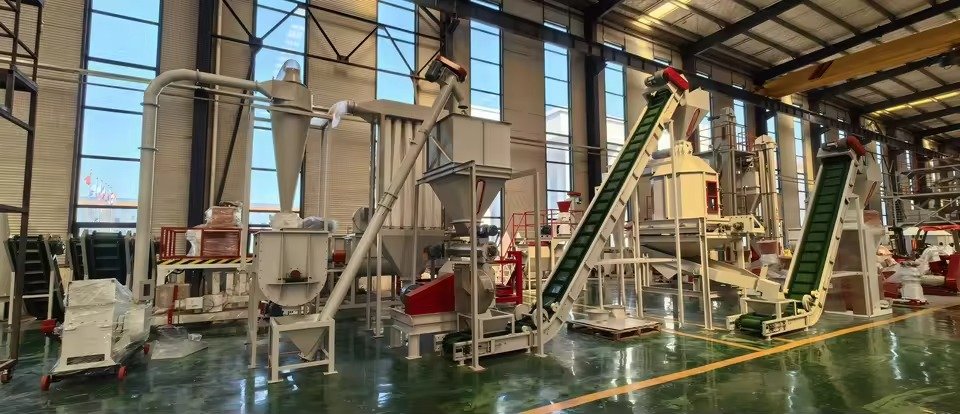
Selecting the right cattle feed production line manufacturer represents a significant business decision with long-term implications. Equipment quality, technical support, and supplier reliability directly affect production efficiency, product quality, and investment returns.
This guide has examined the critical factors UK and European buyers must evaluate: equipment components and specifications, production capacity matching, process workflow design, quality parameters, common technical challenges, after-sales support capabilities, and real-world installation references.
Key Selection Criteria Summary
- Ruminant Specialization: Choose manufacturers with proven expertise in cattle feed processing, not generic pellet mill suppliers
- Complete Systems: Evaluate integrated production lines, not just individual equipment pieces assembled without engineering coordination
- Technical Transparency: Work with suppliers who provide detailed specifications, realistic performance data, and honest capability assessments
- After-Sales Commitment: Prioritize manufacturers offering responsive technical support, spare parts availability, and long-term service relationships
- Reference Verification: Request and contact actual customers operating similar systems in comparable applications
- OEM/ODM Flexibility: Consider suppliers capable of customization to match your specific raw materials, capacity needs, and facility constraints
MAIKONG’s 22-year focus on feed pellet production line manufacturing delivers the expertise, quality, and support successful cattle feed operations require. Our engineering team understands the unique challenges of processing high-fiber roughage materials. Our equipment designs reflect real-world experience gained through hundreds of installations worldwide.
Your Next Steps
Moving forward with your cattle feed production line project requires clear information about your specific requirements. Contact MAIKONG to begin a consultation process that matches equipment capabilities to your operational needs.
Information to Prepare
- Target production capacity (tonnes per hour or per shift)
- Primary raw material types and typical formulations
- Available facility dimensions and layout constraints
- Electrical power specifications (voltage, phase, available capacity)
- Desired automation level (manual, semi-automatic, fully automatic)
- Timeline requirements from order to operation
- Budget range for equipment investment
- Interest in OEM/ODM customization or standard configuration
What MAIKONG Will Provide
- Detailed equipment specifications matched to your requirements
- Production line layout drawings for your facility dimensions
- Itemized quotation with transparent pricing breakdown
- Performance guarantees for capacity and product quality
- Timeline from order confirmation through commissioning
- Reference contacts for similar installations
- Training and support program details
- Warranty coverage and after-sales service terms
Start Your Cattle Feed Production Line Project
MAIKONG technical specialists are ready to discuss your specific requirements and recommend optimal equipment solutions. Contact us through any channel convenient for you. Expect detailed, professional responses within 24 hours.
Visit our website for additional technical resources, case studies, and product information: feedproductionline.uk
Interested in UK distributorship opportunities? Contact our partnership development team to discuss how MAIKONG can support your business growth in the feed equipment sector.
Making informed equipment decisions requires understanding both your production needs and manufacturer capabilities. This guide provides the framework for evaluation. MAIKONG offers the products, expertise, and support to transform that evaluation into successful cattle feed production operation.
British and European cattle operations deserve reliable, efficient feed production equipment backed by genuine technical expertise. MAIKONG delivers precisely that combination through our specialized focus on ruminant feed processing and commitment to customer success throughout the equipment lifecycle.