
Animal Feed Production Line Manufacturer: Complete Guide to Industrial Feed Manufacturing Systems
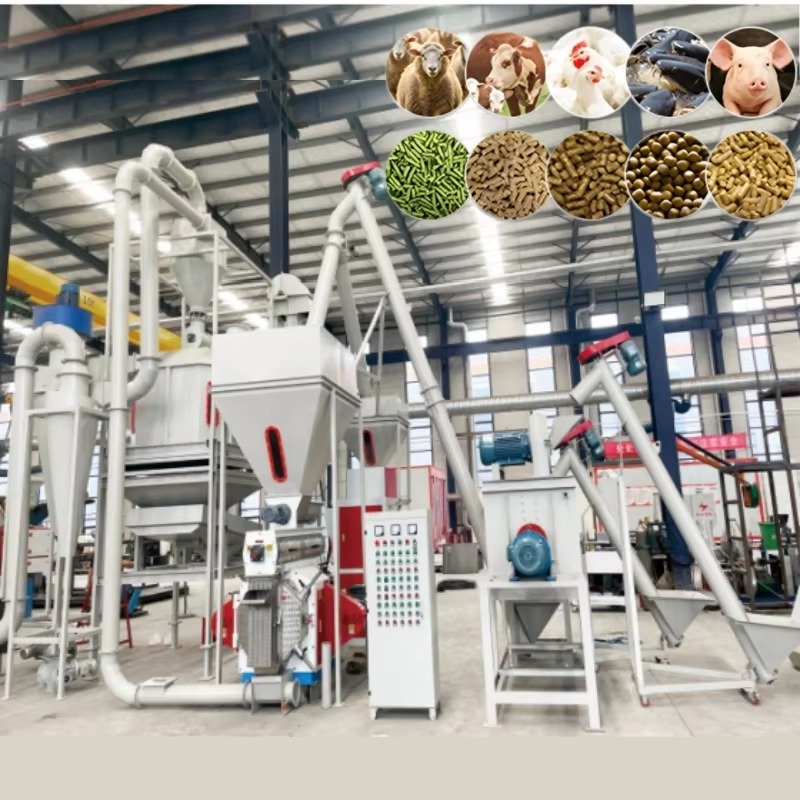
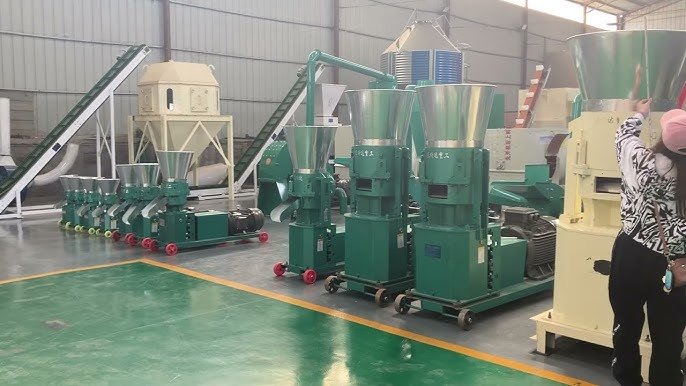
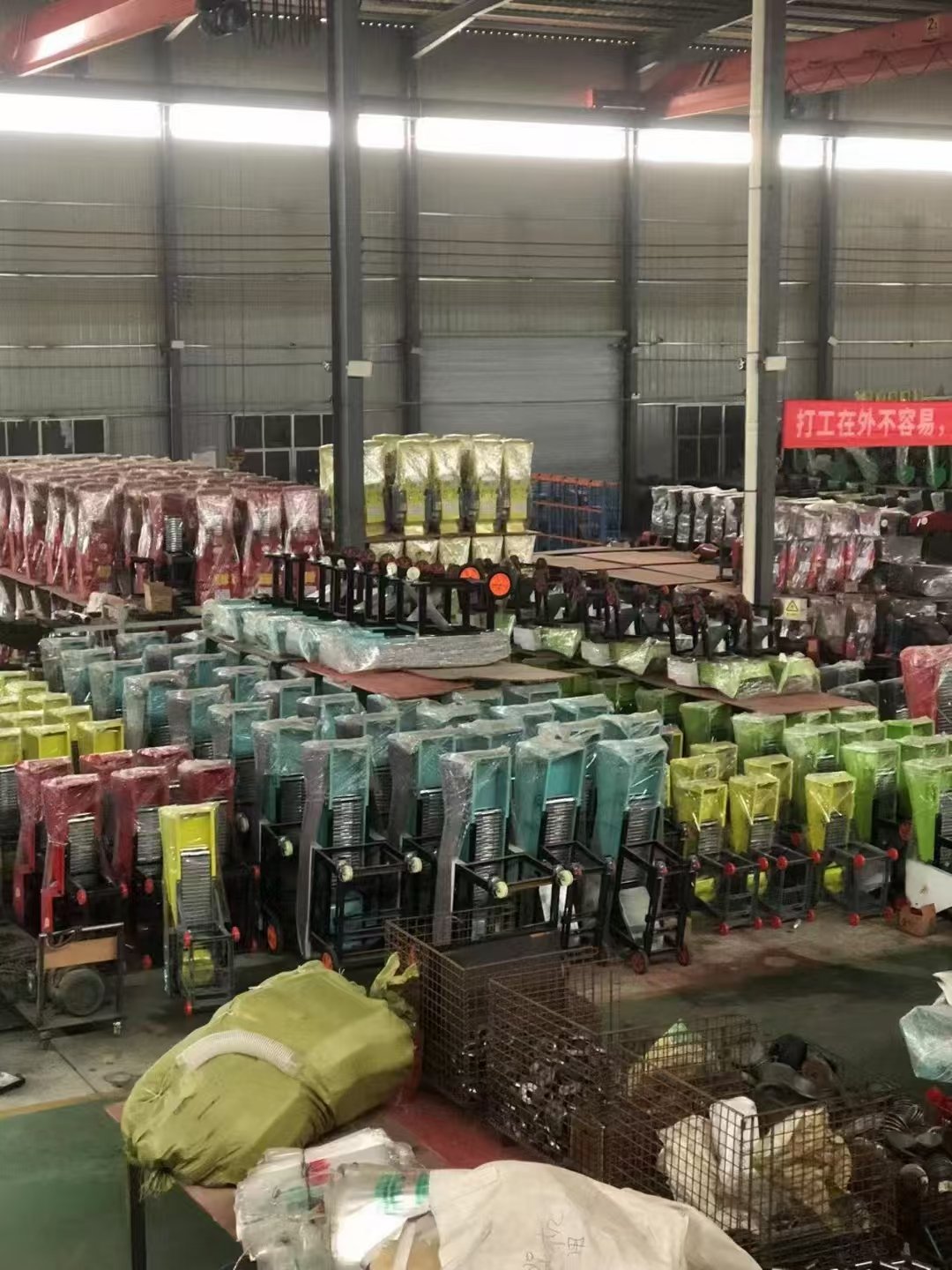
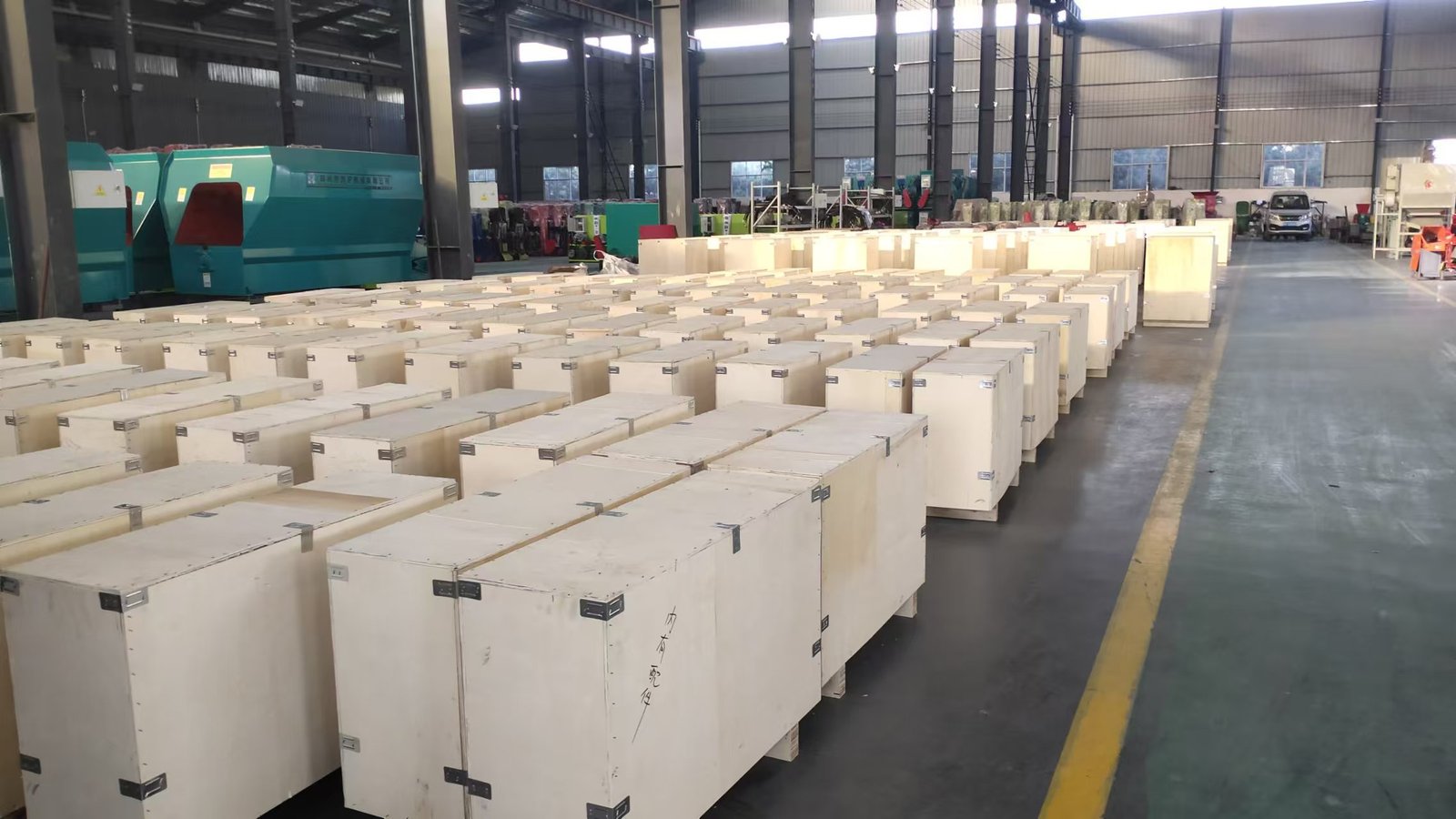
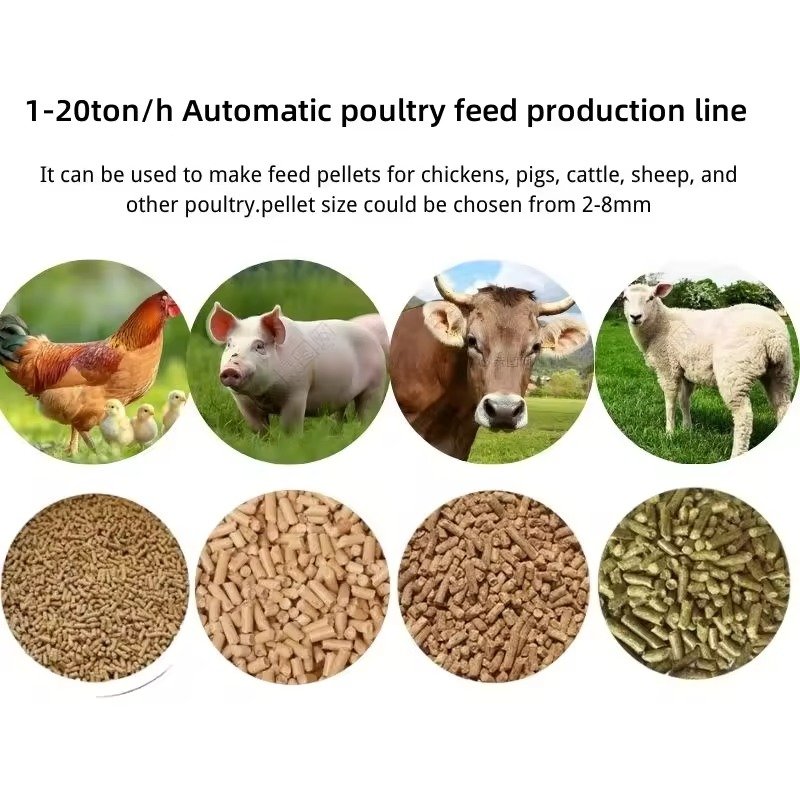
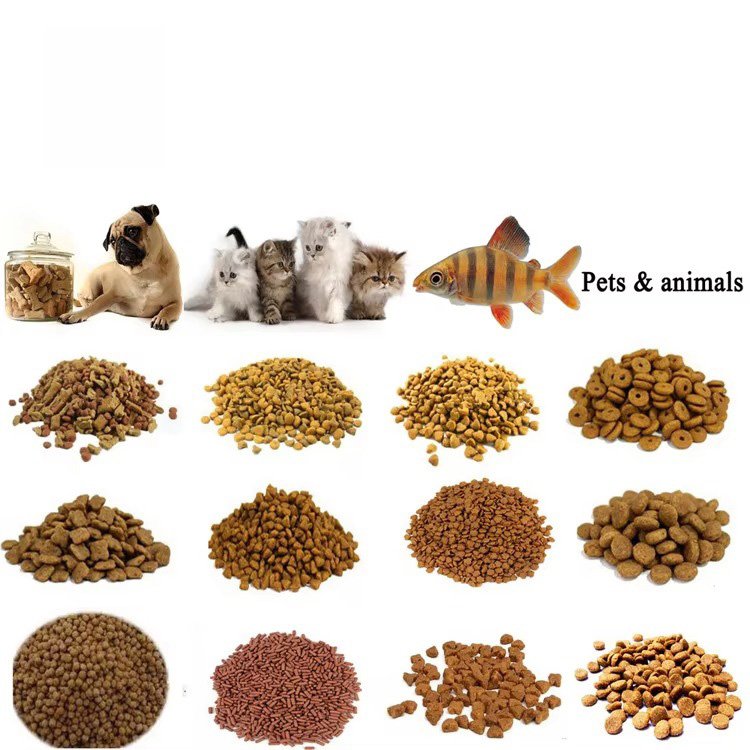 The global feed manufacturing industry processes millions of tonnes annually. Quality production lines transform raw materials into nutritious pellets, mash, and crumbles that support livestock, poultry, aquatic species, and companion animals.This comprehensive guide examines everything you need to know about selecting an animal feed production line manufacturer, from equipment specifications and capacity planning to OEM capabilities and after-sales support. We’ll explore how manufacturers like MAIKONG deliver complete turnkey solutions that meet diverse production requirements across the UK and European markets.
Partner with a Proven Manufacturer
MAIKONG brings 22 years of feed production line manufacturing excellence to operations in 130+ countries. Our UK-focused team designs customised systems from 200kg to 200 tonnes per hour, covering poultry, cattle, aquatic, and pet feed applications.
What Is an Animal Feed Production Line?
An animal feed production line comprises integrated equipment and automated systems that convert raw materials into finished feed products. These manufacturing systems handle everything from initial ingredient receiving through final packaging, creating consistent, nutritious feed for various animal species.
Modern feed production lines serve multiple industries. Poultry operations require high-volume systems producing pellets for broilers, layers, and breeding stock. Cattle ranches need robust equipment handling fibrous materials and producing larger pellets or mash.
Aquaculture facilities demand specialized lines creating water-stable pellets with precise nutrient profiles. Pet food manufacturers seek flexible systems producing various sizes, shapes, and formulations. Each application requires specific equipment configurations and processing capabilities.
Core Components of Complete Feed Manufacturing Systems
Professional animal feed production line manufacturers deliver integrated systems with carefully coordinated components. Understanding these elements helps you evaluate supplier capabilities and specify requirements accurately.
Material Reception and Storage
Raw material handling begins production. Receiving systems include truck unloading pits, pneumatic conveyors, and bucket elevators. Proper storage in silos protects ingredient quality and ensures consistent supply to processing equipment.
Climate-controlled storage prevents moisture absorption and contamination. Automated inventory management tracks material levels and supports accurate batching during production runs.
Grinding and Size Reduction
Hammer mills form the foundation of most feed lines. These machines reduce particle size, improving digestibility and mixing uniformity. Screen sizes from 2mm to 8mm accommodate different animal requirements and pelleting needs.
Capacity ranges from 3 to 25 tonnes per hour depending on motor power and screen configuration. Variable speed drives optimize energy efficiency whilst maintaining consistent output quality across different raw materials.
Batching and Mixing
Accurate ingredient dosing ensures nutritional targets and regulatory compliance. Computer-controlled batching systems weigh individual components with precision exceeding 99.5% accuracy.
Ribbon mixers or paddle mixers blend dry ingredients and liquid additives into homogeneous batches. Mixing cycles typically run 3-8 minutes, achieving coefficient of variation below 5% for proper nutrient distribution throughout every batch.
Pelleting and Forming Equipment
The pelleting process transforms mixed mash into dense, durable pellets through heat, moisture, and mechanical pressure. This critical step improves feed handling, reduces waste, and enhances nutrient digestibility for animals.
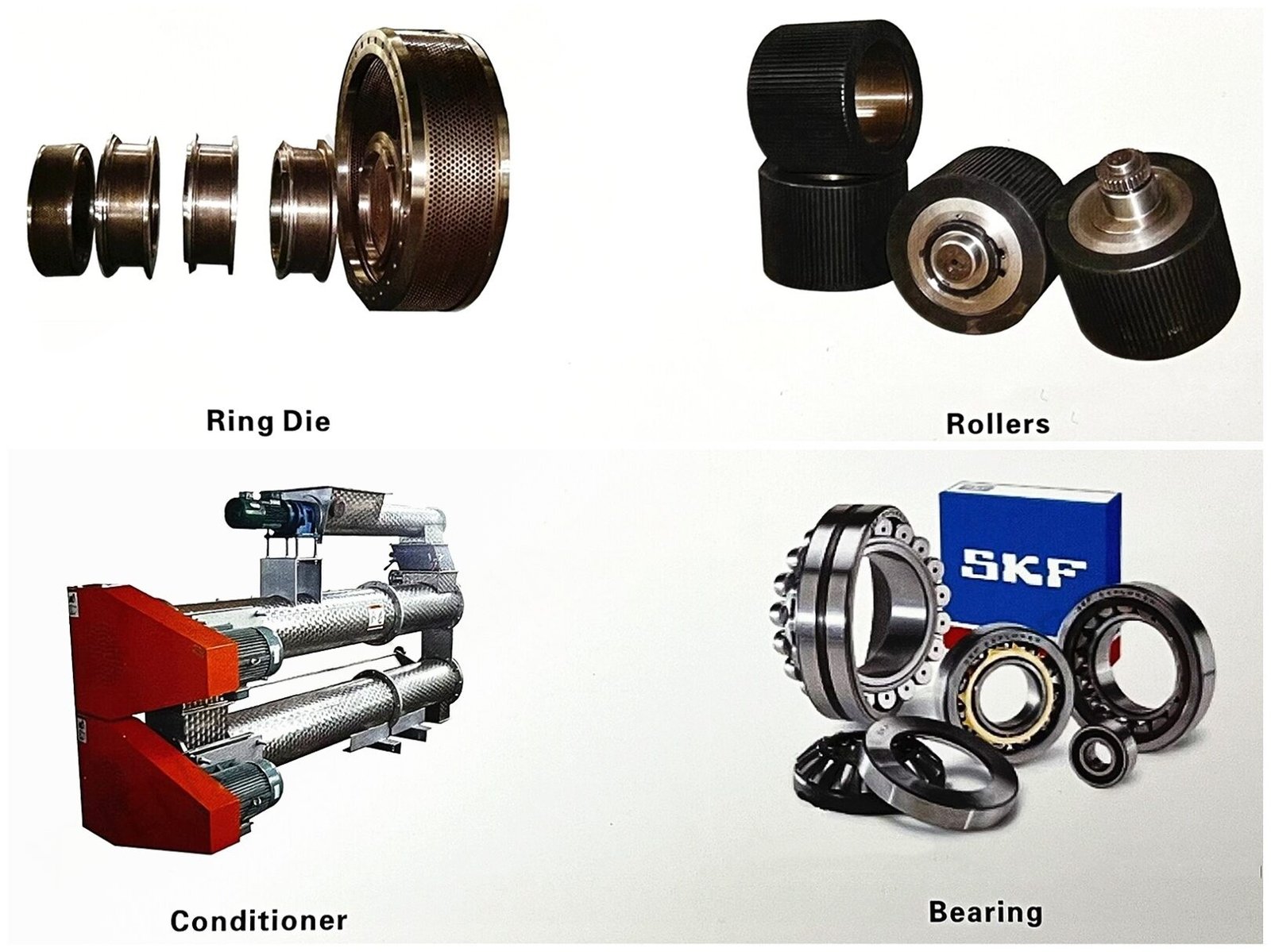
- Conditioning Systems: Steam injection and retention chambers prepare mash for pelleting, raising temperature to 75-85°C whilst adding moisture to 15-17%, activating starches and improving pellet durability
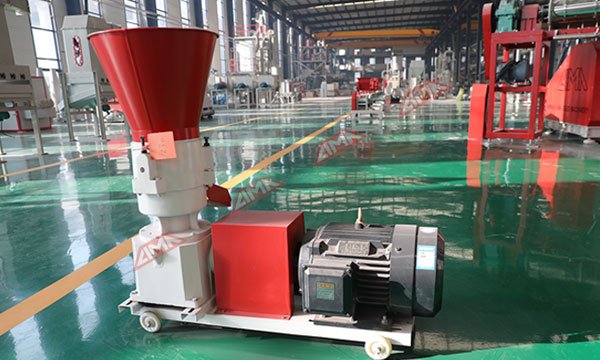
- Ring Die Pellet Mills: Heavy-duty presses force conditioned mash through die holes, producing pellets from 2mm to 8mm diameter with production rates from 1 to 42 tonnes per hour depending on motor power
- Cooling and Drying: Counterflow coolers reduce pellet temperature from 80°C to ambient plus 5°C whilst removing excess moisture, preventing mould growth and ensuring product stability during storage
- Crumbling Equipment: Adjustable roller mills break cooled pellets into smaller particles for young animals, producing uniform crumbles from standard pellets without generating excessive fines
Quality Control and Finishing
Final processing ensures every batch meets specifications before packaging. Screening equipment removes oversized particles and excessive fines. Metal detectors protect animals and equipment from contamination.
Automated sampling systems collect representative samples for laboratory analysis. Testing confirms protein content, moisture levels, and pellet durability meet formulation targets and customer requirements.
Technical Specifications for Your Project
Detailed equipment data helps you plan facilities, calculate power requirements, and estimate production costs accurately. Our technical team provides comprehensive specifications tailored to your operation.
Production Capacity and Customization Options
Matching production line capacity to your operation size prevents under-utilization and production bottlenecks. Professional animal feed production line manufacturers offer flexible configurations scaling from small farm operations to industrial feed mills.
MAIKONG designs systems across the complete capacity spectrum, serving diverse market segments with appropriate technology and investment levels for each scale of operation.
Small-Scale Feed Production Lines (200kg – 2 Tonnes/Hour)
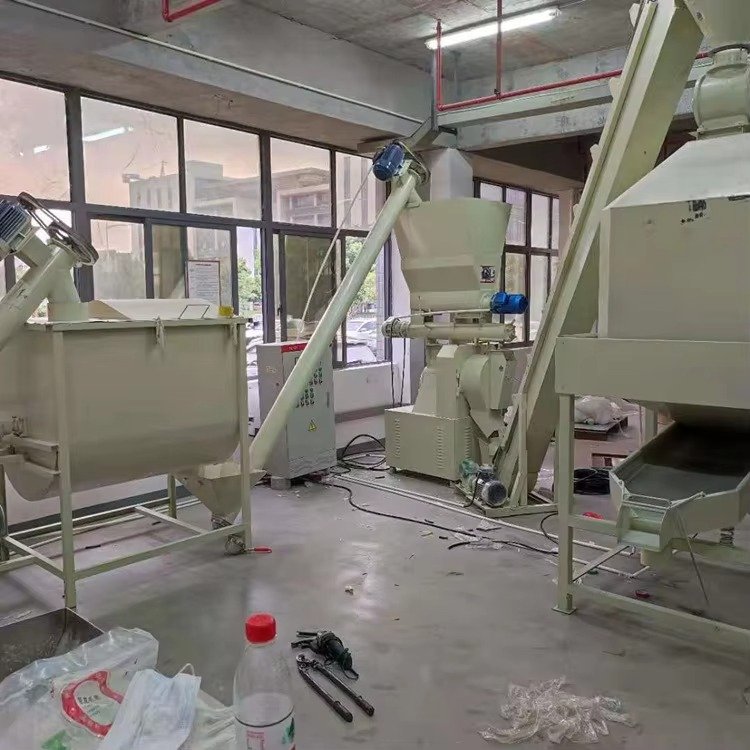
Farm-based operations and emerging feed businesses benefit from compact systems that deliver professional quality without excessive capital investment. These lines suit mixed farming operations producing feed for their own livestock whilst serving local markets.
Equipment Configuration
Compact layouts maximize limited floor space whilst maintaining efficient workflow. Manual or semi-automatic controls reduce complexity and training requirements.
- Single hammer mill (3-5 tonnes/hour capacity)
- Batch mixer (250-500kg per batch)
- Pellet machine (200kg-1 tonne/hour)
- Simple cooling system
- Manual or semi-automatic packaging
Investment Considerations
Lower initial costs accelerate return on investment for small operations. Modular design supports future expansion as production grows.
- Installation period: 2-4 weeks
- Power requirement: 30-75 kW total
- Labour: 2-4 operators per shift
- Floor space: 200-400 square metres
- Suitable for single or dual-shift operation
Medium-Scale Production Systems (3-20 Tonnes/Hour)
Commercial feed manufacturers serving regional markets require higher capacity with increased automation. These systems process multiple formulations daily, meeting diverse customer requirements efficiently.
Medium-scale animal feed production lines balance throughput, flexibility, and operational costs. Computer controls optimize ingredient usage whilst maintaining consistent product quality across production runs.
- Multiple Grinding Lines: Parallel hammer mills handle different grain types simultaneously, preventing cross-contamination whilst maximizing throughput during peak demand periods
- Automated Batching: Recipe management systems store hundreds of formulations, automatically weighing and sequencing ingredients with minimal operator intervention for consistent accuracy
- High-Capacity Pelleting: Ring die mills with 75-160 kW motors produce 3-10 tonnes per hour, equipped with automatic die gap adjustment and overload protection systems
- Integrated Quality Control: In-line screening, metal detection, and automated sampling ensure every batch meets specifications before packaging and dispatch to customers
Large-Scale Industrial Feed Mills (25-200+ Tonnes/Hour)
Major feed manufacturers supplying national markets demand maximum efficiency and full automation. These sophisticated facilities operate continuously, producing hundreds of tonnes daily across multiple species and life stages.
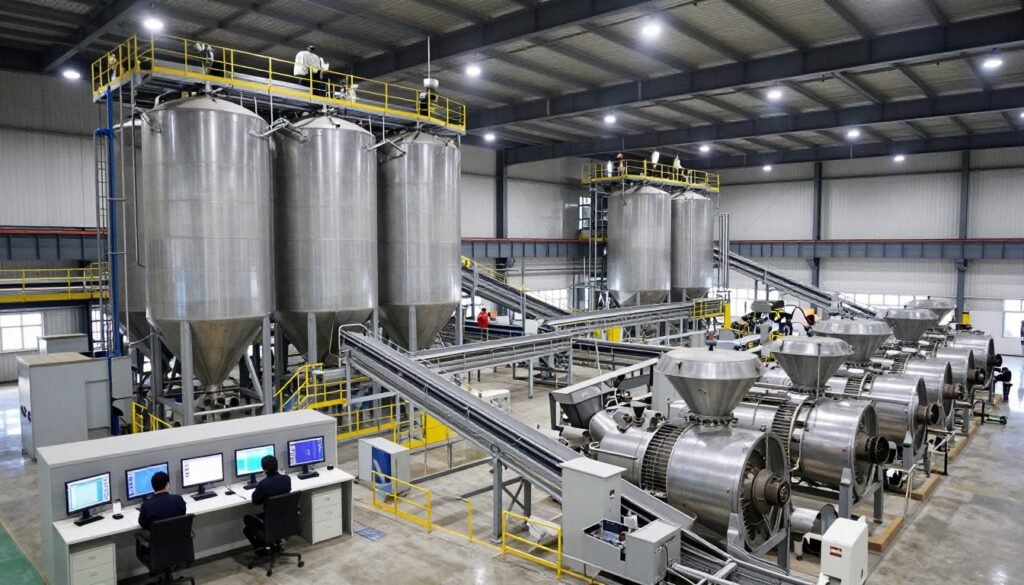
Industrial-scale systems incorporate advanced process control, real-time quality monitoring, and predictive maintenance capabilities. These features minimize downtime whilst maximizing product consistency and operational efficiency.
Raw Material Handling
- Truck and rail receiving systems
- High-capacity storage (5,000+ tonnes)
- Automated inventory management
- Multiple ingredient handling lines
Processing Systems
- Multiple grinding and mixing lines
- Parallel pelleting systems
- Automated formula changeover
- Continuous quality monitoring
Packaging and Dispatch
- High-speed automatic baggers
- Bulk loading systems
- Automated palletizing
- Warehouse management integration
Custom Engineering for Specific Requirements
Every operation faces unique challenges requiring tailored solutions. Experienced manufacturers adapt standard designs to accommodate specific raw materials, facility constraints, and production objectives.
MAIKONG’s engineering team addresses special requirements through careful analysis and custom design work. Our OEM capabilities ensure your production line meets exact specifications whilst maintaining proven reliability and performance standards.
| Customization Parameter | Standard Options | Custom Capabilities | Typical Applications |
| Voltage/Frequency | 380V/50Hz, 415V/50Hz | 220V-690V, 50Hz/60Hz | International exports, site-specific requirements |
| Pellet Diameter | 2mm, 3mm, 4mm, 6mm | 1.5mm to 12mm | Specialized animal requirements, niche markets |
| Raw Material Moisture | 12-14% optimal | 8-18% with special drying/conditioning | Regional climate variations, alternative ingredients |
| Building Integration | Standard layouts | Site-specific engineering drawings | Existing facility upgrades, space constraints |
| Control Systems | PLC with HMI | Integrated ERP, remote monitoring | Large operations, multi-site management |
| Material Handling | Standard conveyors | Pneumatic, chain, special configurations | Dust-sensitive environments, abrasive materials |
Design Your Custom Production Line
Tell us about your capacity requirements, animal types, raw materials, and facility constraints. Our engineering team will design a system optimized for your operation.
Feed Production Line Applications Across Animal Species
Different animals require specialized feed formulations and physical characteristics. Professional animal feed production line manufacturers understand these variations and configure equipment accordingly.
Selecting the right production line starts with understanding your target species’ nutritional and physical feed requirements. Processing parameters, ingredient selection, and final product specifications vary significantly across poultry, livestock, aquatic, and companion animal applications.
Poultry Feed Production Lines
Poultry operations consume more manufactured feed than any other livestock sector. Chickens, ducks, turkeys, and other birds require carefully formulated diets that change throughout their production cycle.
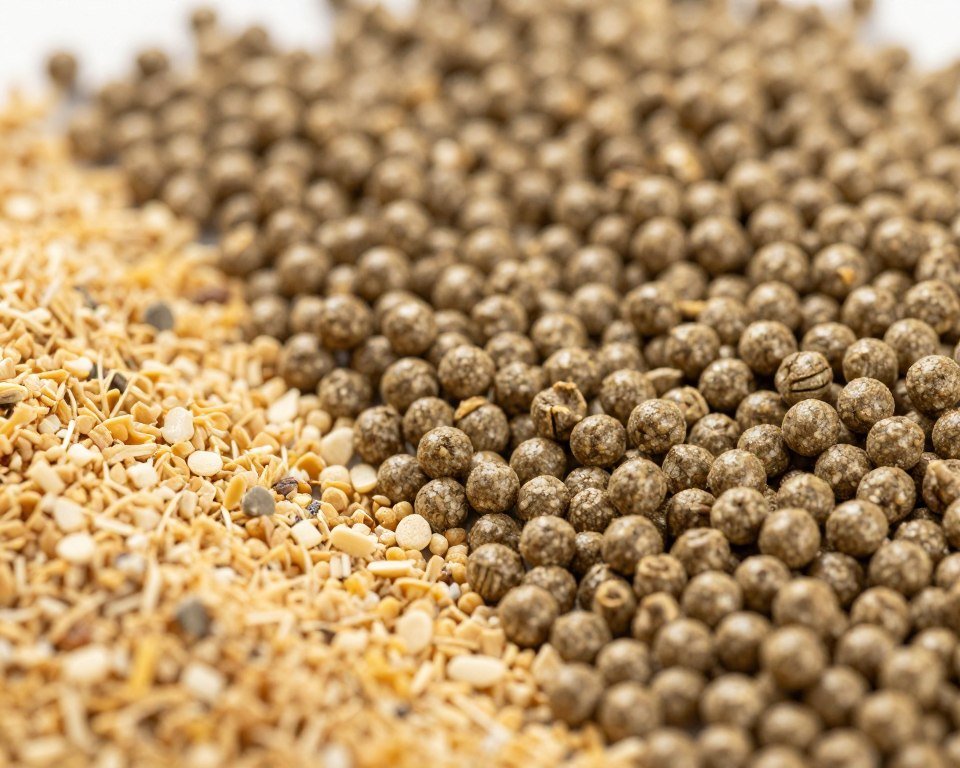
Commercial poultry feed production lines handle multiple formulations daily. Starter feeds for chicks use fine crumbles. Grower feeds transition to small pellets. Finisher and layer feeds use larger pellets optimized for mature birds.
Broiler Production Requirements
Meat chicken operations prioritize rapid growth and feed efficiency. High-energy formulations with precise protein levels maximize weight gain whilst minimizing production costs.
- Starter phase: Crumbles 1-3mm, 23% protein minimum
- Grower phase: Pellets 3-4mm, 20% protein typical
- Finisher phase: Pellets 4-5mm, 18% protein standard
- Production rates: 5-15 tonnes/hour common
- Pellet durability: 95%+ to minimize fines
Layer and Breeder Formulations
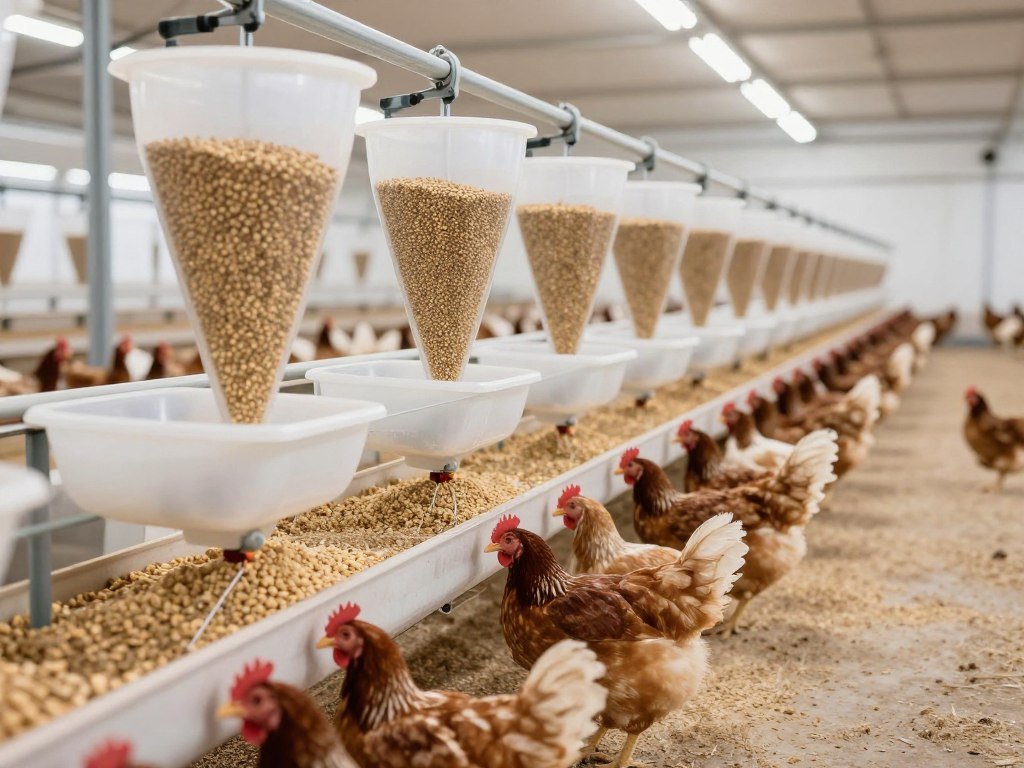
Egg production requires sustained calcium levels and balanced nutrients supporting both body maintenance and daily egg formation. Layer feeds typically include larger particles and calcium supplements like oyster shell or limestone.
Breeder feeds add vitamins and minerals essential for hatchability and chick vitality. These specialized formulations demand precise ingredient control and thorough mixing to ensure uniform nutrient distribution.
Cattle and Ruminant Feed Systems
Beef and dairy cattle have different digestive systems than poultry. Ruminant animals benefit from feed that promotes healthy rumen function whilst delivering energy and protein for milk production or weight gain.
Cattle feed production lines handle bulkier, more fibrous ingredients. Equipment must process materials like hay, silage, and whole grains that poultry systems cannot accommodate.
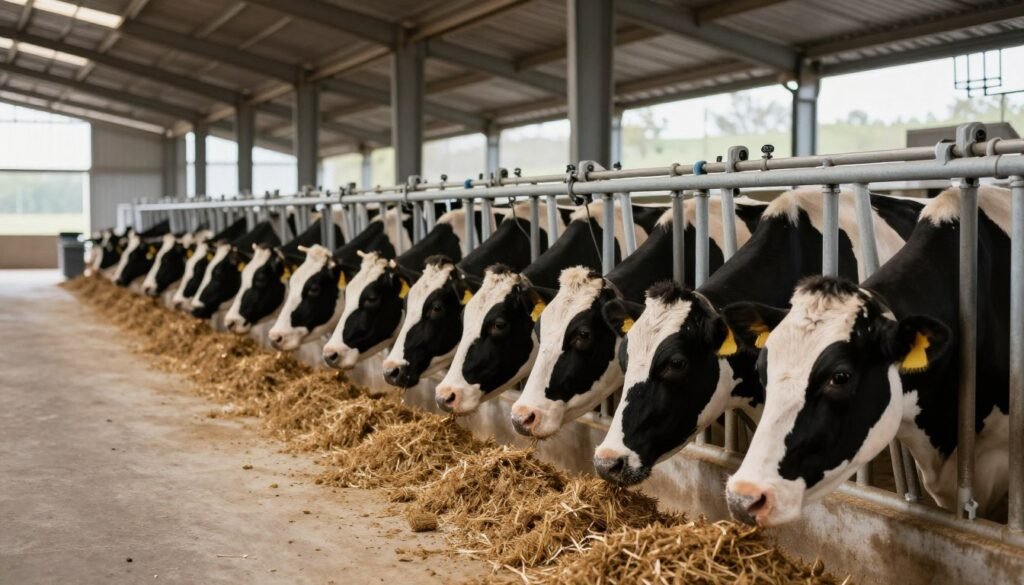
- Dairy Concentrates: High-energy pellets 6-8mm diameter supplement forage, supporting milk production with balanced protein, energy, and minerals for lactating cows
- Beef Finisher Feeds: Energy-dense formulations promote rapid weight gain, using large pellets or textured feeds that cattle consume readily during finishing phase
- Calf Starters: Smaller pellets or crumbles encourage rumen development in young calves, containing easily digestible proteins and energy sources for early growth
- Total Mixed Rations: Some operations produce complete feeds mixing forages with concentrates, requiring specialized equipment handling varied particle sizes and moisture levels
Aquatic Feed Production
Fish and shrimp farming demands water-stable pellets that maintain integrity during feeding. Aquatic feeds require higher protein levels and specialized processing to create floating or sinking pellets matching specific species requirements.
Extrusion technology often supplements traditional pelleting for aquatic applications. Extruders cook ingredients under high temperature and pressure, producing highly digestible, water-stable pellets essential for modern aquaculture operations.
Fish Feed Characteristics
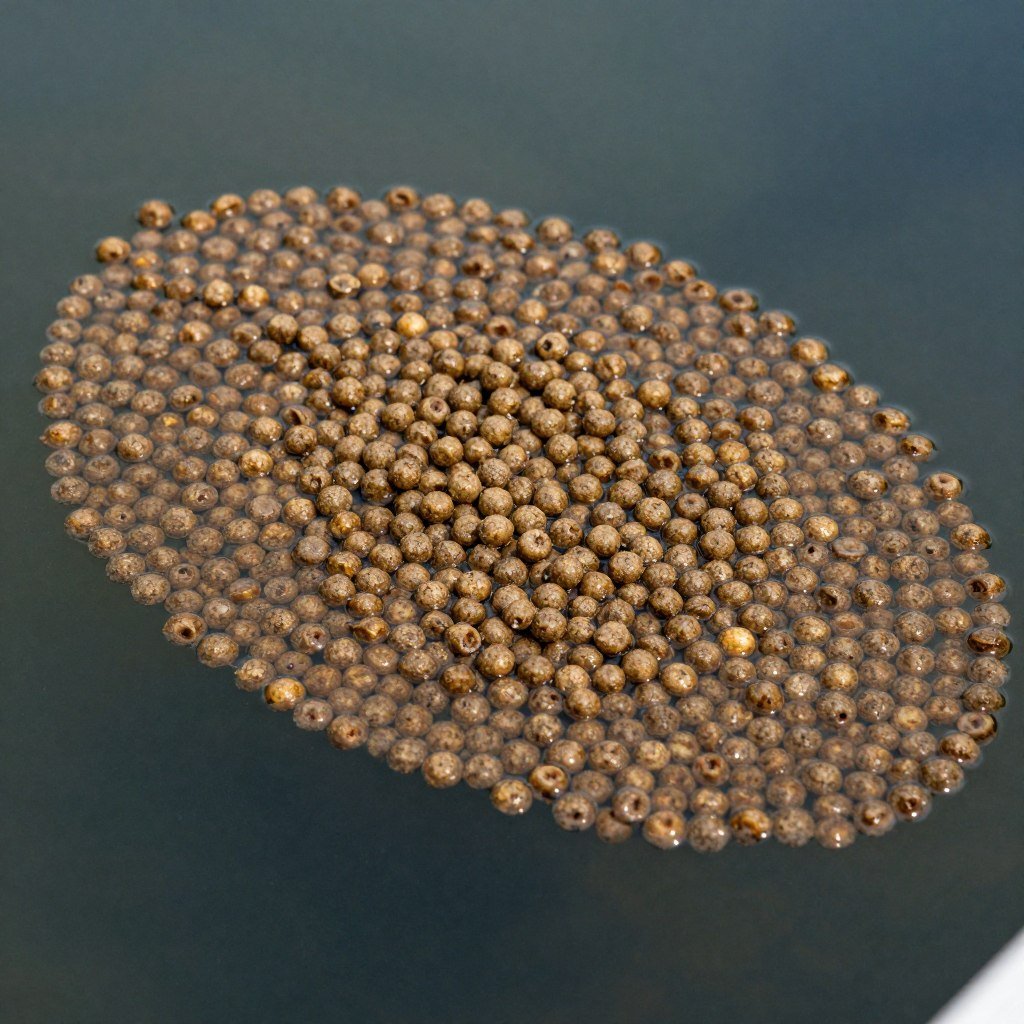
- Water stability: 4-12 hours minimum
- Protein content: 28-45% depending on species
- Pellet size: 0.8mm to 9mm diameter range
- Floating or sinking based on species habits
Shrimp Feed Processing
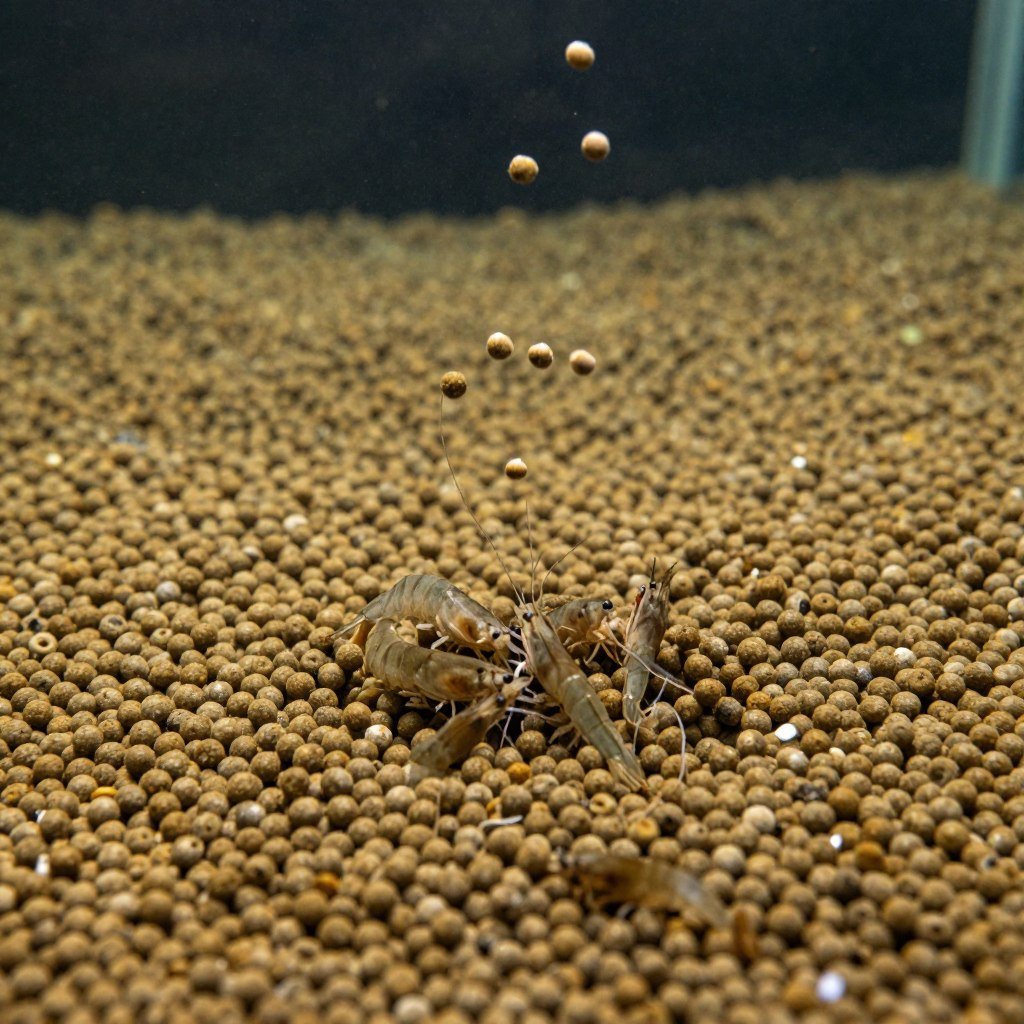
- High water stability required (8+ hours)
- Protein levels 35-40% typical
- Small pellet sizes (0.8-3mm common)
- Sinking pellets for bottom-feeding behaviour
Production Considerations
- Marine protein ingredients (fish meal)
- Specialized binders for water stability
- Precise temperature and moisture control
- Regular quality testing in water
MAIKONG manufactures complete aquatic feed production lines incorporating both pelleting and extrusion technologies. Our systems accommodate the specialized requirements of fish and shrimp farming whilst maintaining operational flexibility for multiple species production.
Pet Food Manufacturing
Companion animal nutrition represents a growing market segment with demanding quality standards. Dog and cat food manufacturers require flexible production systems creating diverse products from economy kibble to premium, grain-free formulations.
Pet feed production lines often incorporate extrusion for enhanced digestibility and palatability. Shape variation, coating systems, and specialized packaging distinguish pet food manufacturing from agricultural feed production.
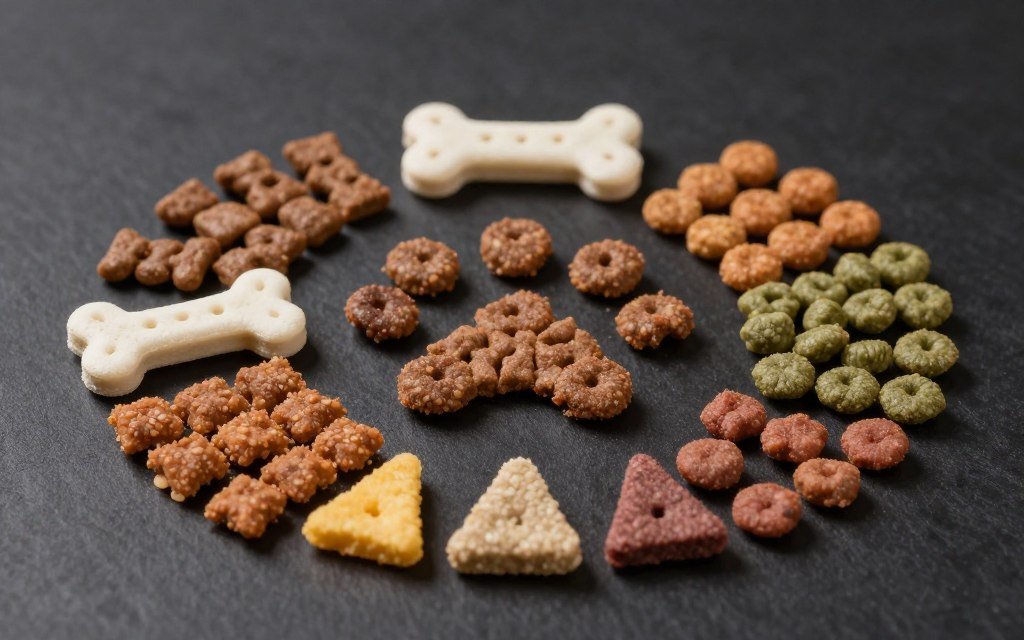
Quality Standards: Pet food faces stricter regulatory oversight than agricultural feed in most markets. Production facilities must implement HACCP protocols, maintain detailed batch records, and undergo regular inspections to ensure product safety and compliance with labelling requirements.
Discuss Your Application Requirements
Each animal species presents unique processing challenges. Our technical team has designed systems for every major feed type. Let’s discuss how MAIKONG can optimize a production line for your specific application.
MAIKONG Feed Production Lines: Global Success Stories
Real-world installations demonstrate manufacturer capability better than marketing claims. MAIKONG has delivered complete feed production systems to operations across six continents, each tailored to local requirements and market conditions.
These case studies showcase our experience designing, manufacturing, installing, and supporting diverse animal feed production line projects from small farm operations to industrial feed mills.
European Feed Mill Installations
European markets demand high standards for equipment quality, safety compliance, and environmental performance. MAIKONG systems meet CE certification requirements whilst delivering the efficiency and reliability European feed manufacturers expect.
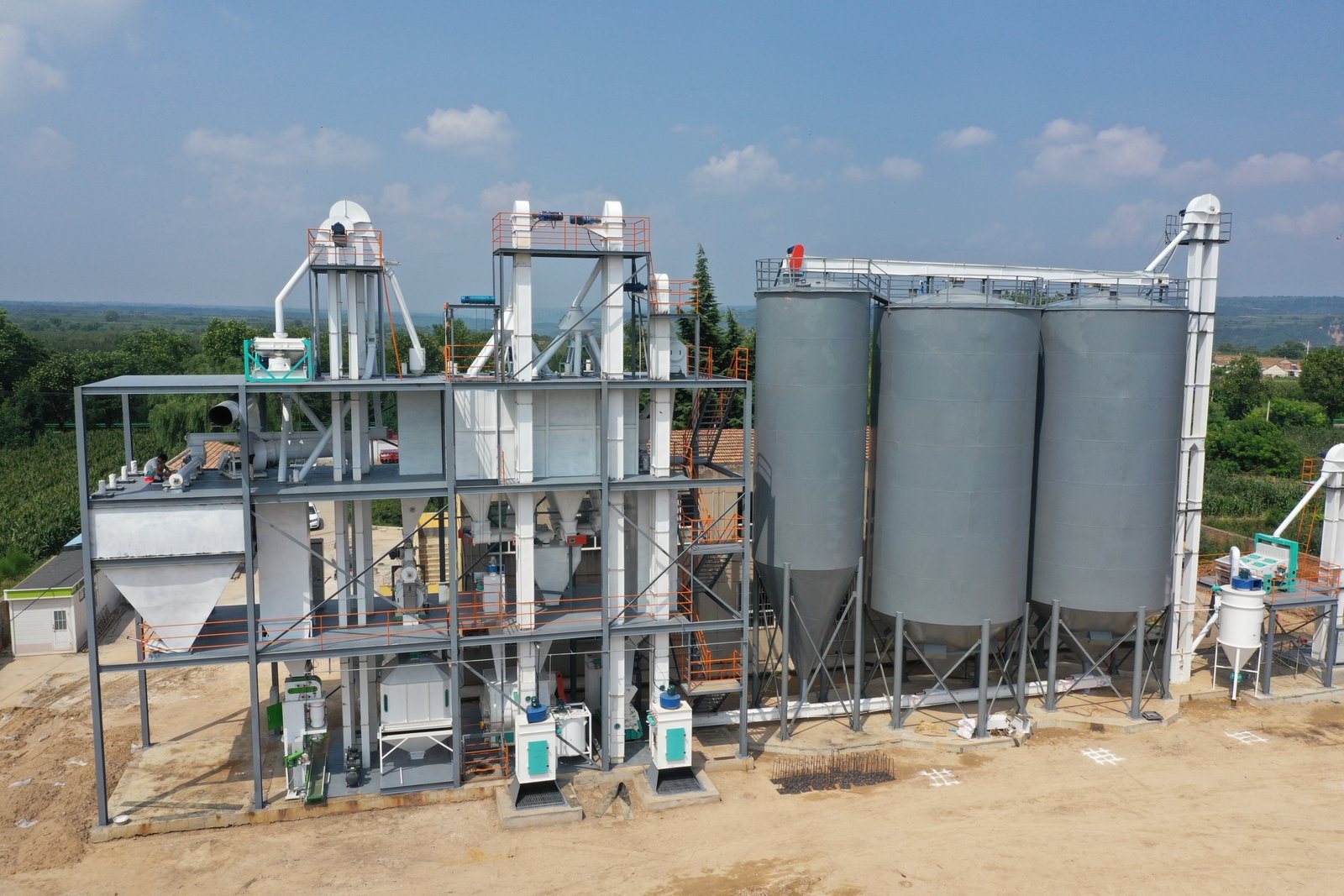
Germany: 10 T/H Poultry Feed Mill
A family-owned poultry integration in Bavaria needed to replace aging equipment whilst expanding capacity. MAIKONG designed a complete system processing local grains into layer and broiler feeds.
Project Specifications:
- Capacity: 10 tonnes/hour pelleting
- Applications: Layer, broiler, turkey feeds
- Special features: Dust collection meeting German standards
- Installation: Completed in 8 weeks
- Result: 30% production increase, reduced energy costs
Netherlands: Cattle Feed Production
A cooperative serving 200+ dairy farms required automated systems producing multiple cattle feed formulations. MAIKONG delivered high-capacity equipment with advanced recipe management.
Project Specifications:
- Capacity: 15 tonnes/hour continuous operation
- Applications: Dairy concentrates, calf starters
- Special features: 50+ stored formulations, automatic changeover
- Installation: 10-week timeline with minimal disruption
- Result: Improved consistency, reduced formulation errors
UK Market Opportunities
The United Kingdom presents significant opportunities for feed production equipment suppliers. Brexit changes, evolving regulations, and sustainability initiatives drive feed mill investment across Britain.
MAIKONG actively seeks UK distributors and agents who understand local market dynamics and can provide responsive technical support to British feed manufacturers.
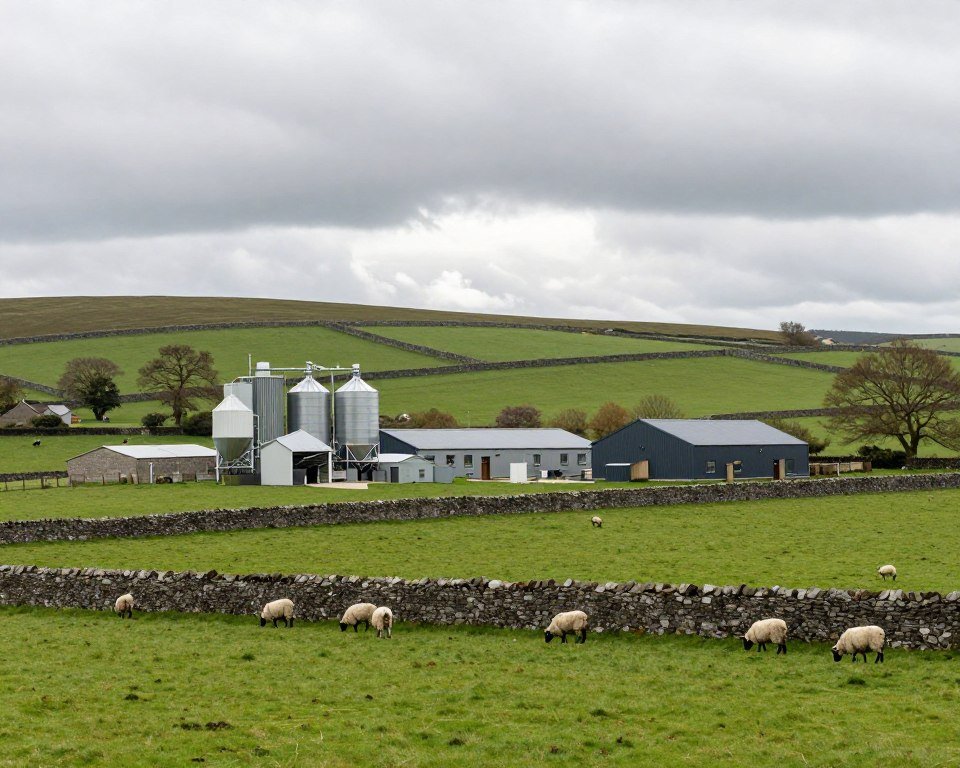
UK Feed Industry Overview: Britain produces approximately 16 million tonnes of compound feed annually. Poultry feed represents 45% of production, followed by cattle feed (28%), pig feed (18%), and other species (9%). The industry employs over 4,000 people across 300+ feed mills ranging from small farm operations to major industrial facilities.
Asian Pacific Installations
Rapid agricultural development across Asia drives demand for modern feed manufacturing equipment. MAIKONG systems support expanding livestock, poultry, and aquaculture industries throughout the region.
Thailand: Aquatic Feed Mill
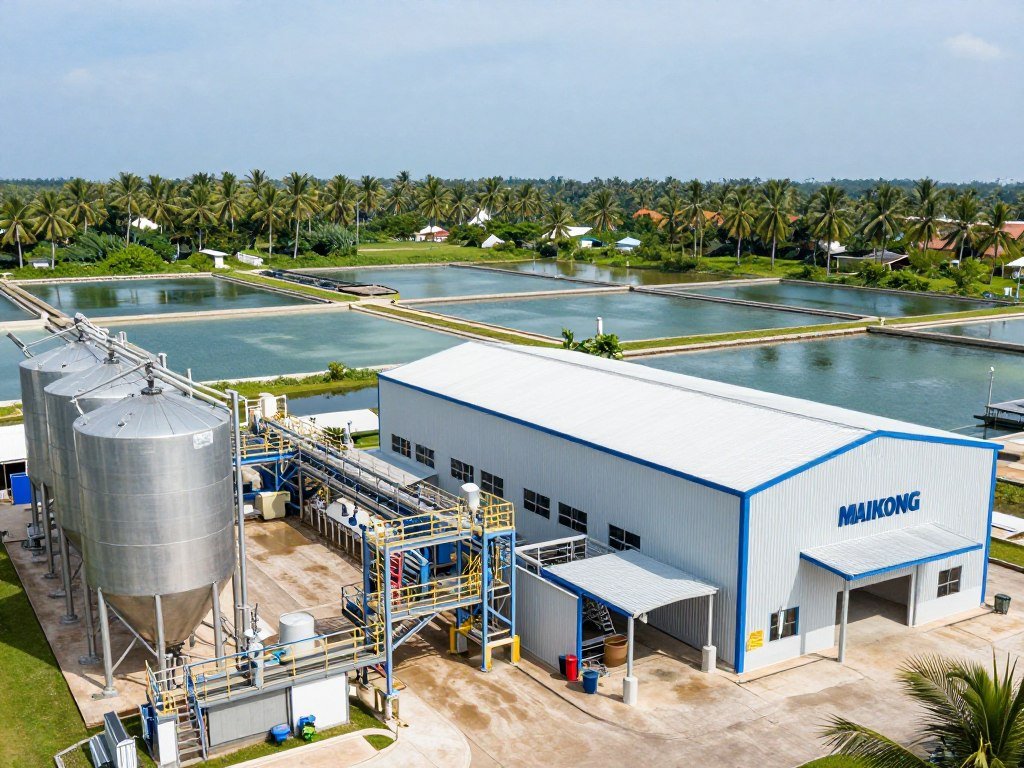
Major shrimp producer installed our 8 T/H extruded aquatic feed line. The system produces water-stable pellets for intensive shrimp farming operations.
- Capacity: 8 tonnes/hour extrusion
- Products: Sinking shrimp feed, multiple sizes
- Result: Expanded production, improved feed quality
Malaysia: Poultry Integration
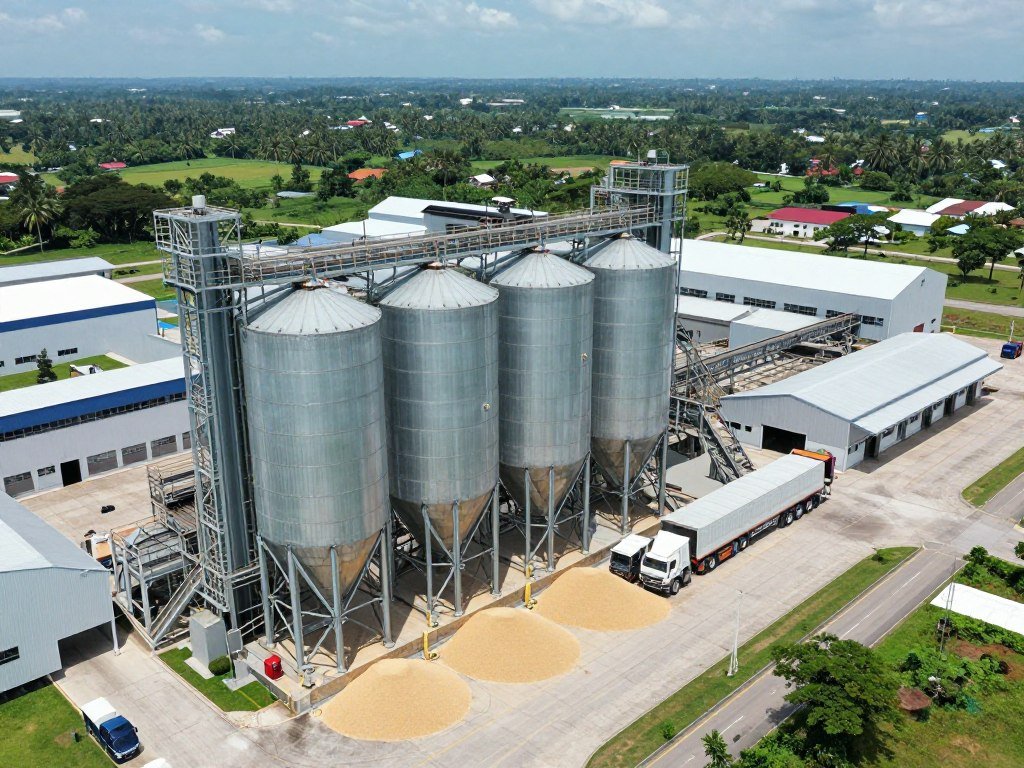
Vertically integrated poultry company upgraded to MAIKONG automated systems. The new line produces feeds for 5 million birds annually.
- Capacity: 12 tonnes/hour pelleting
- Products: Broiler and layer feeds, all growth stages
- Result: Reduced labour, consistent quality
Philippines: Multi-Species Mill
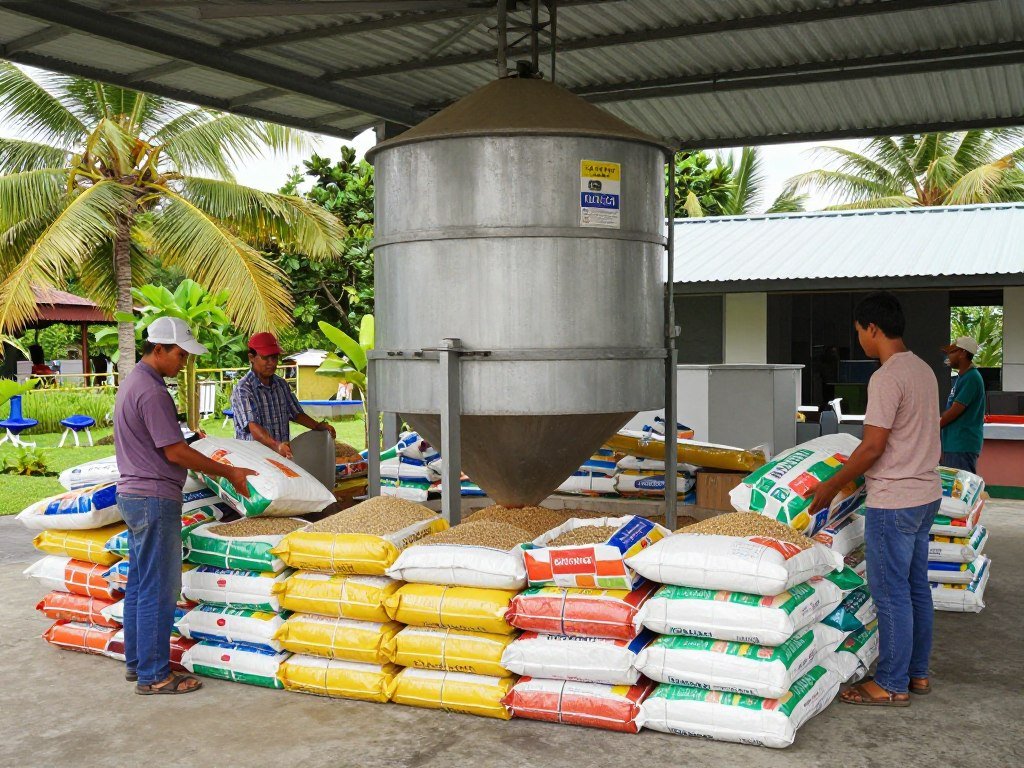
Regional feed manufacturer serves poultry, pig, and cattle farmers. MAIKONG designed flexible systems handling multiple formulations efficiently.
- Capacity: 5 tonnes/hour mixed species
- Products: Poultry, swine, cattle feeds
- Result: Market expansion, improved margins
African Feed Production Development
Growing African livestock industries require appropriate technology matching local conditions. MAIKONG designs robust, maintainable systems suitable for developing market infrastructure whilst delivering modern performance standards.
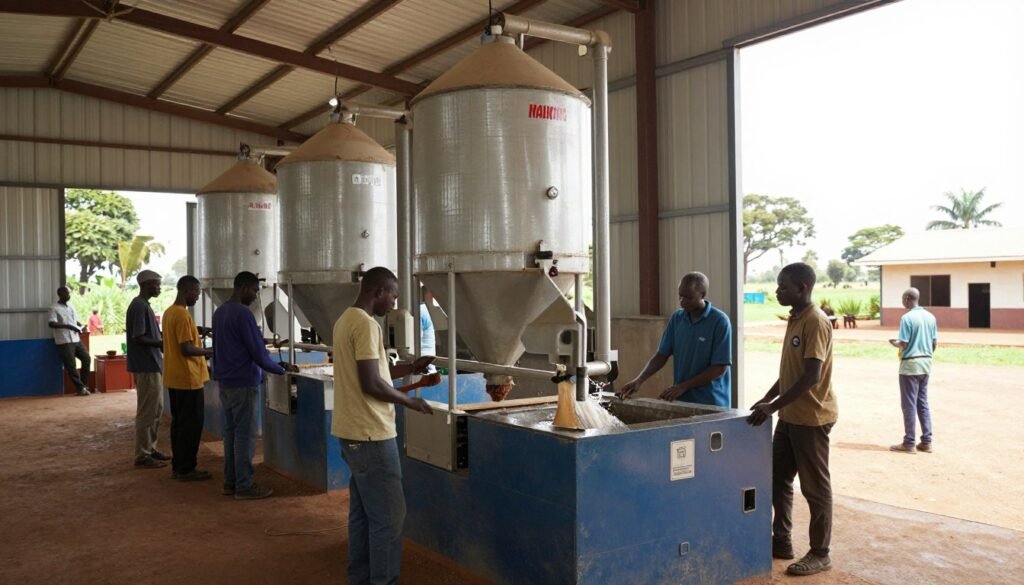
Installations across Tanzania, Zimbabwe, and Algeria demonstrate our commitment to supporting agricultural development. These projects include comprehensive training programmes ensuring local teams can operate and maintain equipment effectively.
Project Success Factors
- Detailed site assessment and planning
- Equipment sized appropriately for market
- Comprehensive operator training programmes
- Local spare parts availability
- Responsive technical support
- Ongoing consultation and optimization
Customer Benefits Realized
- Increased production capacity and efficiency
- Improved feed quality and consistency
- Reduced operating costs per tonne
- Enhanced product range flexibility
- Better market competitiveness
- Sustainable business growth
Request UK and European References
Connect with MAIKONG customers operating similar systems in your region. We’re proud of our installations and happy to facilitate reference discussions with satisfied clients.
Why Choose MAIKONG as Your Animal Feed Production Line Manufacturer
Selecting an animal feed production line manufacturer involves evaluating technical capability, manufacturing quality, support infrastructure, and long-term partnership potential. MAIKONG distinguishes itself through demonstrated expertise across all these critical areas.
Our 22-year manufacturing history encompasses thousands of successful installations worldwide. This experience informs every aspect of our business, from initial design consultation through ongoing technical support for operating production lines.
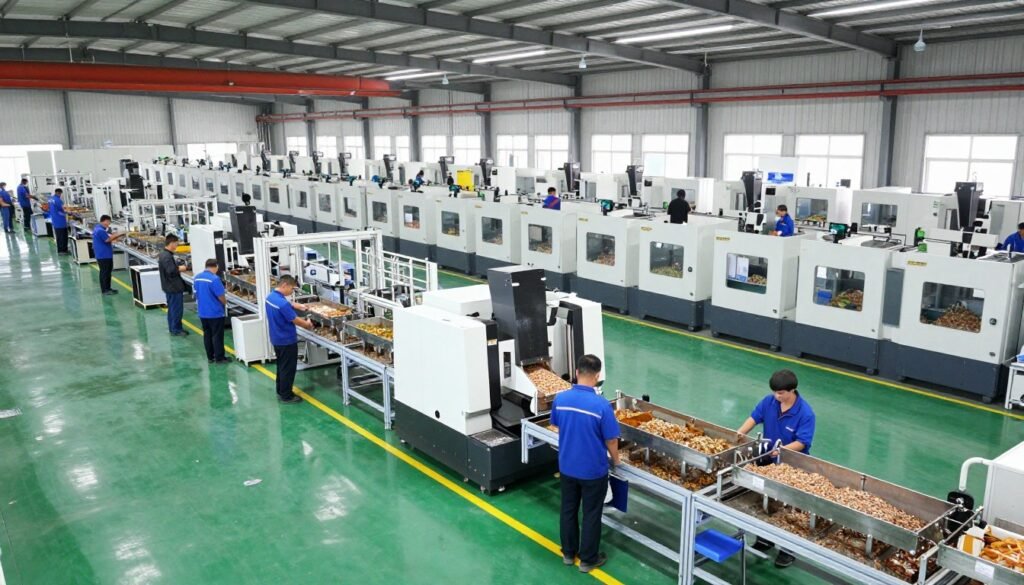
Comprehensive Manufacturing Capabilities
MAIKONG operates integrated manufacturing facilities in Guangdong Province, China. Our production campus encompasses metal fabrication, precision machining, electrical assembly, and complete system testing capabilities under one roof.
Vertical integration ensures quality control throughout manufacturing whilst maintaining competitive pricing. We produce key components in-house rather than relying on external suppliers for critical elements.
Engineering and Design Excellence
Our engineering team holds extensive experience designing feed production systems for diverse applications. Computer-aided design tools optimize layouts whilst 3D modelling helps clients visualize proposed installations.
We maintain detailed libraries of proven designs and components. This knowledge base accelerates project development whilst ensuring new systems incorporate tested, reliable elements.
- Structural engineering for complete facilities
- Electrical design and control systems
- Process optimization and flow analysis
- Custom solutions for special requirements
- Site-specific adaptation of standard designs
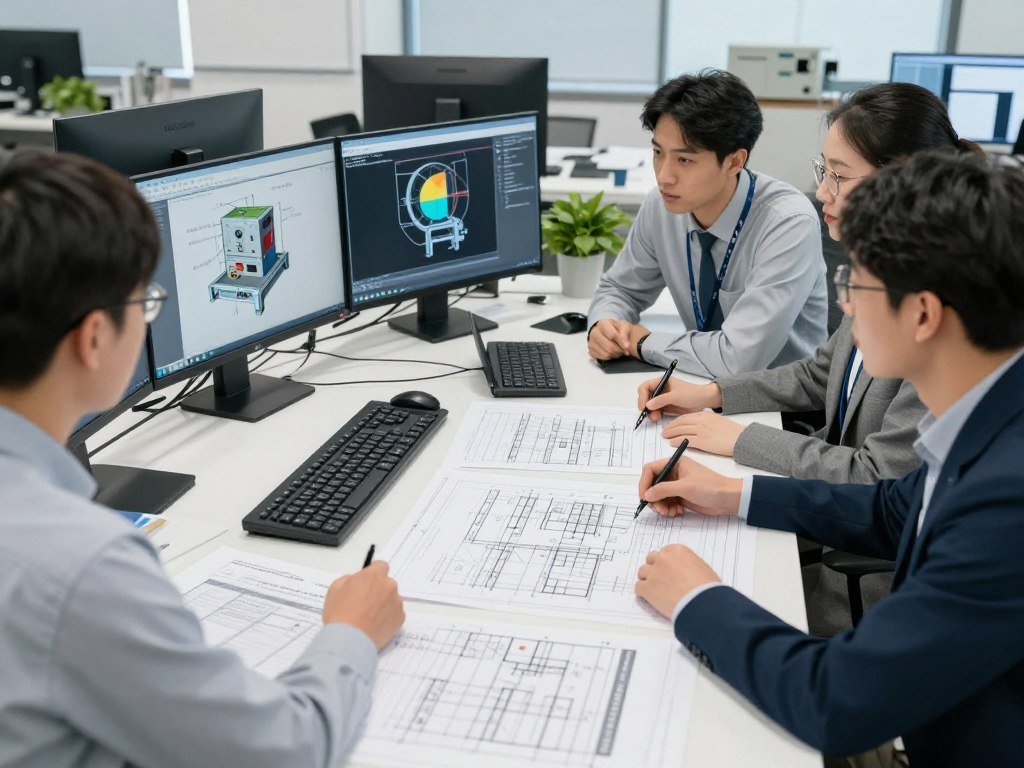
Quality Manufacturing Standards
Every MAIKONG production line undergoes rigorous quality control throughout manufacturing and assembly. Our quality management system ensures consistent standards across all projects regardless of size or destination.
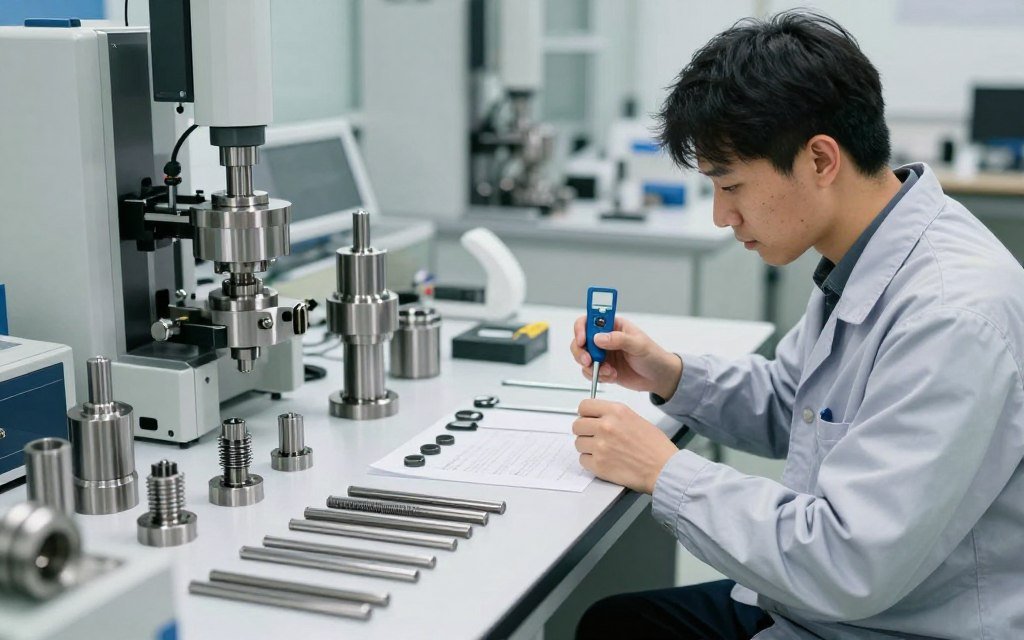
Material Selection
We specify food-grade stainless steel and high-strength carbon steel for appropriate applications. Material certifications accompany all major components.
Precision Manufacturing
CNC machining centres produce critical components to tight tolerances. This precision ensures proper fit, efficient operation, and extended equipment life.
Assembly and Testing
Major equipment undergoes factory testing before shipment. Pellet mills, mixers, and other key components are run to verify performance.
Documentation
Complete technical documentation accompanies every system. Manuals, drawings, spare parts lists, and maintenance schedules support ongoing operation.
OEM and ODM Services
MAIKONG partners with equipment distributors, agricultural cooperatives, and feed companies requiring white-label manufacturing. Our OEM capabilities support your brand whilst leveraging our manufacturing expertise and scale.
Original Design Manufacturing (ODM) services allow you to specify custom features, colours, and branding elements. We’ll manufacture equipment meeting your exact specifications whilst maintaining our quality standards.
Partnership Benefits: OEM partners receive preferential pricing, priority production scheduling, and exclusive territory protection. We support your marketing efforts with technical documentation, product photography, and specification sheets customized with your branding.
Installation and Commissioning Support
Successful production line installation requires experienced technical personnel. MAIKONG provides comprehensive installation supervision and commissioning services ensuring your new equipment operates correctly from day one.
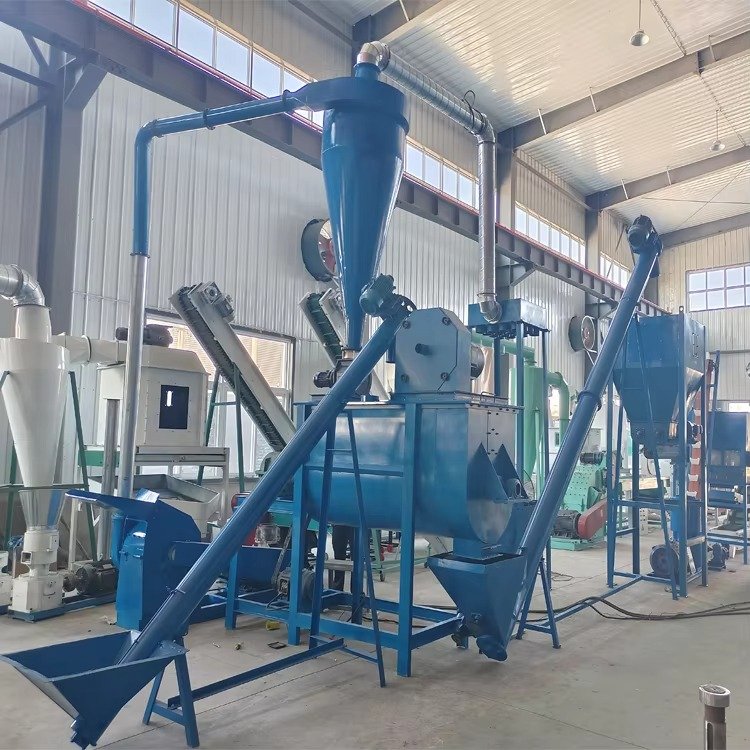
- Pre-Installation Planning: Our team reviews site conditions, verifies utility availability, and coordinates delivery scheduling before equipment arrives at your facility
- Installation Supervision: Experienced technicians oversee equipment positioning, alignment, and connection to utilities, ensuring proper installation meeting manufacturer specifications
- System Commissioning: We conduct comprehensive testing of all equipment and automated controls, verifying proper operation and adjusting parameters for optimal performance
- Operator Training: Hands-on training programmes teach your personnel safe operation, routine maintenance, and troubleshooting procedures for all system components
- Production Trials: Initial production runs under supervision verify feed quality, adjust processing parameters, and demonstrate system capabilities with your actual formulations
After-Sales Technical Support
Production equipment requires ongoing maintenance and occasional troubleshooting. MAIKONG maintains responsive technical support services helping customers maximize uptime and production efficiency.
Remote Technical Assistance
Our support team responds quickly to technical inquiries via phone, email, and WhatsApp. Video conferencing enables remote troubleshooting for many issues.
- 24-hour emergency contact available
- Experienced technical personnel
- Multi-language support capabilities
- Access to engineering resources
Spare Parts Availability
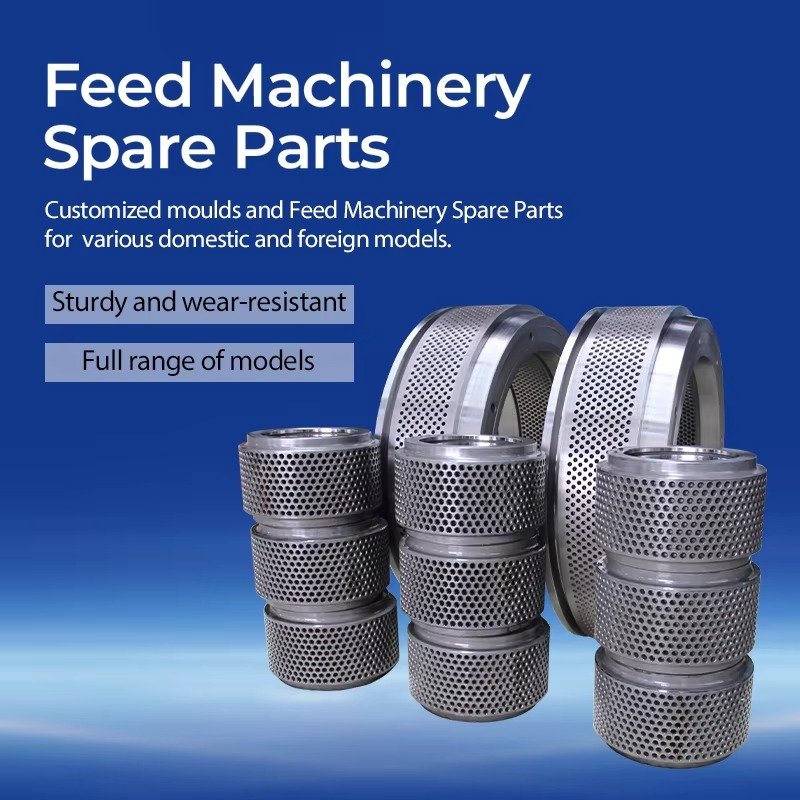
We maintain inventory of wear parts and critical components. Fast shipping ensures minimal downtime when replacement parts are needed.
- Comprehensive spare parts catalogues
- Competitive replacement part pricing
- International shipping arrangements
- Wear part kits for scheduled maintenance
Commitment to UK Market Development
MAIKONG recognizes the United Kingdom’s importance as a feed manufacturing hub serving European markets. We’re actively developing our British presence through distributor partnerships and direct customer support.
UK agricultural businesses benefit from our competitive pricing, proven technology, and flexible customization whilst receiving localized support through our growing partner network.
Become a MAIKONG UK Distributor
MAIKONG seeks established equipment distributors and agricultural suppliers to represent our feed production line range across the United Kingdom. We offer attractive margins, technical support, and marketing assistance for qualified partners.
Distributor Benefits Include:
- Exclusive territory protection in your region
- Competitive wholesale pricing structure
- Technical training for your sales and service teams
- Marketing materials and product documentation
- Factory visits and ongoing product training
- Direct factory support for major projects
Complete Technical Specifications: MAIKONG Model MK-L003 Production Line
Understanding detailed equipment specifications helps you evaluate whether a particular animal feed production line meets your operational requirements. The following specifications describe our versatile MK-L003 series system.
This modular production line accommodates multiple capacity configurations through component selection and equipment arrangement. The specifications below represent a mid-range 5 tonnes per hour configuration suitable for commercial feed manufacturing operations.
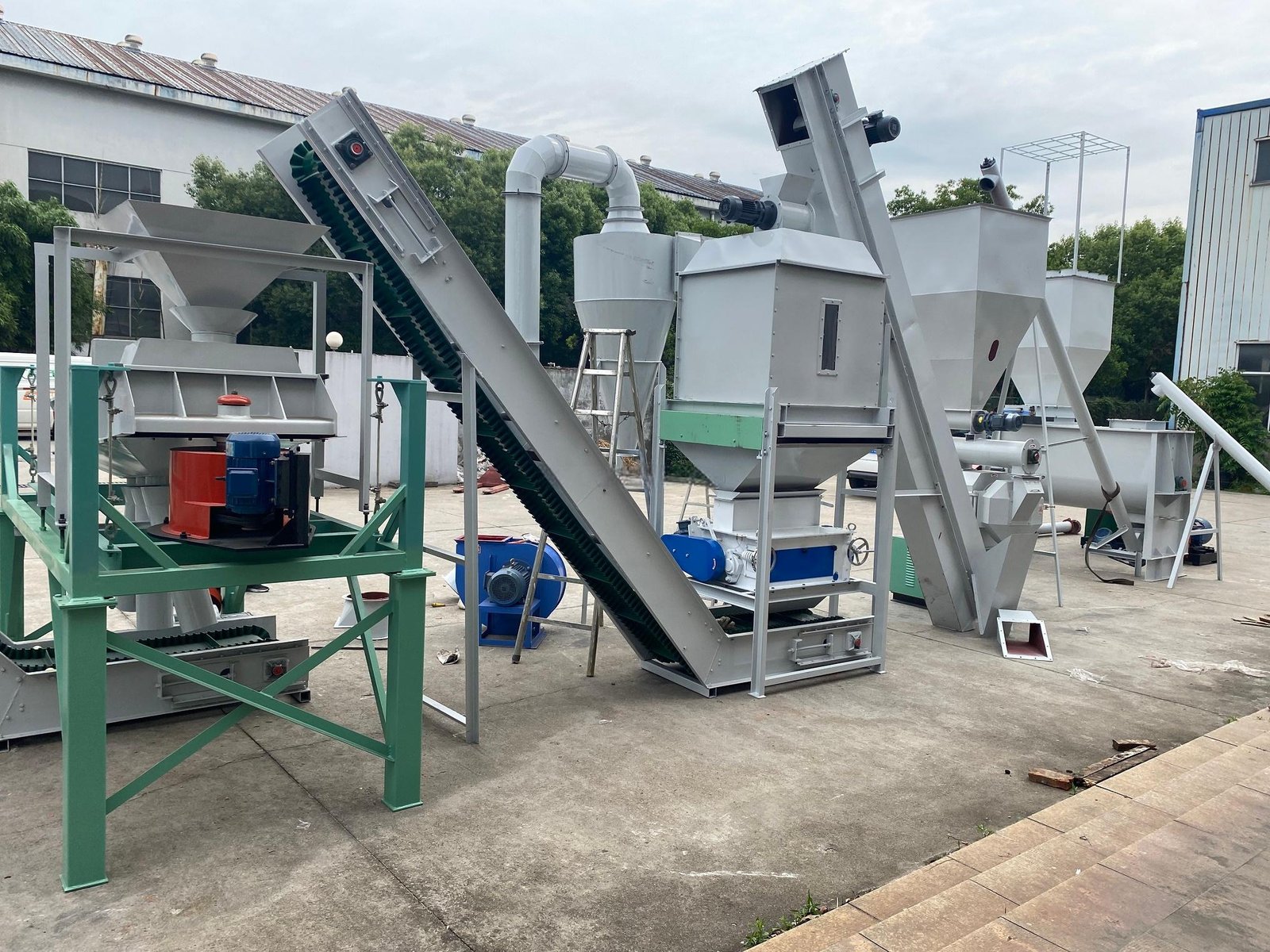
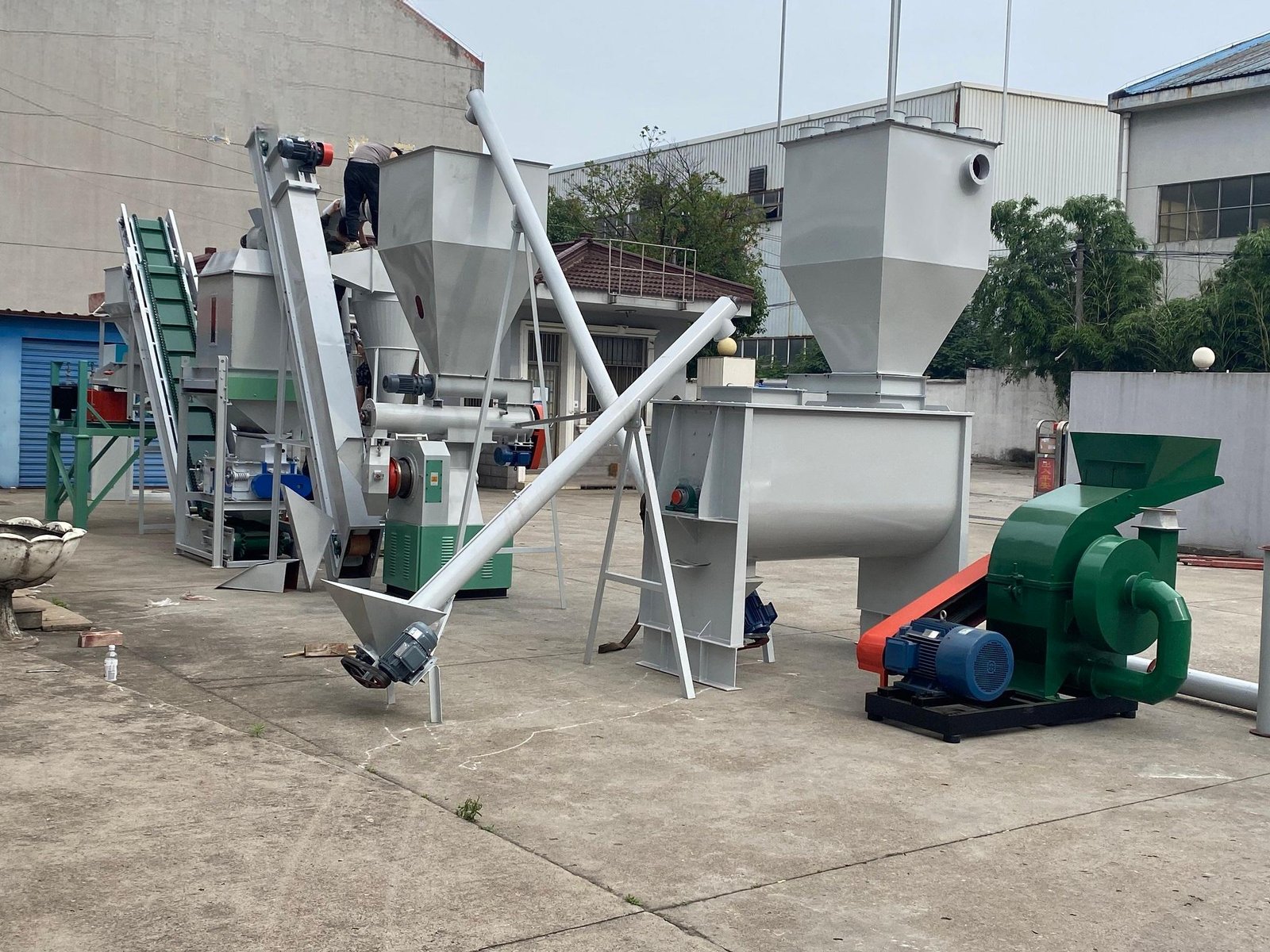
System Overview: MK-L003 Complete Feed Mill
Complete Equipment List and Specifications
| Component | Model Number | Specifications | Power | Dimensions (mm) |
| Hammer Mill | MK-SFSP668 | 5 T/H capacity, interchangeable screens 2-8mm | 55 kW | 2100 × 1050 × 1850 |
| Batch Mixer | MK-SHJZ1000 | 1000 kg capacity, 4-6 min cycle, CV | 18.5 kW | 3200 × 1400 × 2100 |
| Pellet Mill | MK-SZLH420 | Ring die 420mm, 5-6 T/H, pellets 2-8mm | 90 kW | 2400 × 1100 × 2200 |
| Counterflow Cooler | MK-SKLN8 | 8 T/H capacity, ambient +5°C output temp | 2.2 kW | 2800 × 2000 × 3500 |
| Crumbler | MK-SWSP | Adjustable roller gap, 6-8 T/H capacity | 11 kW | 1200 × 800 × 1400 |
| Vibrating Screen | MK-SFJH80×2 | Two-deck classification, 8 T/H capacity | 1.1 kW | 1800 × 1200 × 1600 |
| Packing Scale | MK-DCS50 | 25-50 kg bags, 6-8 bags/min, ±0.2% accuracy | 1.5 kW | 1600 × 900 × 2400 |
| Control System | MK-PLC-Basic | PLC with 10″ HMI touchscreen, recipe storage | 0.5 kW | 800 × 600 × 2000 |
System Performance Parameters
Production Capacity
- Rated Capacity: 5 tonnes/hour
- Daily Output: 80-120 tonnes (16-24 hour operation)
- Annual Capacity: 25,000-40,000 tonnes
- Efficiency: 85-90% sustained throughput
Power and Utilities
- Total Installed Power: 180 kW
- Average Power Draw: 120-140 kW
- Voltage Options: 380V/415V/440V, 50Hz/60Hz
- Compressed Air: 0.6-0.8 MPa, 0.5 m³/min
Facility Requirements
- Floor Space: 600-800 m² production area
- Building Height: 8-12 metres minimum
- Labour: 4-6 operators per shift
- Installation Time: 6-8 weeks typical
Material Specifications and Process Parameters
Feed quality depends on proper raw material handling and optimized processing conditions. The MK-L003 system accommodates typical feed ingredients whilst maintaining flexibility for specialized formulations.
| Parameter | Specification Range | Optimal Values | Notes |
| Raw Material Moisture | 8-14% | 12-13% | Higher moisture requires additional drying |
| Grind Size (Post-Hammer Mill) | 1.5-4.0 mm | 2.0-3.0 mm | Finer grind improves pellet quality |
| Conditioning Temperature | 75-88°C | 80-85°C | Varies by formulation and ingredients |
| Conditioning Moisture Addition | 2-4% | 2.5-3.5% | Via steam injection |
| Pellet Exit Temperature | 75-90°C | 80-85°C | Depends on friction and die design |
| Cooled Pellet Temperature | Ambient +3-7°C | Ambient +5°C | Proper cooling prevents mould growth |
| Final Product Moisture | 11-13% | 12% | Balances storage stability and palatability |
| Pellet Durability Index (PDI) | ≥90% | 93-97% | Higher values reduce transport breakage |
Product Variations and Customization
The MK-L003 platform adapts to various production requirements through equipment selection and configuration changes. MAIKONG engineers work with customers to specify optimal systems for specific applications.
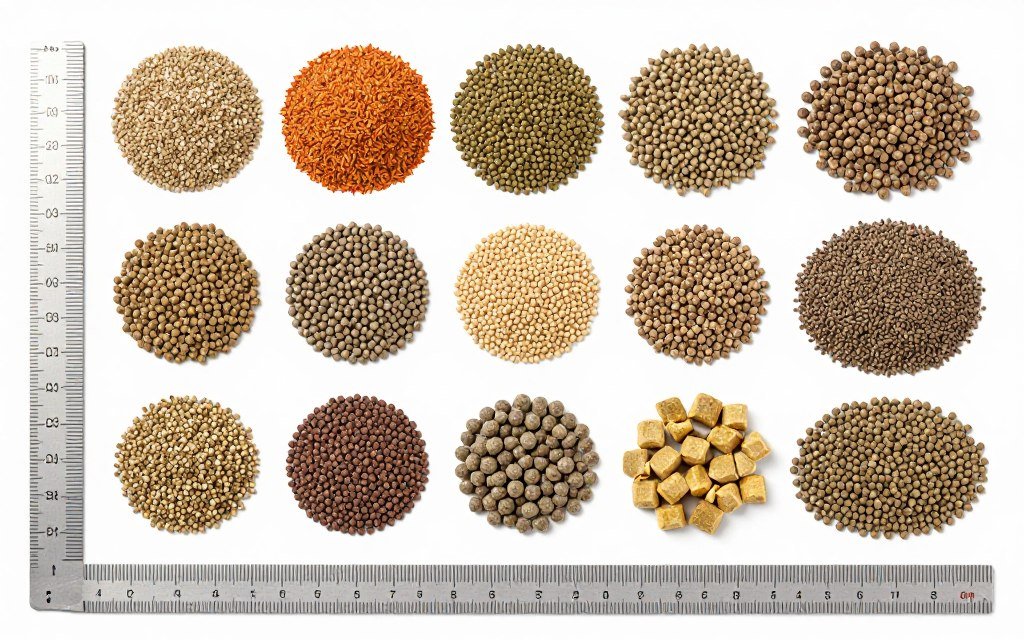
Standard Features
- Robust construction using food-grade materials
- Interchangeable screens and dies for flexibility
- Basic PLC control with touchscreen interface
- Safety interlocks and emergency stops
- Standard electrical components (Schneider/Siemens)
- Complete operation and maintenance manuals
Optional Upgrades Available
- Advanced recipe management with 100+ formulations
- Automatic liquid addition systems
- Enhanced dust collection and environmental controls
- Remote monitoring and diagnostics capability
- Expanded ingredient storage and handling
- Automated bagging and palletizing systems
Maintenance and Consumables
Regular maintenance preserves equipment performance and extends service life. MAIKONG designs systems for straightforward maintenance with accessible wear parts and clear service procedures.
| Wear Component | Service Life | Replacement Frequency | Cost Level |
| Hammer Mill Screens | 500-1000 hours | Monthly to quarterly | £ |
| Hammer Mill Hammers | 1000-2000 hours | Quarterly to semi-annually | £ |
| Mixer Paddles/Ribbons | 3000-5000 hours | Annually | ££ |
| Pellet Mill Dies | 1500-3000 hours | Semi-annually to annually | £££ |
| Pellet Mill Rollers | 2000-4000 hours | Annually | £££ |
| Conveyor Belts | 5000-8000 hours | 1-2 years | ££ |
| Drive Belts | 3000-6000 hours | Annually | £ |
Cost levels: £ = Under £500, ££ = £500-£2000, £££ = Over £2000. Actual costs depend on specifications and quantity ordered.
Spare Parts Programme: MAIKONG offers preventive maintenance kits containing commonly replaced wear parts bundled at attractive pricing. These kits simplify purchasing whilst ensuring you maintain inventory of critical components. Contact our parts department for a customized maintenance kit recommendation based on your production schedule.
Addressing Common Buyer Concerns When Selecting Feed Production Equipment
Purchasing an animal feed production line represents significant capital investment. Buyers rightfully scrutinize potential suppliers carefully, evaluating technical capability, reliability, and support infrastructure before committing.
This section addresses frequent concerns and questions raised during the supplier selection process, providing transparent information to support informed decision-making.
Equipment Reliability and Downtime Prevention
Production interruptions cost money through lost output, idle labour, and delayed customer deliveries. Reliable equipment minimizes unplanned downtime whilst scheduled maintenance occurs during off-shifts or low-demand periods.
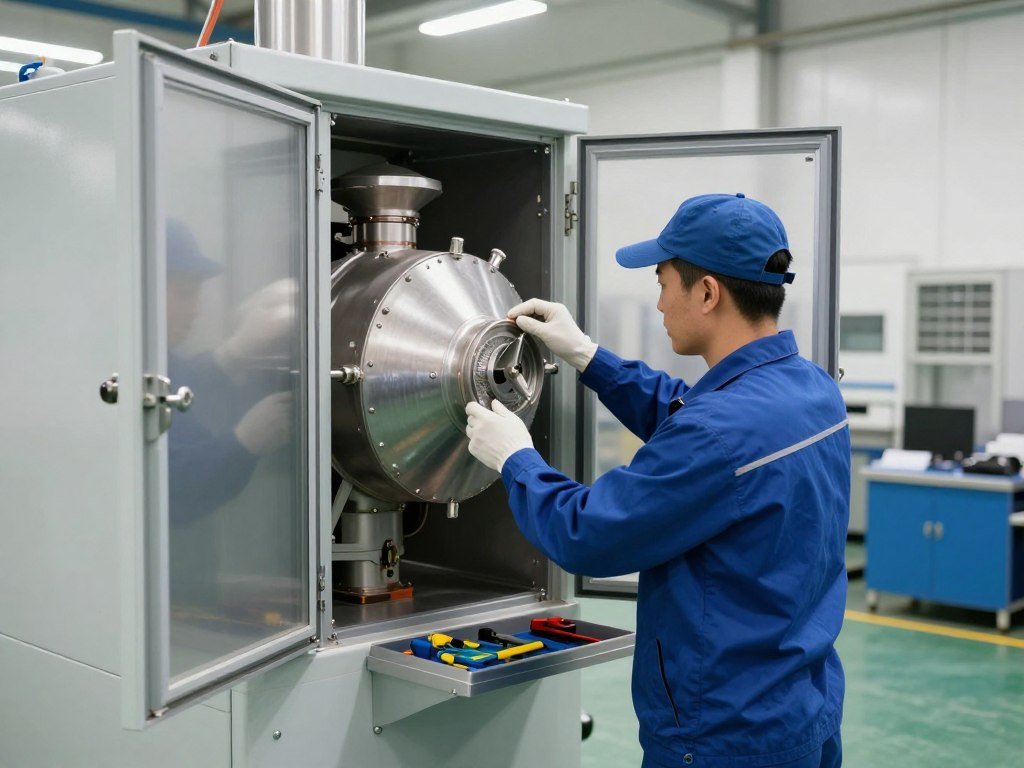
How does MAIKONG equipment compare to European brands regarding reliability?
MAIKONG manufactures equipment using proven designs and quality materials matching or exceeding specifications of established European manufacturers. Key components like bearings, motors, and electrical controls come from reputable international suppliers including SKF, Siemens, and Schneider Electric.
Our manufacturing processes incorporate quality control at every stage. Critical components undergo precision machining and dimensional verification. Assembled equipment runs under load during factory acceptance testing, verifying proper operation before shipment.
Customer feedback from 130+ countries confirms MAIKONG reliability. Many installations operate 16-20 hours daily with availability exceeding 95% when proper maintenance procedures are followed.
What causes material blockages, and how are they prevented?
Material blockages typically result from excessive moisture, improper screen selection, or insufficient equipment capacity for the formulation. Prevention involves proper system design and operational procedures.
MAIKONG addresses blockage risks through multiple strategies:
- Adequate equipment capacity with 15-20% margin above rated production
- Properly sized conveyors and material handling equipment
- Moisture monitoring and control systems
- Level sensors preventing overload conditions
- Accessible cleanout points for routine maintenance
- Operator training covering proper procedures and early problem recognition
How do you minimize pellet fines and maintain pellet durability?
Pellet durability depends on multiple factors including raw material grinding, conditioning parameters, die specifications, and cooling procedures. Achieving high durability (PDI 95%+) requires optimizing each step.
MAIKONG equipment incorporates design features supporting high pellet quality:
- Effective conditioning systems with adequate retention time (30-45 seconds minimum)
- Heavy-duty pellet mills maintaining consistent pressure and temperature
- Quality dies manufactured from alloy steels with proper hole geometry
- Counterflow cooling reducing thermal shock whilst removing excess moisture
- Gentle handling systems minimizing pellet breakage after formation
We provide detailed commissioning support to optimize processing parameters for your specific formulations, achieving maximum pellet durability whilst maintaining production efficiency.
Technical Support and Spare Parts Availability
Equipment only delivers value when operating. Responsive technical support and readily available spare parts minimize downtime when issues occur or maintenance is required.
MAIKONG Support Infrastructure
We maintain dedicated technical support teams serving different global regions. Support personnel understand local business practices, time zones, and communication preferences.
Multi-channel support accommodates different situations:
- Phone Support: Direct technical assistance for urgent issues requiring immediate guidance
- WhatsApp: Quick communication with photo/video sharing for visual troubleshooting
- Email: Detailed technical inquiries, documentation requests, parts ordering
- Remote Access: Direct connection to PLC systems for advanced diagnostics (where network permits)

Spare Parts Management
MAIKONG maintains substantial spare parts inventory supporting equipment worldwide. Common wear components ship within 48 hours of order confirmation. Specialized components requiring manufacture typically complete within 2-3 weeks.
We recommend customers maintain critical spare parts inventory based on production schedule and lead times. Our technical team helps identify appropriate spare parts kits during installation, balancing inventory investment against downtime risk.
Counterfeit Parts Warning: Use only genuine MAIKONG parts to maintain warranty coverage and equipment performance. Non-genuine parts may fit physically but often use inferior materials causing premature failure or producing substandard feed quality. All genuine parts include MAIKONG identification and quality certifications.
Transportation, Installation Timeline, and Project Management
Large equipment shipments require careful logistics planning. Installation scheduling must coordinate equipment delivery, facility preparation, utility connections, and commissioning activities efficiently.
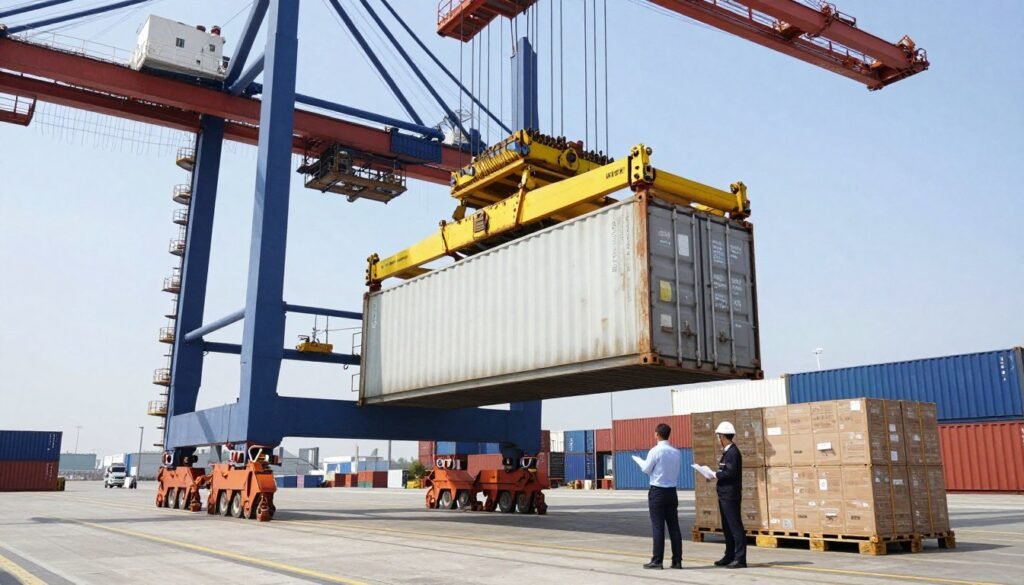
How is equipment packaged for international shipping?
MAIKONG uses robust export packaging protecting equipment during ocean freight, handling, and storage. Major components receive individual packaging whilst smaller items are consolidated in wooden crates.
Export packaging includes:
- Plastic film wrapping for moisture protection
- Shock-absorbing materials at vulnerable points
- Wooden crates or steel frames for structural protection
- Desiccant packets preventing condensation damage
- Clear labelling with handling instructions and component identification
We arrange shipping through established freight forwarders experienced with industrial equipment. Documentation includes commercial invoices, packing lists, certificates of origin, and any required import paperwork for your destination country.
What is the typical timeline from order to operational production?
Complete project timelines vary based on system complexity and customer preparation. A typical medium-scale project follows this approximate schedule:
- Engineering and Approval (2-3 weeks): Final design review, specification confirmation, documentation preparation
- Manufacturing (6-10 weeks): Equipment fabrication, assembly, factory testing, and packaging
- Shipping (3-6 weeks): Ocean freight to UK/European ports, customs clearance, inland transport to site
- Installation (4-8 weeks): Equipment positioning, utility connections, system assembly, control programming
- Commissioning (1-2 weeks): Testing, parameter optimization, operator training, initial production runs
Total Timeline: 16-29 weeks from order confirmation to full production operation.
Customers can reduce timeline by preparing facilities in parallel with equipment manufacturing. Our project management team provides detailed scheduling coordinating all activities efficiently.
Do you provide installation services, or must we hire local contractors?
MAIKONG offers complete installation supervision services. Our experienced technicians travel to your facility, overseeing equipment installation, system integration, and commissioning.
Installation typically involves collaboration between MAIKONG supervisors and your local contractors. This approach combines our equipment expertise with local labour and compliance knowledge.
Typical division of responsibilities:
- Customer/Local Contractor: Building preparation, foundations, utility runs, structural steel, general labour
- MAIKONG Team: Equipment positioning, alignment, assembly, electrical connections, control programming, testing, training
We provide detailed installation drawings and specifications supporting your contractors’ preparation work before our team arrives, maximizing efficiency when installation begins.
Pricing, Payment Terms, and Return on Investment
Capital equipment decisions balance initial investment against operational efficiency, production quality, and long-term reliability. Understanding complete ownership costs helps evaluate competing proposals accurately.
“We evaluated three suppliers including a well-known European brand. MAIKONG offered 40% lower capital cost with comparable specifications. After two years operation, our production costs per tonne match or beat competitor mills using the expensive equipment. The savings funded our planned capacity expansion a year early.”
Investment Considerations
Complete feed production line pricing depends on capacity, automation level, and optional features. MAIKONG provides detailed quotations breaking down equipment costs, shipping, installation, and training.
Typical Investment Ranges (GBP):
- Small-scale (1-2 T/H): £45,000-£85,000
- Medium-scale (3-8 T/H): £95,000-£180,000
- Large-scale (10-20 T/H): £220,000-£450,000
- Industrial (25+ T/H): £500,000+ (custom quotation)
Prices are approximate and subject to specification details, market conditions, and exchange rates. Contact us for detailed quotation specific to your requirements.

Payment Terms and Financing
MAIKONG offers flexible payment structures accommodating different customer preferences and financial situations. Standard terms include deposit at order confirmation, progress payments during manufacturing, and final payment before shipment or upon installation completion.
For qualified customers, we can introduce equipment financing partners experienced with agricultural and industrial equipment. These arrangements preserve working capital whilst acquiring necessary equipment.
Request Detailed Project Quotation
Receive comprehensive pricing including equipment, shipping, installation supervision, training, and spare parts recommendations. Our quotations provide complete transparency supporting accurate financial planning.
Partner with MAIKONG for Your Feed Production Line Investment
Selecting the right animal feed production line manufacturer influences your operation’s success for years to come. Equipment quality, technical support, and manufacturer reliability directly impact production efficiency, product quality, and business profitability.
MAIKONG combines 22 years of manufacturing expertise with commitment to customer success. Our production lines operate successfully across 130 countries, demonstrating versatility and reliability in diverse conditions and applications.
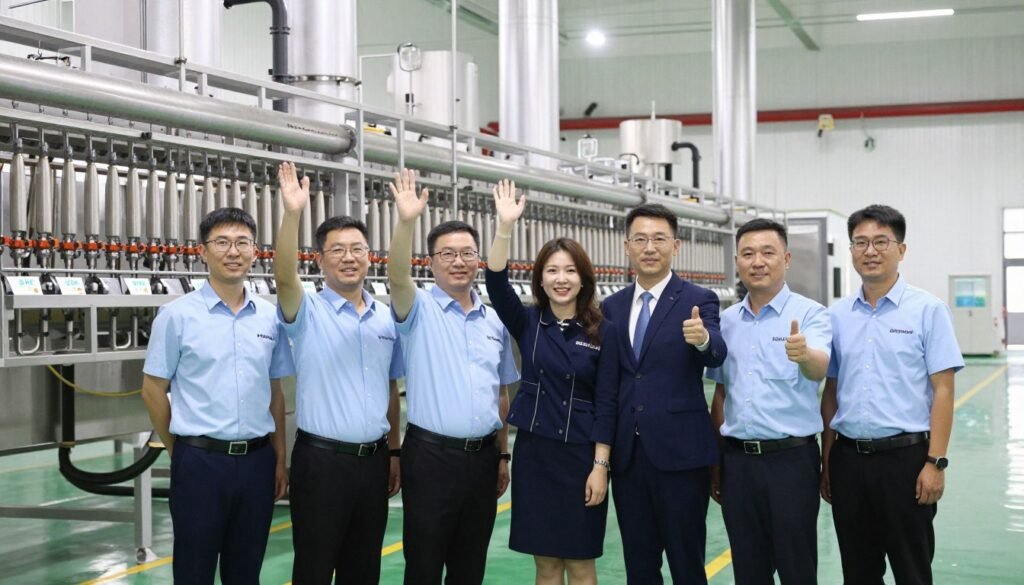
Why UK Feed Manufacturers Choose MAIKONG
Technical Excellence
- Proven designs refined through thousands of installations
- Quality materials and components from reputable suppliers
- Comprehensive testing before shipment
- Customization supporting specialized requirements
- Ongoing product development incorporating latest technology
Customer Support
- Responsive technical assistance via multiple channels
- Spare parts availability with international shipping
- Installation supervision and operator training
- Long-term partnership approach to customer relationships
- Continuous improvement based on field experience
Take the Next Step
Whether you’re planning a new feed mill, expanding existing capacity, or replacing aging equipment, MAIKONG provides the expertise and equipment supporting your goals.
Our UK-focused business development recognizes Britain’s importance in European feed manufacturing. We’re committed to supporting British agricultural businesses with competitive pricing, proven technology, and localized service through our expanding distributor network.
Connect with MAIKONG Today
Discuss your animal feed production line requirements with our experienced team. We’ll provide expert guidance, detailed specifications, and transparent pricing supporting informed decision-making.
UK Distributorship Opportunities: MAIKONG seeks established equipment distributors and agricultural suppliers to represent our feed production line range across the United Kingdom. Limited territory opportunities available for qualified partners. Apply today to join our successful European partner network.
About MAIKONG: Established 22 years ago in Guangdong Province, China, MAIKONG manufactures complete animal feed production systems serving operations from small farms to industrial feed mills. Our equipment produces feed for poultry, cattle, aquatic species, and companion animals across six continents. With proven OEM/ODM capabilities, responsive technical support, and commitment to customer success, MAIKONG delivers the reliable, efficient equipment modern feed manufacturers demand.
Quality feed starts with quality equipment. Choose MAIKONG as your animal feed production line manufacturer and benefit from decades of engineering excellence, manufacturing quality, and customer-focused service supporting your success in competitive feed markets.